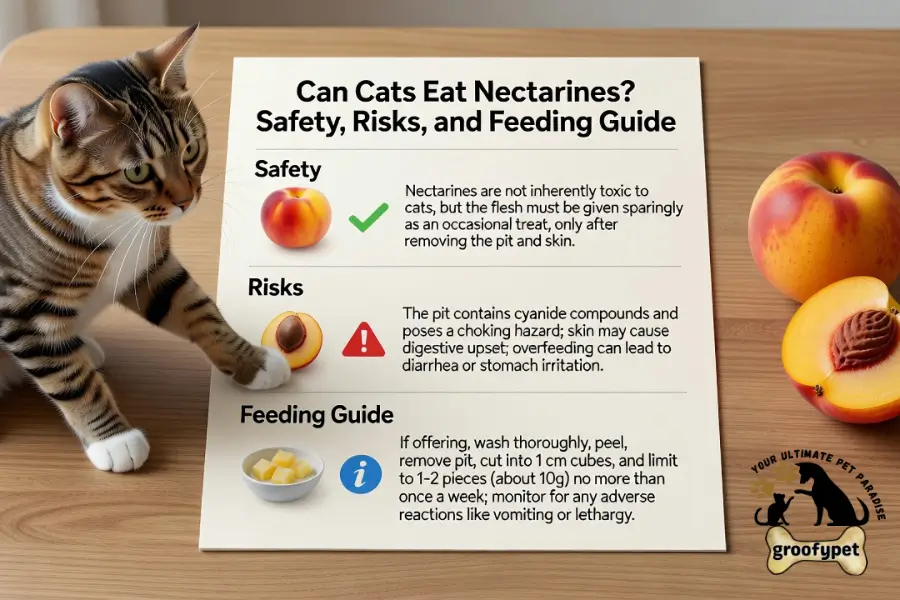
Have you ever noticed your cat showing interest in a juicy nectarine while you enjoy this sweet summer fruit? You might wonder whether sharing a small piece with your feline friend is safe.
Yes, cats can eat a tiny amount of fresh nectarine flesh occasionally, provided it is properly washed and completely separated from the pit. However, nectarines are not necessary for feline nutrition. Their pits contain compounds that can release cyanide when crushed or chewed, and they can also cause choking or intestinal blockage.
Cats are obligate carnivores, meaning their bodies depend mainly on nutrients from animal-based foods. Although nectarine flesh is not considered inherently poisonous, too much can upset your cat’s stomach.
Let’s explore which parts of nectarines are safe, what risks cat owners should understand, and how to respond if a cat accidentally eats the pit.
Can Cats Eat Nectarines Safely?
Yes, most healthy adult cats can have a very small piece of plain, ripe nectarine flesh as an occasional treat. However, you should remove the pit completely before offering any fruit. Nectarines belong to the stone fruit family and are closely related to peaches. They contain water, natural sugars, fiber, and several vitamins.
While these nutrients can be beneficial in human diets, cats have different nutritional requirements. They obtain essential nutrients such as taurine, arachidonic acid, and vitamin A from appropriate animal-based foods. Nectarines should never replace your cat’s regular meals or become a daily snack. Some cats may also experience digestive discomfort after eating unfamiliar fruits.
Important: The flesh and the pit have different safety concerns. A tiny bite of flesh is not the same as chewing or swallowing a nectarine pit.
Are Nectarines Good for Cats?
Nectarines contain several nutrients that support human health, but that does not automatically make them beneficial for cats. Here are some nutrients found in nectarines and what cat owners should understand about them.

1. Water
Nectarines have a high water content, which contributes to hydration. However, cats should receive their daily hydration from fresh drinking water and moisture-rich, balanced cat food.A few bites of fruit are not a reliable way to improve hydration.
2. Dietary Fiber
Fiber supports digestive function and can help regulate bowel movements. However, too much unfamiliar fiber may cause loose stools, gas, or stomach discomfort. Cats already receive suitable nutrients and fiber from appropriately formulated diets.
3. Vitamin A
Vitamin A supports healthy vision, immune function, and skin health. Cats require preformed vitamin A from appropriate dietary sources. They cannot meet their vitamin A requirements simply by eating plant foods.
4. Vitamin C
Nectarines contain vitamin C, an antioxidant involved in several body functions. However, healthy cats can generally produce their own vitamin C. They do not need nectarines to meet this nutritional requirement.
5. Antioxidants
Nectarines contain plant compounds with antioxidant properties. These compounds are associated with protecting cells from oxidative damage. However, there is no established reason to feed nectarines to cats for antioxidant benefits.Overall, nectarines offer no essential nutritional advantage over a complete and balanced cat food.
Can Cats Eat Nectarine Skin?
Nectarine skin is not known to contain the same cyanide-related concern associated with the pit. However, it is better to remove the skin before offering a small piece to your cat. The skin may carry dirt, pesticide residues, or other surface contaminants. Some cats may also find the texture difficult to chew or digest.If you want to share a tiny amount of nectarine:
- Wash the fruit thoroughly under clean running water.
- Remove the skin as an additional precaution.
- Cut the flesh into a very small piece.
- Remove every part of the pit.
- Never add sugar, syrup, or seasoning.
Remember that peeling does not make the fruit necessary or risk-free. It simply removes an additional source of possible contamination and digestive discomfort.
Can Cats Eat Nectarine Pits?
No, cats should never eat nectarine pits. The pit is the hard stone in the middle of the fruit. It contains a kernel with cyanogenic compounds, including amygdalin, which can release cyanide when the kernel is damaged or chewed.
There are two major concerns.
1. Cyanide exposure: Chewing or crushing the kernel can release cyanide. Large enough exposure can interfere with the body’s ability to use oxygen.
2. Choking and intestinal blockage: Even an intact pit can become stuck in the digestive tract. Its size and shape may create a serious foreign-body problem.
Keep nectarine pits away from curious cats, including those that enjoy playing with small objects.
What About Nectarine Leaves and Stems?
Leaves and stems from nectarine trees should also be kept away from cats. Certain parts of stone-fruit plants contain cyanogenic compounds. Do not allow your cat to chew fallen leaves, broken branches, or other discarded plant material.
What Happens If a Cat Eats Nectarines?
The reaction depends on which part of the fruit your cat consumes and how much it eats. A tiny piece of plain nectarine flesh may cause no noticeable reaction. However, larger amounts can upset the digestive system.
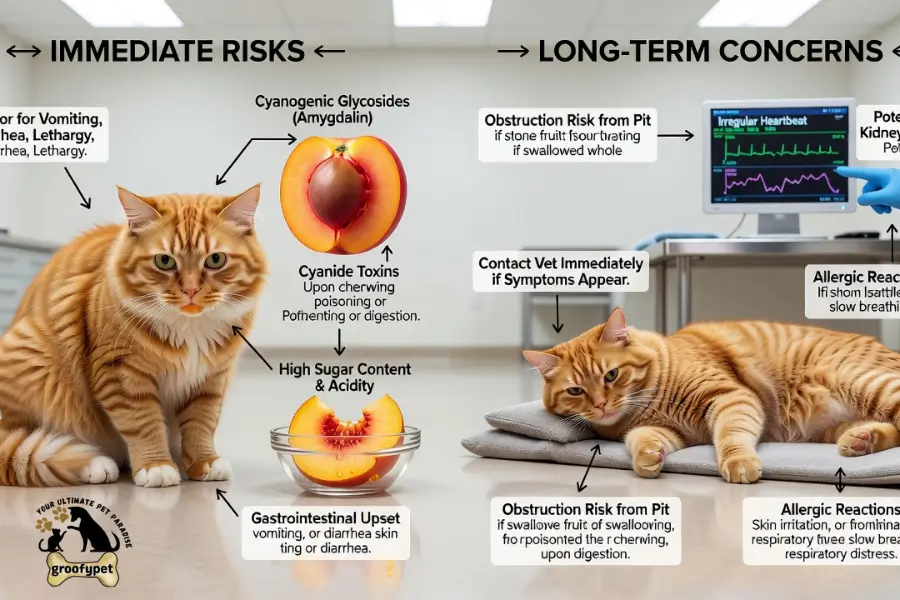
Possible symptoms include:
- Vomiting
- Diarrhea
- Reduced appetite
- Stomach discomfort
- Gas or bloating
- Unusual tiredness
These symptoms are not specific to nectarine exposure, so a veterinarian should assess persistent or concerning reactions.
Signs of Possible Cyanide Poisoning
If a cat chews a nectarine pit or its kernel, cyanide exposure becomes a concern.
Possible warning signs include
- Difficulty breathing
- Rapid or unusual breathing
- Weakness
- Tremors
- Loss of coordination
- Collapse
- Seizures
These signs require emergency veterinary attention.Do not wait for symptoms to develop if your cat has chewed or crushed a nectarine pit. Contact a veterinarian or animal poison control service immediately.
Also Read : Can Cats Eat Boysenberries? Benefits, Risks, and Feeding Tips
How Much Nectarine Can Cats Eat?
There is no scientifically established safe serving size of nectarine specifically for cats. If your healthy adult cat shows interest, a tiny piece of plain, ripe, pit-free flesh is a more cautious choice than offering a large portion. Nectarines should remain an occasional taste rather than a regular part of your cat’s diet.
Here is a practical guide:
| Cat or situation | Recommendation |
|---|---|
| Healthy adult cat | A tiny piece of plain flesh, occasionally |
| Kitten | Avoid unnecessary fruit treats |
| Senior cat | Ask your veterinarian first |
| Cat with diabetes | Avoid without veterinary approval |
| Cat with sensitive digestion | Better to skip nectarines |
| Cat on a prescription diet | Follow veterinary dietary instructions |
| Cat that ate the pit | Contact a veterinarian immediately |
The amount your cat can tolerate may depend on its size, health, age, and digestive sensitivity. However, this is an overall treat guideline, not a recommended nectarine serving size.
How to Prepare Nectarines for Cats
If you decide to offer your cat a tiny taste, preparation matters.
Follow these precautions:
Step 1: Choose a fresh nectarine.
Select a ripe fruit without mold, spoilage, or signs of damage.
Step 2: Wash it properly.
Rinse the fruit under clean running water to remove dirt and surface residue.
Step 3: Remove the pit.
Take out the entire hard stone. Check the flesh carefully to ensure no broken pit pieces remain.
Step 4: Peel the skin.
Removing the skin is an additional precaution that reduces exposure to surface residues.
Step 5: Cut a tiny piece.
Offer only a very small piece of plain flesh. Avoid large chunks that could be difficult to chew.
Step 6: Serve it without additives.
Never add honey, sugar, salt, syrup, spices, or artificial sweeteners.
Step 7: Observe your cat.
Watch for vomiting, diarrhea, reduced appetite, or unusual behavior after trying an unfamiliar food.
If your cat develops concerning symptoms, stop offering the fruit and contact your veterinarian.
Can Kittens Eat Nectarines?
It is better to avoid giving nectarines to kittens. Young cats have developing digestive systems and specific nutritional requirements. They need complete kitten food that supports healthy growth, muscle development, and bone formation. Fruit does not provide the balanced protein, fat, vitamins, and minerals kittens require.
Even a small amount of unfamiliar food may cause digestive discomfort in some kittens. Instead of experimenting with human foods, offer age-appropriate kitten treats recommended by your veterinarian.
Can Cats Eat Canned or Dried Nectarines?
Fresh nectarines and processed nectarine products are not the same. Canned and dried varieties may contain additional ingredients or concentrated sugars. Here is what you should know about each type.
Fresh Nectarines
A tiny piece of fresh, ripe flesh without the pit is the most suitable option if you choose to offer nectarine. It should always be plain, washed, and prepared carefully.
Canned Nectarines
Avoid sharing canned nectarines with cats. They may contain added sugar, syrup, preservatives, or other ingredients that provide no benefit to feline health. Even fruit canned in juice can contain concentrated natural sugars.
Dried Nectarines
Dried nectarines are not a good choice for cats. Removing water concentrates their natural sugars, making it easier to consume more sugar in a smaller portion. Their chewy texture may also make them less suitable as a treat.
Nectarines in Syrup
Never give your cat nectarines preserved in sugary syrup. These products contain unnecessary added sugar and may cause digestive discomfort. Cats do not need sweetened foods.
Nectarine Desserts
Avoid nectarine pies, cakes, jams, cobblers, and other desserts. These products may contain sugar, butter, spices, dairy, or other ingredients unsuitable for cats.
What Should You Do If Your Cat Eats a Nectarine Pit?
If your cat eats a nectarine pit, contact your veterinarian immediately, even if your cat appears normal.Do not assume that an intact pit will pass safely through the digestive system. It may become lodged and cause an obstruction.
Follow these steps:
- Remove any remaining fruit and pits from your cat’s reach.
- Determine whether your cat swallowed the pit whole or chewed it.
- Note approximately how much was eaten and when it happened.
- Take a photograph or keep the remaining fruit for identification.
- Contact your veterinarian or an emergency veterinary clinic.
- Follow professional instructions about examination and treatment.
Never attempt to induce vomiting at home unless your veterinarian specifically instructs you to do so.If your cat develops difficulty breathing, weakness, collapse, tremors, or seizures, seek emergency veterinary care immediately.Early professional advice is important because the risks of physical obstruction and cyanide exposure require different assessments.
Read This : Can Cats Eat Jabuticaba? Benefits, Risks, and Safety Tips
Healthier Fruit Alternatives for Cats
Although cats do not need fruit, some healthy adult cats may enjoy tiny portions of certain fruits.If you want to offer an occasional fruit-based treat, consider these alternatives.
| Fruit | Preparation precautions |
|---|---|
| Watermelon | Remove seeds and rind |
| Blueberries | Wash and offer a small amount |
| Cantaloupe | Remove seeds and rind |
| Strawberries | Remove leaves and cut into small pieces |
| Banana | Offer a tiny piece without the peel |
These fruits should also be occasional treats rather than dietary necessities.If your cat does not show interest in fruit, there is no reason to encourage it.For most cats, plain cooked chicken or commercially prepared feline treats are more appropriate options.
Nectarine Feeding Mistakes Cat Owners Should Avoid
Even when a particular food is not inherently poisonous, improper preparation can create unnecessary risks.
Avoid these common mistakes:
1. Giving the entire fruit: Never leave the pit attached when sharing nectarine flesh.
2. Ignoring the pit: The pit can cause choking, obstruction, and potential cyanide exposure if its kernel is chewed.
3. Offering large portions: Too much fruit may cause digestive discomfort.
4. Feeding canned nectarines: Syrup and added sugar are unnecessary for cats.
5. Giving dried fruit: Concentrated sugars make dried nectarines a poor treat.
6. Ignoring digestive symptoms: Vomiting or diarrhea after trying unfamiliar food should not be dismissed.
7. Replacing regular cat food: Nectarines cannot provide the complete nutrition cats need.
8. Feeding fruit every day: Cats benefit more from a balanced, meat-based diet than repeated fruit snacks.
Making careful food choices can help prevent avoidable digestive problems and other health concerns.
Frequently Asked Questions
Can cats eat nectarine flesh?
Yes, most healthy adult cats can have a tiny piece of plain, ripe nectarine flesh occasionally. Remove the pit, wash the fruit, and preferably peel it before serving. Nectarine flesh should never replace balanced cat food.
Can kittens eat nectarines?
It is better not to give nectarines to kittens. Growing cats need balanced kitten food that supplies the nutrients required for healthy development. Unnecessary fruit treats may also cause digestive discomfort.
can cats eat dried nectarines?
Dried nectarines are not recommended for cats. They contain concentrated natural sugars and provide no essential nutritional advantage. Their chewy texture also makes them less suitable than small pieces of fresh fruit.
How much nectarine can a cat eat?
There is no established veterinary serving size for nectarines in cats. If you choose to offer some, keep it to a tiny piece of plain flesh on rare occasions. Avoid giving it to cats with medical or dietary restrictions without veterinary approval.
Are peaches and nectarines equally safe for cats?
Peaches and nectarines have similar safety considerations. A tiny amount of plain flesh is generally not considered poisonous, but their pits contain cyanogenic compounds and present choking or obstruction risks. Keep the pits, leaves, and stems away from cats.
Should I take my cat to the vet after eating a nectarine?
If your cat only eats a tiny piece of plain flesh and remains normal, emergency treatment is generally not expected to be necessary. However, contact your veterinarian if your cat eats the pit, chews its kernel, develops symptoms, or consumes a large amount.
Final Thoughts
So, can cats eat nectarines? Yes, a healthy adult cat can occasionally taste a tiny piece of fresh, plain nectarine flesh.However, nectarines are not an essential part of feline nutrition. Their natural sugars and fiber may upset some cats’ stomachs, especially when eaten in larger amounts.
The most important precaution is keeping nectarine pits away from your cat. They can cause choking or intestinal blockage, while damaged kernels may release cyanide.If your cat enjoys trying new foods, choose appropriate feline treats instead of regularly sharing human snacks.
A complete and balanced diet, fresh drinking water, and suitable treats will always matter more than adding fruit to your cat’s meals.Your cat’s safety should always come before sharing your favorite snacks.