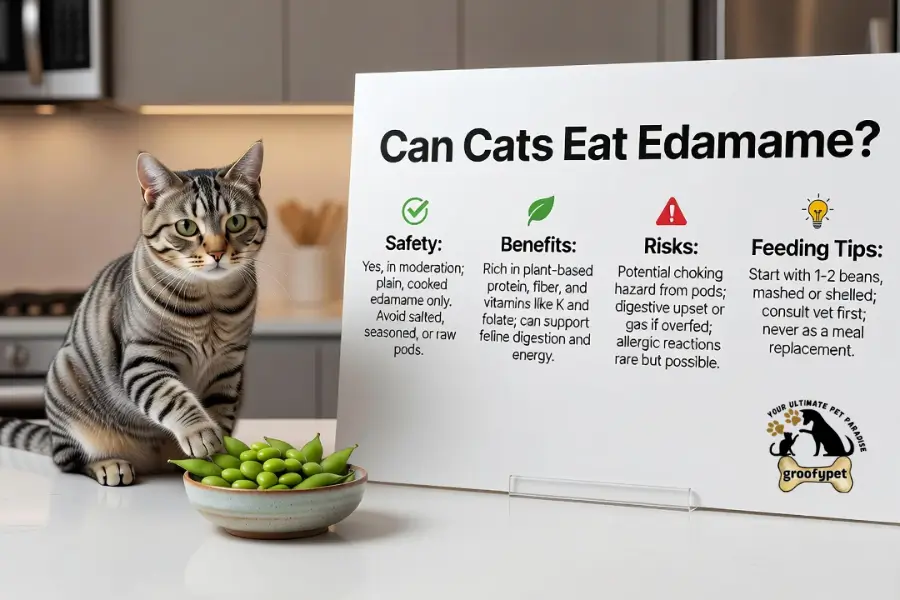
If you enjoy eating edamame, you might wonder whether your cat can enjoy a few beans too. Can Cats Eat Edamame? Yes, cats can eat a tiny amount of plain, fully cooked, shelled edamame occasionally. However, it is not a necessary part of their diet. Cats are obligate carnivores, meaning they need nutrients primarily from animal-based foods.
Although edamame contains protein, fiber, and vitamins, too much can upset your cat’s stomach. Preparation also matters because salt, garlic, onion, and other seasonings can make edamame unsafe for cats.
Before sharing this popular green soybean with your furry friend, understand its potential benefits, possible risks, and safe feeding practices.
Is Edamame Safe for Cats?
Plain, fully cooked, shelled edamame is generally not considered toxic to cats in tiny amounts. However, that does not mean every cat should eat it.Edamame is an immature soybean commonly served as a snack or side dish. It contains plant-based protein, fiber, and several nutrients. These nutrients may be useful in human diets, but cats have different nutritional requirements.
A cat’s digestive system is designed to process nutrients from animal sources. While cats can digest some plant-based ingredients, they do not need edamame to maintain good health.
If you decide to offer it, choose plain, cooked beans without salt, oil, butter, garlic, onion, or spices. Remove the outer pods and offer only a very small piece.
Cats with sensitive stomachs, food allergies, or existing health conditions should not receive new foods without veterinary advice.
What Is Edamame?
Edamame refers to young, green soybeans harvested before they fully mature. These beans are commonly used in Japanese, Chinese, and other Asian cuisines.People usually prepare edamame by boiling or steaming the pods. They then remove the beans from their shells before eating them.
Edamame is popular because it contains plant protein, dietary fiber, and several vitamins and minerals.
You may find it in different forms, including:
- Fresh edamame.
- Frozen edamame.
- Steamed edamame.
- Boiled edamame.
- Salted edamame.
- Shelled edamame beans.
Although these options may look similar, their preparation can make a difference when considering your cat’s safety.
Can Cats Eat Cooked Edamame?
Yes, cats can have a tiny taste of plain, fully cooked edamame occasionally. Cooking makes the beans softer and easier to chew than raw soybeans. However, always prepare edamame separately before adding human seasonings. Avoid sharing beans prepared with salt, garlic, onion, chili powder, soy sauce, or butter.
Allow the beans to cool completely before serving. Remove the outer shells and cut or mash the edible bean into a manageable piece. Remember that cooked edamame should remain an occasional taste rather than a regular snack.
Can Cats Eat Raw Edamame?
It is better to avoid feeding raw edamame to cats. Raw soybeans contain natural compounds, including trypsin inhibitors and lectins, that can interfere with digestion. Proper cooking reduces these compounds and makes soybeans more suitable for consumption.
Raw beans may also be harder for cats to chew and digest. This can increase the possibility of digestive discomfort. If your cat accidentally eats a small amount of raw edamame, do not panic. Remove the remaining beans and monitor for vomiting, diarrhea, or unusual behavior. Contact your veterinarian if symptoms develop or your cat eats a large quantity.
Nutritional Value of Edamame for Cats
Edamame contains several nutrients that contribute to human health. However, cats cannot use all plant-based nutrients as efficiently as nutrients from animal sources.
Here are some nutrients found in edamame:
| Nutrient | Potential Role |
|---|---|
| Plant-based protein | Provides amino acids, but does not replace animal protein. |
| Dietary fiber | Supports digestive function in appropriate amounts. |
| Folate | Helps support normal cell growth. |
| Vitamin K | Plays a role in normal blood clotting. |
| Iron | Supports oxygen transport in the body. |
| Magnesium | Supports muscle and nerve function. |
| Potassium | Helps maintain normal muscle and nerve activity. |
| Carbohydrates | Provide energy, although cats primarily rely on protein and fat. |
Although edamame contains these nutrients, it should not be considered a nutritional supplement for cats. A complete and balanced cat food already provides the essential nutrients your pet needs.
Are There Any Benefits of Edamame for Cats?
Edamame offers some nutritional properties, but its benefits for cats are limited. There is no established need to add soybeans to a healthy cat’s diet.
Here are a few possible advantages of offering a tiny amount.
1. Contains Plant-Based Protein
Edamame contains plant protein that contributes to its nutritional value. However, cats require specific amino acids, including taurine, from appropriate dietary sources. Plant protein should never replace the animal-based protein in your cat’s regular meals.
2. Provides Dietary Fiber
Edamame contains dietary fiber, which plays a role in digestive health. However, too much fiber may cause gas, bloating, or changes in bowel movements. Cats already receive suitable fiber from their complete diets.
3. Contains Vitamins and Minerals
Green soybeans contain folate, vitamin K, magnesium, potassium, and iron. These nutrients support different body functions. Nevertheless, a small serving of edamame provides no reliable nutritional advantage over a properly balanced cat food.
4. Offers an Occasional Food Experience
Some curious cats may show interest in unfamiliar foods because of their smell, texture, or their owner’s eating habits. A tiny piece of plain cooked edamame can provide a different food experience. However, many cats will simply ignore it, and that is perfectly normal.
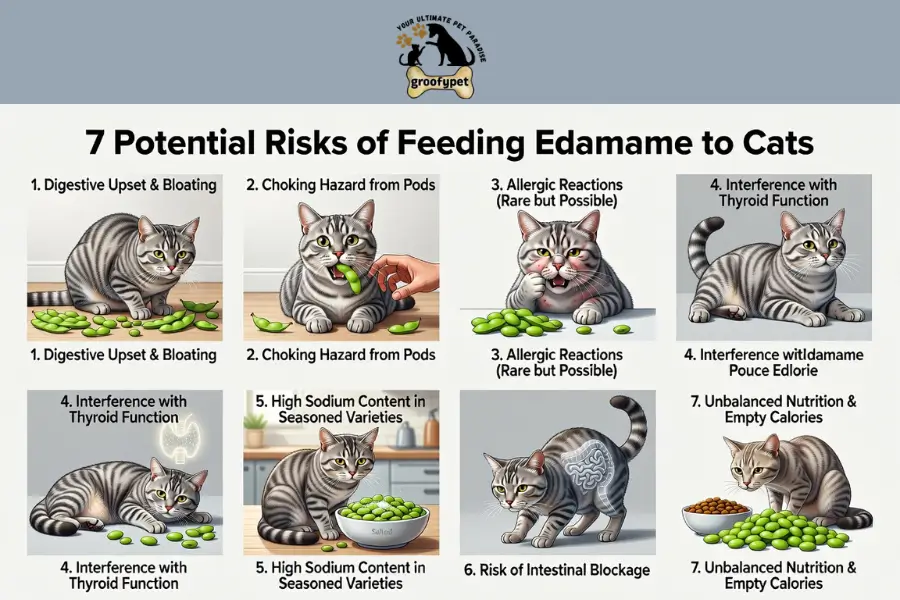
7 Potential Risks of Feeding Edamame to Cats
Although plain cooked edamame is not generally considered toxic to cats, there are several reasons to limit it.

1. Digestive Upset
Cats have different digestive requirements from humans. Their stomachs may not tolerate unfamiliar plant-based foods very well. Eating too much edamame may cause digestive discomfort. Your cat might experience vomiting, loose stools, or changes in appetite. Introduce new foods cautiously and avoid offering another serving if your cat develops symptoms.
2. Gas and Bloating
Edamame contains dietary fiber and carbohydrates that may contribute to gas production. Some cats may experience bloating or abdominal discomfort after eating unfamiliar legumes. If your cat develops a swollen abdomen, repeated discomfort, or signs of pain, contact a veterinarian rather than assuming it is ordinary gas.
3. Vomiting or Diarrhea
A cat that eats too much edamame may develop gastrointestinal symptoms. Vomiting and diarrhea can occur when a cat struggles to tolerate a new food. These symptoms may also have other causes, so do not automatically blame edamame. Contact your veterinarian if symptoms continue, become severe, or occur alongside weakness or reduced appetite.
4. Choking Hazards
Whole edamame beans can be difficult for some cats to chew, particularly smaller cats and kittens. The outer pods are also tough and fibrous. They may become difficult to swallow and create a choking or digestive obstruction risk.Always remove the pods and mash or cut any edible bean into a very small piece.
5. Difficulty Digesting Large Quantities
Edamame is a legume, not a natural staple in a cat’s diet. Large portions introduce more plant-based protein, fiber, and carbohydrates than your cat needs from an occasional snack. Eating too much may lead to digestive discomfort and unnecessary calorie intake.
6. Food Sensitivities or Allergic Reactions
Some cats may have individual sensitivities to soy or other food ingredients. Possible warning signs include itching, excessive grooming, vomiting, diarrhea, or skin irritation. A true food allergy cannot be diagnosed from symptoms alone. Consult your veterinarian if you notice repeated reactions after eating a particular food.
7. Harmful Seasonings and Added Ingredients
This is one of the most important concerns when sharing human food with cats. Edamame served at restaurants or prepared at home may contain ingredients that are unsuitable for pets.
Avoid edamame containing:
- Garlic or garlic powder.
- Onion or onion powder.
- Excessive salt.
- Soy sauce.
- Chili powder.
- Butter and heavy sauces.
- Artificial flavorings and spicy seasonings.
Garlic and onion are particularly dangerous because they can damage a cat’s red blood cells and cause anemia. If your cat eats edamame containing these ingredients, contact a veterinarian promptly.
How Much Edamame Can Cats Eat?
There is no scientifically established safe serving size specifically for edamame in cats.If your veterinarian agrees that your healthy adult cat can try it, offer only a tiny taste of plain, fully cooked, shelled edamame. It should not become a daily snack.
The following table provides a cautious approach:
| Cat Type | Feeding Recommendation |
|---|---|
| Young kittens | Avoid introducing edamame without veterinary advice. |
| Small adult cats | Offer only a tiny taste if approved. |
| Medium adult cats | A tiny piece of plain cooked bean, occasionally. |
| Large adult cats | A tiny taste rather than a full serving. |
| Senior cats | Consult a veterinarian before introducing it. |
| Cats with sensitive stomachs | Avoid it unless your veterinarian approves. |
Remember that treats and other extras should generally account for no more than 10% of a cat’s daily calorie intake. The remaining calories should come from complete and balanced cat food.
How to Prepare Edamame for Cats Safely
If you decide to let your cat taste edamame, proper preparation is essential.
Follow these steps:
- Choose plain edamame: Buy fresh or frozen edamame without added salt or seasoning.
- Cook the beans: Boil or steam them thoroughly until soft.
- Remove the outer pods: Never offer the tough shells to your cat.
- Allow them to cool: Hot beans can burn your cat’s mouth.
- Mash or cut the bean: Make sure the portion is small and easy to manage.
- Offer a tiny taste: Start with a very small amount rather than a full bean.
- Watch your cat: Look for vomiting, diarrhea, itching, or other unusual reactions.
Do not add butter, cooking oil, garlic, onion, or spices during preparation.
Also Read : Can Cats Eat Feijoas? Safety, Risks, and Vet Advice
Can Cats Eat Edamame Pods?
No, it is best to keep edamame pods away from cats.The outer shell is tougher and more fibrous than the soft bean inside. Cats may struggle to chew it properly, increasing the risk of choking or digestive problems.Even if your cat seems interested in playing with an edamame pod, do not allow it to chew or swallow the shell.Remove the beans before offering any taste, and dispose of the pods where your cat cannot reach them.
Can Cats Eat Salted or Seasoned Edamame?
Cats should not eat salted or heavily seasoned edamame.Plain edamame and seasoned edamame are very different when it comes to pet safety. Human recipes often include additional ingredients that can cause problems for cats.
Here is a quick comparison:
| Edamame Type | Safe for Cats? |
|---|---|
| Plain cooked edamame | Tiny taste may be acceptable. |
| Steamed plain edamame | Tiny taste may be acceptable. |
| Salted edamame | Avoid. |
| Garlic-seasoned edamame | Unsafe. |
| Onion-seasoned edamame | Unsafe. |
| Spicy edamame | Avoid. |
| Buttered edamame | Avoid. |
| Edamame with soy sauce | Avoid. |
| Raw edamame | Not recommended. |
| Edamame pods | Avoid. |
Important: Garlic and onion are toxic to cats, even when cooked or powdered. If your cat eats food containing either ingredient, seek veterinary advice immediately.
What Happens If a Cat Eats Too Much Edamame?
Eating too much edamame may upset your cat’s digestive system. The reaction depends on how much your cat consumed, how it was prepared, and your cat’s individual sensitivity.
Watch for these possible symptoms:
- Vomiting: Your cat may throw up after eating unfamiliar food.
- Diarrhea: Changes in stool consistency may indicate digestive irritation.
- Gas: Your cat may experience increased gas after consuming legumes.
- Abdominal discomfort: Your cat may appear restless or uncomfortable.
- Reduced appetite: Your cat might temporarily lose interest in regular meals.
- Unusual behavior: Hiding, weakness, or changes in normal activity deserve attention.
If your cat experiences repeated vomiting, severe diarrhea, weakness, or abdominal pain, contact a veterinarian.If the edamame contained garlic or onion, do not wait for symptoms before seeking veterinary advice.
Must Read : Can Cats Eat Goose? Benefits, Risks and Feeding Tips
What Should You Do If Your Cat Eats Edamame?
Finding your cat eating food from your plate can be surprising. Fortunately, a tiny amount of plain, cooked edamame is not usually a reason to panic.
Follow these steps:
1. Remove the Remaining Edamame
Take away any leftover beans and pods. This prevents your cat from eating more than intended.
2. Check the Ingredients
Determine whether the edamame contained salt, garlic, onion, butter, soy sauce, or other seasonings.
3. Estimate How Much Your Cat Ate
Try to determine whether your cat swallowed one small piece, several beans, or an entire serving.
4. Monitor Your Cat
Watch for vomiting, diarrhea, excessive drooling, appetite changes, or unusual behavior.
5. Contact Your Veterinarian
Seek professional advice if your cat ate a large quantity, consumed seasoned edamame, or develops concerning symptoms.Never try to make your cat vomit unless a veterinarian specifically instructs you to do so.
Healthier Alternatives to Edamame for Cats
If your cat enjoys trying different foods, several animal-based options are more suitable occasional treats.
Here are some options worth considering:
| Food | Why It May Be Suitable | Preparation |
|---|---|---|
| Plain chicken | Provides animal-based protein. | Fully cooked, boneless, unseasoned. |
| Plain turkey | Contains animal protein and essential nutrients. | Fully cooked without seasoning. |
| Cooked fish | Provides protein and may contain beneficial fats. | Fully cooked, boneless, unseasoned. |
| Cooked egg | Provides protein and other nutrients. | Fully cooked without butter or salt. |
Always offer these foods in small portions. Remove bones, skin, sauces, and seasonings where appropriate.Commercial cat treats formulated for feline nutritional needs are another convenient option.
Frequently Asked Questions
Can Kittens Eat Edamame?
It is better to avoid giving edamame to kittens. Young cats need carefully balanced nutrition to support healthy growth. Their regular kitten food should provide everything they need.
Can Cats Eat Frozen Edamame?
Cats may have a tiny taste of frozen edamame after it has been thoroughly cooked, cooled, and shelled. Never serve frozen beans directly from the freezer because they can be difficult to chew.
Can Cats Eat Steamed Edamame?
Yes, plain steamed edamame may be offered in a tiny amount. Make sure it contains no salt, garlic, onion, butter, or other seasonings. Remove the outer pod before serving.
Can Cats Eat Edamame Shells?
No, cats should not eat edamame shells. Their tough, fibrous texture may create choking or digestive obstruction risks. Always remove the outer pods before offering the edible bean.
Is Soy Harmful to Cats?
Soy is not automatically toxic to cats, but it is not an essential part of their diet. Some cats may experience digestive problems or individual food sensitivities after consuming soy products.
Can Cats Eat Edamame Every Day?
No, edamame should not become a daily food. Cats need complete and balanced nutrition from appropriate cat food. Even small extras can contribute unnecessary calories when offered too frequently.
Can Edamame Cause Diarrhea in Cats?
Yes, some cats may develop diarrhea after eating edamame, especially if they consume too much. Stop offering it and contact your veterinarian if diarrhea persists or becomes severe.
Key Takeaways
- Cats can occasionally eat a tiny amount of plain, fully cooked edamame.
- Edamame is not a necessary part of feline nutrition.
- Always remove the outer pods before offering the beans.
- Avoid raw, salted, spicy, and heavily seasoned edamame.
- Garlic and onion are toxic to cats and require prompt veterinary advice.
- Too much edamame may cause vomiting, diarrhea, gas, or digestive discomfort.
- Complete and balanced cat food should remain your cat’s primary source of nutrition.
Final Thoughts
So, can cats eat edamame? Yes, a tiny amount of plain, cooked, shelled edamame may be acceptable for some healthy adult cats. However, it does not provide any essential nutritional benefit that your cat cannot obtain from a properly balanced feline diet.
If your cat shows interest in your edamame snack, remember that sharing is not always caring. Avoid seasoned beans, remove the shells, and keep portions extremely small.Your cat’s health should always come before curiosity about human foods. When introducing anything unfamiliar, consult your veterinarian if you have concerns about its safety.
Can Cats Eat Boysenberries? Benefits, Risks, and Feeding Tips
Can Cats Eat Boysenberries? Benefits, Risks, and Feeding Tips