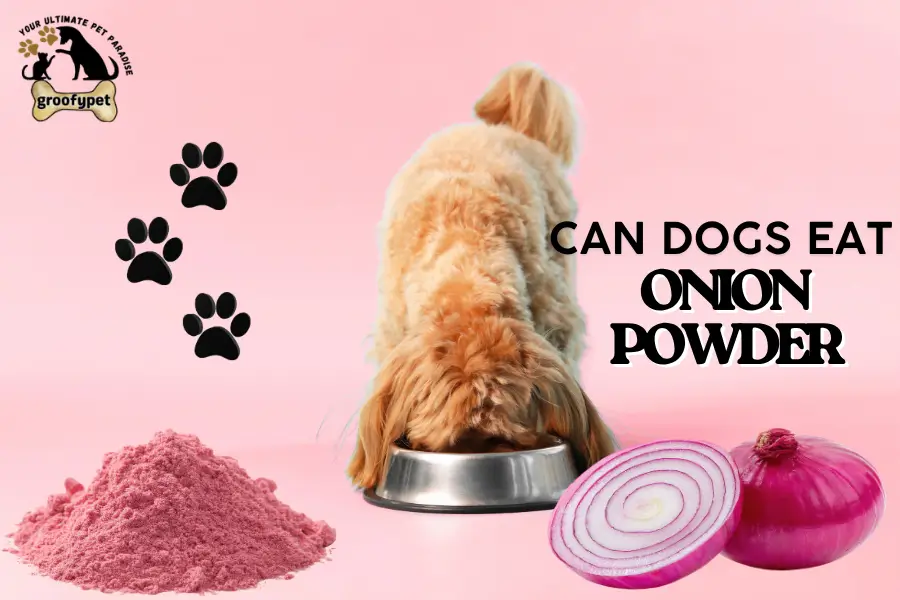
So you are cooking dinner and your dog is sitting right next to you, looking at every move you make. You drop a little food on the floor and start to wonder, is this safe for my dog? If that food has onion powder in it, the answer is no. Can dogs eat onion powder? Absolutely not, and this is not a small concern. Onion powder is one of the most dangerous ingredients you can give to a dog.
It does not matter how little your dog eats. Even a tiny amount can start causing damage inside your dog’s body. Many dog owners do not even know that onion powder is hiding in foods they cook every day. Soups, gravies, baby food, seasoning mixes, and even some sauces have onion powder in them. This article will tell you everything you need to know about onion powder and your dog’s health, so keep reading.
Onion powder is made from dried onions that are ground down into a very fine powder. It is used in cooking because it gives a strong onion flavor without the texture of a real onion. You will find it in almost every kitchen. People add it to soups, stews, rice dishes, meat rubs, and sauces every single day. It is also added to many packaged and processed foods because it makes food taste better.
Can dogs eat onion powder?The problem is that this small powder is far more dangerous for dogs than a real raw onion. When an onion is dried and turned into powder, the toxic compounds become much more concentrated. So if a raw onion is dangerous, onion powder is even more so.
A small sprinkle of onion powder has the same harmful effect as eating a much larger piece of raw onion. This is why dog owners need to be extra careful, because the danger is often invisible and easy to miss in everyday cooking.
Can dogs eat onion powder?Why is onion powder toxic to dogs?
Can dogs eat onion powder?The reason onion powder is toxic to dogs comes down to one specific compound called N-propyl disulfide. This is a natural substance found in all onions and onion products. It is totally harmless for humans, but it causes serious damage inside a dog’s body. When a dog eats onion powder, this compound enters the bloodstream and starts attacking the red blood cells.
It causes oxidative damage to the red blood cell membranes, which makes those cells weak and fragile. The dog’s own immune system then sees these damaged cells as foreign invaders. The body starts destroying its own red blood cells in a process called hemolysis.
This leads to a dangerous medical condition known as hemolytic anemia. The dog’s body simply cannot make new red blood cells fast enough to replace the ones being destroyed. This is why onion powder is so dangerous and why even small amounts should never be given to dogs.
What is hemolytic anemia in dogs?
Hemolytic anemia is a condition where red blood cells break down faster than the body can replace them. Red blood cells carry oxygen to every part of the body, including the heart, lungs, and brain. When those cells are destroyed, the dog’s organs stop getting enough oxygen. This is when things get very serious very fast.
The dog becomes weak, tired, and pale. You might notice pale gums, which is one of the clearest signs of anemia. A vet who examines the blood will often find something called Heinz bodies on a blood smear. These are small clumps that form on red blood cells because of oxidative damage caused by the onion compounds.
Heinz body anemia in dogs is a clear sign of onion or garlic poisoning. If a dog is left untreated, the anemia can get worse over time and can even become life-threatening. Getting to a vet quickly is the only way to stop this from getting worse.
How much onion powder is dangerous for dogs?
Many dog owners want to know exactly how much onion powder will hurt their dog. Can dogs eat onion powder?The answer is that there is no completely safe amount. But to give you a general idea, onion toxicity in dogs usually happens when they eat around 0.5% of their body weight in onion. For a dog that weighs around 44 pounds, that is roughly one medium-sized onion.
Now here is the scary part. One medium onion equals just one tablespoon of onion powder. So a 44-pound dog could be seriously harmed by just one tablespoon of onion powder. Smaller dogs are at even greater risk because their bodies are much smaller and the same amount of powder hits them much harder.
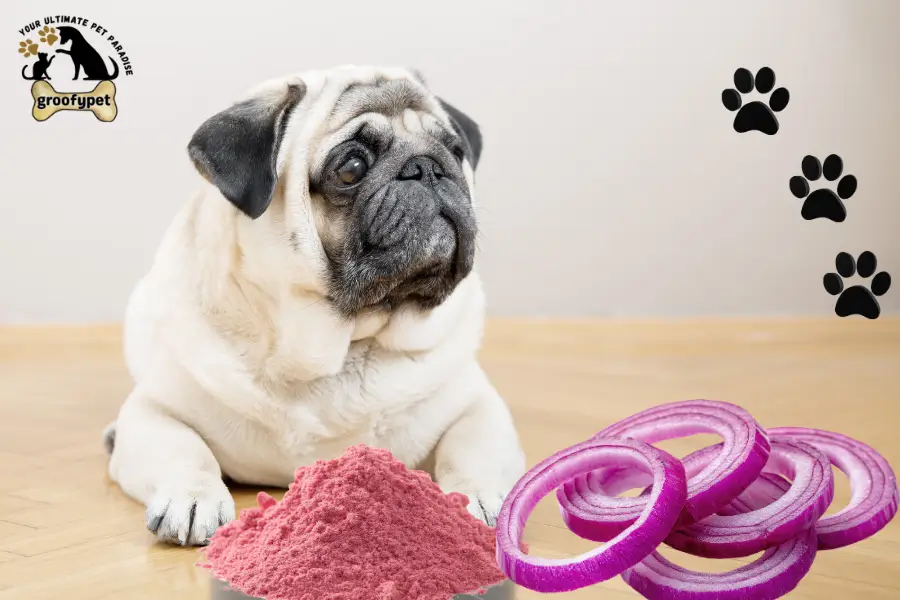
Even a quarter teaspoon of onion powder could be a serious concern for a small dog. This shows you how concentrated and how powerful onion powder really is compared to a fresh onion.
Are some dogs more at risk than others?
Yes, some dogs are more sensitive to onion toxicity than others. Small dogs are at greater risk simply because they weigh less and it takes a smaller amount of onion powder to reach the dangerous level. Certain dog breeds also have a naturally higher risk.
Japanese dog breeds like the Akita and the Shiba Inu are known to be more sensitive to onion poisoning than other breeds. Dogs that already have health problems, especially those with existing anemia or blood disorders, are also more vulnerable. Older dogs and puppies may also have a harder time recovering from the effects.
Risks of onion powder for dogs
If your dog is large and healthy, repeated small exposures to onion powder can build up over time and still cause damage. This means feeding your dog food that regularly contains onion powder is still dangerous, even if no single meal reaches the toxic dose. The safest rule is to never give your dog any amount of onion powder at all.
It destroys red blood cells
Onion powder contains a toxic compound called N-propyl disulfide that directly attacks your dog’s red blood cells.Can dogs eat onion powder? When a dog eats onion powder, this compound sticks to the oxygen molecules inside the red blood cells. This makes those cells very weak and fragile.
The dog’s own immune system then treats these damaged cells as foreign invaders and starts destroying them. This process is called hemolysis and it reduces the number of healthy red blood cells in your dog’s body very quickly. Without enough healthy red blood cells, the body cannot carry oxygen to the heart, brain, and other organs properly.
This is one of the most serious risks because it happens silently inside the body before any visible symptoms even appear. By the time you notice something is wrong, the damage may already be quite serious.
It causes hemolytic anemia
One of the biggest and most dangerous risks of onion powder for dogs is a medical condition called hemolytic anemia. This happens when red blood cells are destroyed faster than the body can produce new ones.
A dog suffering from hemolytic anemia will feel extremely weak and tired because the organs are not getting enough oxygen. The gums may turn pale or even white, which is a very clear warning sign. The dog may breathe faster than normal and have a much higher heart rate as the body tries to compensate for the lack of oxygen.
If the anemia becomes severe and goes untreated, it can lead to organ failure. Small dogs and puppies are at even higher risk because their blood volume is smaller and the impact of losing red blood cells hits them much harder and much faster than it would a larger dog.
3. Even small amounts are dangerous
Many dog owners assume that a little bit of onion powder cannot really hurt their dog. This is one of the most dangerous misunderstandings about onion powder toxicity. The reality is that onion powder is far more concentrated than a fresh raw onion. Just one tablespoon of onion powder is equal to one full medium-sized onion in terms of toxic strength.
For a small dog weighing around 10 to 15 pounds, even a quarter teaspoon of onion powder can be enough to cause a toxic reaction. There is no truly safe amount of onion powder for dogs. Even trace amounts found in soups, gravies, and seasoning mixes can add up over time and cause cumulative damage to the red blood cells.
This risk is especially serious for dogs that are regularly fed table scraps or homemade food that uses onion powder as a seasoning ingredient.
4. Symptoms are delayed and easy to miss
One of the sneakiest risks of onion powder poisoning in dogs is that the symptoms do not always show up right away. A dog can eat onion powder today and seem perfectly fine for the next one to seven days. This delay makes it very easy for dog owners to miss the connection between what their dog ate and the health problems that develop later.
By the time the dog shows visible signs like pale gums, reddish urine, weakness, or rapid breathing, the damage to the red blood cells is already well underway. Many dog owners think their dog just has an upset stomach or a minor illness.
They wait and watch instead of calling the vet immediately. This delay in getting treatment makes the recovery much harder and increases the risk of serious complications. Any time your dog eats food containing onion powder, call your vet right away without waiting for symptoms.
5. It hides in everyday human foods
A very real and practical risk of onion powder for dogs is that it is hidden in so many common foods that people eat every day. Baby food, canned soups, gravies, sauces, instant noodles, seasoning packets, flavored chips, frozen meals, and fast food all commonly contain onion powder as an ingredient.
Many dog owners share these foods with their dogs without checking the label first. A dog that gets a few spoonfuls of soup or a bite of a flavored rice dish may be getting a harmful dose of onion powder without anyone in the household even realizing it.
This hidden risk is especially dangerous during family meals, barbecues, and holiday gatherings when a lot of seasoned food is being prepared and shared. The simple habit of always reading ingredient labels before giving any human food to your dog can prevent this risk entirely.
6. Cooking does not remove the danger
Many people believe that if food is cooked at high heat, the toxic compounds in onion powder are destroyed. This is completely false and it is a risk that puts many dogs in danger every year. The toxic compound N-propyl disulfide is heat-stable, which means it does not break down when food is cooked, boiled, roasted, or simmered.
A soup that has been cooked for hours with onion powder is still just as toxic to your dog as raw onion powder would be. A roasted chicken that was seasoned with an onion powder rub is still dangerous. Even fried foods that contain onion powder remain harmful after cooking.
This misconception leads many dog owners to feel safe sharing cooked food with their dogs when that food actually contains toxic levels of onion powder. Never assume that cooking makes onion powder safe for your dog to eat.
7.It can be fatal without treatment
In serious cases, onion powder poisoning can be fatal for dogs. When a large amount of onion powder is consumed, or when smaller amounts are eaten repeatedly over time, the hemolytic anemia can become so severe that the dog’s organs begin to shut down due to lack of oxygen. Without emergency veterinary treatment, a dog in this condition will not recover on its own.
Small dogs, puppies, elderly dogs, and dogs with existing health conditions are at the highest risk of dying from onion powder toxicity. Even larger and healthier dogs are not immune if the amount eaten is significant enough.
The risk of death is a real and serious concern that every dog owner must understand. This is not a mild food sensitivity or a minor digestive issue. Onion powder is a genuine poison for dogs and must be treated as a life-threatening emergency every single time.
8. Japanese dog breeds face higher risk
Not all dogs face the same level of risk from onion powder. Certain breeds are naturally more sensitive to the toxic effects of allium compounds than others. Japanese dog breeds like the Akita and the Shiba Inu are known to have a significantly higher sensitivity to onion toxicity.
These breeds have red blood cells that are more susceptible to oxidative damage from N-propyl disulfide.This means that even a smaller amount of onion powder can cause serious harm to these specific breeds compared to other dogs of the same size.
If you own an Akita, Shiba Inu, or any other Japanese breed, you need to be especially careful about keeping all onion and garlic products completely away from your dog at all times. Regular vet checkups are also a good idea for these breeds to monitor their red blood cell health.
9. It affects the whole allium family
The risk of onion powder does not stop with onions alone. Onion powder belongs to the allium genus of plants and every single member of this family carries the same toxic compounds. This means that garlic powder, leeks, chives, shallots, and scallions are all equally dangerous for dogs.
Dog owners who carefully avoid onion powder may still accidentally expose their dog to the same type of toxicity through garlic powder in a seasoning blend or chives sprinkled on top of a dish. The risk is multiplied when a dog eats food that contains multiple allium ingredients at the same time.
For example, a dish seasoned with both onion powder and garlic powder delivers a double dose of the toxic compound to the dog’s system. Knowing that the entire allium family is off-limits is a key part of keeping your dog truly safe.
10.It can cause long-term kidney damage
Beyond the immediate damage to red blood cells, severe cases of onion powder toxicity can also lead to kidney damage in dogs. When large numbers of red blood cells are destroyed at once, the broken-down cell material puts a heavy burden on the kidneys as they try to filter it out of the bloodstream.
This can cause significant stress on the kidneys and in serious cases can lead to kidney injury or even kidney failure. Dogs that survive a serious episode of onion poisoning may experience long-term effects on their kidney function.
This is another reason why onion powder poisoning should always be treated as a medical emergency. The kidneys play a vital role in keeping the whole body healthy and any damage to them can have lasting effects on your dog’s quality of life for years to come.
Benefits of keeping dogs away from onion powder
Can dogs eat onion powder?Keeping dogs away from onion powder helps protect them from onion toxicity, which can damage their red blood cells and lead to serious health problems.It also supports better overall health by preventing stomach upset, weakness, and long-term complications.
1. Protects healthy red blood cells
When you keep your dog completely away from onion powder, you are protecting the health of their red blood cells. Red blood cells are responsible for carrying oxygen to every part of the body, including the brain, heart, muscles, and organs.
Healthy red blood cells mean your dog has good energy levels, a strong immune system, and a well-functioning body overall. By removing the risk of N-propyl disulfide exposure, you are making sure that your dog’s blood stays healthy and that their body can do its job properly every single day.
A dog with healthy red blood cells will be more active, more alert, and will recover faster from illness or injury. This one simple step of keeping onion powder away from your dog supports their overall health in a very direct and measurable way.
2. Prevents hemolytic anemia
By keeping your dog away from onion powder, you are directly preventing the risk of hemolytic anemia. This serious blood condition causes extreme weakness, pale gums, rapid breathing, and can be life-threatening.
Can dogs eat onion powder?A dog that never develops hemolytic anemia from onion exposure will live a healthier and more comfortable life. They will not have to go through the pain and discomfort of oxygen deprivation in the body. They will not need emergency vet treatment or blood transfusions.
Prevention is always better than treatment and in the case of onion powder, prevention is as simple as never allowing your dog to eat it. Keeping your dog free from hemolytic anemia also means fewer vet bills, less stress for your dog, and peace of mind for you as a dog owner who is doing everything right.
3. Saves money on emergency vet bills
Treating onion powder poisoning in dogs is not cheap. Emergency vet visits, blood tests, IV fluids, activated charcoal treatment, and possible blood transfusions can add up to a very large bill very quickly. By simply keeping onion powder away from your dog, you are also protecting your wallet. Prevention costs nothing.
Reading a label before sharing food with your dog takes only a few seconds. Storing spices in high cabinets takes minimal effort. But the alternative, an emergency vet visit for onion toxicity, can cost hundreds or even thousands of dollars depending on how serious the case is.
Beyond the financial cost, there is also the emotional cost of watching your dog suffer and not knowing if they will be okay. Preventing onion powder exposure protects both your dog’s health and your peace of mind.
4. Builds a safer feeding routine
When dog owners learn about the dangers of onion powder for dogs, they naturally become more careful about what they feed their pets. This awareness leads to better feeding habits overall. You start reading labels more carefully. You stop giving your dog random table scraps.
You become more intentional about what goes into your dog’s food bowl. This safer feeding routine does not just protect your dog from onion powder. It also protects them from other hidden dangers in human food like garlic powder, xylitol, grapes, raisins, and chocolate.
A dog owner who is educated about food safety is a dog owner whose pet is much less likely to be accidentally poisoned by any harmful ingredient. Good feeding habits built around awareness and care are one of the greatest gifts you can give to your dog.
5. Supports longer and healthier life
Dogs that are protected from toxic foods like onion powder tend to live healthier and longer lives. Repeated exposure to even small amounts of toxic substances takes a toll on the body over time. Protecting your dog from allium toxicity means their organs, especially the kidneys and heart, are not being stressed by toxic compounds on a regular basis.
A dog whose red blood cells are consistently healthy will have more energy, better organ function, and a stronger body overall. Long-term health is built on daily habits and one of the most important habits is keeping dangerous foods completely away from your dog.
Every meal you give your dog that is free from harmful ingredients is a small investment in their long-term health and happiness.
6. Reduces stress and anxiety for dog owners
Knowing that your dog is safe from harmful foods like onion powder gives you genuine peace of mind as a dog owner. There is nothing more stressful than watching your dog get sick and not knowing what caused it.
When you know exactly what your dog can and cannot eat, you feel more confident and in control. You do not have to panic every time your dog sneaks a bite of something from the floor. You do not have to rush to the vet in the middle of the night wondering if your dog will be okay.
Being informed and proactive about onion powder toxicity means you can enjoy mealtimes and family gatherings without constantly worrying about your dog getting into something dangerous. A relaxed and informed dog owner is also a better dog owner overall.
7. Protects other pets in the home too
When you make it a rule to keep onion powder and other allium products away from your dog, you are also protecting any other pets in your home at the same time. Cats are actually even more sensitive to allium toxicity than dogs are.
Their red blood cells are more fragile and a smaller amount of onion powder can cause serious harm. If you have both dogs and cats, or any other small pets, creating a household rule about toxic foods protects everyone equally.
Teaching children and other family members not to share seasoned human food with pets creates a safe environment for all the animals in your home. One simple food safety rule can protect multiple pets at the same time and save multiple lives.
8. Encourages better homemade dog food choices
Many dog owners love making homemade food for their dogs. Learning about the dangers of onion powder encourages these owners to research safer and healthier ingredients for their dog’s meals. Instead of using onion powder for flavor, they discover dog-safe herbs like fresh parsley, small amounts of turmeric, or plain ginger.
Instead of seasoned meats, they prepare plain boiled chicken, steamed vegetables, and simple grains. This shift toward cleaner and safer ingredients makes homemade dog food genuinely healthy rather than accidentally harmful.
A dog that eats well-prepared homemade food made with safe ingredients benefits from better nutrition, better digestion, and overall improved health. The awareness of onion powder toxicity becomes the starting point for a much healthier approach to feeding your dog at home.
9. Helps you become a more informed pet owner
Understanding the risks of onion powder for dogs is part of a bigger picture of responsible pet ownership. When you take the time to learn about what is safe and what is dangerous for your dog, you become a much more informed and capable pet owner.
You learn which foods are toxic, which symptoms to watch for, which vet helplines to call in an emergency, and how to read ingredient labels properly. This knowledge makes you better prepared for all kinds of situations involving your dog’s health and safety.
Informed dog owners are quicker to act in emergencies, better at preventing health problems before they happen, and more confident in managing their dog’s diet and lifestyle. Your dog cannot speak for themselves and it is your knowledge that keeps them safe.
When you keep onion powder and other toxic foods away from your dog and share that knowledge with others, you are doing something genuinely valuable for the wider dog-owning community. Many people simply do not know that onion powder is dangerous for dogs. When you mention it to a friend at a barbecue or tell a family member not to feed the dog from their
10. Sets a great example for others
plate, you could be preventing a serious accident. Sharing knowledge about onion toxicity, allium family dangers, hemolytic anemia, and hidden ingredients in human food helps other dog owners protect their pets too.
Every dog owner who learns this information and acts on it is potentially saving a dog’s life. Being proactive about your dog’s safety and sharing that awareness with others is one of the most caring and responsible things a dog owner can do.
Symptoms of onion powder poisoning in dogs
- When a dog eats onion powder, the symptoms do not always show up right away.
- This is one reason why onion poisoning can be so tricky. S
- igns may appear anywhere from one day to even seven days after your dog ate the onion powder.
- In the early stages, you might notice that your dog seems less interested in food.
- They may seem a little quieter than usual or not as playful as normal.
- Some dogs will start vomiting or have loose stools.
- These early signs can look like a normal upset stomach, which is why many dog owners do not take them seriously at first.
- But if your dog ate anything with onion powder recently, you should not wait and see. Call your vet right away and explain what happened.
- Early action can make a huge difference in how well your dog recovers from onion toxicity.
Serious symptoms that need emergency care
- As the hemolytic anemia gets worse, the symptoms become much more serious.
- Your dog may develop pale or white gums, which means the blood is not carrying enough oxygen around the body.
- You might see reddish or brown-colored urine, which is a sign that red blood cells are being destroyed.
- Your dog may breathe faster than normal, have an elevated heart rate, or start panting even without any exercise.
- Weakness and extreme tiredness are also very common at this stage.
- Some dogs may faint or even collapse. If you see any of these serious signs, this is a medical emergency.
- Do not wait to call your vet.
- Do not try to treat your dog at home by yourself.
- Get your dog to a veterinary hospital as fast as possible.
- The faster you act, the better the chances that your dog will make a full recovery from onion powder poisoning.
What to do if your dog eats onion powder?
If you think your dog just ate something with onion powder in it, the very first thing to do is stay calm. Panicking will not help your dog and it will stop you from thinking clearly. Try to figure out how much onion powder your dog may have eaten and when it happened. Check the food or recipe to see how much onion powder was used. Write down your dog’s weight and any symptoms you have already noticed.
Is cooked onion powder still dangerous?
Many dog owners believe that cooking destroys the toxic compounds in onion powder. This is a very common misunderstanding that can put dogs in danger. The truth is that heat does not break down N-propyl disulfide. Even after onion powder has been cooked in a dish, it is still just as toxic to dogs as it was before.
A soup that was simmered for hours with onion powder is still dangerous. A meat dish that was roasted with an onion-powder rub is still harmful. Cooked onions and cooked onion powder are not safer than raw versions when it comes to your dog’s health.
So never assume that because you cooked the food, the onion powder in it is now safe for your dog to eat. This is one of the most important things every dog owner should know about onion powder toxicity.
Onion powder vs garlic powder: which is worse for dogs?
Can dogs eat onion powder?Both onion powder and garlic powder are toxic to dogs, and both belong to the same allium family of plants. However, garlic is considered more toxic than onion when you compare them by weight. Garlic contains a higher concentration of the oxidant compounds that damage red blood cells. But onion powder is still extremely dangerous because it is so concentrated.
Both powders are far more potent than their fresh versions. A small amount of either powder can cause serious harm to a dog. The truth is that neither one is safe in any amount. Many dog owners think garlic is fine because they have read that it has health benefits for humans.
But in dogs, garlic causes the exact same type of hemolytic anemia as onions do. If you are cooking for your dog at home, avoid both onion powder and garlic powder completely. Always stick to dog-safe seasonings and ingredients when preparing your dog’s food.
Safe food alternatives for dogs
- Just because onion powder is toxic to dogs does not mean your dog cannot enjoy tasty food.
- There are many safe and healthy vegetables that dogs can eat without any risk at all.
- Carrots are one of the best options. They are crunchy, low in calories, and dogs absolutely love them.
- Cucumbers are another great choice, especially in warm weather. Green beans are also completely safe and very nutritious.
- Plain cooked sweet potato is a wonderful treat that many dogs enjoy.
- Blueberries, watermelon without seeds, and plain pumpkin are also safe and healthy options.
- The key is to always serve these foods plain, without any seasoning, sauces, or added ingredients.
If you want to add flavor to your dog’s homemade food, always check with your vet first before adding anything new. Keeping your dog’s diet simple and clean is always the best approach.
Dog safe seasonings and herbs
If you like to cook homemade food for your dog, you might want to add a little flavor. There are a few herbs that are generally considered safe for dogs in very small amounts.
- Fresh plain parsley is one option that many vets consider safe.
- Turmeric in tiny amounts is also used sometimes as an anti-inflammatory addition to dog food.
- Fresh ginger in very small doses may also be okay for some dogs.
- Basil is another herb that is generally harmless for dogs.
However, before you add any seasoning or herb to your dog’s food, always speak with your vet first. Every dog is different and some dogs may have sensitivities or health conditions that make even safe herbs a bad idea. The goal is to keep your dog healthy and happy, and that always starts with asking your vet before making any changes to their diet.
How to keep your dog safe from onion powder every day?
Keeping your dog safe from onion powder does not have to be complicated. It mostly comes down to building a few simple habits in your daily routine. First, always read ingredient labels before giving any packaged food to your dog. This one habit alone can prevent most accidental poisonings.
Keep all spices, seasoning mixes, and powders stored in high cabinets or locked drawers where your dog cannot reach them. Never feed your dog table scraps without first checking every ingredient in the dish. Educate everyone in your home, including children and guests, about the dangers of giving dogs human food.
Be especially careful during family gatherings and holidays when a lot of seasoned food is being prepared and shared. If you grow onions, garlic, chives, or leeks in your garden, make sure your dog cannot access that area. These simple steps will go a long way in protecting your dog from accidental onion toxicity.
Can cats eat onion powder?
While this article is mainly about dogs, it is worth mentioning cats too since many households have both pets. Onion powder is also toxic to cats, and in fact cats may be even more sensitive to allium toxicity than dogs are. Cats have more fragile red blood cells, which means even a smaller amount of onion powder can cause serious harm.
If your cat eats food with onion powder in it, the same risks apply, including hemolytic anemia and damage to red blood cells. Many cat owners do not realize that baby food flavored with onion powder is dangerous for cats too. Some people give meat-flavored baby food to sick cats to encourage them to eat, not knowing that many baby foods contain onion powder.
Always check labels for both your dogs and your cats. If your cat shows signs of weakness, pale gums, or has discolored urine, take them to the vet right away just like you would for a dog.
Frequently Asked questions
Can dogs eat food cooked with onion powder?
No, dogs cannot eat food cooked with onion powder. Many people think that cooking removes the danger, but that is not true. The toxic compound N-propyl disulfide does not break down when heated. A soup, stew, or meat dish that was cooked with onion powder is still harmful to your dog.
My dog ate a tiny bit of onion powder, should I worry?
Yes, you should take it seriously even if the amount seems very small. Onion powder is extremely concentrated, and even a small amount can be harmful especially for small dogs. The effects may not show up immediately, which makes it easy to assume everything is fine.
How long does it take for onion poisoning symptoms to appear?
Symptoms of onion powder poisoning can appear anywhere from one day to seven days after your dog eats the onion powder. This delay makes it easy to miss the connection between what your dog ate and how they are feeling later. Early signs include vomiting, low energy, and loss of appetite. More serious signs like pale gums, reddish urine, rapid breathing, and weakness show up as the hemolytic anemia gets worse.
Can onion powder kill a dog?
Yes, in large amounts and without proper treatment, onion powder can be fatal to dogs. The destruction of red blood cells can become so severe that the dog’s organs stop getting enough oxygen. This can lead to organ failure and death. Small dogs and dogs that eat large amounts are at the highest risk.
Is onion powder in commercial dog treats safe?
No, onion powder should never appear in commercial dog treats or dog food. Responsible pet food manufacturers do not use onion powder as an ingredient. However, it is still a good habit to check the labels of any new treats or food you buy for your dog.
What is the difference between onion powder and onion salt?
Onion salt is a mixture of onion powder and table salt. Both are equally dangerous for dogs. Onion salt carries the same N-propyl disulfide toxicity as plain onion powder, plus it also contains high levels of sodium which is harmful to dogs in its own way. So if your dog eats food with onion salt in it, you are dealing with two separate dangers at the same time.
Final Thoughts
So to answer the main question one more time, can dogs eat onion powder? The answer is a clear and firm no. Onion powder is one of the most harmful ingredients a dog can eat. It contains a toxic compound that destroys red blood cells and leads to hemolytic anemia. The danger is made worse by the fact that onion powder is concentrated, meaning it takes a very small amount to cause real harm.
It also hides in many everyday foods like soups, gravies, baby food, and seasoning mixes, making it easy to accidentally feed it to your dog without realizing it. Cooking does not remove the danger. All forms of the allium family, including garlic, leeks, chives, and shallots, are equally off-limits for dogs.
The best thing you can do as a dog owner is read every label, avoid sharing human food with your dog unless you are sure it is safe, and call your vet immediately if your dog ever eats anything with onion powder in it. Your dog trusts you to keep them safe, and knowing the facts about onion powder toxicity is one of the most important steps you can take to protect their health every single day.
Can Dogs Eat Coconut Rice? A Safety Guide for Smart Pet Parents!