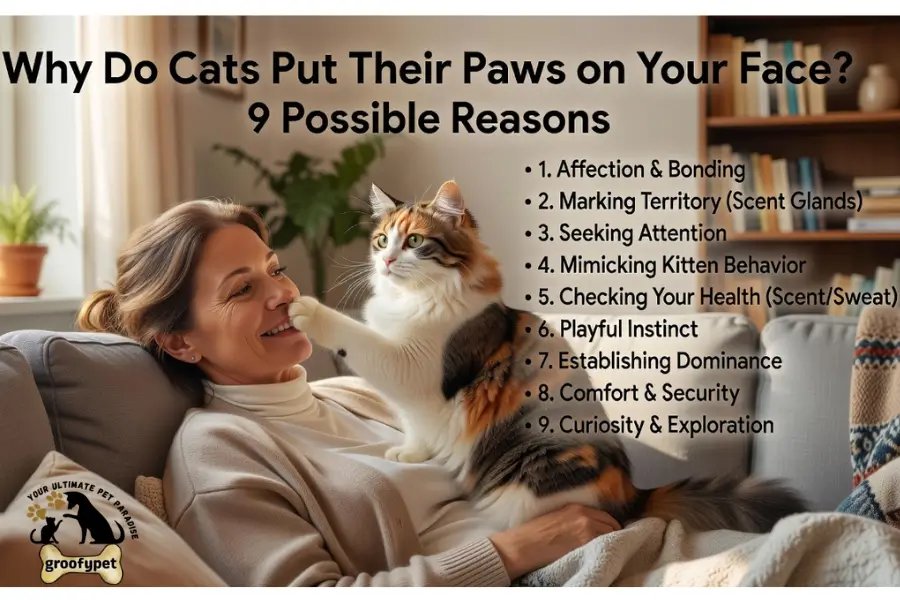
Have you ever been relaxing in bed when your cat gently places a paw on your cheek, nose, or forehead? It might look like a sweet little gesture, but there could be several reasons behind this behavior.
Cats put their paws on your face for different reasons, including showing affection, seeking attention, feeling comfortable, playing, or communicating their boundaries. Sometimes, your cat simply wants to interact with you or get you out of bed.
Understanding your cat’s body language can help you figure out what this adorable habit means. The timing, paw movement, and your cat’s overall behavior can reveal important clues.
Let’s explore nine possible reasons your cat puts its paws on your face and what you should do about it.
Why Do Cats Put Their Paws on Your Face?
Cats put their paws on their owners’ faces to communicate, seek attention, show social closeness, or encourage interaction. Some cats do it while their owners sleep, while others gently touch their cheeks during cuddle time. The meaning depends on the situation, your cat’s personality, and its body language.
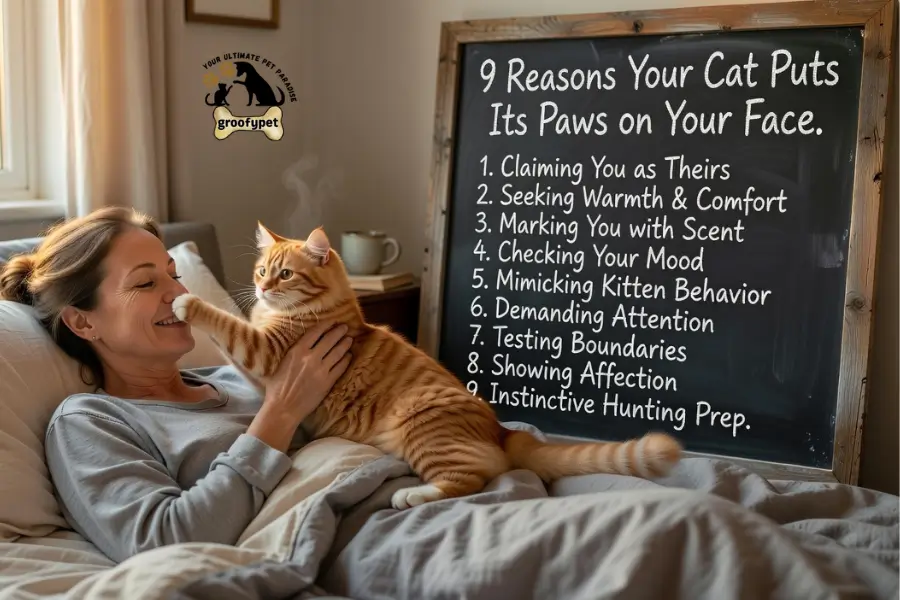
9 Reasons Your Cat Puts Its Paws on Your Face
1. Your Cat Is Showing Affection
One possible reason your cat puts its paw on your face is that it feels comfortable around you. Cats do not always express affection through cuddling or licking. Some prefer gentle physical contact, such as resting a paw against your cheek or touching your forehead.
This behavior may happen when your cat is sitting beside you, relaxing on your chest, or enjoying a quiet moment together. Your cat may also purr, close its eyes, or slowly blink while touching your face. These additional signs can suggest that it feels relaxed and comfortable.
What you should do: If your cat seems relaxed, gently pet its head or cheeks if it enjoys being touched. Let your cat decide how much contact it wants.
2. Your Cat Wants Your Attention
Cats quickly learn which behaviors make their owners respond. If your cat touches your face and you immediately wake up, talk, or start petting it, your cat may repeat that action. For example, imagine working on your laptop while your cat sits nearby. It might first stare at you, then place one paw on your cheek when you ignore it.
Your cat may be asking for something simple, such as:
- A little attention or affection.
- Playtime with its favorite toy.
- Food or fresh water.
- An invitation to sit beside you.
- Some interaction after spending time alone.
Cats can develop different ways of getting attention, and gentle pawing may become one of their favorite habits.
What you should do: Check whether your cat needs something. Give it attention when appropriate, but avoid rewarding repeated scratching or disruptive behavior.
3. Your Cat Is Leaving Its Scent on You
Cats use scent to understand their surroundings and communicate with other animals. They have specialized scent glands in different areas of their bodies, including their faces and paws. These glands release chemical signals that help cats communicate through scent.
Your cat may use its paws to make physical contact with your face because you are a familiar and important part of its environment. This behavior is related to feline scent communication. However, a paw touching your face does not automatically mean your cat is deliberately marking you.
Cats also rub their cheeks and foreheads against familiar people to spread their scent and reinforce social familiarity.
What you should do: There is generally no need to discourage gentle paw contact if both you and your cat are comfortable.
4. Your Cat Feels Safe Around You
Cats are naturally careful about their surroundings. They usually prefer familiar places where they can relax without feeling threatened. If your cat comfortably rests beside your head and places a paw on your face, it may be showing that it feels secure around you.
You might notice other relaxed behaviors, such as
- Sleeping close to your body.
- Purring softly.
- Keeping its ears in a natural position.
- Closing its eyes while resting.
- Relaxing its body instead of staying tense.
Your cat may also choose your pillow because it smells familiar and provides a comfortable sleeping spot. Remember that every cat expresses trust differently. Some enjoy physical contact, while others prefer simply staying nearby.
What you should do: Maintain a peaceful environment and allow your cat to approach you naturally. Avoid forcing cuddles when it wants to rest.
5. Your Cat Wants You to Wake Up
Does your cat place its paw on your face early in the morning? It might be trying to wake you up! Cats often develop routines around feeding, playing, and interacting with their owners. If you regularly serve breakfast at a particular time, your cat may begin expecting it.
When you remain asleep, your cat might try different methods to get your attention. It may walk across your pillow, meow beside your head, or gently tap your cheek. Some cats even place their paws on their owners’ noses or mouths until they receive a response. This behavior can become stronger when touching your face has successfully woken you up before.
What you should do: Keep feeding times consistent. If your cat regularly wakes you for breakfast, an automatic feeder may help reduce early-morning interruptions.
6. Your Cat Is Asking for Personal Space
Not every paw touching your face is an affectionate gesture. Sometimes, cats use their paws to create distance when they feel uncomfortable or want to stop physical contact. For example, you might be cuddling your cat when it gently places one paw against your cheek and pushes your face away.
It could be communicating that it needs a little room. Watch for additional signs that your cat wants space:
- Ears turning sideways or flattening backward.
- Tail moving sharply from side to side.
- Body becoming stiff.
- Pupils becoming noticeably enlarged.
- Hissing, growling, or attempting to move away.
These signs can indicate discomfort, fear, or overstimulation.
What you should do: Stop petting your cat and give it some space. Never force physical contact when your cat is showing signs of discomfort.
7. Your Cat Finds Your Face Warm and Comfortable
Your face and head can be attractive resting spots for a cat because they provide warmth and familiar smells. Cats often choose sleeping places based on comfort, temperature, and security. Your pillow may also carry your familiar scent, making it an appealing place to rest.
Some cats stretch out beside their owners and place one paw against their cheeks while sleeping. Others prefer resting near their heads because they enjoy staying close without lying directly on their bodies. This behavior may simply be part of your cat’s preferred sleeping routine.
What you should do: If you enjoy having your cat nearby, provide a comfortable blanket or sleeping spot beside your pillow. This gives your cat another cozy place to rest.
8. Your Cat Is Trying to Play With You
Cats use their paws to explore objects, interact with people, and play. A gentle paw tap on your face may be an invitation to interact, especially when your cat is energetic and alert. You may notice your cat repeatedly touching your cheek, moving its paws, or watching your reaction.
Some cats also combine paw tapping with playful movements, such as rolling onto their backs or reaching toward your hands. Young cats and kittens may show this behavior more frequently because they are still developing their play and social interaction habits. However, playfulness can sometimes become too rough if your cat uses its claws.
What you should do: Redirect playful pawing toward an appropriate toy. Wand toys and soft toys can help your cat enjoy playtime without scratching your face.
9. Your Cat Is Following a Familiar Routine
Cats are creatures of habit. They often repeat behaviors that make them feel comfortable or produce predictable results. If your cat regularly sleeps beside your head and touches your face before settling down, this may have become part of its bedtime routine.
For example, your cat might jump onto your bed, walk around your pillow, place one paw on your cheek, and then curl up beside you. It may repeat the same sequence every night because it feels familiar. Your response can also influence this habit. If you usually smile, pet your cat, or talk to it after the paw touch, the behavior may become part of your shared routine.
What you should do: Decide whether the habit is comfortable for you. If you enjoy it, allow gentle contact. If not, calmly redirect your cat to its own sleeping area.
Why Does My Cat Put Its Paw on My Face While I Sleep?
Cats sometimes touch their owners’ faces while they are sleeping because they want attention, feel comfortable nearby, or have developed a familiar nighttime routine. Your cat may notice that you are lying still and use its paw to make contact. It might also be trying to wake you up because it expects food or playtime.
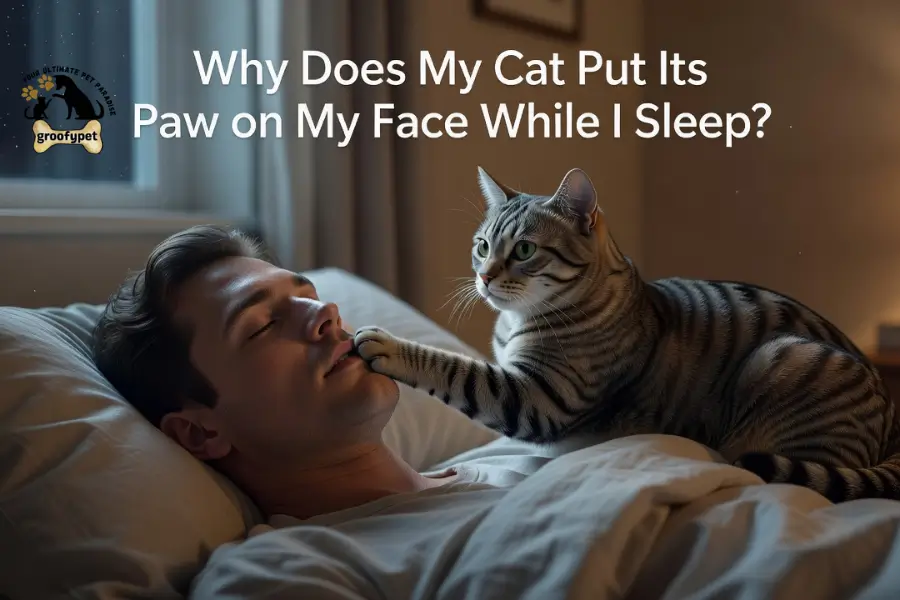
Here are some common situations:
- Before breakfast: Your cat may touch your face because it expects its morning meal.
- During the night: It may want attention, company, or a comfortable sleeping position.
- When settling down: It may rest one paw against your cheek while getting comfortable.
- When you move: Your cat may touch your face again after you change sleeping positions.
If your cat seems relaxed and does not use its claws, this behavior is usually harmless. However, you can gently move its paw away if it interrupts your sleep.
Why Does My Cat Put Its Paw on My Nose or Mouth?
Cats sometimes place their paws directly on their owners’ noses or mouths because they want attention or are exploring their surroundings. Your breathing, facial movements, and familiar scent may also attract your cat’s curiosity.
There are several possible explanations:
- Getting your attention: Your cat may have learned that touching your nose makes you react.
- Waking you up: It might be asking you to get out of bed.
- Seeking closeness: Your cat may enjoy sleeping near your face.
- Exploring: It may be investigating your movements and facial reactions.
Although this behavior can look adorable, discourage your cat from covering your nose or mouth while you sleep. Gently redirect its paw toward your hand or a nearby blanket.
Why Does My Cat Gently Touch My Face Without Using Its Claws?
A cat that gently places its paw on your face without extending its claws may be comfortable with physical contact.Some cats use soft paw touches to initiate interaction or remain close to their favorite people.You might notice this behavior when your cat is purring, resting beside you, or enjoying a quiet moment.
However, gentle paw placement does not always mean affection. Your cat may also be asking you to stop touching it or move away.Look at its ears, tail, posture, and facial expressions to understand the situation.
How to Tell Whether Your Cat’s Paw Touch Is Affection or a Warning
Understanding feline body language can help you recognize the difference between friendly contact and a request for space.
Here is a simple comparison:
| Cat’s Behavior | Possible Meaning |
|---|---|
| Gently resting a paw on your cheek | Comfort or social contact |
| Purring while touching your face | Relaxation or social interaction |
| Repeatedly tapping your cheek | Seeking attention |
| Touching your face before breakfast | Asking for food or attention |
| Slowly pushing your face away | Requesting personal space |
| Flattening ears and pushing repeatedly | Discomfort or irritation |
| Extending claws during contact | Play, overstimulation, or defensive behavior |
These behaviors are not fixed rules. A cat’s overall body language and the situation provide better clues than paw placement alone.
Also Read : How to Stop Aggression in Cats: Causes, Warning Signs, and What to Do
Should You Let Your Cat Put Its Paws on Your Face?
You can allow gentle paw contact if your cat is healthy, relaxed, and not scratching your skin.However, there are a few things worth considering.
- Hygiene: Cats use their paws to walk around the house and explore different surfaces. Wash your face if your cat’s dirty paws touch your skin, especially near your eyes or mouth.
- Scratches: Even friendly cats can accidentally scratch your face. Keep their nails trimmed appropriately and redirect rough pawing.
- Sleeping comfort: You do not have to allow your cat to touch your face throughout the night. It is perfectly fine to establish sleeping boundaries.
- Personal space: Some cats become overstimulated by too much physical contact. Give them the freedom to move away whenever they want.Never punish your cat for natural behavior. Calm redirection is a better way to teach acceptable boundaries.
When Should You Be Concerned About This Behavior?
Occasional paw touching is generally a normal part of cat-human interaction. However, pay attention if your cat suddenly develops unusual behavior.For example, if your previously gentle cat starts scratching, biting, or aggressively pushing your face, something may be bothering it.
Other warning signs include:
- Suddenly avoiding physical contact.
- Showing unusual sensitivity around the face or paws.
- Frequently crying or appearing restless.
- Displaying signs of pain when touched.
- Showing a sudden change in sleeping or social habits.
Changes in behavior do not automatically indicate illness, but they deserve attention when they appear alongside other unusual symptoms.If the behavior changes suddenly or your cat seems uncomfortable, arrange a veterinary checkup. A veterinarian can help identify whether pain, stress, or another health concern is involved.
How to Respond When Your Cat Puts Its Paw on Your Face
Your response can influence whether your cat continues this habit.
Here are some simple ways to handle it:
- Observe your cat first: Check its ears, tail, and body posture before assuming it wants affection.
- Respond gently: If your cat seems relaxed, you can offer a little attention or petting.
- Avoid face scratching: Move your face away if your cat extends its claws.
- Use appropriate toys: If your cat wants to play, redirect its attention toward a wand toy or soft toy.
- Maintain a regular routine: Consistent feeding and bedtime schedules can help reduce attention-seeking behavior.
- Respect its boundaries: If your cat pushes your face away, stop interacting and give it some space.
Remember that your cat communicates through more than sounds. Its paws, ears, tail, eyes, and posture all provide useful information.
Read This : How Do Cats See Humans in the Dark? Secrets of Feline Vision at Night
Frequently Asked Questions
Why does my cat put its paw on my mouth?
Your cat may be trying to get your attention or exploring your face. It might also have learned that touching your mouth wakes you up. Gently redirect this behavior because allowing paws to cover your mouth while sleeping is not a good habit.
Why does my cat gently touch my cheek?
Gentle cheek touching may be a sign of social contact, comfort, or attention-seeking. Your cat might simply enjoy being close to you. If it also purrs, relaxes, or slowly blinks, these additional signs may suggest that it feels comfortable.
Why does my cat put its paw on my face and purr?
Your cat may be feeling relaxed and enjoying your company. Purring alongside gentle paw contact can indicate positive social interaction. However, cats also purr in other emotional situations, so consider their posture and behavior before interpreting the gesture.
Why does my cat push my face away with its paw?
Your cat may be asking for personal space or trying to stop physical contact. If it pushes your face away while flattening its ears or moving its tail sharply, it may be uncomfortable. Stop petting and allow your cat to move away.
Should I let my cat touch my face?
You can allow gentle contact if your cat is calm and its paws are clean. However, discourage scratching and avoid letting your cat cover your nose or mouth while sleeping. You can gently redirect unwanted contact without punishing your cat.
Why does my cat place one paw on me while sleeping?
Your cat may enjoy physical contact, warmth, and familiar surroundings. Resting one paw against your body can also become a comfortable sleeping habit. It does not necessarily have one specific meaning, as individual cats have different sleeping preferences.
Do cats put their paws on your face to mark you?
Cats have scent glands between their toes and use scent as part of their communication. Paw contact may leave some scent, but it is not possible to conclude that marking is the reason your cat touches your face. Facial rubbing is a more established scent-marking behavior.
Final Thoughts
So, why do cats put their paws on your face? This adorable habit can have several explanations, from affection and attention-seeking to playfulness and personal boundaries.Your cat might touch your cheek because it feels comfortable around you, wants breakfast, or simply enjoys sleeping close to your head.
The most important thing is to observe the situation rather than assuming every paw touch means the same thing. Pay attention to your cat’s ears, tail, purring, and overall body language.Whether your furry friend is asking for attention or enjoying a quiet cuddle, understanding this little habit can help you build a stronger relationship with your cat.
Why Do Cats Bite When Grooming? Shocking Truth!
Why Does My Cat Hug My Arm? 10 Vet Reviewed Reasons Explained!