Can cats eat kabocha squash? Yes, most cats can eat small amounts of plain, fully cooked kabocha squash as an occasional treat. It should stay a small extra in the bowl, not a main meal. Cats are obligate carnivores, which means they need nutrients that come from animal tissue. Squash cannot fill those needs.
Kabocha is a sweet Japanese winter squash that many cats find interesting. Some cats sniff it and walk away. Others ask for more. Preparation matters, and every cat reacts a little differently. This guide covers safe forms, portions, risks, and warning signs. It offers general food safety information and does not replace advice from your veterinarian.
Can Cats Eat Kabocha Squash?
Yes, cats can eat kabocha squash in small amounts when it is plain and fully cooked. Serve only the soft flesh, without skin, seeds, salt, butter, onion, or garlic. Treat it as an occasional extra, since cats are obligate carnivores and need complete, balanced cat food as their main diet.
Plain kabocha is not considered toxic to cats. The cooked flesh is soft and mild, and most healthy adult cats handle a small spoonful without trouble.
Portion size matters because squash is not a complete food for a cat. A few teaspoons is plenty. Preparation matters just as much. The same squash becomes a poor choice once it picks up butter, salt, onion, or garlic.
Cornell University’s College of Veterinary Medicine describes cats as hunters that evolved to eat prey high in protein, with moderate fat and very little carbohydrate. That is why a complete and balanced cat food should make up nearly everything your cat eats. Squash is a small taste, not a nutritional need.
What Is Kabocha Squash?
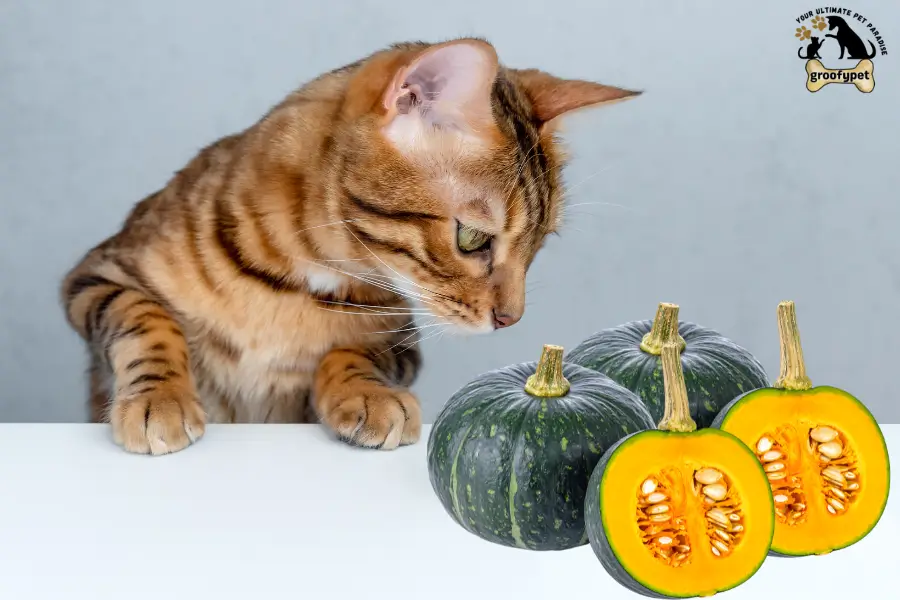
Kabocha is a winter squash related to pumpkin and butternut. Many people call it Japanese pumpkin. It has dark green skin, sometimes with pale stripes, and a round, squat shape. Inside you find bright orange flesh and a cluster of seeds.
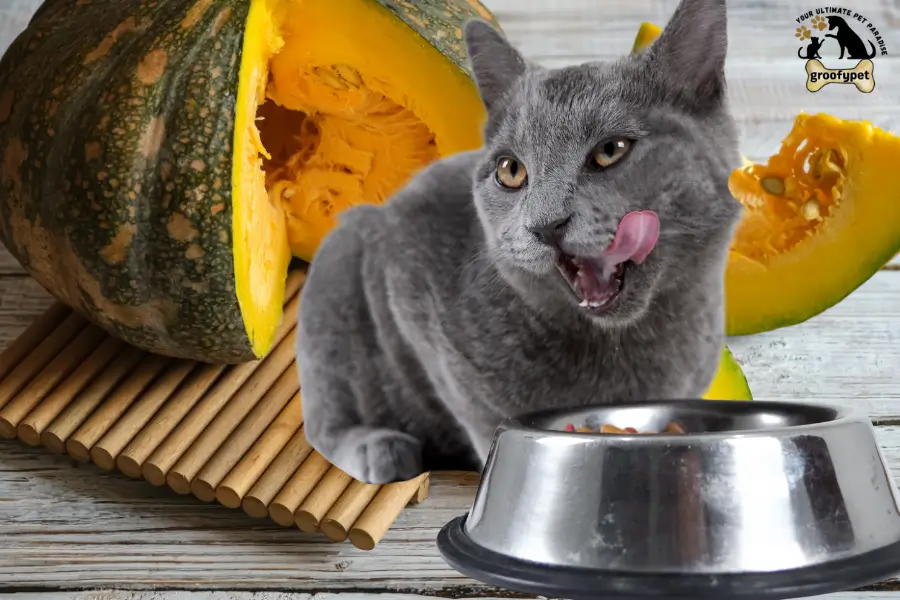
The flesh tastes sweet and nutty. After cooking, it feels dry and fluffy, closer to a sweet potato than to watery zucchini. Kabocha is a separate variety from acorn squash, even though some websites mix them up. Its skin is thick, but it softens when cooked, so people often eat it.
Cooks steam it, roast it, simmer it in soup, or fry it as tempura. Those methods often add oil, salt, or sauce. Your cat needs the plain version.
Is Kabocha Squash Safe for Cats?
Plain, cooked kabocha squash is generally safe for cats and is not considered toxic. Problems usually come from how it is served. Seasonings, butter, onion, garlic, hard skin, and seeds can cause trouble, and large portions may upset a cat’s stomach. Introduce it slowly and watch how your cat responds.
| Kabocha squash form | Generally safe for cats? | Important consideration |
|---|---|---|
| Plain cooked flesh | Yes, in small amounts | Serve plain |
| Raw flesh | Not ideal | Harder to chew and digest |
| Seasoned squash | No | Ingredients may be unsafe |
| Squash with butter | Avoid | High fat |
| Squash with salt | Avoid | Excess sodium |
| Squash with onion or garlic | No | Potentially toxic ingredients |
| Seeds | Avoid | Choking and digestive concerns |
| Tough skin | Avoid | Difficult to chew |
Use this table as a practical feeding guide. It does not replace veterinary advice, especially if your cat has a health condition.
Can Cats Eat Cooked Kabocha Squash?
Yes, cooked kabocha squash is the best way to offer it. Steaming, boiling, or baking without any seasoning makes the flesh soft and easier to digest. Let it cool, mash it or cut it into tiny pieces, and start with a very small amount.
Cooking softens the dense flesh so your cat can chew and swallow it safely. Three simple methods work well:
- Steaming keeps the texture soft and needs no oil.
- Boiling works too. Drain the water fully afterward.
- Baking without seasoning gives a deeper flavor that some cats prefer.
Cook the squash until a fork slides in with no resistance. Let it cool to room temperature before serving. Hot food can burn a cat’s mouth.
Keep these out of the pan: salt, garlic, onion, butter, heavy sauces, herbs, spices, and sugar. Pie spices are a common trap. Even a small sprinkle can make a treat a poor choice.
Can Cats Eat Raw Kabocha Squash?
Raw kabocha is not the preferred option. The flesh is dense and hard, so most cats struggle to chew it. Swallowed chunks may cause an upset stomach. Hard pieces also raise a choking concern, and large chunks could cause a blockage in the digestive tract.
Raw squash gives your cat no benefit that cooked squash lacks. If you want to offer kabocha, cook it first.
Must Read : Can Cats Eat Butternut Squash? How to Feed It the Right Way!
Can Cats Eat Kabocha Squash Skin?
It is better to remove the skin. Kabocha skin is edible for people once cooked, but it stays tough for a cat to chew. Large or stringy pieces can be a choking hazard and may be hard to digest. Serve only the soft, peeled flesh.
Kabocha skin is not poisonous. The issue is texture. A cat’s teeth are built for shearing meat, not grinding tough plant material. Skin can break into stringy strips that pass slowly through the gut.
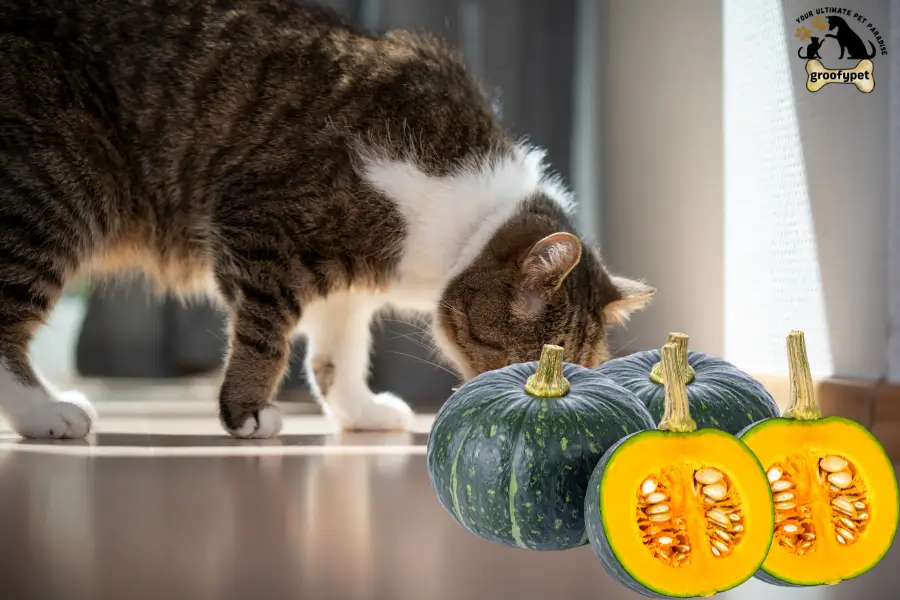
Peeling raw kabocha is awkward because the skin is so thick. An easier trick is to cook the squash in halves. Then scoop the soft flesh away from the skin with a spoon.
Can Cats Eat Kabocha Squash Seeds?
No, remove the seeds before serving. Squash seeds are hard, and cats do not chew them well. They can pose a choking risk or irritate the digestive tract. Scoop them out before cooking and offer only the soft cooked flesh. Skip roasted or salted seeds too.
The seeds inside the squash you cut open are the main concern. They are hard and slippery, and a cat may swallow them whole. Commercial seed products, such as roasted pepitas or seasoned snack seeds, add salt and oil. Those are also poor choices for cats. Some cats may nibble a seed with no harm, but there is no reason to offer one.
Nutritional Benefits of Kabocha Squash for Cats
- Kabocha contains water, fiber, some potassium, and plant compounds.
- It has fewer calories than most commercial treats.
- The fiber may help a cat feel full, which is why some owners of cats on a calorie-controlled diet show interest.
- Talk to your vet before you build a weight plan around any extra food.
- Kabocha also contains carbohydrates.
- Cats do not need many carbs, and kabocha is starchier and sweeter than zucchini.
- If your cat has diabetes, ask your veterinarian before offering any squash.
- Kabocha is rich in beta-carotene, a vitamin A precursor.
- Cats use beta-carotene poorly and need preformed vitamin A from animal sources.
- Cats also make their own vitamin C. For those nutrients, squash adds little for a cat.
The realistic benefit is a bit of water and fiber. Squash cannot replace animal protein or essential amino acids such as taurine. It also cannot replace a balanced diet.
How Much Kabocha Squash Can Cats Eat?
Most adult cats can try about 1 to 2 teaspoons of plain cooked kabocha squash as an occasional treat. Smaller cats may do better with about 1 teaspoon. Treats should stay a small part of the daily diet, and every cat tolerates new foods differently.
| Cat size | Suggested small serving |
|---|---|
| Small cat | About 1 teaspoon |
| Average adult cat | About 1–2 teaspoons |
| Large adult cat | About 1–2 teaspoons |
These are conservative treat-sized portions, not required servings. No single amount suits every cat. Many veterinarians suggest keeping treats and extras to about 10 percent of daily calories. For a first try, offer half a teaspoon and see how your cat does.
How Often Can Cats Eat Kabocha Squash?
Think occasional. Once or twice a week suits many healthy cats, and some cats do fine with less.
- Start slowly. Offer a tiny amount and wait 24 hours before trying more.
- Watch for changes. Look at appetite, stool, and energy.
- Adjust for your cat. If stools turn soft, cut back or stop.
- Keep the foundation. Complete cat food stays the main meal every day.
Can Kittens Eat Kabocha Squash?
Kittens grow fast and need more calories and nutrients per pound than adult cats. Their stomachs are small and sensitive. A complete kitten food should provide nearly everything they eat.
A lick of plain cooked squash is unlikely to hurt a healthy older kitten. Still, there is little reason to offer it. Very young kittens should not get unusual foods without a veterinarian’s approval. Keep treats limited and check with your vet first.
Can Cats Eat Kabocha Squash Every Day?
Usually not. Daily squash adds calories your cat does not need. It can also cause loose stools or gas. Extras can also crowd out complete cat food, which weakens the balance of the whole diet. Some cats tolerate squash well, but others react to small amounts. Keep it a treat rather than a routine.
Kabocha Squash and Cat Digestive Health
Fiber can affect stool consistency. A small amount may firm up loose stool in some cats. It may add bulk in others. Too much squash can backfire and cause:
- Loose stool
- Gas
- Vomiting
- Constipation or other digestive changes in some cats
Some owners hope fiber will help with hairballs. Fiber may help move hair through the gut for some cats, but squash is not a hairball treatment. It also does not cure constipation or diarrhea. If your cat has ongoing digestive problems, see your veterinarian instead of adjusting treats.
Risks of Feeding Kabocha Squash to Cats
| Risk | Why it can happen |
|---|---|
| Digestive upset | Too much fiber or unfamiliar food |
| Vomiting | Individual intolerance or overeating |
| Diarrhea | Sudden dietary change |
| Choking | Large or hard pieces |
| Excess calories | Large portions |
| Unsafe seasoning | Onion, garlic, salt, sauces, etc. |
| Nutritional imbalance | Replacing balanced cat food with extras |
Most risks come down to serving style. Cats have sensitive stomachs, and a new food can cause an upset stomach even when it is safe. Vomiting or diarrhea often follows a big portion or a sudden change.
Choking risk rises with large or hard pieces, so mash the squash or cut it very small. Extra calories add up when you offer more than a few teaspoons.
Seasoning is the most serious risk. Onion and garlic are toxic to cats, and salt and rich sauces are unsuitable. Finally, squash should never push out the complete food that meets your cat’s nutritional needs.
Also Read : Can Cats Eat Acorn Squash? Benefits, Risks, and Safe Feeding Guide
How to Prepare Kabocha Squash for Cats
- Wash the outside of the squash.
- Cut it carefully. Kabocha is hard, so use a sharp knife and a steady board.
- Remove the seeds and stringy pulp.
- Peel the tough skin, or scoop the cooked flesh away from it later.
- Cook until very soft. Steaming takes about 10 to 15 minutes for small chunks.
- Skip all seasoning.
- Cool it to room temperature.
- Mash it or cut it into tiny pieces.
- Start with a very small amount.
- Monitor your cat for the next day.
Here are two practical feeding examples. For a small cat, stir half a teaspoon of mashed squash into dinner and watch the next day. For a healthy adult cat who tolerates it well, offer one teaspoon as a weekend treat. Store leftovers in the fridge for a couple of days.
Can Cats Eat Kabocha Squash With Other Foods?
A teaspoon of plain cooked squash can go into your cat’s usual wet food if your cat tolerates it. Some owners mix in a little plain cooked chicken or salmon to make it more appealing. Leave out salt, seasoning, bones, and skin.
Do not replace balanced cat food with homemade mixtures. Homemade blends are not nutritionally complete unless a qualified veterinary nutrition professional formulated them.
Squash is one of several safe vegetables for cats that some cats accept in small amounts. Others include carrots, steamed green beans, steamed broccoli, and spinach. Blueberries are a common fruit option. No cat needs any of these, and every cat reacts differently.
Can Cats Eat Canned or Seasoned Kabocha Squash?
Canned kabocha or pumpkin puree can work if the label lists only squash or pumpkin. Check for added salt, sugar, spices, or preservatives. Pumpkin pie filling and seasoned canned products are not suitable. The same goes for leftovers from a human meal, since you rarely know everything in them.
What About Kabocha Squash Soup?
Human squash soup is usually a poor choice for cats. It often contains onion, garlic, salt, cream, butter, spices, or broth with hidden seasonings. Set aside a bit of plain cooked squash before you add the other ingredients. That plain portion is far safer than prepared soup.
What If My Cat Eats Too Much Kabocha Squash?
Mild digestive upset can follow overeating an unfamiliar food. Watch for:
- Vomiting
- Diarrhea
- Abdominal discomfort
- Loss of appetite
- Unusual behavior
Stop offering squash and return to your cat’s regular food. Make sure fresh water is available. Most mild upsets settle within a day. If symptoms are severe, persistent, or paired with other concerning signs, contact your veterinarian.
When Should You Contact a Veterinarian?
Call your veterinarian if you see:
- Repeated vomiting
- Persistent diarrhea
- Difficulty breathing
- Severe lethargy
- Loss of appetite
- Signs of pain
- Choking
- Suspected ingestion of onion or garlic
- Any concerning reaction in a kitten or medically fragile cat
Veterinary advice matters most when the squash contained potentially harmful ingredients. You can also contact the ASPCA Animal Poison Control Center at 1-888-426-4435 for poison concerns. Note how much your cat ate and what else was in the food.
Kabocha Squash Feeding Chart
| Question | Answer |
|---|---|
| Can cats eat kabocha squash? | Yes, in small amounts when plain and properly prepared |
| Best form | Plain cooked flesh |
| Raw squash | Not recommended |
| Skin | Better removed |
| Seeds | Remove |
| Seasonings | Avoid |
| Portion | Small treat-sized amount |
| Frequency | Occasional |
| Main diet | Complete and balanced cat food |
Frequently Asked Questions
How much kabocha squash can cats eat?
About 1 to 2 teaspoons is a conservative treat for most adult cats. Small cats may do better with 1 teaspoon.
Can kittens eat kabocha squash?
Kittens need complete kitten food. Ask your vet before offering unusual foods to very young kittens.
Can cats eat kabocha squash every day?
Daily feeding is usually unnecessary. It adds calories, may upset digestion, and can crowd out balanced food.
Can cats eat kabocha squash soup?
Avoid it. Soup often contains onion, garlic, salt, cream, or spices. Plain-cooked squash is safer.
Can cats eat seasoned kabocha squash?
No. Salt, butter, sauces, onion, garlic, and spices can be unsafe or unsuitable for cats.
What should I do if my cat eats too much kabocha squash?
Stop offering it and return to normal food. Watch for vomiting or diarrhea. Call your vet if symptoms are severe or last more than a day.
The Bottom Line
Kabocha squash can be a safe treat for many cats when you keep it plain, cooked, and tiny. Remove the skin and seeds, skip all seasoning, and stick to a teaspoon or two. Complete and balanced cat food should stay the center of every meal. When in doubt, ask your veterinarian.
Can Cats Eat Beets?Benefits and Risks Before You Feed!
Can Cats Eat Persimmons? Essential Advice to Keep Your Cat Healthy!