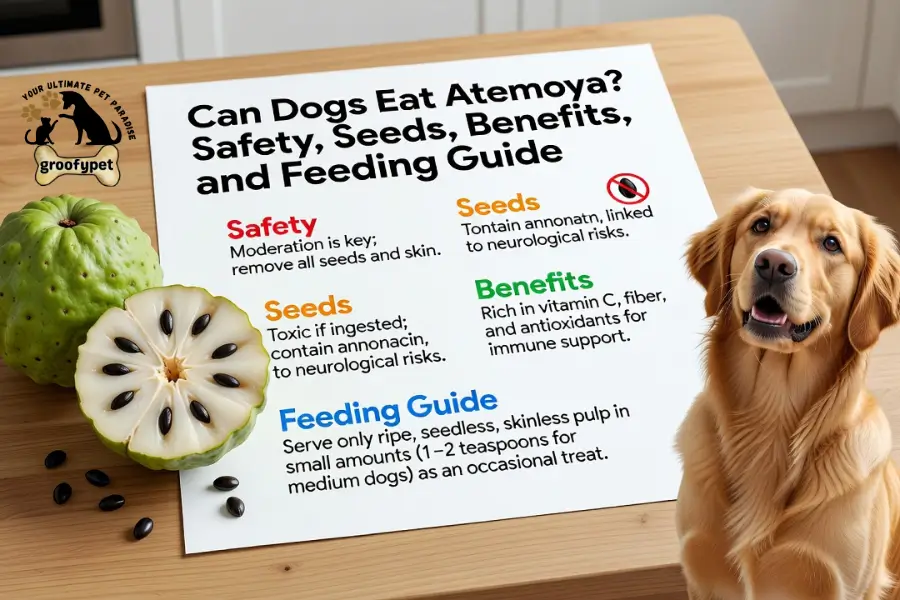
Can dogs eat atemoya? Dogs may be able to eat a very small amount of ripe atemoya flesh, but the seeds and skin should be avoided. Atemoya is a sweet tropical fruit related to cherimoya and sugar apple. Its creamy flesh contains natural sugars, fiber, and several nutrients.
However, atemoya needs careful preparation before you consider sharing it with your dog. Its seeds are considered toxic, and accidentally swallowing them may create serious concerns. There is also limited research on the effects of atemoya specifically in dogs.
If you want to offer this fruit, remove every seed and the outer skin. Serve only a tiny piece of ripe flesh as an occasional treat, not as a regular meal.
What Is Atemoya?
Atemoya is a tropical fruit created by crossing two related fruits: cherimoya (Annona cherimola) and sugar apple (Annona squamosa). Its botanical name is Annona × atemoya. The fruit usually has green, slightly bumpy skin and soft, creamy-white flesh. When ripe, its texture resembles custard, and its flavor is sweet.
Atemoya is also called custard apple in some regions. However, this common name can refer to other related fruits, so it is important to identify the fruit correctly. Inside the flesh, you will find several smooth, dark brown or black seeds. These seeds must be removed before the fruit is eaten. The University of Florida describes atemoya as a hybrid with creamy flesh and numerous seeds.
Can Dogs Eat Atemoya?
Dogs may be offered a tiny amount of ripe, seed-free atemoya flesh, but it should not become a regular part of their diet. There is limited dog-specific research establishing the safety of this fruit.
The biggest concern is the seeds. Atemoya belongs to the Annonaceae plant family, and its seeds contain compounds associated with toxicity. The University of Florida also warns that the seeds and bark of atemoya are considered toxic. Gardening Solutions+1
Before offering atemoya, follow these precautions:
- Remove every seed carefully.
- Remove the outer skin.
- Use only ripe, fresh flesh.
- Cut the flesh into tiny pieces.
- Offer a very small amount initially.
- Avoid feeding it to dogs with diabetes or sensitive digestion without veterinary advice.
Atemoya is not a necessary food for dogs. Your dog’s regular complete and balanced food should provide the nutrition they need.
Which Parts of Atemoya Can Dogs Eat?
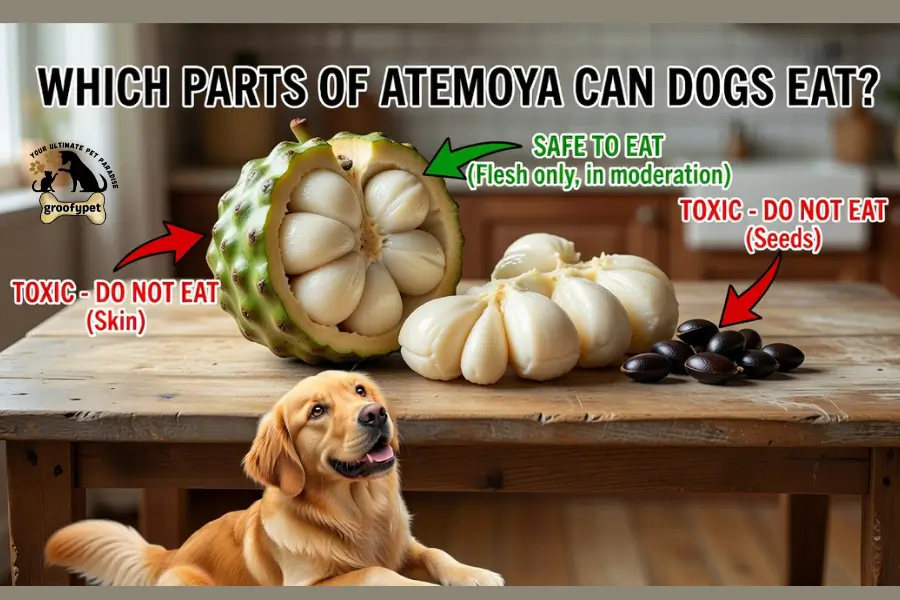
Not every part of atemoya is suitable for dogs. The flesh is the only part worth considering as an occasional treat.
| Atemoya Part | Can Dogs Eat It? | Explanation |
|---|---|---|
| Ripe flesh | Small amount only | Remove all seeds and skin before serving |
| Seeds | No | Contain potentially toxic compounds and can cause choking |
| Skin or peel | Avoid | Not an appropriate part to feed |
| Stem | Avoid | No nutritional reason to offer it |
| Unripe flesh | Avoid | Not a suitable treat; wait until the fruit ripens |
Important: Never blend atemoya with its seeds still inside. Remove the seeds individually and inspect the flesh before serving.
Nutritional Value of Atemoya for Dogs
Atemoya flesh contains nutrients that contribute to human diets, including vitamin C, potassium, carbohydrates, and some dietary fiber. It also contains considerable natural sugar. These nutrients do not make atemoya a complete food for dogs. The exact nutritional content can vary with fruit variety and ripeness.
| Nutrient | Potential Dietary Contribution |
|---|---|
| Water | Contributes moisture |
| Carbohydrates | Provide energy |
| Natural sugars | Add sweetness and calories |
| Dietary fiber | Contributes to normal digestive function |
| Vitamin C | Supports normal antioxidant functions |
| Potassium | Helps support normal muscle and nerve function |
| Calcium and phosphorus | Contribute to normal body functions |
Atemoya is not a replacement for a balanced dog food. Its nutrients are best viewed as small additional contributions rather than special health benefits. Food-composition information for atemoya describes its natural nutrients, but those values should not be treated as a dog-specific feeding recommendation.
7 Possible Benefits of Atemoya Flesh for Dogs
A small amount of seed-free atemoya flesh may offer some nutritional variety. However, there is no strong clinical evidence that feeding atemoya provides specific health benefits for dogs.

1. Provides Moisture
Fresh atemoya contains water, which contributes a little moisture to your dog’s diet. It can be a juicy treat when served in a small portion. However, it cannot replace fresh drinking water. Always make clean water available to your dog.
2. Contains Dietary Fiber
Atemoya flesh contains some dietary fiber. Fiber contributes to normal digestive function and helps support healthy stool formation. Too much fruit can cause digestive upset, so keep the serving small. Dogs with sensitive stomachs may need to avoid unfamiliar fruits.
3. Provides Vitamin C
Atemoya contains vitamin C, a nutrient involved in normal antioxidant activity. Dogs can produce vitamin C in their bodies, so they generally do not need fruit as a vitamin C supplement. Do not feed atemoya to treat a vitamin deficiency or medical condition.
4. Contains Potassium
Potassium is an essential mineral involved in normal muscle and nerve function. Atemoya naturally contains some potassium. However, the small amount a dog receives from an occasional fruit bite is not a substitute for balanced nutrition.
5. Offers a Different Flavor
Some dogs enjoy sweet fruit flavors and soft textures. A tiny piece of ripe atemoya may provide variety for dogs that like trying new foods. Other dogs may not enjoy its taste or texture. Never force your dog to eat it.
6. Can Add Variety to Occasional Treats
A small piece of prepared atemoya can be offered as an occasional treat. This may add variety alongside other suitable dog treats. Remember that treats should generally account for no more than 10% of your dog’s daily calories.
7. Provides Small Amounts of Minerals
Atemoya contains minerals such as calcium, phosphorus, and iron. These nutrients perform important functions in the body. However, your dog should receive these nutrients from a complete and balanced diet. Atemoya is not a reliable mineral supplement.
Is Atemoya Toxic to Dogs?
Atemoya requires caution because its seeds and other plant parts contain potentially harmful compounds. The seeds are specifically identified as toxic in horticultural and botanical references. Research on Annona atemoya has identified several groups of natural plant compounds, including acetogenins and alkaloids.
Some compounds in related Annona species have raised toxicological concerns. However, the exact effects and toxic dose of atemoya seeds in dogs are not established. This means dog owners should not assume that swallowing an atemoya seed is harmless.
Keep these precautions in mind:
- Never intentionally feed atemoya seeds.
- Do not crush or grind the seeds.
- Keep discarded seeds away from pets.
- Do not leave cut fruit where your dog can reach it.
- Contact a veterinarian if your dog swallows a seed.
The ripe flesh and seeds should not be treated as having the same safety profile.
Can Dogs Eat Atemoya Seeds?
No, dogs should not eat atemoya seeds. These seeds contain natural compounds associated with toxicity, and they may also create choking or digestive concerns. Atemoya seeds are smooth, dark, and relatively firm. A dog may swallow one while eating fruit left unattended.
If your dog swallows an atemoya seed, contact your veterinarian promptly. Do not wait for symptoms or try to make your dog vomit unless a veterinary professional specifically instructs you. The amount swallowed, your dog’s size, and the time since ingestion can all matter when a veterinarian assesses the situation.
Can Dogs Eat Atemoya Skin?
It is best to avoid feeding atemoya skin to dogs. The peel is not a necessary part of their diet, and there is no established benefit to offering it. Remove the outer skin before preparing the flesh. This also makes it easier to inspect the fruit and remove all the seeds. Do not assume that washing the skin makes it appropriate for dogs to eat. Serve only the clean, ripe flesh in a small amount.
How Much Atemoya Can Dogs Eat?
There is no scientifically established serving size for atemoya in dogs. If your veterinarian agrees that a small taste is appropriate, begin with a tiny piece of ripe, seed-free flesh.The following table gives cautious starting suggestions, not proven veterinary feeding amounts.
| Dog Size | Approximate Weight | Cautious Starting Portion |
|---|---|---|
| Extra-small | Under 10 lbs | A tiny bite |
| Small | 10–20 lbs | About ½–1 teaspoon |
| Medium | 20–50 lbs | About 1 teaspoon |
| Large | 50–90 lbs | About 1–2 teaspoons |
| Extra-large | Over 90 lbs | Up to 1 tablespoon |
These portions are suggestions for an initial taste, not daily feeding recommendations. A dog’s health, calorie requirements, and ability to tolerate fruit all affect the appropriate amount.Follow the 10% treat rule: Treats and other extras should generally provide no more than 10% of your dog’s daily calories. The remaining calories should come from complete and balanced food.
Because atemoya is sweet and contains natural sugar, avoid giving large portions or feeding it frequently.
Possible Risks and Side Effects of Atemoya for Dogs
Even when you remove the seeds and skin, atemoya may not agree with every dog. Its natural sugar, fiber, and unfamiliar texture can cause problems in some pets.
1. Stomach Upset
A dog’s digestive system may react to unfamiliar foods. Introducing atemoya suddenly can cause discomfort, especially in dogs with sensitive stomachs.
2. Diarrhea
Eating too much fruit may cause loose stools or diarrhea. Stop offering atemoya if your dog develops digestive problems.
3. Vomiting
Some dogs may vomit after eating an unfamiliar food. Repeated vomiting needs veterinary attention, especially if your dog also appears weak or uncomfortable.
4. Excess Natural Sugar
Atemoya has a sweet taste because it contains natural sugars. Large portions can add unnecessary sugar and calories to your dog’s diet.
5. Weight Gain
Frequent fruit treats can increase daily calorie intake. Over time, extra calories may contribute to weight gain, particularly in dogs that already need weight management.
6. Choking Hazard
The seeds are firm and can become a choking hazard. Large pieces of fruit may also be difficult for small dogs to swallow safely.
7. Possible Intestinal Problems
Swallowing seeds or large pieces may create digestive complications. Contact your veterinarian if your dog swallows seeds or develops abdominal pain, repeated vomiting, or difficulty passing stool.
8. Seed-Related Toxicity Concerns
Atemoya seeds contain potentially toxic natural compounds. Because dog-specific toxic-dose information is limited, treat any seed ingestion seriously and seek veterinary advice.
9. Problems in Dogs With Sensitive Digestion
Dogs with a history of food intolerance may react to unfamiliar fruits. Avoid experimenting with atemoya if your dog frequently experiences digestive upset.
10. Problems With Existing Health Conditions
Dogs with diabetes, obesity, or certain digestive conditions may need carefully controlled treats. Ask your veterinarian before adding sweet fruits to their diet.
Can Puppies Eat Atemoya?
It is better to prioritize a complete puppy food rather than introduce atemoya. Puppies need carefully balanced nutrition to support their growth and development.Their digestive systems may also react differently to unfamiliar foods. If your veterinarian approves a taste, offer only a tiny amount of ripe flesh with every seed and the skin removed.
Never give puppies the seeds. Keep the fruit out of reach when preparing it, because curious puppies may swallow discarded pieces.
Can Dogs With Diabetes Eat Atemoya?
Dogs with diabetes should not be given atemoya without veterinary guidance. Although its sugar occurs naturally, it still contributes carbohydrates and calories.A diabetic dog’s diet needs careful management. Extra fruit may affect the overall feeding plan and make blood glucose control more difficult.
Ask your veterinarian which treats are appropriate for your dog’s condition. Do not use atemoya as a substitute for prescribed food or diabetes treatment.
Also Read : Can Dogs Eat Halloumi? Safety, Risks, and Vet Advice
How to Prepare Atemoya for Dogs
If your veterinarian agrees that your dog can try atemoya, prepare it carefully. The goal is to offer only a tiny amount of clean, ripe flesh.
Follow these steps:
- Choose ripe fruit: Select an atemoya that has softened as it ripened.
- Wash the outside: Rinse the fruit before cutting to reduce surface dirt.
- Remove the skin: Peel away the entire outer covering.
- Remove every seed: Take out all visible seeds carefully.
- Inspect the flesh: Check for any remaining seed pieces before serving.
- Cut into tiny pieces: Make small, manageable bites suitable for your dog’s size.
- Offer a tiny amount: Start with one small piece and observe your dog.
- Store leftovers safely: Refrigerate unused ripe fruit in a covered container.
Do not add sugar, honey, syrup, chocolate, cream, or other toppings. Plain fruit is the only option worth considering.
What to Do If Your Dog Eats Atemoya Seeds
If your dog swallows an atemoya seed, contact your veterinarian or an animal poison-control service promptly. Do not assume that one seed is harmless.
Take these steps:
- Remove the remaining fruit and seeds from your dog’s reach.
- Check how many seeds may be missing.
- Note when your dog might have swallowed them.
- Tell your veterinarian your dog’s weight and any symptoms.
- Follow the veterinary professional’s instructions.
- Do not induce vomiting or give home remedies unless instructed.
Watch for vomiting, diarrhea, unusual tiredness, weakness, or changes in behavior. These signs do not confirm seed poisoning, but they need professional assessment.If your dog has difficulty breathing, collapses, experiences seizures, or becomes severely weak, seek emergency veterinary care immediately.
The University of Florida specifically advises keeping atemoya seeds and other potentially toxic plant parts away from pets.
Atemoya vs. Cherimoya vs. Sugar Apple for Dogs
Atemoya, cherimoya, and sugar apple are closely related tropical fruits. Their similarities can cause confusion, but they are not exactly the same fruit.
| Feature | Atemoya | Cherimoya | Sugar Apple |
|---|---|---|---|
| Botanical name | Annona × atemoya | Annona cherimola | Annona squamosa |
| Relationship | Hybrid of the other two | Parent species | Parent species |
| Flesh | Creamy white | Creamy white | White and segmented |
| Flavor | Sweet and custard-like | Sweet and aromatic | Very sweet |
| Seeds | Dark, firm seeds | Dark seeds | Dark seeds |
| Dog-feeding precaution | Avoid seeds and skin | Avoid seeds | Avoid seeds |
All three belong to the Annona group. Their seeds should not be treated as safe dog treats. Do not assume that information about one species establishes the exact toxicity of another. PMC+1
Safer Fruit Alternatives for Dogs
If you want to share fruit with your dog, several familiar options are easier to prepare. Always remove inedible parts and offer small portions.
- Blueberries:Small, bite-sized fruits that can be offered plain and fresh.
- Apple:Remove the core and seeds, then cut the flesh into small pieces.
- Watermelon:Serve seedless flesh without the rind.
- Strawberries:Wash them and cut them into manageable pieces.
- Cantaloupe:Remove the rind and seeds before serving small pieces.
- Banana:Offer a small slice because bananas contain natural sugar and calories.
These fruits are occasional treats, not replacements for your dog’s regular balanced meals.
Must Read : Can Dogs Eat Black Sapote? Safety, Risks and Advice
Frequently Asked Questions
Can Dogs Eat Atemoya Flesh?
Dogs may be able to eat a small amount of ripe atemoya flesh after every seed and the skin have been removed. However, there is limited research on its safety in dogs. Offer it only occasionally and monitor your dog’s reaction.
Are Atemoya Seeds Toxic to Dogs?
Atemoya seeds contain natural compounds associated with toxicity. They may also create choking or digestive risks. Dogs should never intentionally eat these seeds. Contact a veterinarian promptly if your dog swallows one.
What Happens If a Dog Eats Atemoya Seeds?
The effects depend on the amount swallowed and other factors. The seeds contain potentially harmful compounds, but a specific toxic dose for dogs is not established. Contact your veterinarian immediately rather than waiting for symptoms.
Can Dogs Eat Atemoya Skin?
It is best to avoid feeding atemoya skin to dogs. Remove the peel before preparing the fruit and serve only a tiny amount of ripe flesh. There is no nutritional reason to include the skin.
Is Atemoya High in Sugar?
Atemoya has a naturally sweet taste and contains carbohydrates, including natural sugars. Large portions can add unnecessary calories to a dog’s diet. Dogs with diabetes or weight problems should only receive fruit treats with veterinary guidance.
Key Takeaways
- Dogs may be able to eat a tiny amount of ripe atemoya flesh.
- Atemoya seeds should never be fed to dogs because they contain potentially toxic compounds.
- Remove the skin and every seed before preparing the fruit.
- Introduce only a tiny portion and monitor your dog’s reaction.
- Avoid frequent feeding because atemoya contains natural sugar.
- Dogs with diabetes or sensitive digestion need extra caution.
- Contact a veterinarian promptly if your dog swallows atemoya seeds.
Final Thoughts
So, can dogs eat atemoya? A small amount of ripe, seed-free flesh may be an occasional treat for some healthy dogs. However, there is limited research confirming its safety specifically in dogs.The seeds deserve particular attention because they contain potentially toxic compounds. Always remove the seeds and skin, prepare the flesh carefully, and offer only a tiny portion.
Atemoya is not essential to canine nutrition. If you want to share fruit with your dog, familiar options such as blueberries, apples without seeds, and watermelon without rind are simpler alternatives.
Can Dogs Eat Baguette? Safe Serving Guide for Dogs
Raw Dog Food Calculator by Breed: Find the Right Portion for Your Dog