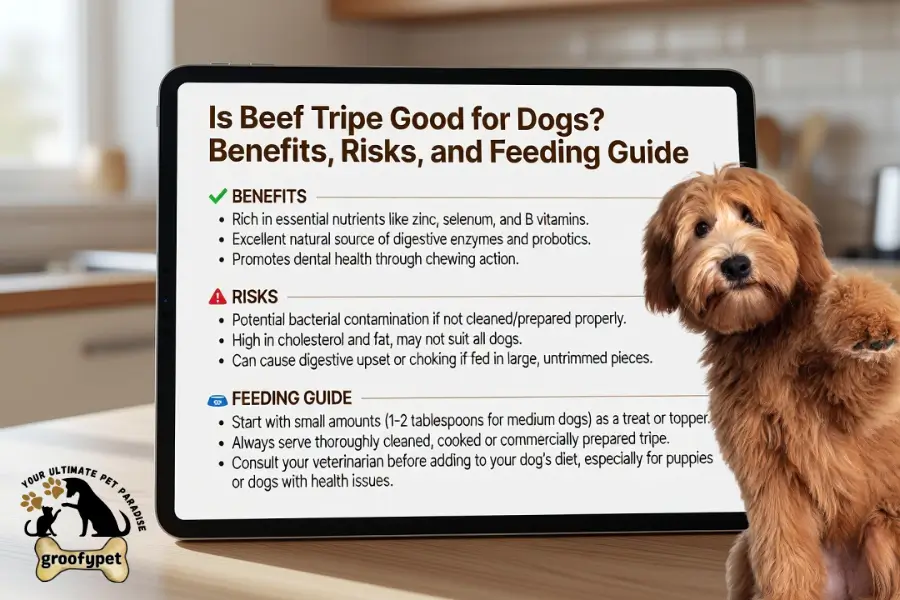
Is beef tripe good for dogs? Beef tripe can be a nutritious addition to some dogs’ diets when it is properly prepared and served in moderation. It comes from the stomach lining of cattle and provides animal-based protein, fat, and other nutrients. Many dog owners choose green tripe because of its strong smell and natural flavor, which some dogs find appealing.
However, not all beef tripe products are the same. Raw, cooked, green, bleached, and dehydrated tripe have different preparation methods and safety considerations. Understanding these differences helps you choose a suitable option for your dog.
The short answer: Plain, properly cooked beef tripe can be offered to many healthy dogs as an occasional food or topper. Raw tripe carries food-safety risks, and tripe alone does not provide a complete and balanced diet.
What Is Beef Tripe?
Beef tripe is the edible stomach lining of a cow. Cattle have a four-compartment stomach, and tripe sold for food usually comes from one of these sections.
It has a soft, chewy texture and a noticeable smell. People use it in traditional dishes, while pet food manufacturers include it in some dog foods, toppers, and treats.
You may find beef tripe in several forms:
- Fresh tripe: Uncooked tripe that needs safe storage and thorough cooking.
- Green tripe: Minimally processed, unbleached tripe that may retain more of its natural contents and odor.
- White tripe: Tripe that has been cleaned and often bleached or otherwise processed.
- Cooked tripe: Tripe that has been heated before serving.
- Dehydrated tripe: Tripe with much of its moisture removed.
- Freeze-dried tripe: Tripe preserved through freezing and drying. It may still be raw unless the product has received a pathogen-reducing treatment.
Green tripe does not mean the meat is literally green. The name generally describes how it is processed, not its color or a guarantee of quality.
Is Beef Tripe Good for Dogs?
Yes, plain beef tripe can be suitable for many healthy dogs when served in appropriate portions. It provides animal protein and fat, and its strong flavor may make it appealing to picky eaters.
However, beef tripe should not automatically become a major part of your dog’s daily meals. Its nutritional value varies depending on the type, processing method, and manufacturer.
A few important points to remember:
- Choose plain tripe without onion, garlic, heavy seasoning, or added salt.
- Cook fresh tripe thoroughly before serving.
- Avoid raw tripe because it may carry harmful bacteria.
- Introduce it gradually to reduce the chance of stomach upset.
- Keep treats and food toppers within your dog’s daily calorie needs.
- Use a complete and balanced dog food as the foundation of the diet.
If your dog has pancreatitis, food allergies, or another medical condition, ask your veterinarian before adding beef tripe.
Nutritional Value of Beef Tripe for Dogs
Beef tripe contains several nutrients that can contribute to a dog’s diet. However, the exact nutritional profile depends on the product and preparation method.
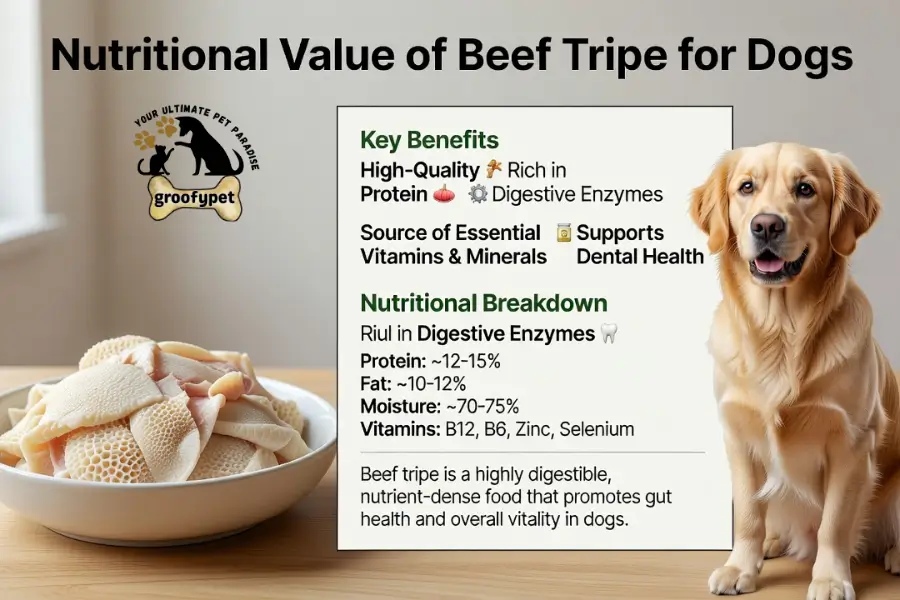
| Nutrient | Why It Matters for Dogs |
|---|---|
| Protein | Supplies amino acids needed for muscles and body tissues |
| Fat | Provides energy and supports normal body functions |
| Amino acids | Help maintain muscles, skin, and other tissues |
| Water | Helps contribute to daily fluid intake when tripe is fresh or wet |
| Minerals | May provide minerals, depending on the product |
| Vitamins | May contain some vitamins, but amounts vary |
Tripe is not nutritionally identical to beef muscle meat or organ meats such as liver. You should not assume it provides every nutrient your dog needs. For a more accurate picture, check the manufacturer’s nutritional analysis and calorie information. This is especially important when feeding green tripe products regularly.
10 Potential Benefits of Beef Tripe for Dogs
Beef tripe offers several possible benefits when it is safely prepared and used as part of an appropriate diet. These benefits depend on the product and your dog’s individual nutritional needs.
1. Provides Animal-Based Protein
Beef tripe contains animal protein that supplies amino acids. Dogs use these amino acids to maintain muscles, repair tissues, and support normal body functions. Protein is an important part of canine nutrition. However, tripe should complement a balanced diet rather than replace a complete protein and nutrient source.
2. Supplies Energy Through Fat
Some beef tripe products contain fat, which provides energy. Fat also helps dogs absorb certain fat-soluble vitamins from their overall diet. The fat content can vary considerably. Choose leaner options if your dog needs to manage weight or has been advised to follow a low-fat diet.
3. Adds Variety to Meals
Dogs sometimes become less interested in familiar meals. A small amount of plain cooked tripe can add a different smell, taste, and texture. You can mix a little into your dog’s regular food. Keep the portion small so the extra calories do not interfere with a balanced feeding plan.
4. May Encourage Picky Eaters
Green tripe has a strong odor that many dogs find attractive. Its smell may encourage some picky eaters to investigate their food. You can try a small amount as a topper. However, if your dog suddenly refuses regular meals, speak with a veterinarian rather than relying on toppers to hide the problem.
5. Provides Amino Acids
The protein in beef tripe supplies amino acids that help maintain muscles and support everyday body processes. Dogs need a range of essential amino acids from their diet. A complete and balanced dog food is designed to provide the right nutritional combination.
6. Adds Moisture to Meals
Fresh and canned tripe contain moisture, which contributes to a dog’s overall water intake. This can add moisture to dry kibble when used as a small topper. However, tripe should never replace fresh drinking water.
7. Offers a Different Food Texture
Tripe has a chewy texture that can make meals more interesting. Some dogs enjoy the change from their usual kibble or wet food. Choose a texture and piece size that your dog can chew comfortably. Supervise your dog when offering any new treat.
8. Can Be Used as an Occasional Treat
Plain cooked tripe can be cut into small pieces and offered as a reward. This gives your dog a different flavor without requiring a large serving. Remember to count these pieces as part of your dog’s daily treat allowance.
9. Can Be Included in Some Dog Food Formulas
Some commercial dog foods contain beef tripe as an ingredient. These products may combine it with other ingredients to create a complete meal. Check the nutritional adequacy statement on the label. A product containing tripe is not automatically complete and balanced.
10. May Make Meals More Appealing
The smell and taste of beef tripe can make it attractive to some dogs. A small amount may help add variety to an otherwise familiar meal. Every dog has different preferences, so some may enjoy tripe while others may refuse it.
Can Beef Tripe Help a Dog’s Digestion?
Beef tripe is often promoted as a food that supports digestion, especially when it is green tripe. Some sellers describe it as a natural source of digestive enzymes and beneficial bacteria. However, strong scientific evidence showing that beef tripe improves digestion in dogs is limited. Its presence in a dog’s diet does not guarantee better gut health or resolve digestive problems.
Green tripe may contain naturally occurring microorganisms before processing. But the amount and type can vary, and you should not treat it as a reliable probiotic supplement.
If your dog experiences frequent diarrhea, constipation, vomiting, or excessive gas, consult a veterinarian. These symptoms may have causes that require proper diagnosis and treatment.
Green Tripe vs. White Tripe for Dogs
Green and white tripe mainly differ in how they are processed. Understanding the difference helps you choose the right product.
| Feature | Green Beef Tripe | White Beef Tripe |
|---|---|---|
| Processing | Usually minimally processed | Usually cleaned and more heavily processed |
| Appearance | Often darker or greenish-brown | Usually pale or white |
| Smell | Strong and noticeable | Usually milder |
| Texture | Varies by product | Often cleaner and more uniform |
| Natural contents | May retain more natural material | Usually cleaned more thoroughly |
| Common use | Pet foods, toppers, and treats | Human cooking and some pet foods |
Which is better for dogs?
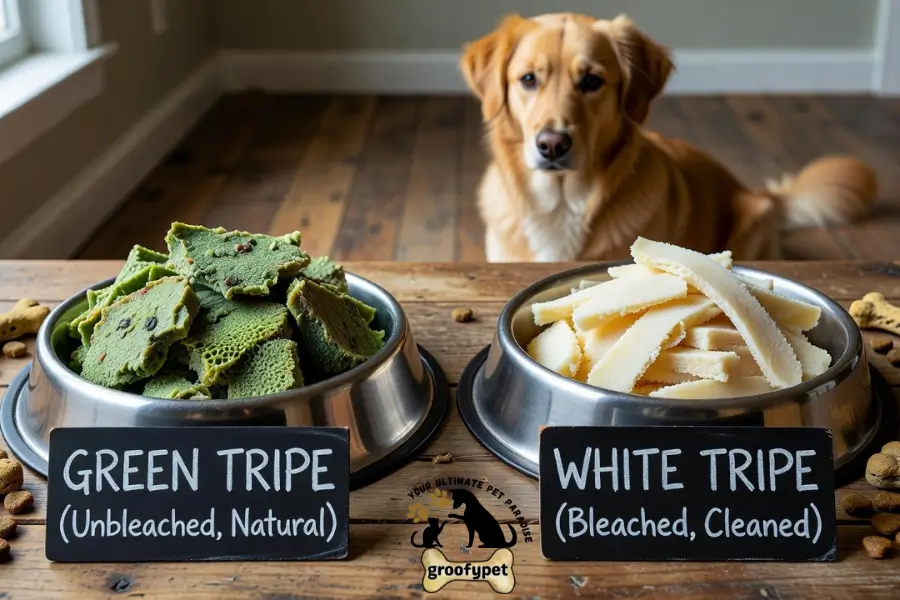
Green tripe is popular among dog owners because it is less processed and has a strong natural smell. However, less processing does not automatically make it safer or nutritionally complete.
White tripe can also be suitable when it is plain and properly prepared. The best choice depends on its ingredients, nutritional analysis, and food-safety treatment.
Is Raw Beef Tripe Safe for Dogs?
Raw beef tripe is not the safest choice for dogs. Like other uncooked animal products, it may carry harmful bacteria that can cause illness.
Potential contaminants include:
- Salmonella
- E. coli
- Listeria
- Campylobacter
A dog may develop vomiting, diarrhea, fever, or changes in behavior after eating contaminated food. Some dogs can also carry and spread harmful bacteria without appearing sick. The risk does not stop with your dog. Bacteria from raw meat can spread through food bowls, kitchen surfaces, hands, and animal waste.
Children, older adults, pregnant people, and people with weakened immune systems may face greater risks. The American Veterinary Medical Association also discourages feeding raw or undercooked animal-source proteins. Freeze-dried or dehydrated tripe is not necessarily safe from these risks.
Drying does not always eliminate harmful bacteria, so check whether the manufacturer uses a validated pathogen-reduction process.
Safer option: Choose properly cooked beef tripe or a commercially prepared product that has received an appropriate safety treatment.
Also Read : Can Dogs Eat Beef Broth? Benefits Risks And Safe Feeding Tips!
Can Dogs Eat Cooked Beef Tripe?
Yes, many healthy dogs can eat plain cooked beef tripe in small amounts. Cooking helps reduce the risk of harmful bacteria when the food reaches a safe temperature.
Follow these preparation guidelines:
- Buy fresh beef tripe from a reliable supplier.
- Keep it refrigerated or frozen until preparation.
- Thaw frozen tripe safely in the refrigerator.
- Cook it thoroughly without seasoning.
- Remove excess visible fat if needed.
- Cut it into small, manageable pieces.
- Allow it to cool before serving.
- Offer a small amount and monitor your dog’s reaction.
Never add onion, garlic, chili, excessive salt, butter, or rich sauces. These ingredients can make the food unsuitable for dogs.
Cornell University College of Veterinary Medicine recommends careful handling of raw animal products and cooking raw meat thoroughly to reduce food-safety risks.
How Much Beef Tripe Can Dogs Eat?
The right amount depends on your dog’s weight, daily calorie needs, health, and the fat content of the tripe. There is no universal veterinary serving size for every dog.
If your veterinarian agrees that tripe is suitable, start with a very small amount of plain cooked tripe. The following table gives cautious starting portions for a first trial, not daily feeding requirements.
| Dog Size | Approximate Weight | Cautious First Portion |
|---|---|---|
| Extra-small | Under 10 lbs | ½–1 teaspoon |
| Small | 10–20 lbs | 1–2 teaspoons |
| Medium | 20–50 lbs | 1 tablespoon |
| Large | 50–90 lbs | 1–2 tablespoons |
| Extra-large | Over 90 lbs | 2 tablespoons |
These amounts are only starting suggestions. They are not suitable for every dog or every tripe product. Dried tripe is more concentrated than fresh tripe, so its portion should be much smaller.Follow the 10% treat rule: Treats and extras should generally provide no more than 10% of a dog’s daily calories. The remaining calories should come from a complete and balanced diet.
If you want to feed tripe regularly, ask your veterinarian to help determine an appropriate portion based on its calorie content.
Possible Risks and Side Effects of Beef Tripe
Although plain cooked beef tripe can suit some dogs, it may cause problems in certain situations.
1. Stomach Upset
Introducing a new food too quickly can upset your dog’s stomach. Start with a small amount and watch for changes in appetite and stool.
2. Diarrhea or Loose Stools
Some dogs may develop loose stools after eating tripe. This can happen when they eat too much or do not tolerate the food well.
3. Vomiting
A sudden dietary change or contaminated tripe may cause vomiting. Stop offering the food if your dog becomes sick.
4. High Fat
Some tripe products contain more fat than others. Excessive fat can add unnecessary calories and may be unsuitable for dogs that need a low-fat diet.
5. Pancreatitis Concerns
Dogs with a history of pancreatitis may need strict control over dietary fat. Do not add beef tripe without veterinary approval if your dog has this condition.
6. Bacterial Contamination
Raw or improperly handled tripe may contain Salmonella, E. coli, or other harmful organisms. These bacteria can affect pets and people.
7. Food Sensitivities
Some dogs may react poorly to beef. Signs can include itching, ear irritation, vomiting, diarrhea, or skin problems.
8. Weight Gain
Frequent treats and large food toppers can increase daily calorie intake. Over time, this may contribute to unwanted weight gain.
9. Harmful Added Ingredients
Seasoned tripe may contain onion, garlic, chili, salt, or sauces. Avoid these products because some ingredients can be harmful to dogs.
10. Nutritional Imbalance
Tripe alone does not meet every nutritional requirement. Feeding it as a major part of an unbalanced homemade diet can create nutrient deficiencies or excesses.
Which Dogs Should Avoid or Limit Beef Tripe?
Some dogs need extra care before trying beef tripe. A veterinarian can help decide whether it fits their dietary needs.
| Dog Type | Why Extra Care Is Needed |
|---|---|
| Dogs with pancreatitis | May need controlled fat intake |
| Dogs with sensitive stomachs | May develop vomiting or diarrhea |
| Dogs with beef allergies | May react to beef protein |
| Overweight dogs | Extra calories can affect weight management |
| Dogs with kidney disease | May need a carefully controlled diet |
| Immunocompromised dogs | Foodborne infections may be more concerning |
| Puppies | Need a complete diet designed for growth |
Puppies should receive food formulated for their growth stage. A small treat may be appropriate in some cases, but tripe should not replace their regular puppy food.
How to Choose Safe Beef Tripe for Dogs
The quality and processing of beef tripe matter. Before buying a product, read the label carefully.
Use this simple checklist:
- Choose a product specifically intended for dogs or plain tripe suitable for cooking.
- Check that beef tripe is clearly listed as an ingredient.
- Avoid products containing onion, garlic, and heavy seasoning.
- Check the calorie and fat information.
- Look for clear storage and preparation instructions.
- Check whether raw or freeze-dried products have received a validated pathogen-reduction treatment.
- Choose a reputable manufacturer with clear quality-control information.
Do not assume that a product is safe just because it says “natural,” “premium,” or “green tripe.” These words do not guarantee nutritional balance or eliminate food-safety risks.
Beef Tripe vs. Other Meats for Dogs
Beef tripe is different from muscle meat and other organ meats. Each provides a different nutritional profile and serves a different purpose in dog food.
| Food | Main Nutritional Role | Feeding Consideration |
|---|---|---|
| Beef tripe | Animal protein and variable amounts of fat | Serve plain and in moderation |
| Chicken | Animal protein | Cook thoroughly and remove bones |
| Beef muscle meat | Protein and amino acids | Choose plain, lean cuts |
| Beef liver | Concentrated source of several vitamins and minerals | Feed carefully because too much can cause nutrient excess |
| Beef heart | Protein and several nutrients | Use as part of a balanced feeding plan |
None of these foods should automatically replace complete and balanced dog food. Organ meats such as liver are especially important to portion carefully because their nutrient concentrations differ from ordinary meat.
Signs Your Dog Is Not Tolerating Beef Tripe
Watch your dog after introducing any new food. Some dogs tolerate tripe without problems, while others may experience digestive or allergic reactions.
Possible warning signs include:
- Vomiting
- Diarrhea
- Excessive gas
- Reduced appetite
- Itching or skin irritation
- Ear irritation
- Unusual tiredness
- Abdominal discomfort
Stop feeding tripe if you notice a reaction. Contact your veterinarian if symptoms continue, become severe, or return repeatedly.Seek urgent veterinary care if your dog develops facial swelling, difficulty breathing, collapse, repeated vomiting, or severe weakness.
Must Read : Can Dogs Eat Venison? Benefits and Hidden Risks Explained!
Frequently Asked Questions
Is Beef Tripe Safe for Dogs to Eat Every Day?
Plain beef tripe may be suitable for some dogs, but feeding it every day is not necessary. Its nutritional content varies, and it should not replace complete and balanced dog food. Ask your veterinarian before making it a regular part of your dog’s diet.
Is Green Beef Tripe Better Than White Tripe for Dogs?
Green tripe is generally less processed and has a stronger smell than white tripe. However, it is not automatically safer or more nutritious. The product’s ingredients, processing, nutritional analysis, and food-safety standards matter more than its color.
Can Beef Tripe Cause Diarrhea in Dogs?
Yes, beef tripe can cause diarrhea in some dogs, especially when introduced suddenly or served in excessive amounts. Raw or contaminated tripe may also cause foodborne illness. Stop feeding it if your dog develops digestive problems.
Does Beef Tripe Contain Probiotics?
Green tripe may contain naturally occurring microorganisms before processing. However, the types and amounts can vary, and there is limited evidence that feeding beef tripe provides reliable probiotic benefits. It should not replace a veterinarian-recommended probiotic.
Key Takeaways
- Beef tripe is the stomach lining of cattle and provides animal-based protein and fat.
- Plain, thoroughly cooked beef tripe can be suitable for many healthy dogs.
- Green tripe is usually less processed than white tripe, but it is not automatically safer.
- Raw beef tripe can carry harmful bacteria that affect dogs and people.
- Start with a small portion and watch for digestive reactions.
- Avoid seasoned tripe containing onion, garlic, or excessive salt.
- Beef tripe should not replace a complete and balanced dog food.
Final Thoughts
So, is beef tripe good for dogs? It can be a useful occasional addition to some dogs’ diets when you choose a suitable product and prepare it safely.Plain cooked tripe provides animal-based protein, fat, and a different flavor that some dogs enjoy. Green tripe is also popular, but claims about its digestive and probiotic benefits should be viewed carefully.
Avoid raw tripe because of bacterial contamination risks. Introduce cooked tripe gradually, control the portion, and consider your dog’s health before serving it.When in doubt, ask your veterinarian whether beef tripe is appropriate for your dog’s individual nutritional needs.
Raw Dog Food Calculator by Breed: Find the Right Portion for Your Dog
Can Dogs Eat Fat Trimmings? A Must-Read Guide to Keep Your Dog Safe!