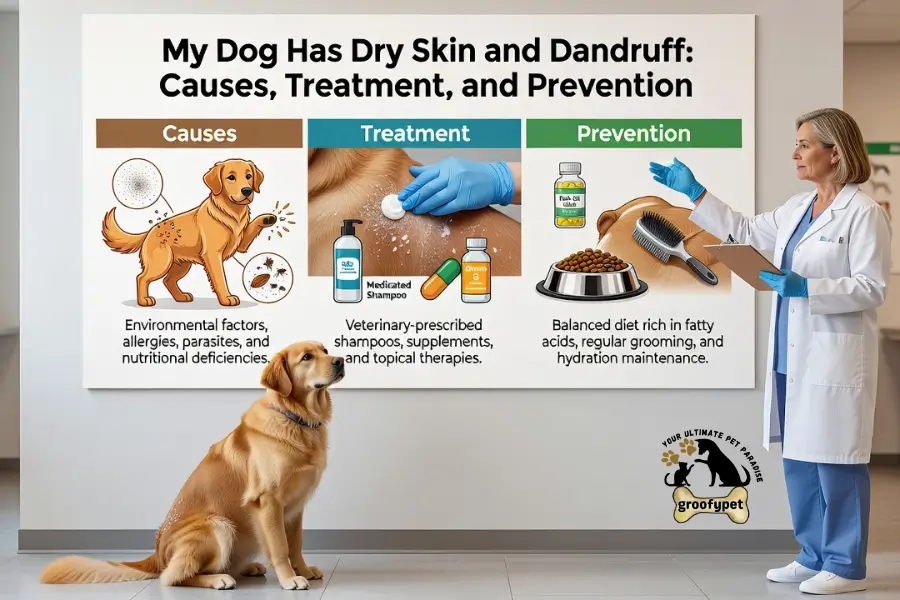
Why my dog has dry skin and dandruff? If your dog has dry skin and dandruff, you may notice white flakes, constant scratching, or a rough-looking coat. This problem can develop because of dry weather, frequent bathing, allergies, parasites, or an underlying skin condition. In some dogs, mild dryness improves with better grooming and proper nutrition.
However, persistent dandruff, redness, hair loss, or severe itching may indicate a problem that needs veterinary care.The important thing is to understand why your dog’s skin is flaky before trying different treatments. This guide explains the common causes, safe home care tips, treatment options, and warning signs that should not be ignored.
What Does Dry Skin and Dandruff Look Like in Dogs?
Dog dandruff appears as small white or gray flakes that collect on the skin or become visible throughout the coat. You may notice these flakes when brushing your dog, petting them, or looking closely at their back. Dry skin can also make your dog’s coat look dull, rough, or less healthy than usual. Some dogs experience itching, while others have visible flakes without much discomfort.
Common signs include:
- White flakes on the fur or skin.
- Dry, rough, or scaly patches.
- Frequent scratching or rubbing against furniture.
- Excessive licking or chewing.
- Redness or mild skin irritation.
- A dull-looking coat.
- Hair thinning or unusual shedding.
- Greasy skin or an unpleasant smell.
Not every flaky patch is ordinary dandruff. Crusting, scabs, sores, greasy areas, and strong odors can point to other skin problems. A veterinarian can help identify the actual cause.
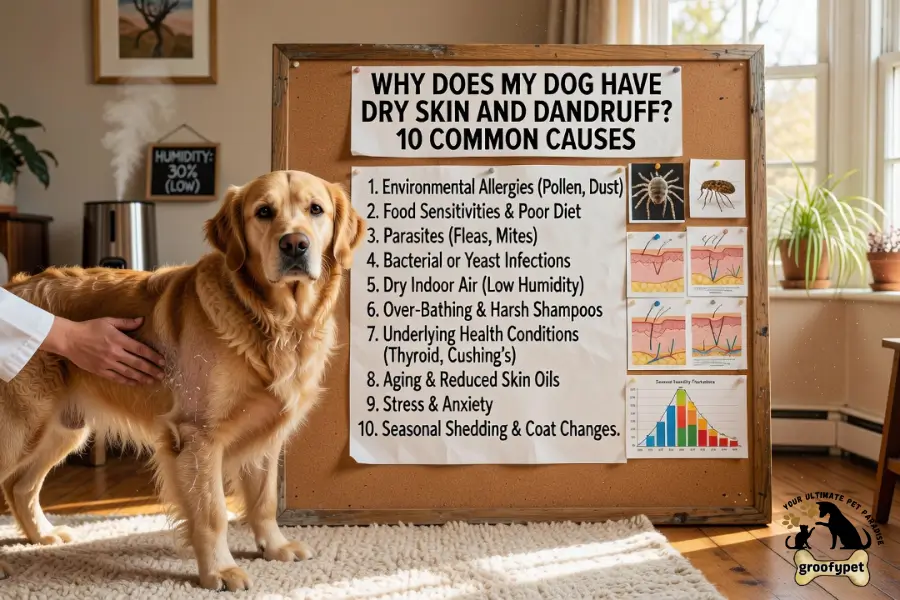
Why Does My Dog Have Dry Skin and Dandruff? 10 Common Causes
My dog’s dry skin and dandruff can develop for several reasons. Some causes are related to grooming or the environment, while others involve allergies, parasites, infections, or medical conditions.
1. Dry Weather and Low Humidity
Cold weather and low indoor humidity can make your dog’s skin lose moisture. This may lead to dryness, small flakes, and mild itching. Indoor heating can also reduce humidity during colder months. Dogs that already have sensitive skin may notice these changes more than others.
You can help by keeping your dog’s sleeping area comfortable and avoiding unnecessary baths. A clean humidifier may also help if your indoor air is very dry.
2. Frequent Bathing or Harsh Shampoos
Bathing your dog too often can remove natural oils that help protect the skin. Strong fragrances, human shampoos, and unsuitable grooming products may also cause irritation. Dogs need shampoos made specifically for their skin. Human skin and dog skin differ, so even baby shampoo may be too harsh for regular use.
Use a gentle dog shampoo when bathing is needed. If your dog develops flakes after every bath, ask your veterinarian whether the product or bathing schedule should change.
3. Poor Diet or Nutritional Imbalance
Your dog’s skin and coat need a balanced supply of nutrients to stay healthy. A diet that does not meet your dog’s nutritional needs may contribute to a dry coat and poor skin condition. Essential fatty acids, including omega-3 and omega-6 fats, support normal skin function. However, dandruff alone does not prove that your dog has a nutritional deficiency.
Choose a complete and balanced food suitable for your dog’s age and life stage. Speak with your veterinarian before adding fish oil or other supplements because the correct amount depends on your dog’s needs.
4. Environmental or Food Allergies
Allergies can cause itching and inflammation that affect your dog’s skin. Environmental triggers may include pollen, grass, dust mites, and mold. Some dogs also react to ingredients in their food. However, food allergies cannot be diagnosed just by looking at flakes or changing foods repeatedly.
You may notice redness, paw licking, ear irritation, repeated scratching, or skin infections alongside dandruff. Your veterinarian can help identify possible triggers and recommend an appropriate allergy assessment.
5. Fleas, Mites, and Other Parasites
External parasites can cause intense itching, irritation, and flaky skin. Fleas are a common cause of skin discomfort, while certain mites can cause conditions such as mange. Some dogs develop flea allergy dermatitis, meaning even a small number of flea bites can trigger a strong reaction. You may see scratching around the tail, lower back, belly, or thighs.
Check your dog’s coat for fleas or black specks that may be flea dirt. However, not seeing fleas does not rule out parasites. Your dog may need a veterinary examination and reliable parasite prevention.
6. Yeast or Bacterial Skin Infections
Yeast and bacterial infections can make your dog’s skin flaky, red, greasy, itchy, or smelly. These problems may develop on their own or occur after another condition damages the skin.
Common signs include:
- Strong or unusual skin odor.
- Red or irritated patches.
- Greasy areas with flakes.
- Repeated licking and scratching.
- Crusts, bumps, or hair loss.
A veterinarian may examine skin samples to check for yeast or bacteria. Treatment depends on the type and severity of infection, so avoid using leftover medication or random medicated shampoos.
7. Seborrhea and Other Skin Conditions
Seborrhea is a skin condition that causes excessive scaling. It can produce dry flakes, greasy skin, or a combination of both.Some dogs have an inherited form, but secondary seborrhea is more common. It may develop because of allergies, parasites, infections, or hormonal problems.
You might notice thick scales, oily patches, an unpleasant smell, or recurring dandruff. A veterinarian needs to investigate the underlying cause before deciding on treatment.
8. Dehydration
Water supports normal body functions, including healthy skin. If your dog does not drink enough, dehydration can become a concern. However, dry skin and dandruff alone are not reliable signs of dehydration. Look for other changes, such as reduced energy, dry or sticky gums, and unusual thirst or urination.
Keep fresh water available throughout the day. If your dog is drinking much less than usual or seems unwell, contact your veterinarian.
9. Underlying Health Problems
Some medical conditions can affect the skin and coat. Hormonal disorders, including hypothyroidism and Cushing’s disease, may contribute to skin changes in dogs.You may also notice hair thinning, recurring infections, changes in weight, increased thirst, or changes in energy. These symptoms do not confirm a specific illness, but they deserve attention.
If dandruff continues despite suitable grooming, your veterinarian may recommend blood tests or other checks. Treating the underlying condition is often more important than simply removing the flakes.
10. Breed-Related Skin Tendencies
Some dog breeds are more likely to develop inherited skin and coat conditions. Examples include Cocker Spaniels, Basset Hounds, West Highland White Terriers, and certain other breeds affected by seborrhea. Breed alone does not explain every case of dandruff. A dog from any breed can develop dry skin because of allergies, parasites, grooming products, or other health problems.
If your dog has had recurring flakes since puppyhood, mention this history during a veterinary visit.
Also Read : How Often to Wash Dog Bedding? A Complete Cleaning Guide
Common Causes of Dog Dandruff and What to Do
| Possible cause | Signs you may notice | Helpful next step |
|---|---|---|
| Dry weather | Fine flakes and mild dryness | Improve indoor humidity |
| Frequent bathing | Dry coat and flakes after baths | Review shampoo and bathing routine |
| Nutritional imbalance | Dull coat and poor skin condition | Check diet with your vet |
| Allergies | Itching, redness, paw licking | Arrange an allergy assessment |
| Fleas or mites | Scratching and irritated skin | Check parasite prevention |
| Skin infection | Odor, greasy flakes, redness | Get a veterinary examination |
| Seborrhea | Repeated dry or oily scaling | Ask about skin testing |
| Health conditions | Skin changes with other symptoms | Discuss further testing |
How to Get Rid of Dog Dandruff and Dry Skin
The best way to treat dog dandruff is to find out what is causing it. Simple grooming changes may help mild dryness, but allergies, parasites, and infections need targeted care.
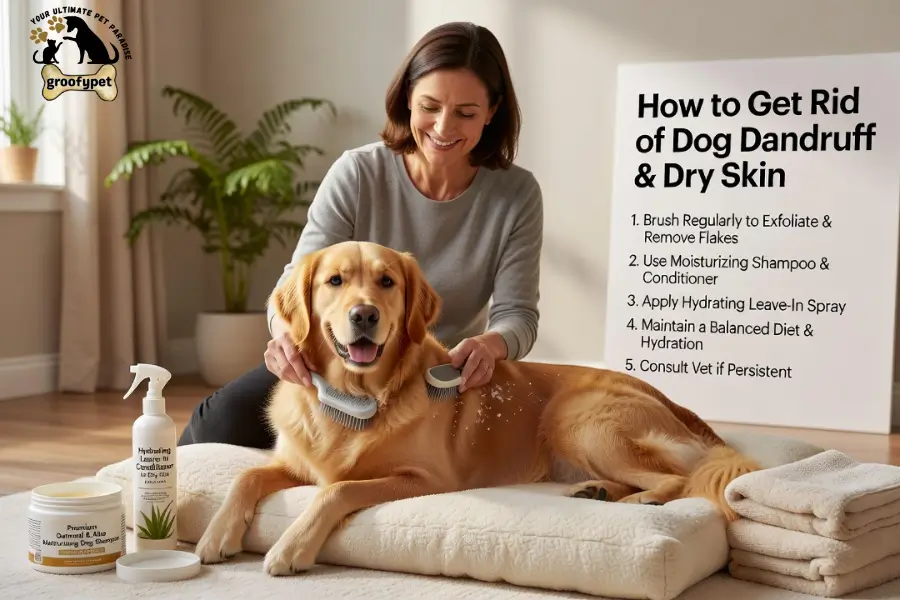
Here are practical steps that can support your dog’s skin health.
1. Use a Gentle Dog-Specific Shampoo
Choose a mild shampoo made specifically for dogs. Avoid products with strong fragrances or harsh ingredients if your dog has sensitive skin. Some dogs benefit from moisturizing or veterinary-recommended shampoos. Others need medicated products for infections or seborrhea.
Do not choose a medicated shampoo without understanding the skin problem. Ask your veterinarian which product is suitable for your dog’s condition.
2. Avoid Bathing Too Frequently
Frequent bathing can make some dogs’ skin drier. The right bathing schedule depends on coat type, activity level, skin condition, and veterinary advice. Use lukewarm water and rinse thoroughly. Shampoo left behind can irritate the skin and cause additional discomfort.
If your dog needs frequent baths because of a skin condition, ask your veterinarian about a suitable bathing plan.
3. Brush Your Dog Regularly
Brushing helps remove loose fur, dirt, and some dead skin flakes. It also helps distribute natural oils through the coat. Choose a brush that suits your dog’s coat type. Use gentle movements, especially around dry or irritated areas.Avoid brushing over open sores, painful patches, or inflamed skin. If brushing causes discomfort, stop and ask your veterinarian for advice.
4. Provide Fresh Drinking Water
Make sure your dog has access to clean water throughout the day. Wash the water bowl regularly and refill it when needed. Some dogs drink more when water is placed in several accessible locations. You can also ask your veterinarian whether your dog’s daily water intake seems appropriate.
5. Feed a Complete and Balanced Diet
Good nutrition supports healthy skin, normal hair growth, and overall well-being. Choose a complete and balanced dog food that matches your dog’s age and nutritional needs.Avoid making sudden food changes just because you notice dandruff. If you suspect a food allergy, your veterinarian may recommend a controlled elimination diet.
6. Maintain Flea and Parasite Prevention
Fleas and mites can cause itching and skin irritation. Follow a veterinarian-recommended parasite prevention plan that suits your dog’s age, weight, and lifestyle.Check your dog’s coat regularly, especially around the tail base, belly, and inner thighs. Contact your veterinarian if you notice persistent scratching or suspicious skin changes.
7. Keep Bedding and Grooming Tools Clean
Dirty bedding can collect loose hair, dust, and skin flakes. Wash your dog’s blankets and bedding regularly using a pet-safe laundry routine.Clean brushes and grooming tools to remove trapped fur and dirt. Make sure everything dries fully before your dog uses it again.
Best Home Remedies for Dog Dry Skin and Dandruff
If your dog has mild dryness without redness, sores, or severe itching, a few simple care steps may help. These measures support skin health but do not treat every cause of dandruff.
- Gentle brushing: Brush your dog with a suitable grooming tool to remove loose flakes and spread natural oils.
- Clean bedding: Wash blankets and sleeping areas regularly to reduce dust and dirt.
- Fresh water: Keep clean drinking water available at all times.
- Comfortable indoor air: If your home is very dry, a clean humidifier may help improve humidity.
- Suitable bathing: Avoid unnecessary baths and use only dog-specific products.
Be careful with online home remedies. Essential oils, vinegar, baking soda, and human skin creams may irritate your dog’s skin or cause harm if licked. Coconut oil is not a proven treatment for every cause of dandruff. Ask your veterinarian before applying products to affected skin.
Can Food Cause Dry Skin and Dandruff in Dogs?
Yes, nutrition can influence your dog’s skin and coat health. A diet that does not provide the nutrients your dog needs may contribute to poor coat condition.Essential fatty acids help support the skin’s natural barrier. Omega-3 fats are found in ingredients such as fish oil, while omega-6 fats are present in several plant and animal fats.
However, dandruff does not automatically mean your dog needs more fatty acids. Too much supplementation can also create problems, and supplements may not be suitable for every dog.Food allergies are another possibility. Some dogs react to particular food proteins and develop itching, ear problems, or recurring skin irritation. A veterinarian may recommend a strict elimination diet to investigate this.
Do not switch between several foods or add multiple supplements at once. Making one planned change at a time helps you and your veterinarian understand what is affecting your dog.
Read This : Can Bed Bugs Kill Dogs? Risks, Symptoms, and Safety Tips
When Should I Take My Dog to the Vet?
A few flakes without other symptoms may not be an emergency. However, persistent dandruff deserves attention because it can be linked to an underlying skin problem.
Arrange a veterinary appointment if you notice:
- Dandruff that continues or keeps returning.
- Frequent scratching, licking, or chewing.
- Red, swollen, or painful skin.
- Bald patches or unusual hair loss.
- Open sores, bleeding, or thick crusts.
- Greasy skin or a strong unpleasant odor.
- Repeated ear irritation or infections.
- Changes in appetite, energy, or drinking habits.
Seek prompt veterinary advice if your dog has rapidly spreading skin changes, severe discomfort, or seems generally unwell. Do not wait for dandruff to disappear on its own when other symptoms are present.
How Do Vets Diagnose Dry Skin and Dandruff in Dogs?
Your veterinarian will first ask about your dog’s symptoms, diet, grooming routine, and medical history. They will examine the skin and coat to check where the flakes appear and whether redness, odor, hair loss, or irritation is present.
Depending on the findings, testing may include:
- Skin scraping: A sample of skin is examined for certain mites and other parasites.
- Skin cytology: A sample is checked under a microscope for bacteria, yeast, and inflammatory cells.
- Flea combing: The veterinarian checks the coat for fleas or signs of flea activity.
- Fungal testing: Testing may be recommended if ringworm or another fungal problem is suspected.
- Blood tests: These may help investigate hormonal disorders or other internal health problems.
- Skin biopsy: In selected cases, a small skin sample is examined to help identify a specific skin condition.
Not every dog needs all these tests. The veterinarian chooses them based on the symptoms and examination results.
How to Prevent Dry Skin and Dandruff in Dogs
You cannot prevent every skin condition, but regular care can reduce some common triggers.
- Feed a complete and balanced diet.
- Provide clean drinking water every day.
- Use shampoo designed for dogs.
- Avoid bathing more often than necessary.
- Brush your dog’s coat gently.
- Keep bedding and grooming tools clean.
- Follow a suitable flea and tick prevention plan.
- Watch for early signs of itching or redness.
- Schedule routine veterinary checkups.
Pay attention to changes in your dog’s coat. If flakes appear suddenly or continue returning, investigate the cause instead of relying on repeated baths or home treatments.
Can Puppies and Senior Dogs Get Dandruff?
Yes. Dogs of all ages can develop dry skin and dandruff, but their needs may differ.
- Puppies: Young dogs can develop flaky skin because of parasites, infections, grooming products, or other skin conditions. Use only products suitable for puppies and ask your veterinarian about persistent flakes.
- Adult dogs: Allergies, parasites, diet, and bathing habits can all affect skin health. A sudden change in an adult dog’s coat deserves attention, especially if itching develops.
- Senior dogs: Older dogs may have reduced mobility or underlying health problems that affect grooming and skin condition. New dandruff, hair loss, or recurring infections should be discussed with a veterinarian.
A Simple Skin-Care Routine for Dogs
A consistent routine can help you notice changes before they become more serious.
| Frequency | What to do |
|---|---|
| Daily | Check for scratching, redness, and changes in the coat |
| Daily | Provide fresh drinking water |
| Several times a week | Brush gently when suitable for the coat |
| Weekly | Check the skin, ears, bedding, and grooming tools |
| As needed | Bathe with a suitable dog shampoo |
| Regularly | Follow veterinary parasite prevention advice |
Adjust this routine to your dog’s coat type and medical needs. Dogs with diagnosed skin conditions may need a different grooming schedule.
Frequently Asked Questions
Why Does My Dog Have Dry Skin and White Flakes?
Your dog may have white flakes because of dry weather, frequent bathing, allergies, parasites, or a skin condition such as seborrhea. Skin infections and some medical problems can also cause scaling. A veterinarian can help identify the cause if the problem persists.
Is Dog Dandruff Normal?
A small amount of loose skin may not always indicate a serious problem. However, frequent or heavy dandruff is worth checking, especially when it appears with itching, redness, odor, or hair loss.
How Do I Get Rid of Dandruff on My Dog?
Start by reviewing your dog’s bathing routine, shampoo, diet, and parasite prevention. Gentle brushing and clean bedding may help mild dryness. If dandruff continues, arrange a veterinary examination to identify the underlying cause.
Can Dry Weather Cause Dandruff in Dogs?
Yes. Low humidity and dry indoor air can contribute to flaky skin. Keeping your dog’s environment comfortable and avoiding unnecessary bathing may help reduce dryness.
Can Dog Food Cause Dry Skin?
An unbalanced diet or inadequate nutrient intake can affect skin and coat health. Food allergies may also cause itching and inflammation. Your veterinarian can help determine whether nutrition is contributing to the problem.
Should I Bathe My Dog If He Has Dandruff?
You can bathe your dog when necessary, but avoid frequent baths and harsh products. Use a dog-specific shampoo and ask your veterinarian about a suitable product if the skin is irritated or flaky.
What Shampoo Is Best for Dogs With Dry Skin?
A gentle, dog-specific shampoo may suit dogs with mild dryness. Dogs with infections, seborrhea, or other skin conditions may need a veterinary-recommended medicated shampoo. The best choice depends on the cause.
Key Takeaways
- Dog dandruff can develop because of dry weather, bathing habits, allergies, parasites, or skin conditions.
- White flakes are not always a sign of simple dry skin.
- Frequent bathing and harsh shampoos may make dryness worse.
- Balanced nutrition and fresh water support healthy skin and coat.
- Home care may help mild dryness but cannot treat every skin problem.
- Persistent itching, redness, odor, sores, or hair loss need veterinary attention.
- Finding the underlying cause is the most effective way to manage recurring dandruff.
Final Thoughts
If your dog has dry skin and dandruff, start by looking for other symptoms and reviewing their grooming routine. Mild dryness may improve with gentle care, suitable bathing habits, and balanced nutrition.However, recurring flakes can be a sign of allergies, parasites, infections, or another health condition.
Do not rely on home remedies when your dog has persistent itching, redness, sores, or hair loss.A veterinary examination can help identify the cause and guide the right treatment. With proper care, you can help your dog feel more comfortable and maintain a healthier coat.
Why Do Dogs Stretch When They See You? 10 Reasons Explained
Why Does Dog Grinding Teeth When Settling Down Sound So Alarming?