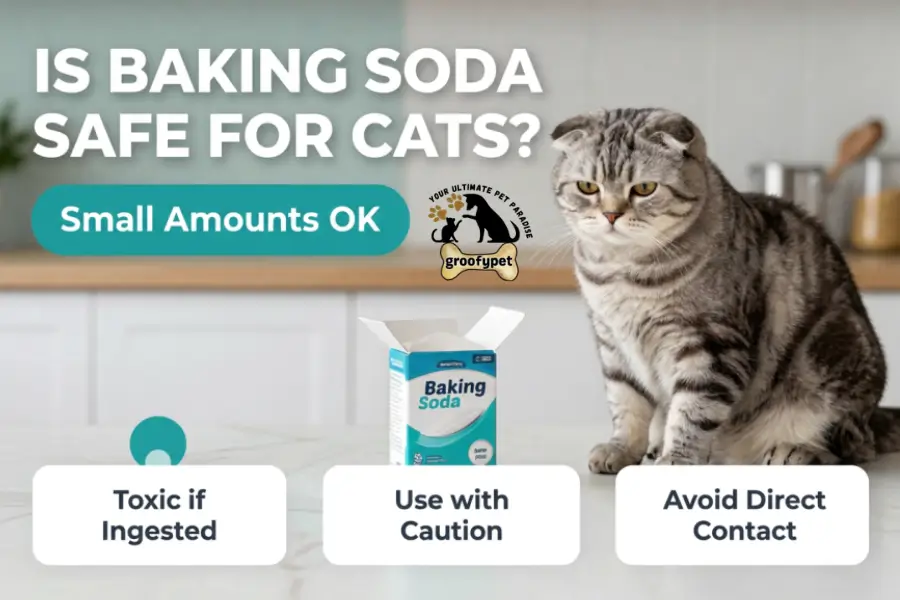
If you share your home with a cat, baking soda is probably already somewhere in your pantry, fridge, or cleaning cabinet. Is baking soda safe for cats? Cat owners reach for it to freshen litter boxes, deodorize carpets, and tackle tough household smells.
Because baking soda is marketed as a natural, chemical-free product, many people assume it must be perfectly harmless around pets. But that assumption deserves a much closer look.
This comprehensive, vet-reviewed guide answers every question cat owners have about baking soda and cats including what it is, how it affects feline health, how much is considered dangerous, what symptoms signal a problem, and how to use it safely if you choose to keep it in your home.
Quick Answer: Is Baking Soda Safe for Cats?
Baking soda is the common household name for sodium bicarbonate (NaHCO3), a naturally occurring alkaline mineral salt. It appears as a fine white powder and has been used for centuries in cooking, cleaning, and personal care.
Because baking soda is natural, inexpensive, and widely available, many cat owners consider it their first choice for managing pet odors. That makes understanding its safety profile around cats especially important.
| Use | Common Application | Risk Level for Cats |
| Baking | Cookies, cakes, bread | Negligible (cooked) |
| Carpet deodorizer | Sprinkle, sit, vacuum | Low (if vacuumed thoroughly) |
| Litter box | Odor control additive | Moderate (paw contact, inhalation) |
| Direct skin application | Dry shampoo, flea remedy | High (ingestion risk) |
| Surface cleaner | Counters, floors, sinks | Low (if rinsed well) |
Is Baking Soda Toxic to Cats?
The short answer: not at trace or minimal amounts, but yes at moderate to large doses. Veterinary toxicologists classify baking soda as a dose-dependent hazard, meaning the danger scales directly with how much a cat is exposed to.
Is baking soda safe for cats? Sodium bicarbonate is an alkaline salt. When a cat ingests too much, it disrupts the body’s delicate acid-base balance, leading to a condition called metabolic alkalosis. Because cats are significantly smaller than humans and far more sensitive to electrolyte shifts, even relatively modest amounts can cause problems that would barely affect a person.
According to the American College of Veterinary Pharmacists, toxicosis in cats may occur at ingestion levels of 10 to 20 grams per kilogram of body weight, which translates to approximately 2 to 4 teaspoons per kilogram. For a typical 4-kilogram cat, that means as little as 8 to 16 teaspoons of baking soda could trigger toxic reactions a sobering amount to keep in perspective when using it around the home.
How Baking Soda Causes Harm
- When cats ingest sodium bicarbonate, it reacts with stomach acid, releasing carbon dioxide.
- This causes immediate gastric distension and vomiting.
- Beyond that, absorbed sodium bicarbonate raises blood pH, interfering with normal cellular function.
- Electrolyte imbalances, particularly involving sodium, potassium, and chloride.
- It affects muscle function, heart rhythm, and neurological activity.
Can Cats Eat Baking Soda?
Cats do not deliberately seek out baking soda, but accidental ingestion is common. A curious cat investigating freshly sprinkled carpet powder, grooming paws that have walked across a treated surface, or licking fur that has been dusted with baking soda all of these are realistic exposure routes.
Cats are fastidious self-groomers. Whatever lands on their fur or paws will almost certainly end up in their mouths. This is precisely why applying baking soda directly to a cat’s coat as a dry shampoo or flea remedy is not recommended by veterinarians. Even if the amount on their fur seems small, repeated grooming sessions mean repeated ingestion.
A cat that licks a small dusting of baking soda from the carpet after it has been vacuumed is unlikely to suffer any ill effects. A cat that consumes a significant portion of an open box or that has baking soda applied generously to its coat and then grooms continuously faces real risk.
Health Benefits of Baking Soda Around Cats
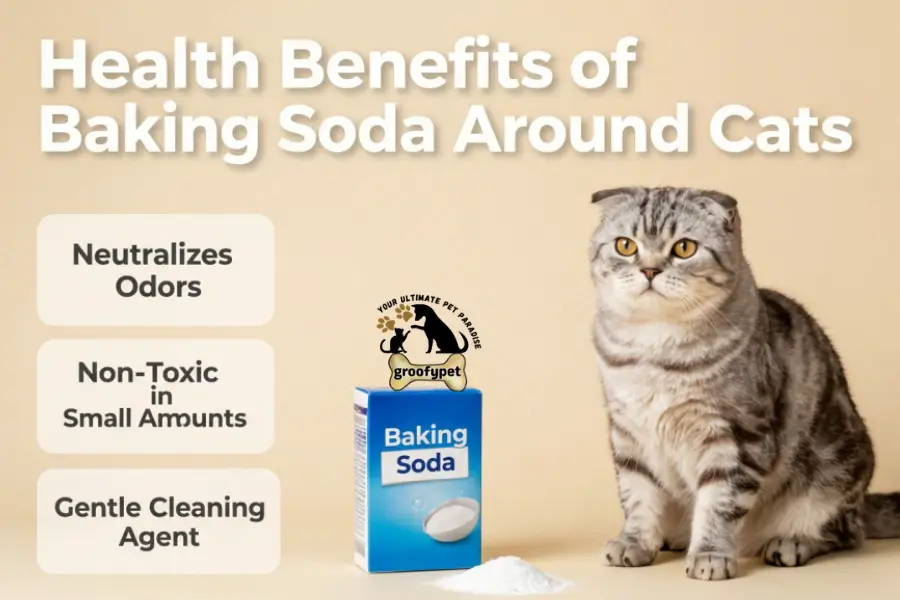
Is baking soda safe for cats? Despite the risks associated with ingestion, baking soda does offer genuine, practical benefits for cat owners when used responsibly. Understanding what it can and cannot safely do helps you make informed choices.
1. Natural Odor Control
Baking soda neutralizes odors by chemically reacting with acidic and alkaline odor molecules rather than masking them. This makes it genuinely effective for household smells caused by pet accidents, dirty litter, or general pet odors without the heavy synthetic fragrances found in many commercial products that can irritate a cat’s highly sensitive sense of smell.
2. Helps Reduce Litter Box Smells
Many cat owners sprinkle a small amount at the bottom of the litter box before adding litter to help absorb ammonia odors. Used this way, beneath the litter and not on top, contact risk is greatly reduced. Many commercial cat litter brands already incorporate controlled amounts of sodium bicarbonate in their formulations, which have been designed and tested for pet safety.
3. Chemical-Free Cleaning Option
For cat owners who prefer to avoid harsh chemical cleaners, baking soda offers a genuine alternative. It cuts through grease, neutralizes odors, and can be combined with water or white vinegar to create an effective cleaning paste or spray without leaving toxic residues that could harm cats who walk across freshly cleaned surfaces.
4. Affordable Household Cleaner
Baking soda costs a fraction of most commercial pet-safe cleaners and is available everywhere. For cat owners managing multiple animals or a large home, cost-effectiveness is a real consideration.
5. Helps Absorb Moisture
Its moisture-absorbing properties make baking soda useful for treating pet accidents on carpets and upholstery. Sprinkling it on a damp spot after blotting helps draw out remaining moisture and neutralize the odor.
6. Multipurpose Cleaning Product
From cat bedding to furniture to car seats, baking soda can deodorize a wide range of surfaces that cats come into contact with as long as surfaces are thoroughly vacuumed or rinsed before your cat returns to them.
7. Environmentally Friendly
Baking soda is biodegradable and does not introduce persistent chemical compounds into your home environment, making it an appealing option for eco-conscious cat owners.
Risks of Baking Soda for Cats
Understanding the risks is just as important as knowing the benefits. Here are the key hazards associated with baking soda and cats:
- Baking soda poisoning from moderate to large ingestion
- Electrolyte imbalances affecting sodium, potassium, and chloride levels
- Vomiting, often the first and most immediate symptom
- Diarrhea and gastrointestinal distress
- Excessive thirst and urination as kidneys work to restore balance
- Lethargy and weakness from disrupted muscle and nerve function
- Muscle tremors in more serious cases
- Breathing difficulties as the body attempts to compensate for acid-base changes
- Kidney stress from processing an overload of sodium bicarbonate
- Severe toxic reactions including seizures and collapse in extreme ingestion cases
Symptoms of Baking Soda Poisoning in Cats
Recognizing the symptoms of baking soda toxicity early can make a significant difference in outcomes. Symptoms typically appear within three hours of ingestion and progress in stages.
| Stage | Symptoms | Action Required |
| Early | Drooling, vomiting, diarrhea, loss of appetite | Monitor closely; call vet if symptoms persist |
| Moderate | Weakness, excessive thirst, confusion, disorientation | Contact veterinarian promptly |
| Severe | Tremors, seizures, breathing problems, collapse | Emergency veterinary care immediately |
Do not attempt to induce vomiting unless your veterinarian explicitly instructs you to do so. Inducing vomiting can sometimes cause additional harm, particularly if the cat is already showing signs of neurological involvement.
How Much Baking Soda Is Dangerous for Cats?
Toxicity in cats is dose-dependent and varies based on several key factors.
Cat Size and Weight
A smaller cat reaches dangerous exposure thresholds much faster than a larger one. The toxicosis threshold of 10 to 20 g/kg means a 3-kilogram kitten would be at risk from far less baking soda than a 6-kilogram adult cat.
Concentrated vs Diluted Exposure
A cat licking pure baking soda powder absorbs it very differently than a cat walking across a floor cleaned with a diluted baking soda solution that was thoroughly rinsed. Concentration and form of exposure matter enormously.
Frequency of Exposure
Repeated low-level exposures — for example, a cat that consistently grooms baking soda from its paws after walking through a litter box treated with loose powder — may accumulate more risk over time than a single minor incident.
What To Do If Your Cat Eats Baking Soda
If you suspect your cat has ingested baking soda, act quickly and calmly. Follow these steps:
- Remove Access: Immediately remove any remaining baking soda from your cat’s reach to prevent further ingestion.
- Check the Amount: Estimate how much your cat may have consumed. Check the container and note how much is missing.
- Contact Your Veterinarian: Call your vet or an animal poison helpline immediately. Provide your cat’s weight, the estimated amount consumed, and any symptoms you observe.
- Monitor Symptoms: Watch closely for vomiting, drooling, weakness, or tremors. Note the time symptoms appear and their severity.
- Do Not Induce Vomiting: Unless specifically instructed by your vet, do not attempt to make your cat vomit.
Seek emergency veterinary care immediately if your cat shows tremors, seizures, breathing difficulties, extreme lethargy, or collapse.
Is Baking Soda Safe in Cat Litter?
This is one of the most common questions cat owners ask, and the answer requires an important distinction: commercially formulated cat litter containing baking soda is not the same as adding loose household baking soda to your cat’s litter box.
Pouring loose baking soda directly into a litter box is a different matter. Cats dig vigorously in litter, which kicks up fine powder. They inhale the dust, and the powder clings to their paws and fur, where they will inevitably groom it off. Veterinary guidance does not support adding loose household baking soda to a cat’s litter box for this reason.
If odor control in the litter box is your goal, choose a high-quality commercial litter that already contains baking soda in a pet-safe formulation, and maintain a regular cleaning schedule. Baking soda helps with odors but does not replace regular scooping and box washing.
Is Baking Soda Safe for Cleaning Around Cats?
Floors
You can clean floors with a diluted baking soda solution. The key is thorough rinsing and allowing the floor to dry completely before your cat walks on it. A thin residue on damp floors can transfer to paws and be ingested during grooming.
Carpets
Sprinkling baking soda on carpets to deodorize them is generally safe provided you vacuum thoroughly before allowing your cat back into the room. Most carpet deodorizers are baking soda-based, and the amounts that transfer to a cat’s paws after a thorough vacuuming are too small to cause harm in most cases.
Furniture
Baking soda can deodorize upholstered furniture and cat beds effectively. Sprinkle, allow it to sit, then vacuum thoroughly. Keep cats away during the application and vacuum step.
Food Preparation Areas
Avoid using baking soda to clean surfaces where cat food is prepared or served. Even trace residues in food bowls can accumulate over repeated meals.
Safe Ways to Use Baking Soda Around Cats
- Use diluted solutions rather than full-strength powder on surfaces cats contact
- Always rinse surfaces thoroughly after cleaning with baking soda
- Allow surfaces to dry completely before letting cats back into the area
- Vacuum carpets thoroughly and allow to air out before cat access
- Never apply baking soda directly to cat fur, skin, or coat
Better Alternatives to Baking Soda for Cat Owners
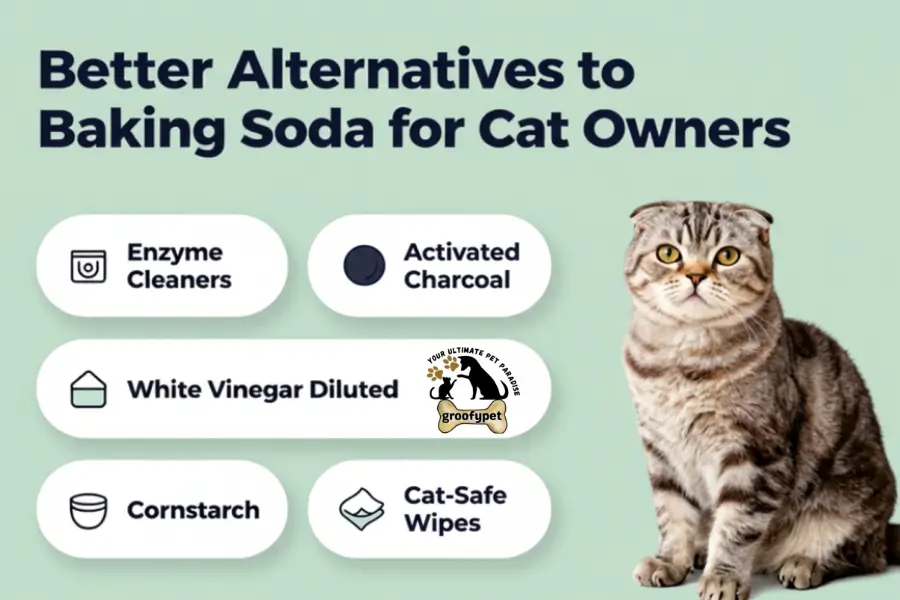
If you are concerned about the risks associated with baking soda and cats, several excellent pet-safe alternatives exist:
|
Purpose |
Pet-Safe Alternative |
Notes |
| Litter box odor | Commercial baking soda litters | Pre-formulated for pet safety |
| Carpet deodorizing | Enzyme-based pet deodorizers | Breaks down odor at molecular level |
| Surface cleaning | Diluted white vinegar solution | Rinse well; strong odor dissipates quickly |
| Accident cleanup | Enzymatic pet stain cleaners | Most effective for urine and feces odors |
| General odor control | Activated charcoal air purifiers | No surface residue risk |
| Dry coat freshening | Vet-approved waterless pet shampoos | Formulated for cat skin pH |
Veterinary Perspective: What Vets Want Cat Owners to Know
Veterinarians who work with feline patients regularly see cases of accidental household product ingestion, and baking soda comes up more often than most owners expect. The core message from veterinary professionals is consistent:
- Baking soda is not classified alongside recognized cat poisons like lilies, antifreeze, or certain medications, but its alkaline nature and electrolyte-disrupting potential make it genuinely dangerous in significant amounts
- Cats’ small body size means thresholds for toxicity are reached much faster than in dogs or humans
- The grooming behavior of cats creates an indirect ingestion risk that does not apply to many other species
- Many DIY remedies promoting baking soda for cat flea treatment or skin care lack veterinary support and carry real risks
- When in doubt about any household product and your cat’s safety, consult your veterinarian before use — not after a problem arises
Common Misconceptions About Baking Soda and Cats
Several myths circulate online about baking soda and cats. Here are the most common ones addressed directly:
| Misconception | Reality |
| Baking soda is completely non-toxic to cats | It is dose-dependent. Large amounts cause real harm. |
| It is safe to apply to cat fur for flea control | It is not vet-approved for this use and creates ingestion risk. |
| Natural means safe for pets | Many natural substances are toxic to cats. “Natural” does not equal “harmless.” |
| Cats won’t eat it because it tastes bad | Cats don’t eat it intentionally, but they ingest it through grooming. |
| A little baking soda in litter is fine | Loose powder creates dust and paw contact risk. Use commercial formulations instead. |
- Baking soda (sodium bicarbonate) is not classified as a toxic poison for cats by veterinary sources
- However, baking soda is not harmless; moderate to large ingestion can cause electrolyte imbalances, vomiting, tremors, and serious health complications
- Cats are particularly vulnerable because they self-groom, meaning any substance on their fur or paws will likely be ingested
- Toxicosis may occur at approximately 10 to 20 g/kg of body weight (2 to 4 teaspoons per kilogram)
- Never apply baking soda directly to a cat’s fur, skin, or coat
- Avoid adding loose baking soda to litter boxes use commercial litters with pre-formulated baking soda instead
- Use baking soda for carpet and surface deodorizing with proper precautions: dilute, rinse thoroughly, vacuum well, and keep cats away during application
- Symptoms of baking soda poisoning include vomiting, diarrhea, lethargy, weakness, tremors, and in severe cases, seizures
- Contact your veterinarian or animal poison helpline immediately if you suspect significant ingestion
- Pet-safe enzymatic cleaners and commercial deodorizers formulated for cats are safer alternatives in most situations
Frequently Asked Questions
Is baking soda toxic to cats?
Baking soda is not classified as a traditional poison, but it is dose-dependent in its danger. Small, accidental exposures are unlikely to cause serious harm. Larger amounts, particularly around 10 to 20 grams per kilogram of body weight can cause significant toxicity, including electrolyte imbalances and neurological symptoms.
Can cats lick baking soda safely?
A very small lick of baking soda is unlikely to cause harm. However, cats should not be allowed to lick baking soda freely, and you should never apply it to surfaces your cat will groom. The risk lies in repeated or concentrated exposure through the self-grooming behavior that is natural to all cats.
Is baking soda safe in cat litter?
Commercially formulated cat litters that contain baking soda are designed for pet safety and are generally fine. Adding loose household baking soda directly to a litter box is not recommended because it creates fine dust that cats inhale and accumulate on their paws, increasing ingestion risk.
What happens if my cat eats baking soda?
If your cat eats a small amount, monitor them closely for signs of distress. If your cat eats a larger amount, contact your veterinarian or an animal poison helpline immediately. Symptoms of baking soda toxicity include vomiting, diarrhea, lethargy, muscle tremors, and difficulty breathing. Do not induce vomiting unless directed by a veterinarian.
Can baking soda be used to remove cat odors?
Yes, baking soda is effective at neutralizing pet odors on carpets, furniture, and in the air. Use it safely by sprinkling on surfaces, allowing it to sit, then vacuuming thoroughly before letting your cat back into the area. Always ensure surfaces are clean and dry before cat contact.
How much baking soda is dangerous for cats?
According to the American College of Veterinary Pharmacists, toxicosis in cats may occur with the ingestion of 10 to 20 grams per kilogram of body weight, roughly 2 to 4 teaspoons per kilogram. For a typical 4 kg cat, this means ingesting around 8 to 16 teaspoons of baking soda could trigger toxic reactions.
Is baking soda safer than chemical cleaners?
Baking soda avoids many of the harsh chemical compounds found in conventional cleaners that pose risks to cats. However, it is not automatically safe just because it is natural. The key is using any cleaning product, natural or chemical, with awareness of how your cat could come into contact with it and taking appropriate precautions.
When should I call a veterinarian?
Call your veterinarian or an animal poison helpline any time you suspect your cat has ingested more than a trace amount of baking soda. Seek emergency care immediately if your cat shows tremors, seizures, breathing difficulties, extreme weakness, or collapse.
Vet-Approved Closing Thoughts
Baking soda occupies an interesting middle ground in cat safety. It is not a poison in the way that lilies or antifreeze are, but it is far from harmless when cats are exposed to meaningful amounts. Is baking soda safe for cats? The key to using it responsibly lies in understanding exactly how cats interact with their environment.
Used with the right precautions, diluted properly, thoroughly rinsed, vacuumed well, and kept away from direct cat contact, baking soda can be a safe and useful tool in a cat owner’s household. Used carelessly, applied to fur, poured into litter boxes, or left where cats can investigate freely, it becomes an unnecessary risk.
The best approach is always to consult your veterinarian before using any household product in a new way around your cat. When it comes to your cat’s health and safety, informed use and professional guidance will always be your most reliable tools.
Why Is My Cat Getting Fat? The UltimateGuide For Cat Parents!