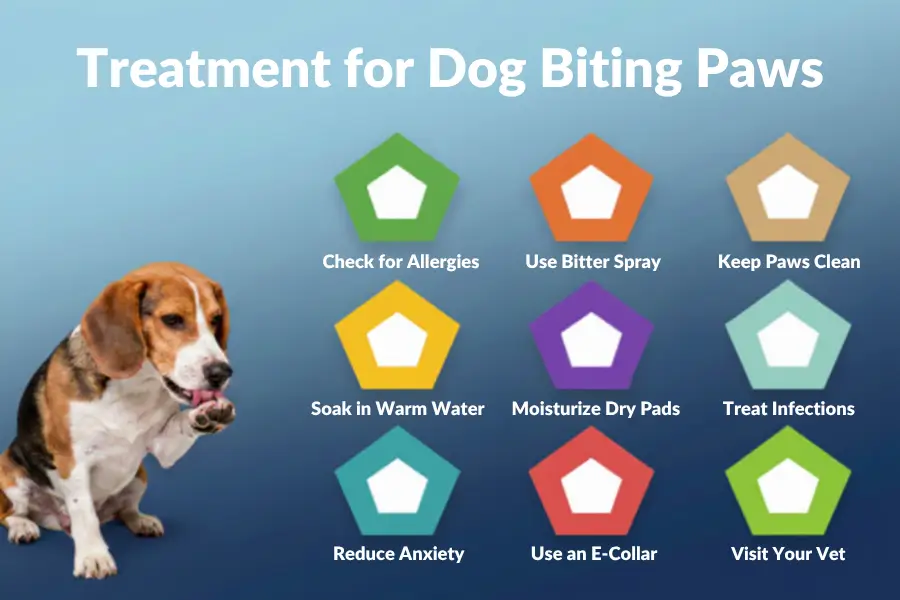
Treatment for a dog biting its paws depends entirely on the cause. Common triggers include allergies, fleas or mites, bacterial or yeast infections, injuries, dry or cracked paw pads, joint pain, and stress or boredom.
Mild cases can often be managed at home with cleaning, protective boots, or an Elizabethan collar, but persistent, worsening, or painful paw biting needs veterinary diagnosis and treatment rather than guesswork.
Occasional paw licking is a normal part of a dog’s grooming routine. Dogs use their tongues and teeth to clean debris from their feet, soothe minor itches, and investigate anything unusual between their toes. But when paw biting becomes frequent, intense, or focused on one spot, it’s rarely “just a habit.”
Persistent biting, chewing, or licking can point to irritation, allergies, parasites, infection, pain, or an underlying behavioral issue and the right treatment always starts with figuring out why it’s happening in the first place.
This guide walks through the most common causes of dog biting paws, how veterinarians typically diagnose them, safe home-care steps you can take in the meantime, and clear signs that mean it’s time to call the vet.
Treatment for Dog Biting Paws
Because so many different problems can lead to the same behavior, treatment for dog biting paws isn’t one-size-fits-all. Here’s how treatment generally breaks down by cause.
- Allergies: A veterinary assessment is the first step to confirm whether the trigger is environmental, food-related, or contact-based. Treatment may involve trigger avoidance, prescribed allergy management (such as medicated shampoos, antihistamines, or other veterinarian-prescribed options), and a supervised diet trial if food allergies are suspected.
- Parasites: Veterinarian-recommended flea, tick, or mite control is essential — not just to stop the current itching, but to prevent reinfestation. Over-the-counter products aren’t always effective against the specific parasite involved, so professional guidance matters here.
- Infections: Bacterial and yeast infections require a veterinary diagnosis, often through a simple skin or paw cytology test, followed by the appropriate topical or systemic treatment. Treating the wrong type of infection with the wrong product can make things worse or delay healing.
- Injuries: Minor wounds can be cleaned and protected at home, but deep wounds, embedded foreign objects, or anything that doesn’t improve within a day or two should be evaluated by a veterinarian.
- Dry paws: Identify and remove the source of irritation — whether that’s hot pavement, road salt, or a harsh cleaning product — and use only veterinarian-approved paw balms or moisturizers. Not every human-grade product is safe if licked off.
- Pain: A full veterinary examination can identify the source of discomfort, whether it’s arthritis, an injury, or a nail problem, and lead to appropriate pain management.
- Behavioral causes: Once medical causes are ruled out, treatment focuses on enrichment, consistent exercise, a predictable routine, training, and for more severe compulsive licking veterinary guidance, which may include behavioral support.
Important: Do not use human creams, essential oils, antibiotics, steroid creams, or painkillers on your dog without veterinary approval. Many human medications are toxic to dogs, and even “natural” remedies like essential oils can cause serious irritation or poisoning if licked.
Why Is My Dog Biting His Paws?
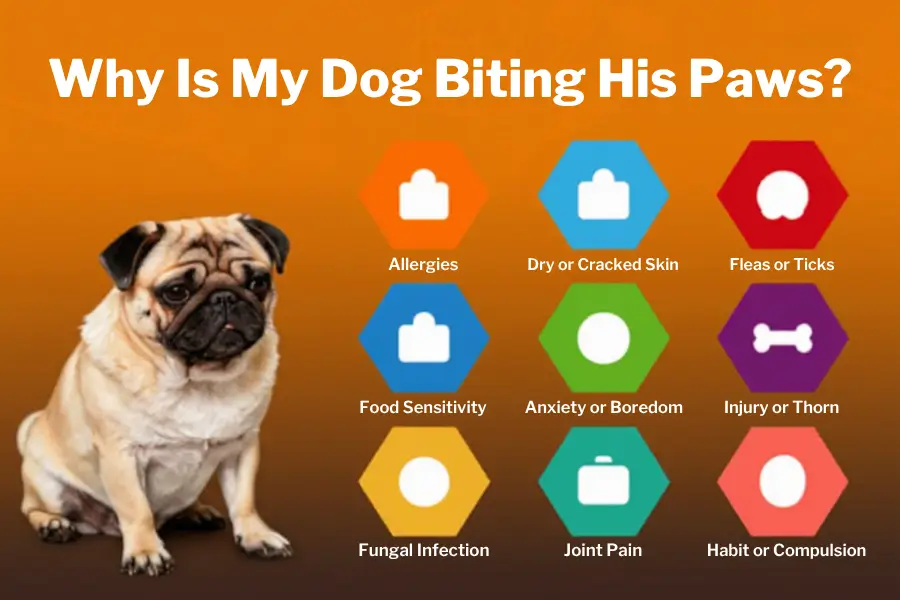
If you’ve noticed your dog biting feet, gnawing at their toes, or obsessively licking one paw, the cause usually falls into one of a few categories: allergies, parasites, infection, injury, dry skin, pain, or behavior. Below is a closer look at each.
Allergies
Dog allergies are one of the most frequent reasons behind itchy dog paws. Because the paws have thin skin and constant contact with the ground, they’re often the first place allergic reactions show up.
- Environmental allergies — Pollen, mold spores, and dust mites can trigger seasonal or year-round itching, especially around the toes and pads.
- Food allergies — Certain proteins or grains can cause skin inflammation that shows up as red paws in dogs, along with ear infections or digestive upset.
- Seasonal triggers — Some dogs only react during spring or fall, when pollen counts spike.
- Contact irritation — Cleaning products, lawn chemicals, salt used on winter roads, or certain fabrics in bedding can irritate the paw pads directly.
Allergic dogs often lick or bite at more than one paw, and the itching tends to come and go or worsen with the seasons.
Fleas and Other Parasites
Parasites are a classic cause of dog paw itching, and they’re easy to miss if you’re not looking closely.
- Flea bites — Even a small number of fleas can cause an intense allergic reaction called flea allergy dermatitis, which often concentrates around the feet and lower legs.
- Mites — Microscopic mites (including harvest mites and sarcoptic mange mites) can cause relentless itching between the toes.
- Ticks — While less commonly linked to paw chewing specifically, ticks can cause localized irritation at the bite site.
Parasites cause itching by injecting saliva or burrowing into the skin, which triggers a histamine response — this is why the itching from fleas or mites can feel disproportionate to how few parasites are actually present.
Bacterial or Yeast Infections
Warm, moist paws — especially the skin between the toes — are an ideal breeding ground for bacteria and yeast. A dog paw infection often develops secondary to another problem, like allergies or a wound, because constant licking breaks down the skin’s natural barrier.
Watch for:
- Redness
- Swelling
- A strong or unusual odor
- Discharge
- Darkened or thickened, irritated skin
Yeast infections in particular often produce a musty or “corn chip” smell and a brownish discoloration of the fur between the toes.
Paw Injuries
Sometimes the explanation is simple and physical. Dogs may bite at a paw because something is actually wrong with it:
- Cuts or scrapes from rough terrain, glass, or debris
- Splinters, thorns, or grass seeds lodged in the pad or between the toes
- Burns from hot pavement or asphalt
- Cracked or split paw pads
- Foreign objects wedged between the toes
A dog fixating on one specific paw or toe, rather than licking generally, is a strong clue that an injury or foreign body is involved.
Dry or Irritated Paw Pads
Paw pads can become dry, cracked, or irritated from environmental exposure rather than an injury or allergy. Common culprits include:
- Hot pavement or sand in summer
- Ice, salt, and de-icing chemicals in winter
- Rough or abrasive terrain
- Excessive moisture from swimming or rain, which can soften and weaken the pads
- Harsh soaps or cleaning chemicals tracked onto floors
Dry or cracked pads are uncomfortable, and a dog may lick or gently bite the area for relief.
Pain or Joint Problems
Not all paw biting is about itching. Dogs sometimes lick or bite a paw because it hurts, rather than because it’s irritated. Underlying pain sources can include:
- Arthritis, especially in older dogs
- Hip or elbow dysplasia affecting gait and weight distribution
- Sprains or soft-tissue injuries
- Nail problems, such as an ingrown or broken nail
Pain-related licking is often localized to one paw and may be accompanied by limping, reluctance to walk, or changes in how the dog stands.
Anxiety, Stress, or Boredom
Repetitive paw chewing can also be a behavioral issue. Dogs left alone for long periods, under-stimulated, or experiencing separation anxiety sometimes develop compulsive licking or biting as a coping mechanism. Over time, this can lead to a lick granuloma, a thickened, often hairless patch of skin caused by chronic licking.
That said, behavioral causes should generally be considered only after medical causes have been ruled out. A dog that seems anxious and licks their paws may actually be reacting to an itch or pain that hasn’t been identified yet.
Safe Home Care for a Dog Biting Its Paws
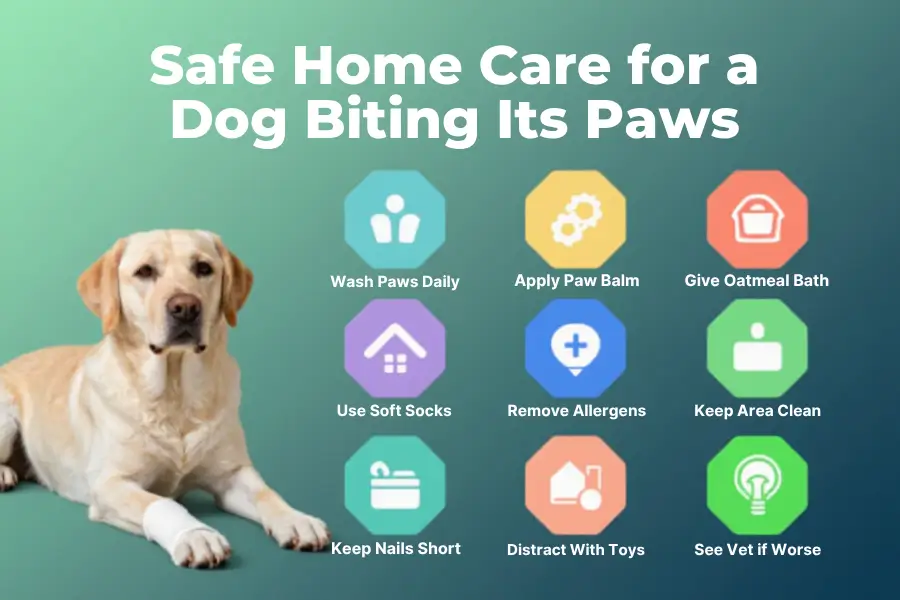
While you’re figuring out the cause or waiting for a vet appointment there are safe steps you can take to keep your dog comfortable and prevent things from getting worse:
- Inspect paws gently. Check between the toes and pads for redness, swelling, cuts, or foreign objects.
- Keep paws clean and dry. Moisture trapped between the toes encourages bacteria and yeast growth.
- Rinse paws after exposure to irritating surfaces, such as salted sidewalks, chemically treated lawns, or muddy trails, when appropriate.
- Prevent excessive chewing with veterinary-approved protective measures like a cone collar or protective booties.
- Keep nails trimmed appropriately to avoid added pressure on the paw and reduce the risk of splitting.
- Wash bedding regularly to cut down on allergens, bacteria, and parasite eggs.
- Avoid harsh household chemicals around your dog’s feet, including some floor cleaners and lawn treatments.
These steps support healing and reduce further irritation, but they aren’t a substitute for identifying and treating the underlying cause.
When Should I Take My Dog to the Vet?
Some signs of paw biting call for immediate veterinary attention rather than home care. Contact your vet if you notice:
- Severe swelling
- Bleeding
- Pus or discharge
- A bad or unusual odor
- Deep wounds
- Signs of severe pain
- Limping or inability to walk normally
- A foreign object stuck in the paw
- Rapidly worsening symptoms
- Persistent chewing despite consistent home care
If your dog is in visible distress, refuses to bear weight, or the paw looks significantly worse than it did the day before, don’t wait get veterinary treatment sooner rather than later.
How Will a Veterinarian Diagnose the Cause?
A vet visit for paw biting typically involves a structured approach to narrow down the cause:
- Medical history — questions about when the biting started, how often it happens, and whether it’s linked to seasons, food changes, or specific environments.
- Paw and skin examination — a close look at the pads, nails, and skin between the toes for redness, cracking, discharge, or wounds.
- Parasite examination — checking for fleas, mites, or other parasites, sometimes using a skin scrape.
- Skin cytology or other laboratory testing when appropriate — to identify bacterial or yeast overgrowth under a microscope.
- Allergy investigation — which may include discussing diet, environment, and in some cases referral for more extensive allergy testing.
- Examination for foreign bodies or injuries — including checking between the toes for embedded objects like grass seeds or thorns.
This step-by-step process is what allows a vet to recommend a targeted treatment plan instead of a generic one.
How to Stop a Dog From Biting Its Paws
Stopping the behavior for good means treating the trigger not just physically preventing the dog from reaching their paws. A cone collar or booties can offer short-term relief and protect healing skin, but they don’t address why the biting started.
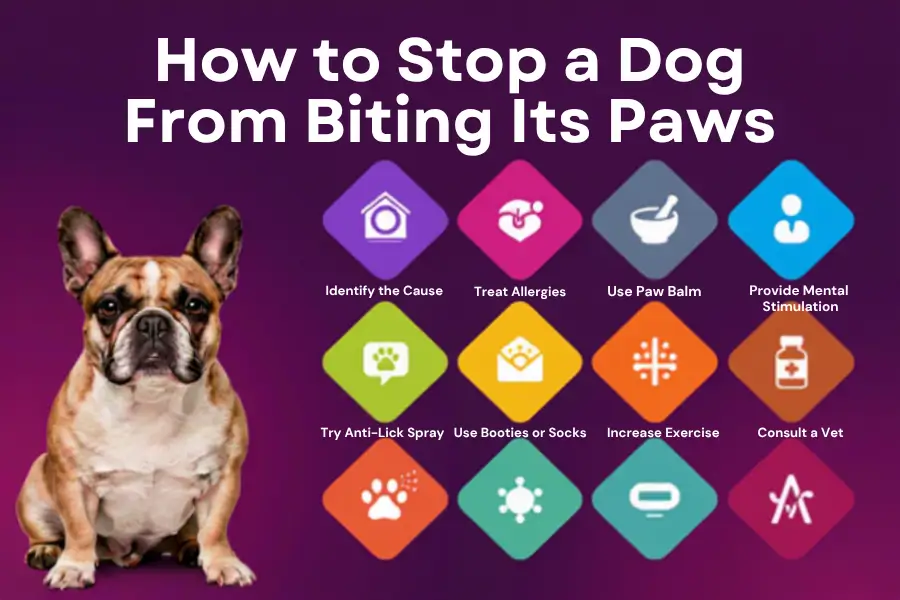
Effective long-term prevention usually combines:
- Environmental management — reducing exposure to known allergens or irritants
- Appropriate enrichment — mental stimulation and exercise to reduce boredom-driven behaviors
- Veterinary treatment — addressing the medical cause, whether that’s allergies, infection, parasites, or pain
- Protective devices when recommended — used as a support tool alongside treatment, not as a replacement for it
Dogs that stop biting once the underlying issue resolves confirm that the behavior was a symptom, not the core problem.
Can I Put Anything on My Dog’s Paws?
It’s tempting to reach for a household cream, ointment, or disinfectant when your dog’s paws look irritated, but caution is important here. Many products made for human skin — including some essential oils, antiseptic creams, and pain relievers — can be toxic if licked, and dogs almost always try to lick anything applied to their paws.
Before applying anything to your dog’s feet:
- Confirm the product is labeled safe for pets
- Avoid essential oils unless specifically formulated and diluted for veterinary use
- Skip human antibiotic ointments and steroid creams unless directed by a vet
- Ask your veterinarian first, especially if the paw is broken, bleeding, or infected
When in doubt, plain cleaning with pet-safe wipes or a gentle rinse is a safer default than a random product from the medicine cabinet.
Frequently Asked Questions
What is the best treatment for dog biting paws?
There’s no single best treatment it depends on the cause. Allergies need trigger management and possibly medication, infections need targeted antibacterial or antifungal treatment, injuries need cleaning and protection, and behavioral causes need enrichment and, if needed, veterinary support.
Why does my dog constantly bite his paws?
Constant paw biting is usually driven by ongoing irritation, such as allergies, a parasite infestation, a chronic infection, or persistent pain. A dog that bites at their paws frequently and doesn’t stop with basic cleaning likely needs a veterinary evaluation to identify the root cause.
How can I stop my dog from chewing his paws?
Start by inspecting the paw for visible problems, keep the area clean, and use a cone or booties to prevent further damage while healing. Long-term relief comes from identifying and treating the underlying cause with your veterinarian’s guidance.
Can allergies make dogs bite their paws?
Yes. Environmental and food allergies are among the most common reasons for dog paw itching, and the paws are often one of the first places allergic symptoms appear.
Can yeast infections cause paw chewing?
Yes. Yeast thrives in the warm, moist skin between the toes, and a yeast infection often causes intense itching, a musty odor, and brownish staining of the fur, all of which can drive persistent licking and biting.
Why are my dog’s paws red between the toes?
Redness between the toes can be caused by allergies, a bacterial or yeast infection, a foreign object, or irritation from chemicals or rough terrain. Because several conditions look similar, a vet exam is the most reliable way to identify the cause.
Should I take my dog to the vet for paw biting?
If the biting is mild and occasional and there’s no swelling, odor, or wound, home care may be enough to start. But persistent, worsening, or painful paw biting or any sign of infection or injury warrants a veterinary visit.
Can stress make a dog chew its paws?
Yes, stress, anxiety, and boredom can all lead to compulsive paw licking or chewing. However, medical causes should be ruled out first, since dogs experiencing itching or pain can also appear anxious or restless.
Final Thoughts
Persistent paw biting is usually a sign worth investigating rather than a habit to ignore. The most effective treatment for dog biting paws depends on whether the underlying cause is allergy, parasites, infection, injury, pain, irritation, or a behavioral issue and treating the wrong cause rarely brings lasting relief.
Simple home care, like keeping paws clean, dry, and protected, can help in the short term, but a veterinary evaluation gives you an accurate diagnosis and a treatment plan built for your dog’s specific situation. If the biting is persistent, severe, or getting worse, it’s always worth having your veterinarian take a closer look.
Why Do Dogs Put Their Ears Back Explaining This Common Dog Behavior