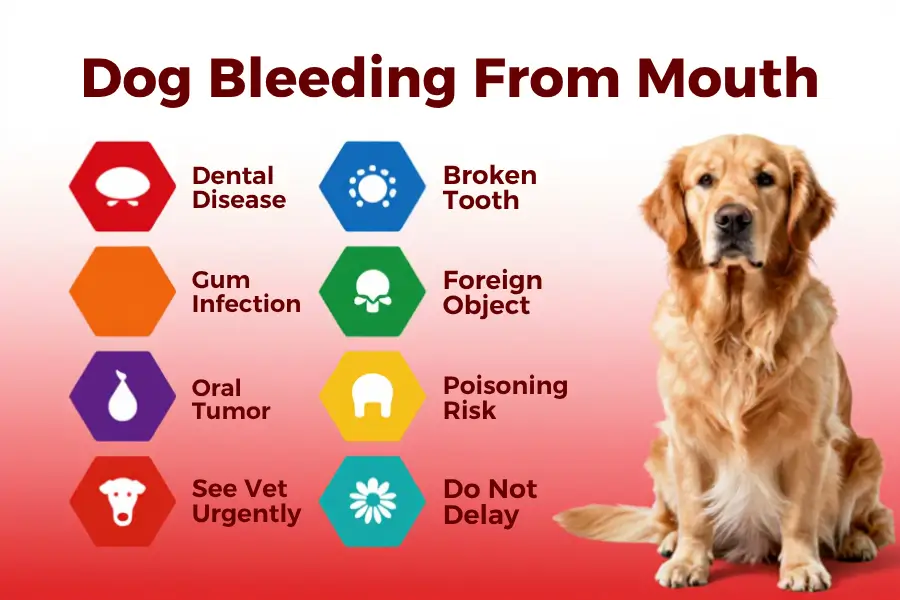
A dog bleeding from mouth can be caused by something as minor as gum irritation from chewing or as serious as dental disease, oral trauma, a foreign object, an oral tumor, poisoning, or an internal clotting problem.
Small, occasional spots of blood are usually not an emergency, but heavy, continuous, or unexplained bleeding, especially with pale gums, difficulty breathing, or collapse, needs immediate veterinary attention.
Finding blood in your dog’s mouth, on a chew toy, or dripping from the lips is unsettling for any pet owner. The good news is that not every instance of oral bleeding signals a crisis. The bad news is that some causes, like clotting disorders, internal bleeding, or certain toxins, can look deceptively minor at first.
This guide walks through the most common and most serious causes of dog mouth bleeding, what the blood might look like in each case, how to tell whether it’s an emergency, safe first-aid steps, how veterinarians diagnose the problem, and how to lower the risk of it happening again.
This article is meant to help you understand what might be going on and when to act. It is not a substitute for a hands-on veterinary exam, and it should never be used to diagnose your dog at home.
Why Is My Dog Bleeding From Mouth?
Oral bleeding in dogs generally falls into a few broad categories: dental and gum disease, physical injury, foreign objects, abnormal growths, blunt trauma, clotting or toxin-related problems, and bleeding that actually originates somewhere else in the body (like the nose, lungs, or stomach) and only appears to come from the mouth. Below is a closer look at each.
1. Dental Disease and Gum Problems
Dental issues are among the most frequent reasons dogs bleed from the mouth, particularly adult and senior dogs. Periodontal disease, inflammation and infection of the tissues that support the teeth, is extremely common and can cause bleeding gums, bad breath, and eventually loose or lost teeth.
Gingivitis, an earlier and milder stage of gum inflammation caused by plaque and tartar buildup, can also make the gums swollen, tender, and prone to bleeding, especially when your dog chews something firm or when the gums are brushed.
Left untreated, gum inflammation tends to progress. Plaque hardens into tartar (also called calculus), which traps more bacteria against the gumline and accelerates tissue damage. Over months or years, this can lead to recession of the gums, bone loss around the tooth roots, and eventually tooth mobility all of which can make the mouth bleed more easily, even from routine chewing or a light touch to the gums.
A fractured, cracked, or abscessed tooth is another common culprit. A broken tooth can expose sensitive inner tissue and become infected, leading to swelling, pain, and intermittent bleeding.
Some breeds, including German Shepherds, Dachshunds, Labrador Retrievers, and Maltese, appear more prone to certain oral inflammatory conditions, such as canine ulcerative paradental stomatitis (CUPS), a painful condition where ulcers form on the gums and cheeks in response to plaque and can bleed when they open.
2. Mouth Injuries
Dogs are curious and often explore the world with their mouths, which puts them at risk of oral injury. Chewing on sticks, bones, hard toys, or sharp objects can cut or puncture the gums, tongue, cheeks, or the roof of the mouth. A small nick from a stick or an aggressive chewing session is a common, usually minor, cause of a little blood on a toy or water bowl.
Burns from hot food, liquids, or chewed electrical cords are less common but can also cause oral bleeding along with visible tissue damage. Any injury involving the tongue tends to bleed more than expected, because the tongue has a rich blood supply, but this doesn’t necessarily mean the injury is severe.
3. Foreign Objects
Sticks, bone fragments, fish hooks, grass seeds (foxtails), and even porcupine quills can become lodged between the teeth, under the tongue, in the gums, or against the roof of the mouth. A foreign object stuck in the mouth or throat can cause pawing at the face, drooling, gagging, and bleeding as your dog tries to dislodge it.
Important: If you can see an object lodged deep in your dog’s mouth or throat, do not attempt to pull it out yourself. Deeply embedded objects can be attached to important structures, and forceful removal can cause more damage or push the object further in. This situation calls for a veterinarian.
4. Oral Growths or Tumors
Abnormal masses in the mouth on the gums, tongue, lips, or the roof of the mouth can bleed, particularly if they become irritated, ulcerated, or large enough to interfere with normal chewing. Both benign and malignant (cancerous) tumors can occur in a dog’s mouth, and appearance alone cannot tell you which type you’re dealing with.
Malignant melanoma is one of the more commonly discussed cancers associated with oral bleeding in dogs, but a veterinary exam and often a biopsy are the only way to know for certain what a mass actually is. Any new lump, swelling, or growth in your dog’s mouth deserves prompt veterinary evaluation, whether or not it’s bleeding.
5. Trauma
Falls, being hit by a car, rough play, or fights with other animals can cause blunt or penetrating trauma to the face and mouth. Bleeding from the mouth after any kind of accident should be taken seriously, because visible oral bleeding can be accompanied by less visible injuries such as jaw fractures, head trauma, or internal injuries that aren’t obvious at first glance.
If your dog has experienced any kind of fall, collision, or altercation and is now bleeding from the mouth, this warrants an urgent veterinary visit even if your dog seems otherwise alert.
It’s worth remembering that adrenaline can mask pain and injury in the immediate aftermath of an accident. A dog that appears to be walking normally and acting alert shortly after a collision or fall can still be dealing with internal injuries that take hours to become apparent.
For this reason, any dog involved in significant trauma is generally safest evaluated by a veterinarian promptly, rather than waiting to see if symptoms worsen.
6. Poisoning or Blood-Clotting Problems
Some of the most serious causes of oral bleeding aren’t located in the mouth at all; they’re systemic. Ingestion of certain toxins, most notably anticoagulant rodenticides (rat and mouse poison), interferes with the body’s ability to clot blood.
This can cause bleeding from the gums, nose, urine, stool, or under the skin, sometimes days after exposure. Underlying diseases such as liver disease, certain tick-borne illnesses, and inherited or acquired clotting disorders can produce a similar pattern of unexplained bleeding.
If your dog is bleeding from the mouth along with any of the following, treat it as an emergency: nosebleeds, blood in the urine or stool, unexplained bruising, or pinpoint red spots on the skin or gums.
These signs point toward a body-wide clotting problem rather than a simple local injury, and time matters when a clotting disorder or poisoning is suspected.
7. Blood Coming From the Nose, Lungs, or Stomach
Sometimes what looks like mouth bleeding is actually blood that has traveled from somewhere else. Blood dripping from the nose can pool near the mouth. Coughing up blood (which often looks frothy and pink, and is usually associated with the lungs or airway) is different from vomiting blood (which may look bright red or resemble dark “coffee grounds” and usually originates in the stomach or upper digestive tract).
Distinguishing between coughing and vomiting blood can be difficult for an owner to do with confidence, and your veterinarian will want a clear description or ideally to see the episode directly, via video if possible, to help narrow down the source.
Dog Bleeding From Mouth: Causes You Should Never Ignore
Seeing blood around your dog’s mouth can be frightening. Sometimes the reason is a small cut or irritated gum, but mouth bleeding can also point to dental disease, an injury, poisoning, or a problem affecting the whole body.
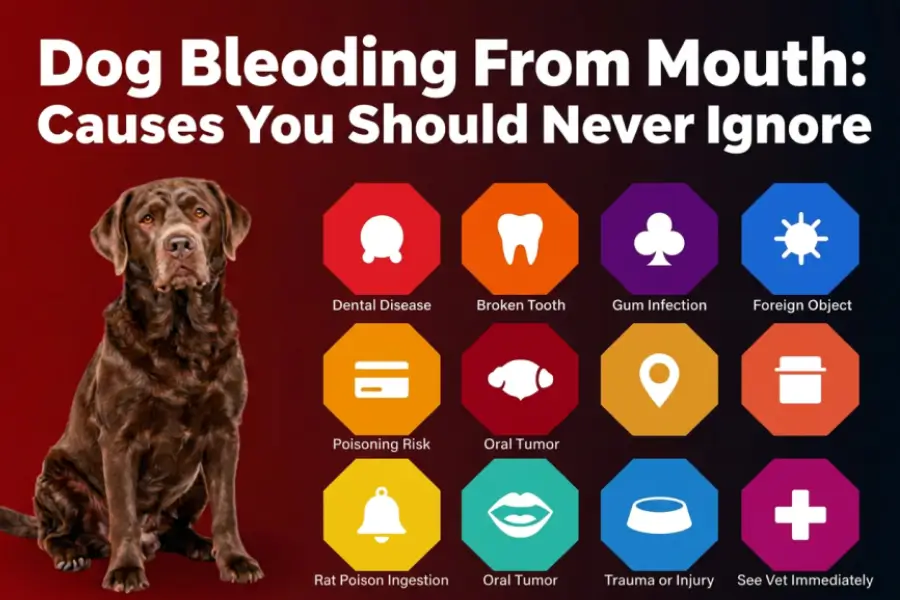
The amount of blood does not always show how serious the problem is. A small mouth wound can bleed heavily because the mouth has a rich blood supply, while some serious illnesses may initially cause only a small amount of blood.
1. A Cut Inside the Mouth
Dogs investigate the world with their mouths, so they can easily cut their gums, lips, cheeks, or tongue. Sharp sticks, broken toys, rough objects, or pieces of food can scratch delicate tissues. Your dog may drool more than usual, lick its lips, paw at its face, or avoid eating.
Small superficial injuries may stop bleeding on their own. However, deep wounds or bleeding that does not stop need veterinary attention.
2. A Sharp Object Is Stuck in the Mouth
A splinter, piece of bone, plant material, or toy fragment can become lodged between the teeth or underneath the tongue.
You may notice your dog repeatedly:
- Pawing at its mouth
- Drooling
- Chewing strangely
- Shaking its head
- Refusing food
- Rubbing its face against furniture
Never blindly reach into a painful dog’s mouth. A frightened dog may bite even if it normally has a gentle temperament.
3. Severe Gum Disease
Bleeding gums can be a sign of periodontal disease, especially in dogs with heavy tartar buildup.
Watch for:
- Red or swollen gums
- Bad breath
- Yellow or brown tartar
- Loose teeth
- Blood on chew toys
- Difficulty eating
- Excessive drooling
Dental disease does not usually disappear without treatment. A veterinarian may need to examine the teeth and gums and recommend professional dental care.
4. A Broken Tooth
A tooth can crack or break when a dog chews something excessively hard.A damaged tooth may bleed, hurt, or become infected. Some dogs hide dental pain, so the only noticeable clue may be blood on a toy or food bowl.
If you see a fractured tooth, do not try to remove it yourself. A veterinarian should determine how much of the tooth is damaged.
5. Tongue Injury
The tongue contains many blood vessels, so even a relatively small injury can produce noticeable bleeding.
Your dog may keep its mouth open, drool excessively, lick repeatedly, or have difficulty eating.
A tongue injury can happen after chewing sharp objects, biting the tongue during an accident, or encountering something hot or irritating.
6. Oral Infection or Inflammation
Inflammation inside the mouth can make tissues fragile and more likely to bleed.
Along with blood, you might notice:
- Strong mouth odor
- Red tissues
- Swelling
- Drooling
- Difficulty chewing
- Reduced appetite
The underlying cause needs to be identified before choosing treatment.
7. A Lump or Growth in the Mouth
A new lump, unusual swelling, or mass inside your dog’s mouth should be checked by a veterinarian.
Some oral growths can become irritated when your dog eats or chews and may therefore bleed easily.
Do not assume that every mouth lump is cancer. Several different conditions can produce oral masses, and proper examination is needed to determine what you are seeing.
8. Something Is Wrong With Blood Clotting
Sometimes the mouth itself is not the real problem.
A dog with a bleeding or clotting disorder may develop bleeding from the gums without having an obvious mouth injury.
Other clues can include:
- Nosebleeds
- Easy bruising
- Blood in urine
- Bloody stool
- Unusual weakness
- Pale gums
- Bleeding from small wounds that normally would stop quickly
This type of bleeding requires veterinary investigation.
9. Poisoning
Certain toxins can cause dangerous bleeding by interfering with the body’s ability to clot blood. Some rodenticides are particularly concerning.
A poisoned dog may eventually develop bleeding from the gums, nose, digestive tract, or other areas.
If you think your dog may have eaten poison, do not wait for mouth bleeding to become severe. Contact a veterinarian or emergency veterinary service immediately.
10. Trauma
A collision, fall, animal fight, or blow to the face can injure the mouth.
If your dog’s mouth starts bleeding after an accident, look beyond the blood. Breathing problems, weakness, swelling, severe pain, collapse, or unusual behavior can indicate more serious injuries.
Trauma-related bleeding deserves prompt veterinary assessment.
11. Blood From the Nose May Look Like Mouth Bleeding
Not all blood around the mouth actually comes from the mouth.
A nosebleed can drain toward the throat and become mixed with saliva. Blood from the respiratory or digestive tract can also appear around the mouth.
Try to notice whether your dog is also:
- Sneezing
- Coughing
- Vomiting
- Having a nosebleed
- Swallowing repeatedly
This information can help your veterinarian identify the source.
12. Tick-Borne or Other Systemic Diseases
Some diseases can affect platelets or the body’s clotting system. This can make bleeding easier and may produce signs beyond the mouth.
If your dog has recently had ticks, unexplained bruising, weakness, fever, or bleeding from multiple locations, tell your veterinarian.
Treatment for Dog Mouth Bleeding
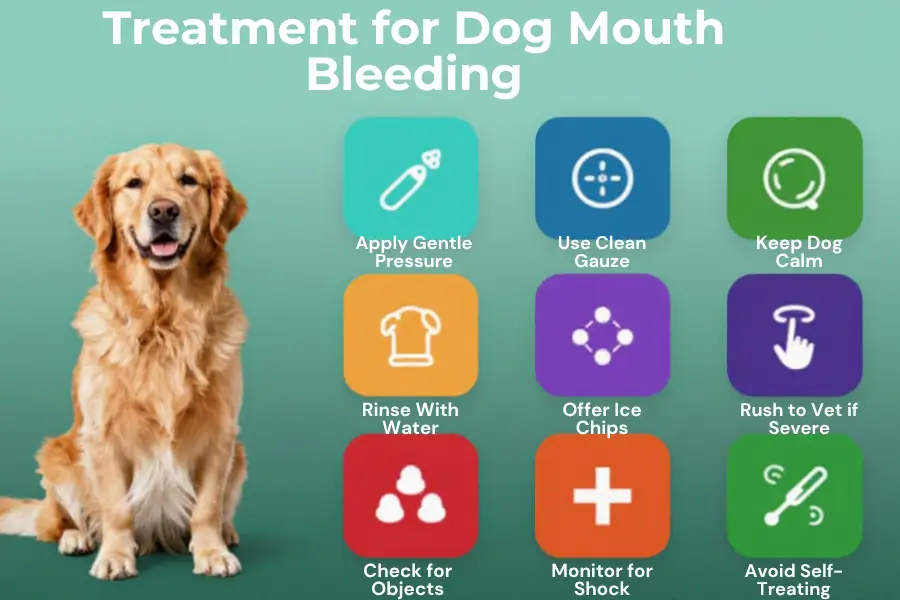
Treatment depends entirely on the underlying cause, which is why an accurate diagnosis matters. Depending on what’s found, your veterinarian may recommend:
- Dental treatment, such as a professional cleaning, tooth extraction, or treatment of an abscess
- Wound care for cuts, lacerations, or trauma to the soft tissue of the mouth
- Removal of a foreign object lodged in the gums, teeth, or throat
- Medication prescribed by your veterinarian, such as antibiotics for infection or pain relief appropriate for dogs
- Treatment for poisoning, which may include specific antidotes or supportive care depending on the toxin involved
- Surgery, in cases involving significant trauma, tumors, or severe dental disease
Because some of these conditions can look similar on the surface but require very different treatments, it’s important not to guess or self-treat, especially with medications, which should only be given under veterinary supervision.
How Serious Is Dog Bleeding From the Mouth?
The situation is more concerning when the bleeding is heavy, persistent, recurrent, or accompanied by other symptoms.
Get urgent veterinary help if your dog:
- Cannot stop bleeding
- Has trouble breathing
- Collapses
- Has very pale or white gums
- Seems extremely weak
- Has severe facial trauma
- Has major mouth swelling
- May have eaten poison
- Is vomiting or coughing blood
- Cannot swallow normally
What Should You Do at Home?
Keep your dog quiet and prevent running or rough play.
If you can safely identify a small external wound, clean gauze may be used for gentle pressure. Do not force your dog’s mouth open or place your fingers deep inside it.
Avoid giving human pain medications or applying household products to the wound unless a veterinarian specifically recommends them.
If the bleeding is unexplained, keeps returning, or comes with pain, weakness, swelling, appetite changes, or other unusual symptoms, arrange a veterinary examination.
What Does the Blood Look Like?
The appearance of the blood can offer some general context, but it cannot reliably tell you the cause on its own that always requires a veterinary exam. A few patterns worth knowing:
- Fresh, bright-red blood usually indicates a more recent or active bleeding source, such as a cut, injured gum, or a growth that is currently bleeding.
- Small spots or streaks mixed with saliva often point toward a minor gum or mouth irritation, such as normal teething in puppies or mild gingivitis.
- Continuous or dripping blood is more concerning and suggests a larger wound, a more significant dental problem, or a possible clotting issue.
- Dark, “coffee-ground” material mixed with vomit typically indicates digested blood from the stomach, which is different from fresh oral bleeding and should be treated as a separate warning sign.
- Blood mixed with saliva around the lips or chin, or noticed when your dog yawns or pants, can be subtle and easy to miss at first.
Because appearance alone is not diagnostic, the safest approach is to note what you’re seeing (color, amount, frequency, and any accompanying symptoms) and share those details with your veterinarian.
Is a Dog Bleeding From the Mouth an Emergency?
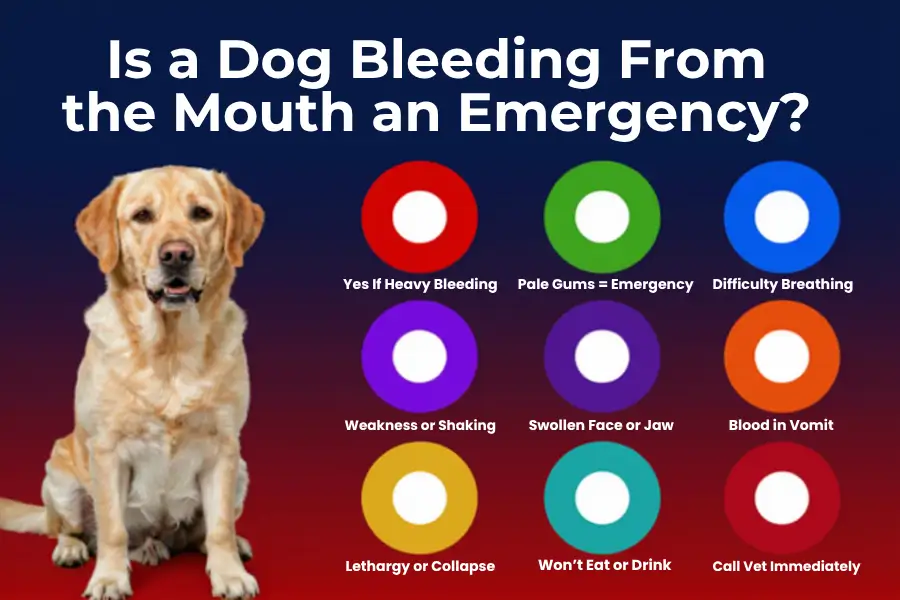
⚠️ Seek immediate veterinary care if your dog has any of the following:
- Heavy or continuous bleeding that doesn’t slow down
- Difficulty breathing or labored breathing
- Pale, white, blue, or gray gums
- Collapse, extreme weakness, or reluctance to move
- Severe facial trauma or swelling
- Suspected exposure to poison, rodenticide, or a toxic substance
- Uncontrolled or worsening bleeding
- Blood accompanied by repeated vomiting or coughing
- Inability or refusal to swallow
- Loss of consciousness or seizures
If none of these apply and you’re only seeing a small amount of blood — for example, a puppy chewing a toy during teething, or a single spot of blood after your dog chews something firm — it may not require an emergency visit, but you should still monitor closely and contact your regular veterinarian for guidance. Any bleeding that is persistent, recurring, or unexplained should be evaluated even if it doesn’t meet emergency criteria.
What Should I Do If My Dog Is Bleeding From the Mouth?
While you arrange veterinary care, there are some safe steps you can take at home:
- Stay calm and keep your dog calm. Restrict activity and avoid excitement, which can raise heart rate and increase bleeding.
- Keep your dog away from sharp objects, bones, or toys that could worsen an existing injury.
- Gently observe the mouth without forcing it open. If your dog allows it, you can look for visible wounds, swelling, or foreign objects, but don’t pry the jaw open or cause your dog distress.
- Apply gentle pressure with clean gauze to an accessible external wound (such as a cut lip) if it’s safe to do so and your dog tolerates it.
- Call your veterinarian or an emergency animal hospital to describe what you’re seeing and get guidance on next steps.
There are also several things you should avoid doing:
- Do not give human medications, including over-the-counter pain relievers, which many are toxic to dogs.
- Do not force food or water if your dog seems reluctant or is having trouble swallowing.
- Do not put your fingers deep inside your dog’s mouth, especially if your dog is in pain, frightened, or if there’s a chance of a foreign object or injury near the throat this protects both you and your dog.
- Do not attempt to induce vomiting unless a veterinarian specifically instructs you to, since this can be dangerous depending on the cause.
How Does a Veterinarian Find the Cause?
Diagnosing the source of oral bleeding typically involves a combination of the following:
- Medical history: Your vet will ask about the timeline, appearance of the blood, recent chewing habits, any possible trauma, exposure to toxins, and other symptoms you’ve noticed.
- Oral examination: A hands-on look at the gums, teeth, tongue, and roof of the mouth to check for wounds, swelling, masses, or foreign material.
- Dental examination: Often performed under sedation or anesthesia, allowing a thorough look at each tooth and the gumline, which isn’t possible in an awake exam.
- Blood tests and clotting tests: These help rule out systemic causes such as clotting disorders, rodenticide poisoning, or underlying organ disease.
- X-rays or dental imaging: Dental X-rays can reveal problems below the gumline, such as abscesses or bone loss, that aren’t visible during a physical exam.
- Additional imaging or biopsy when indicated: If a mass or tumor is found, a biopsy may be recommended to determine whether it’s benign or malignant. Additional imaging (such as advanced imaging of the head or chest) may be used in select cases.
How to Prevent Mouth Bleeding in Dogs
While not every cause of oral bleeding is preventable, you can reduce the risk with a few consistent habits:
- Prioritize dental care. Regular tooth brushing and professional dental cleanings help prevent gingivitis and periodontal disease, two of the most common causes of bleeding gums.
- Choose safe chew toys. Avoid overly hard bones, antlers, or objects that could crack a tooth or splinter and injure the mouth.
- Avoid sharp or dangerous objects during play and be mindful of what your dog has access to in the yard or on walks (sticks, fishing gear, and foxtails).
- Schedule regular veterinary exams, including dental checks, so problems are caught early.
- Practice toxin prevention by keeping rodenticides, medications, and other hazardous substances completely out of reach.
- Treat dental disease promptly rather than waiting, since gum disease tends to worsen over time and can eventually contribute to more serious health issues beyond the mouth.
Frequently Asked Questions
Why is my dog bleeding from his mouth?
Bleeding from a dog’s mouth can be caused by dental disease, gum irritation, a mouth injury, a foreign object, an oral growth, trauma, or, in more serious cases, a clotting disorder or toxin exposure. The exact cause can only be confirmed with a veterinary exam.
Why are my dog’s gums bleeding?
Bleeding gums are most often linked to gingivitis or periodontal disease caused by plaque and tartar buildup. Gum injury from chewing or, less commonly, a systemic clotting problem can also cause bleeding gums.
Is a little blood from a dog’s mouth normal?
A very small, occasional amount of blood, such as a spot on a chew toy, is not usually an emergency, especially in a teething puppy. However, any bleeding that is frequent, unexplained, or accompanied by other symptoms should be checked by a veterinarian.
What should I do if my dog’s mouth will not stop bleeding?
Continuous or uncontrolled bleeding is an emergency. Keep your dog calm, apply gentle pressure to an accessible wound with clean gauze if possible, and get to a veterinarian or emergency animal hospital right away.
Can dental disease cause a dog’s mouth to bleed?
Yes. Periodontal disease and gingivitis are among the most common causes of oral bleeding in adult dogs, often accompanied by bad breath, swollen gums, or loose teeth.
Can a dog bleed from the mouth after chewing a bone?
Yes. Hard bones and chewable items can cause minor cuts to the gums or tongue, or in some cases fracture a tooth, both of which can lead to bleeding.
Can poisoning cause mouth bleeding in dogs?
Yes. Certain toxins, particularly anticoagulant rodenticides, interfere with normal blood clotting and can cause bleeding from the gums, nose, or other areas. This requires immediate veterinary attention.
When should I take my dog to an emergency vet?
Seek emergency care for heavy or continuous bleeding, pale or discolored gums, difficulty breathing, collapse, severe facial trauma, suspected poisoning, or bleeding combined with repeated vomiting, coughing, or seizures.
Final Thoughts
A dog bleeding from mouth is a symptom, not a diagnosis, and it can stem from a wide range of causes, from something as simple as normal puppy teething or minor gum irritation to something as serious as a clotting disorder, poisoning, or internal injury.
Minor, occasional bleeding may be manageable with observation and a routine vet visit, but heavy, persistent, unexplained, or trauma-related bleeding should always be treated as urgent. When in doubt, contact your veterinarian. Early evaluation is the safest way to identify the cause and get your dog the right care as quickly as possible.
How Long Can Dogs Go Without Food? Life Saving Tips Inside!
How to Soothe Dog With Collapsed Trachea Naturally: 10 Proven Home Remedies!