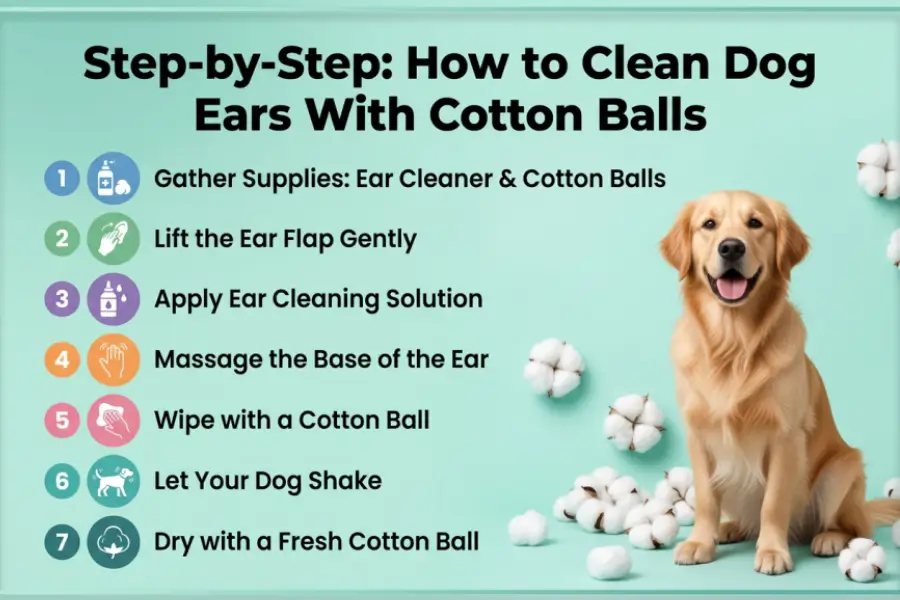
Cleaning your dog’s ears is one of the simplest ways to keep them healthy and comfortable. Dirty ears can lead to painful infections, bad odour, and constant scratching. The good news is that you don’t need fancy tools to do this job well. Learning how to clean dog ears with cotton balls is one of the safest and easiest methods for pet owners at home.
Cotton balls are gentler than cotton swabs, which can push wax and debris deeper into the ear canal instead of removing it. In this guide, you’ll learn the correct dog ear-cleaning steps, the supplies you need, mistakes to avoid, and how to spot signs of an ear infection early.
How to clean dog ears with cotton balls?
Yes, you can clean dog ears with cotton balls. They’re soft, safe, and won’t injure the ear canal like a cotton swab can. The correct method is to apply a vet-approved ear cleaner, massage the base of the ear, let your dog shake its head, and then gently wipe away loosened wax and debris with a cotton ball, never inserting it deeper than your finger can comfortably reach.
Why Dog Ear Cleaning Is Important
Regular ear cleaning does more than keep your dog looking tidy. It also:
- Removes dirt and everyday grime
- Clears away built-up earwax
- Helps prevent painful ear infections
- Reduces bad odor coming from the ear canal
- Gives you a chance to spot problems, like redness or discharge, before they get worse
Healthy ears are usually light pink, free of strong odour, and comfortable when touched. Checking them regularly helps you catch issues early, before a vet visit becomes urgent.
Do Dogs Need Their Ears Cleaned Regularly?
Not every dog needs the same ear care routine. How often you clean depends on a few factors:
- Breed – Dogs with floppy ears trap more moisture and debris than dogs with upright ears.
- Ear shape – Narrow or hairy ear canals collect wax faster.
- Swimming – Water in the ear canal creates a breeding ground for bacteria and yeast.
- Allergies – Allergy-prone dogs often produce more wax and are more prone to infection.
- Wax production – Some dogs naturally produce more earwax than others.
| Dog Type | Cleaning Frequency |
|---|---|
| Floppy ears | Every 2–4 weeks |
| Active swimmers | Weekly check |
| Upright ears | Monthly or as needed |
| Allergy-prone dogs | Follow vet advice |
Supplies You’ll Need
Before you start, gather everything so the process goes smoothly:
- Dog ear cleaner – A veterinarian-approved solution designed to break up wax and dry out excess moisture
- Cotton balls – For gently wiping away loosened debris
- Towels – Your dog will likely shake its head, so keep one nearby
- Treats – Positive reinforcement keeps your dog calm and cooperative
- Gloves (optional) – Useful if your dog’s ears have a lot of discharge or odor
Having these ready before you begin makes cleaning dog ears at home faster and less stressful for both of you.
Why Cotton Balls Are Better Than Cotton Swabs

Cotton balls are one of the best tools for dog ear hygiene because they’re soft and safe for wiping the visible parts of the ear. Cotton swabs (like Q-tips), on the other hand, are narrow and rigid, which makes them risky inside a dog’s ear canal.
| Cotton Balls | Cotton Swabs |
|---|---|
| Safe | Can push debris deeper |
| Gentle | Risk of injury |
| Better for wiping | Not recommended inside the ears. |
Vets consistently advise against cotton swabs because they can damage the eardrum or pack debris further into the L-shaped ear canal. Cotton balls, torn in half or wrapped around a finger, let you clean effectively without that risk.
Step-by-Step: How to Clean Dog Ears With Cotton Balls
- Step 1: Inspect the ears. Gently lift the ear flap (pinna) and look inside before you clean anything.
- Step 2: Look for redness, swelling, or discharge. If you see any of these signs, stop and contact your veterinarian instead of cleaning.
- Step 3: Apply a veterinarian-approved ear cleaner. Fill the ear canal with the solution, or soak a cotton ball with cleaner if your dog doesn’t tolerate liquid poured directly in.
- Step 4: Massage the base of the ear. Gently massage for 20–30 seconds. You may hear a soft squishing sound as the solution loosens wax and debris.
- Step 5: Let your dog shake its head. This natural movement helps bring loosened debris up and out of the ear canal. Keep a towel handy.
- Step 6: Use cotton balls to wipe away loosened wax and debris. Wipe the inner flap and only as far into the canal as your finger can comfortably reach — about one knuckle deep. Use a fresh cotton ball for each pass until it comes away clean.
- Step 7: Reward your dog. Give a treat and repeat the process on the other ear.
Safety tip: Go slowly, especially during your dog’s first few cleanings, and stop immediately if your dog shows signs of pain.
What NOT to Do
⚠️ Warning: Avoid the following, as they can seriously harm your dog’s ears:
- Cotton swabs deep inside ears – Can injure the ear canal or eardrum
- Alcohol – Irritates sensitive ear tissue
- Hydrogen peroxide – Can damage healthy skin cells inside the ear
- Homemade solutions – Many contain ingredients that irritate rather than clean
- Sharp objects – Never use tweezers, sticks, or anything pointed
- Excessive cleaning – Cleaning too often can strip natural protective oils and cause irritation
Signs Your Dog’s Ears Need Cleaning
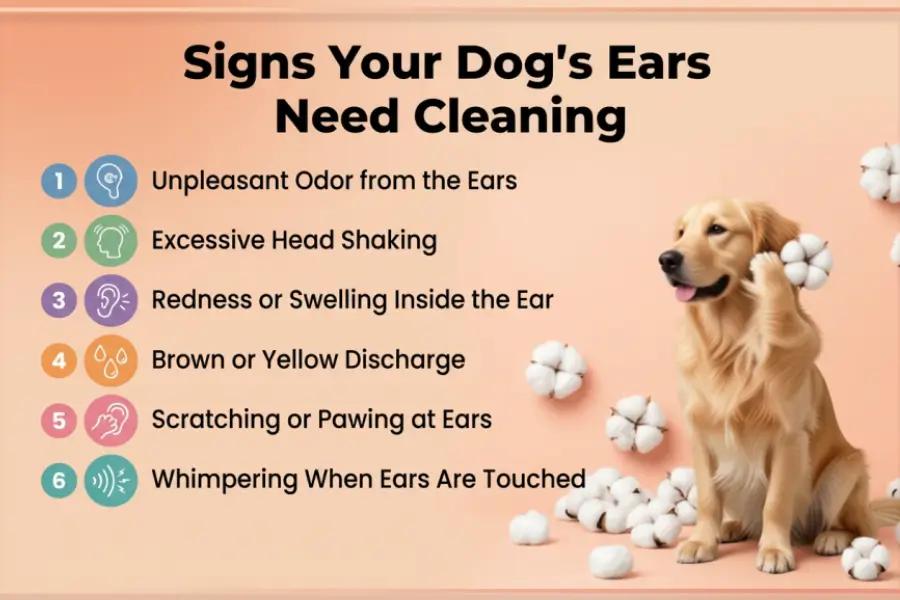
Watch for these signs of dirty dog ears:
- Bad smell
- Brown wax buildup
- Head shaking
- Scratching at the ears
- Mild visible debris
- A generally dirty appearance inside the ear flap
Signs You Should Visit the Vet Instead
Some symptoms mean it’s time to stop cleaning and call your veterinarian:
- Blood
- Thick discharge
- Severe redness
- Swelling
- Pain when the ear is touched
- Constant scratching
- Loss of balance
- Persistent odor despite cleaning
These signs can point to an ear infection, ear mites, or another underlying condition that needs professional treatment, not home cleaning.
Best Ear Cleaning Solutions
| Type | Safe? | Best For |
|---|---|---|
| Vet-approved ear cleaner | ✅ | Routine cleaning |
| Saline solution (vet-advised) | Sometimes | Minor debris |
| Alcohol | ❌ | Avoid |
| Hydrogen peroxide | ❌ | Avoid |
| Vinegar mixtures | Usually avoid | Vet advice only |
Common Mistakes Dog Owners Make
- Cleaning too often
- Cleaning too deeply
- Using cotton swabs instead of cotton balls
- Ignoring early signs of infection
- Using household cleaners not made for pets
- Skipping the reward, which makes future cleanings harder
How Often Should You Clean Dog Ears?
- Puppies – Introduce gentle handling early, but clean only lightly and infrequently
- Adult dogs – Follow the frequency guide above based on breed and lifestyle
- Senior dogs – May need more frequent checks as wax production or health issues change
- Dogs with allergies – Often need more frequent cleaning; follow your vet’s plan
- Dogs that swim frequently – Check ears weekly and dry them thoroughly after each swim
Tips to Make Ear Cleaning Easier

- Stay calm — dogs pick up on your energy
- Use treats throughout the process
- Choose a quiet room with no distractions
- Keep sessions short, especially at first
- Praise your dog during and after cleaning
- Clean after bathing if your vet recommends it, since ears often get damp then
Breed-Specific Ear Care
- Cocker Spaniels – Long, floppy ears trap moisture; clean every 2–3 weeks
- Basset Hounds – Deep, hairy ear canals need frequent checks
- Labradors – Love water, so ears need extra drying and attention after swimming
- Poodles – Hair inside the ear canal may need trimming (ask your groomer or vet)
- German Shepherds – Upright ears usually stay drier and need less frequent cleaning
- Bulldogs – Skin folds near the ears can trap moisture and debris
Frequently Asked Questions
Can I use dry cotton balls only?
Dry cotton balls can wipe away loose debris, but a vet-approved cleaner works better to loosen wax first.
Can I use baby wipes?
No. Baby wipes often contain fragrances or chemicals that can irritate a dog’s ear canal.
Can I use water?
Plain water isn’t effective at breaking up wax and can leave excess moisture behind, which raises infection risk.
How long does ear cleaning take?
Most cleanings take just a few minutes per ear once your dog is used to the process.
Can puppies have their ears cleaned?
Yes, gently and only as often as needed. Ask your vet for age-appropriate guidance.
What colour should healthy earwax be?
Healthy ear wax is usually light yellow or tan. Dark brown, black, or bloody wax can signal a problem.
Why does my dog shake its head afterwards?
Shaking helps push loosened debris and leftover solution out of the ear canal naturally.
Can I clean infected ears myself?
No. If you suspect an infection, see a veterinarian before attempting to clean the ear yourself.
Vet Tips for Healthy Dog Ears
- Do regular ear checks, even when not cleaning
- Only trim excess ear hair if your vet or groomer advises it
- Dry ears thoroughly after baths or swimming
- Use quality, vet-approved ear cleaners
- Schedule routine veterinary exams to catch problems early
Final Thoughts
How to clean dog ears with cotton balls? Cotton balls are one of the safest tools for cleaning the visible parts of a dog’s ears. Clean gently, and only as often as your dog actually needs it. Never insert anything deep into the ear canal, and always contact your veterinarian if you notice signs of infection, pain, or persistent discomfort.
Can Dogs Eat Chicory Root? Benefits, Risks and Feeding Guide
Can Dogs Eat Ambarella Fruit? Benefits, Risks and Feeding Guide