
Can dogs eat ambarella fruit? Yes, dogs can eat ripe ambarella fruit (Spondias dulcis) in moderation as an occasional treat. The large fibrous pit, tough skin, and unripe fruit should be avoided, since they may cause choking, intestinal blockage, or digestive upset.
Always serve fresh, ripe, peeled ambarella cut into small bite-sized pieces with no added sugar, salt, or seasoning. Before feeding ambarella to your dog, wash the fruit thoroughly, remove the skin and large fibrous pit, and cut the flesh into small, bite-sized pieces.
Although ripe ambarella can be a healthy snack, it should only be fed in moderation. Too much fruit may cause vomiting, diarrhoea, gas, or bloating because of its fibre and natural sugar. Introduce ambarella gradually; monitor your dog for any adverse reactions; and always use it as an occasional treat rather than a replacement for a complete and balanced dog diet.
Can dogs eat ambarella fruit?
Yes. Ripe, peeled ambarella fruit is generally safe for dogs when fed in small amounts as an occasional treat.
Is ambarella safe or toxic?
Ambarella is not considered toxic to dogs. However, the pit and unripe fruit carry real risks and should never be given.
Which parts are safe?
Only the ripe, peeled flesh is safe. The skin, pit, and unripe (green) fruit should be avoided.
Key takeaway: Ambarella for dogs can be a hydrating, fibre-rich, vitamin-packed snack, but moderation and proper preparation are essential for it to stay dog-safe.
What Is Ambarella Fruit?
Ambarella is a tropical fruit that grows on a fast-growing tree native to the South Pacific. It has a crisp, juicy texture somewhere between a mango and a green apple, with a mildly sweet, slightly tangy flavour when ripe.
Scientific Name
The botanical name for ambarella is Spondias dulcis. It belongs to the same plant family as mangoes and cashews (Anacardiaceae).
Common Names
Ambarella goes by several names depending on the region, including the following:
- Ambarella
- June plum
- Golden apple
- Hog plum (in some regions)
- Makok (in parts of Southeast Asia)
Whether you know it as ‘June plum for dogs’ or ‘golden apple fruit’, it’s the same species Spondias dulcis, and the same safety rules apply.
Origin and Growing Regions
Ambarella originated in Polynesia and Melanesia, including Papua New Guinea, Fiji, and Vanuatu. It later spread throughout Southeast Asia, the Caribbean, and tropical parts of the Americas, including Florida. Today it’s widely sold in fresh markets across tropical and subtropical regions.
Health Benefits of Ambarella Fruit for Dogs
Can dogs eat ambarella fruit?When served correctly and in moderation, ambarella can offer several potential benefits as part of healthy treats for dogs.
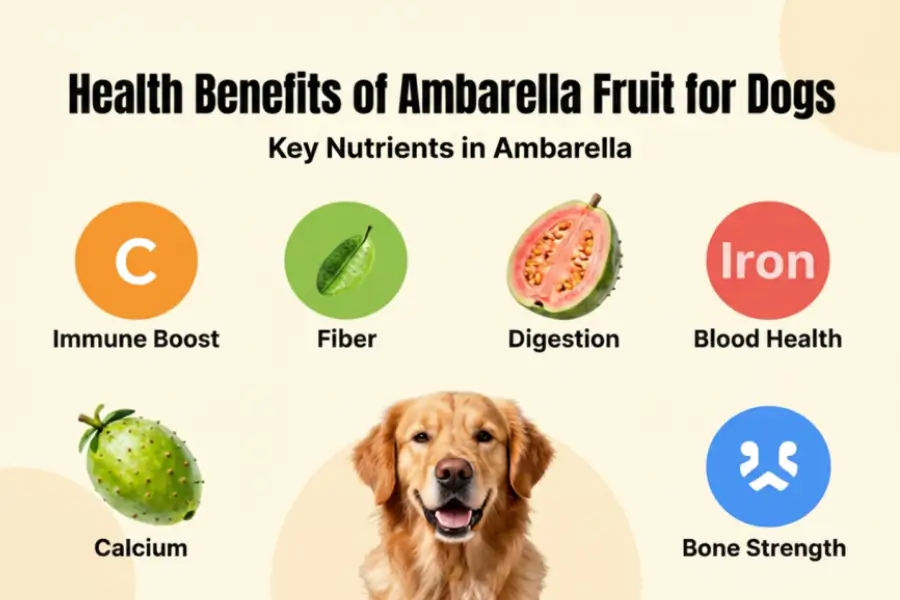
1. Helps Keep Dogs Hydrated
Ambarella has a high water, which makes it a refreshing snack, especially in warm weather. Hydration for dogs matters year-round, and juicy fruits like this can be a helpful supplement to their water intake — not a replacement for it.
2. Supports Healthy Digestion
The fibre for dogs found in ripe ambarella can support regular digestion when fed in small quantities. Fibre helps move food through the digestive tract and may support gut health.
3. Provides Vitamin C
Vitamin C for dogs isn’t essential the way it is for humans since dogs naturally produce their own. Still, a modest boost from whole foods like ambarella may offer additional antioxidant support, particularly for senior dogs or dogs under physical stress.
4. Rich in Antioxidants
Antioxidants for dogs help neutralise free radicals, which are linked to cellular aging and inflammation. Ambarella’s antioxidant content is one reason it’s sometimes highlighted among tropical fruits for dogs.
5. Contains Potassium
Potassium supports healthy muscle function and nerve signalling. Ambarella provides a modest amount, which can complement (not replace) the potassium already found in a complete dog food.
6. Low in Fat and Calories
Ambarella is low in fat, making it a lighter treat option compared to many processed dog treats — a plus for dogs that need to watch their weight or manage conditions like pancreatitis, where high-fat treats are best avoided.
7. May Support Coat and Skin Health
The combination of vitamin A, vitamin C, and antioxidants found in ambarella is sometimes associated with skin and coat support in dogs, since these nutrients play a role in cell repair and inflammation control.
This benefit is generalised from broader canine nutrition research rather than studies on ambarella specifically, so it should be viewed as a possible bonus rather than a guaranteed outcome.
Nutritional Value of Ambarella Fruit
Ambarella is nutrient-dense, which is part of why so many pet owners ask whether dogs eating ambarella is a good idea. Here’s a breakdown of what’s inside the fruit and how each nutrient may support canine nutrition.
| Nutrient | Benefit for Dogs |
|---|---|
| Water | Hydration for dogs |
| Fiber | Digestive health, supports regular bowel movements |
| Vitamin C | Immune support |
| Vitamin A | Eye and skin health |
| Potassium | Muscle and nerve function |
| Antioxidants | Cell protection against oxidative stress |
Ambarella also contains small amounts of protein, calcium, phosphorus, and iron, though it should never replace a balanced dog diet built around a complete, veterinarian-approved dog food.
For context, ripe ambarella flesh is mostly water, which is part of why it’s often grouped with hydration-friendly fruits for dogs like watermelon and cantaloupe. The remaining content is largely carbohydrate and fibre, with only trace amounts of fat one reason it’s considered a relatively light snack compared to many store-bought dog treats.
It’s worth noting that most of the nutritional data on ambarella comes from human nutrition research rather than studies specifically on canine nutrition. That doesn’t make the nutrients irrelevant to dogs; vitamin C, potassium, and antioxidants are broadly beneficial across species, but it does mean pet owners should treat amarella as a supplemental snack rather than a core part of a balanced dog diet.
Is Ambarella Fruit Safe for Dogs?
Is Ambarella Toxic?
Ambarella is not classified as toxic to dogs. Wild animals eat it regularly in its native range, and there’s no documented compound in the ripe flesh known to poison dogs. That said, research on ambarella for dogs specifically is limited, so “not toxic” doesn’t mean “risk-free” preparation and portion size still matter.
Which Parts Are Safe?
- Ripe flesh: Safe in small amounts
- Skin: Not recommended — tough and harder to digest
- Pit: Unsafe — choking and blockage hazard
- Unripe (green) fruit: Not recommended — more acidic and harder on the stomach
Why Moderation Matters
Even dog-safe fruits are high in natural sugars and fibre compared to a dog’s regular diet. Feeding too much ambarella fruit at once or too often can lead to loose stools, gas, or an upset stomach, even though the fruit itself isn’t dangerous.
Risks of Feeding Ambarella Fruit to Dogs
Understanding the risks is just as important as understanding the benefits before adding any new food to your dog’s diet. As with most tropical fruits for dogs, the risks with ambarella are less about the ripe flesh itself and more about the parts surrounding it, plus the temptation to overfeed a food dogs often find appealing.
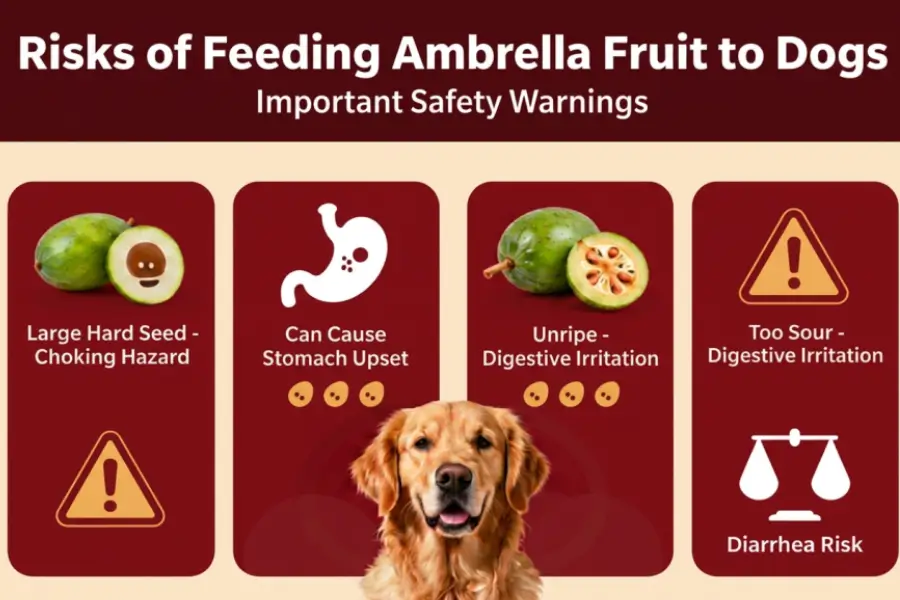
1. Large Fibrous Pit Can Cause Choking
The ambarella pit is large, hard, and covered in tough fibres. It’s one of the biggest safety concerns tied to this fruit and should never be given to a dog.
2. Intestinal Blockage Risk
If swallowed, the pit can lodge in the oesophagus, stomach, or intestines, potentially requiring emergency veterinary treatment or surgery.
3. Skin May Be Difficult to Digest
The skin is tougher than the flesh and may be harder for a dog’s digestive system to break down, increasing the risk of stomach upset.
4. Unripe Fruit Is Too Acidic
Unripe, green ambarella is firmer and more acidic than the ripe version. This acidity can irritate a dog’s stomach and lead to digestive discomfort.
5. Too Much Natural Sugar
While lower in sugar than many fruits, ambarella still contains natural sugars. Overfeeding can be a concern for dogs with diabetes, obesity, or other metabolic conditions.
6. Digestive Upset From Overfeeding
Feeding large amounts of any new fruit, including ambarella, can overwhelm a dog’s digestive system and trigger vomiting, diarrhoea, or gas.
Can Dogs Eat Ambarella Pit?
No. Dogs should never eat the ambarella pit under any circumstances.
Why the Pit Is Dangerous
The pit is large relative to the fruit, fibrous, and hard — similar in concept to a mango pit. It doesn’t break down easily and isn’t meant to be chewed or swallowed.
Choking and Obstruction Risks
Depending on your dog’s size, the pit can become lodged in the throat or cause a life-threatening intestinal obstruction if swallowed whole.
What to Do If Your Dog Swallows the Pit
If your dog swallows an ambarella pit,
- Stay calm and monitor your dog closely.
- Watch for gagging, vomiting, drooling, or difficulty breathing.
- Contact your veterinarian or an emergency animal hospital immediately, even if your dog seems fine — obstructions can take time to show symptoms.
- Do not attempt to induce vomiting unless a veterinarian specifically instructs you to.
Can Dogs Eat Ambarella Skin?
Is the Skin Safe?
The skin isn’t toxic, but it’s tougher and more fibrous than the flesh, which can make it harder to digest, particularly for small dogs or dogs with sensitive stomachs.
Should You Peel the Fruit?
Yes. Peeling the ambarella before offering it to your dog reduces the risk of digestive upset and makes the fruit easier to chew and swallow safely.
Can Dogs Eat Unripe Ambarella?
Why It Should Be Avoided
Unripe ambarella is firmer, more sour, and more acidic than the ripe version. It hasn’t developed the same sweetness or texture that makes the ripe fruit easier on a dog’s stomach.
Possible Digestive Problems
Feeding unripe ambarella can increase the likelihood of vomiting, diarrhoea, or general stomach discomfort. Always wait until the fruit has turned golden-yellow and softened before offering any to your dog.
Can Puppies Eat Ambarella Fruit?
Is It Recommended?
Puppies have more sensitive digestive systems than adult dogs, so introducing ambarella should be done with extra caution, if at all. Many veterinarians recommend waiting until a puppy is fully weaned and established on a balanced diet before introducing new fruits.
Safe Feeding Advice
- Offer only a tiny taste of ripe, peeled ambarella.
- Watch closely for any signs of digestive upset.
- Avoid feeding ambarella to very young puppies or those with known sensitive stomachs.
- When in doubt, consult your veterinarian before offering ambarella to a puppy.
How Much Ambarella Can Dogs Eat?
Portion size should always match your dog’s size. Use this table as a general starting guide.
| Dog Size | Serving Size | Frequency |
|---|---|---|
| Extra Small | 1–2 small pieces | Occasionally |
| Small | 2–3 small pieces | Occasionally |
| Medium | 4–5 small pieces | Occasionally |
| Large | 6–8 small pieces | Occasionally |
| Giant | A few extra pieces | Occasionally |
As a general rule, treats — including fruit — should make up no more than 10% of a dog’s total daily calorie intake.
How to Prepare Ambarella Fruit for Dogs
Proper preparation is the single biggest factor in making ambarella safe for dogs.
- Wash Thoroughly — Rinse the fruit under clean water to remove dirt, pesticide residue, or bacteria.
- Peel the Skin — Remove the tough outer skin completely.
- Remove the pit completely — Cut around the fibrous pit and discard it where your dog cannot reach it.
- Cut Into Bite-Sized Pieces — Small, manageable pieces reduce choking risk, especially for small dogs.
- Serve Fresh and Plain — Never add sugar, salt, chilli, shrimp paste, or other seasonings sometimes used in human preparations of ambarella.
Signs Your Dog Ate Too Much Ambarella
Watch for the following symptoms after feeding ambarella, especially the first time:
- Vomiting
- Diarrhea
- Gas
- Bloating
- Stomach pain
- Loss of appetite
Mild symptoms often resolve on their own within a day. Persistent or worsening symptoms warrant a call to your veterinarian.
What If Your Dog Eats the Pit or Unripe Fruit?
Symptoms to Watch For
- Gagging or choking
- Repeated vomiting
- Lethargy
- Abdominal pain or a visibly distended belly
- Straining to defecate or no bowel movements
When to Contact a Veterinarian
Contact your vet immediately if your dog swallows a pit, eats a large amount of unripe fruit, or shows any of the symptoms above.
Emergency Signs of Intestinal Blockage
Seek emergency veterinary care right away if you notice:
- Persistent vomiting that won’t stop
- Severe lethargy or collapse
- A hard, painful, or swollen abdomen
- Complete loss of appetite combined with distress
Can Dogs Be Allergic to Ambarella?
Food allergies in dogs are possible with almost any new food, including fruit.
Common Symptoms
- Itchy skin or excessive scratching
- Facial swelling
- Hives
- Vomiting or diarrhea
- Ear infections in dogs prone to food sensitivities
First-Time Feeding Tips
- Offer a very small piece the first time.
- Wait 24 hours and monitor for any reaction before offering more.
- Avoid feeding ambarella alongside other new foods so you can identify the cause if a reaction occurs.
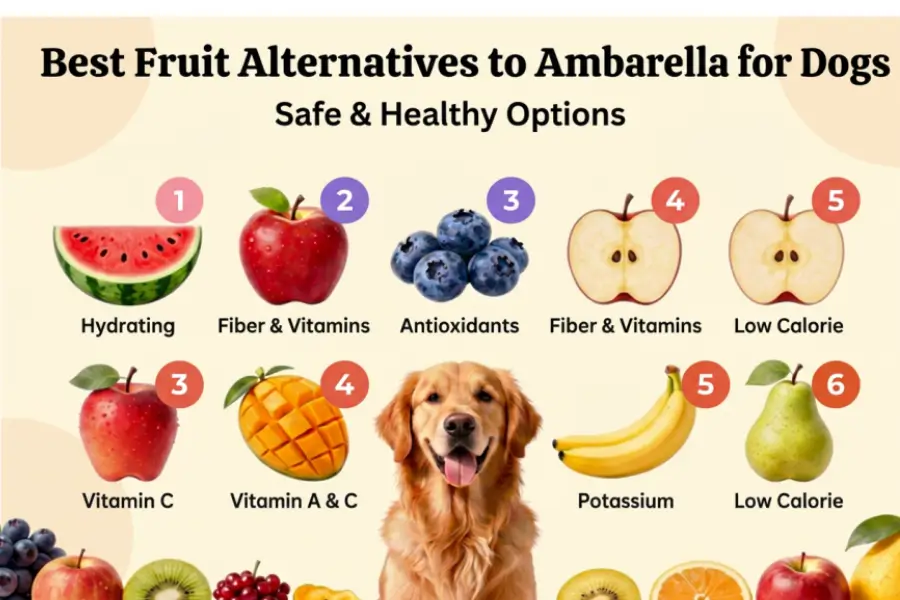
Best Fruit Alternatives to Ambarella
If you’re looking for other dog-safe fruits or want variety in your dog’s treat rotation, these are well-established safe human foods for dogs.
| Fruit | Safe | Main Benefit |
|---|---|---|
| Blueberries | ✅ | Antioxidants |
| Apples (seedless) | ✅ | Fiber |
| Watermelon (seedless) | ✅ | Hydration |
| Bananas | ✅ | Potassium |
| Strawberries | ✅ | Vitamin C |
| Cantaloupe | ✅ | Vitamins A & C |
Fruits Dogs Should Avoid
| Fruit | Reason |
|---|---|
| Grapes | Toxic |
| Raisins | Toxic |
| Cherries | Pits contain toxins |
| Avocado | Contains persin |
| Ambarella pit | Choking and blockage risk |
Veterinary Tips Before Feeding Ambarella
Before adding ambarella or any new fruit to your dog’s routine, keep these veterinary nutrition basics in mind:
- Introduce Slowly — Start with a small piece to gauge tolerance.
- Feed in Moderation — Treat ambarella as an occasional snack, not a daily staple.
- Remove the pit and skin — Every single time, without exception.
- Monitor for Digestive Changes — Keep an eye on stool consistency, appetite, and energy levels for 24–48 hours after a new food.
A balanced dog diet built around a complete commercial or vet-formulated food should remain the foundation of your dog’s nutrition, with fruit playing only a supporting role.
A Veterinary Nutrition Perspective on Ambarella for Dogs
From a canine nutrition standpoint, ambarella fits into a broader category of tropical fruits, like mango and papaya, that offer hydration, fibre, and micronutrients but aren’t essential to a dog’s diet. Dogs are primarily carnivorous omnivores, meaning their nutritional needs are built around animal protein, with fruits and vegetables serving a supporting, rather than central, role.
When pet owners ask, “Is ambarella safe for dogs?”, the honest answer reflects the current state of the evidence: there’s no research indicating ambarella is toxic, and its nutrient profile lines up well with other dog-safe fruits already recommended by veterinarians.
At the same time, the absence of large-scale studies specifically on ambarella and dogs means caution, moderation, and attentive preparation matter more than they might with better-studied fruits like blueberries or apples.
The practical takeaway for most healthy adult dogs: ambarella can have a place in the treat rotation, but it should always be the ripe flesh only, offered in small quantities, and treated as an occasional addition rather than an everyday staple.
Frequently Asked Questions
Can dogs eat ripe ambarella fruit?
Yes, ripe, peeled ambarella fruit is generally safe for dogs in small amounts.
Is ambarella poisonous to dogs?
No, ambarella is not considered poisonous to dogs, but the pit and unripe fruit carry digestive and choking risks.
Can dogs eat ambarella skin?
It’s best avoided. The skin is tough and may be harder for dogs to digest than the flesh.
Can dogs eat the ambarella pit?
No. The pit is a serious choking and intestinal blockage hazard and should never be given to a dog.
Can puppies eat ambarella?
Only in very small amounts, if at all, and ideally after checking with your veterinarian first, since puppies have more sensitive digestive systems.
How much ambarella can dogs eat?
A few small, bite-sized pieces, sized according to your dog’s weight, and only as an occasional treat.
Is ambarella acidic for dogs?
Unripe ambarella is more acidic than the ripe version, which is why only fully ripe fruit should be offered.
What should I do if my dog swallows an ambarella pit?
Contact your veterinarian or an emergency animal hospital immediately, even if your dog appears symptom-free at first.
Can diabetic dogs eat ambarella?
Dogs with diabetes should avoid ambarella or only have it with direct veterinary guidance due to its natural sugar content.
Can dogs eat dried or pickled ambarella?
No. Dried and pickled preparations often contain added salt, sugar, or seasoning that isn’t appropriate for dogs.
Final Thoughts
Can dogs eat ambarella fruit? Yes, dogs can safely enjoy ripe ambarella fruit in small amounts when it is properly prepared. The fruit provides hydration, fibre, vitamins, and antioxidants that may support your dog’s overall health. However, it should only be offered as an occasional treat.
Always remove the skin and fibrous pit before serving, and avoid feeding unripe ambarella because it may cause digestive upset. Cut the ripe flesh into small pieces and introduce it gradually to monitor your dog’s reaction.
When fed in moderation as part of a balanced diet, ripe ambarella can be a safe and refreshing snack for many dogs. If your dog accidentally eats the pit or develops symptoms such as vomiting, diarrhoea, or abdominal discomfort, contact your veterinarian for advice.
Can Dogs Eat Nasturtiums? Pros, Cons, and Healthy Alternatives