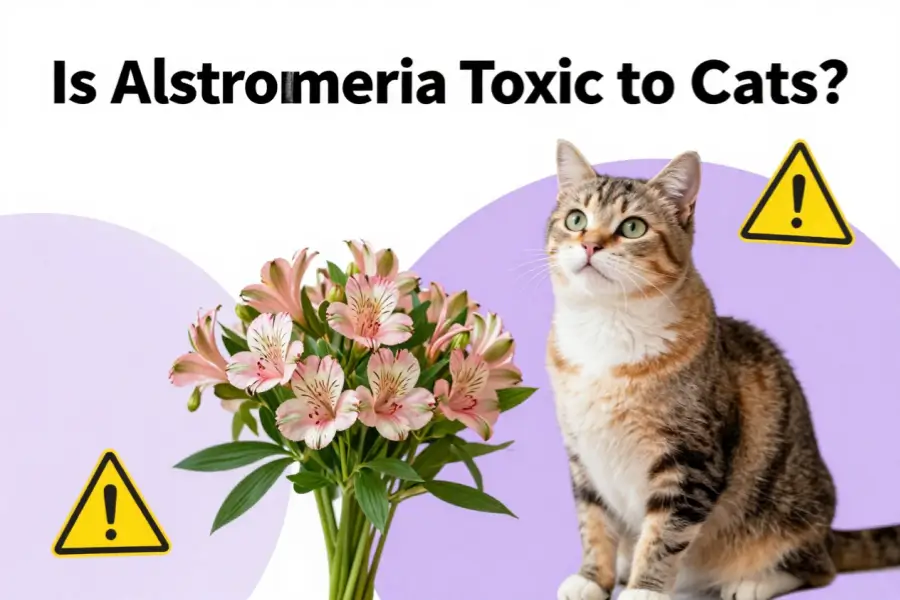
Alstroemeria, commonly known as the Peruvian lily, is considered mildly toxic to cats — not highly poisonous like true lilies from the Lilium or Hemerocallis families. If a cat eats Alstroemeria, it may experience vomiting, diarrhea, drooling, stomach irritation, and mild digestive upset, mainly because the plant contains tulipalin A, an irritating compound.
Alstroemeria does not usually cause the life-threatening kidney failure associated with true lilies, but any cat that eats it should still be monitored closely, and a veterinarian should be contacted if symptoms develop or worsen.
This distinction matters a great deal to cat owners, because the word “lily” alone can cause panic. Understanding exactly how alstroemeria cat toxicity differs from true lily poisoning can help you respond calmly and appropriately if your cat gets into a bouquet.
This guide breaks down exactly what makes Alstroemeria different from more dangerous plants, what symptoms to expect, and when veterinary care becomes necessary.
Is Alstroemeria toxic to cats?
Yes, it is mildly toxic. Ingestion typically causes gastrointestinal irritation rather than organ damage.
Is it as dangerous as true lilies?
No. True lilies such as Easter lilies, tiger lilies, and daylilies can cause fatal kidney failure in cats. Alstroemeria does not share this risk.
Main symptoms: vomiting, diarrhea, drooling, mouth irritation, loss of appetite, and mild lethargy.
Key takeaway: Alstroemeria poisoning in cats is uncomfortable but rarely life-threatening. Still, any cat exposed to it should be watched closely, and a vet should be consulted for guidance, especially if symptoms don’t improve within a day.
What Is Alstroemeria?
Alstroemeria is a popular flowering plant often used in gardens, bouquets, and floral arrangements because of its long vase life and vivid, spotted petals. Its widespread use in cut-flower arrangements is exactly why so many cat owners search for “is alstroemeria toxic to cats”; it shows up in homes far more often than people realise.
Scientific Name
The genus name is Alstroemeria spp.
Common Names
- Peruvian Lily
- Lily of the Incas
- Alstroemeria
Where It Is Commonly Found
- Garden plants
- Bouquets
- Floral arrangements
- Indoor decorations
Because Alstroemeria appears so frequently in florists bouquets, many people bring it into their homes without realizing it belongs to the broader category of toxic flowers for cats, even though its toxicity level is much lower than that of true lilies.
Alstroemeria is native to South America, and its name honors the Swedish botanist Baron Claus von Alstroemer, who is credited with introducing the plant to Europe in the 18th century. Today it is cultivated worldwide as both a garden perennial and a cut flower, prized for blooms that can last two to three weeks in a vase, far longer than most cut flowers.
That long shelf life is one reason florists rely on it so heavily and one reason it ends up in so many households with cats. Unlike true lilies, Alstroemeria belongs to the family Alstroemeriaceae, a completely separate plant family from Liliaceae, where true lilies are classified.
This taxonomic distinction is the biological reason behind the difference in toxicity, even though the common name “Peruvian lily” understandably causes confusion for pet owners trying to research feline plant toxicity.
Is Alstroemeria Toxic to Cats?
Yes, but only mildly. Alstroemeria is classified as an irritant plant rather than a systemically toxic one for cats.
Mild vs Severe Toxicity
Mild toxicity means a plant can cause discomfort — vomiting, drooling, or diarrhea — but does not typically damage internal organs. Severe toxicity, like that seen in true lily poisoning, can lead to permanent organ failure or death.
Why It Is Different From True Lilies
This is one of the most important points in any discussion of feline plant toxicity: not all “lilies” are equally dangerous. True lilies (Lilium and Hemerocallis species) contain compounds that are highly nephrotoxic to cats, while Alstroemeria, despite the common name “Peruvian lily,” is botanically unrelated to true lilies and does not carry the same kidney-failure risk.
Why Is Alstroemeria Toxic?
Tulipalin A
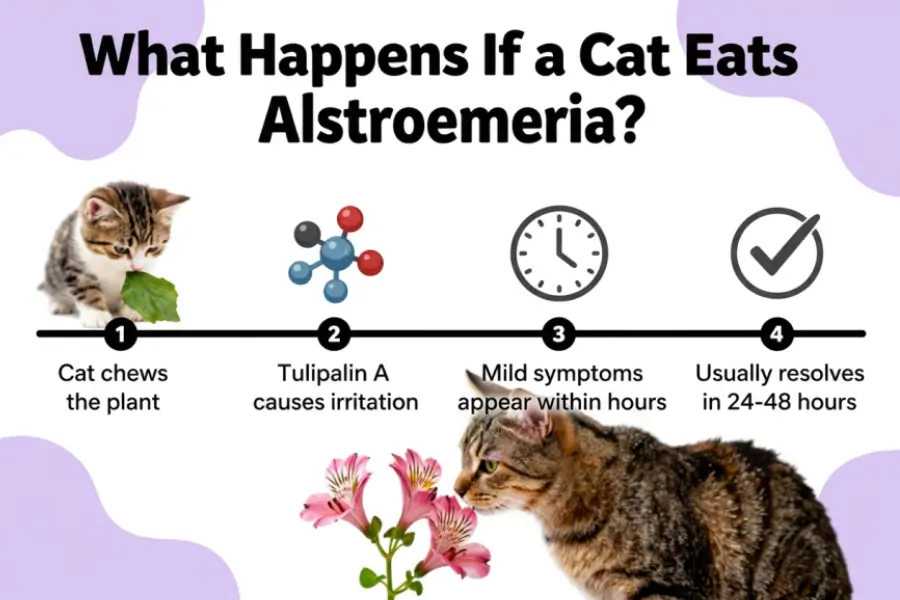
The compound responsible for alstroemeria’s mild toxicity is tulipalin A, a substance also found in tulips. Tulipalin A is a contact and ingestion irritant that affects the mouth, throat, and digestive tract.
How It Affects Cats
When a cat chews or swallows part of an Alstroemeria plant, tulipalin A irritates the mucous membranes and digestive lining, leading to the gastrointestinal symptoms associated with alstroemeria poisoning in cats.
Which Parts of the Plant Contain the Irritant?
- Flowers
- Leaves
- Stems
- Sap
All parts of the plant contain some amount of the irritant, though sap contact and ingestion of leaves or stems tend to cause the most noticeable reaction.
Interestingly, tulipalin A is the same compound responsible for “tulip finger”, a contact dermatitis condition seen in florists who handle tulips and related plants regularly without gloves.
That difference in mechanism is precisely why alstroemeria poisoning in cats tends to stay localised to the mouth and digestive tract instead of affecting the kidneys, liver, or heart.
Symptoms of Alstroemeria Poisoning in Cats
Cat owners searching for symptoms of plant poisoning in cats should watch for the following signs after any suspected exposure:
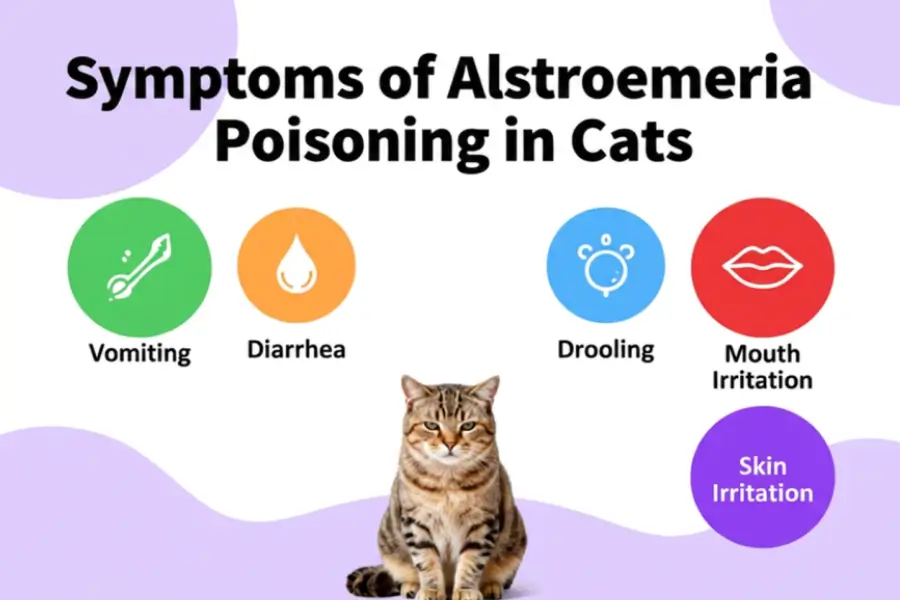
- Vomiting — often the first and most common sign
- Diarrhea — may appear a few hours after ingestion
- Excessive drooling — a response to mouth irritation
- Loss of appetite — temporary disinterest in food
- Stomach pain — visible discomfort or a hunched posture
- Mild lethargy — reduced energy for a short period
- Mouth irritation — pawing at the mouth or drooling excessively
These symptoms typically appear within a few hours of exposure and are usually short-lived compared to the symptoms of true lily poisoning.
It’s worth noting that the severity of symptoms of plant poisoning in cats often depends on three factors: how much plant material was eaten; which part of the plant was chewed (sap and leaves tend to be more concentrated in irritants than petals); and the individual cat’s sensitivity.
A cat that only brushes against the plant and licks its paw afterward may show nothing more than a bit of drooling, while a cat that chews through a whole stem may experience more pronounced vomiting and diarrhoea.
How Dangerous Is Alstroemeria Compared With True Lilies?
Cat owners are right to be cautious around anything called a ‘lily’, but the comparison table below shows why alstroemeria cat toxicity is a very different situation from true lily poisoning in cats.
| Plant | Toxic to Cats | Kidney Failure Risk |
|---|---|---|
| Alstroemeria | Mildly toxic | ❌ No |
| Easter Lily | Extremely toxic | ✅ Yes |
| Tiger Lily | Extremely toxic | ✅ Yes |
| Daylily | Extremely toxic | ✅ Yes |
| Peace Lily | Mild irritation | ❌ No |
This table highlights an important point for anyone researching true lilies vs Alstroemeria: the word “lily” in a plant’s common name does not automatically mean it poses a kidney failure risk to cats.
True lily poisoning in cats is one of the most serious plant-related emergencies in veterinary medicine. Even small amounts of pollen, a few chewed petals, or water from a vase containing true lilies can trigger acute kidney failure within 24 to 72 hours.
This is why veterinary toxicologists consistently emphasise that Easter lilies, tiger lilies, and daylilies should never be kept in any home with cats; there is no “safe amount” the way there arguably is with milder irritants like Alstroemeria. Cat owners should treat this as a firm rule rather than a matter of moderation, unlike the more flexible guidance that applies to mildly toxic plants.
Which Parts of Alstroemeria Are Toxic?
Flowers
The petals contain tulipalin A and can cause mouth and stomach irritation if chewed or swallowed.
Leaves
Leaves carry a similar concentration of the irritant compound as the flowers.
Stems
Stems can cause mechanical irritation in addition to chemical irritation from the sap they contain.
Sap
Direct skin or mouth contact with the sap can cause localised irritation, redness, or drooling even before any plant material is swallowed.
What Happens If a Cat Eats Alstroemeria?
Mild Cases
In most cases, a cat that nibbles on a leaf or petal will experience temporary drooling, mild vomiting, or a brief loss of appetite that resolves within 24 hours.
Moderate Cases
Cats that consume a larger amount of plant material may show more persistent vomiting and diarrhea, along with noticeable stomach discomfort.
When Symptoms Usually Appear
Symptoms typically begin within a few hours of ingestion and are one of the more predictable patterns in feline plant toxicity cases.
What Should You Do If Your Cat Eats Alstroemeria?
If you suspect your cat has come into contact with this plant, follow these steps for what to do if a cat eats alstroemeria:
Remove Plant Material
Take away any remaining flowers, leaves, or stems your cat could access, and check your cat’s mouth and paws for plant residue.
Rinse the Mouth
If it’s safe to do so, gently rinse your cat’s mouth with water to reduce lingering irritation from the sap.
Monitor Symptoms
Watch your cat closely for the next 12 to 24 hours for vomiting, diarrhoea, drooling, or changes in appetite and energy.
Contact Your Veterinarian
Even though alstroemeria is only mildly toxic, it’s wise to call your veterinarian or an animal poison control service for guidance, especially if you are unsure how much your cat ingested.
When Emergency Care Is Needed
Seek emergency veterinary advice for cats immediately if your cat shows severe or continuous vomiting, difficulty breathing, collapse, or extreme lethargy.
Veterinary Diagnosis
A veterinarian will typically start with a physical exam to check for signs of dehydration, mouth irritation, or abdominal discomfort.
History of Exposure
Telling your vet exactly what plant your cat was exposed to and ideally bringing a sample or photo helps rule out more dangerous true lily poisoning.
Additional Tests if Needed
In cases where the plant type is uncertain, your vet may run bloodwork or kidney function tests simply to rule out exposure to a more toxic lily species. This step is less about treating Alstroemeria itself and more about ruling out the far more dangerous possibility, since visual identification of plant material after a cat has already chewed and possibly vomited it up can be difficult even for an experienced clinician.
If any doubt remains about which plant your cat encountered, most veterinarians will treat the situation as a precaution against true lily poisoning until they can confirm otherwise. Bringing a photo of the plant, the original packaging, or even an intact leaf or petal to the appointment can speed up this process considerably.
Treatment for Alstroemeria Poisoning
Cats with ongoing vomiting or diarrhoea may receive subcutaneous or intravenous fluids to prevent dehydration.
Anti-Nausea Medication
Vets may prescribe anti-nausea medication to make the cat more comfortable and reduce vomiting.
Stomach Protectants
Medications that coat and protect the stomach lining can help speed up recovery from irritation.
Observation
In most mild cases, a period of at-home observation combined with veterinary advice for cats is enough, without the need for hospitalization.
Recovery and Prognosis
Most cats recover from alstroemeria poisoning within 24 to 48 hours with supportive care.
Most cats recover well
Because this plant does not cause organ damage the way true lilies do, the prognosis for cats after alstroemeria exposure is generally very good.
When Recovery May Take Longer
Cats that ingested a large quantity, or those with pre-existing digestive sensitivities, may need a few extra days and closer monitoring before returning to normal.
How to Prevent Alstroemeria Poisoning
Keep Bouquets Out of Reach
Place floral arrangements on high shelves or in rooms your cat cannot access.
Choose Cat-Safe Plants
Whenever possible, choose cat-safe flowers instead of Alstroemeria for indoor decoration.
Educate Family Members
Make sure everyone in the household and anyone sending flowers as gifts knows which plants are unsafe.
Check Floral Arrangements
Always inspect a new bouquet for hidden toxic stems, since Alstroemeria is frequently combined with other flowers in mixed arrangements.
Grocery store and florist bouquets are a particularly common source of accidental exposure because mixed arrangements often combine alstroemeria, roses, greenery, and occasionally true lilies without any warning label about pet safety.
Before placing a new bouquet on a table or counter, take a minute to separate the stems and identify each flower type. If you’re unsure what a particular stem is, it’s safest to remove it from the arrangement entirely or keep the whole bouquet in a cat-free room until you can confirm what it contains.
Safe Flowers for Cats
If you love having fresh flowers at home, these cat-safe flowers are considered non-toxic alternatives:
| Flower | Cat Safe |
|---|---|
| Orchid | ✅ |
| Rose | ✅ |
| Snapdragon | ✅ |
| Sunflower | ✅ |
| Freesia | ✅ |
Flowers That Are Highly Toxic to Cats
While Alstroemeria is only mildly toxic, the plants below are genuinely dangerous and belong on every cat owner’s list of poisonous plants for cats to avoid entirely.
| Plant | Risk |
|---|---|
| Easter Lily | Kidney failure |
| Tiger Lily | Kidney failure |
| Daylily | Kidney failure |
| Lily of the Valley | Heart problems |
| Autumn Crocus | Severe poisoning |
The ASPCA toxic plants database is a reliable resource for checking any plant before bringing it into a home with cats.
When to Call a Veterinarian Immediately
Contact your vet or an emergency animal clinic right away if your cat shows:
- Continuous vomiting
- Severe diarrhea
- Trouble breathing
- Collapse
- Severe lethargy
- Refusal to eat for 24 hours
Any of these signs could indicate a more serious issue and warrant urgent cat emergency poisoning care rather than at-home monitoring.
Veterinary Prevention Tips
Avoid True Lilies Completely
True lilies should never be kept in a home with cats under any circumstances, given the risk of fatal kidney failure.
Supervise Curious Cats
Cats that are known to chew on houseplants should be supervised closely around any new floral arrangement.
Learn Plant Names Before Buying
Before purchasing garden plants or accepting a bouquet as a gift, look up the plant’s full name to confirm it isn’t one of the toxic garden plants for cats or indoor plants toxic to cats.
Frequently Asked Questions
Is Alstroemeria poisonous to cats?
Yes, it is mildly toxic. It can cause vomiting, diarrhoea, and drooling, but it is not considered highly dangerous like true lilies.
Can Alstroemeria kill a cat?
It is very unlikely. Alstroemeria does not cause the kidney failure associated with true lily poisoning, and most cats recover fully with basic supportive care.
Is Alstroemeria as dangerous as true lilies?
No. True lilies such as Easter lilies, tiger lilies, and daylilies can cause fatal kidney failure, while Alstroemeria typically causes only mild digestive irritation.
What are the symptoms of Alstroemeria poisoning?
Common symptoms include vomiting, diarrhoea, drooling, mouth irritation, loss of appetite, and mild lethargy.
How long do symptoms last?
Most cats recover within 24 to 48 hours with rest, monitoring, and supportive veterinary care if needed.
Should I take my cat to the vet after eating Alstroemeria?
It’s a good idea to call your veterinarian for guidance, especially if symptoms are severe or persistent or if you’re unsure exactly what plant your cat ingested.
Are Alstroemeria flowers safe in bouquets?
They are commonly used in bouquets, but they should still be kept out of reach of curious cats due to their mild toxicity.
Which lilies are deadly to cats?
Easter lilies, tiger lilies, daylilies, and other true Lilium and Hemerocallis species are highly toxic and can cause fatal kidney failure in cats.
Can kittens be affected more severely?
Yes. Kittens are smaller and more sensitive, so the same amount of plant material may cause more pronounced symptoms compared to an adult cat.
How can I keep my cat safe from toxic flowers?
Keep all bouquets and garden plants out of reach, learn to identify cat-safe flowers, and always check new plants against a reliable resource like the ASPCA toxic plants list before bringing them home.
Final Thoughts
Is Alstroemeria toxic to cats? Yes, Alstroemeria (Peruvian lily) is considered mildly toxic to cats. While it is not as dangerous as true lilies, eating any part of the plant can cause vomiting, diarrhoea, drooling, and stomach irritation due to the presence of tulipalin A.
If your cat chews or eats Alstroemeria, remove any remaining plant material and monitor for symptoms. Most cats recover with supportive care, but you should contact your veterinarian if symptoms are severe or persistent or your cat eats a large amount. To keep your cat safe, it’s best to avoid bringing Alstroemeria into your home and choose cat-friendly flowers instead.
Can Cats Eat Acorn Squash? Benefits, Risks, and Safe Feeding Guide
Can Cats Eat Sea Moss? Benefits, Risks, and Safe Feeding Guide!