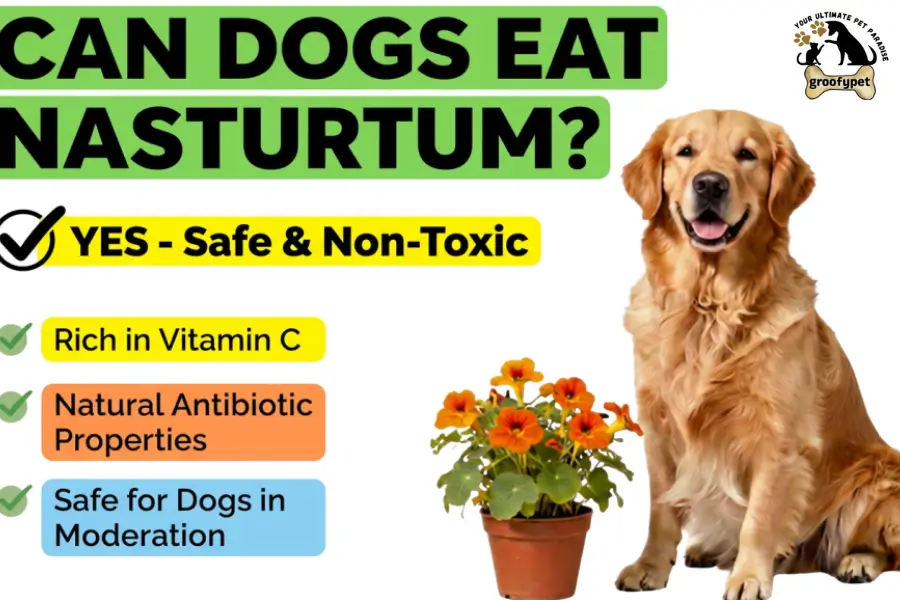
If your dog just helped itself to a mouthful of those bright orange, yellow, and red flowers spilling out of your garden bed, you’re probably googling this for a reason: you want a real answer, fast, not a wall of disclaimers. Can Dogs Eat Nasturtiums? Yes, dogs can generally eat nasturtium.
The common garden nasturtium (Tropaeolum majus) is classified as non-toxic to dogs by the ASPCA, and both the flowers and leaves are edible for humans and pets alike. This guide covers exactly which parts are safe, how much is too much, what symptoms to watch for, and when a quick nibble in the garden is nothing to worry about versus when it’s time to call your vet.
This article gives you that answer, backed by veterinary toxicology references and canine nutrition research, while also covering the nuance that most quick answers leave out.
What is a nasturtium?
Nasturtium (Tropaeolum majus) is a fast-growing, edible flowering plant common in home gardens and salads. It has a peppery flavor similar to watercress, which is part of why the name causes confusion; more on that below.
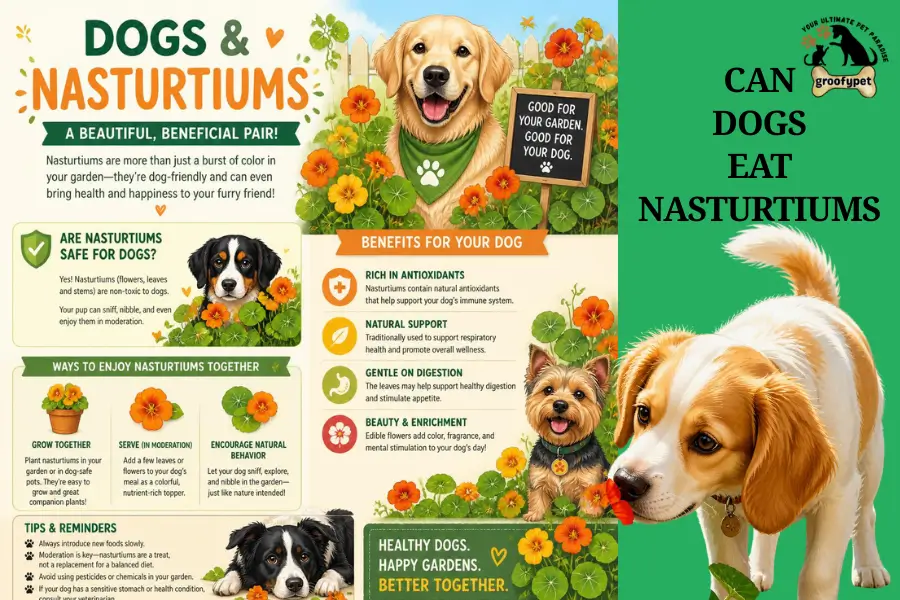
Why dog owners ask this question:
Dogs are curious, low-growing flowers are easy to reach, and nasturtium happens to grow in a huge number of backyard gardens, containers, and vegetable beds. It’s one of the most commonly self-seeded “weeds” in temperate climates, so accidental ingestion is extremely common.
What you’ll learn:
Which parts of the plant are safe, how nutrition and risk differ between flowers, leaves, stems, and seeds, what symptoms mean you should call a vet, how puppies and senior dogs are affected differently, and which other edible flowers and herbs make safer everyday treats.
Can Dogs Eat Nasturtiums?
Yes, in small to moderate amounts, plain garden nasturtium is considered safe for dogs.The ASPCA’s toxic and non-toxic plant database lists the common nasturtium as non-toxic to dogs, cats, and horses. This lines up with how the plant is treated in human nutrition too; both the flowers and leaves are routinely eaten raw in salads, garnishes, and pestos.
Is it safe in moderation?
Yes, with an emphasis on moderation. Like a lot of “safe” produce, apples, carrots, broccoli and nasturtium aren’t dangerous, but eating a large quantity in one sitting can still cause vomiting or diarrhoea simply from gastrointestinal irritation, not toxicity.
The plant’s natural compounds (more on these in the nutrition section) are mildly pungent, and dogs’ digestive systems aren’t built to process big servings of raw, fibrous plant matter.
Veterinary opinion
Most veterinary toxicology resources, including ASPCA Animal Poison Control, classify nasturtium as non-toxic rather than simply “low risk”.
Where you’ll see conflicting claims online, it’s usually one of two things: confusion with a different plant that shares the name (covered below) or general caution language about “any plant in large quantities” being applied specifically to nasturtiums.
Should dogs eat it regularly?
No. Even though it’s non-toxic, nasturtium isn’t nutritionally necessary for dogs and shouldn’t replace a balanced diet or be offered as a daily treat. Think of it the way you’d think of a dog eating a few blades of grass or a strawberry from the garden: an occasional, supervised nibble is fine; a daily habit is not something to encourage.
Important naming note: “Nasturtium” is also the genus name of watercress (Nasturtium officinale), an unrelated aquatic plant in the cabbage family. The two plants share a common name but are botanically different species. Garden nasturtium (the flowering plant most people mean when they ask this question) is the focus of this article. Watercress is generally fine in small amounts too, but it grows in water and carries separate risks around contamination, which is a different topic from garden nasturtium safety.
- Edible flowers and leaves: Both the flowers and the round, lily-pad-shaped leaves of garden nasturtium are edible. The flowers have a mild, sweet-to-peppery flavor, while the leaves are more sharply peppery, similar to arugula or watercress.
- Common culinary uses: In human cooking, nasturtium flowers are used as a colorful garnish, the leaves are tossed into salads, and the unripe seed pods are sometimes pickled in vinegar as a caper substitute.
- Nutritional profile: Nasturtium is low in calories and contains a notable amount of vitamin C, along with smaller amounts of other vitamins and minerals, including potassium, phosphorus, magnesium, calcium, manganese, copper, zinc, and iron. It also contains natural antioxidant and antimicrobial plant compounds, discussed in more detail below.
Is Nasturtium Safe for Dogs?
Different parts of the plant carry slightly different considerations:
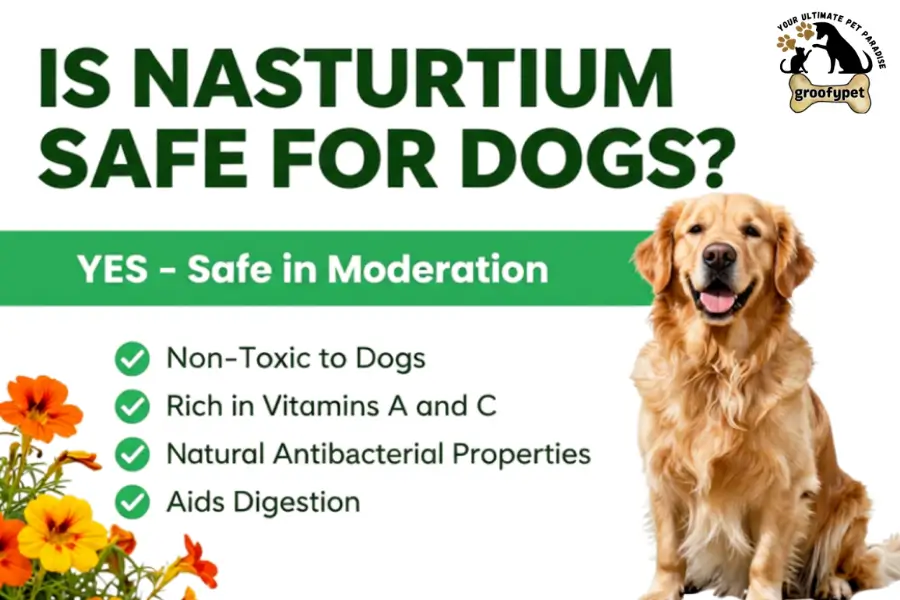
- Nasturtium flowers: The flowers (petals) are the mildest part of the plant and generally the safest for dogs to eat. They have a high water content and a relatively gentle flavor, making them the lowest-risk part if your dog grabs a mouthful while sniffing around the garden.
- Nasturtium leaves: The leaves are higher in fiber and have a stronger, peppery bite. Eating a leaf or two is unlikely to cause problems, but the high fiber content means that eating a large quantity of leaves is the most likely scenario to cause loose stool or stomach upset.
- Nasturtium stems: The stems are tougher and more fibrous than the leaves or flowers. They aren’t toxic, but they’re harder to digest and are also more likely to be a minor choking or gulping hazard, especially for small dogs or puppies that tend to swallow without chewing thoroughly.
- Nasturtium seeds: The seeds and immature seed pods are generally considered safe in small amounts, but they’re more concentrated in the plant’s pungent compounds than the flowers. A dog eating a small handful of seeds in the garden typically isn’t cause for alarm, but seeds eaten in larger quantities are more likely to trigger vomiting or diarrhea than petals would.
- Garden-grown vs. store-bought nasturtium: This distinction matters more than the plant part does. Nasturtium grown in your own garden, or bought specifically as a food product (such as edible flowers sold at a farmers’ market or grocery store), is far lower risk than nasturtium of unknown origin, for example, a neighbour’s flowerbed, a public park, or landscaping along a sidewalk, where you have no idea what pesticides, herbicides, or fertilisers may have been applied.
Can Puppies Eat Nasturtium?
- Sensitive digestive systems: Puppies have less digestive resilience than adult dogs. Their gut microbiome is still developing, and they’re more prone to vomiting or diarrhoea from any new or unusual food, including otherwise “safe” plants like nasturtium.
- Portion concerns: Because puppies are smaller, the same quantity of plant material represents a much larger relative dose. A few leaves that wouldn’t faze a 60-pound adult dog could be enough to upset a 10-pound puppy’s stomach.
- Veterinary recommendations: Most veterinarians recommend treating any new plant ingestion in puppies more cautiously than in adult dogs, not because nasturtium itself is more dangerous to puppies, but because puppies are more likely to overeat out of curiosity and less able to tolerate the resulting GI upset. If a puppy eats nasturtium, it’s reasonable to monitor closely and have a lower threshold for calling your vet compared to an adult dog with the same exposure.
Nutritional Value of Nasturtium
Can dogs eat nasturtiums? Nasturtium isn’t a significant source of nutrition in a dog’s diet, but it does contain some genuinely beneficial compounds:
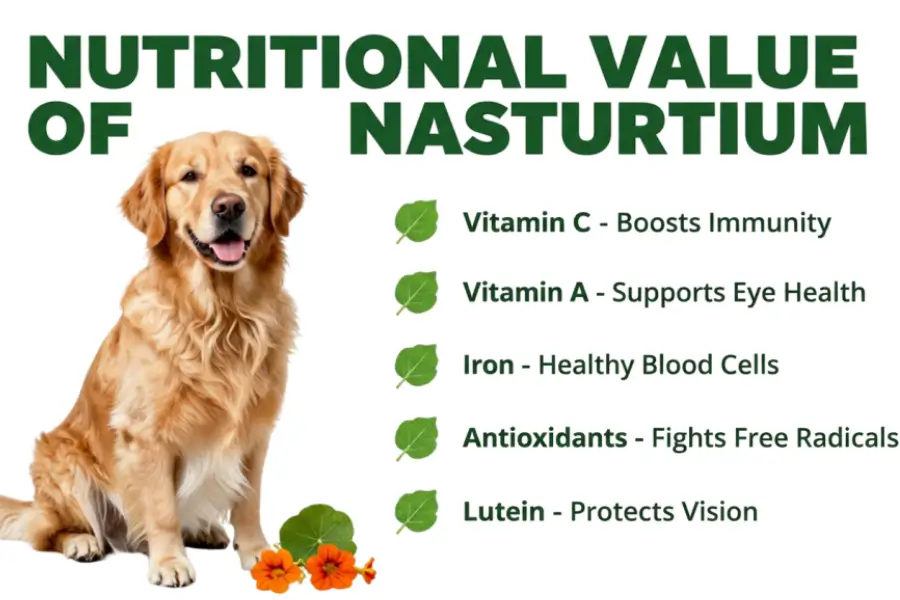
- Vitamin C: Nasturtium flowers are notably rich in vitamin C, comparable to nutrient-dense greens like parsley. Dogs synthesise their own vitamin C and don’t strictly need dietary sources, but it’s not harmful and may offer a modest antioxidant boost.
- Vitamin A and other vitamins: The plant contains smaller amounts of other vitamins found broadly across leafy greens and edible flowers.
- Iron and trace minerals: Nasturtium contains trace amounts of iron, along with potassium, calcium, magnesium, manganese, copper, and zinc.
- Antioxidants: The leaves and flowers contain antioxidant compounds that help neutralize free radicals, similar to many other leafy greens and herbs.
- Plant compounds: Nasturtium contains natural compounds historically associated with antifungal and antibacterial activity in herbal use, though this research is mostly based on human or in vitro studies, not canine-specific trials.
Potential Health Benefits of Nasturtium for Dogs
- Antioxidants: May offer a small, supportive contribution to overall cellular health, similar to other antioxidant-rich produce occasionally added to a dog’s diet.
- Vitamins: A minor nutritional bonus, though not something dogs require from this specific plant.
- Natural hydration: Like most fresh produce, nasturtium flowers and leaves have high water content, which can contribute a small amount of hydration.
- Plant nutrients: Trace minerals add marginal nutritional variety, the same way a dog might benefit slightly from nibbling other garden greens.
Why these benefits are limited: None of this makes nasturtium a meaningful “superfood” for dogs. Commercial dog food is formulated to meet a dog complete nutritional needs, and nasturtium’s vitamin and mineral content is small relative to a dog’s daily requirements. Any benefit should be considered a minor bonus from an occasional treat, not a reason to add nasturtium to your dog’s regular diet.
Risks and Side Effects of Nasturtium for Dogs
- Stomach upset: The most common reaction, especially after eating leaves or stems in any real quantity.
- Vomiting: A frequent response when a dog has eaten more than their stomach can comfortably handle — often the dog’s own way of resolving the irritation.
- Diarrhoea: Can follow vomiting or occur on its own, particularly after eating a large amount of leaves due to their fibre content.
- Excess fibre: Nasturtium leaves are relatively high in fibre, which is fine in small amounts but can move through a dog’s digestive system too quickly in larger quantities, leading to loose stool.
- Allergic reactions: Uncommon, but as with any new plant or food, individual dogs can have sensitivities. Watch for unusual itching, swelling, or hives after exposure.
- Pesticide contamination: This is a bigger real-world risk than the plant itself. Garden centers, landscaping companies, and even home gardeners frequently treat ornamental plants with pesticides that are far more dangerous to dogs than the nasturtium plant tissue underneath them.
- Fertilisers and chemicals: Synthetic fertilizers, slow-release granules, and soil treatments can also pose risks if a dog digs around the base of the plant and ingests treated soil along with the plant.
- Large quantity ingestion: Eating a whole plant, a large patch of flowers, or a significant portion of a garden bed is far more likely to cause noticeable symptoms than a casual nibble.
- Sensitive stomachs: Dogs with a history of food sensitivities, inflammatory bowel disease, or chronic GI issues may react more strongly than dogs with no digestive history.
- Puppies and senior dogs: Both groups tend to have less digestive resilience and should be monitored more closely after any plant ingestion, including nasturtium.
What Happens If a Dog Eats Nasturtium?
- Small bite: A dog that grabs one flower or a leaf while walking through the garden is very unlikely to show any symptoms at all. This is the most common real-world scenario and rarely requires any action beyond keeping an eye on your dog for the next few hours.
- Large amount: A dog that gets into an entire nasturtium patch common with off-leash dogs in a yard or a curious puppy left unsupervised near a flower bed has a meaningfully higher chance of vomiting or developing diarrhoea within several hours due to the volume of fibrous plant material and natural plant compounds consumed.
- Garden plants treated with chemicals: If there’s any possibility the nasturtium was treated with pesticide, herbicide, or fertiliser, treat the situation differently than a plain plant ingestion. Symptoms from chemical exposure can be more serious than simple GI upset and may include drooling, tremors, weakness, or breathing changes call your veterinarian or a pet poison hotline promptly if this applies.
- What to expect: In the vast majority of plain, untreated nasturtium cases, any symptoms that do occur are mild and self-limiting, typically resolving within 12 to 24 hours with basic supportive care at home.
Symptoms to Watch For
After a dog eats nasturtium, especially in larger amounts, monitor for:
- Vomiting — often shortly after ingestion, as the stomach reacts to the plant material
- Diarrhea — may appear within a few hours to a day
- Drooling — mild drooling can accompany nausea or the plant’s peppery taste
- Loss of appetite — temporary disinterest in food while the stomach settles
- Mild stomach pain — visible as restlessness, a hunched posture, or reluctance to be touched on the belly
- Lethargy — low energy can accompany GI upset, but persistent or severe lethargy is a reason to call your vet
- Allergic reactions — itching, swelling, hives, or unusual skin redness in rare individual cases
Most of these symptoms, when they occur at all, are mild and pass on their own. Symptoms that are severe, that don’t improve within a day, or that include breathing difficulty warrant a veterinary call regardless of the suspected cause.
Pros and Cons of Nasturtium for Dogs
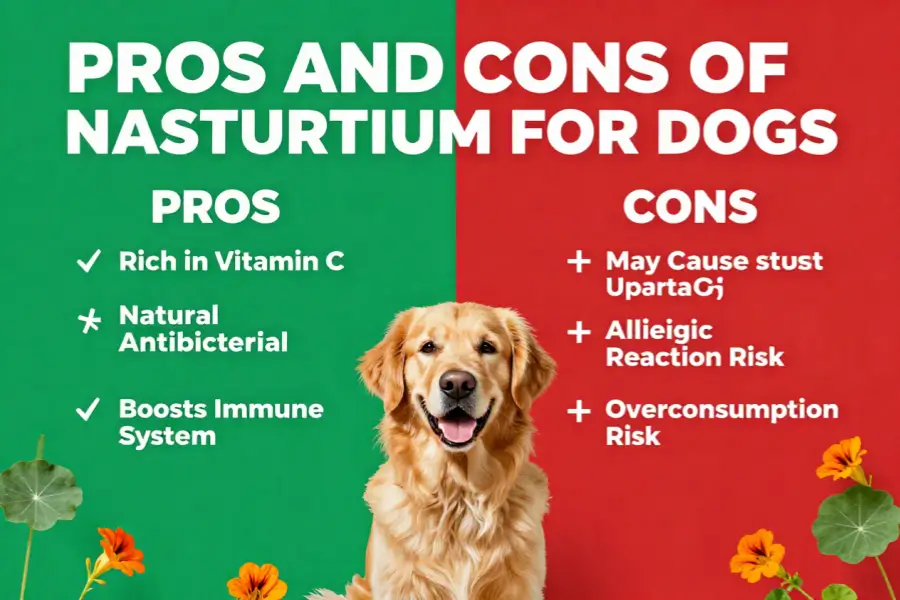
- Edible, non-toxic plant for dogs in moderate amounts
- Contains vitamin C and trace minerals
- Naturally low in calories
- Generally safe as an occasional, plain
- Eating large amounts causes vomiting
- Plants treated with pesticides carry real risk
- Offers no meaningful nutrition for dogs
- Some individual dogs may be sensitive
What Should You Do If Your Dog Eats Nasturtium?
- Step 1: Estimate how much was eaten. A single flower or leaf is very different from an entire plant or flower bed. This single piece of information will guide everything else.
- Step 2: Check if pesticides or chemicals were used. If the plant came from your own untreated garden, this lowers your concern significantly. If it came from a public space, a neighbour’s yard, or a recently treated garden bed, treat it as a higher-priority situation and contact your vet sooner rather than later.
- Step 3: Watch for symptoms. Keep your dog calm and monitor them for the next several hours for any of the symptoms listed above.
- Step 4: Provide fresh water. Make sure your dog has access to clean water, which supports digestion and helps if mild vomiting or diarrhoea occurs. Withholding food for a few hours (but not water) is a common, vet-recommended way to let an upset stomach settle.
- Step 5: Call your veterinarian if symptoms develop. If vomiting or diarrhoea persists beyond 24 hours, becomes severe, or is accompanied by lethargy; loss of appetite lasting more than a day, or any signs of a chemical exposure, contact your vet promptly. When in doubt, a quick call to your vet or a pet poison hotline costs nothing and provides peace of mind.
- Can Dogs Eat Foods Made With Nasturtium?
Eating the raw plant straight from the garden is a very different scenario from eating prepared human food that contains nasturtium. As a general rule, plain raw nasturtium is the only form that’s reasonably appropriate to let a dog have, and even then only in small amounts.
- Nasturtium salads: Most dressed salads contain ingredients dogs should avoid — onions, garlic, certain vinaigrettes, excess salt, or toxic ingredients like grapes or raisins. The salad as a whole is not appropriate for dogs, even though the nasturtium itself would be fine alone.
- Nasturtium pesto: Typically made with garlic, parmesan, and large amounts of oil and salt — all things to keep away from dogs. Avoid sharing pesto entirely.
- Pickled nasturtium seeds: Pickling involves vinegar, salt, and sometimes additional spices, all of which make this preparation unsuitable for dogs even though the raw seed itself is low-risk.
- Cooked nasturtium: Cooking itself isn’t dangerous, but dishes are often seasoned with onion, garlic, butter, or salt, which makes the finished dish unsuitable even if the plain plant wouldn’t be.
- Garnishes: A plain, unseasoned nasturtium flower used as a garnish on your own plate is fine to let your dog have a small taste of, as long as nothing else on the plate is dog-unsafe.
Dog-Safe Flowers and Herbs
If you’re looking for other edible plants that are safer or more nutritionally useful as occasional treats, several common garden flowers and herbs are considered dog-safe:
| Plant | Safe? | Benefits |
|---|---|---|
| Nasturtium | Yes, in moderation | Vitamin C, antioxidants |
| Basil | Yes | Antioxidants, anti-inflammatory compounds |
| Dill | Yes | Mild digestive support |
| Cilantro | Yes | Vitamins A, C, K |
| Curly parsley | Yes | Freshens breath, vitamin C |
| Chamomile | Yes, in small amounts | Mild calming properties |
Plants Dogs Should Avoid
In contrast to nasturtium, several common garden and household plants are genuinely toxic to dogs and should be kept out of reach entirely:
- Foxglove — contains cardiac glycosides that affect heart function
- Oleander — highly toxic to dogs even in small amounts
- Azalea — can cause vomiting, drooling, and in severe cases, cardiovascular problems
- Lily of the valley — affects heart rhythm and can be life-threatening
- Daffodil — bulbs in particular cause severe GI upset and can affect the heart
- Tulip bulbs — the bulb is far more concentrated in toxins than the petals
- Sago palm — among the most dangerous common ornamental plants for dogs; can cause liver failure
If you have any of these in your yard alongside nasturtium, it’s worth fencing them off or removing them, since the risk profile is dramatically different from nasturtium’s.
Nutritional Comparison Table
| Plant | Safe for Dogs? | Main Benefit | Main Risk |
|---|---|---|---|
| Nasturtium | Yes, in moderation | Vitamin C, antioxidants | Digestive upset if overeaten |
| Basil | Yes | Antioxidants | Very low risk |
| Cilantro | Yes | Vitamins, minerals | Mild stomach upset if excessive |
When Should You Contact a Veterinarian?
Call your vet if any of the following apply:
- Vomiting that repeats multiple times or continues beyond 24 hours
- Severe or bloody diarrhea
- Difficulty breathing, excessive drooling, or tremors (signs that may point to a chemical exposure rather than the plant alone)
- Any signs consistent with poisoning beyond mild GI upset
- A large amount of the plant was eaten, especially an entire flower bed or plant
- The plant may have been treated with pesticides, herbicides, or fertilizer
- The dog involved is a puppy, a senior dog, or has an existing health condition that makes GI upset riskier
Frequently Asked Questions
Can dogs eat nasturtium flowers?
Yes. The flowers are the mildest part of the plant and are generally considered safe for dogs in small to moderate amounts.
Can dogs eat nasturtium leaves?
Yes, in small amounts. The leaves are higher in fiber and have a stronger peppery taste than the flowers, so larger quantities are more likely to cause loose stool or stomach upset.
Are nasturtium seeds safe for dogs?
Generally yes in small amounts. Seeds are more concentrated in the plant’s natural compounds than the petals, so a large handful is more likely to cause digestive upset than a few seeds.
Is garden nasturtium safe for dogs?
Plain, untreated garden nasturtium is considered non-toxic to dogs by the ASPCA. The main added risk comes from pesticides or fertilizers that may have been applied to the plant or surrounding soil, not the plant itself.
What happens if my dog eats too much nasturtium?
The most likely outcomes are vomiting, diarrhea, drooling, or temporary loss of appetite, caused by gastrointestinal irritation rather than toxicity. Symptoms are usually mild and resolve within a day with rest, water, and a bland diet.
Can puppies eat nasturtium?
Puppies can technically eat small amounts, but they’re more likely to have a stronger digestive reaction due to their smaller size and developing digestive systems. Monitor puppies more closely than adult dogs after any plant ingestion.
Are edible flowers safe for dogs?
Many are, including nasturtium, but not all edible-for-humans flowers are automatically safe for dogs. Always confirm a specific flower’s safety before assuming, since “edible” for humans doesn’t always mean “safe” for dogs.
Should I call my veterinarian if my dog eats nasturtium?
For a small nibble of an untreated plant, it’s usually not necessary. Call your vet if your dog ate a large amount, the plant may have been chemically treated, or your dog develops symptoms beyond mild, short-lived stomach upset.
Final Thoughts
Can dogs eat nasturtiums? Yes, dogs can eat nasturtium. Plain, untreated nasturtium flowers and leaves are generally considered non-toxic to dogs and can be eaten in small amounts without serious concern. However, nasturtium should not become a regular part of your dog’s diet; it offers only minor nutritional value and isn’t a substitute for balanced dog food.
The biggest real-world risk isn’t the plant itself but what may have been applied to it: pesticides, herbicides, and synthetic fertilizers used on garden or landscaping plants are far more dangerous than the nasturtium tissue underneath them.
If your dog eats a large amount, shows symptoms beyond mild and short-lived stomach upset, or may have eaten a chemically treated plant, contact your veterinarian.
Can Dogs Eat Hickory Nuts? Benefits, Risks and Warning Signs
Can Dogs Eat Snapper? Benefits, Risks, and Safe Feeding Guide!