Cherries are a delicious and nutritious treat for humans, with sweet and tart varieties like black cherries, Bing cherries, and Rainier cherries offering plenty of flavor. But it’s not safe and toxic to cats.
So, can cats eat cherries? Unfortunately, the answer is no. The ripe flesh of a cherry is generally not toxic and might not cause immediate harm; the seeds, stems, and other parts of the cherry plant create serious health risks for cats. These parts contain compounds that can be toxic, making it safe to keep cherries away from your cat.
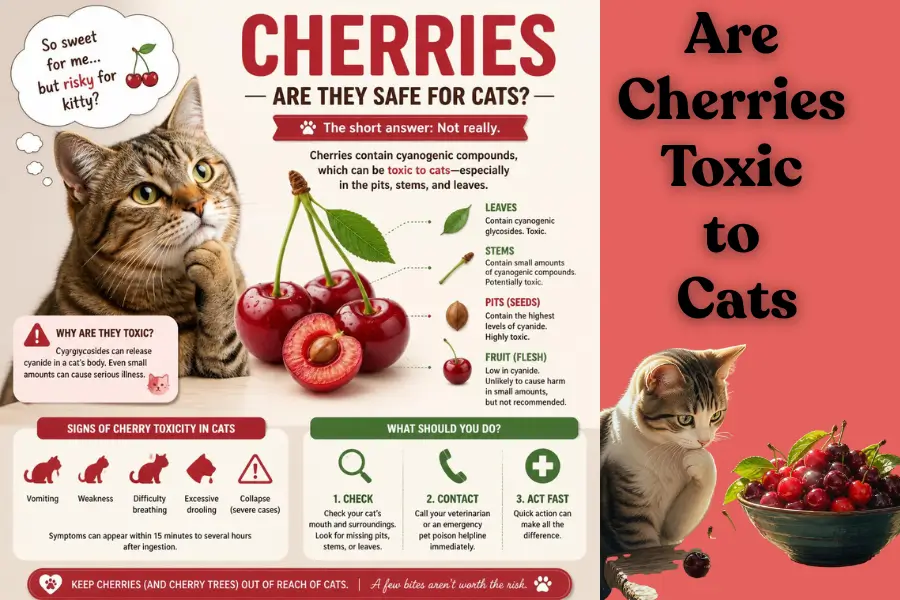
These plants are common in North America and other regions. All parts of the cherry plant—except for the ripe fruit pulp—are toxic to cats, including the seeds, blossoms, stems, leaves, and pits. Symptoms of cherry poisoning in cats include bright red gums and difficulty breathing; it can be severe if not treated properly.
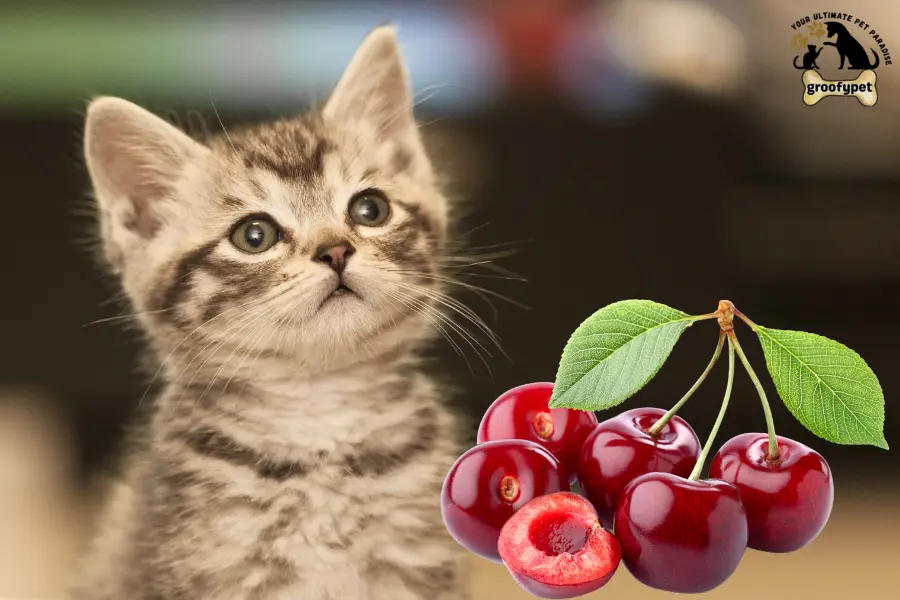
Cherries are seen as a superfood for people because they’re full of vitamins and antioxidants. It contributes to better sleep, weight loss, and lowering inflammation. But your cat doesn’t need cherries in their diet; there are a few nutrients in them that can be helpful. The fiber in cherries can support digestion and help keep your cat’s bowel movements regular.
They also contain potassium, which plays a role in how their muscles and kidneys function and helps with things like hydration and blood pressure. There’s also some vitamin C in cherries, which supports healthy skin, bones, and blood vessels in cats too.
Are cherries poisonous to cats?
Are cherries toxic to cats? The reason cherries are dangerous is due to their cyanide, found in the non-flesh parts. When ingested, cyanide can prevent your cat’s cells from absorbing oxygen properly, which can lead to serious health issues. If you observe that your cat may have eaten any part of a cherry, watch for symptoms such as difficulty breathing, dilated pupils, red gums, or signs of weakness, and contact your vet immediately.
Here are the symptoms to look for.
- Muscle spasms
- Dilation of pupils
- Shock
- Collapse
- Breathing problems
- Vomiting
- Diarrhea
How many cherries can a cat eat?
Ideally, none. Cherries—especially the pits, stems, leaves, and even unripe fruit—contain cyanide, which can be toxic to cats. Because of these serious risks, it’s safest not to give your cat any cherries at all.

If your cat happens to nibble on a seedless, ripe cherry, it likely won’t cause harm, but you should still watch for any unusual behavior or signs of illness. On the other hand, if your cat eats a whole cherry with the pit, the stem, or any other part of the plant, contact your vet immediately, as this could be dangerous.
How Often Can a Cat Eat Cherries?
Cherries might seem harmless, but even a single one can be dangerous to your cat—especially if it’s underripe, still has the stalk, or contains a seed. These parts of the cherry plant carry cyanide, which is toxic and potentially life-threatening for cats. That’s why it’s best to keep all cherries, whether fresh or from your garden, well out of reach of curious paws.
While dried cherries typically don’t have seeds and might seem safer, they still aren’t the ideal choice. Instead, consider offering your cat a safer alternative. If you’re aiming for something packed with antioxidants, try a blueberry—it’s a much safer and healthier treat for your feline friend.
Do Cats Like Cherries?
Cats are obligate carnivores, so their diet should mostly be meat. While some cats might be curious about a small bite of human food, cherries aren’t something they typically crave. It’s always a good idea to double-check that any food you offer your cat is safe for them.
Why are cherries bad for cats?
Cherries are bad for cats because they contain cyanide in the pit, stem, and leaves. Cyanide blocks oxygen in the body, and this can harm vital organs. A cat’s body is small, so even a little bit can cause damage quickly.
Eating cherries may lead to weakness, trouble breathing, or even worse problems. The fruit flesh may not have much cyanide, but it still has sugar and fiber that cats cannot digest well. This can upset their stomach and cause vomiting or diarrhea. For safety, it is better not to let cats touch cherries at all.
Can cats eat cherry flesh?
Some people wonder if cats can eat just the fruit part of cherries. The flesh itself does not have as much cyanide, but it is still not good for cats. Cats are obligate carnivores, which means their bodies are made for meat, not fruit.
Cherry flesh has sugar, and sugar can upset a cat’s stomach. It may lead to gas, bloating, or loose stools. Cats also do not taste sweet flavors, so they gain nothing from eating cherries. Giving cherry flesh is not worth the risk, so it is best to avoid it.
Are Cherries Used in Cat Food?
Cherries don’t appear in commercial cat food. The flesh of sweet cherries is generally safe, but the pits, stems, and leaves contain compounds that can release cyanide, which is toxic to cats. So, it’s best to avoid giving your cat any part of a cherry. If you’re looking for a safe fruit treat for your feline, try offering blueberries, strawberries, or watermelon instead.
Are cherries toxic to cats?
Cherries aren’t directly poisonous to cats; there are still risks involved when it comes to cyanide. The seeds, leaves, stems, and flowers of both sweet and tart cherry plants contain cyanide, which can be dangerous for your cat.
Although the flesh of the cherry itself doesn’t have much cyanide, the pit can be harmful, particularly when ripe. If your cat eats too much cyanide, it can cause symptoms like trouble breathing, vomiting, drooling, and muscle spasms. In severe cases, cyanide poisoning, if not treated immediately.
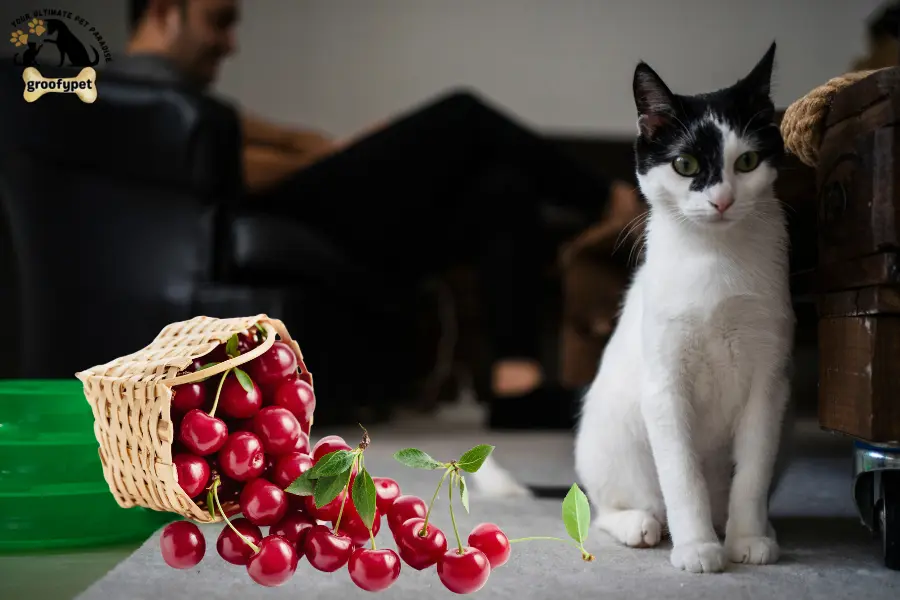
There’s also the risk of choking from the cherry pit, even if your cat only eats the flesh. And as with any new food, cherries could upset your cat’s stomach. Feeding your cat anything outside of their regular balanced diet could lead to nutritional issues. Overall, it’s best to skip the cherries and keep your cat safe. Cherries aren’t directly poisonous to cats.
Some fruits are safe for your cat that are filled with nutrients, but they shouldn’t make up a regular part of their diet. Cats are obligate carnivores, meaning they need animal-based proteins to stay healthy, and fruit just doesn’t provide the essential nutrients they require.
It’s best to offer fruit in moderation, only when recommended by your vet. Are Cherries Toxic to Cats Cats with conditions like diabetes or digestive issues should avoid cherries due to their high sugar content. Always check with your vet before introducing new foods to your cat’s diet.
Symptoms of cherry poisoning in cats
- When a cat eats cherries, signs of poisoning can appear fast.
- The cat may start to breathe with difficulty or seem weaker than normal.
- Its gums may turn bright red because the body is not using oxygen right.
- You may also notice dilated pupils, restlessness, or confusion.
- Some cats may vomit or have diarrhea after eating cherries.
- In severe cases, a cat may collapse or have seizures.
- These are all serious signs and should never be ignored.
- If you see these symptoms, take your cat to the vet right away.
Is cherry juice toxic to cats?
Cherries in any form can be harmful to pets, including cats. Fresh cherries, grapes, raisins, and some citrus fruits can cause health issues like liver damage or stomach upset. Cherry juice isn’t recommended for cats either.
Also Read : Feline Hyperesthesia Life Expectancy
Safe fruits cats can eat instead of cherries
If you want to share fruit with your cat, there are better choices than cherries. Cats can safely eat small bites of blueberries, bananas, watermelon, and cantaloupe. These fruits have fewer risks and can be offered as tiny treats.
Always remove seeds and rinds before giving them. Fruits should not be a big part of a cat’s diet, but small safe pieces are okay sometimes. Remember to give fruits in moderation and watch your cat for any reaction. Safer fruits are always a smarter choice than risky ones like cherries.
Can cats have cherries without pits?
Some owners think it is safe to give cats cherries if the pits are removed. While the pit is the most dangerous part, the flesh of the cherry is still not good for cats. The fruit has sugar and fiber that cats cannot digest well.
Eating cherry flesh may cause an upset stomach, vomiting, or loose stools. Cats do not taste sweet flavors, so they gain no benefit from cherries. Since cats are obligate carnivores, they need meat, not fruit. Even without pits, cherries can still make cats sick. It is better to avoid giving cherries to cats at all.
Are cherries poisonous to pets?
Yes, cherries are poisonous to pets, including cats and dogs. The pits, stems, and leaves of cherries contain cyanide, which is highly toxic. If a pet chews or swallows these parts, it can block oxygen in the body.
This can lead to weakness, breathing problems, or even life-threatening poisoning. Dogs may sometimes chew fruits more than cats, but both are at risk. The fruit flesh may not have much cyanide, but it is still not safe. To protect pets, it is best to keep cherries away from them completely.
Can cats lick cherry juice?
Cats should not lick cherry juice. Juice is concentrated and may contain sugar or preservatives, which harm a cat’s stomach. Even if the juice is fresh, it may carry tiny amounts of cyanide from the fruit. Cats are sensitive, and even small licks can upset their digestion.
Some cats may vomit, drool, or develop diarrhea after drinking juice. Cats also do not need fruit juice because their bodies are made to get water from food and plain water. Giving cherry juice is unsafe, so it should always be avoided.
What happens if my cat licks a cherry?
If your cat licks a cherry, it may or may not get sick, depending on which part it touched. If it only licked the skin of the fruit, the risk may be small but stomach upset is still possible. If it licked the pit, stem, or leaves, the risk is higher because of cyanide.
Symptoms may include red gums, trouble breathing, or weakness. Even a small amount of cherry can harm cats because of their small body size. If this happens, watch your cat closely and call your vet for advice.
Are cherries toxic to cats? What happens if my cat eats a cherry?
If your cat happens to eat a cherry, there’s no need to panic. Are Cherries Toxic to Cats? While cherry pits can be toxic due to their cyanide content, the fruit itself is non-toxic to cats. However, if your cat somehow swallows a pit, there’s a small risk. But overall, your cat should be just fine with no special care needed.
Frequently Asked Questions
Final Thoughts
Technically, only the ripe flesh of a cherry is safe, but even that comes with risks. Are cherries toxic to cats? The pit, stem, and leaves are all toxic to cats, and even if you remove the seed and stem, traces can remain.
On top of that, it’s hard to tell if a cherry is ripe enough to be completely safe. With so many hazards and so little benefit, it’s best to avoid feeding cherries to your cat altogether.
Why are Cats So Soft? The Secret Touch That Melts Your Heart!