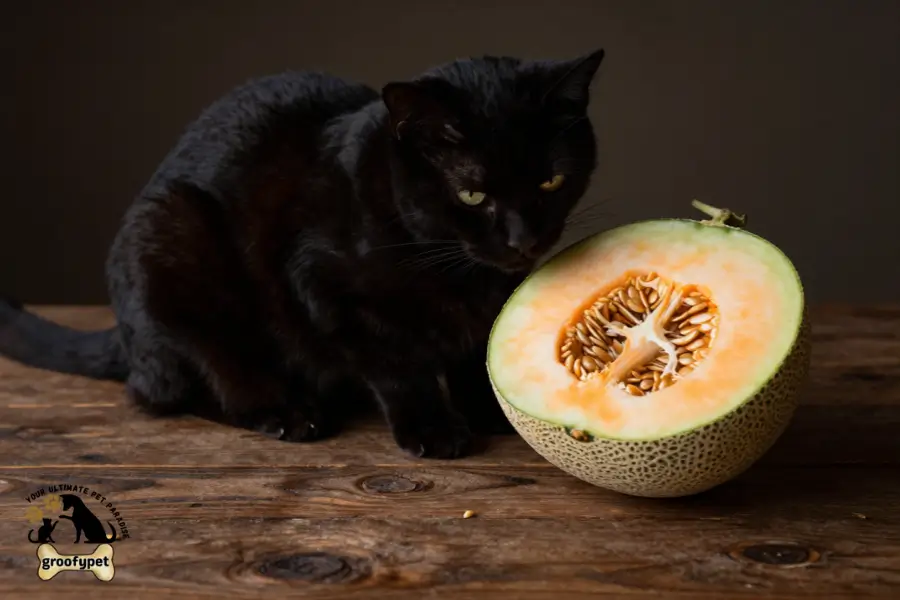
Have you ever been slicing a fresh cantaloupe on a warm afternoon and noticed your cat watching every move? You are not alone. Many cat owners find their curious feline companions drawn to the sweet smell of fruits like cantaloupe. It is a refreshing summer melon that millions of people enjoy — but is it safe for cats too?
The short answer is that cantaloupe can be okay for cats in very small amounts. It is not toxic to felines and some cats seem to genuinely enjoy the soft texture and light aroma. That said there are real risks to know about before sharing a piece with your pet.
This article covers everything you need to know: the health benefits of cantaloupe for cats, the risks of feeding cantaloupe to cats, safe serving tips and the best safe alternatives to cantaloupe for cats. By the end you will know exactly how to handle this sweet treat in a way that keeps your cat safe and happy.
Can Cats Eat Cantaloupe?
Yes, cats can eat cantaloupe. Plain ripe cantaloupe offered in small pieces is generally considered safe for cats. Cantaloupe is not toxic to cats, which means a tiny cube of fresh melon is unlikely to cause serious harm to a healthy adult cat.
However, it is important to remember that cats are obligate carnivores. This means their bodies are designed to get all nutrition from animal protein and meat-based diets. Unlike humans, cats do not need carbohydrates, plant matter or fruit in their daily diet. Their digestive system is built to process raw meat, not fruit sugar.
Because of this, cantaloupe should only ever be an occasional treat never a regular part of feline nutrition. Some cats may show interest in cantaloupe because the volatile compounds in melon share amino acids with protein, so the fruit can actually smell a little like meat to a cat.
Always offer only small portions watch for any signs of stomach upset and check with your veterinarian before introducing any new human food into your cat’s diet.
Is Cantaloupe Safe for Cats?
Yes. Cantaloupe is generally safe for cats when served the right way. It is not toxic to cats and many cats can enjoy a tiny piece of fresh ripe cantaloupe without any trouble. The soft texture and sweet smell can make it interesting for curious cats. Some cats may even enjoy the juicy bite on a warm day.
Still, cats do not need fruit in their diet. They are obligate carnivores, which means their bodies need meat to stay healthy. Cantaloupe should only be an occasional treat and never a meal replacement. Too much fruit can upset a cat’s stomach because cats do not digest sugar the same way people do.
Cantaloupe is generally safe for cats when served correctly:
• It is ripe and fresh — not overripe or starting to spoil.
• It is cut into small bite-sized pieces that are easy to chew.
• All seeds have been removed before serving.
• It is served plain with no added sugar syrup or flavoring.
Can cats eat cantaloupe?Cantaloupe may not be safe if it is overripe moldy or packed in syrup. Large portions can also lead to vomiting diarrhea or stomach discomfort. If your cat has diabetes, a sensitive stomach or weight concerns, it is best to avoid cantaloupe or ask your vet first.
When may cantaloupe not be safe?
There are situations where cantaloupe can become a problem for cats:
• Overripe fruit has higher sugar content and ferments slightly, which can upset a cat’s digestive system.
• Moldy cantaloupe is dangerous and should never be given to any pet.
• Cantaloupe in sugar syrup juice or canned form contains too much sugar and additives.
• Large portions can cause digestive problems even in healthy cats.
Health Benefits of Cantaloupe for Cats
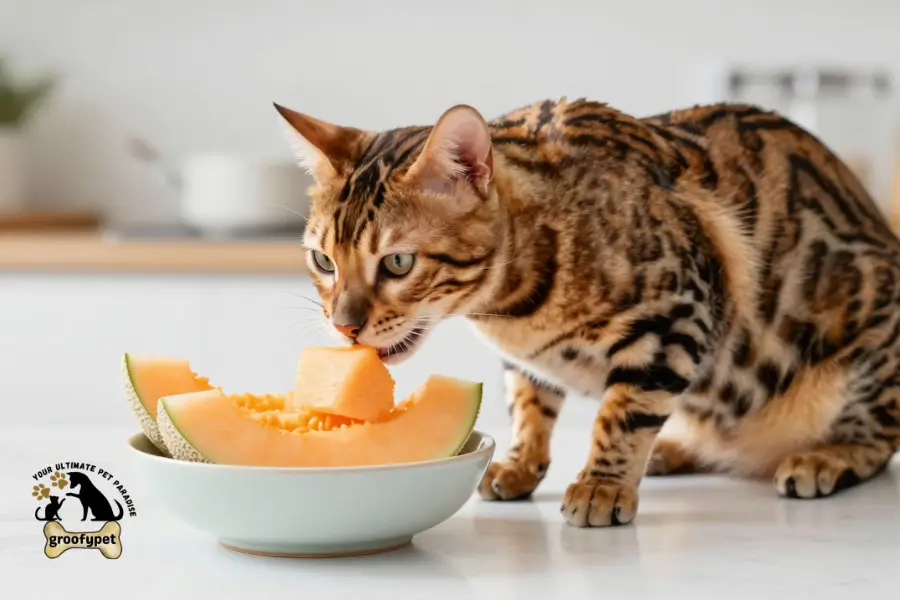
While cats do not need fruit in their daily meals a tiny piece of cantaloupe can offer a few small benefits as an occasional treat. The key is to keep the portion very small and always serve fresh plain melon with no seeds or rind.
1. High water supports hydration
Cantaloupe has a lot of water which can help cats get extra moisture. This can be helpful on hot days when your cat needs more fluids. Cats that do not drink much water may enjoy the juicy texture. A tiny piece can feel cool and refreshing.
2. Gentle on the mouth
Ripe cantaloupe feels soft and easy to chew. Many cats may find it easier than crunchy treats or firm fruits. The soft texture can be more comfortable for older cats. It also lowers the chance of chewing trouble.
3. Low-calorie snack
A small cube of cantaloupe has very few calories. This makes it lighter than many rich treats. It can feel like a fun snack without adding too much. Portion size still matters for cats.
4. Supports extra moisture in warm weather
Cats can lose more fluids during hot weather. A juicy fruit like cantaloupe can add a little moisture. It may help your cat feel refreshed. Always keep fresh water nearby too.
5. Contains antioxidants
Cantaloupe has natural antioxidants that help protect body cells. These compounds support normal body function. Antioxidants can help the body fight stress from free radicals. A small amount gives a gentle boost.
6. Provides vitamin A
Cantaloupe contains vitamin A, which supports healthy body function. Cats need vitamin A in their diet to stay healthy. They mainly get it from meat, but cantaloupe still contains some. It can be part of a tiny treat.
7. Contains vitamin C
Cantaloupe also contains vitamin C. This vitamin helps support healthy cells. Cats make their own vitamin C, but small amounts from food are still present. It adds to the fruit’s natural nutrients.
8. Adds variety to treat time
Some cats enjoy trying different textures and smells. A small cantaloupe cube can make treat time more interesting. The sweet smell may catch your cat’s attention. It can feel like a fun change once in a while.
9. May appeal to curious cats
Cats often explore foods with new scents. Cantaloupe has a smell that many cats notice right away. This can make snack time exciting for curious pets. A tiny bite may satisfy that interest.
10. A refreshing seasonal treat
Cold cantaloupe can feel cool and fresh on warm days. Some cats enjoy the juicy texture and mild taste. It can be a simple seasonal treat in summer. Just offer a very small amount and watch for any reaction.
While cantaloupe is not a necessary part of a cat’s diet, it does offer a few modest benefits when given as an occasional snack.
Risks of Feeding Cantaloupe to Cats
Despite the small benefits, there are real risks of feeding cantaloupe to cats that every owner should understand.
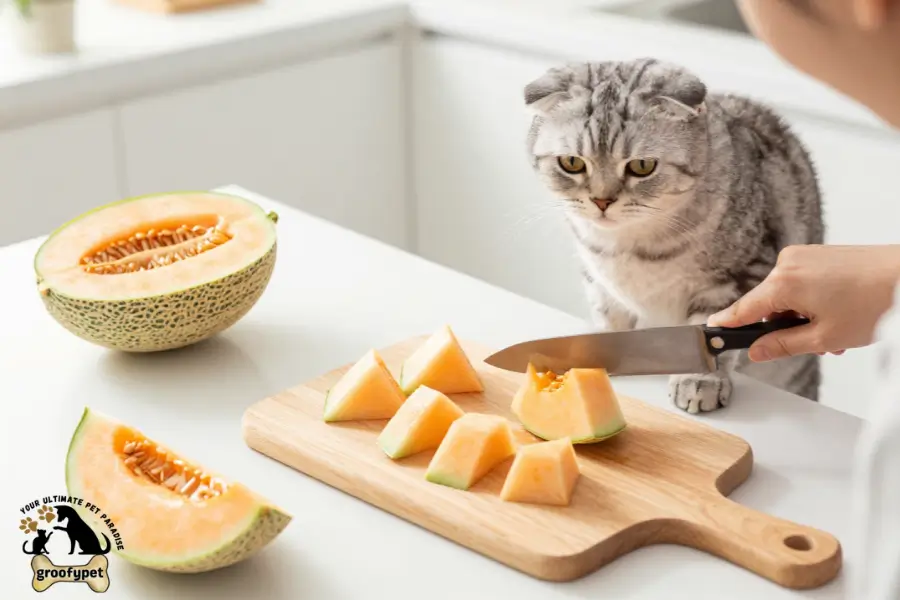
Even though cantaloupe is not toxic to cats, there are still some risks to know before sharing it. Cats have sensitive digestive systems, and fruit is not a natural part of their daily diet. That is why cantaloupe should only be a small treat once in a while.
1. Too much natural sugar
Cantaloupe has natural sugar that can be hard for cats to handle. Cats do not process sugar like people do. Too much can upset the stomach and lead to discomfort. Small portions are always safer.
2. Digestive upset
Some cats may get an upset stomach after eating cantaloupe. This can happen because cats are built to eat meat not fruit. Even a small amount may feel heavy for sensitive cats. Watch closely after the first bite.
3. Vomiting
A cat that does not tolerate cantaloupe may throw up soon after eating it. This can happen if they eat too much or eat it too fast. Vomiting is a sign the body did not like the food. Stop giving more if this happens.
4. Diarrhea or loose stool
Fruit can sometimes move through a cat’s stomach too quickly. This may lead to loose stool or diarrhea. It can also cause dehydration if it continues. Fresh water is important if stomach issues begin.
5. Choking on large pieces
Big chunks of cantaloupe can be hard for cats to chew. This raises the risk of choking while eating. Always cut the melon into very tiny soft cubes. Small bites are much safer.
6. Seeds can be dangerous
Cantaloupe seeds are not safe for cats. They can be hard to chew and harder to digest. A cat may choke on them or feel stomach pain after swallowing. Remove every seed before serving.
7. Rind is hard to digest
The rind is thick tough and fibrous. Cats can struggle to chew it and swallow it. It may cause stomach pain or even blockage. Only offer the soft inside fruit.
8. Allergic reaction
Some cats may react badly to new foods. While rare fruit allergies can happen. Signs may include itching swelling or stomach trouble. Try only a tiny bite the first time.
9. Weight gain over time
Too many treats can add extra calories fast. Even fruit can lead to weight gain when offered often. Overweight cats may have more health problems later. Cantaloupe should stay an occasional snack.
10. Risk for cats with diabetes
Cats with diabetes should avoid sugary fruits like cantaloupe. The natural sugar may affect blood sugar levels. This can make managing diabetes harder. Ask your vet before offering any fruit.
Cantaloupe Diet Plan Chart for Cats
Weekly Feeding Guide
| Cat size | Safe amount | How often | Notes |
|---|---|---|---|
| Kitten | ½ tsp | Once a week | Tiny bites only |
| Small adult | 1 tsp | 1–2 times/week | Watch digestion |
| Medium adult | 2 tsp | 1–2 times/week | Best after regular meal |
| Large adult | 2–3 tsp | 1–2 times/week | Avoid daily feeding |
| Senior cats | 1 tsp | Once a week | Easier on digestion |
Best way to serve
✅ Cut into very small cubes
✅ Remove all seeds
✅ Remove the rind completely
✅ Serve fresh and ripe
✅ Offer after your cat has eaten normal food
Avoid cantaloupe if your cat has
❌ Diabetes
❌ Frequent stomach sensitivity
❌ Ongoing diarrhea
❌ Fruit allergies
❌ Trouble chewing or swallowing
Example for a healthy 10-pound cat:
- Morning: regular cat food
- Evening: regular cat food
- Treat day (1–2× weekly): 2 teaspoons cantaloupe cubes after dinner
That keeps cantaloupe as a fun, hydrating snack while your cat still gets most nutrition from balanced cat food.
Can Cats Eat Cantaloupe Seeds?
No, cantaloupe seeds are not a good choice for cats. They are hard to digest may irritate the gastrointestinal tract, and could become a choking hazard, especially for smaller cats or kittens. Before offering any piece of cantaloupe to your cat, always remove every seed completely.
Can Cats Eat Cantaloupe Rind?
No—the cantaloupe rind is unsafe for cats. It is tough fibrous and very hard for a cat to chew or digest properly. Eating the rind can upset digestion cause intestinal impaction or become a choking hazard. Always peel the rind away completely and serve only the soft inner flesh in very small pieces.
How Much Cantaloupe Can Cats Eat?
Keep portions very small. One or two tiny cubes roughly pea-sized to teaspoon-sized is more than enough for most adult cats. Cantaloupe should be offered once in a while as a special treat not every day.
For kittens be extra careful. Kittens have more sensitive digestive systems and even less need for fruit in their diet. It is best to avoid offering cantaloupe to very young cats entirely or to consult your veterinarian first.
How to Serve Cantaloupe to Cats Safely?
Wash the fruit well
Always rinse the cantaloupe under clean running water before cutting. The outer rind can carry bacteria or pesticide residue.
Cut away rind and seeds
Peel the rind completely and remove all seeds before preparing any pieces for your cat.
Slice tiny soft cubes
Cut the flesh into very small soft cubes small enough for your cat to eat easily without any choking risk.
Offer plain with no sugar
Serve the cantaloupe plain no added sugar, honey syrup or seasoning of any kind.
Watch your cat after eating
Observe your cat for the next few hours after eating cantaloupe. If any digestive upset vomiting or unusual behavior occurs stop offering the fruit and contact your vet.
Signs Your Cat Did Not Tolerate Cantaloupe
Watch for these signs of poor tolerance after your cat eats cantaloupe:
• Vomiting
• Diarrhea or loose stool
• Excess gas or bloating
• Loss of appetite
• Lethargy or unusual tiredness
If any of these symptoms appear stop feeding cantaloupe immediately. If symptoms are severe or do not improve within a day call your veterinarian.
Safe Alternatives to Cantaloupe for Cats
If your cat enjoys the texture of soft treats or you want to offer a little fruit variety here are some generally cat-safe options:
• Watermelon (seedless and no rind) — another water-dense melon that is safe in small amounts.
• Blueberries—small, soft, and low in calories.
• Cooked pumpkin — great for digestion and very easy on the stomach.
• Small banana pieces—high in sugar so only very occasionally.
• High-quality cat treats — the safest and most nutritionally balanced option.
• Cooked plain chicken — the best treat for an obligate carnivore.
Always introduce any new food slowly and in tiny amounts while watching for reactions.
When Cats Should Avoid Cantaloupe?
Some cats should skip cantaloupe entirely:
• Cats with sensitive stomachs or a history of digestive trouble.
• Cats diagnosed with diabetes — the high sugar content makes fruit risky.
• Overweight or obese cats where extra calories and sugar are a concern.
• Cats with known or suspected fruit allergies.
• Cats already experiencing any form of digestive upset.
When in doubt, your veterinarian is always the best person to ask about your individual cat’s dietary needs.
Frequently AskedQuestions
Can cats eat cantaloupe every day?
No. Cantaloupe should only be an occasional treat. Daily feeding can contribute to excess sugar intake weight gain and digestive problems over time.
Can kittens eat cantaloupe?
It is best to avoid giving cantaloupe to kittens. Their digestive systems are more sensitive and they need a diet built entirely on proper kitten food that supports healthy growth.
Why does my cat like cantaloupe?
Cats are attracted to cantaloupe because of its volatile compounds, which come from amino acids, the same building blocks found in animal protein. The melon may actually smell a little like meat to a cat, which explains the curious interest.
Can cats eat frozen cantaloupe?
A small piece of frozen cantaloupe can be a fun cool treat on a hot day. Make sure it is plain seedless rind-free, and cut into small enough pieces that it does not pose a choking hazard as it thaws.
What happens if my cat eats cantaloupe rind?
If your cat eats a small piece of rind accidentally, monitor them closely. The rind can cause GI upset vomiting or diarrhea. If your cat ate a large amount or shows severe symptoms contact your veterinarian promptly.
Final Thoughts
So can cats eat cantaloupe? Yes — but only in moderation and with the right preparation. Cantaloupe is not toxic to cats and a small plain rind-free seedless piece can make a refreshing occasional treat for a healthy adult cat.
Always remove the seeds and rind before serving, keep portions small and watch your cat after trying any new food. If your cat is diabetic, overweight, or has a sensitive stomach, it is safest to skip cantaloupe entirely.
Most importantly, remember that cats are obligate carnivores. Their bodies thrive on meat-based diets, and fruit should never replace proper nutrition. Cooked chicken or a quality vet-approved cat treat will always be the better reward.
When in doubt, ask your veterinarian; they know your cat’s individual health needs best. Treat time should always be safe, fun, and just a little extra special.
What Can Cats Eat From the Fridge?
Can Cats Eat Chicharrones or Is This Crunchy Snack a Silent Danger!