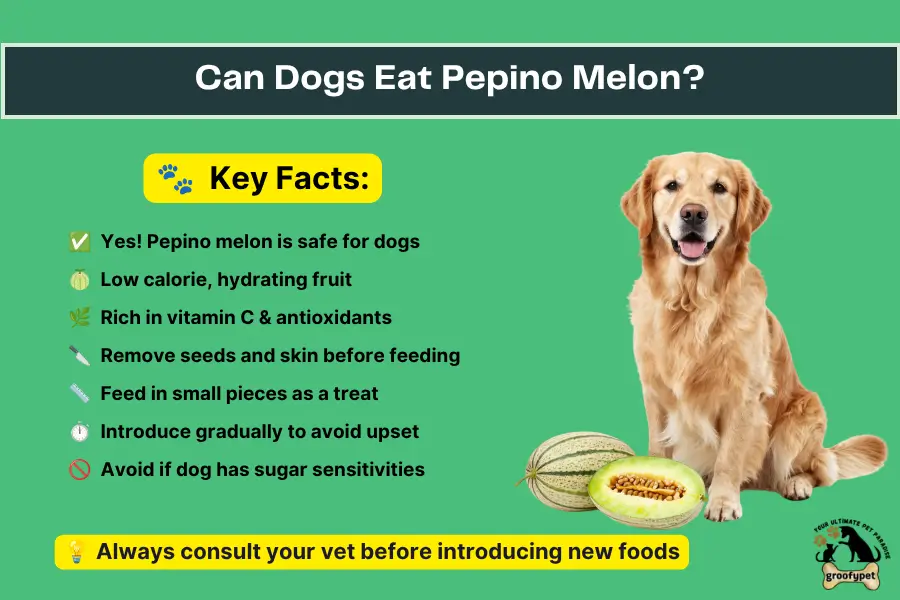
Can dogs eat pepino melon? Yes, dogs can eat ripe pepino melon in moderation. The flesh is non-toxic and contains water, fibre, vitamins, and antioxidants that can support canine health. However, the seeds, leaves, stems, and unripe fruit should be avoided, since these parts may contain compounds that can upset a dog’s stomach or cause other problems.
Always serve ripe, peeled, plain pepino melon in small, bite-sized pieces as an occasional treat, not a meal replacement. Although pepino melon offers some nutritional benefits, it should never replace a complete and balanced dog food.
Introduce it gradually, feed only small portions, and watch for signs of digestive upset or an allergic reaction after your dog tries it for the first time.
Can dogs eat pepino melon?
Yes. Dogs can eat pepino melon (Solanum muricatum) when it is fully ripe, peeled, seeded, and cut into small pieces. This makes pepino melon for dogs a safe, low-calorie snack for most healthy adult dogs.
Is it safe or toxic?
The ripe flesh is considered safe. The plant itself belongs to the nightshade family, and unripe fruit, leaves, and stems can contain compounds that are unsafe for dogs.
Which parts are safe?
Only the ripe, peeled flesh is safe. Skin, seeds, leaves, stems, and unripe (green) fruit should be avoided or removed before feeding.
- Ripe pepino melon is safe for dogs in moderation.
- Serve it peeled, seedless, and plain.
- Avoid unripe fruit, leaves, and stems.
- Feed only small portions as an occasional treat.
- Stop feeding and contact your veterinarian if your dog shows signs of digestive upset or an allergic reaction.
What Is Pepino Melon?
Scientific Name
Pepino melon’s botanical name is Solanum muricatum. It belongs to the same plant family as tomatoes and potatoes.
Common Names
People search for this fruit under several names, including:
- Pepino melon
- Pepino dulce
- Sweet cucumber
Origin and Appearance
Pepino melon is native to South America and is grown for its juicy, mildly sweet flesh. The fruit has smooth, yellow-and-purple striped skin and a pale, melon-like interior with a texture similar to a cross between a melon and a cucumber.
Nutritional Value of Pepino Melon
| Nutrient | Benefit for Dogs |
|---|---|
| Water | Hydration |
| Fiber | Digestive health |
| Vitamin C | Immune support |
| Vitamin A | Eye health |
| Potassium | Muscle and nerve function |
| Antioxidants | Cell protection |
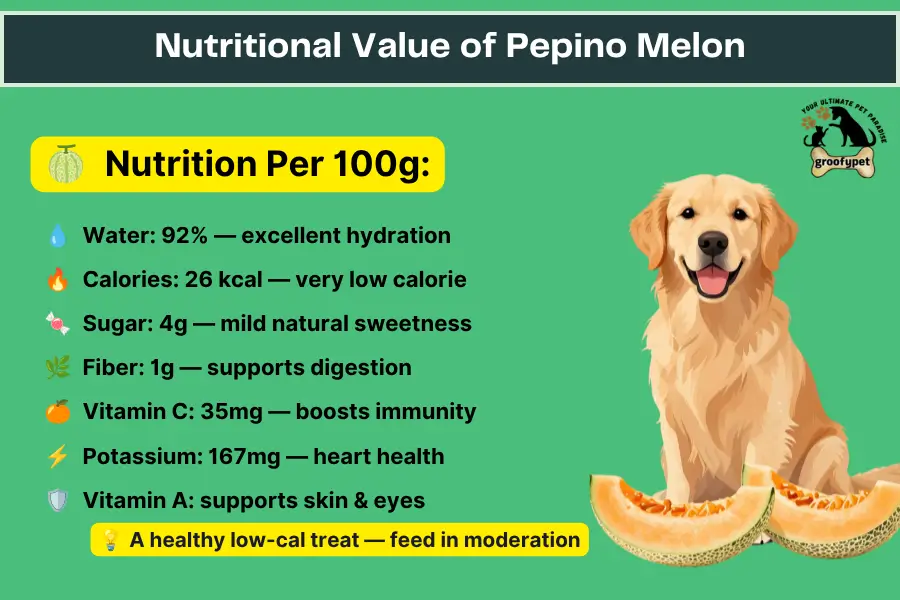
This nutrient profile is why pepino melon is often grouped with other low-calorie fruits for dogs when owners look for healthy treats for dogs that support canine nutrition without adding excess fat.
Is Pepino Melon Safe for Dogs?
Is Pepino Melon Toxic?
Pepino melon is not considered toxic when the ripe flesh is fed in small amounts. The concern with nightshade plants relates mainly to the unripe fruit, leaves, and stems, which can carry compounds that are harder for dogs to digest.
Which Parts Are Safe?
- Safe: Ripe, peeled flesh
- Avoid: Skin, seeds, leaves, stems, and unripe fruit
Why Moderation Matters
Even dog-safe fruits can cause digestive upset in dogs if given in large amounts. Moderation protects against unnecessary sugar intake and reduces the risk of stomach upset.
Benefits of Pepino Melon for Dogs
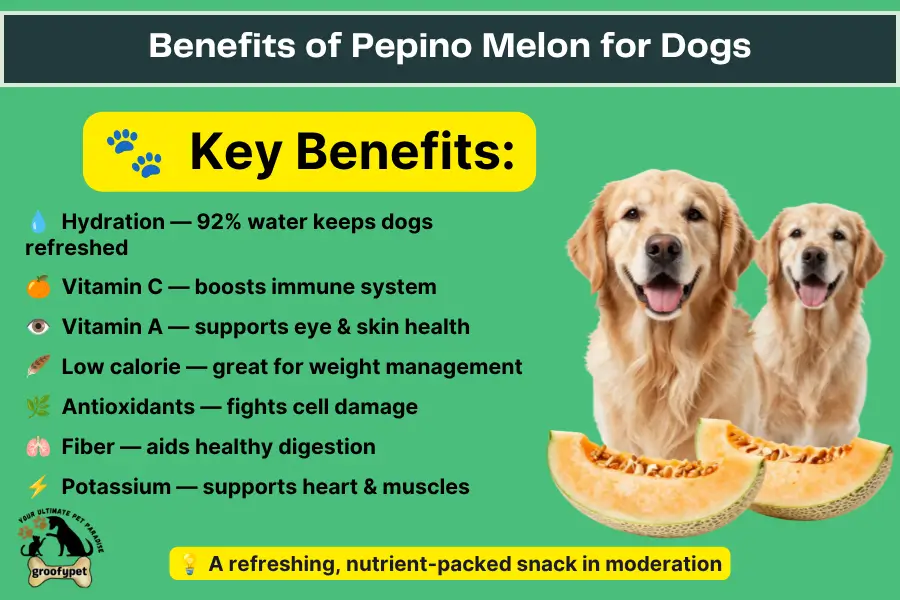
Pepino melon can be a healthy occasional treat for dogs when it is ripe, peeled, and served in moderation. It provides water, fibre, vitamins, and antioxidants that may support hydration, digestion, and overall health as part of a balanced diet.
1. Helps Keep Dogs Hydrated
Pepino melon has a high water content that helps support your dog’s hydration. It can be a refreshing snack during hot weather or after exercise. Staying hydrated is important for healthy digestion, circulation, and body temperature. Always provide fresh drinking water alongside any fruit treats. Pepino melon should only be offered in moderation.
2. Supports Healthy Digestion
Pepino melon contains dietary fibre that can help support healthy digestion. Fibre promotes regular bowel movements and may improve gut health. Small amounts are usually easy for healthy dogs to digest. Too much fibre, however, can upset your dog’s stomach. Introduce this fruit gradually to avoid digestive problems.
3. Low in Calories
Pepino melon is naturally low in calories compared to many commercial dog treats. It allows your dog to enjoy a tasty snack without consuming excessive calories. This makes it a suitable occasional treat for dogs maintaining a healthy weight. Portion control is still important. Treats should make up no more than 10% of your dog’s daily calories.
4. Provides Vitamin C
Pepino melon contains vitamin C, an antioxidant that helps protect cells from damage. Dogs naturally produce vitamin C, but extra amounts from food may provide additional support. Antioxidants help reduce oxidative stress in the body. They also contribute to overall health and wellness. Pepino melon should complement a balanced diet rather than replace it.
5. Contains Potassium
Potassium is an important mineral that supports healthy muscle contractions and nerve function. It also helps maintain proper fluid and electrolyte balance. Pepino melon provides a small amount of potassium that contributes to your dog’s overall nutrition. Healthy potassium levels support normal heart and muscle function. Feed only moderate portions to avoid digestive upset.
Can Dogs Eat Ripe Pepino Melon?
Benefits
Ripe pepino melon for dogs is softer, sweeter, and easier to digest than the unripe fruit. This is the only stage at which the fruit should be offered.
Safe Serving Tips
- Choose fruit that is fully yellow with purple streaks
- Peel and deseed before serving
- Cut into small, manageable pieces suited to your dog’s size
Can Dogs Eat Unripe Pepino Melon?
Why It Should Be Avoided
Unripe pepino melon is firmer and less sweet, and it’s more likely to cause digestive discomfort. As a nightshade fruit, unripe specimens are best left off the menu entirely.
Possible Digestive Problems
Feeding unripe fruit can lead to an upset stomach, vomiting, or diarrhoea in some dogs.
Can Dogs Eat Pepino Melon Skin?
Is the Peel Safe?
The skin is not toxic, but it is tougher and harder to digest than the flesh. It offers little nutritional value in comparison.
Should You Remove It?
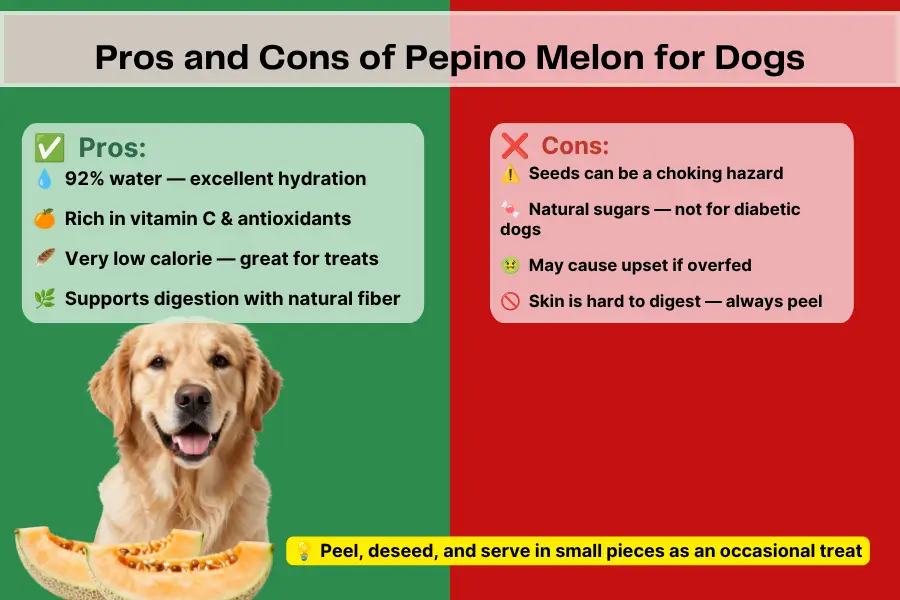
Yes. Removing the pepino melon skin before serving reduces choking risk and makes the treat easier for your dog to digest.
Can Dogs Eat Pepino Melon Seeds?
Are the Seeds Dangerous?
Pepino melon seeds are not known to be toxic, but they are a potential choking hazard and can be harder to digest, especially for small dogs.
Should They Be Removed?
Yes, removing pepino melon seeds before feeding is a simple safety step every owner should take.
Can Dogs Eat Pepino Melon Leaves and Stems?
Why These Parts Are Unsafe
The leaves and stems of the pepino plant are not meant for dogs (or humans) to eat and should be kept out of reach.
Toxic Compounds in the Plant
As a member of the nightshade family, the green parts of the pepino plant may contain compounds that can cause digestive upset if ingested in quantity.
Can Puppies Eat Pepino Melon?
Is It Recommended?
Puppies have more sensitive digestive systems, so introducing pepino melon should wait until they are past the early weaning stage and eating solid food regularly.
Safe Serving Advice
- Offer a very small piece first
- Watch closely for any reaction
- Stick to ripe, peeled, seedless pieces only
- Treat it as an occasional extra, not a daily addition to a balanced dog diet
How Much Pepino Melon Can Dogs Eat?
| Dog Size | Serving Size | Frequency |
|---|---|---|
| Extra Small (under 10 lbs) | 1–2 small cubes | Once or twice a week |
| Small (10–25 lbs) | 2–3 small cubes | Once or twice a week |
| Medium (25–50 lbs) | 3–4 small cubes | Up to 2–3 times a week |
| Large (50–90 lbs) | 4–6 small cubes | Up to 2–3 times a week |
| Giant (90+ lbs) | 6–8 small cubes | Up to 2–3 times a week |
These amounts are general guidance. Treats, including fruit, should make up no more than about 10% of a dog’s total daily calories.
How to Prepare Pepino Melon for Dogs
- Wash Thoroughly – Rinse the fruit to remove dirt and any residue.
- Peel the Fruit – Remove the skin completely.
- Remove Seeds – Scoop out or cut away the seeds.
- Cut Into Small Pieces – Size the pieces to your dog’s mouth to prevent choking.
- Serve Fresh and Plain – Skip sugar, salt, or any added seasoning.
Signs Your Dog Ate Too Much Pepino Melon
Watch for:
- Vomiting
- Diarrhea
- Gas
- Bloating
- Stomach discomfort
If any of these symptoms appear after eating fruit, hold off on future feedings and monitor your dog closely.
What If Your Dog Eats Unripe Pepino Melon or the Plant?
Symptoms to Watch For
- Vomiting
- Diarrhea
- Lethargy
- Loss of appetite
- Drooling
When to Contact a Veterinarian
Contact your vet if your dog shows any of the symptoms above, especially if they persist beyond 24 hours or worsen, or if your dog has consumed a large amount of unripe fruit, leaves, or stems.
Can Dogs Be Allergic to Pepino Melon?
Allergic reactions are uncommon but can include itching, hives, swelling, or gastrointestinal upset.
First-Time Feeding Tips
- Offer a small piece first
- Wait 24 hours before giving more
- Stop immediately if any reaction occurs
- Contact your vet with questions before repeating
Best Fruits Instead of Pepino Melon
| Fruit | Safe | Main Benefit |
|---|---|---|
| Blueberries | ✅ | Antioxidants |
| Apples (seedless) | ✅ | Fiber |
| Watermelon (seedless) | ✅ | Hydration |
| Strawberries | ✅ | Vitamin C |
| Bananas | ✅ | Potassium |
| Cantaloupe | ✅ | Vitamins A & C |
These dog-safe fruits are widely recommended alternatives if you’re looking to rotate healthy treats for dogs.
Fruits Dogs Should Avoid
| Fruit | Reason |
|---|---|
| Grapes | Toxic |
| Raisins | Toxic |
| Cherries | Pits and stems contain toxins |
| Avocado | Contains persin |
| Unripe Pepino Melon | May cause digestive upset |
Veterinary Tips Before Feeding Pepino Melon
- Introduce Slowly – Start with a small piece to check tolerance.
- Feed in Moderation – Keep servings occasional, not daily.
- Monitor for Digestive Changes – Watch stool and behaviour after feeding.
- Use as an Occasional Treat – Fruit should complement, not replace, a balanced dog diet built around complete dog food and sound veterinary nutrition guidance.
Frequently Asked Questions
Can dogs eat ripe pepino melon?
Yes, ripe pepino melon is safe for dogs in small, peeled, seedless portions.
Is pepino melon poisonous to dogs?
The ripe flesh is not considered poisonous. The unripe fruit, leaves, and stems carry more risk and should be avoided.
Can dogs eat pepino melon skin?
It’s not toxic, but it’s tough to digest and offers little nutrition, so it’s best removed.
Can dogs eat pepino melon seeds?
Seeds aren’t known to be toxic but pose a choking risk and should be removed before serving.
Can puppies eat pepino melon?
Only in very small amounts once puppies are eating solid food, and only after checking with your vet.
How much pepino melon can dogs eat?
This depends on your dog’s size — see the serving size table above for general guidance.
Can diabetic dogs eat pepino melon?
Diabetic dogs should avoid or strictly limit pepino melon due to its natural sugar content. Always consult your vet first.
What should I do if my dog eats unripe pepino melon?
Monitor for vomiting, diarrhoea, or lethargy, and contact your veterinarian if symptoms appear or your dog ate a large amount.
Can dogs eat dried pepino melon?
Dried fruit is more concentrated in sugar, so fresh, ripe pepino melon is the better and safer option.
Is pepino melon healthier than cantaloupe for dogs?
Both offer similar vitamins and hydration. Neither is definitively the “healthier” variety; in dog-safe fruits, generally the better approach is
Final Thoughts
Can dogs eat pepino melon? Yes, dogs can enjoy ripe pepino melon in moderation as an occasional treat. Its high water content and beneficial nutrients can make it a refreshing snack, but it should always be served peeled, seedless, and in small bite-sized pieces.
Avoid feeding unripe pepino melon, leaves, or stems, and introduce this fruit gradually to watch for any digestive upset or allergic reaction. When fed properly, pepino melon can be a safe addition to your dog’s diet, but it should never replace a complete and balanced dog food.
Can Dogs Eat Tamarillos? Benefits, Risks, and Safe Feeding Guide!