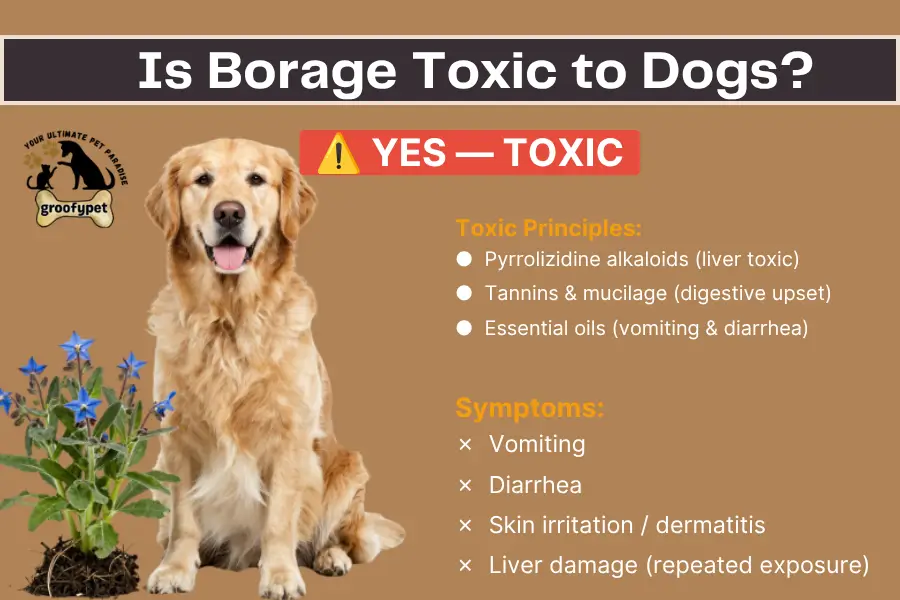
Is borage toxic to dogs? Yes, borage (Borago officinalis) should be considered unsafe for dogs. It contains pyrrolizidine alkaloids (PAs), compounds that can damage the liver when a dog eats enough of them or is exposed to them repeatedly over time.
The level of risk depends on how much your dog ate, which part of the plant it came from, and whether the product was processed to remove these compounds.
Why it can be dangerous: Borage leaves, stems, flowers, and seeds all contain some amount of pyrrolizidine alkaloids and tannins. These compounds are known contributors to canine toxicology cases involving liver toxicity in dogs, and dogs metabolise plant compounds differently than humans do.
Should you call a veterinarian? Yes. If your dog ate borage, especially a large amount of dried plant material or a concentrated supplement, contact your veterinarian or an emergency animal hospital right away. Don’t wait for symptoms to appear.
Key takeaway: A single small nibble of a garden borage leaf is unlikely to cause serious harm in most healthy adult dogs, but borage is not a plant you should intentionally offer, and any known exposure deserves a call to your vet as part of responsible pet poison prevention.
What Is Borage?
Borage is a flowering herb best known for its fuzzy leaves and clusters of small, star-shaped blue flowers, which is why it’s commonly nicknamed “starflower”. It belongs to the Boraginaceae plant family and grows wild across the Mediterranean, though it’s now cultivated in gardens throughout Europe and North America.
Scientific Name
Borago officinalis
Common Uses
Borage shows up in a surprising number of everyday and commercial products, including the following:
- Culinary herb — leaves have a mild cucumber-like taste and are used fresh in salads, soups, and drinks
- Edible flowers — sweet-tasting blossoms used as garnishes in some cuisines
- Garden plant — popular for companion planting, since it’s believed to help protect nearby vegetables like tomatoes and strawberries
- Herbal supplements — marketed for skin, adrenal, and anti-inflammatory support in both human and pet products
- Borage oil — extracted from the seeds, this oil is rich in gamma-linolenic acid (GLA) and sold as a supplement for skin and coat health
The fact that borage has legitimate herbal uses is exactly why so many dog owners search “is borage poisonous to dogs”; it’s a plant that looks and sounds benign, but that reputation doesn’t fully apply to dogs.
Why Is Borage Toxic to Dogs?
Pyrrolizidine alkaloids are naturally occurring plant compounds found in borage and several related species in the Boraginaceae family. They’re a well-documented category of poisonous herbs for dogs and other animals, not unique to borage.
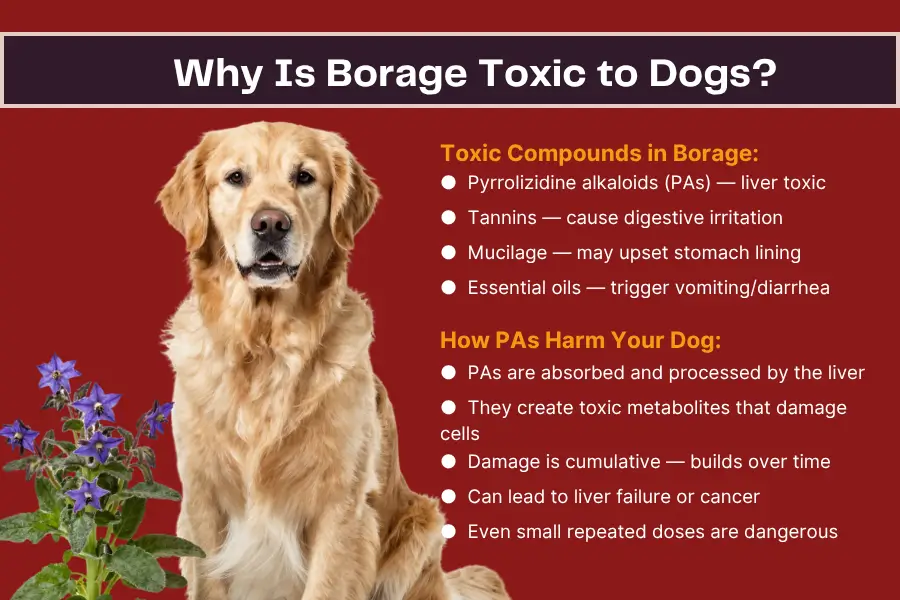
PAs are processed by the liver, where they can be converted into reactive compounds that damage liver cells. With low-level or one-time exposure, a healthy dog liver may handle this without issue. But repeated exposure, or a single large dose, can overwhelm the liver’s ability to repair itself, leading to progressive liver toxicity in dogs.
This is a slow, cumulative type of harm, which is part of what makes PA-containing plants tricky: a dog might look fine for days before signs of damage appear. Borage also contains tannins, a separate class of compounds that bind to proteins in the digestive tract and can trigger gastrointestinal irritation independent of any liver effects.
Which Parts of the Plant Are Risky?
| Plant Part | Relative Risk | Notes |
|---|---|---|
| Leaves | Moderate–High | Contain PAs and tannins; most commonly ingested part |
| Stems | Moderate | Similar compound profile to leaves |
| Flowers | Lower, but not zero | A sweeter taste may tempt dogs to eat more |
| Seeds | Variable | Source of borage oil; concentration depends on processing |
No part of the fresh plant should be treated as a safe, unlimited snack for dogs.
Is Borage Oil Safe for Dogs?
This is one of the more nuanced questions in this topic, and it’s where a lot of confusion comes from.
Refined vs. Unrefined Borage Oil
Commercial borage seed oil intended for supplements is often refined specifically to reduce or remove pyrrolizidine alkaloid content. Refined borage oil used at an appropriate, vet-recommended dose is a different product from a dog chewing on raw garden leaves.
Why Some Supplements May Differ
Not all borage oil products are processed to the same standard. PA content can vary based on:
- Sourcing and manufacturing quality control
- Whether the product is labeled “PA-free” or tested for alkaloid levels
- Dosage instructions and concentration
Always Consult a Veterinarian
Never start your dog on a borage oil supplement or any product containing borage without first talking to your veterinarian. This is especially important as part of any broader veterinary advice for dog poisoning prevention, since “natural” does not automatically mean “safe at any dose”.
Symptoms of Borage Poisoning in Dogs
Borage poisoning symptoms can appear within minutes to hours of ingestion or may develop more gradually if liver involvement is present. Watch for:
- Vomiting
- Diarrhea (sometimes with blood)
- Drooling
- Loss of appetite
- Weakness
- Lethargy
- Abdominal pain
- Jaundice (yellowing of the gums, skin, or eyes — a sign of liver stress)
- Increased thirst
- Increased urination
In more severe or rare cases involving larger ingestions, dogs have also been reported to show incoordination, dilated pupils, low body temperature, low blood pressure, and — in extreme cases — seizures or collapse.
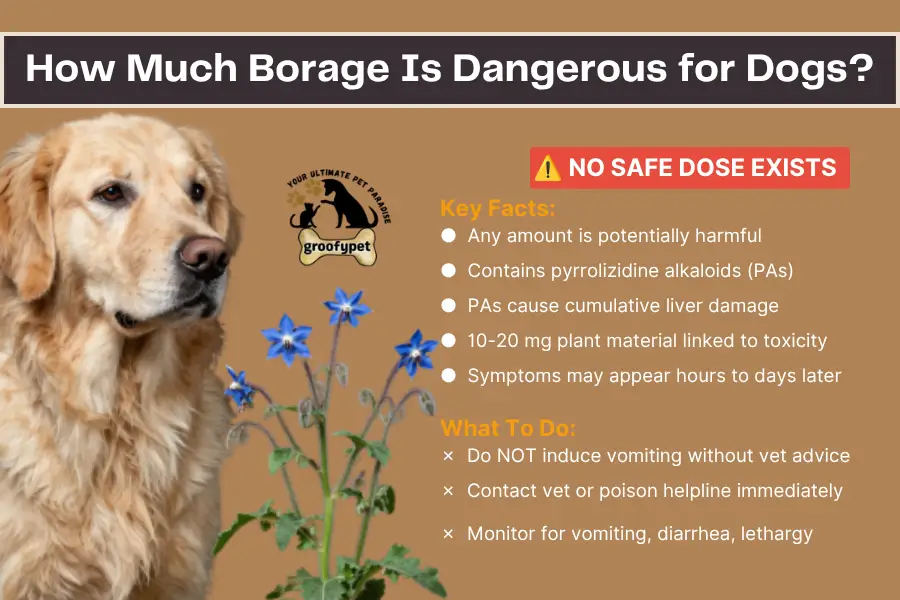
How Much Borage Is Dangerous?
Small Taste vs. Large Amount
A large, healthy adult dog that eats a leaf or two while sniffing around the garden is unlikely to develop serious illness. A small- or toy-breed dog or any dog that consumes a large quantity of dried plant material or a concentrated supplement faces meaningfully higher risk.
Factors That Affect Toxicity
| Factor | Why It Matters |
|---|---|
| Dog size | Toy and small breeds (e.g., Yorkshire Terriers, Maltese, Poodles, Schnauzers) reach a toxic dose at much lower total intake |
| Amount eaten | More plant material means more pyrrolizidine alkaloids and tannins absorbed |
| Fresh vs. dried | Dried or wilted borage can have concentrated compound levels compared to fresh leaves |
| Existing liver disease | Dogs with prior liver damage have much less reserve capacity to handle PA exposure |
What Should You Do If Your Dog Eats Borage?
Stay Calm
Panic doesn’t help your dog. Move calmly and quickly through the next steps.
Remove Remaining Plant Material
Take away any borage your dog can still access so they can’t eat more.
Estimate the Amount Eaten
Try to figure out roughly how much your dog consumed and which part of the plant (leaf, stem, flower, seed, or oil supplement). This detail matters a lot to your vet.
Contact Your Veterinarian
Call your regular vet, an emergency animal hospital, or a pet poison hotline right away — even if your dog seems fine. This is standard pet poison prevention practice for any suspected dog-plant poisoning.
When Emergency Care Is Needed
Seek emergency care immediately if your dog shows any of the following:
- Persistent vomiting
- Severe or bloody diarrhea
- Collapse
- Trouble breathing
- Yellow gums or eyes
- Extreme lethargy
- Seizures
How Veterinarians Diagnose Borage Poisoning
A vet evaluating a suspected case of a dog eating borage will typically use a combination of the following:
- Physical examination — checking vitals, hydration status, and overall condition
- Medical history — including how much was eaten, timing, and your dog’s health background
- Blood tests — to assess general organ function and look for early abnormalities
- Liver function tests — since PAs specifically target the liver, these are central to diagnosis
- Imaging (if needed) — x-rays, ultrasound, or, in select cases CT/MRI, to rule out obstruction or assess organ changes
Bringing a sample or photo of the plant your dog ate can speed up an accurate diagnosis.
Treatment for Borage Toxicity
Treatment is tailored to severity and may include:
- IV fluids — to support hydration and help the kidneys and liver clear toxins
- Anti-nausea medication — to control vomiting and keep the dog comfortable
- Liver support — medications or supplements aimed at protecting liver cells during recovery
- Monitoring — repeat bloodwork to track liver values over the following days
- Hospitalization for severe cases — dogs with significant symptoms may need 24–48 hours of inpatient observation and supportive care
Note: Vets generally do not recommend inducing vomiting at home without professional guidance, since this can sometimes worsen certain types of plant-related irritation. Always follow your veterinarian’s specific instructions.
Can Puppies Eat Borage?
Puppies have smaller body mass relative to any dose consumed, and their liver and detox pathways are still developing. This makes them more sensitive to pyrrolizidine alkaloids than a full-grown adult dog of the same breed.
Puppies should never be given borage in any form (plant, supplement, or oil) without direct veterinary guidance. If a puppy eats borage, treat it as a same-day veterinary matter rather than a wait-and-watch situation.
Is Borage Safe in Small Amounts?
Because pyrrolizidine alkaloids can build up in the liver over repeated exposures, “small amounts” aren’t automatically risk-free, especially if a dog has garden access and nibbles on the same plant regularly. One isolated small taste is very different from ongoing, repeated exposure.
For a large, healthy adult dog that ate a very small amount of fresh borage once, a vet may advise monitoring at home for 24–36 hours for vomiting, diarrhoea, or lethargy, with instructions to call back immediately if anything develops. This decision should always come from your veterinarian, not be self-diagnosed.
Safe Garden Plants for Dogs instead of Borage
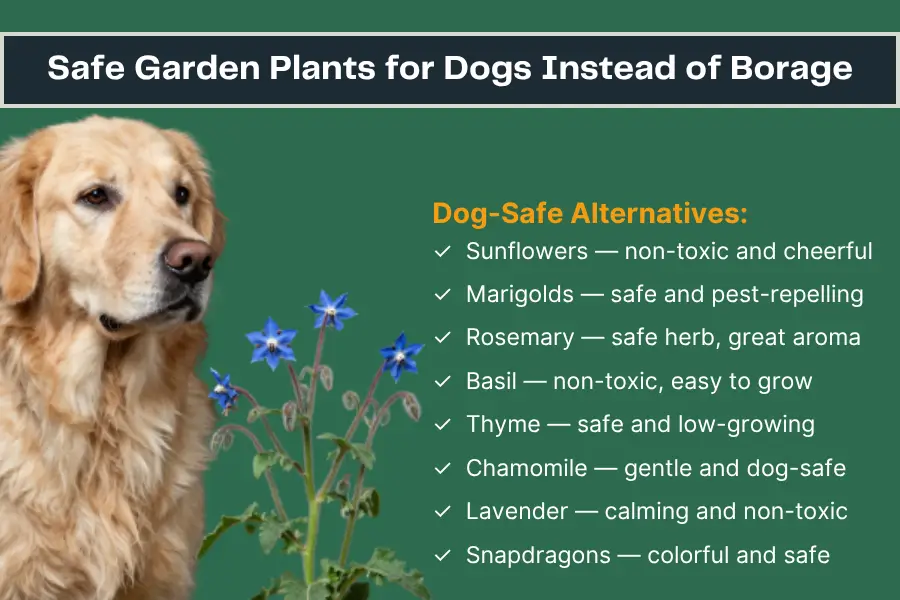
If you love the idea of a dog-friendly herb garden, these are generally considered safer options in moderation:
| Plant | Dog Safe | Notes |
|---|---|---|
| Basil | ✅ | Safe in moderation |
| Parsley (curly) | ✅ | Small amounts |
| Rosemary | ✅ | Generally safe |
| Thyme | ✅ | Safe in moderation |
| Dill | ✅ | Occasional use |
Toxic Plants Dogs Should Avoid
Borage isn’t the only garden risk. Common toxic plants for dogs include:
| Plant | Risk |
|---|---|
| Borage | Liver toxicity |
| Foxglove | Heart toxicity |
| Oleander | Severe poisoning |
| Autumn Crocus | Highly toxic |
| Sago Palm | Severe liver damage |
How to Prevent Plant Poisoning
- Identify toxic plants already growing in your yard or brought in as bouquets
- Fence off garden areas where poisonous herbs for dogs or ornamental plants grow
- Supervise outdoor time, especially in new or unfamiliar environments
- Teach the “leave it” command so your dog reliably drops plant material on cue
When to Contact a Veterinarian Immediately
Don’t wait if you see the following:
- Persistent vomiting
- Severe diarrhea
- Collapse
- Trouble breathing
- Yellow gums or eyes
- Extreme lethargy
- Seizures
Frequently Asked Questions
Is borage poisonous to dogs?
Yes. Borage contains pyrrolizidine alkaloids and tannins that can cause gastrointestinal upset and, with larger or repeated exposure, liver damage in dogs.
Can dogs eat borage flowers?
Flowers carry a lower PA concentration than leaves or stems in some assessments, but they aren’t confirmed safe. Treat all parts of the plant as something to keep away from your dog.
Is borage oil safe for dogs?
Refined, properly tested borage oil used at a vet-recommended dose is different from raw plant material, but you should never give your dog any borage oil product without veterinary guidance.
What happens if my dog eats borage?
Depending on the amount, your dog may show no symptoms, mild gastrointestinal upset, or — in more serious cases — signs of liver stress. Contact your vet regardless of symptom severity.
How long do symptoms take to appear?
Gastrointestinal symptoms can appear within minutes to hours. Liver-related effects from pyrrolizidine alkaloids may take longer to become apparent, sometimes days.
Can puppies eat borage?
No. Puppies are more vulnerable to plant toxins due to their smaller size and developing liver function.
Should I induce vomiting?
Don’t induce vomiting unless a veterinarian specifically instructs you to. Some vets avoid this step with certain plant ingestions.
Is dried borage toxic?
Yes, and potentially more concentrated in compounds than fresh plant material, depending on how it was dried and stored.
Can borage cause liver damage?
Yes. The pyrrolizidine alkaloids in borage are known to affect liver cells, and repeated or large exposures raise the risk of measurable liver damage.
What herbs are safe for dogs?
Herbs generally considered safer in moderation include basil, curly parsley, rosemary, thyme, and dill. Always introduce any new herb gradually and check with your vet first.
Final Thoughts
Yes, borage toxicity in dogs is real and well-documented, driven mainly by pyrrolizidine alkaloids that target the liver, along with tannins that irritate the digestive tract. Raw leaves, stems, dried plant material, and unrefined or untested borage oil supplements carry the most risk. Refined, vet-approved borage oil at an appropriate dose is different, though still not risk-free.
Remove access to the plant, estimate how much was eaten, and call your veterinarian promptly, even if your dog seems fine. Watch closely for the emergency signs listed above. If you want a dog-friendly herb garden, stick to options like basil, parsley, rosemary, thyme, and dill instead of borage.
Because pyrrolizidine alkaloid damage can be slow and cumulative, prompt veterinary advice for dog poisoning rather than a wait-and-see approach gives your dog the best chance of a full recovery.