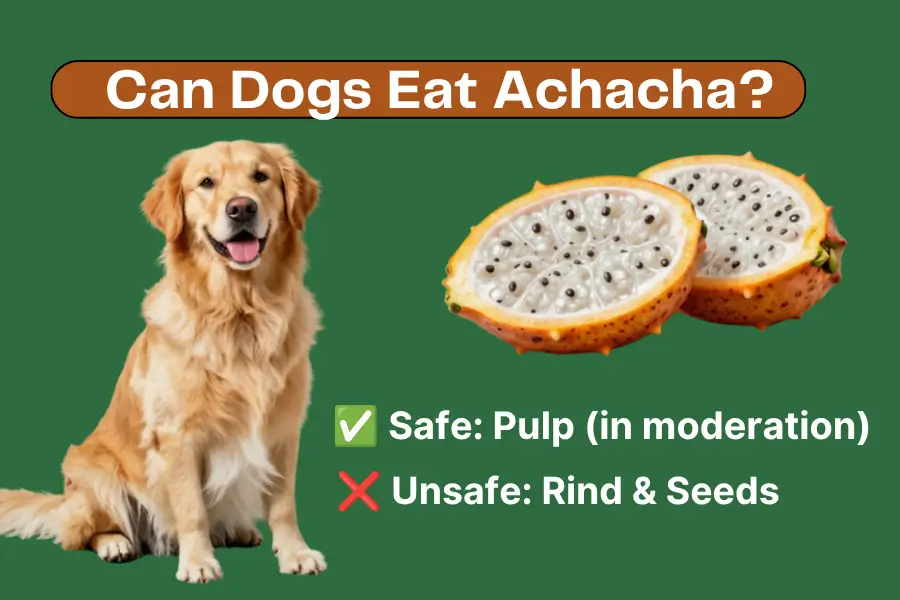
Yes, dogs can eat achacha in moderation, but only the flesh. This tropical fruit from Bolivia is not known to be toxic to dogs, and its antioxidants, vitamin C, potassium, and fibre may offer minor health benefits. However, the seeds and skin must always be removed, and it should only be served as an occasional treat, not a dietary staple.
What Is Achacha?
Achacha is known locally as ‘Achachairu’, meaning ‘honey kiss’ in the indigenous Guarani language. Botanically classified as Garcinia humilis, it belongs to the Garcinia family, making it a close relative of the mangosteen.
The fruit is small and oval, roughly egg-shaped, with a thick, leathery orange rind that protects a soft, juicy white pulp inside. Its flavour is a refreshing balance of sweet and tart, often compared to a mix of mango, lychee, and passionfruit.
Key facts about achacha:
- Scientific name: Garcinia humilis
- Family: Garciniaceae (related to mangosteen)
- Origin: Amazon forest, Bolivia
- Common names: Achachairu, Bolivian mangosteen, “the dancing fruit”
- Taste: Sweet-tart, similar to mango and lychee
- Commercial growing: Queensland, Australia is the only region with a licensed commercial orchard outside Bolivia
- How people eat it: Pierce the rind with a thumb, peel back the skin, eat the white pulp, and discard the seeds. The rind is also steeped in water to make a refreshing antioxidant-rich drink.
Can Dogs Eat Achacha?
Yes, dogs can eat achacha, but only the flesh, in small amounts, and not regularly. Based on animal and clinical toxicity studies in the Garcinia family (including achacha), there is no observed adverse effect on record.
That said, no direct studies have been conducted specifically on the suitability of feeding achacha to dogs. This means veterinary guidance defaults to a cautious “yes, in moderation” for the flesh, and a firm “no” for the rind and seeds.
Safe serving method:
- Remove the skin (rind) completely
- Remove all seeds before serving
- Cut the white pulp into small, bite-sized pieces
- Offer occasionally as a treat, not a regular part of a dog’s diet
Veterinary recommendation: Always consult your veterinarian before introducing any new fruit or tropical fruit to your dog’s diet, especially if your dog has diabetes, obesity, kidney disease, gastrointestinal issues, or food allergies.
Is Achacha Safe for Dogs? (Part by Part)
Not all parts of achacha are safe. Here is a breakdown of each part:
✅ Flesh (White Pulp) Generally Safe
The soft inner pulp is the only part dogs should eat. It contains vitamin C, antioxidants, potassium, and fibre. Serve fresh, in small amounts.
❌ Skin (Rind) — Not Recommended
The thick, leathery rind of achacha is very difficult for a dog’s digestive system to break down. It can cause gastrointestinal upset, bloating, or even intestinal blockage if consumed in quantity. While people steep the rind in water for a nutritional drink, dogs should not eat the rind directly.
❌ Seeds — Dangerous
Achacha typically contains one to two large, almond-sized, woody seeds. These pose a significant choking hazard for dogs of all sizes and can cause intestinal obstruction if swallowed. Always remove seeds completely before offering any piece of the fruit to your dog.
❌ Leaves — Not for Dogs
No evidence supports feeding achacha leaves to dogs. As with most tropical fruit trees, leaves may contain compounds not suitable for canine digestion.
⚠️ Juice (Fresh) — Proceed with Caution
Fresh, homemade achacha juice made purely from the pulp, diluted with water and without added sugar, is unlikely to harm a dog in tiny amounts. However, it should not replace water.
❌ Store-Bought or Packaged Achacha Juice — Avoid
Commercial achacha juice almost always contains added sugar, preservatives, and artificial sweeteners, including potentially xylitol, which is highly toxic to dogs. Never give dogs store-bought fruit juice.
❌ Dried Achacha — Avoid
Drying fruit concentrates its sugar content significantly. Dried achacha has far more sugar per gram than fresh achacha and may contain preservatives and a sticky texture that can cause dental problems or digestive upset. Avoid giving dried achacha to dogs.
⚠️ Note: Achacha-specific nutritional data for dogs has not been independently studied. Values are extrapolated from general Garcinia family nutritional research.
Question
Short Answer
Is achacha safe for dogs?
Yes — flesh only, in small amounts
Can puppies eat achacha?
Yes — but extra caution, very small portions
Is the skin (rind) safe?
No — too tough and hard to digest
Are the seeds dangerous?
Yes — choking and blockage risk
How much is safe?
A few small pieces, occasionally
Nutritional Value of Achacha for Dogs
Nutrient
Approximate Amount (per 100g pulp)
Benefit for Dogs
Vitamin C
High
Immune support, antioxidant activity
Potassium
Moderate
Heart and muscle health, electrolyte balance
Dietary Fiber
Moderate
Digestive health, healthy bowel movement
Folate (Vitamin B9)
Present
Cell function, supports neurological health
Beta-carotene
Trace
Eye health, antioxidant support
Antioxidants
High
Fights oxidative stress, reduces inflammation
Water content
High
Natural hydration
Fat
Very low
Safe for weight-conscious dogs
Calories
Low-moderate
Suitable as an occasional treat
Natural Sugar
Moderate
Must be controlled; risk of weight gain if overfed
Pros and cons of of Achacha for Dogs
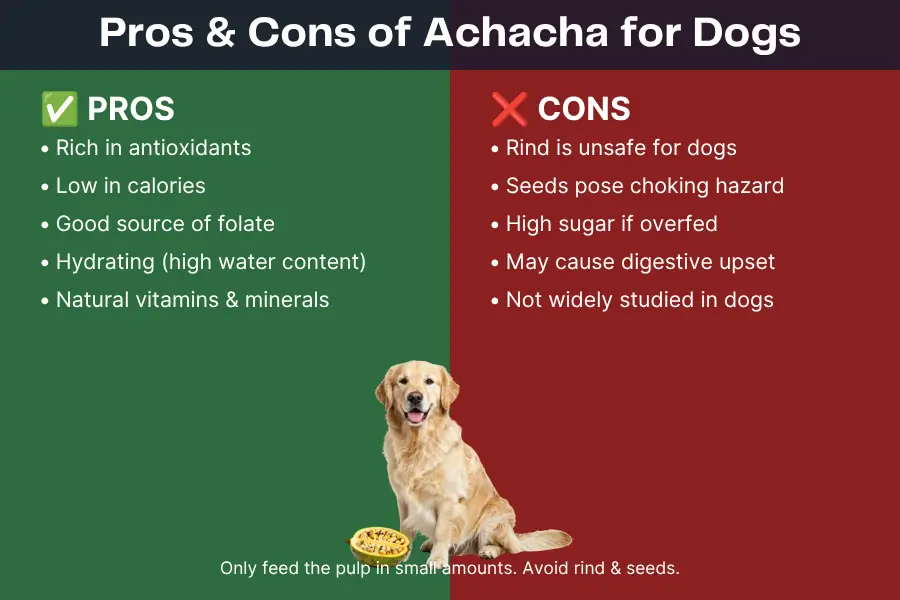
- Contains vitamin C.
- Provides antioxidants.
- High in water content.
- Low in fat.
- Safe in small amounts (flesh only).
- Seeds are a choking hazard.
- Thick rind is not edible.
- Too much may cause stomach upset.
- High natural sugar content.
- Not an essential part of a dog’s diet.
Potential Health Benefits of Achacha for Dogs
When served correctly and in small amounts, achacha may offer dogs these minor health benefits:
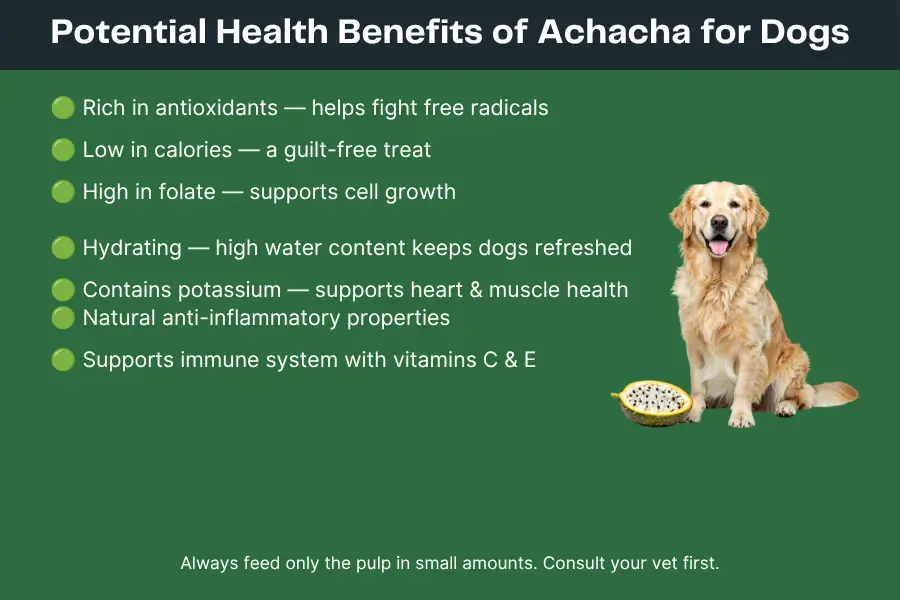
- Hydration support — High water content helps keep dogs hydrated, especially in hot weather
- Natural antioxidants — May help neutralize free radicals and support the immune system
- Vitamin C boost — Supports immune function; dogs can synthesize their own vitamin C, but supplementary sources can still be beneficial
- Digestive fiber — Moderate fiber content may help regulate bowel movements and support gut health
- Low fat content — Safe as an occasional low-calorie treat for healthy dogs
- Potassium source — Supports proper heart, kidney, and muscle function
These benefits are modest. Achacha should never be seen as a health food for dogs — it is at best a safe, occasional natural snack that causes no harm when properly prepared.
Risks of Feeding Achacha to Dogs
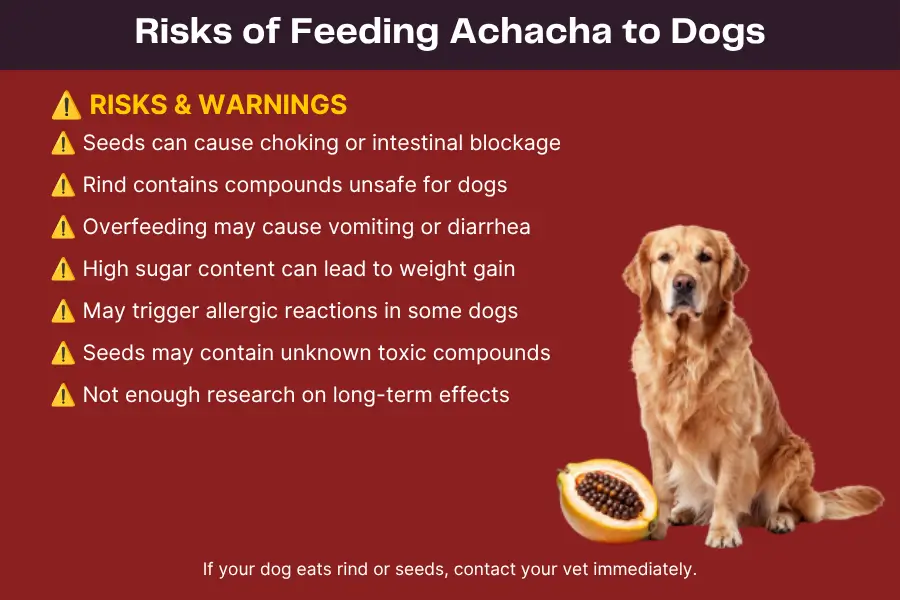
Even with its benefits, feeding achacha to dogs carries real risks if not done carefully:
Sugar
Achacha contains natural sugars. While lower than many tropical fruits, excessive amounts can contribute to:
- Weight gain and obesity
- Blood sugar spikes (dangerous for diabetic dogs)
- Long-term dental health issues
Digestive Upset
Too much achacha at once or introducing it too quickly can lead to the following:
- Vomiting
- Diarrhea or loose stool
- Bloating and gas
- Abdominal discomfort
Choking Hazards
The large, woody seeds are a serious choking hazard, particularly for small and toy breeds. Even large dogs can choke on a whole seed.
Seed Obstruction
If a seed is swallowed, it can cause an intestinal blockage, which is a veterinary emergency requiring immediate attention.
Rind Digestion Issues
The thick, leathery rind is not digestible by dogs and can cause the following:
- Gastrointestinal irritation
- Blockages in severe cases
Allergic Reactions
Though rare, dogs can have allergic reactions to new fruits. First-time exposure should always be a tiny portion. Watch for:
- Hives or skin irritation
- Swelling of the face, lips, or tongue
- Difficulty breathing
- Excessive scratching
If any of these occur, contact your veterinarian immediately.
Can Puppies Eat Achacha?
Puppies have significantly more sensitive digestive systems than adult dogs. While achacha is not toxic, puppies are more vulnerable to:
- Digestive upset from new foods introduced too quickly
- Choking on seeds or improperly cut pieces
- Sugar sensitivity, as their systems are still developing
If you want to offer your puppy achacha,
- Wait until at least 12 weeks of age
- Offer an extremely tiny piece (a single bite)
- Monitor closely for any digestive reaction for 24 hours
- Always consult your veterinarian before introducing any exotic or tropical fruit to a puppy
Can Dogs Eat Achacha Skin?
No, achacha skin is not recommended for dogs. The rind is thick, leathery, and fibrous. Unlike the tender skin of a grape or mango, achacha’s rind does not soften easily and is very difficult for a dog’s digestive system to break down. Feeding it can cause the following:
- Gastrointestinal upset
- Vomiting
- Potential blockage in smaller dogs
While humans steep the skin in water to make a refreshing tonic, dogs should not consume it directly in any form.
Can Dogs Eat Achacha Seeds?
No, achacha seeds are dangerous and must always be removed. Achacha typically has one to two almond-sized, woody, inedible seeds. For dogs, these seeds present two serious risks:
- Choking hazard — A seed can lodge in the throat, airway, or esophagus, especially in small breeds
- Intestinal blockage — If swallowed, seeds can cause a partial or complete intestinal obstruction, which may require emergency surgery
Always inspect every piece of achacha before offering it to your dog. Never assume the pulp is seed-free.
Can Dogs Drink Achacha Juice?
| Type of Juice | Safe for Dogs? | Reason |
|---|---|---|
| Fresh, homemade (no sugar, diluted) | In tiny amounts only | Pulp nutrients present but no sugar added |
| Store-bought achacha juice | No | Added sugar, preservatives, possibly xylitol |
| Achacha skin-steeped water (plain) | Not recommended | Not studied; rind compounds unknown |
| Sweetened achacha drinks | Absolutely not | Sugar, additives, xylitol risk |
Can Dogs Eat Dried Achacha?
No, ripened achacha is not recommended for dogs. The drying process removes water and concentrates sugar to a far higher level than the fresh fruit. Dried achacha also commonly contains:
- Added sugar or sweeteners (sometimes xylitol — toxic to dogs)
- Preservatives that dogs cannot tolerate
- A sticky texture that can cling to teeth, promoting dental disease
Always choose fresh achacha if you wish to give your dog this fruit as an occasional treat.
Safe serving recap:
- ✅ Flesh only — fresh, never canned or dried
- ✅ Seeds removed — always, without exception
- ✅ Rind removed — completely
- ✅ Small, bite-sized pieces appropriate for your dog’s size
- ✅ Occasional treat only — following the 10% rule
- ✅ Introduce slowly and watch for any adverse reactions
When to call your vet:
- Your dog ate the seeds or rind
- Your dog shows vomiting, diarrhea, or signs of pain
- Your dog has diabetes, kidney disease, or other health conditions
- You are unsure how much is safe for your specific dog
How Much Achacha Can Dogs Eat?
Use the following size-based feeding chart as a guideline. These are suggested maximums; always start with less and monitor your dog’s reaction.
| Dog Size | Weight Range | Safe Serving of Achacha Pulp | Frequency |
|---|---|---|---|
| Toy / Extra Small | Under 5 kg (under 10 lbs) | 1 very small piece (~5g) | Once a week at most |
| Small | 5–10 kg (10–22 lbs) | 1–2 small pieces (~10g) | Once or twice a week |
| Medium | 11–25 kg (23–55 lbs) | 2–3 small pieces (~20g) | 2–3 times a week |
| Large | 26–45 kg (56–99 lbs) | 3–4 small pieces (~30g) | 2–3 times a week |
| Extra Large | Over 45 kg (100+ lbs) | Up to 5 small pieces (~40g) | 2–3 times a week |
The 10% rule: Treats of any kind including fruit should make up no more than 10% of your dog’s total daily caloric intake. The other 90% must come from a nutritionally complete, balanced dog food.
How to Prepare Achacha for Dogs: Step-by-Step
Follow these steps every time you prepare achacha for your dog:
- Wash the fruit — Rinse thoroughly under cool running water to remove any surface pesticides, dirt, or bacteria
- Remove the rind — Pierce the skin with your thumb at the midpoint and peel the halves apart. Discard the rind completely
- Remove all seeds — Locate the one or two large seeds inside and discard them. Double-check before serving
- Cut into small, bite-sized pieces — The size of each piece should be appropriate for your dog’s breed and size. smaller pieces for smaller dogs
- Serve fresh and plain — No added sugar, honey, syrups, or flavouring. Fresh only
- Offer occasionally — Treat achacha as a special snack, not a daily part of your dog’s diet
Signs Your Dog Ate Too Much Achacha
If your dog consumed too much achacha or ate the rind or seeds, watch for these warning signs:
Mild symptoms (monitor at home for 24 hours):
- Loose stool or diarrhea
- Mild vomiting (once or twice)
- Bloating or gassiness
- Reduced appetite
- Lethargy
For serious symptoms, contact your veterinarian immediately:
- Repeated vomiting that will not stop
- Severe abdominal pain or distension
- Blood in stool or vomit
- Difficulty breathing
- Signs of choking (pawing at mouth, gagging, wheezing)
- Inability to defecate (possible obstruction)
- Collapse or loss of consciousness
What To Do If Your Dog Eats the Seed
- Stay calm and assess – Note your dog’s size, how many seeds may have been swallowed, and your dog’s current behavior
- Check the mouth — If the seed is visible and accessible without risk, you may carefully remove it. Never put your hand deep into a choking dog’s throat
- Call your vet — For small dogs, even one seed is a serious concern. For large dogs, monitor closely but still contact your vet for guidance
- Do not induce vomiting without veterinary instruction — Inducing vomiting incorrectly can cause more harm
- Watch for obstruction signs — Inability to defecate, straining, pain, or bloating within 12–48 hours may indicate a blockage requiring emergency care
Healthier Fruit Alternatives for Dogs
If achacha is not available or your dog reacted poorly to it, these vet-approved fruits are safer, more widely studied, and easier to find:
| Fruit | Safe for Dogs? | Key Benefit | Key Caution |
|---|---|---|---|
| Apples | ✅ Yes | Vitamins A & C, fiber | Remove core and seeds |
| Blueberries | ✅ Yes | Antioxidants, low-calorie | Feed in moderation |
| Strawberries | ✅ Yes | Vitamin C, a teeth-whitening enzyme | High sugar; limit quantity |
| Bananas | ✅ Yes | Potassium, B6, fiber | High sugar; occasional only |
| Watermelon | ✅ Yes | Hydrating, vitamins A & C | Remove rind and seeds |
| Mango | ✅ Yes | Vitamins A, B6, C, E | Remove pit and peel |
| Pears | ✅ Yes | Antioxidants, fiber | Remove core and seeds |
| Cantaloupe | ✅ Yes | Vitamins A, B, C; hydrating | High sugar; avoid for diabetic dogs |
| Papaya | ✅ Yes | Vitamins A & C, fiber | Remove skin and seeds |
| Dragon fruit | ✅ Yes | Vitamin C, omega-3, low calorie | Remove spiky skin |
Fruits Dogs Should Never Eat
These fruits are toxic to dogs and must be kept completely out of reach:
| Fruit | Why It Is Dangerous |
|---|---|
| Grapes | Causes acute kidney failure — even small amounts can be fatal |
| Raisins | Same toxic principle as grapes: highly concentrated, even more dangerous |
| Cherries | Pits, stems, and leaves contain cyanide; fruit flesh may cause GI upset |
| Avocado | Persin (in pit, skin, leaves) causes vomiting, diarrhea, and heart damage |
| Unripe ackee | Contains hypoglycin A; causes toxic hypoglycaemia (Jamaican vomiting sickness) |
| Lemon/Lime | Citric acid and psoralens cause GI distress and central nervous system depression |
| Grapefruit | Same concerns as lemons and limes |
| Fruit seeds/pits (apple, apricot, plum) | Contain amygdalin, which metabolizes into cyanide |
Frequently Asked Questions
Can dogs eat achacha every day?
No. Even though achacha flesh is not toxic, daily feeding is not recommended. The natural sugar content can contribute to weight gain, dental problems, and blood sugar fluctuations over time. Treat it as an occasional snack a couple of times a week at most, in small amounts.
Is achacha toxic to dogs?
Achacha is not known to be toxic to dogs. Based on toxicity data from the broader Garcinia plant family, no adverse effects have been observed. However, there are no direct, peer-reviewed studies specifically examining achacha consumption in dogs. The seeds and rind should be considered hazardous due to choking and blockage risk.
Can puppies have achacha?
Puppies can try a very tiny amount of achacha flesh, but it is best to wait until they are fully weaned and past 12 weeks of age. Their digestive systems are much more sensitive than adult dogs. Consult your veterinarian first.
Can diabetic dogs eat achacha?
No, achacha should be avoided for diabetic dogs. Although it is relatively low in sugar compared to some tropical fruits, its natural sugar content can still affect blood glucose levels in dogs with diabetes. Consult your veterinarian for a safe treat plan.
What if my dog swallowed an achacha seed?
Contact your veterinarian immediately. Seeds can cause choking or intestinal obstruction, both of which can become life-threatening if untreated. Do not wait for symptoms to appear.
Can dogs eat frozen achacha?
Yes, frozen achacha pulp (with seeds and rind removed) is generally safe as a refreshing treat on hot days. Freezing does not significantly change the nutritional profile. Make sure pieces are small enough to avoid a choking hazard.
Is achacha skin (rind) poisonous to dogs?
Not poisonous in the traditional sense, but the rind is indigestible for dogs and can cause significant gastrointestinal upset, blockage, or irritation. Avoid it entirely.
Can dogs eat canned achacha?
No. Canned versions almost always contain added syrups, sugar, and preservatives. The sugar concentration in canned fruit is unsafe for dogs, and many processed fruit products contain additives that can be harmful. Always choose fresh achacha.
Final Thoughts
Can dogs eat achacha? Yes, but with strict conditions. The white pulp of fresh achacha is not toxic to dogs and can be offered as an occasional treat when properly prepared. Its antioxidants, vitamin C, potassium, fibre, and folate may offer modest benefits.
However, the seeds are a serious choking and blockage hazard, the rind is indigestible, and the fruit should never be given to diabetic, obese, or immunocompromised dogs without veterinary approval.
Can Dogs Eat Asafoetida?Is Hing Safe or Harmful for Dogs?
Can Dogs Eat Burdock Root?Benefits, Side Effects, and Serving Guide!