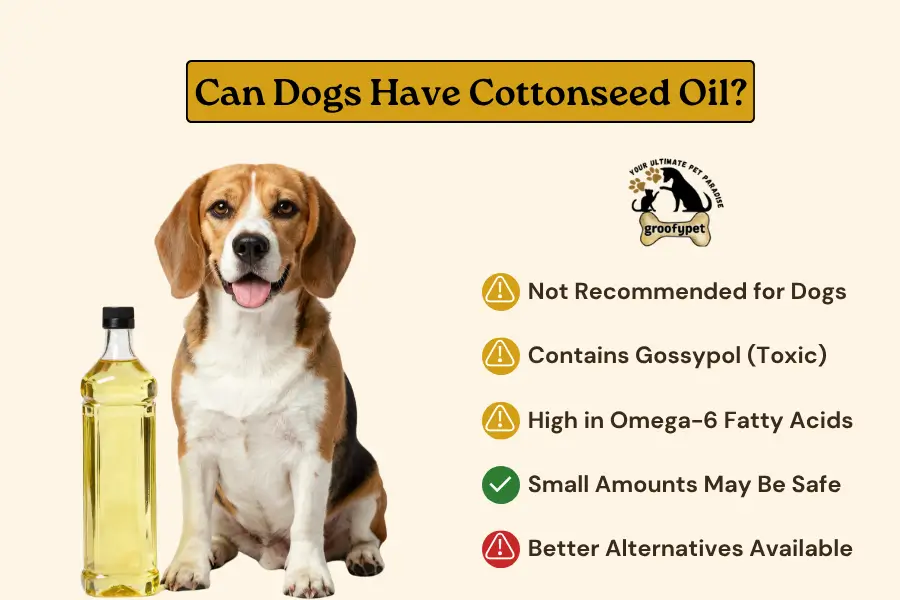
Can dogs have cottonseed oil? The answer is yes, in small amounts, but it is not the healthiest oil for dogs. Cottonseed oil is used in many processed foods and some dog treats. While it is not toxic, it offers fewer health benefits than oils like fish oil or flaxseed oil.
Too much cottonseed oil can add extra fat and calories to your dog’s diet, so it should only be given occasionally and in moderation. Can dogs eat cottonseed oil? In small, occasional amounts, highly refined cottonseed oil is generally not considered toxic to dogs.
However, it isn’t a healthy everyday choice; it’s high in omega-6 fatty acids and offers little nutritional value compared with oils like fish or flaxseed oil. Unrefined cottonseed oil is riskier because it may contain natural toxic compounds. Call your veterinarian if your dog eats a large amount or shows signs of illness.
What Is Cottonseed Oil?
Cottonseed oil is a vegetable oil pressed from the seeds of the cotton plant (Gossypium species), the same crop grown for cotton fiber. Once the fiber is removed, the leftover seeds are crushed and processed to extract the oil.
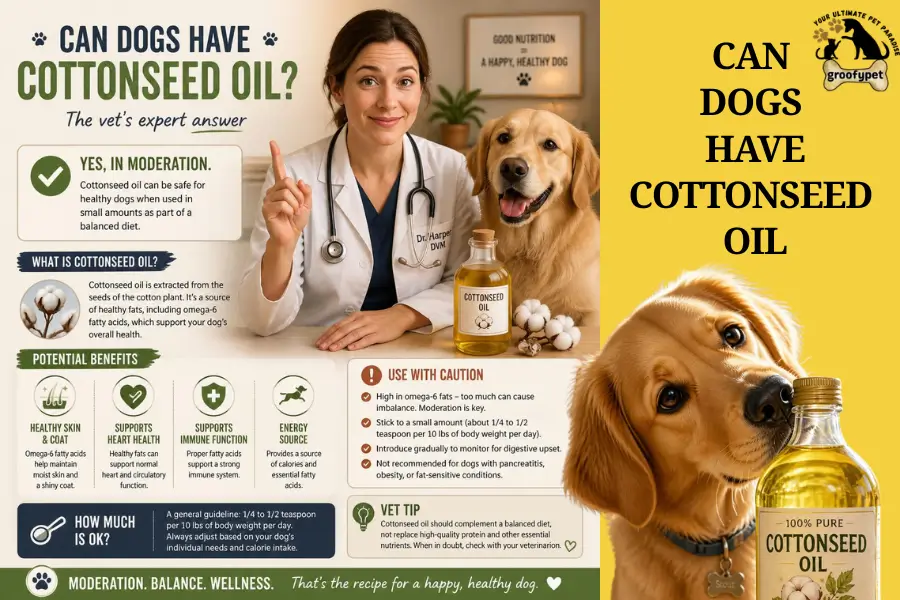
There are two broad categories worth understanding:
- Refined cottonseed oil — This version has gone through bleaching, deodorising, and heat processing that removes most of the naturally occurring toxic compounds. It’s the type most commonly found in grocery store shelves and restaurant fryers.
- Unrefined (or crude) cottonseed oil — This form retains more of the cottonseed’s natural compounds, including a substance called gossypol, which is toxic to many animals when consumed in meaningful amounts over time.
Cottonseed oil has a neutral flavor and a high smoke point, which is why it’s popular in:
- Commercial deep-frying (chips, fried snacks, fast food)
- Baked goods and margarine
- Some pet food formulations, where refined cottonseed oil may occasionally appear as a fat source or preservative carrier
Can Dogs Have Cottonseed Oil?
The short answer is occasional, accidental exposure to a small amount of refined cottonseed oil is unlikely to seriously harm a dog. Most dogs that lick a spill or eat food fried in cottonseed oil will, at worst, experience mild digestive upset.
That said, veterinary nutrition guidance is consistent on a few points:
- Refined cottonseed oil is not classified as an acutely toxic substance for dogs.
- It is not recommended as a regular dietary fat because of its heavy omega-6 fatty acid load and lack of standout nutritional benefits.
- Unrefined cottonseed oil, cottonseed meal, and whole cottonseed products carry a real risk of gossypol exposure, especially with repeated or prolonged consumption.
- There’s no established “healthy serving size” of cottonseed oil for dogs; it simply isn’t a recommended supplement.
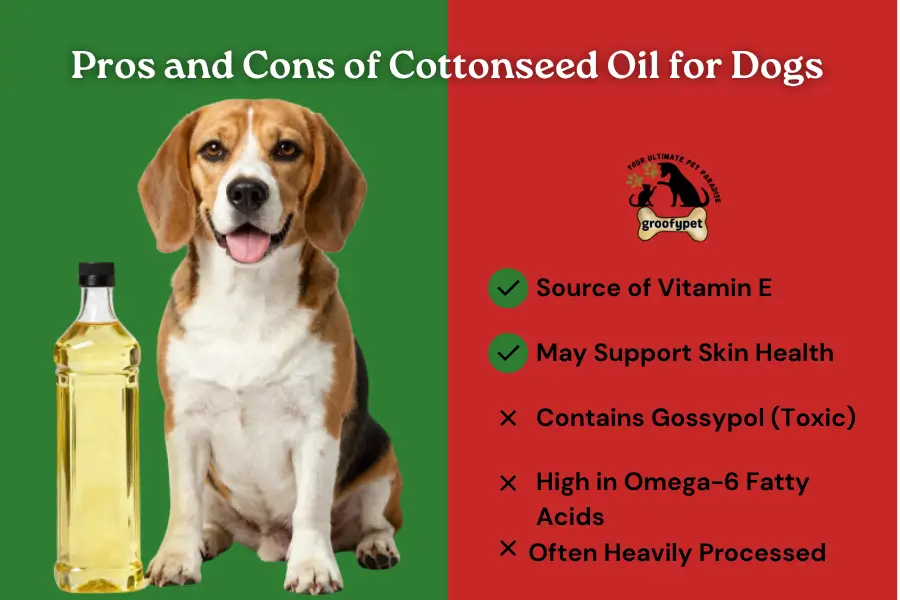
- Provides a source of energy.
- Contains vitamin E.
- Helps improve food texture.
- Safe in small amounts.
- Commonly found in some pet foods.
- High in omega-6 fats.
- Can cause weight gain.
- May upset the stomach.
- Low in beneficial omega-3s.
- Not the healthiest oil choice for dogs.
Is Cottonseed Oil Safe for Dogs?
Safety really comes down to how much and what kind:
| Type | General Safety for Dogs |
|---|---|
| Highly refined cottonseed oil (small, occasional amount) | Generally considered low risk |
| Unrefined/crude cottonseed oil | Higher risk due to gossypol content |
| Cottonseed meal (used in some livestock/pet feed) | Risk increases with regular, long-term exposure |
| Whole cottonseed or cotton plant material | Should be avoided entirely |
Dogs and cats have an intermediate sensitivity to gossypol compared with more vulnerable species like pigs and rabbits, but “intermediate sensitivity” doesn’t mean it’s something to feed on purpose.
Nutritional Profile of Cottonseed Oil
| Nutrient (per tablespoon, ~14g) | Approximate Amount | Effect on Dogs |
|---|---|---|
| Calories | ~120 kcal | Contributes to weight gain if fed regularly |
| Total fat | 14g | High-fat foods increase pancreatitis risk in sensitive dogs |
| Saturated fat | ~3.5g | Minimal nutritional advantage |
| Monounsaturated fat | ~2.5g | Small benefit, better sources exist |
| Polyunsaturated fat | ~7g | Mostly omega-6 |
| Omega-6 fatty acids | High | Necessary in small amounts, inflammatory in excess |
| Omega-3 fatty acids | Negligible | Doesn’t help balance the omega-3:omega-6 ratio |
| Vitamin E | Small amount | Mild antioxidant benefit |
Potential Benefits of Cottonseed Oil for Dogs
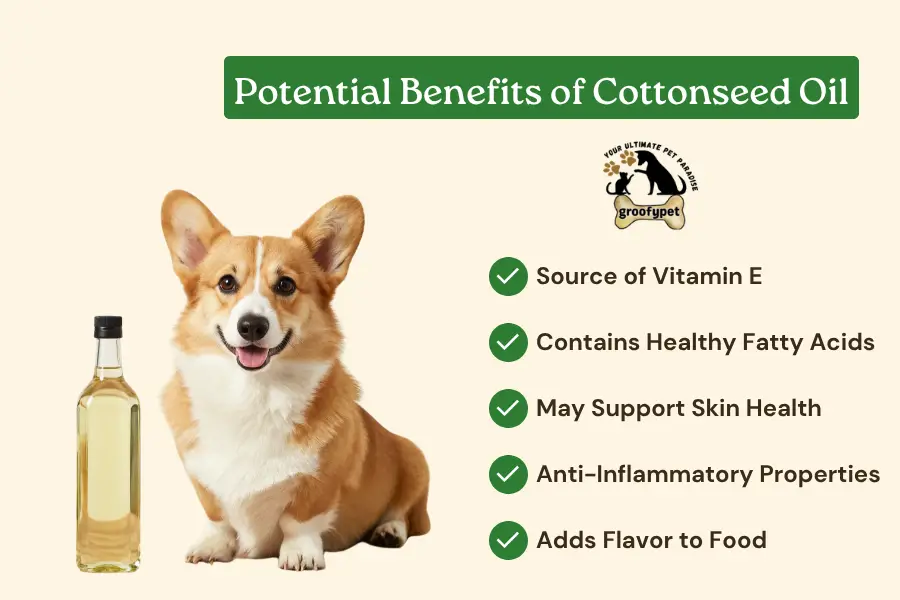
Can dogs have cottonseed oil? To be fair, cottonseed oil isn’t purely negative; it just isn’t special.
- Energy source — like any fat, it’s calorie-dense and can supply quick energy.
- Contains some vitamin E — a modest antioxidant contribution.
- Improves texture/palatability of processed foods, which is why manufacturers use it.
- Occasionally present in commercial dog food, usually in small, regulated amounts as part of a balanced formula (not as a standalone supplement).
The key takeaway: these aren’t unique benefits. Oils like fish oil, flaxseed oil, and olive oil provide the same or better benefits with a healthier fatty acid profile.
Potential Risks of Cottonseed Oil for dogs
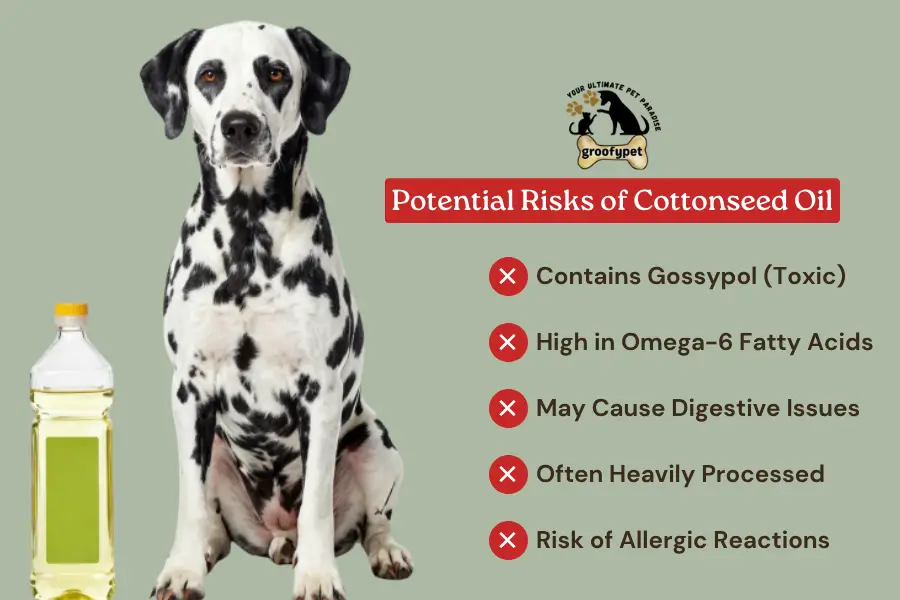
Feeding cottonseed oil regularly or in large amounts even once carries several risks:
- Excess omega-6 intake, which can promote inflammation when not balanced with omega-3s
- Weight gain, since oils are calorie-dense with no fiber or protein to balance them
- Digestive upset, including vomiting and diarrhea
- Pancreatitis risk, particularly in dogs prone to fatty-food sensitivity or with a history of pancreatic issues
- Gossypol exposure from unrefined oil, linked in veterinary literature to heart, liver, and reproductive effects with long-term ingestion
- Food allergies or sensitivities in dogs prone to plant-based protein/oil reactions
- Unnecessary excess calories that offer little nutritional return
Can Puppies Have Cottonseed Oil?
Can dogs have cottonseed oil? Puppies are more vulnerable to any dietary misstep than adult dogs because of their
- Sensitive digestive systems, which are more easily upset by unfamiliar fats or oils
- High nutritional demands for growth, which are better met with balanced, veterinarian-formulated puppy food rather than added oils
- Lower body weight, meaning even a small amount of oil represents a larger relative dose
Veterinary guidance generally recommends avoiding cottonseed oil for puppies altogether and consulting your vet before adding any oil or fat supplement to a growing dog’s diet.
Can Dogs Eat Foods Cooked in Cottonseed Oil?
This comes up often — French fries, fried chicken, chips, and other restaurant foods are frequently cooked in cottonseed oil or a vegetable oil blend that includes it.
In most cases, the oil itself is usually not the biggest concern. The bigger issues are the following:
- High sodium content
- Seasonings (garlic, onion powder) that can be toxic to dogs
- Batters and breading that add unnecessary carbohydrates and fat
- Overall high fat content, which can cause digestive upset or pancreatitis regardless of which oil was used
A few fries dropped on the floor once in a while is unlikely to cause harm. Regularly sharing fried, salted, or heavily seasoned restaurant food is the real problem.
What Happens If My Dog Eats Cottonseed Oil?
Watch for these possible signs after your dog eats cottonseed oil or food cooked in it:
- Loose stool or diarrhea
- Vomiting
- Stomach discomfort or a hunched posture
- Reduced appetite
- Lethargy
- In more serious cases (especially after large amounts of fatty food): signs of pancreatitis, such as repeated vomiting, abdominal pain, and lack of appetite lasting more than a day
Most mild cases resolve within 24–48 hours with supportive care at home. Symptoms that are severe, worsening, or accompanied by lethargy warrant a vet visit.
How Much Cottonseed Oil Is Too Much?
There’s no official “safe daily amount” of cottonseed oil for dogs — it isn’t a recommended supplement, so this table reflects general risk levels based on dog size and quantity consumed.
| Dog Size | Accidental Small Amount (a lick or splash) | Larger Amount (several tablespoons+) |
|---|---|---|
| Toy dogs (under 10 lbs) | Usually low risk; monitor closely | Higher risk of GI upset; contact vet |
| Small dogs (10–25 lbs) | Usually low risk | Moderate risk; monitor for vomiting/diarrhea |
| Medium dogs (25–50 lbs) | Low risk | Moderate risk, especially with fatty meals |
| Large dogs (50–90 lbs) | Very low risk | Lower relative risk, but still monitor |
| Giant breeds (90+ lbs) | Very low risk | Lower relative risk per body weight, but still avoid |
Bottom line: smaller dogs face proportionally higher exposure from the same amount of oil, so err on the side of caution regardless of size.
What Should You Do If Your Dog Eats Cottonseed Oil?
- Estimate the amount eaten. A lick versus a cup of oil changes the level of concern significantly.
- Check whether the oil was refined or unrefined if you know the source (a bottle in your pantry is almost certainly refined).
- Watch for vomiting or diarrhea over the next 24–48 hours.
- Offer fresh water and withhold any additional fatty treats or meals for the rest of the day.
- Contact your veterinarian or a pet poison helpline if your dog consumed a large amount, is a puppy, has a history of pancreatitis, or starts showing symptoms like repeated vomiting, lethargy, or abdominal pain.
Healthier Oil Alternatives for Dogs
If you’re looking to add an oil to your dog’s diet for skin, coat, or joint support, these are generally better choices than cottonseed oil:
| Oil | Generally Safe? | Key Benefits |
|---|---|---|
| Fish oil (salmon, sardine) | Yes, in moderation | Rich in omega-3 (EPA/DHA); supports joints, skin, and heart |
| Flaxseed oil | Yes, in moderation | High in ALA omega-3; supports coat and mobility |
| Hemp seed oil | Yes, in moderation | Balanced omega-3:omega-6 ratio |
| Olive oil | Yes, in moderation | Monounsaturated fats and antioxidants; supports skin and heart |
| Coconut oil | Yes, in small amounts | MCTs may support skin and digestion, though evidence is limited |
Fish-based oils and flaxseed oil stand out because they help correct the omega-6-heavy balance that’s common in many commercial diets — something cottonseed oil does nothing to fix.
Oils Dogs Should Avoid or Limit
- Unrefined cottonseed oil — gossypol exposure risk
- Used/reused deep-frying oil — breakdown compounds and rancidity
- Large amounts of bacon grease – extremely high fat, pancreatitis risk
- Excess butter — high saturated fat with little benefit
- Highly processed vegetable oil blends in large quantities — often heavy in omega-6 with no balancing omega-3s
Frequently Asked Questions
Can dogs eat cottonseed oil every day?
No. Even the refined form isn’t recommended as a daily addition to your dog’s diet due to its high omega-6 content and lack of unique nutritional benefits.
Is cottonseed oil toxic to dogs?
Highly refined cottonseed oil is not considered acutely toxic in small amounts. Unrefined cottonseed oil carries more risk because of naturally occurring gossypol.
What happens if my dog licks cottonseed oil?
A small lick of refined cottonseed oil is unlikely to cause more than mild, temporary digestive upset, if symptoms occur at all.
Is refined cottonseed oil safe?
In small, infrequent amounts, yes, it’s not classified as an acute toxin. It’s simply not a beneficial oil to feed regularly.
Can puppies have cottonseed oil?
It’s best avoided. Puppies have more sensitive digestive systems and specific nutritional needs that are better met through a balanced puppy food, not added oils.
Is cottonseed oil used in dog food?
Refined cottonseed oil occasionally appears in small amounts in some commercial pet foods, typically as a minor fat source rather than a primary ingredient.
Which cooking oil is safest for dogs?
Fish oil, flaxseed oil, and olive oil are generally considered better options because they provide beneficial omega-3 fatty acids that cottonseed oil lacks.
Should I call my veterinarian after my dog eats cottonseed oil?
Call your vet if your dog ate a large amount, is a puppy, has a history of pancreatitis, or develops symptoms like repeated vomiting, diarrhoea, lethargy, or abdominal pain.
Final Thoughts
So can dogs have cottonseed oil? Highly refined cottonseed oil isn’t likely to seriously harm your dog if they get into a small amount by accident, but it’s not a smart addition to their regular diet. Its high omega-6 and lack of standout nutrients make it a poor substitute for oils like fish, flaxseed, or olive oil, which actually support skin, coat, joint, and heart health.
Unrefined cottonseed oil is a different story; its natural gossypol content makes it worth avoiding altogether. If your dog eats a large amount of cottonseed oil, is a puppy, has an underlying health condition, or develops symptoms of illness, contact your veterinarian promptly rather than waiting to see how things progress.
Can Dogs Eat Hickory Nuts? Benefits, Risks and Warning Signs