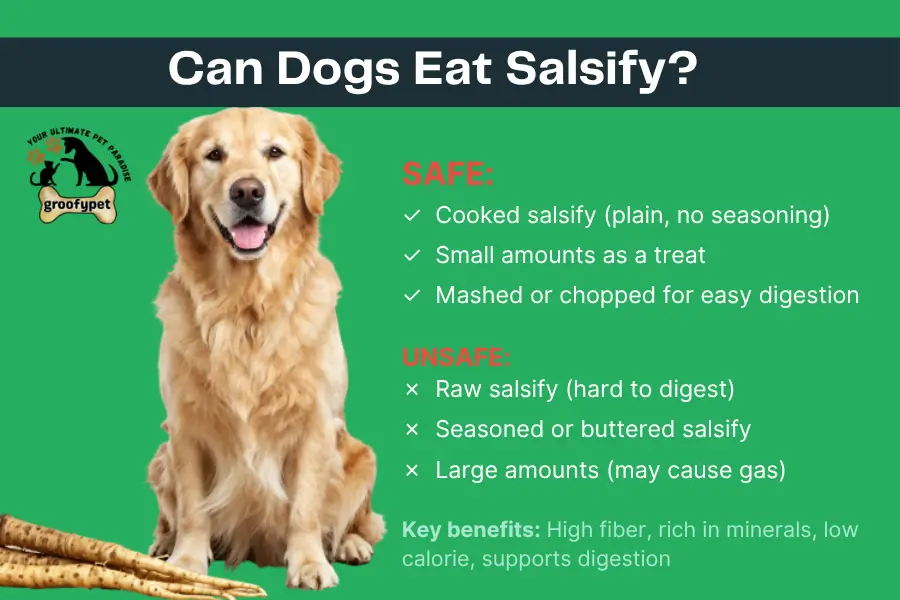
Can dogs eat salsify? Yes, dogs can eat plain, cooked salsify in moderation. This root vegetable is not toxic to dogs and contains fibre, potassium, and other beneficial nutrients. However, it should always be served plain without butter, garlic, onions, salt, or other seasonings that can be harmful to dogs.
Feeding too much salsify may also cause digestive upset because of its high fibre. As with any new food, introduce it gradually and consult your veterinarian if your dog has underlying health conditions.
Can dogs eat salsify?
Yes, dogs can eat plain, cooked salsify in small amounts. Salsify is not toxic to dogs, but it should always be served plain, without butter, garlic, onions, salt, or spices. Too much salsify may cause digestive upset because of its high fiber.

Is salsify toxic to dogs?
No. Salsify itself is not toxic to dogs. The danger comes from how it is prepared. Seasonings, butter, garlic, and onion are what make salsify dishes risky, not the vegetable itself. Cooked, unseasoned salsify can be a healthy, low-calorie addition to a dog’s diet in small amounts.
It should never replace a complete and balanced dog food, and any new vegetable should be introduced slowly under a veterinarian’s guidance.
- Salsify is safe for dogs when cooked, peeled, and served plain.
- It is rich in dietary fibre, potassium, vitamin C, and inulin (a natural prebiotic).
- Raw salsify is harder to digest and carries a choking risk.
- Seasoned, buttered, or garlic-roasted salsify can be dangerous for dogs.
- Puppies and dogs with sensitive stomachs should get smaller portions, if any.
- Always ask your veterinarian before adding new root vegetables for dogs to your pet’s diet.
What is Salsify?
Salsify is a long, thin root vegetable in the Asteraceae family. It is sometimes called the “oyster plant” because its flavor is compared to shellfish when cooked. Salsify has been eaten by humans for centuries in European cooking and is gaining attention today as one of the lesser-known dog-safe vegetables.
Different Types of Salsify
White salsify (Tragopogon porrifolius) has pale, cream-colored skin and a mild, slightly sweet flavor. It is the more common type found in speciality grocery stores.
Black salsify (Scorzonera hispanica, also called Scorzonera) has dark, almost black skin with white flesh inside. It has a stronger, earthier flavor and is popular in European home cooking. Both types are considered root vegetables for dogs that are generally safe when cooked properly.
Nutritional Value of Salsify
Salsify is low in fat and calories but rich in fiber, minerals, and natural prebiotics. Below is an approximate nutritional breakdown per 100 grams of cooked salsify.
| Nutrient | Approximate Amount (per 100 g cooked) | Relevance for Dogs |
|---|---|---|
| Calories | ~80–110 kcal | Low-calorie vegetables for dogs support healthy weight |
| Dietary Fiber | ~4–6 g | Supports dog digestive health |
| Vitamin C | ~5–8 mg | Antioxidant support |
| Potassium | ~300–380 mg | Supports muscle and nerve function |
| Calcium | ~55–60 mg | Bone health |
| Magnesium | ~20–25 mg | Metabolic and muscle function |
| Iron | ~0.5–0.6 mg | Supports healthy blood cells |
| Vitamin B6 | ~0.2 mg | Supports metabolism |
| Inulin | Moderate–high | Natural prebiotic for gut bacteria |
Is Salsify Safe for Dogs?
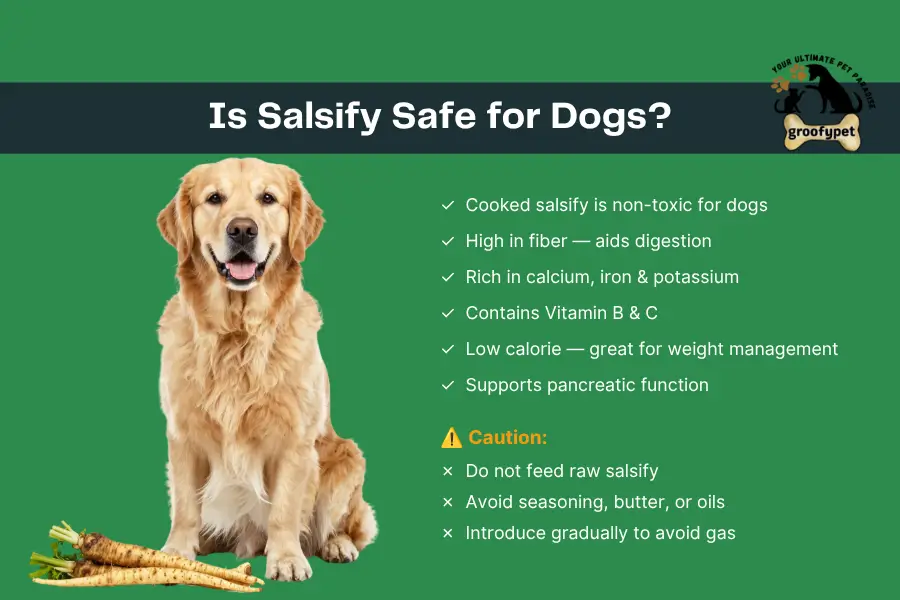
No. Salsify does not appear on major toxic plant lists for dogs. Unlike alliums (onions, garlic, leeks, and chives), salsify does not contain compounds known to damage red blood cells or cause haemolytic anaemia in dogs.
Can Dogs Digest Salsify?
Dogs can digest cooked salsify reasonably well because cooking softens the tough fibrous texture. Raw salsify is much harder to break down and can pass through a dog’s digestive system without being fully digested, which may lead to loose stool or gas.
What Makes It Safe?
Salsify is safe for dogs when it is
- Peeled to remove the tough outer skin
- Cooked until soft (boiled, steamed, or baked)
- Served plain, with no added salt, butter, or seasoning
- Given in small, moderate amounts as an occasional treat, not a meal replacement
Health Benefits of Salsify for Dogs
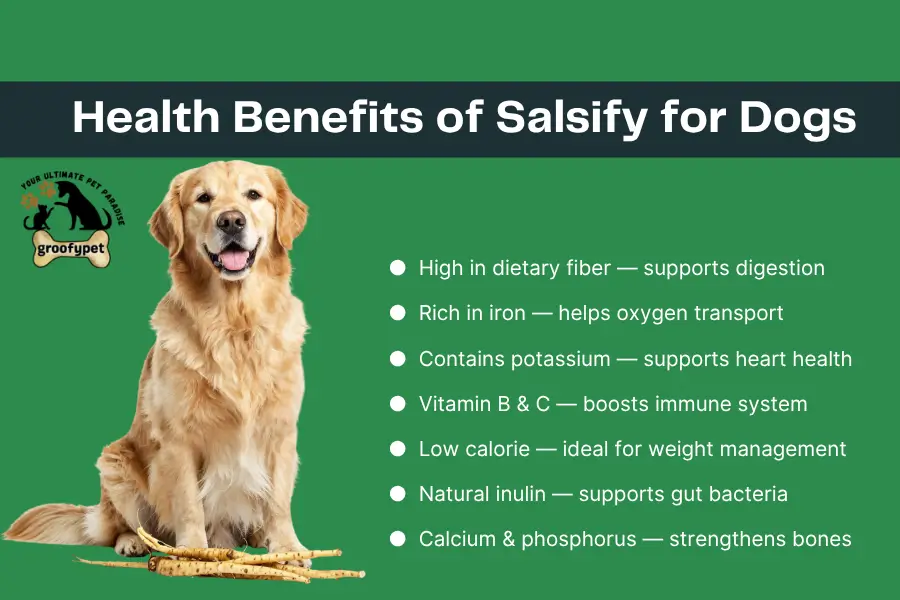
Salsify provides dietary fiber, potassium, and prebiotics that may support your dog’s digestive health when fed in moderation. While it is not an essential part of a dog’s diet, plain cooked salsify can be an occasional nutritious treat alongside a complete and balanced dog food.
1. Rich in Dietary Fiber
Fiber helps regulate a dog’s digestive system and promotes regular bowel movements.
2. Supports Digestive Health
The combination of fiber and moisture in cooked salsify can support overall gastrointestinal health in dogs when fed in moderation.
3. Contains Natural Prebiotics
Salsify contains inulin, a prebiotic fibre. Prebiotic vegetables like salsify may help feed the beneficial bacteria living in a dog’s gut.
4. May Support Healthy Gut Bacteria
By feeding good bacteria, inulin in salsify may contribute to a healthier gut microbiome over time, though more veterinary research on dogs specifically is still developing.
5. Source of Potassium
Potassium supports normal muscle contractions, nerve signalling, and heart function.
6. Supports Muscle Function
The mineral content in salsify, including magnesium and potassium, plays a role in healthy muscle and nerve activity.
7. Provides Vitamin C
While dogs naturally produce their own vitamin C, a small dietary boost from antioxidant-rich vegetables like salsify does not hurt and may support the immune system.
8. Contains Antioxidants
Antioxidants help neutralize free radicals in the body, supporting overall canine nutrition and long-term cellular health.
9. Low in Fat
Salsify is naturally low in fat, making it a reasonable choice among low-calorie vegetables for dogs, particularly those needing weight management.
10. Hydrating Vegetables
Cooked salsify has a fairly high water content, which can contribute a small amount to a dog’s daily hydration.
Risks of Feeding Salsify to Dogs
Feeding too much salsify may cause gas, bloating, diarrhoea, or stomach discomfort because of its high fibre. Salsify should always be served plain and cooked, as added ingredients like garlic, onions, butter, and excessive salt can be harmful to dogs.
Digestive Upset
Because salsify is high in fibre, feeding too much at once can upset a dog’s stomach, especially if their system is not used to new vegetables.
Gas and Bloating
The fibre and inulin, while beneficial in small amounts, can cause gas and bloating if a dog eats too much salsify too quickly.
Loose Stool
Excess fiber intake is a common cause of loose stool or diarrhea in dogs. This is one of the most frequently reported side effects of overfeeding fibrous vegetables.
Too Much Fiber
While fiber supports digestion, too much fiber all at once can have the opposite effect and disrupt normal digestive systems.
Choking Hazard
Raw or improperly cut salsify pieces can pose a choking hazard, particularly for small dogs or dogs that eat quickly.
Seasoning Risks
The vegetable itself is not the biggest concern; how it is prepared is. Never feed a dog salsify that has been cooked with the following:
- Garlic — toxic to dogs and can damage red blood cells
- Onion — toxic to dogs, part of the same allium family as garlic
- Butter — high in fat and can trigger digestive upset or pancreatitis
- Salt — excess sodium can be dangerous, especially for dogs with heart or kidney issues
- Pepper — can irritate a dog’s digestive tract
- Cream sauces — high fat content is difficult for dogs to digest and can trigger gastrointestinal issues
Pros and cons of salsify for dogs
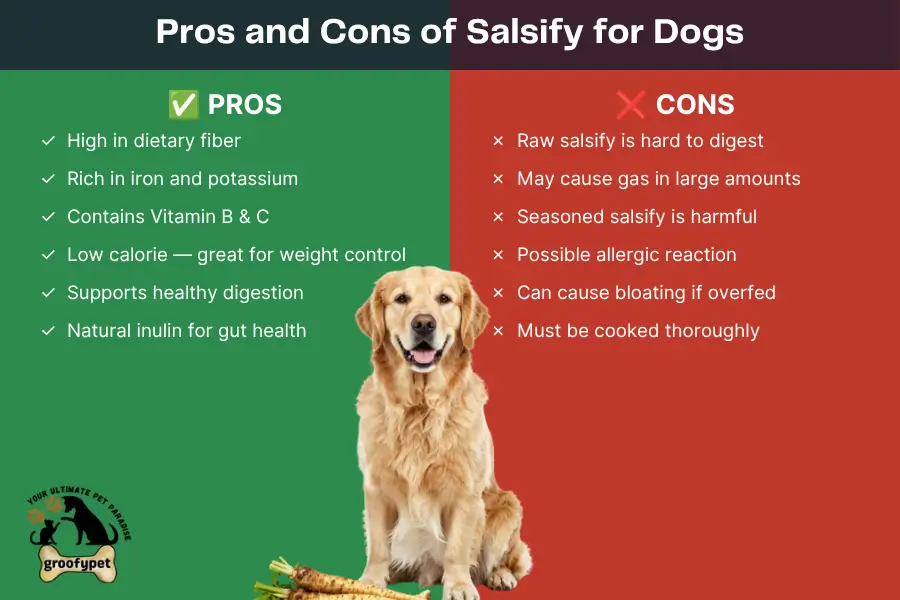
Pros
- Supports healthy digestion.
- Rich in potassium.
- Contains gut-friendly prebiotics.
- Low in fat and calories.
- Provides natural antioxidants.
Cons
- May cause gas or diarrhea if overfed.
- Raw salsify is harder to digest.
- Seasonings can be harmful.
- Large pieces may cause choking.
- Not a substitute for balanced dog food.
Is Raw Salsify Safe for Dogs?
Raw salsify for dogs is not recommended as a regular choice. If offered at all, it should be finely grated in a very small amount. Cooked salsify for dogs is the safer, more digestible option.
Can Dogs Eat Cooked Salsify?
Cooking breaks down the tough fibers in salsify, making it easier for a dog to chew, swallow, and digest. It also softens the texture, reducing the choking hazard.
Best Cooking Methods
- Boiled — a simple, low-fat method that softens the vegetable fully
- Steamed — preserves more nutrients than boiling while still softening the texture
- Baked — safe as long as no oil, butter, or seasoning is added
Avoid
- Fried — adds unnecessary and unhealthy fat
- Buttered — high fat content can trigger digestive upset
- Garlic roasted — garlic is toxic to dogs
- Creamed — cream sauces are too rich and fatty for a dog’s digestive system
Can Puppies Eat Salsify?
Is It Recommended?
Salsify is not typically recommended as an early food for puppies. Puppies have more sensitive digestive systems and are still developing, so new foods should be introduced with extra caution.
How Much Is Safe?
If a veterinarian approves it, puppies should only be given a tiny, finely cooked, mashed piece no larger than a pea for small breeds to test tolerance. Puppies should primarily rely on a complete and balanced puppy food for proper growth and nutrition.
How Much Salsify Can Dogs Eat?
Portion sizes should always be based on a dog’s size, activity level, and overall health. As a general guideline:
| Dog Size | Amount | Frequency |
|---|---|---|
| Extra Small (under 10 lbs) | 1–2 small cooked cubes | 1–2 times per week |
| Small (10–25 lbs) | 2–3 small cooked cubes | 1–2 times per week |
| Medium (25–50 lbs) | 3–5 cooked cubes | 2 times per week |
| Large (50–90 lbs) | ¼–½ cup cooked, cubed | 2–3 times per week |
| Giant (90+ lbs) | ½–¾ cup cooked, cubed | 2–3 times per week |
These amounts are general starting points, not exact medical dosages. Always start with a smaller amount than listed and watch how your dog reacts before increasing the portion. Consult your veterinarian for guidance specific to your dog’s weight and health history.
How to Prepare Salsify for Dogs
- Wash Thoroughly — Rinse the root under cool water to remove dirt and debris.
- Peel Carefully — Remove the tough outer skin with a vegetable peeler, similar to peeling a potato or a carrot.
- Cook Until Soft — Boil, steam, or bake until the salsify is fork-tender.
- Cut Into Small Pieces — Dice into bite-sized cubes appropriate for your dog’s size to reduce choking risk.
- Serve Plain — Do not add butter, oil, salt, garlic, onion, or any seasoning.
Signs Your Dog Ate Too Much Salsify
Watch for the following symptoms after feeding salsify:
- Vomiting
- Diarrhea
- Excess gas
- Stomach pain or visible discomfort
- Reduced appetite
When to call a veterinarian: If symptoms last longer than 24 hours, if your dog seems lethargic, if there is blood in the vomit or stool, or if your dog stops eating or drinking, contact your veterinarian right away.
What If Your Dog Eats Seasoned Salsify?
If your dog gets into a dish of salsify that was cooked with seasonings, the level of concern depends on the ingredients involved.
- Garlic — Even small amounts can be toxic to dogs and may cause red blood cell damage over time.
- Onion — Toxic in the same way as garlic; symptoms may not appear immediately.
- Heavy cream — Can trigger digestive upset, vomiting, or, in some cases, pancreatitis, especially in dogs prone to fatty food sensitivity.
- Cheese sauce — High in fat and sometimes contains added onion or garlic powder.
- Salt — Excess sodium intake can cause increased thirst, vomiting, and in severe cases, sodium ion poisoning.
Emergency signs
Seek immediate veterinary care if your dog shows pale gums, weakness, rapid breathing, repeated vomiting, or collapse after eating seasoned salsify.
Can Dogs Be Allergic to Salsify?
True food allergies to salsify are considered rare, but they are not impossible. As with any new food, individual dogs may react differently.
Symptoms
Watch for itching, skin redness, ear infections, swelling, hives, or digestive upset shortly after eating salsify for the first time.
First Feeding Tips
- Offer only a small, plain, cooked piece the first time.
- Wait 24–48 hours to check for any reaction before offering it again.
- Avoid feeding salsify alongside other new foods so you can identify the cause if a reaction occurs.
Best Vegetables Instead of Salsify
If you are looking for other dog-safe vegetables or an alternative to salsify, consider these healthy treats for dogs:
| Vegetable | Safe | Main Benefit |
|---|---|---|
| Carrots | ✅ | Low-calorie; supports dental chewing habits |
| Green Beans | ✅ | Low-calorie, good source of fiber |
| Pumpkin | ✅ | Supports digestive health and is gentle on the stomach |
| Sweet Potato | ✅ | Rich in vitamin A and fiber |
| Zucchini | ✅ | Low in calories, hydrating |
| Cucumber | ✅ | Very low-calorie, hydrating snack |
| Broccoli | Limited | Safe in small amounts; too much can cause gas |
Foods Dogs Should Never Eat With Salsify
Never mix or cook salsify with the following ingredients before feeding it to a dog:
- Garlic
- Onion
- Chives
- Leeks
- Butter
- Excess salt
- Cream sauces
- Bacon
- Cheese sauces
These ingredients are common culprits behind emergency vet visits related to “safe” vegetables gone wrong, and they are a key part of understanding foods dogs should avoid.
Veterinary Tips Before Feeding New Vegetables
- Introduce slowly — Start with a very small portion to see how your dog tolerates it.
- Watch stool changes — Loose stool or excess gas is often the first sign a new food does not agree with your dog.
- Feed in moderation — Vegetables like salsify should only be an occasional treat, not a regular meal component.
- Balance with complete dog food — Treats and vegetables should make up no more than about 10% of a dog’s total daily calorie intake, with the rest coming from nutritionally complete and balanced dog food. Always confirm specific feeding guidance with your veterinarian.
Frequently Asked Questions
Can dogs eat raw salsify?
It is not recommended as a regular food. Raw salsify is tough, harder to digest, and carries a higher choking risk than cooked salsify.
Can puppies eat salsify?
Only in very small, cooked, mashed amounts, and only after checking with a veterinarian. Puppies should mainly eat a complete puppy food for proper growth.
Is black salsify safe for dogs?
Yes. Black salsify for dogs is generally considered safe when peeled, cooked plain, and served in moderation, just like white salsify.
Is cooked salsify healthier than raw?
Cooked salsify is easier to digest and safer overall, even though raw salsify may retain slightly more vitamin C.
Can diabetic dogs eat salsify?
Salsify contains natural sugars and carbohydrates. Owners of diabetic dogs should consult a veterinarian before adding any new root vegetable to the diet.
Can dogs eat mashed salsify?
Yes, as long as it is plain, with no butter, cream, salt, or seasoning added.
Can dogs eat frozen salsify?
Frozen salsify should be thawed and cooked before serving, since raw or icy textures can be harder to chew and digest.
Can dogs eat canned salsify?
Canned versions often contain added salt or preservatives, so plain, home-cooked salsify is the safer choice for dogs.
Can dogs eat salsify leaves?
The leaves are not a traditional part of a dog’s diet, and safety data is limited. It’s best to stick to the cooked root and avoid the leaves unless a veterinarian confirms it’s fine.
How often can dogs eat salsify?
As an occasional treat, generally one to three times per week in small, appropriate portions based on the dog’s size, as shown in the serving size table above.
Final Thoughts
Can dogs eat salsify? Yes, plain cooked salsify is generally a safe, dog-friendly vegetable when prepared correctly and fed in moderation. Who should avoid it? Dogs with known food sensitivities, dogs prone to digestive issues, and puppies (unless cleared by a vet) should avoid salsify or only try it with extra caution.
Follow the size-based feeding table above, always starting with a smaller test portion first. If your dog shows vomiting, diarrhea, or lethargy or refuses food after eating salsify or if they accidentally eat a seasoned version containing garlic or onion, contact your veterinarian.
Is Purslane Toxic to Dogs? Risks, Benefits and Symptoms
Can Dogs Eat Psyllium Husk? Benefits, Risks and Safety Guide