
Yes, purslane can be risky for dogs. This common garden plant contains compounds called oxalates, and eating too much of it may lead to health problems, including issues with the kidneys. Many dogs love to sniff, dig, and chew on plants when they’re outside, so it’s easy for them to take a bite of something they shouldn’t. That’s why knowing which toxic plants for dogs are hiding in your yard matters so much.
If you’ve found your dog snacking on this plant, you probably typed “is purslane toxic to dogs” into Google in a bit of a panic. That’s a smart move. In this guide, we’ll answer that question clearly, explain why purslane can be a problem, walk through the symptoms to watch for, and tell you exactly what to do next. We’ll also cover safer veggie options so your dog can still enjoy crunchy, healthy snacks without the risk.
This guide is written for everyday pet parents, not veterinary professionals, so we’ll keep things simple and skip the heavy medical jargon wherever we can. By the end, you’ll have a clear, practical answer to “is purslane toxic to dogs,” plus a plan you can actually use the next time you spot this plant in your yard.
Let’s get into it.
Purslane (scientific name Portulaca oleracea) is a low-growing, weedy plant that pops up in gardens, lawns, sidewalk cracks, and flower beds almost everywhere.
You’ll recognize it by its
- Thick, fleshy, reddish-green leaves
- Small yellow flowers that open briefly in sunlight
- Trailing stems that spread close to the ground
It’s sometimes called pursley, wild portulaca, or moss rose. Interestingly, purslane is actually edible for humans. Some people grow it on purpose and add it to salads or stir-fries because it’s packed with omega-3 fatty acids and other nutrients. You may have even seen it praised online as a “superfood” leafy green.
Here’s the catch: just because a plant is safe and even healthy for people doesn’t mean it’s safe for dogs. This is a really important rule of thumb when you’re thinking about a purslane plant for dogs or any other healthy vegetables for dogs you might want to share from your own kitchen. Dogs process plants differently than we do, and a food that’s perfectly fine on a human plate can sometimes cause real trouble in a dog’s body.
Is Purslane Toxic to Dogs?
So, is purslane toxic to dogs? The honest answer is it depends on the amount. Most veterinary and pet-safety resources list purslane as a plant dogs should avoid, mainly because of the oxalates it contains (more on that below).
In real life, here’s generally what tends to happen:
- A small, accidental nibble — like one or two leaves while sniffing around the yard — often causes little to no reaction, though some dogs may still get mild stomach upset.
- Eating a large amount—a mouthful of stems and leaves, or grazing on it repeatedly — raises the risk of more serious symptoms.
- Every dog is different. A tiny puppy, a senior dog, or a dog with existing health issues can react more strongly than a large, healthy adult dog eating the exact same amount.
This is why dogs eating purslane isn’t always a five-alarm emergency, but it also isn’t something to brush off completely. Vets generally agree that purslane belongs on the “avoid” list rather than the “safe to feed” list, even though it isn’t usually as dangerous as plants like lilies or sago palm.
If you’re trying to figure out which plants belong on your personal list of dog-safe plants, purslane is one that’s safer to remove from areas your dog can reach. Most owners searching “is purslane toxic to dogs” are really asking a more practical question: “Do I need to worry right now?” The answer is usually “Be cautious, but don’t panic,” unless your dog ate a large amount or is already showing symptoms.
Why Can Purslane Be Dangerous for Dogs?
The main reason purslane shows up on toxic plant lists comes down to one word: oxalates.
Oxalates in Purslane
Here’s a simple breakdown of what that means:
- Purslane contains soluble calcium oxalates, a natural compound found in many plants.
- When a dog eats enough of these oxalates, they can bind with calcium in the bloodstream.
- This can throw off the body’s normal calcium balance.
- Over time, or in large amounts, this process can put stress on the kidneys.
This is generally known as oxalate poisoning in dogs. It’s the same general type of compound (in different forms and amounts) found in plants like rhubarb leaves and shamrock plants, which is why those also appear on toxic plant lists for pets.
The biggest long-term concern with this kind of plant toxin is its connection to kidney problems in dogs. The kidneys are responsible for filtering waste from the blood, and when oxalate levels get too high, they have to work much harder.
In rare, severe cases usually involving very large amounts eaten over time, this extra strain has been linked to kidney damage. It’s worth being clear here: there isn’t one universal “toxic amount” of purslane that applies to every dog. Reactions depend on the dog’s size, overall health, and how much was actually eaten.
That uncertainty is exactly why vets recommend caution instead of a wait-and-see approach. This is also the core reason behind the “is purslane toxic to dogs?” question being so common online the answer isn’t a simple yes-or-no on a chemical level; it’s a yes-or-no on a “should you risk it?” level.
And for most pet parents, the safer choice is clear: treat purslane as a plant to keep away from your dog rather than one to test the limits of.
Symptoms of Purslane Poisoning in Dogs
Not every dog will show obvious signs right away, which is part of what makes plant ingestion tricky to catch. Still, there are common symptoms of plant poisoning in dogs that purslane exposure can trigger:
- Vomiting
- Diarrhea
- Loss of appetite
- Drooling more than usual
- Weakness
- Lethargy (low energy, seeming “off”)
- Increased thirst
- Changes in urination (going more, going less, or straining)
Mild cases often look like a simple upset stomach; your dog might just seem a little tired or skip a meal. More concerning cases involve several of these symptoms together or symptoms that don’t improve within a day.
Risks of Purslane for Dogs
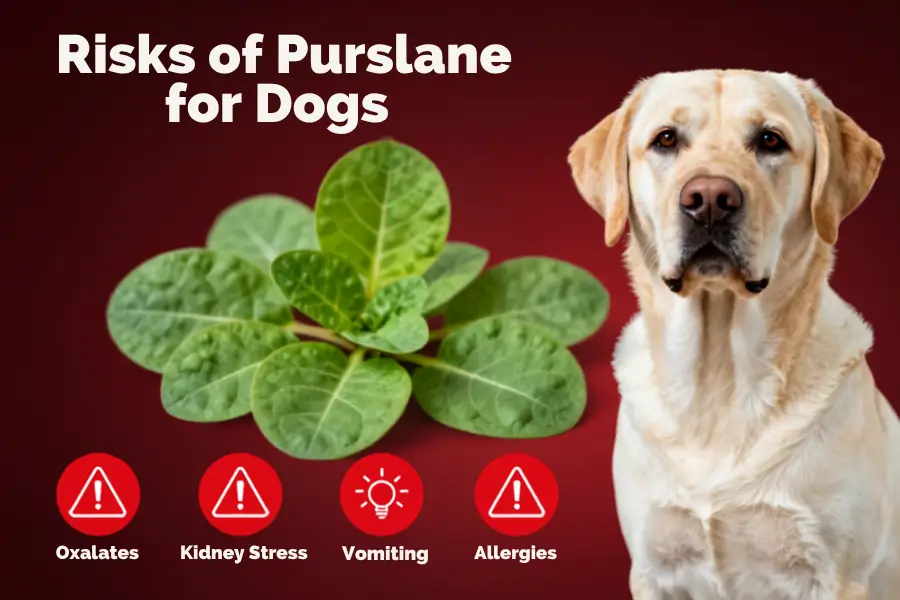
Purslane may cause health problems for dogs if they eat it in large amounts because it contains compounds like oxalates. It can lead to stomach upset, digestive issues, or possible kidney concerns in sensitive dogs.
1. Risk of Oxalate Poisoning in Dogs
One of the biggest concerns with purslane is that it contains oxalates. When dogs eat a large amount of oxalate-containing plants, it may affect their body’s calcium balance. In some cases, this can contribute to oxalate poisoning in dogs. Dogs with sensitive health conditions may have a higher risk.
2. Possible Kidney Problems
Eating too much purslane may increase stress on the kidneys, especially in dogs that already have kidney issues. The body needs to process plant compounds, and dogs with weak kidney function may struggle more. Pet owners should be extra careful with dogs that have a history of kidney problems.
3. Digestive Upset
Purslane is a plant with fiber and natural compounds that may not agree with every dog’s stomach. Some dogs may develop the following:
- Vomiting
- Diarrhea
- Gas
- Stomach discomfort
Dogs that are not used to eating plants may have stronger reactions.
4. Risk of Eating Too Much Plant Material
Dogs may enjoy chewing outdoor plants and may eat more than expected. Large amounts of purslane can increase the chance of stomach issues or other reactions. Dogs eating purslane should always be monitored.
5. Allergic Reactions
Some dogs may have sensitivity to certain plants. After eating purslane, a dog may experience the following:
- Itchy skin
- Redness
- Swelling
- Paw licking
- Skin irritation
Every dog reacts differently to new foods and plants.
6. Contamination Risk From Wild Purslane
Wild purslane growing outside may contain harmful substances. Plants near roads, gardens, or treated areas may have:
- Pesticides
- Chemicals
- Dirt
- Bacteria
Even a plant that seems natural may not be safe for pets.
7. Risk for Puppies
Puppies have developing digestive systems and may react differently to new plants. A small puppy eating purslane may experience stomach upset more easily than an adult dog.
8. Risk for Dogs With Existing Health Conditions
Dogs with certain health problems may need more caution. Dogs with kidney concerns, digestive issues, or special diets may not tolerate purslane well. Always consider your dog’s health before adding new foods.
9. Confusion With Other Toxic Plants
One danger is that pet owners may mistake purslane for another plant. Some similar-looking plants may be harmful. Learning about toxic plants for dogs can help prevent accidental poisoning.
10. Poor Nutrition Balance
Purslane should not replace a balanced dog diet. Dogs need proper amounts of protein, fats, vitamins, and minerals. Too many plants may disturb their normal diet.
A healthy homemade dog diet should always include safe and balanced ingredients.
Benefits of Purslane for Dogs
(Benefits may apply only in small amounts and only if your dog tolerates it. Always ask your veterinarian before adding new foods.)

1. Contains Helpful Nutrients
Purslane contains several nutrients that can support overall health. It includes vitamins and minerals that may contribute to a balanced diet when used carefully.
2. Provides Fiber
Purslane contains fiber that may support normal digestion. Fiber can help maintain healthy bowel movements when included in the right amount. However, too much fiber may cause digestive upset.
3. Contains Omega Fatty Acids
Purslane is known for containing omega fatty acids. These nutrients are linked with supporting:
- Healthy skin
- Shiny coat
- Normal body functions
4. Contains Antioxidants
Purslane contains plant compounds with antioxidant properties. Antioxidants help protect cells from damage caused by free radicals.
5. May Support Healthy Digestion
Small amounts of plant fiber may help some dogs maintain regular digestion. Every dog is different, so it is important to introduce new foods slowly.
6. Low-Calorie Plant Option
Purslane is a low-calorie food compared with many treats. Some pet owners looking for healthy vegetables for dogs may consider small amounts of safe plant foods.
7. Adds Variety to Diet
Some dogs enjoy different flavors and textures. Small amounts of safe vegetables can add variety to meals. However, variety should never replace complete dog nutrition.
8. Contains Minerals
Purslane contains minerals that play roles in normal body functions. These nutrients may support overall wellness when consumed in moderation.
9. May Be Part of a Balanced Diet
For some dogs, small amounts of suitable vegetables can be included as part of a balanced meal plan. Always choose dog-safe plants and foods approved for your pet.
10. Helps Owners Explore Natural Food Options
Learning about plants like purslane helps dog owners make better choices. Understanding which foods are safe can prevent problems and support better pet care.
While purslane has some nutritional value, it is not a necessary food for dogs. The risks may outweigh the benefits if a dog eats large amounts. If your dog eats purslane and shows unusual signs, contact your veterinarian for proper guidance.
When should you call the vet?
Contact your veterinarian if you notice:
- Repeated vomiting or diarrhea
- Your dog seems unusually weak or wobbly
- Little or no urination
- Symptoms lasting more than 24 hours
- Any symptoms at all in a puppy, senior dog, or dog with known kidney issues
When in doubt, a quick call costs you nothing but a few minutes, and it can give you real peace of mind.
- Contains vitamins and minerals
- Provides fiber for digestion
- Has antioxidants that support health
- Low in calories
- Adds variety to meals
- May cause stomach upset
- Oxalates can be risky in large amounts
- May affect dogs with kidney issues
- Wild plants can contain chemicals
- Not necessary for a balanced dog diet
What Happens If a Dog Eats Purslane?
If you catch your dog mid-snack on a purslane plant, here’s a simple step-by-step plan.
Step 1: Stay Calm
Easier said than done, but try not to panic.
- Gently remove any remaining plant pieces from your dog’s mouth or the surrounding area.
- Take note of which plant it was (a quick photo helps if you’re not 100% sure it’s purslane).
- Don’t force your dog to vomit on your own — this should only be done if a vet specifically tells you to.
Step 2: Check How Much Was Eaten
Try to estimate:
- Was it a single leaf, or did your dog graze on a patch of the plant?
- Is your dog a tiny puppy or a large adult dog? Smaller dogs and puppies are generally more sensitive to smaller amounts because of their size.
- Does your dog have any existing health conditions, especially related to the kidneys?
This information will be genuinely useful if you do end up calling a vet, so try to keep it in mind even while you’re worried.
Step 3: Contact a Vet If Needed
- If it was a small nibble and your dog seems totally normal, keep an eye on them for the next 24 hours.
- If your dog ate a larger amount or starts showing any of the symptoms listed above, reach out to your vet or an emergency animal clinic right away.
- Don’t wait for symptoms to get severe before asking for help; early veterinarian advice almost always leads to an easier, smoother recovery.
Safe Alternatives to Purslane for Dogs
The good news is that there are plenty of healthy vegetables for dogs that make great, crunchy treats without the same level of risk. A few favorites:
- Carrots — Low in calories, naturally sweet, and good for dental chewing. Many dogs love them frozen as a summer treat.
- Green beans—Plain, cooked, or raw green beans are a popular low-calorie snack often used in weight-management plans for dogs.
- Pumpkin — Plain, cooked pumpkin (not pumpkin pie filling) is gentle on digestion and a common pick for dogs with sensitive stomachs.
- Cucumber — Crunchy, hydrating, and very low in calories; a refreshing snack on a hot day.
- Sweet potato — Cooked and mashed or in small chunks, sweet potato is a nutrient-rich option many dogs enjoy.
These options let you build a more varied, homemade, dog-diet-friendly snack rotation without introducing the same oxalate concerns that come with purslane.

How Much Purslane Is Dangerous for Dogs?
This is one of the trickiest parts of the whole topic, and it’s worth being upfront: there’s no single exact amount that’s considered “the” toxic dose for every dog. Toxicity isn’t usually that simple. What we do know is that risk tends to increase with:
- Size—smaller dogs are at higher risk from smaller amounts than large dogs.
- Breed — some breeds are more prone to kidney and urinary issues in general, which may make them more sensitive.
- Health condition — dogs with existing kidney disease or urinary stone history are at higher risk even from amounts that wouldn’t bother a healthy dog.
- Frequency—a one-time nibble is very different from a dog who keeps grazing on purslane in the yard every day.
Because there’s no safe “measured” amount to rely on, the simplest and safest approach is to prevent access altogether rather than try to calculate a “safe dose.”
This is part of why a question like “is purslane toxic to dogs” doesn’t have one tidy number attached to it the way some toxins do. Vets generally avoid giving a specific “safe gram amount” for plants like this, because doing so could give pet owners a false sense of security. Instead, the safest mindset is simple: less exposure is always better than more, and no exposure is best of all.
Can Dogs Eat Cooked Purslane?
Some pet owners wonder if cooking purslane makes it safer, since cooking can reduce certain plant compounds. Here’s the honest answer:
- Cooking may reduce some oxalate content, but it does not reliably remove the risk altogether.
- Even cooked purslane isn’t considered a recommended food for dogs.
- If purslane is ever prepared as food (for humans), make sure none of it ends up in your dog’s bowl and never add garlic, onions, oil, butter, or heavy seasoning, since these are separately harmful to dogs.
The bottom line: cooking is not a workaround. If you’re building a homemade dog diet and want to include vegetables, it’s much safer to stick with foods that are already known to be dog-friendly (see the next section) rather than trying to “fix” a risky plant by cooking it.
As always, before adding any new food — cooked or raw — to your dog’s diet, it’s worth a quick check with your vet first.
How to Prevent Dogs From Eating Purslane?
Prevention really is the easiest fix here. A few practical tips:
- Remove unknown plants from your yard. If you’re not sure what’s growing in a flower bed or along the fence line, it’s worth identifying it or simply pulling it. Purslane often hides among other ground cover, so a closer look at “weeds” can pay off.
- Train your dog not to chew on plants. Basic “leave it” training goes a long way, especially for dogs who like to graze. Consistency matters more than intensity here — short, regular practice sessions work better than one long one.
- Supervise outdoor playtime, especially in unfamiliar yards or parks or while traveling. New environments mean new plants your dog hasn’t encountered before.
- Learn the common toxic plants for dogs in your region, since purslane is far from the only one. A quick search or a printed list from your vet’s office can help you spot trouble before it happens.
- Check garden beds and pots regularly, since purslane often grows back quickly even after being removed. It’s a hardy plant, so one-time removal usually isn’t enough.
- Offer approved chew options instead. Dogs who like to graze on grass and plants often do so out of boredom or curiosity. Giving them a safe chew toy or a dog-safe vegetable snack can redirect that habit.
A little bit of yard awareness goes a long way toward avoiding an unexpected vet visit.
Frequently Asked Questions
Can dogs eat purslane leaves?
It’s best to avoid letting dogs eat purslane leaves on purpose. While a small accidental nibble may not cause a big reaction in every dog, the leaves contain the same oxalates responsible for the plant’s toxicity concerns, so they aren’t considered a safe snack.
Is wild purslane safe for dogs?
Wild purslane carries extra risks beyond the plant itself. It may have been exposed to pesticides, herbicides, road runoff, or other contamination, especially if it’s growing along sidewalks, parking lots, or untreated lawns. Even setting the oxalate issue aside, this makes wild purslane a poor choice for dogs to eat.
What should I do if my puppy eats purslane?
Puppies are generally more sensitive to plant toxins because of their smaller size and still-developing organs. If a puppy eats purslane, it’s a good idea to contact your vet even if the amount seems small, just to be safe. Watch closely for any of the symptoms mentioned earlier, like vomiting, diarrhea, or unusual tiredness.
Are all garden plants dangerous for dogs?
No — not at all. Many common garden plants are completely safe for dogs, while others, like purslane, lilies, or sago palm, carry real risks. The safest approach is to research any plant in your yard rather than assuming it’s either totally safe or totally dangerous.
When should I call a veterinarian?
Call your vet if your dog shows repeated vomiting or diarrhea, seems unusually weak, has little or no urination, or if any symptoms last longer than a day. It’s also smart to call right away if a puppy, senior dog, or a dog with existing kidney issues eats purslane, even in a small amount.
Final Thoughts
So, is purslane toxic to dogs? The short version: it’s not on the “safe to eat” list, and it’s smart to treat it as a plant your dog should avoid. While a tiny accidental bite may not always cause serious harm, larger amounts can lead to real health risks, particularly around oxalate poisoning in dogs and the extra strain it can place on the kidneys.
Keep an eye out for symptoms like vomiting, drooling, lethargy, or changes in urination, and don’t hesitate to reach out to your vet if something seems off. When you’re looking for snack options, lean toward dog-safe vegetables like carrots, pumpkin, or green beans instead.
Most cases of dogs eating purslane turn out fine, especially when the amount eaten is small and caught quickly. But “usually fine” isn’t the same as “guaranteed safe,” and that gap is exactly why prevention and quick action matter so much. Keeping your yard checked, your dog supervised, and your vet’s number handy will cover you in almost any plant-related situation — not just purslane.
At the end of the day, your vet knows your dog’s specific health history best. When it comes to questionable plants, getting veterinarian advice early is always the safest move — for your peace of mind and your dog’s health.
Can Dogs Eat Currants? Safe Fruit or Serious Health Risk!
Can Dogs Eat Dino Nuggets? A Complete Guide for Dog Parents!