
Many dog owners look for natural ways to support their pet’s digestive health. One ingredient that often gets attention is psyllium husk. This natural fiber comes from the seeds of the Plantago ovata plant and is widely used to promote healthy digestion in both people and animals.
If you have ever wondered, can dogs eat psyllium husk? The answer is yes in many cases. When given in the proper amount and with enough water, psyllium husk can be a helpful addition to a dog’s diet.Psyllium husk contains soluble fiber that absorbs water and forms a gel-like substance in the digestive tract.
This process can help improve stool consistency and support regular bowel movements. Many pet owners use it to help manage occasional constipation, mild diarrhea, or other digestive issues. Some veterinarians may also recommend psyllium husk as part of a weight management plan because fiber can help dogs feel full for longer periods.
Can dogs eat psyllium husk?
Yes, dogs can eat psyllium husk in small, controlled amounts. Psyllium husk is a natural soluble fiber supplement that supports dog digestive health, helping with both constipation and diarrhea. It works best when mixed into wet food with plenty of water.
However, giving too much, or feeding it without enough hydration, can cause bloating, gas, or — in rare cases — intestinal blockage. As with any fiber supplement for dogs, veterinary guidance is recommended before regular use.
Nutritional profile of Psyllium husk
Psyllium husk is composed almost entirely of soluble fiber, with a smaller amount of insoluble fiber. The key component is a substance called hemicellulose mucilage, which absorbs water and forms a thick gel. This gel-forming property is what makes psyllium husk such an effective bulk-forming agent for both human and dog digestive health.
How it’s made:
- Seeds are harvested from the Plantago ovata plant.
- The husk (outer seed coating) is separated from the seed.
- The husk is cleaned, dried, and milled into powder or sold as whole flakes.
Why humans use it:
People primarily use psyllium husk as a natural fiber supplement (commonly sold under brand names like Metamucil) to support regular bowel movements, lower cholesterol, and manage blood sugar levels.
| Component | Approximate Content (per serving) |
|---|---|
| Soluble fiber | ~70% |
| Insoluble fiber | ~30% |
| Calories | Very low |
| Fat | Negligible |
| Protein | Minimal |
Can Dogs Eat Psyllium Husk Safely?
From a veterinary nutrition perspective, plain, unflavored psyllium husk is generally considered safe for most healthy adult dogs when dosed correctly. It is one of several natural fiber sources used in veterinary medicine to support dog digestive health, alongside pumpkin and oat bran.
Safe usage guidelines:
- Use only 100% pure psyllium husk powder — no added sugar, xylitol, flavorings, or artificial sweeteners.
- Always pair it with adequate water intake.
- Start with a small amount and increase gradually.
- Mix it into food rather than feeding it dry.
When it may be helpful:
- Mild constipation
- Occasional loose stools or diarrhea
- Supporting weight management through increased satiety
- Maintaining consistent stool quality, which can support anal gland health
Dogs that should avoid it:
- Dogs with a history of intestinal blockage
- Dogs with swallowing difficulties (megaesophagus, etc.)
- Dogs on certain medications (fiber can affect drug absorption)
- Puppies, unless specifically advised by a veterinarian
- Dogs with chronic, undiagnosed gastrointestinal disease
This is why “is psyllium husk safe for dogs?“ is best answered case-by-case; it depends on the individual dog’s health status, not just the supplement itself.
Nutritional Benefits of Psyllium Husk for Dogs
Psyllium husk is rich in soluble fiber, which can help support healthy digestion and regular bowel movements in dogs. It may also promote gut health, improve stool quality, and help dogs feel full for longer.

1. Supports Healthy Digestion
As a soluble fiber, psyllium husk absorbs water in the gut and forms a gel that helps food move smoothly through the intestinal tract, supporting overall healthy digestion and reducing digestive support gaps in dogs prone to irregularity.
2. Helps Relieve Constipation
The gel-like bulk created by psyllium husk softens hard stool and stimulates the colon, making it a commonly recommended natural option among dog constipation remedies.
3. May Improve Diarrhea
Counterintuitively, the same fiber that relieves constipation can also firm up loose stools. Psyllium husk absorbs excess water in the intestines, which is why many owners use it as a natural approach for dog diarrhea.
4. Supports Weight Management
Because psyllium husk expands in the stomach, it increases a feeling of fullness (satiety) without adding meaningful calories — useful for dogs on a weight-management plan.
5. Promotes Healthy Gut Bacteria
Soluble fiber acts as a mild prebiotic. As it ferments in the colon, it helps feed beneficial gut microflora and supports the production of short-chain fatty acids that nourish the colon lining contributing to long-term dog gut health.
6. Helps Regulate Bowel Movements
Whether stools are too loose or too hard, psyllium husk works as a bulk-forming regulator, helping normalize bowel frequency and consistency over time.
7. Supports Colon Health
The gel formed by psyllium husk gently moves through the colon, helping carry out waste and supporting a cleaner, healthier intestinal environment.
8. May Help Dogs With Anal Gland Issues
Firmer, well-formed stools apply natural pressure on the anal glands during defecation, which may reduce the frequency of anal gland impaction in some dogs — though this should not replace direct veterinary anal gland care.
Is Psyllium Husk Good for Constipated Dogs?
Causes of constipation in dogs include low water intake, lack of fiber in the diet, inactivity, certain medications, and underlying health conditions like megacolon or orthopedic pain that makes squatting difficult.
How fiber works: Psyllium husk absorbs water and adds bulk to stool, which stimulates the intestinal walls (a process called peristalsis) to move waste along more effectively.
Expected results: Most dogs show improved stool consistency within 12–48 hours of consistent, properly dosed use.
When to call a veterinarian: If your dog hasn’t passed stool in more than 48–72 hours, is straining without result, or shows signs of pain or lethargy, stop home remedies and contact your vet this could indicate a blockage rather than simple constipation.
Can Psyllium Husk Help Dogs With Diarrhea?
Water absorption properties: Psyllium husk pulls excess free water out of loose stool, helping firm it up naturally.
Stool-firming effects: As the fiber gels in the intestines, it adds structure to otherwise watery stool, often improving consistency within a day or two.
Digestive support benefits: Veterinary research, including studies on working dogs with stress-related diarrhea, has shown that psyllium husk supplementation can help manage chronic loose stool issues when used consistently and paired with adequate hydration.
How Much Psyllium Husk Can Dogs Have?
There is no universal “one-size-fits-all” dose. Can dogs eat psyllium husk? Psyllium husk dosage for dogs depends primarily on body weight. The table below offers general starting guidance — always confirm exact amounts with your veterinarian before starting regular use.
| Dog Size | Approximate Weight | Suggested Amount |
|---|---|---|
| Small Dogs | Under 20 lbs | Small serving (start with ¼ tsp, mixed into food) |
| Medium Dogs | 20–50 lbs | Moderate serving (½ tsp to 1 tsp, mixed into food) |
| Large Dogs | 50+ lbs | Larger serving (1–2 tsp, mixed into food) |
Key dosing rules:
- Start at the lowest end of the range.
- Increase slowly over several days while monitoring stool quality.
- Always serve with extra water — psyllium husk needs liquid to work safely.
- Never exceed your vet’s recommended maximum daily amount.
How to Give Psyllium Husk to Dogs?
Safe Methods
- Mixed with wet food — the easiest and most palatable option.
- Mixed with homemade dog food — stir into rice, broth-based meals, or lean protein dishes.
- Added to pumpkin recipes—combining two natural fiber sources for digestive support.
- Added to fiber-rich meals—alongside oat bran or sweet potato for variety.
Important Water Requirements
Hydration is not optional with psyllium husk — it’s essential. The fiber works by absorbing water; if there isn’t enough liquid available, it can absorb moisture from the intestines instead, worsening constipation or, in rare severe cases, contributing to blockage. Always:
- Mix psyllium husk with extra water or wet food.
- Ensure your dog has constant access to fresh drinking water.
- Avoid feeding dry psyllium husk powder directly.
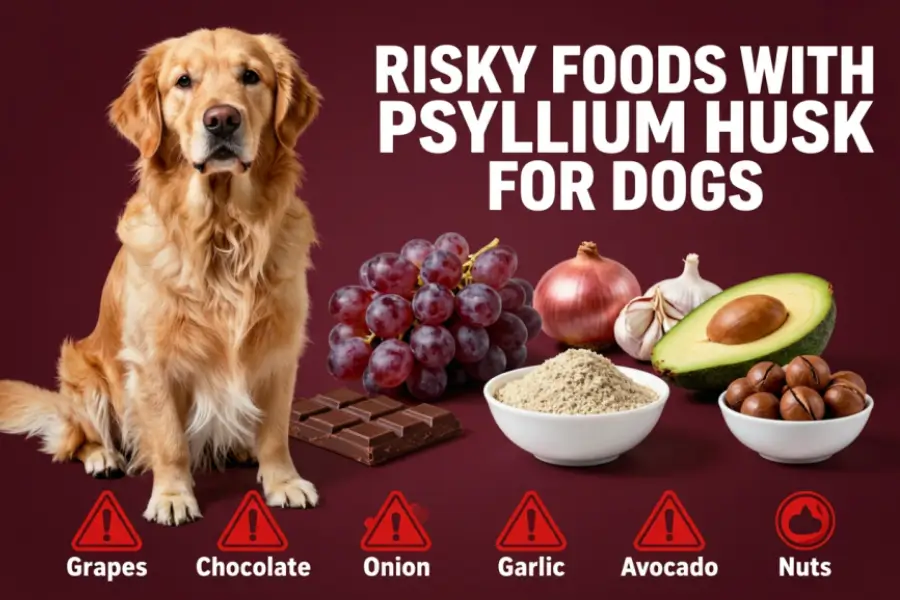
Dogs That Should Not Eat Psyllium Husk
- Puppies — their digestive systems are still developing; fiber supplements should only be used under veterinary direction.
- Dogs with intestinal blockages — fiber can worsen an existing obstruction.
- Dogs with swallowing issues — conditions like megaesophagus increase aspiration risk with thick, gel-forming substances.
- Dogs with chronic medical conditions — including kidney disease or conditions requiring strict fluid management.
- Dogs taking certain medications—particularly those with narrow therapeutic windows.
Signs Your Dog Ate Too Much Psyllium Husk
- Vomiting
- Severe constipation (straining without results)
- Lack of appetite
- Abdominal discomfort or a tense, painful belly
- Excessive gas or visible bloating
If any of these symptoms appear, stop supplementation and contact your veterinarian.
Alternatives to Psyllium Husk for Dogs

If psyllium husk isn’t the right fit, several other natural and veterinary-formulated options can support dog bowel health.
| Alternative | Type of Fiber | Best For | Notes |
| Pumpkin (plain, canned) | Soluble fiber | Mild constipation or diarrhea | Easy to mix into food; low calorie |
| Sweet Potato | Soluble/insoluble mix | General digestive support | Should be cooked, plain, no seasoning |
| Green Beans | Insoluble fiber | Weight management, mild fiber boost | Low calorie, good as a treat substitute |
| Oat Bran | Soluble fiber | Cholesterol and blood sugar support | Introduce gradually to avoid gas |
| Veterinary Fiber Supplements | Varies (often psyllium-based or specialized blends) | Chronic digestive issues | Formulated and dosed specifically for dogs |
- Supports healthy digestion.
- Helps relieve constipation.
- Improves stool quality.
- May help with diarrhea management.
- Promotes a feeling of fullness.
- Can cause bloating and gas.
- May lead to diarrhea if overused.
- Can cause constipation without water.
- May interfere with medication absorption.
- Can increase the risk of dehydration.
When to Contact a Veterinarian
Stop any home fiber remedy and seek veterinary care if your dog shows:
- Blood in stool
- Persistent diarrhea (lasting more than 24–48 hours)
- Severe constipation
- Vomiting
- Weakness or lethargy
- Refusal to eat
These signs can indicate a more serious underlying condition that fiber alone cannot address.
Expert Tips for Feeding Psyllium Husk
- Choose plain, unflavored psyllium husk — avoid human products with added sweeteners.
- Start low and go slow — introduce gradually over 5–7 days.
- Always add water — never feed dry powder alone.
- Monitor stool quality — adjust the amount based on results.
- Time it apart from medications — by at least 1–2 hours.
- Check with your vet first — especially for dogs with existing health conditions.
- Be consistent — sporadic use is less effective than a steady, vet-approved routine.
Can dogs eat psyllium husk?
Yes, dogs can eat psyllium husk in small, controlled amounts as a natural soluble fiber supplement for digestive health.
Is psyllium husk safe for dogs?
Plain, unflavored psyllium husk is safe for most healthy dogs when dosed by weight and given with plenty of water.
How much psyllium husk can dogs eat?
Dosage depends on size: roughly ¼ tsp for small dogs, ½–1 tsp for medium dogs, and 1–2 tsp for large dogs, always mixed into food and water.
What are the benefits of psyllium husk for dogs?
Benefits include improved digestion, relief from constipation and diarrhea, weight management support, and healthier gut bacteria.
Can psyllium husk help dog constipation?
Yes, its soluble fiber absorbs water and adds bulk to stool, which softens and stimulates movement through the colon.
Can psyllium husk help dog diarrhea?
Yes, it absorbs excess water in the intestines, helping firm up loose stools and support overall digestive support.
Frequently Asked Questions
Can dogs eat psyllium husk every day?
Yes, many dogs can have small daily amounts of psyllium husk as part of a consistent fiber routine, but long-term daily use should be discussed with a veterinarian to confirm the right ongoing dose.
Is psyllium husk safe for puppies?
Generally, psyllium husk is not recommended for puppies without direct veterinary guidance, since their digestive systems are still developing and more sensitive to fiber shifts.
How long does psyllium husk take to work in dogs?
Most dogs show changes in stool consistency within 12 to 48 hours of consistent use, though results can vary based on dose and the underlying issue.
Can psyllium husk stop dog diarrhea?
Psyllium husk can help firm up loose stools by absorbing excess intestinal water, making it a useful supportive option for mild to moderate diarrhea — but persistent diarrhea always warrants a vet visit.
Can dogs eat Metamucil?
Plain, unflavored Metamucil (100% psyllium husk with no added sugar or xylitol) may be used in small amounts, but flavored versions often contain ingredients unsafe for dogs, so plain pet-safe psyllium husk powder is the better choice.
Does psyllium husk help dog anal glands?
Firmer, bulkier stools from psyllium husk can apply more natural pressure during defecation, which may support anal gland expression in some dogs, though it’s not a guaranteed fix for chronic anal gland problems.
What is the best fiber supplement for dogs?
The “best” option depends on the dog. Psyllium husk, plain pumpkin, and oat bran are all commonly used, with veterinary-formulated fiber blends being ideal for dogs with chronic digestive conditions.
Can too much psyllium husk hurt a dog?
Yes, excessive psyllium husk, especially without enough water, can cause bloating, severe constipation, or, in rare cases, intestinal blockage, so dosing should always stay within vet-recommended limits.
Final Thoughts
Can dogs eat psyllium husk?Psyllium husk can be a safe and effective natural fiber for dogs when used correctly. It offers real benefits for digestive support, helping with constipation, diarrhea, weight management, and overall dog digestive health, making it a popular natural remedy among pet owners and some veterinarians alike.
That said, the benefits depend entirely on proper use: the right dose for your dog’s size, adequate hydration, and a gradual introduction. The risks of gas, bloating, or, in rare cases, blockage are largely avoidable when psyllium husk is dosed responsibly and never given dry.
The safest path forward is simple: talk to your veterinarian before adding psyllium husk to your dog’s diet, especially if your dog has any pre-existing health conditions or takes regular medication.
Can Dogs Eat Prickly Pear? Benefits, Risks, and Safe Feeding Guide