Conch is a sea snail known for its firm, chewy meat and pretty spiral shell. People enjoy it in fritters, salads, and chowders across coastal regions. If you were snacking on conch and your dog gave you those pleading puppy eyes, you probably started wondering: can dogs eat conch?
The good news is that conch is not toxic to dogs. But like most seafood, it comes with rules. This guide covers everything you need to know before you share a bite: the nutrition facts, the health benefits, the risks, how to prepare it safely, and answers to the most common questions dog owners ask about feeding conch
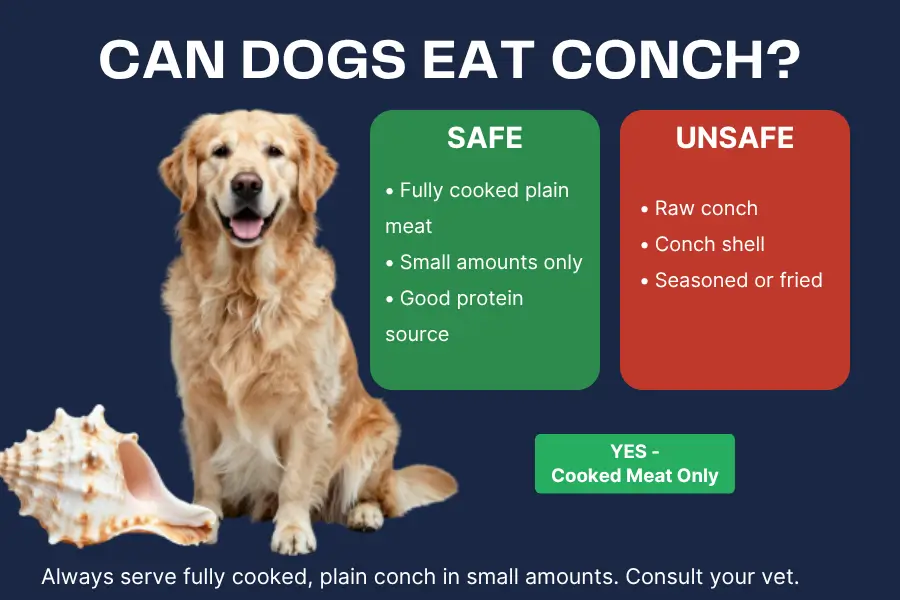
Yes, dogs can eat conch, but only when it is fully cooked, plain, and shell-free. Conch meat is a lean protein packed with iron, zinc, and vitamin B12. It should stay an occasional treat, not a regular meal. Avoid raw conch, fried conch, and any seasoned or spiced version, and always ask your vet first if your dog has a sensitive stomach.
At a Glance
| Question | Answer |
|---|---|
| Safe for dogs? | Yes, in moderation |
| Raw or cooked? | Cooked only |
| Puppies? | Small amounts only, with vet approval |
| Good source of protein? | Yes |
| Main risks | Bacteria, choking, seasoning, allergies |
| Best serving | Plain, cooked, boneless, shell-free |
What Is Conch?
Conch (pronounced “conk”) is a large sea snail that lives inside a hard, spiral-shaped shell. It’s found in warm ocean waters, especially around the Caribbean, the Bahamas, and Florida. The edible part is the muscular body inside the shell. This meat is chewy and mild in flavour, similar to squid or abalone.
It’s naturally low in fat and high in protein, along with minerals like iron, zinc, and selenium. People typically eat conch cooked in dishes like conch fritters, conch salad, chowder, or grilled skewers. Raw conch is also popular in some ceviche-style dishes, but that version is not appropriate for dogs.
Can Dogs Eat Conch?
Yes, dogs can eat conch, but only under the right conditions. The safest way to feed conch to a dog is:
- Fully cooked (boiled or steamed)
- Served plain, with no seasoning, butter, or sauce
- Cut into small, bite-sized pieces
- Given in small portions
- Offered only as an occasional treat, not a daily meal
Conch itself is not specifically toxic to dogs. The real risks come from how it’s prepared and served. Raw conch, fried conch, and seasoned conch dishes can all cause problems, which we’ll cover below.
Is Conch Good for Dogs?
Cooked, plain conch does offer some real nutritional value for dogs.
High-Quality Protein
Conch meat is rich in protein, which dogs need for strong muscles, healthy skin, and everyday energy.
Low Fat
Conch is naturally lean. This makes it a lighter option compared to fattier meats, which is helpful for dogs who need to watch their weight.
Iron
Iron helps carry oxygen through your dog’s blood and supports healthy energy levels.
Selenium
This mineral works as an antioxidant and supports a healthy immune system in dogs.
Vitamin B12
Vitamin B12 supports nerve function and helps your dog’s body turn food into usable energy.
Zinc
Zinc plays a role in skin health, wound healing, and a strong immune system.
Omega Fatty Acids (Small Amounts)
Conch contains small amounts of omega fatty acids, which can support skin and coat health, though it’s not as rich a source as fish like salmon or sardines.
Health Benefits of Conch for Dogs
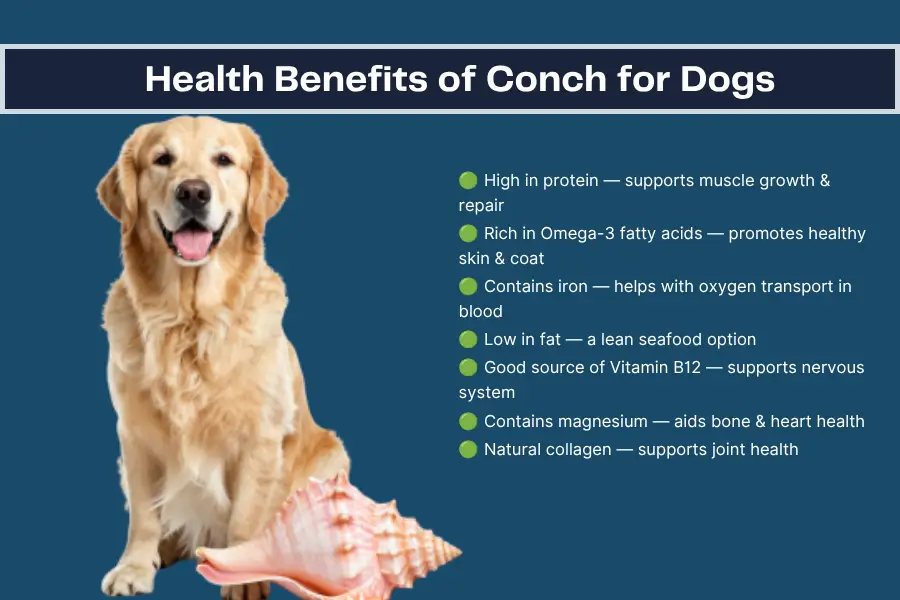
When served safely and in moderation, conch may offer these benefits.
1. Supports Muscle Growth
The protein in conch gives your dog’s body the building blocks it needs for muscle repair and growth.
2. Helps Maintain Healthy Skin
Zinc and small amounts of fatty acids in conch can support your dog’s skin barrier.
3. Supports Immune System
Selenium and zinc both play a role in helping your dog’s immune system function properly.
4. Helps Energy Production
Vitamin B12 and iron work together to help your dog’s body produce and use energy efficiently.
5. Supports Healthy Metabolism
B vitamins found in conch help your dog’s body process food into usable fuel.
6. Provides Lean Protein
Because conch is low in fat, it’s a lighter protein option compared to some fattier meats or fried foods.
7. May Support Coat Health
The combination of protein, zinc, and fatty acids may help keep your dog’s coat looking shiny and healthy over time.
Potential Risks of Feeding Conch to Dogs
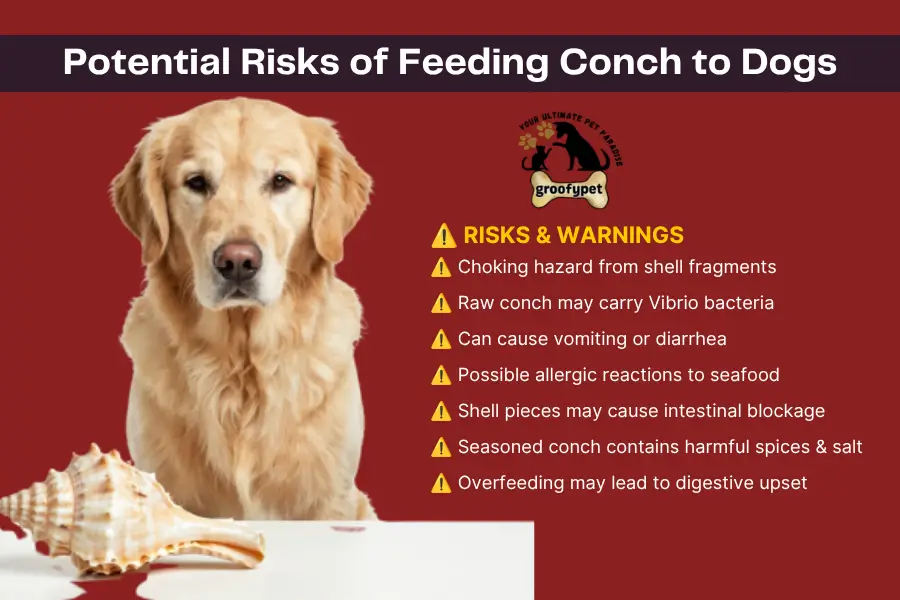
Conch also carries several risks that every dog owner should understand before sharing it.
1. Raw Seafood Bacteria
Raw conch can carry harmful bacteria such as Salmonella, Vibrio, and E. coli. These can cause serious food poisoning in dogs.
2. Parasites
Uncooked conch may contain parasites that survive until the meat is fully cooked. Cooking kills these parasites and makes the meat safe.
3. Shell Fragments
The conch shell is hard and should never be given to a dog. Small fragments can cause cuts inside the mouth or digestive tract.
4. Choking Hazard
Large chunks of conch, or any piece of shell, can become a choking hazard, especially for small dogs.
5. Seasonings
Many conch dishes are seasoned with ingredients that are unsafe for dogs. Always serve conch completely plain.
6. Garlic Toxicity
Garlic is toxic to dogs and can damage red blood cells, even in small amounts.
7. Onion Toxicity
Onion is also toxic to dogs and should never be used when cooking food for your pet.
8. Butter and Oil
Butter and oil add unnecessary fat, which can upset your dog’s stomach or contribute to pancreatitis in sensitive dogs.
9. Salt
Excess salt can lead to dehydration and, in extreme cases, sodium poisoning in dogs.
10. Seafood Allergy
Some dogs are allergic to seafood. Watch for itching, swelling, or digestive upset after the first taste.
11. Digestive Upset
Even plain conch can be hard for some dogs to digest, especially if they eat too much too quickly.
12. Heavy Metals (Occasional Concern)
Like other seafood, conch may contain trace amounts of heavy metals such as mercury. This is generally only a concern with frequent, large servings.
Can Dogs Eat Raw Conch?
No, dogs should not eat raw conch. Raw conch can carry:
- Parasites that cause digestive illness
- Bacteria that lead to food poisoning
- A higher risk of choking, since raw meat is tougher and chewier
Feeding raw conch increases the chance of vomiting, diarrhoea, and more serious infections. Always cook conch fully before offering it to your dog.
Pros and Cons of eating conch for dogs
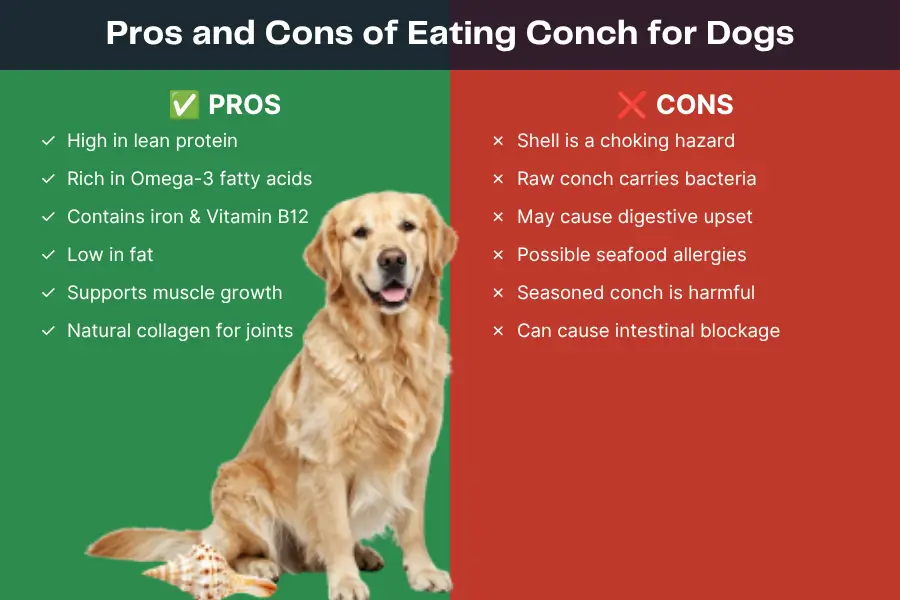
- High in lean protein
- Low in fat
- Rich in vitamin B12
- Contains iron and zinc
- Supports muscle health
- Raw conch contain harmful bacteria
- Seasoned conch can be toxic
- Cause stomach upset in sensitive dogs
- Shell pieces can be a choking hazard
- Some dogs may have a seafood allergy
Can Dogs Eat Cooked Conch?
Yes, cooked conch is the safest way to feed this seafood to your dog. Follow these rules:
- Boiled or steamed only
- Serve it plain, with nothing added
- No butter
- No garlic
- No onion
- No spicy seasoning or sauces
Cooking conch fully kills bacteria and parasites, making it much safer for your dog’s digestive system.
Can Puppies Eat Conch?
Puppies can try small amounts of cooked, plain conch, but extra caution is needed. Puppies have:
- More sensitive stomachs than adult dogs
- A higher risk of digestive upset from new foods
- A need for balanced puppy-specific nutrition, not table scraps
Introduce conch in small amounts, and always check with your veterinarian first, especially if your puppy is still building up its diet.
How Much Conch Can Dogs Eat?
Portion size should match your dog’s size. Use this chart as a general guide.
| Dog Size | Serving |
|---|---|
| Extra Small | One tiny bite |
| Small | 1–2 small pieces |
| Medium | 2–4 pieces |
| Large | A few bite-sized pieces |
Conch should only be given once every few weeks as a treat, not as a regular part of your dog’s diet.
How to Prepare Conch for Dogs
Follow these steps to prepare conch safely for your dog.
- Buy fresh, high-quality conch from a trusted source.
- Wash the meat thoroughly under running water.
- Cook it completely by boiling or steaming until tender.
- Remove the shell fully; never leave any shell pieces in the meat.
- Cut the cooked meat into small, bite-sized pieces.
- Serve it plain, with no seasoning, sauce, or oil.
- Introduce it slowly, starting with a small piece to check for any reaction.
Symptoms Your Dog Ate Too Much Conch
Watch for these signs if your dog eats a large amount of conch or reacts poorly to it.
- Vomiting
- Diarrhea
- Gas
- Stomach pain
- Drooling
- Loss of appetite
- Allergic reaction, such as itching or swelling
- Trouble breathing (this is an emergency; call your vet immediately)
What to Do If Your Dog Eats Seasoned Conch
If your dog gets into a seasoned conch dish, follow these steps.
- Stay calm and check what was in the dish.
- Look closely for garlic, onion, excessive salt, or spicy seasoning.
- Watch your dog closely for the next several hours for vomiting, diarrhoea, or unusual behaviour.
- Call your veterinarian right away if the dish contained onion, garlic, a lot of salt, or hot spices.
Best Seafood Alternatives
If you’re looking for other seafood options to share with your dog, here’s how conch compares.
| Seafood | Safe? | Notes |
|---|---|---|
| Salmon | ✅ | Excellent source of omega-3s |
| Sardines | ✅ | Great omega-3s, small and low in mercury |
| Whitefish | ✅ | Lean protein, easy to prepare |
| Cod | ✅ | Easy to digest |
| Shrimp | Yes, moderate | Cooked only, shell removed |
| Tuna | Limited | Feed only occasionally due to mercury |
| Crab | Moderate | Plain only, no shell |
| Lobster | Moderate | Plain only, small portions |
| Conch | Moderate | Cooked, plain, and shell-free only |
Foods to Avoid Serving With Conch
Never pair conch with these ingredients when feeding your dog.
- Garlic butter
- Onion
- Hot sauce
- Cajun seasoning
- Lemon pepper
- Excess salt
- Fried batter
- Breadcrumb coating
- Alcohol-based sauces
When Dogs Should Not Eat Conch
Some dogs should avoid conch entirely. This includes dogs with:
- Known seafood allergies
- Kidney disease
- Pancreatitis or a history of pancreatitis
- A generally sensitive stomach
- Puppies under a veterinarian’s specific dietary restrictions
If your dog falls into any of these categories, talk to your vet before offering any seafood, including conch.
Frequently Asked Questions
Can dogs eat raw conch?
No. Raw conch can carry bacteria and parasites that cause food poisoning and digestive illness in dogs. Always cook it fully first.
Can dogs eat fried conch?
No. Fried conch, like conch fritters, is cooked in oil and often coated in breading, which adds unhealthy fat and can upset your dog’s stomach.
Can dogs eat conch salad?
No. Conch salad usually contains onion, citrus, hot peppers, and other seasonings that are not safe for dogs.
Is conch toxic to dogs?
Plain, cooked conch meat is not toxic to dogs. The danger comes from the shell, raw preparation, or added seasonings like garlic and onion.
Can puppies eat conch?
Puppies can try a very small amount of cooked, plain conch, but only with veterinary approval, since their stomachs are more sensitive.
How often can dogs eat conch?
Conch should be an occasional treat, offered no more than once every few weeks.
Can dogs eat frozen conch?
Frozen raw conch still needs to be fully cooked before serving. Never thaw and feed it raw.
Can dogs eat conch fritters?
No. Fritters are fried, breaded, and often seasoned, making them unsafe for dogs.
Is conch healthy for senior dogs?
Small amounts of plain, cooked conch can be fine for senior dogs, but check with your vet first, especially if your dog has kidney or digestive issues.
What seafood is safest for dogs?
Salmon, sardines, whitefish, and cod are generally considered some of the safest seafood options for dogs when cooked properly.
Can dogs eat canned conch?
Canned conch often contains added salt and preservatives, so it’s best to avoid it. Fresh, home-cooked conch is a safer choice.
What should I do if my dog ate too much conch?
Watch for vomiting, diarrhoea, or signs of an allergic reaction. Contact your veterinarian if symptoms are severe or don’t improve.
Final Thoughts
So, can dogs eat conch? Yes, but only when it’s fully cooked, plain, shell-free, and served in moderation. Conch offers lean protein, iron, zinc, and vitamin B12, making it a decent occasional treat rather than a regular meal.
Avoid raw conch, fried conch, and any dish made with garlic, onion, or heavy seasoning. When you introduce any new food, start small and watch how your dog reacts. If your dog has an underlying health condition or shows signs of digestive upset or allergies after eating conch, contact your veterinarian right away.
Can Dogs Eat Tamarillos? Benefits, Risks, and Safe Feeding Guide!
Can Dogs Eat Prickly Pear? Benefits, Risks, and Safe Feeding Guide