
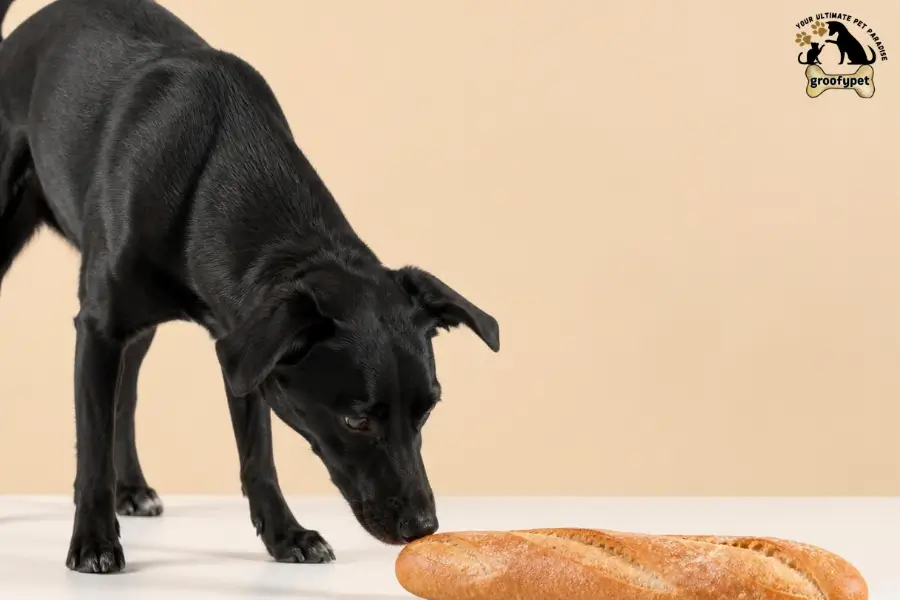
Can Dogs Eat Baguette? A small amount of plain, fully baked baguette is generally not toxic to healthy dogs. It should stay an occasional treat, not a regular part of the diet. Ingredients matter a great deal. Plain baked baguette is very different from raw yeast dough, garlic bread, or a loaf with raisins or chocolate, and those last few can make a dog seriously ill. This guide covers what is safe, what is not, how much to offer, and what to do if your dog raids the bread board.
Can Dogs Eat Baguette?
Yes, most healthy dogs can eat a small piece of plain, fully baked baguette as an occasional treat. Baguette is not toxic on its own, but it offers little nutrition and adds calories. Garlic, onion, raisins, chocolate, and raw yeast dough are unsafe.
Plain baguette is made from flour, water, yeast, and salt. Once it is baked, those ingredients are fine in small amounts. That is why many pet sites list French bread as acceptable for a nibble.
Portion size matters. A few bites suit most dogs. A whole loaf does not.
There is also a big difference between “not toxic” and “healthy.” Bread is mostly carbohydrates. It works as a filler food and adds nothing your dog’s complete and balanced food does not already supply. Dogs do not need bread to thrive.
An occasional bite is a treat. Daily bread becomes extra calories, and those calories can lead to weight gain and obesity over time.
Is Baguette Safe for Dogs?
Plain, fully baked baguette is safe for most healthy dogs in small amounts. Safety depends on the ingredients, the portion, your dog’s size, and any allergies or health problems. Toppings, fillings, and raw dough can change the answer completely.
Several factors decide whether a piece of French bread is a harmless snack or a problem:
- Ingredients: Garlic, onion, raisins, chocolate, seeds, and nuts can turn plain bread into a hazard.
- Portion size: A few bites is a treat. A large amount can upset the stomach.
- Dog size: A slice that suits a Labrador may be far too much for a toy poodle.
- Existing health issues: Dogs with diabetes, pancreatitis history, or weight problems need extra caution.
- Allergies and sensitivities: Some dogs react to wheat or gluten with itching, ear trouble, or digestive upset.
- Baking status: Fully baked bread is a different situation from raw dough.
- Fillings and toppings: Butter, cheese, garlic spread, and sweet glazes all change the risk.
Not every dog handles bread equally. Some eat it with no trouble. Others get gas or loose stools from a small piece.
Can Dogs Eat Plain Baguette?
Plain baguette is the safest version. A traditional loaf usually contains just:
- Flour
- Water
- Yeast
- Salt
Yeast is inactive after baking, so it is not the same concern as raw dough. Still, plain baguette should be offered in small amounts. It is a high-carbohydrate food with few nutrients, so extra bread means extra calories without much benefit.

Check the label or ask the bakery. Some loaves include sugar, seeds, garlic, herbs, or oil. Those extras are what turn a harmless bite into a risky one.
Can Dogs Eat Baguette Crust?
Baguette crust is not toxic, but it can be hard and sharp-edged. Offer only small, manageable pieces. Skip crusty chunks for dogs that gulp their food, since large hard pieces can be a choking hazard, especially for small dogs.
The crust itself is just baked flour and water. The concern is texture. A crisp, crackly crust can scratch the mouth or lodge in the throat of a fast eater.
Tear the bread into tiny pieces and watch your dog chew. If your dog swallows treats whole, skip the crust and offer a softer dog-safe treat instead.
Can Dogs Eat Toasted Baguette?
Plain toasted baguette is generally okay in small amounts. Toasting does not add toxins, but it makes bread harder and more brittle. Break it into tiny pieces and skip butter, garlic, cheese, and other toppings.
Toasted bread is drier and can splinter into sharp bits. That raises the choking concern, especially for small dogs and enthusiastic gulpers.
The bigger issue is what goes on top. Garlic butter, cheese, jam, and seasoning blends are common on toasted baguette slices, and some are unsafe. If it is not plain, do not share it.
Can Puppies Eat Baguette?
Puppies can have a tiny bite of plain, fully baked baguette, but it is not a good treat choice. Growing puppies need complete puppy food. For very young puppies or those with sensitive stomachs, ask a veterinarian first.
Puppies have different needs from adult dogs. They are growing fast, so most of their calories should come from food made for puppies. Bread fills a small stomach without helping growth.
Their digestive systems can also be sensitive. New foods may cause gas, loose stools, or vomiting. If you want to reward a puppy, use tiny portions of treats made for puppies. Do not let bread replace nutritionally complete meals.
Can Dogs Eat Baguette Dough?
No. Raw yeast dough is dangerous for dogs. It can expand in the stomach, and the yeast can produce alcohol as it ferments. Call a veterinarian or animal poison service right away if your dog eats any, even if your dog seems fine.
This is the most serious bread-related risk. Raw dough is not the same as baked baguette. There are two main dangers:
- Stomach expansion. The warm, moist stomach is a perfect place for dough to rise. It can cause painful bloating. In rare cases, especially in large deep-chested breeds, the stomach can twist. That emergency is called GDV.
- Alcohol poisoning. As yeast ferments the sugars in dough, it produces alcohol. The alcohol absorbs quickly and can cause stumbling, weakness, low blood sugar, and, in severe cases, seizures or coma.
Sourdough starter and pizza dough with active yeast carry the same concern.
If your dog eats raw dough, call your veterinarian, an emergency clinic, or an animal poison service right away. Do not wait for symptoms. Do not try home treatments, and do not make your dog vomit unless a veterinary professional tells you to.
Can Dogs Eat Baguette With Garlic?
No. Garlic is unsafe for dogs. It belongs to the allium family and can damage red blood cells, leading to a type of anemia.
This includes:
- Garlic bread
- Garlic butter
- Garlic spread
- Garlic seasoning
- Garlic-infused baguette
Picking off visible garlic pieces does not make the bread safe. The garlic flavor and compounds soak into the bread and butter. Symptoms may not show up right away, sometimes for a day or more. If your dog ate garlic bread, call a veterinarian or poison service while your dog still looks fine.
Related reading: Can Dogs Eat Tiger Nuts? Safety, Benefits and Risks
Can Dogs Eat Baguette With Onion?
No. Onion is unsafe for dogs in every form. Like garlic, onion can damage red blood cells and cause anemia.
Watch for these forms in prepared bread and spreads:
- Fresh or cooked onion
- Onion powder
- Onion seasoning
- Dips and spreads containing onion
Concentrated powders deserve special attention. They hide in seasoning blends, herb butters, and flavored breads, so they are easy to miss. Signs of trouble include weakness, pale gums, reduced appetite, and reddish urine. If your dog eats an onion-flavored baguette, contact your veterinarian immediately.
Can Dogs Eat Baguette With Raisins?
No. Raisins and grapes can be dangerous for dogs, and even a small amount can cause problems. Veterinarians still do not fully understand why some dogs react more strongly than others.
A raisin baguette should never be treated like plain bread. That includes bread with currants or sultanas. Do not feed the raisin-free part of the loaf either, since it may contain traces.
If your dog eats raisin-containing bread, contact a veterinarian promptly. Do not wait for symptoms. Raisin and grape toxicity can affect the kidneys, and early treatment gives dogs the best chance.
Related reading: Can Dogs Eat Tapioca Flour? Safe Serving Guide for Dogs
Can Dogs Eat Baguette With Chocolate?
No. Chocolate contains caffeine and theobromine, and dogs process these much more slowly than people do.
How risky it is depends on several factors:
- Type of chocolate: Darker and more bitter chocolate is more dangerous. White chocolate has the least theobromine.
- Amount eaten: A few chips differ greatly from a whole pain au chocolat.
- Your dog’s size: Smaller dogs are affected by smaller amounts.
- Individual circumstances: Health conditions matter too.
Signs may take several hours to appear. They include vomiting, restlessness, a racing heart, tremors, and seizures. After a meaningful amount of chocolate, call your veterinarian or a poison hotline for guidance.
Can Dogs Eat Baguette With Butter?
Plain butter is not a typical dog toxin. Still, it is not a good routine treat.
Butter is high in fat, which means:
- Extra calories
- Possible digestive upset, such as loose stools or vomiting
- Pancreatitis risk in susceptible dogs
Not every dog that eats butter will develop pancreatitis. But dogs with a history of pancreatitis, or those prone to weight gain, are better off without it. If your baguette is buttered, garlic-buttered, or herb-buttered, skip sharing it.
Related reading: Can Dogs Eat Butter?
Can Dogs Eat Baguette With Cheese?
Cheese is not automatically toxic to dogs, but tolerance varies. A cheesy baguette brings several concerns:
- Fat: Cheese adds calories and can upset sensitive stomachs.
- Lactose: Some dogs have trouble digesting dairy.
- Salt: Many cheeses are salty.
- Added ingredients: Cheese breads often include garlic, onion, or herbs.
Some dogs will have gas or diarrhea after even a small piece. If you want to share dairy, try a tiny bite of plain cheese by itself and see how your dog reacts.
How Much Baguette Can Dogs Eat?
Most dogs need only a few small bites of baguette, and only now and then. Small dogs can have a couple of bite-sized pieces, medium dogs a small piece, and large dogs a small slice. Treats should stay a small part of the daily diet.
| Dog Size | Small Occasional Portion |
|---|---|
| Small dog | A few small bites |
| Medium dog | A small piece |
| Large dog | A small slice or equivalent |
These are conservative treat-sized portions. They are not nutritional requirements or veterinary prescriptions. Your dog’s weight, age, health, and regular diet all affect what is reasonable.
As a general habit, keep treats and extras to a small share of your dog’s daily calories. Ask your veterinarian for a personal limit, especially if your dog is overweight or has a medical condition.
How Often Can Dogs Eat Baguette?
Baguette should be an occasional treat, not a daily food. A bite now and then is fine. A habit is not.
Frequent bread can cause several issues:
- Calories: Bread adds calories quickly, especially for small dogs.
- Carbohydrates: Bread is high in carbs and can affect blood sugar.
- Nutritional imbalance: Filling up on bread can crowd out balanced food.
- Digestive issues: Some dogs get gas or soft stools from regular bread.
- Weight management: Extra table scraps are a common cause of weight gain.
Most of your dog’s nutrition should come from complete and balanced dog food. Think of baguette as a rare extra, not a routine.
Nutritional Value of Baguette for Dogs
Baguette has limited nutritional value for dogs. It is mainly:
- Carbohydrates: These make up most of the loaf.
- Calories: They add up fast for small dogs.
- Small amounts of protein: Not enough to matter for a dog’s diet.
Baguette is not a superfood, and it does not replace anything in a complete dog food. Some minerals and B vitamins may be present, but the amounts are not meaningful for canine nutrition. Bread is best described as empty calories for dogs. Dogs do not need it as part of their diet.
Potential Risks of Feeding Baguette to Dogs
| Potential Risk | Why It Can Happen |
|---|---|
| Weight gain | Excess calories |
| Digestive upset | Large amounts or individual sensitivity |
| Choking | Large or hard pieces |
| High sodium intake | Salty bread or toppings |
| Pancreatitis risk | High-fat toppings |
| Toxicity | Garlic, onion, raisins, chocolate |
| Alcohol exposure | Raw yeast dough |
| Stomach expansion | Raw yeast dough |
The most common risks are simple ones: extra calories and an upset stomach. Weight gain builds slowly over time. Digestive upset usually appears within hours after a large amount.
The most serious risks come from what is added to the bread. Toxic ingredients and raw dough can cause emergencies. Sweet breads can also contain xylitol, an artificial sweetener that is toxic to dogs. Check labels on any sugar-free baked goods or spreads. Seeds and nuts, especially macadamia nuts, are another concern, since some are toxic and others are high in fat.
What Happens If a Dog Eats Too Much Baguette?
A dog that eats a large amount of plain baguette may develop mild digestive upset. Possible signs include:
- Vomiting
- Diarrhea
- Gas
- Bloating
- Abdominal discomfort
- Reduced appetite
Mild upset often passes on its own. Offer fresh water, skip more treats, and watch your dog closely. Some owners feed a bland diet of boiled chicken and rice for a short time, but ask your veterinarian first, particularly for small dogs and puppies.
Symptoms after eating toxic ingredients or raw dough call for a different level of concern. Those situations can become emergencies, even when the dog seems fine at first.
What Should I Do If My Dog Eats Baguette?
Your response depends on what the bread contained.
- If it was plain, fully baked baguette: Monitor your dog and skip further treats. Watch for vomiting, diarrhea, or bloating over the next day. Most dogs do fine.
- If it contained garlic, onion, raisins, chocolate, or another potentially harmful ingredient: Contact a veterinarian or animal poison service promptly. Do not wait for symptoms. Have your dog’s weight, the amount eaten, the ingredients, and the time ready.
- If your dog ate raw yeast dough: Contact a veterinarian immediately. Do not induce vomiting at home unless a veterinary professional specifically tells you to.
In the US, you can call the ASPCA Animal Poison Control Center at 888-426-4435 or Pet Poison Helpline at 855-764-7661. Consultation fees may apply.
When Should You Call a Veterinarian?
Call right away if you notice any of these signs:
- Repeated vomiting
- Severe abdominal swelling
- Difficulty breathing
- Extreme weakness
- Collapse
- Tremors
- Seizures
- Severe abdominal pain
- Loss of coordination or stumbling
Also call if you suspect your dog ate any of the following, even if no symptoms show yet:
- Raw yeast dough
- Raisins or grapes
- Onion or garlic
- Chocolate
Ordinary overeating usually means a mild stomach upset that passes. Potentially toxic ingredients are different. They can cause serious harm with delayed symptoms, so early advice matters.
Baguette vs. Other Breads for Dogs
Plain baguette is similar to plain white bread in nutrition. Here is how other breads compare:
- Whole wheat bread: Fine in small amounts if plain.
- Ciabatta: Okay when plain, but avoid herbs and oils.
- Sourdough: Baked sourdough is usually tolerated, but it may upset some stomachs. Raw starter and dough are dangerous.
- Brioche and challah: High in butter, sugar, and eggs, so best limited.
- Multigrain and rye: May contain seeds and nuts, so read the label.
- Banana bread: Usually too sugary and may contain harmful add-ins.
Related reading:
Healthier Treat Ideas Instead of Baguette
If you want to share a snack, some options offer more value than bread:
- Green beans
- Carrot pieces
- Apple slices with no seeds or core
- Store-bought dog treats
- Small pieces of plain cooked chicken
Some pet stores also sell baguette-shaped chew treats made for dogs. These give the fun of the shape without the ingredient worries. Always check labels and offer new foods in small amounts.
Baguette Safety Chart for Dogs
| Baguette Type | Safe for Dogs? | Important Note |
|---|---|---|
| Plain baked baguette | Generally okay in small amounts | Occasional treat |
| Toasted plain baguette | Generally okay in small amounts | Avoid very hard pieces |
| Baguette crust | Small amounts may be okay | Watch texture |
| Garlic baguette | No | Garlic is unsafe |
| Onion baguette | No | Onion is unsafe |
| Raisin baguette | No | Raisins can be dangerous |
| Chocolate baguette | No | Chocolate is toxic |
| Buttered baguette | Best avoided | High fat |
| Raw yeast dough | No | Potentially dangerous |
| Heavily salted baguette | Avoid | Excess sodium |
Frequently Asked Questions
Can dogs eat baguette?
Yes, in small amounts. Plain, fully baked baguette is generally not toxic to healthy dogs. It should be an occasional treat, and it should never contain garlic, onion, raisins, chocolate, or other unsafe ingredients.
Can dogs eat toasted baguette?
Plain toasted baguette is generally okay in small amounts. It is harder than fresh bread, so break it into tiny pieces. Avoid garlic, butter, cheese, and other toppings.
Can puppies eat baguette?
A tiny bite of plain baked baguette is unlikely to harm a healthy puppy, but it is not ideal. Puppies need complete puppy food. Check with a veterinarian first for very young or sensitive puppies.
Can dogs eat baguette dough?
No. Raw yeast dough can expand in the stomach and produce alcohol. Call a veterinarian or animal poison service immediately if your dog eats any, and do not induce vomiting unless directed.
Can dogs eat garlic baguette?
No. Garlic can damage red blood cells and cause anemia. Removing visible pieces does not make it safe. Contact a veterinarian or poison service if your dog eats garlic bread.
Can dogs eat onion baguette?
No. Onion is unsafe in every form, including cooked and powdered. Concentrated onion powder in seasoning and spreads can be especially risky. Call a veterinarian promptly after ingestion.
Can dogs eat raisin baguette?
No. Raisins and grapes can be dangerous to dogs and may affect the kidneys. Do not wait for symptoms. Contact a veterinarian promptly if your dog eats raisin bread.
Can dogs eat chocolate baguettes?
No. Chocolate contains theobromine and caffeine, which are toxic to dogs. Risk depends on the type, amount, and your dog’s size. Call a veterinarian or poison hotline after a significant amount.
Can dogs eat baguette with butter?
Butter is not a typical toxin, but it is high in fat. It can cause digestive upset and may raise pancreatitis risk in susceptible dogs. Plain baguette is the better choice.
How much baguette can a dog eat?
Only a small treat-sized amount: a few bites for small dogs, a small piece for medium dogs, and a small slice for large dogs. Ask your veterinarian for advice tailored to your dog.
Can dogs eat baguette every day?
It is not recommended. Daily bread adds calories and carbohydrates without much benefit, and it can lead to weight gain or crowd out balanced nutrition. Keep it occasional.
What should I do if my dog eats baguette?
For plain baked baguette, monitor your dog and skip more treats. If it had garlic, onion, raisins, or chocolate, or if it was raw dough, contact a veterinarian or poison service right away.
Final Thoughts
Plain, fully baked baguette can generally be offered to dogs in small amounts. It is not a necessary part of a dog’s diet, and it adds calories without meaningful nutrition. Avoid baguettes containing garlic, onion, raisins, chocolate, or other unsafe ingredients. Never give dogs raw yeast dough. Keep portions small and occasional, and when in doubt, call your veterinarian.
Can Dogs Eat Oat Bran? Risks, Benefits, and Safe Alternatives!