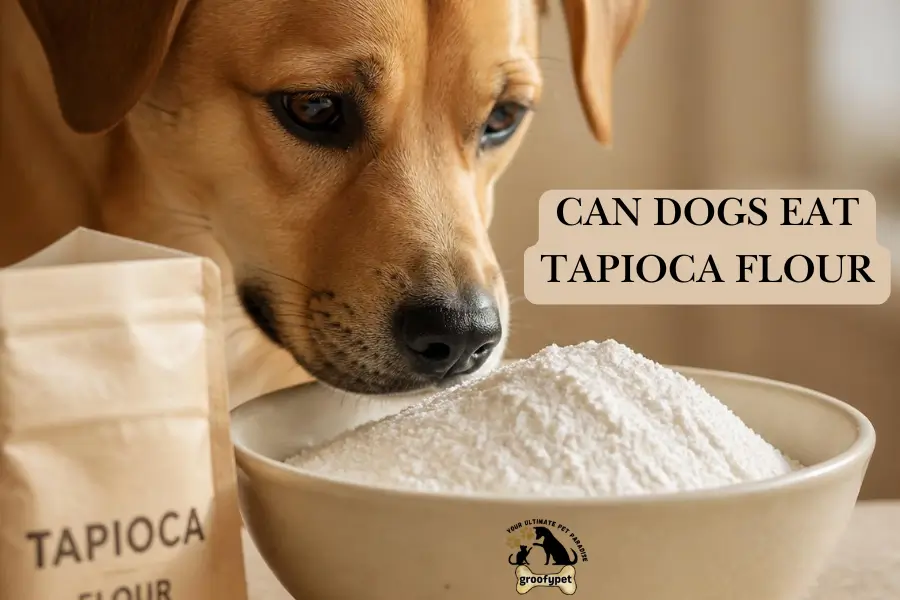
If you’ve ever flipped over a bag of dog treats and spotted “tapioca flour” on the ingredient list, you’re not alone in wondering what it actually is. Can dogs eat tapioca flour without any trouble, or is it something to watch out for?
The short answer: plain tapioca flour is generally not considered toxic to dogs when given in small amounts. It’s mainly a source of starch and carbohydrates, not a nutritionally necessary ingredient your dog needs to thrive. That means it can have a place in your dog’s diet occasionally, but it isn’t something you need to go out of your way to add.
How tapioca flour is prepared, and what else gets mixed in with it, matters just as much as the flour itself. A plain, cooked, simple recipe is a very different thing from a packaged snack loaded with sugar, salt, or flavorings meant for humans.
This article walks through what tapioca flour is, how much your dog can safely have, the possible benefits and risks, how it compares to other flours, and what to do if your dog eats more than they should. By the end, you’ll have a clear, practical answer instead of a vague one.
Can Dogs Eat Tapioca Flour?
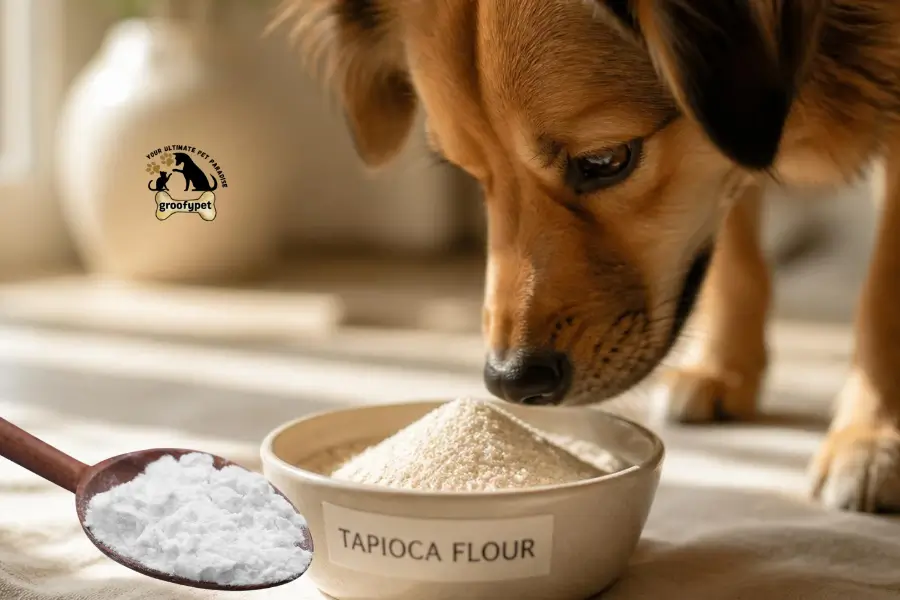
Dogs can eat tapioca flour in small amounts. Tapioca flour, sometimes called tapioca starch, comes from the cassava root, a starchy vegetable grown widely in South America and parts of Africa and Asia. Manufacturers extract the starch from the root, dry it, and grind it into a fine, white powder that looks a lot like cornstarch.
Tapioca flour and tapioca starch are typically the same product, and most recipes use the two names interchangeably. You’ll find it in gluten-free baking, as a thickener in soups and sauces, and increasingly in dog food and dog treats as a wheat-free binding agent.
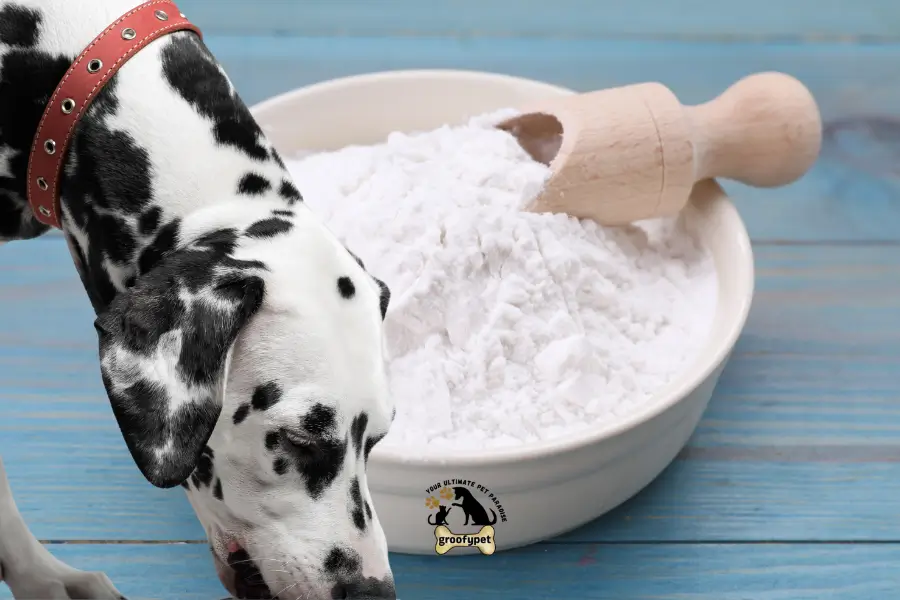
Many dogs tolerate a small amount of tapioca flour just fine, especially when it’s cooked into a recipe rather than fed as a raw powder. That said, tolerating a small amount doesn’t mean unlimited amounts are a good idea. Tapioca flour is almost pure starch. It carries very little protein, fat, fiber, or vitamins, so it shouldn’t take up a large share of your dog’s daily food. Think of it more like a filler or binding ingredient than a food with much nutritional weight of its own.
Is Tapioca Flour Safe for Dogs?
Plain tapioca flour, on its own, is one of the more benign starches you’ll come across in pet food. The bigger question usually isn’t the flour itself but what it’s mixed with.
A dog treat made with tapioca flour, oats, and pumpkin is a very different product from a store-bought snack that also contains added sugar, salt, artificial sweeteners, or flavor enhancers. Some ingredients that show up in human snacks and even a few pet products can cause real harm to dogs, including:
- Sugar (contributes to weight gain and can worsen digestive upset)
- Salt in excessive amounts
- Artificial sweeteners, particularly xylitol
- Chocolate
- Onion or garlic powder
None of these ingredients are dangerous because of the tapioca flour. They’re dangerous on their own, and tapioca flour just happens to be sitting next to them on the label. This is why checking the full ingredient list matters more than checking for tapioca flour alone, whether you’re looking at a bag of commercial dog food or a homemade treat recipe you found online.
What Is Tapioca Flour Made From?
Tapioca flour starts with the cassava root, a large, starchy tuber that looks a bit like a thick, woody sweet potato. Producers harvest the root, wash it, and grind it into a pulp. From there, they extract the liquid, which is mostly water and starch, and let the starch settle out. Once dried, that starch becomes tapioca flour, a fine, chalky-white powder with almost no flavor or smell.
This is different from wheat flour, which comes from ground wheat kernels and naturally contains gluten, along with more protein than tapioca flour. Because tapioca flour has no gluten and very little protein, it behaves differently in recipes. It thickens liquids well and creates a chewy texture when baked, which is part of why it shows up so often in gluten-free and grain-free treat recipes for dogs.
In simple terms, tapioca flour is a purified starch. It doesn’t carry the fiber or germ found in whole-grain flours, which is part of why its nutritional profile is so thin compared to alternatives like oat flour or chickpea flour.
Can Dogs Eat Cassava Flour and Tapioca Flour?
Cassava flour and tapioca flour come from the same root, but they are not identical products, and it helps to know the difference before you swap one for the other in a recipe.
Cassava flour is made from the whole root, peeled, dried, and ground. Because it uses the entire root rather than just the extracted starch, cassava flour retains more fiber and a slightly more complex nutritional profile. Tapioca flour, on the other hand, is the pure starch that has been separated out from the rest of the root. It has less fiber and a more neutral, almost invisible flavor.
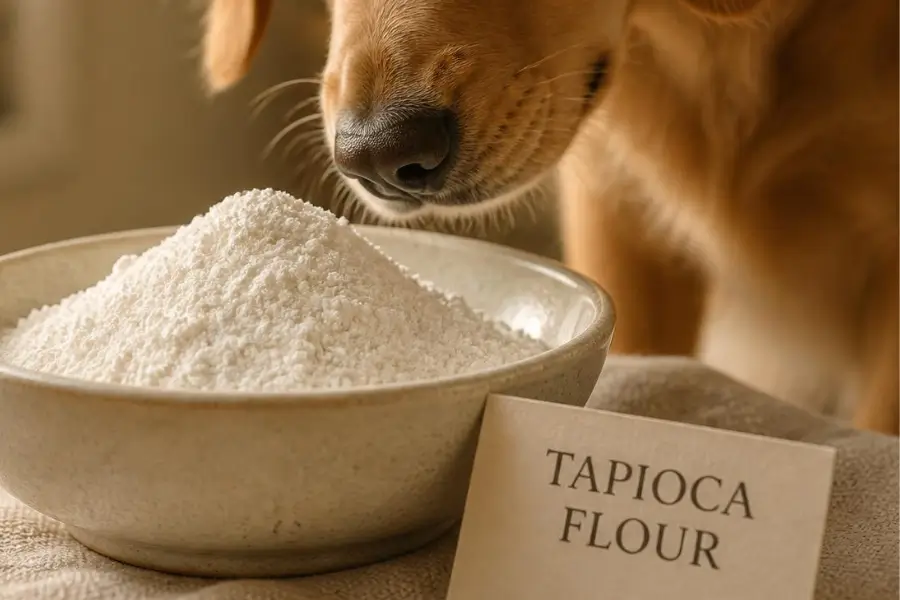
In cooking, they don’t always behave the same way. Cassava flour tends to be denser and can absorb liquid differently, while tapioca flour is prized for its thickening and binding properties. If you’re following a homemade dog treat recipe, don’t assume you can substitute one for the other in equal amounts and get the same result. It’s worth checking exactly which ingredient a recipe calls for and sourcing that specific product rather than treating cassava flour and tapioca flour as one and the same.
Does Tapioca Flour Have Any Benefits for Dogs?
Tapioca flour isn’t a superfood, and no reputable source should claim it is. But it does serve a few practical purposes in dog food and treats.
It provides a source of carbohydrates, which can supply usable energy, particularly for dogs that need a grain-free or gluten-free diet due to sensitivities. It also works well as a binding ingredient, holding homemade treats together in a way that mimics what wheat flour does in traditional baking.
Because it’s gluten-free, it’s often chosen for recipes designed around dogs with wheat or grain intolerances. Beyond that, tapioca flour helps create a specific chewy or soft texture in baked treats that some dogs and owners prefer over crunchier alternatives.
These are ingredient-level benefits, related to cooking and formulation, not major nutritional advantages. Tapioca flour doesn’t meaningfully boost your dog’s immune system, joint health, or coat condition on its own. If a product or recipe suggests otherwise, take that claim with some skepticism.
Nutritional Value of Tapioca Flour for Dogs
Nutritionally, tapioca flour is straightforward: it’s almost entirely carbohydrate and calories, with very little else.
A typical serving of tapioca flour is high in starch and calories relative to its size but low in protein, fat, and fiber. It contains only trace amounts of vitamins and minerals, nowhere near enough to count as a meaningful source of any particular nutrient. This is different from some other carbohydrate sources, like sweet potato or pumpkin, which bring along fiber and vitamins in addition to their starch content.
Being low in certain nutrients doesn’t make tapioca flour dangerous. Plenty of ingredients in a dog’s diet exist mainly to provide texture, binding, or energy rather than a full nutritional punch. The issue arises only if tapioca flour, or any single starch, starts to replace a meaningful portion of a dog’s balanced, complete diet. Dogs need protein, healthy fats, and a range of vitamins and minerals that tapioca flour simply doesn’t supply. It works fine as a minor ingredient in treats or an occasional topper, but it shouldn’t be asked to do more than that.
How Much Tapioca Flour Can Dogs Eat?
There’s no single medically exact amount that applies to every dog, since size, activity level, and overall diet all play a role. That said, general portion guidance can help you get started safely.
| Dog Size | Starting Amount | Frequency |
|---|---|---|
| Extra-small dogs (under 10 lbs) | A very small amount, roughly a pinch to a quarter teaspoon in a recipe | Occasional |
| Small dogs (10–25 lbs) | A small amount, about half a teaspoon in a recipe | Occasional |
| Medium dogs (25–50 lbs) | A small amount, roughly one teaspoon in a recipe | Occasional |
| Large dogs (50–90 lbs) | A slightly larger amount, one to two teaspoons in a recipe | Occasional |
| Extra-large dogs (over 90 lbs) | A modest amount, up to a tablespoon in a recipe | Occasional |
These amounts refer to tapioca flour as it’s used within a cooked recipe, not spoonfuls of dry flour fed directly. When you introduce tapioca flour, or any new ingredient, start small and watch how your dog responds over the next day or two. If everything looks normal, you can continue offering it occasionally as part of treats or toppers.
Keep in mind that treats and extras, tapioca flour included, should stay a limited slice of your dog’s overall diet. Most veterinarians and nutritionists suggest treats make up no more than about ten percent of daily calories, with the rest coming from a complete and balanced dog food. A dog’s age, weight, activity level, and any existing health conditions can also affect how well they handle starchy ingredients, so what works for one dog may not suit another.
Can Dogs Eat Raw Tapioca Flour?
Feeding dry, raw tapioca flour directly to your dog isn’t a good idea, even though the flour itself isn’t classified as toxic. Dry powder is difficult for dogs to swallow safely and can pose a choking risk if inhaled or if a dog tries to lap it up quickly. It can also clump unpleasantly in the mouth or throat.
Beyond the physical risk, raw starch is harder for a dog’s digestive system to break down efficiently compared to cooked starch. This can lead to digestive discomfort, even if the amount is small. For these reasons, tapioca flour is best incorporated into an appropriately cooked recipe rather than offered straight from the bag.
Can Dogs Eat Cooked Tapioca Flour?
Cooked tapioca flour, used within a simple, dog-friendly recipe, is a more reasonable way to offer this ingredient than feeding it dry. Cooking helps break down the starch structure, making it easier to digest, and it allows the flour to bind with other ingredients in a way that’s safer and more palatable.
For example, a basic homemade dog biscuit might combine tapioca flour with oat flour, a small amount of pumpkin puree, and an egg, baked until firm. The tapioca flour here acts as a binder and contributes to a chewy texture, while the other ingredients provide more of the nutritional substance. The key is looking at the recipe as a whole rather than assuming tapioca flour alone determines whether something is appropriate for your dog.
Can Dogs Eat Tapioca Flour in Dog Treats?
Tapioca flour shows up often in homemade and commercial dog treat recipes, largely because of its binding properties and gluten-free nature. Its presence in a treat isn’t a red flag by itself, but it also isn’t a guarantee that the treat is fine for your dog.
Before giving your dog a treat that lists tapioca flour, look at every other ingredient on the list. Some ingredients are far more concerning than the tapioca flour itself and should be avoided entirely in anything made for dogs, including:
- Xylitol, an artificial sweetener that’s highly toxic to dogs even in small amounts
- Chocolate
- Raisins and grapes
- Macadamia nuts
- Onion
- Garlic
- Excessive salt
A treat isn’t automatically dog-safe just because tapioca flour is one of its components. Read the whole label, or the whole recipe, every time.
Can Dogs Eat Tapioca Flour Every Day?
Occasional use makes more sense than making tapioca flour a daily staple. Dogs need a complete and balanced diet that includes adequate protein, fat, and a range of vitamins and minerals, none of which tapioca flour provides in meaningful amounts.
If your dog gets a treat containing tapioca flour a few times a week, that’s unlikely to cause problems for most healthy dogs. But relying on tapioca flour heavily, or using it as a major daily ingredient in homemade meals, risks crowding out the more nutritionally complete foods your dog actually needs. Dietary balance over the course of a week matters more than any single ingredient on any single day.
Possible Risks of Tapioca Flour for Dogs
Tapioca flour isn’t high-risk, but it isn’t risk-free either. A few things are worth keeping in mind:
- Digestive upset. Any new food, including tapioca flour included, can cause temporary digestive changes in some dogs.
- Excess calories. Because it’s calorie-dense and mostly starch, overfeeding it can contribute to weight gain over time.
- Too much starch. A diet too heavy in starch, relative to protein and fat, isn’t ideal for most dogs.
- Unbalanced homemade diets. If tapioca flour becomes a major component of homemade meals without proper planning, nutritional gaps can develop.
- Problems from added ingredients. As mentioned earlier, harmful ingredients mixed in with tapioca flour are often the real source of danger.
- Individual intolerance. Some dogs simply don’t tolerate certain starches well, tapioca included.
- Choking or inhalation when dry. Raw powder poses a physical hazard that cooked tapioca flour doesn’t.
- Issues in dogs with specific dietary restrictions. Dogs managing diabetes, obesity, or certain digestive conditions may need to avoid extra starch altogether, depending on their vet’s recommendations.
Not every dog will run into these issues, and most dogs handle small amounts of tapioca flour without any noticeable problem. But it’s worth knowing what to watch for rather than assuming there’s zero risk involved.
Can Tapioca Flour Cause Diarrhea in Dogs?
Tapioca flour itself isn’t expected to automatically cause diarrhea in most dogs. That said, any new food can trigger digestive upset, especially if introduced in a large amount all at once, mixed into a rich recipe, or given to a dog with a sensitive stomach or an individual intolerance to starchy ingredients.
If your dog develops loose stool, diarrhea, or vomiting after eating something containing tapioca flour, it’s more likely related to the amount given, the other ingredients in the recipe, or your dog’s individual sensitivity than to tapioca flour being inherently harmful. Watch for how long symptoms last and how severe they are. A single loose stool that resolves within a day usually isn’t a major concern. Repeated vomiting, diarrhea lasting more than a day, or visible distress warrants a call to your veterinarian.
Can Dogs Be Allergic to Tapioca Flour?
True food allergies in dogs are less common than food intolerances, but they do happen, and tapioca flour isn’t automatically exempt just because it’s a relatively mild ingredient. An allergy involves the immune system reacting to a specific protein, while an intolerance is more of a digestive sensitivity that doesn’t involve the immune system in the same way.
Because tapioca flour contains very little protein, true allergic reactions to it are considered uncommon but not impossible. If your dog shows unusual signs after eating something with tapioca flour, don’t dismiss them just because tapioca is generally considered mild.
Watch for symptoms such as itching, skin redness or hives, vomiting, diarrhea, facial swelling, or difficulty breathing. Mild digestive symptoms may resolve on their own, but swelling or breathing difficulty is a sign of a more serious reaction and calls for urgent veterinary attention.
Must Read : Can Dogs Eat Achacha? Benefits, Risks, and Feeding Guide
Tapioca Flour vs Other Flours for Dogs
Dog treat recipes use a wide range of flours, each with its own characteristics. Here’s how tapioca flour stacks up against some common alternatives.
| Flour | Main Characteristic | Common Dog-Treat Use | Key Consideration |
|---|---|---|---|
| Tapioca flour | Pure starch, gluten-free, neutral flavor | Binding agent, chewy texture | Very low in protein and fiber |
| Oat flour | Whole-grain, mild fiber content | General baking base | Contains gluten-free oats but check for cross-contamination |
| Rice flour | Mild flavor, gluten-free | Thickener, baking base | Higher glycemic impact, low fiber |
| Coconut flour | High fiber, absorbs a lot of liquid | Low-carb treat recipes | Requires recipe adjustments due to liquid absorption |
| Whole wheat flour | Contains gluten and more protein than tapioca | Traditional biscuit base | Not suitable for dogs with wheat sensitivities |
| Chickpea flour | Higher in protein and fiber | Protein-boosted treats | Stronger flavor, not ideal for every recipe |
No single flour is universally the best choice for every dog. The right one depends on your dog’s individual needs, whether that’s a grain-free diet, a higher-fiber option, or simply what works best for the texture of a particular recipe.
How to Choose Tapioca Flour for Dogs
If you’re buying tapioca flour to use in homemade treats, look for a plain, minimally processed product with nothing added. The ingredient label should read simply “tapioca flour” or “tapioca starch,” without added sweeteners, flavorings, or preservatives.
Avoid products marketed for human snacking, like flavored tapioca chips or pudding mixes, since these often include sugar, dairy, or artificial additives not meant for dogs. A plain baking-aisle tapioca flour or tapioca starch, the kind used for gluten-free cooking, is generally the safer choice when you’re preparing something for your dog yourself.
Also Read : Can Dogs Eat Water Caltrops? Benefits, Risks and Feeding Guide
Safe Ways to Use Tapioca Flour for Dogs
If you’d like to incorporate tapioca flour into your dog’s routine, a few simple, low-risk options include:
- Homemade dog biscuits, combining tapioca flour with oat flour, pumpkin, and egg
- Simple baked treats, using tapioca flour as a partial binder alongside dog-safe ingredients like peanut butter without xylitol, or plain pureed vegetables
- As a small binding ingredient in recipes that need to hold together without wheat
- In an appropriate dog-friendly recipe designed specifically with canine nutrition in mind, rather than adapted from a human dessert
Whatever recipe you choose, the entire list of ingredients needs to work for dogs, not just the tapioca flour portion of it.
What to Do If Your Dog Eats Too Much Tapioca Flour
If your dog gets into a bag of tapioca flour or eats an unusually large amount in one sitting, stay calm and take a few practical steps. First, try to figure out roughly how much your dog ate and whether it was plain flour or part of a prepared food that might contain other ingredients. Check whether anything else, like sugar, salt, or a sweetener, was mixed in.
Keep an eye on your dog for digestive symptoms such as vomiting, diarrhea, or a bloated, uncomfortable stomach over the next several hours. Make sure your dog has normal access to fresh water. In most cases involving plain tapioca flour, a healthy dog will pass mild digestive upset without lasting harm. If symptoms are severe, persistent, or unusual, or if you suspect the flour was mixed with something toxic, contact your veterinarian or a pet poison helpline promptly rather than waiting to see if things improve on their own.
When Should You Contact a Veterinarian?
Most cases of a dog eating tapioca flour resolve without any real issue. Still, certain signs deserve a call to your vet rather than a wait-and-see approach:
- Repeated vomiting
- Persistent diarrhea lasting more than a day
- Severe lethargy or unusual weakness
- Trouble breathing
- Facial swelling
- Collapse
- Signs of severe abdominal discomfort, such as a hard, distended belly or visible pain
- Consumption of a product containing a known toxic ingredient, like xylitol or chocolate
When in doubt, a quick call to your vet costs far less than waiting through a worsening situation.
Frequently Asked Questions
Can dogs eat tapioca flour?
Yes, in small amounts. Plain tapioca flour is generally not considered toxic to dogs, though it offers mostly starch and calories rather than significant nutrition.
Is tapioca flour toxic to dogs?
No, plain tapioca flour is not considered toxic. Problems more often come from added ingredients like sugar, salt, or sweeteners mixed in with it.
Can puppies eat tapioca flour?
Puppies can have very small amounts occasionally, but their diet should focus on food formulated for growth. Check with your vet before adding new ingredients to a puppy’s diet.
Can dogs eat cooked tapioca flour?
Yes. Cooked tapioca flour, used within an appropriate recipe, is easier to digest than raw, dry flour.
Can dogs eat raw tapioca flour?
It’s not recommended. Dry, raw flour poses a choking risk and is harder to digest than cooked tapioca flour.
Can dogs eat tapioca flour in homemade treats?
Yes, as long as the rest of the recipe is dog-safe. Tapioca flour is often used as a binder in homemade dog biscuits.
Can tapioca flour cause diarrhea in dogs?
It’s not typical, but any new food, including tapioca flour, can cause digestive upset in some dogs, especially in large amounts.
Can dogs eat tapioca starch?
Yes, tapioca starch and tapioca flour are typically the same product and can be used interchangeably in most recipes.
Can dogs eat tapioca pearls?
Plain, well-cooked tapioca pearls in small amounts are generally tolerated, but pearls used in bubble tea or pudding often contain sugar and dairy, which aren’t good for dogs. Pearls can also present a choking risk.
Can dogs eat foods made with tapioca flour?
It depends on the other ingredients. Check the full ingredient list before assuming a product is dog-safe just because it contains tapioca flour.
Final Thoughts
Tapioca flour lands in a pretty ordinary spot when it comes to dog nutrition. It’s not dangerous in plain, small amounts, but it’s also not something your dog needs or benefits from in a major way. Its real value shows up in the kitchen as a gluten-free binder that helps homemade treats hold together, rather than as an ingredient with much nutritional weight of its own.
If you decide to give your dog something made with tapioca flour, keep it plain, keep portions modest, and pay closer attention to the rest of the ingredient list than to the tapioca flour itself. A balanced, complete diet should still make up the bulk of what your dog eats day to day, with treats like these staying an occasional, minor addition rather than a daily habit.
Can Dogs Eat Ambarella Fruit? Benefits, Risks and Feeding Guide
Can Dogs Eat Chicory Root? Benefits, Risks and Feeding Guide