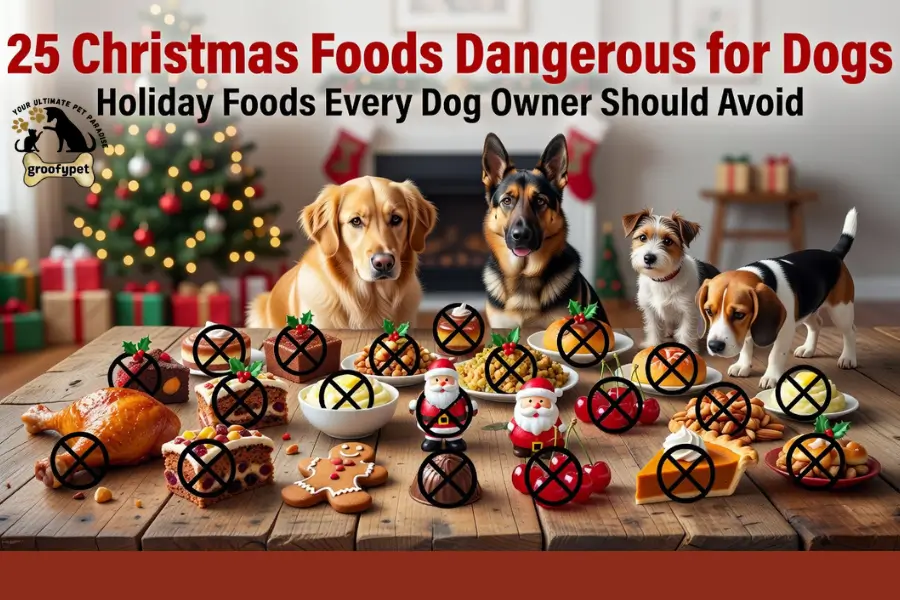
Christmas is one of the most exciting times of the year. Families prepare delicious dinners, bake festive desserts, exchange gifts, and enjoy special treats together. However, these celebrations can create unexpected dangers for dogs, especially when tempting food is left unattended.
Your dog may sit beside the dinner table, watch everyone enjoy their meals, and wait patiently for a tasty bite. Sharing a little food might seem harmless, but some traditional Christmas dishes contain ingredients that can cause serious health problems.
Chocolate desserts, Christmas pudding, mince pies, fruitcake, stuffing, gravy, and alcoholic drinks are among the foods that are Christmas foods dangerous for dogs. deserve special attention. Some contain toxic ingredients that can affect a dog’s kidneys, red blood cells, nervous system, or digestive system.
Understanding which Christmas food is dangerous for dogs helps you make safer choices during holiday celebrations. It also allows you to recognize potential poisoning early and seek veterinary treatment before complications become more serious.
In this detailed guide, we will explore 25 Christmas foods dogs should avoid, explain why their ingredients are harmful, identify possible warning signs, and share safer alternatives for your furry family member.
What Christmas Foods Are Dangerous for Dogs?
Several traditional Christmas foods contain ingredients that are toxic or unhealthy for dogs. The most concerning include Christmas pudding, mince pies, fruitcake, chocolate, grapes, raisins, onions, garlic, macadamia nuts, alcohol, and xylitol-containing sweets.
Other foods, including cooked turkey bones, fatty ham, rich gravy, heavily seasoned vegetables, and salty leftovers, can also create health risks.
The danger depends on the ingredients, quantity consumed, and the dog’s size and health. Some toxic foods can cause serious problems even when a dog initially appears completely normal.
Also Read : 10 Best Treats for Dogs With Sensitive Stomachs
Why Is Christmas Food Dangerous for Dogs?
Christmas meals are different from ordinary dog meals. They often contain multiple ingredients, rich sauces, seasonings, sweeteners, and cooking oils. A dish that looks harmless to humans may contain something dangerous for pets.
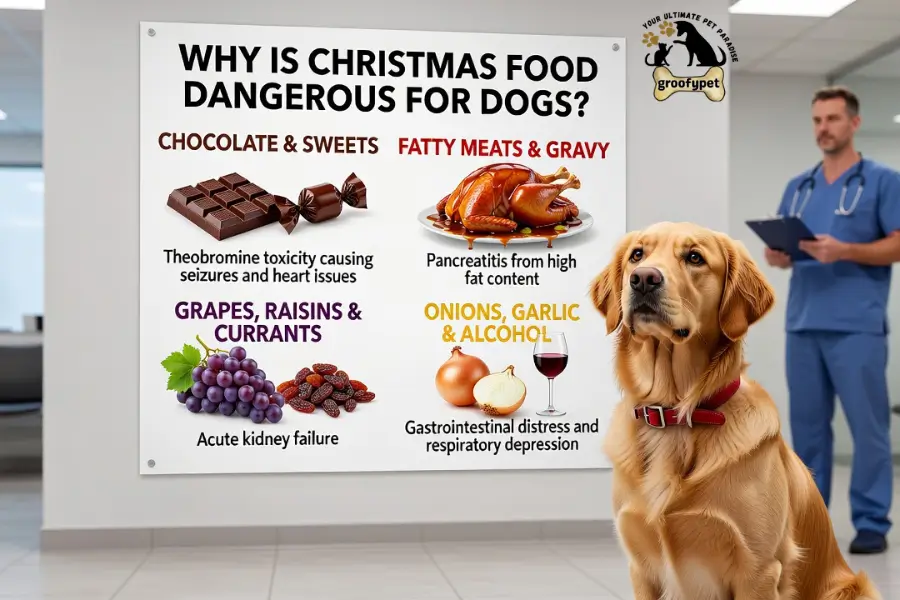
Here are the main reasons Christmas food can create problems for dogs.
1. Hidden Toxic Ingredients
Many Christmas recipes contain ingredients that are unsafe for dogs. Raisins may be hidden inside fruitcake, while onion and garlic powders commonly appear in stuffing and gravy.Chocolate can also appear in festive cookies, brownies, cakes, and decorative sweets.
These ingredients are particularly concerning because dog owners may not immediately recognize them in prepared foods.
2. High-Fat Holiday Meals
Christmas dinner often includes fatty meat, butter, cream, cheese, and rich sauces. Eating too much fat can cause digestive upset and may trigger pancreatitis in susceptible dogs. Pancreatitis is inflammation of the pancreas, an organ that helps the body digest food.
Dogs experiencing pancreatitis may develop vomiting, abdominal pain, reduced appetite, and weakness.
3. Excessive Salt and Seasoning
Ham, gravy, stuffing, and processed meats often contain considerable amounts of salt. Too much salt can cause excessive thirst, vomiting, weakness, and potentially dangerous neurological symptoms. Seasonings such as onion and garlic are particularly harmful because they can damage a dog’s red blood cells.
4. Dangerous Desserts and Sweeteners
Christmas desserts often contain chocolate, dried fruits, alcohol, and artificial sweeteners. Xylitol is especially dangerous because it can cause a rapid drop in blood sugar and potentially severe liver injury.
5. Bones and Food Scraps
After Christmas dinner, leftover bones and food scraps may end up in rubbish bins or on the floor. Cooked bones can splinter and cause choking, digestive tract injuries, or intestinal obstruction. Dogs may also swallow food wrappers and packaging while searching for leftovers.
25 Christmas Foods Dangerous for Dogs
The following foods are commonly associated with Christmas celebrations. Some contain directly toxic ingredients, while others create risks because of their preparation, fat content, or physical structure.
1. Christmas Pudding
Christmas pudding is one of the most concerning festive desserts for dogs. Traditional recipes contain dried fruits such as raisins, sultanas, and currants. These ingredients are associated with acute kidney injury in dogs. The exact toxic substance and the amount needed to cause a reaction are not fully predictable.
Some Christmas puddings also contain brandy, rum, or other alcoholic ingredients. Alcohol adds another potential poisoning risk. Even a small serving should never be considered safe for your dog.
Why is it dangerous?
- Raisins and sultanas may cause kidney injury.
- Alcohol can affect the nervous system.
- High sugar and fat content can upset digestion.
- Spices and rich ingredients may cause stomach irritation.
Warning signs to watch for:
- Vomiting and diarrhea
- Loss of appetite
- Excessive thirst
- Weakness and unusual tiredness
- Changes in urination
What should you do?
If your dog eats Christmas pudding, contact a veterinarian immediately. Tell them whether the pudding contained raisins, currants, sultanas, or alcohol. Do not wait for symptoms to appear.
2. Mince Pies
Mince pies are traditional Christmas pastries filled with a sweet mixture of dried fruits, spices, and other ingredients. Despite their small size, these pastries can be dangerous for dogs because their filling often contains raisins, currants, and sultanas.These dried fruits can cause acute kidney injury. There is no dependable way to identify a safe amount for every dog.
Some homemade recipes also contain alcohol or additional ingredients that increase the risk.
Why should dogs avoid mince pies?
The main concern is the dried fruit filling. A dog may swallow an entire pie before its owner notices, making it difficult to estimate the amount of fruit consumed.
Possible symptoms:
- Vomiting
- Diarrhea
- Reduced appetite
- Abdominal discomfort
- Increased thirst
- Changes in urination
Safety advice: Never offer mince pies as dog treats. If your dog steals one, contact a veterinarian immediately, even if your pet appears healthy.
3. Chocolate Yule Log
A chocolate Yule log is a popular Christmas dessert made with chocolate sponge, cream, frosting, and decorative toppings. Chocolate contains theobromine and caffeine, two substances that can be toxic to dogs. Unlike humans, dogs process theobromine much more slowly. This allows the substance to remain in their bodies longer and produce harmful effects.
The toxicity depends on the chocolate type, amount eaten, and dog’s weight. Dark chocolate, baking chocolate, and cocoa powder generally contain more theobromine than milk chocolate.
Possible health problems:
- Vomiting and diarrhea
- Restlessness and excessive activity
- Increased heart rate
- Excessive thirst and urination
- Muscle tremors
- Seizures in severe cases
What should you do?
Keep chocolate cakes and desserts in closed containers. If your dog eats chocolate, contact your veterinarian immediately. Provide the chocolate type, approximate quantity, and your dog’s weight.
4. Christmas Fruitcake
Fruitcake is a common holiday dessert containing dried fruits, nuts, spices, and sometimes alcohol.Raisins, currants, and sultanas make this cake particularly dangerous for dogs. These ingredients can cause acute kidney injury, which may become life-threatening.
Some fruitcakes are soaked in rum, brandy, or other alcoholic drinks before serving.The combination of dried fruits and alcohol makes fruitcake unsuitable for dogs.
Why is it harmful?
Dried grapes are the biggest concern. Alcohol can also cause poisoning, while rich ingredients may contribute to digestive upset.
What should you do?
Never share fruitcake with your dog. If your pet eats even a small portion, seek immediate veterinary advice.
5. Christmas Stuffing
Stuffing is commonly served alongside roasted turkey. It may contain bread, onions, garlic, butter, herbs, salt, and different seasonings. The most dangerous ingredients for dogs are onions and garlic.Both belong to the Allium family and contain compounds that can damage red blood cells. This damage may result in hemolytic anemia, a condition that reduces the blood’s ability to carry oxygen.
Onion powder and garlic powder are also harmful.
Possible warning signs:
- Weakness and tiredness
- Vomiting and diarrhea
- Pale gums
- Rapid breathing
- Reduced appetite
- Dark or reddish urine
Some symptoms may take several days to become noticeable.
Safety advice: Keep stuffing away from your dog, including small pieces dropped under the dining table. Contact a veterinarian if your dog eats stuffing containing onion or garlic.
6. Christmas Gravy
Gravy makes Christmas dinner more flavorful, but ordinary gravy is not a good choice for dogs.Many recipes contain onion, garlic, meat drippings, butter, salt, and other seasonings.Onion and garlic can damage red blood cells. High-fat gravy can also cause digestive problems and may increase the risk of pancreatitis.
Some packaged gravies contain concentrated onion or garlic powders.
Potential health concerns:
- Digestive irritation
- Vomiting and diarrhea
- Pancreatitis
- Salt-related problems
- Red blood cell damage
Safety advice: Do not pour regular Christmas gravy over your dog’s food. If you want to make your dog’s meal more appealing, ask your veterinarian about a suitable plain, low-sodium option.
7. Cooked Turkey Bones
Turkey is one of the most recognizable Christmas dinner foods. Plain cooked turkey meat can be suitable for many dogs, but cooked turkey bones should never be given to them. Cooking changes the structure of bones and makes them more brittle. They can break into sharp pieces when a dog chews them.
These fragments may cause choking, mouth injuries, intestinal blockage, or damage to the digestive tract.
Why are cooked bones dangerous?
- Sharp pieces may injure the mouth.
- Bone fragments can become stuck in the throat.
- Swallowed pieces may cause intestinal obstruction.
- Sharp fragments can damage the digestive tract.
What should you do?
Keep turkey bones away from your dog and dispose of them securely. If your dog swallows a cooked bone, contact a veterinarian for advice rather than trying to make your pet vomit.
8. Christmas Ham
Ham is another popular Christmas food, especially during large family dinners.However, most prepared ham contains considerable amounts of salt and fat. Honey-glazed versions may also contain sugar and additional seasonings.Eating too much ham can cause digestive upset. Fatty meat may also trigger pancreatitis, particularly in dogs with a history of digestive problems.
Excessive salt intake can create additional health concerns.
Possible symptoms:
- Vomiting
- Diarrhea
- Increased thirst
- Abdominal discomfort
- Weakness
Safety advice: Avoid giving your dog glazed ham, fatty meat, ham bones, or heavily seasoned leftovers. Choose plain cooked turkey without skin or bones instead.
9. Christmas Cake
Christmas cake is traditionally prepared with dried fruits, nuts, spices, and sometimes alcohol.Although it may look like an ordinary dessert, its ingredients can create serious health risks for dogs.Raisins, currants, and sultanas are the biggest concern because they can cause kidney injury.Some recipes also contain chocolate, making certain versions even more dangerous.
Why should dogs avoid it?
The dried fruit content makes Christmas cake unsafe. Even a small piece may expose your dog to ingredients associated with poisoning.
Safety advice: Store Christmas cake in an airtight container away from pets. If your dog eats it, contact your veterinarian immediately.
10. Grapes and Raisins
Grapes and raisins are among the most important foods to keep away from dogs.They can cause acute kidney injury, sometimes resulting in kidney failure. The exact amount that may cause toxicity varies, and there is no established safe quantity.Raisins are particularly easy to overlook during Christmas because they appear in puddings, fruitcakes, cookies, and sweet pastries.
Some dog owners mistakenly believe that dried grapes are harmless because they are commonly used in human snacks.Unfortunately, drying does not remove the danger.
Possible symptoms:
- Vomiting
- Diarrhea
- Reduced appetite
- Lethargy
- Increased thirst
- Reduced urination
Safety advice: Treat any grape or raisin ingestion as potentially serious. Contact your veterinarian immediately rather than waiting for symptoms.
11. Onions and Garlic
Onions and garlic are common ingredients in Christmas meals. They appear in stuffing, gravy, roasted vegetables, sauces, marinades, and meat preparations.Both foods contain organosulfur compounds that can damage a dog’s red blood cells.
This damage may lead to hemolytic anemia, which can affect the body’s ability to transport oxygen.Raw, cooked, dried, and powdered forms can all be harmful.
Possible symptoms include:
- Pale gums
- Weakness
- Vomiting
- Reduced appetite
- Rapid breathing
- Dark urine
Symptoms may not appear immediately. This makes early veterinary advice particularly important.
Safety advice: Check every ingredient before sharing food with your dog. Never assume that cooked onions or garlic are safe.
12. Chocolate Cookies and Brownies
Chocolate cookies and brownies are common additions to Christmas dessert tables.They contain chocolate or cocoa, which can expose dogs to theobromine and caffeine.The amount of risk depends on the cocoa concentration and how much your dog consumes.Brownies may contain cocoa powder or dark chocolate, making some recipes especially concerning.
Possible symptoms:
- Restlessness
- Vomiting
- Increased heart rate
- Excessive thirst
- Tremors
- Seizures
Safety advice: Keep cookies and brownies away from dogs. Contact a veterinarian immediately if your pet eats chocolate-containing baked goods.
13. Macadamia Nuts
Macadamia nuts are sometimes included in Christmas cookies, chocolates, and homemade desserts.They are toxic to dogs, although the exact mechanism behind their toxicity is still not completely understood.Dogs may develop weakness, vomiting, tremors, fever, and difficulty walking after eating them.Macadamia nut poisoning can affect the muscles and nervous system.
What makes them dangerous?
Even when macadamia nuts appear inside a baked product, their presence can still create a poisoning risk.
Safety advice: Keep macadamia nuts, nut mixtures, and cookies containing them away from dogs. Contact your veterinarian if ingestion occurs.
14. Alcoholic Christmas Drinks
Christmas celebrations often involve wine, beer, champagne, cocktails, and other alcoholic drinks.Alcohol contains ethanol, which can affect a dog’s central nervous system. Dogs are more vulnerable to alcohol poisoning than humans.Alcoholic beverages may cause dangerous changes in blood sugar, body temperature, breathing, and coordination.
Possible symptoms:
- Vomiting
- Disorientation
- Loss of coordination
- Excessive sleepiness
- Difficulty breathing
- Tremors
- Seizures
- Collapse
Safety advice: Never allow your dog to drink alcoholic beverages. Clean spills immediately and keep glasses away from tables your dog can reach.
15. Sugar-Free Sweets Containing Xylitol
Sugar-free sweets may appear to be a better choice for people, but some products contain xylitol, an artificial sweetener that is extremely toxic to dogs.Xylitol can trigger a rapid release of insulin, causing dangerously low blood sugar. In some cases, it can also cause serious liver injury.
It may appear in chewing gum, candies, baked goods, and certain other products.
Warning signs include:
- Vomiting
- Weakness
- Difficulty walking
- Tremors
- Seizures
- Collapse
Safety advice: Read product labels carefully. If your dog consumes xylitol, seek emergency veterinary care immediately.
16. Fruit Salad With Grapes
Fresh fruit salad may seem healthier than traditional Christmas desserts, but certain ingredients can make it dangerous for dogs.Grapes and raisins are the biggest concern. They may cause acute kidney injury even when mixed with other fruits.Some fruit salads also contain alcohol-based dressings, chocolate, or sugary syrups.
Safer approach: Avoid sharing mixed fruit salads unless you have checked every ingredient. Plain pieces of suitable fruits may be offered occasionally, but grapes and raisins must always be avoided.
17. Rich Creamy Desserts
Christmas trifle, cream cakes, custards, and other rich desserts may contain ingredients that upset a dog’s digestive system.These desserts are often high in fat and sugar. Some contain chocolate, alcohol, or dried fruits.Dairy products may also cause digestive discomfort in dogs that have difficulty digesting lactose.
Potential problems:
- Diarrhea
- Vomiting
- Stomach discomfort
- Excessive calorie intake
- Pancreatitis from rich, fatty ingredients
Safety advice: Keep creamy Christmas desserts for human guests. Offer your dog a suitable dog treat instead.
18. Pigs in Blankets
Pigs in blankets are small sausages wrapped in bacon and commonly served during Christmas dinner.Although plain cooked meat may be suitable for some dogs, this festive dish is generally unsuitable.Bacon and sausages can contain high amounts of salt, fat, preservatives, and seasonings.
Some sausages also contain onion or garlic powder.
Why should dogs avoid them?
- High fat content can trigger digestive problems.
- Excessive salt is harmful.
- Onion and garlic seasonings can damage red blood cells.
- Processed meat is not a healthy regular treat.
Safety advice: Avoid sharing pigs in blankets with your dog. Choose plain, unseasoned cooked meat instead.
19. Cheese and Cheese-Based Appetizers
Cheese boards are popular during Christmas gatherings. They often contain cheddar, cream cheese, blue cheese, crackers, and other appetizers.A small amount of plain cheese may be tolerated by some dogs, but large portions can cause digestive upset because of their fat and lactose content.
Some cheese-based foods also contain garlic, onion, herbs, or other seasonings.
Potential risks:
- Diarrhea
- Vomiting
- Stomach discomfort
- Excessive fat intake
- Pancreatitis in susceptible dogs
Safety advice: Avoid rich cheese appetizers and flavored cheese spreads. If you occasionally offer plain cheese, keep the amount very small and check with your veterinarian if your dog has dietary restrictions.
20. Christmas Cookies
Christmas cookies come in many varieties, including gingerbread, chocolate chip, sugar, and nut-filled versions.Some cookies contain chocolate, raisins, macadamia nuts, or xylitol. These ingredients can create serious health risks.Even cookies without directly toxic ingredients may contain excessive sugar, butter, and fat.
Safety advice: Never assume a cookie is safe because it looks simple. Check the ingredients carefully and keep homemade baking away from pets.
21. Nutmeg-Containing Desserts
Nutmeg is a traditional spice used in certain Christmas desserts, custards, and baked goods.It contains myristicin, a compound that can cause toxic effects when consumed in significant amounts.Large exposures may cause disorientation, increased heart rate, abdominal pain, and nervous system symptoms.
Small amounts used in ordinary recipes are less likely to cause serious poisoning, but deliberately feeding nutmeg to dogs is not recommended.
Safety advice: Keep concentrated nutmeg, spice containers, and heavily spiced desserts away from your dog. Seek veterinary advice if your pet eats a substantial amount.
22. Raw Bread Dough
Christmas baking often involves homemade bread, rolls, and pastries.However, raw yeast dough is dangerous for dogs because it can expand inside the stomach. This may cause painful bloating and potentially life-threatening complications.Yeast fermentation also produces alcohol, which can lead to alcohol poisoning.
Warning signs include:
- Swollen abdomen
- Vomiting or attempts to vomit
- Discomfort
- Weakness
- Disorientation
- Difficulty breathing
Safety advice: Keep raw bread dough away from pets during baking. Contact a veterinarian immediately if your dog eats uncooked yeast dough.
23. Christmas Sausage Rolls
Sausage rolls contain seasoned meat wrapped in pastry.The meat filling may include onion, garlic, salt, and spices. The pastry can also contain substantial amounts of butter or other fats.
These ingredients make sausage rolls unsuitable for dogs.
Possible problems:
- Digestive upset
- Excessive salt intake
- Onion or garlic toxicity
- Pancreatitis from fatty ingredients
Safety advice: Avoid sharing sausage rolls with dogs, even when they appear to contain only a small amount of meat.
24. Christmas Potato Dishes
Potatoes are common Christmas side dishes, but their preparation makes a significant difference.Plain, fully cooked potatoes can be suitable in small portions. However, roasted potatoes, creamy mashed potatoes, and potato gratin often contain butter, cream, salt, cheese, garlic, and other seasonings.Raw and green potatoes are also unsuitable because they may contain higher levels of solanine, a natural toxic compound.
Safety advice: If you offer potato, serve a small amount that is thoroughly cooked and completely plain. Avoid heavily seasoned or fatty potato dishes.
25. Chocolate-Coated Nuts and Festive Candy
Chocolate-coated nuts and festive candies combine several ingredients that may be harmful to dogs.Depending on the product, they may contain chocolate, macadamia nuts, raisins, or xylitol.Some candies also contain wrappers that can cause choking or digestive obstruction if swallowed.
Safety advice: Keep festive candy bowls away from dogs. Never leave chocolates or nut-based sweets unattended on coffee tables or dining surfaces.
Read Also : Raw Dog Food Calculator by Breed: Find the Right Portion for Your Dog
Christmas Food Danger Comparison Chart
Not every Christmas food causes the same type of health problem. Some contain ingredients that directly poison dogs, while others can cause digestive complications, choking, or intestinal blockage.Use this table as a quick reference when preparing your holiday menu.
| Christmas food | Main dangerous ingredient | Possible health problem |
|---|---|---|
| Christmas pudding | Raisins, sultanas, alcohol | Kidney injury, alcohol poisoning |
| Mince pies | Currants, raisins | Kidney injury |
| Chocolate Yule log | Theobromine | Chocolate poisoning |
| Fruitcake | Dried fruits, alcohol | Kidney injury |
| Stuffing | Onion, garlic | Red blood cell damage |
| Gravy | Onion, garlic, excess fat | Anemia, pancreatitis |
| Turkey bones | Sharp bone fragments | Choking, intestinal injury |
| Christmas ham | Salt and fat | Digestive problems |
| Christmas cake | Raisins, currants | Kidney injury |
| Grapes | Toxic compounds | Kidney injury |
| Onions | Allium compounds | Anemia |
| Garlic | Allium compounds | Red blood cell damage |
| Chocolate brownies | Cocoa and theobromine | Heart and nervous system problems |
| Macadamia nuts | Toxic compounds | Weakness and tremors |
| Alcoholic drinks | Ethanol | Alcohol poisoning |
| Sugar-free sweets | Xylitol | Low blood sugar, liver injury |
| Fruit salad | Grapes or raisins | Kidney injury |
| Creamy desserts | Excess fat and dairy | Digestive upset |
| Pigs in blankets | Fat, salt, seasonings | Pancreatitis, digestive upset |
| Cheese appetizers | Fat and lactose | Digestive upset |
| Christmas cookies | Chocolate, raisins, xylitol | Poisoning |
| Nutmeg desserts | Concentrated nutmeg | Possible neurological effects |
| Raw bread dough | Active yeast | Bloating and alcohol poisoning |
| Sausage rolls | Fat, onion, garlic | Digestive problems, anemia |
| Rich potato dishes | Butter, cream, garlic | Digestive upset |
The table describes potential hazards, not a guaranteed outcome. Actual risk depends on the recipe, amount eaten, and individual dog.
Ingredients Hidden in Christmas Recipes That Dog Owners Should Check
One of the biggest problems with Christmas food is that dangerous ingredients are not always visible.A dog may eat a small piece of food without its owner realizing that the recipe contains something toxic.
Here are some common hidden ingredients worth checking.
Onion Powder in Gravy and Stuffing
Onion powder is a concentrated seasoning commonly used in packaged gravy mixes, stuffing, sauces, and meat marinades.Even when the food does not contain visible onion pieces, the powder can still expose your dog to harmful Allium compounds.Always check ingredient labels before sharing prepared food.
Garlic Powder in Roasted Vegetables
Garlic powder often appears in roasted potatoes, vegetable dishes, meat rubs, and seasoning blends.Garlic can damage red blood cells in dogs. Cooking or drying it does not make it safe.Avoid giving dogs vegetables that have been prepared with garlic seasoning.
Raisins in Baked Desserts
Raisins are commonly hidden inside Christmas pudding, fruitcake, mince pies, cookies, and sweet breads.Because raisins are small, dogs can easily swallow several without chewing them properly.Never assume that removing visible raisins makes the remaining dessert safe.
Xylitol in Sugar-Free Desserts
Some sugar-free candies, chewing gums, baked products, and nut butters contain xylitol.This ingredient can cause dangerously low blood sugar in dogs and may also damage the liver.Read the complete ingredient list instead of relying on product labels such as sugar-free or natural.
Alcohol in Festive Desserts
Some Christmas puddings, fruitcakes, sauces, and desserts contain brandy, rum, wine, or other alcoholic ingredients.Alcohol can affect a dog’s coordination, breathing, and nervous system.Do not offer desserts simply because their alcohol flavor is mild or difficult to detect.
What Christmas Foods Can Dogs Eat Safely?
Christmas does not have to be a food-free celebration for your dog. You can prepare a small, separate serving using simple ingredients that do not contain harmful seasonings.However, remember that a food being generally safe does not mean every preparation is suitable.
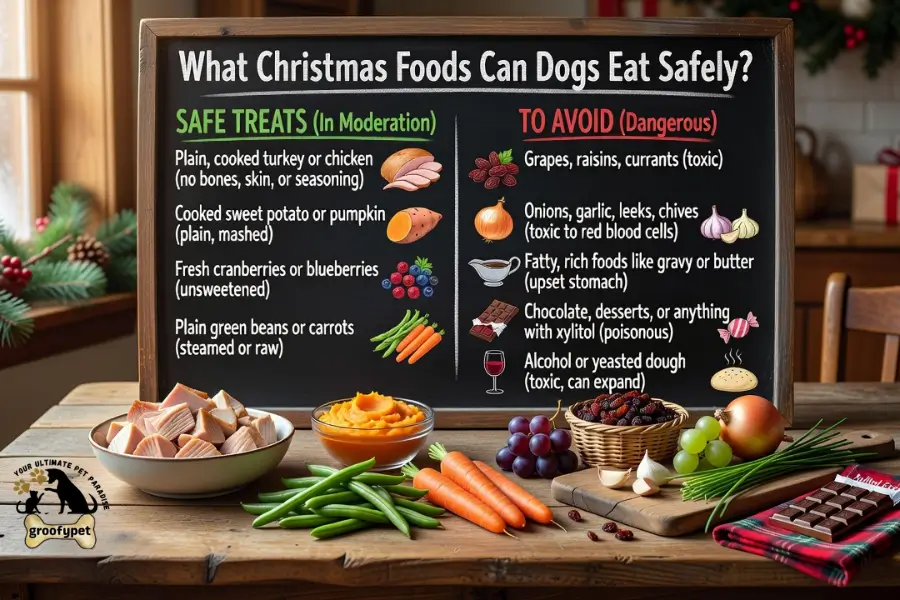
1. Plain Cooked Turkey Breast
Plain turkey breast can be an occasional treat for many healthy dogs.Remove the skin, bones, and visible fat. Make sure the meat is fully cooked and contains no onion, garlic, gravy, or seasoning.Cut it into small pieces appropriate for your dog’s size.
2. Plain Green Beans
Green beans are a useful vegetable option when prepared without additional ingredients.You can serve them steamed or boiled. Avoid adding butter, salt, garlic, onion, or creamy sauces.They should be cut into suitable pieces to reduce choking risks.
3. Plain Carrots
Carrots can be served raw or cooked, depending on your dog’s chewing ability.They provide fiber and nutrients while making a simple alternative to rich Christmas snacks.For smaller dogs, cut carrots into manageable pieces rather than offering large, hard chunks.
4. Plain Sweet Potato
Fully cooked sweet potato can be offered in a small quantity.Remove any added sugar, butter, marshmallows, and spices. Avoid feeding raw sweet potato because it may be difficult for some dogs to digest.
5. Plain Pumpkin
Plain cooked pumpkin can be an occasional addition to a dog’s regular food.It contains fiber and can be suitable for many dogs in moderate amounts.Do not use pumpkin pie filling, which may contain added sugar and spices.
6. Plain Cooked Apple
Small pieces of fresh apple can be suitable for many dogs.Remove the seeds and core before serving. Avoid caramel apples, apple pie, and other desserts containing added sugar or spices.
7. Commercial Dog Christmas Treats
Another option is to purchase treats specifically formulated for dogs.Check the ingredients, feeding instructions, and suitability for your dog’s age and health needs.If your dog follows a veterinary-prescribed diet, ask your veterinarian before introducing new treats.
Important portion reminder: Treats should generally make up no more than 10% of a dog’s daily calories. The remaining food should come from a complete and balanced diet. Dogs with medical conditions may need stricter dietary limits. wsava.org+1
What Happens When Dogs Eat Toxic Christmas Food?
The effects of eating dangerous Christmas food depend on the substance involved.Some ingredients cause digestive irritation, while others can affect the kidneys, liver, blood cells, heart, or nervous system.Understanding these differences helps owners recognize why certain foods require immediate attention.
Kidney Damage
Grapes and raisins can cause acute kidney injury in dogs.The kidneys help remove waste products from the blood and maintain fluid balance. When they become damaged, a dog may experience vomiting, reduced appetite, weakness, and changes in urination.Severe cases may progress to kidney failure.
Red Blood Cell Damage
Onions and garlic contain compounds that can damage red blood cells.These cells carry oxygen throughout the body. When too many become damaged, the dog may develop hemolytic anemia.Signs may include pale gums, weakness, rapid breathing, and dark urine.
Heart and Nervous System Problems
Chocolate contains theobromine and caffeine, which stimulate the nervous system and cardiovascular system.A dog with chocolate poisoning may become restless, develop an elevated heart rate, experience tremors, or suffer seizures.
Low Blood Sugar
Xylitol can trigger excessive insulin release in dogs.Insulin lowers blood sugar. When the amount becomes dangerously low, the dog may experience weakness, difficulty walking, tremors, seizures, or collapse.
Pancreatitis
Rich, fatty Christmas foods can contribute to pancreatitis.The pancreas becomes inflamed and causes symptoms such as vomiting, abdominal pain, reduced appetite, and lethargy.Some dogs require hospitalization and supportive treatment.
Alcohol Poisoning
Alcohol affects the central nervous system and can cause vomiting, poor coordination, low body temperature, difficulty breathing, and unconsciousness.Raw yeast dough can create a similar concern because yeast fermentation produces alcohol inside the digestive system.
Warning Signs of Christmas Food Poisoning in Dogs
Recognizing unusual behavior is important after a possible food poisoning incident.However, symptoms vary depending on the ingredient, and some dangerous foods may not cause immediate visible reactions.
Watch for the following signs:
| Warning sign | What it may indicate |
|---|---|
| Repeated vomiting | Toxic exposure or digestive irritation |
| Diarrhea | Gastrointestinal upset |
| Excessive drooling | Nausea or oral irritation |
| Weakness | Poisoning or low blood sugar |
| Pale gums | Possible anemia |
| Tremors | Nervous system involvement |
| Increased heart rate | Possible stimulant toxicity |
| Loss of coordination | Alcohol or neurological effects |
| Excessive thirst | Possible dehydration or metabolic changes |
| Reduced urination | Possible kidney injury |
| Swollen abdomen | Possible bloating or digestive emergency |
| Seizures | Severe poisoning or neurological complications |
Some symptoms can develop within minutes, while others may take hours or days.For example, xylitol can cause rapid low blood sugar, whereas red blood cell damage from onions may become apparent later.Never wait for symptoms before contacting a veterinarian when your dog has eaten a known toxic ingredient.
What Should You Do If Your Dog Eats Dangerous Christmas Food?
Finding your dog eating Christmas pudding, chocolate, or another dangerous food can be frightening.he most important thing is to act quickly and provide accurate information to your veterinarian.
Follow these steps.
Step 1: Remove the Remaining Food
Take away any remaining food and move your dog away from the area.Check the floor, dining table, and nearby rubbish for additional pieces.
Step 2: Identify the Ingredients
Find out exactly what your dog ate.For homemade food, check the recipe. For packaged products, keep the original packaging and ingredient label.
This is particularly important when identifying raisins, chocolate, onion powder, garlic, and xylitol.
Step 3: Estimate the Amount Consumed
Try to determine how much food is missing.Even an estimate is useful. Tell your veterinarian whether your dog ate one raisin, an entire mince pie, several chocolates, or a larger portion of food.
Step 4: Record Your Dog’s Weight and the Time
Your dog’s weight helps the veterinarian assess the potential exposure.Also record approximately when the food was eaten. Do not delay the call while trying to calculate an exact amount.
Step 5: Contact a Veterinarian Immediately
Call your regular veterinarian or an emergency veterinary hospital.Explain what happened and follow their instructions.These services may charge a consultation fee. Availability and contact arrangements can vary by location.
Step 6: Do Not Try Home Remedies
Never use salt, cooking oil, milk, or other household remedies to treat suspected poisoning.Do not induce vomiting unless a veterinary professional specifically tells you to do so.Some substances can cause additional injury if vomited, and certain treatments are unsafe in dogs with specific symptoms.
Step 7: Follow the Recommended Treatment Plan
Depending on the food, your veterinarian may recommend examination, blood tests, monitoring, or treatment at a veterinary hospital.Early treatment can make a significant difference, especially with kidney toxins, chocolate, and xylitol.
Does a Small Amount of Christmas Food Harm a Dog?
This is one of the most common questions dog owners ask during holiday celebrations.The answer depends on the food. Some ingredients are dangerous even in relatively small quantities, while others generally cause problems after larger amounts are consumed.
For example, grapes and raisins have unpredictable toxicity. There is no reliably safe quantity that owners should intentionally feed their dogs.
Chocolate toxicity depends on several factors, including:
- The type of chocolate.
- The amount consumed.
- The dog’s body weight.
- The concentration of theobromine.
- The dog’s individual sensitivity.
Similarly, onion and garlic exposure depends on the quantity, concentration, and frequency of consumption.A small dog may receive a larger dose relative to its body weight than a large dog eating the same amount.The safest approach: Never use a small portion as a reason to ignore possible poisoning. Contact your veterinarian whenever your dog eats a known toxic ingredient.
Why Are Small Dogs and Puppies More Vulnerable to Christmas Food?
A dog’s size can influence how much of a potentially harmful substance enters its body relative to its weight.For example, imagine two dogs eating the same piece of chocolate. The smaller dog generally receives a higher dose per kilogram of body weight.This does not mean large dogs are protected from food poisoning.
Puppies also need additional attention because they are smaller and may be more sensitive to dietary changes.
Consider these precautions:
- Keep small treats away from puppies.
- Never allow children to share Christmas sweets with dogs.
- Avoid introducing unfamiliar foods during holiday gatherings.
- Supervise puppies around dining tables and rubbish bins.
- Seek veterinary advice immediately after suspected toxic exposure.
Older dogs and dogs with existing health conditions may also require extra dietary care.
How to Keep Your Dog Safe During Christmas Celebrations
Keeping your dog safe requires more than simply avoiding dangerous foods. Christmas gatherings create distractions, and guests may unintentionally leave food where pets can reach it.
Here are practical ways to prevent accidents.
1. Create a Separate Eating Area
Give your dog a comfortable place away from the dining table.This reduces begging and prevents your pet from grabbing dropped food while guests are eating.
2. Keep Desserts in Closed Containers
Chocolate, mince pies, Christmas cake, and cookies should remain inside secure containers.Dogs can smell food even when it is stored in ordinary packaging.
3. Use a Secure Rubbish Bin
Christmas rubbish may contain turkey bones, meat scraps, chocolate wrappers, and leftover desserts.Choose a bin with a locking lid and empty it regularly.
4. Tell Guests About Dangerous Foods
Some guests may believe that sharing a small amount of Christmas food is harmless.Explain that certain ingredients, especially raisins, chocolate, onions, garlic, and xylitol, can seriously harm dogs.
5. Keep Children Informed
Children often enjoy giving pets little treats during celebrations.Teach them which foods are unsafe and ask them to use only treats approved by an adult.
6. Supervise Your Dog in the Kitchen
Food preparation creates opportunities for dogs to steal ingredients from counters, open containers, or fallen food.Keep your pet away from cooking areas, especially when handling chocolate, raisins, raw dough, and cooked bones.
7. Clean Up Immediately After Dinner
Do not leave plates, leftovers, or food packaging unattended.Remove dropped food from the floor and secure leftovers before allowing your dog back into the dining area.
8. Prepare a Special Dog-Friendly Christmas Meal
You can prepare a small portion of plain cooked turkey, carrots, and green beans.Serve it without salt, garlic, onion, butter, or gravy.Keep the portion appropriate for your dog’s normal daily calorie needs.
Frequently Asked Questions
What are the most dangerous Christmas foods for dogs?
The most concerning Christmas foods include Christmas pudding, mince pies, fruitcake, chocolate, grapes, raisins, onions, garlic, macadamia nuts, alcoholic drinks, and xylitol-containing sweets. Cooked bones and fatty leftovers also create significant health risks.
Can dogs eat Christmas dinner?
Dogs can enjoy selected Christmas foods, but ordinary Christmas dinner is often unsuitable. Plain cooked turkey, carrots, green beans, and sweet potato may be appropriate in small portions without harmful seasonings. Can dogs eat Christmas pudding?
No. Christmas pudding commonly contains raisins, sultanas, and currants, which can cause acute kidney injury. Some recipes also contain alcohol, creating additional poisoning risks.
Are mince pies dangerous for dogs?
Yes. Traditional mince pies contain dried fruits such as raisins and currants. These ingredients can cause serious kidney damage, so contact a veterinarian immediately if your dog eats one.
Can dogs eat turkey on Christmas Day?
Plain, fully cooked turkey meat without bones, skin, or seasoning can be an occasional treat. Avoid turkey prepared with garlic, onion, butter, stuffing, or gravy.
Can dogs eat Christmas ham?
Christmas ham is not recommended because it is usually high in salt and fat. Large amounts may cause digestive problems and increase the risk of pancreatitis.
How long after eating dangerous food do dogs show symptoms?
It depends on the ingredient. Some dogs develop symptoms within minutes or hours, while others may show delayed signs over several days. For example, onion-related red blood cell damage may not become obvious immediately.
Final Thoughts
Christmas should be a happy occasion for every member of your family, including your dog. However, traditional holiday meals contain several ingredients that can create serious health risks for pets.Christmas pudding, mince pies, fruitcake, chocolate desserts, stuffing, gravy, cooked bones, and alcoholic drinks are hristmas foods dangerous for dogs and deserve particular attention.
Remember that dangerous ingredients are not always visible. Onion powder may be hidden in gravy, raisins may be mixed into desserts, and xylitol may appear in sugar-free products.The best way to protect your dog is to prepare food carefully, supervise your pet during gatherings, and keep dangerous leftovers out of reach.
If your dog accidentally eats something toxic, contact a veterinarian immediately rather than waiting for symptoms.With a little preparation and awareness, you can enjoy a wonderful Christmas while keeping your furry family member safe.