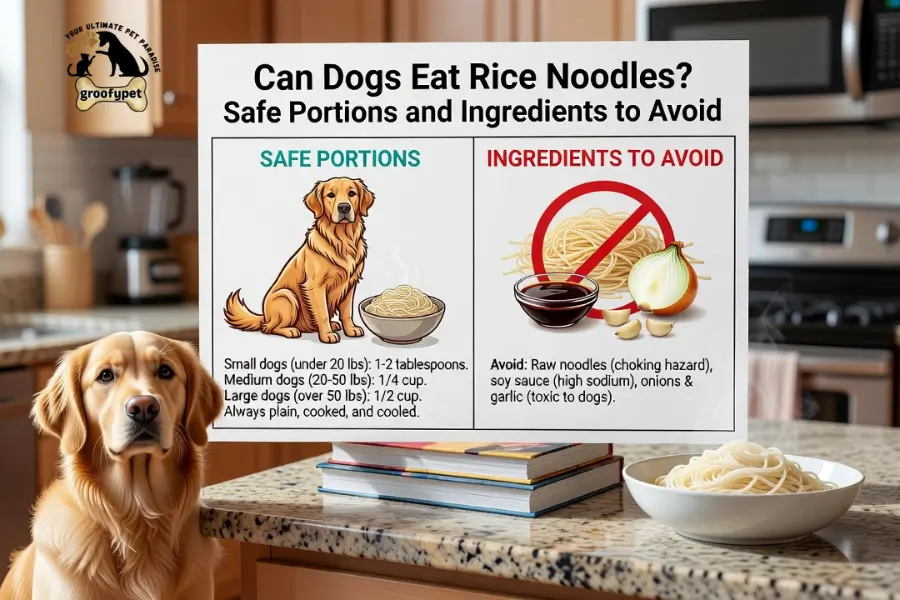
If you enjoy rice noodles, you might wonder whether your dog can share a small portion. Yes, dogs can eat plain, fully cooked rice noodles in moderation. They are generally safe when prepared without salt, garlic, onion, sauces, or harmful seasonings. However, rice noodles offer limited nutritional benefits and should not replace your dog’s regular food.
Although rice noodles are made primarily from rice flour and water, their nutritional value depends on the ingredients and preparation method. Some packaged and restaurant-style noodles contain additional starches, oils, salt, and seasonings that are unsuitable for dogs.
Before sharing your meal, understand which rice noodles are safe, how much your dog can eat, and what ingredients to avoid.
Are Rice Noodles Safe for Dogs?
Yes, plain and thoroughly cooked rice noodles are generally safe for most healthy dogs when served occasionally in small quantities. Rice flour, the primary ingredient in many rice noodles, is not considered toxic to dogs.However, safe does not necessarily mean healthy. Rice noodles mainly provide carbohydrates and calories without supplying the complete range of nutrients dogs need.
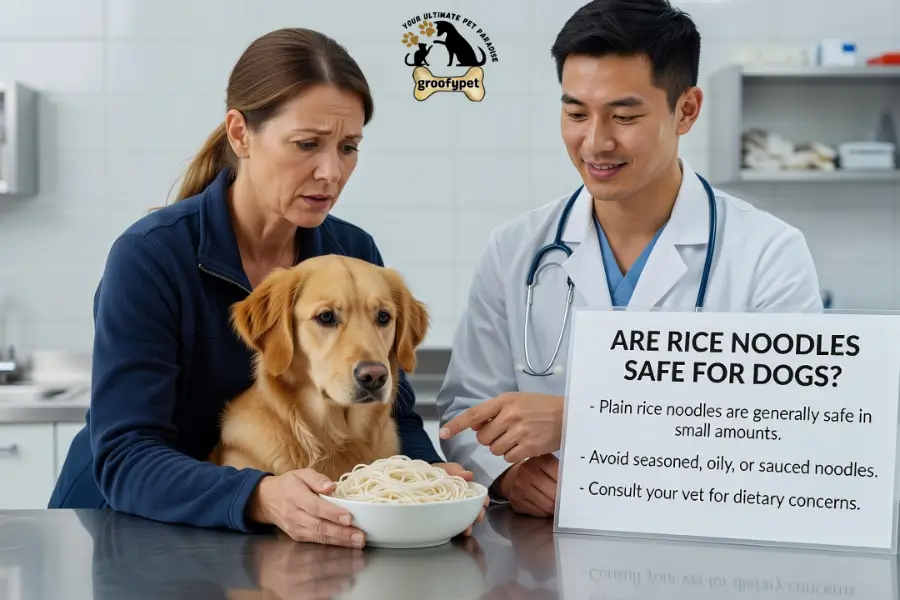
The biggest concern is usually how the noodles are prepared. Restaurant dishes and packaged rice noodles may contain ingredients that can upset your dog’s stomach or cause more serious health problems.
Follow these basic safety rules:
- Choose plain rice noodles with simple ingredients.
- Cook them thoroughly before serving.
- Avoid garlic, onions, and spicy seasonings.
- Never add soy sauce or excessive salt.
- Allow the noodles to cool before serving.
- Offer only a small amount occasionally.
Important: Rice noodles should be an occasional addition to your dog’s diet, not a regular meal or replacement for balanced dog food.
What Are Rice Noodles Made Of?
Rice noodles are popular in many Asian cuisines. They are commonly used in dishes such as pho, pad Thai, stir-fries, and noodle soups. Most traditional rice noodles contain two basic ingredients:
1. Rice Flour
Rice flour is produced by grinding rice into a fine powder. It provides carbohydrates and gives rice noodles their familiar soft texture.
2. Water
Water combines with rice flour to create the noodle mixture. The mixture is shaped into different noodle varieties and cooked or dried. Some commercial varieties also contain tapioca starch, cornstarch, salt, or other ingredients to improve their texture and shelf life.
Always check the ingredient label before sharing packaged rice noodles with your dog.
Nutritional Value of Rice Noodles for Dogs
Rice noodles are primarily a carbohydrate-based food. They provide energy but are not particularly rich in protein, healthy fats, or other essential nutrients. Their nutritional content varies depending on the brand, ingredients, and whether the noodles are fresh or dried.
| Nutrient | Nutritional role |
|---|---|
| Carbohydrates | Provide energy |
| Protein | Usually present in small amounts |
| Fat | Generally low in plain varieties |
| Fiber | Varies by rice type and product |
| Sodium | Depends on added salt and processing |
| Calories | Depend on serving size and preparation |
Rice noodles are not nutritionally complete for dogs. They lack the balanced combination of nutrients found in properly formulated dog food.
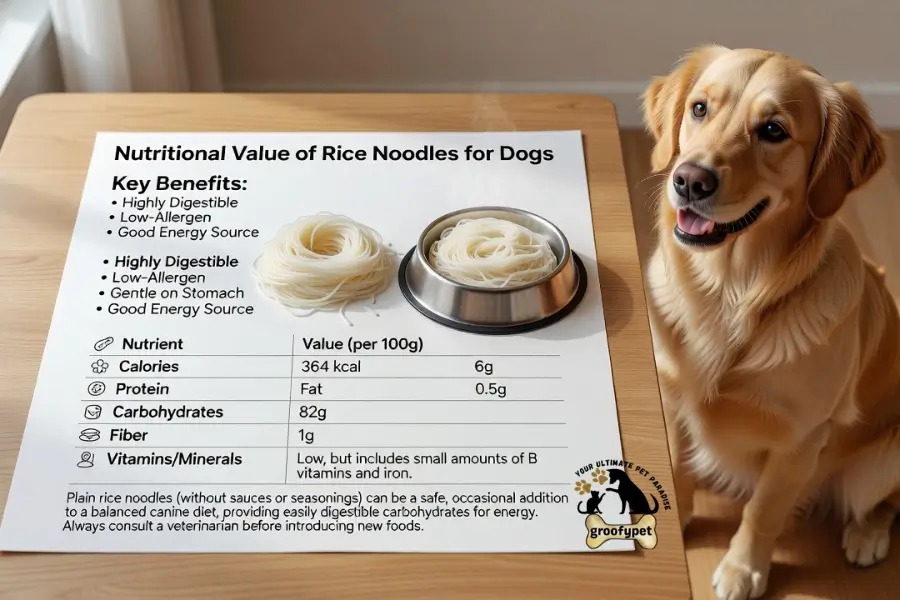
If your dog needs additional calories or has special dietary requirements, consult your veterinarian before adding human foods.
Are There Any Benefits of Rice Noodles for Dogs?
Rice noodles are not a necessary part of canine nutrition. However, plain varieties may offer a few limited advantages when given occasionally.
1. Provide Carbohydrates for Energy
Rice noodles contain carbohydrates that the body can use for energy. However, dogs already receive sufficient energy from a complete and balanced diet.
2. Soft Texture When Cooked
Properly cooked rice noodles become soft and easy to chew. This can make them easier to eat than hard, uncooked noodles.Always cut long noodles into smaller pieces to reduce choking risks.
3. Simple Ingredient Options
Some rice noodles contain only rice flour and water. These simple varieties make it easier for dog owners to avoid unnecessary seasonings and additives.However, a short ingredient list does not automatically make a food suitable for every dog.
4. Can Be Offered as an Occasional Food Topper
A small amount of plain rice noodles can occasionally be mixed with your dog’s regular food.Remember that additional foods should not interfere with the nutritional balance of your dog’s main diet.
7 Risks of Feeding Rice Noodles to Dogs
Although plain rice noodles are generally safe in small portions, feeding too many or choosing the wrong variety can cause problems.Here are seven important risks every dog owner should understand.
1. Weight Gain From Excess Calories
Rice noodles contain carbohydrates and calories. Feeding large portions frequently can increase your dog’s overall calorie intake.Extra calories may contribute to weight gain, especially in dogs that already have a sedentary lifestyle. Obesity can increase the risk of joint problems, diabetes, and other health complications.
Prevention: Offer only a small amount and account for all additional treats in your dog’s daily calorie intake.
2. Blood Sugar Fluctuations
Rice noodles are primarily made from refined rice flour. They can contribute to a rapid increase in blood glucose, depending on the product and portion.This is particularly important for dogs with diabetes or other blood sugar concerns.
Prevention: Ask your veterinarian before offering rice noodles to a diabetic dog. A veterinarian can recommend appropriate carbohydrate sources and portion sizes.
3. Digestive Upset
Some dogs may experience digestive discomfort after eating unfamiliar human foods. Eating too many rice noodles may cause:
- Vomiting
- Diarrhea
- Gas
- Bloating
- Reduced appetite
Dogs with sensitive stomachs may react differently to new foods.
Prevention: Introduce unfamiliar foods gradually and stop feeding them if your dog develops digestive problems.
4. Added Salt and Sodium
Some packaged and restaurant-style rice noodles contain added salt or sodium-rich sauces. Too much sodium can increase thirst and cause digestive problems. Large amounts of salt can lead to serious sodium poisoning.
Prevention: Avoid salted noodles, seasoning packets, and salty sauces. Choose plain varieties without added salt.
5. Harmful Seasonings and Sauces
Garlic and onion are particularly dangerous ingredients for dogs. They belong to the Allium plant family and can damage red blood cells. This can lead to anemia and other serious complications. Garlic and onion remain harmful whether they are raw, cooked, dried, or powdered.
Other ingredients to avoid include:
- Chili oil
- Spicy sauces
- Excessive soy sauce
- Heavy seasoning mixtures
- Rich sauces containing excessive fat
Prevention: Never share seasoned rice noodle dishes with your dog unless a veterinarian has confirmed that every ingredient is suitable.
6. Choking Risks From Long Noodles
Long, slippery rice noodles may be difficult for some dogs to chew and swallow properly.Small dogs, puppies, and dogs that eat quickly may have a greater risk of choking.
Prevention: Cut cooked noodles into short, manageable pieces. Supervise your dog while eating.
7. Nutritional Imbalance From Frequent Feeding
Rice noodles do not provide all the nutrients dogs need to stay healthy.Feeding too many noodles can displace complete dog food, potentially affecting the balance of protein, vitamins, minerals, and essential fats in the diet.
Prevention: Keep rice noodles as an occasional treat rather than a regular dietary ingredient.
How Much Rice Noodles Can Dogs Eat?
The appropriate amount depends on your dog’s weight, daily calorie requirements, activity level, and overall health.There is no scientifically established safe serving size specifically for rice noodles. Therefore, start with a very small taste rather than treating the following amounts as recommended daily portions.
| Dog size | Example weight | Conservative starting amount |
|---|---|---|
| Extra-small | 2–10 lbs | 1 teaspoon |
| Small | 11–20 lbs | 1–2 teaspoons |
| Medium | 21–50 lbs | 1 tablespoon |
| Large | 51–90 lbs | 1–2 tablespoons |
| Extra-large | Over 90 lbs | 2 tablespoons |
These are cautious starting suggestions, not veterinary feeding limits. Even smaller amounts may be inappropriate for dogs with certain medical conditions.
Remember the 10% rule: According to veterinary nutrition guidance from the World Small Animal Veterinary Association (WSAVA), treats and other extras should generally provide no more than 10% of a dog’s daily calorie intake. At least 90% should come from complete and balanced food.
Rice noodles should share this calorie allowance with all other treats and food extras.
Read This : Can Dogs Eat Rice Paper? Is It Safe or Harmful for Dogs?
How to Prepare Rice Noodles for Dogs Safely
Preparing rice noodles for your dog does not require complicated ingredients. The safest option is to keep the preparation simple.
Follow these steps:
Step 1: Choose Plain Rice Noodles
Purchase rice noodles with a simple ingredient list. Avoid flavored varieties and products containing unnecessary additives.
Step 2: Check the Ingredients
Read the packaging carefully. Look for rice flour and water. Avoid products containing garlic, onion, excessive salt, or spicy flavorings.
Step 3: Cook the Noodles Thoroughly
Boil the noodles according to the package instructions. Do not serve them hard or undercooked.
Step 4: Avoid Seasonings
Do not add salt, butter, garlic, onion, chili, soy sauce, or cooking sauces.
Step 5: Let Them Cool
Allow the cooked noodles to reach room temperature before serving. Hot noodles can burn your dog’s mouth.
Step 6: Cut Into Small Pieces
Use clean scissors or a knife to cut the noodles into short pieces. This makes them easier to manage.
Step 7: Serve a Small Portion
Offer a tiny amount alongside your dog’s regular food or as an occasional treat. Monitor your dog for any unusual reactions.
Can Dogs Eat Different Types of Rice Noodles?
Rice noodles come in several varieties. Although many are made from similar ingredients, their thickness, preparation, and additional ingredients can differ.
White Rice Noodles
Plain white rice noodles are generally safe for dogs when thoroughly cooked. They are commonly made from white rice flour and water.Offer only a small amount without sauces or seasoning.
Brown Rice Noodles
Brown rice noodles may contain more fiber than varieties made with refined white rice.They can be offered plain and cooked, provided your dog tolerates them. However, additional fiber is not automatically beneficial for every dog.
Rice Vermicelli
Rice vermicelli consists of very thin rice noodles commonly used in Asian dishes.Plain, cooked rice vermicelli is generally suitable for an occasional small treat. Cut it into manageable pieces before serving.
Fresh Rice Noodles
Fresh rice noodles are often soft and moist. Check the ingredient list and make sure they do not contain added salt, flavorings, or sauces.Serve them fully prepared and cooled.
Dried Rice Noodles
Dried rice noodles are harder before cooking. Always prepare them according to the package directions before offering any to your dog.Avoid feeding hard, uncooked noodles because they can be difficult to chew and may cause digestive discomfort.
Rice Stick Noodles
Rice stick noodles are commonly used in dishes such as pho and pad Thai.Plain cooked rice sticks are generally safe in small amounts. However, restaurant versions often contain seasonings, sauces, and other ingredients that dogs should avoid.
Read This : Can Dogs Eat Red Rice? Benefits, Risks and Feeding Tips!
Can Dogs Eat Rice Noodles With Other Ingredients?
The ingredients mixed with rice noodles can make a significant difference in their safety.
Here is a quick guide to common combinations.
| Rice noodle combination | Safe for dogs? | Explanation |
|---|---|---|
| Plain rice noodles | Yes, in moderation | No harmful seasonings |
| Rice noodles with plain chicken | Generally yes | Use fully cooked, boneless, skinless chicken |
| Rice noodles with carrots | Generally yes | Use plain, cooked carrots |
| Rice noodles with soy sauce | No | High sodium content |
| Rice noodles with garlic | No | Garlic is toxic to dogs |
| Rice noodles with onions | No | Onions can damage red blood cells |
| Rice noodles with chili sauce | Avoid | May irritate the digestive system |
| Rice noodles with peanut sauce | Avoid | Often contains salt, spices, and other unsuitable ingredients |
Can Dogs Eat Rice Noodles With Chicken?
Yes, dogs can generally eat a small amount of plain rice noodles with fully cooked, boneless, skinless chicken.Chicken provides protein, while rice noodles provide carbohydrates. However, this combination is not a complete and balanced diet.Avoid seasoning the chicken with garlic, onion, salt, or sauces.
Can Dogs Eat Rice Noodles With Vegetables?
Some vegetables are suitable for dogs when prepared correctly.Plain cooked carrots and green beans can be reasonable additions in small amounts.Avoid vegetables such as onions and garlic because they are toxic to dogs.
Can Dogs Eat Rice Noodles With Soy Sauce?
No. It is better to avoid rice noodles prepared with soy sauce.Soy sauce contains substantial sodium, and excessive salt intake can be harmful to dogs.Choose plain noodles instead.
Can Puppies Eat Rice Noodles?
Puppies can generally tolerate a tiny amount of plain, fully cooked rice noodles, but they do not need them in their diet.Growing puppies require carefully balanced nutrition to support healthy bones, muscles, brain development, and immune function.Rice noodles provide calories without supplying all the nutrients needed during growth.
If you decide to introduce a small taste, follow these precautions:
- Make sure the noodles are fully cooked.
- Cut them into very small pieces.
- Avoid sauces and seasonings.
- Offer only a tiny amount.
- Watch for vomiting or diarrhea.
Puppies with sensitive stomachs or existing health problems should not receive new foods without veterinary guidance.
What Should You Do If Your Dog Eats Seasoned Rice Noodles?
Do not panic if your dog steals a few noodles from your plate. The appropriate response depends on the ingredients and quantity consumed.
Follow these steps:
1. Check the Ingredients:Find out whether the noodles contained garlic, onion, soy sauce, chili, or other seasonings.
2. Estimate How Much Your Dog Ate;Consider your dog’s size and the amount of food consumed.
3. Contact Your Veterinarian if Toxic Ingredients Were Present:Garlic and onions can cause poisoning in dogs. Contact your veterinarian promptly if your dog ate noodles containing these ingredients, even if no symptoms have appeared.
4. Monitor Your Dog:Watch for vomiting, diarrhea, abdominal discomfort, weakness, pale gums, or unusual tiredness.
5. Never Induce Vomiting Without Veterinary Instructions:Do not try home remedies or make your dog vomit unless a veterinarian specifically instructs you to do so.
Garlic and onion poisoning can damage red blood cells, and symptoms may not appear immediately. Prompt professional advice is important.
Rice Noodles vs. Regular Pasta: Which Is Better for Dogs?
Both rice noodles and regular pasta are carbohydrate-rich foods. Neither is necessary for a healthy dog’s diet.
| Feature | Rice noodles | Regular pasta |
|---|---|---|
| Main ingredient | Rice flour | Usually wheat flour |
| Carbohydrates | High | High |
| Protein | Generally low | Often somewhat higher |
| Gluten | Usually naturally gluten-free | Usually contains gluten |
| Fat | Generally low when plain | Generally low when plain |
| Nutritional value | Limited | Limited |
| Feeding suitability | Occasional small treat | Occasional small treat |
Rice noodles may be an option for dogs that need to avoid wheat ingredients, but that does not make them a treatment for food allergies.Both varieties should be served plain, fully cooked, and in small amounts.
Healthier Alternatives to Rice Noodles for Dogs
If you want to share something nutritious with your dog, consider these options instead.
| Food | Potential benefit | Preparation |
|---|---|---|
| Plain carrots | Provide fiber and beta-carotene | Wash and cut into small pieces |
| Plain pumpkin | Provides dietary fiber | Serve cooked or plain canned pumpkin without added ingredients |
| Green beans | Low-calorie vegetable option | Serve plain and cooked |
| Sweet potato | Provides fiber and carbohydrates | Cook thoroughly without seasoning |
| Plain chicken | Provides protein | Cook fully without bones or seasoning |
| Plain cucumber | Provides water and a crunchy texture | Wash and cut into small pieces |
Introduce new foods gradually and consider your dog’s individual dietary needs.Remember that even healthy human foods should not replace complete and balanced dog food.
Frequently Asked Questions
Can Dogs Eat Plain Rice Noodles?
Yes, dogs can generally eat plain, fully cooked rice noodles in small quantities. They should contain no garlic, onion, excessive salt, or harmful seasonings. Serve them occasionally rather than making them a regular part of your dog’s diet.
Can Dogs Eat Rice Noodles Every Day?
No, feeding rice noodles every day is not recommended. They provide mostly carbohydrates and calories without the complete nutrition dogs need. Frequent feeding may also increase calorie intake and contribute to weight gain.
Can Dogs Eat Cooked Rice Vermicelli?
Yes, plain cooked rice vermicelli is generally safe for dogs in moderation. Make sure it contains no added seasonings, sauces, garlic, or onions. Cut the noodles into short pieces before serving to make them easier to swallow.
Are Rice Noodles Better Than Wheat Noodles for Dogs?
Neither option is nutritionally necessary. Rice noodles are generally gluten-free, while traditional wheat noodles contain gluten. However, both are mainly carbohydrate sources. Dogs with suspected food allergies need veterinary assessment rather than an automatic switch to rice noodles.
Can Dogs Eat Rice Noodles With Chicken?
Yes, plain rice noodles with fully cooked, boneless, skinless chicken can be offered in a small amount. Avoid adding salt, garlic, onion, butter, or sauces. This combination is an occasional food option, not a complete and balanced meal.
Can Diabetic Dogs Eat Rice Noodles?
Dogs with diabetes should not receive rice noodles without veterinary guidance. Rice noodles contain carbohydrates that can affect blood glucose levels. Your veterinarian can help determine whether any additional carbohydrate-containing foods fit your dog’s feeding and insulin management plan.
How Many Rice Noodles Can a Dog Eat?
There is no established universal serving size for rice noodles. Start with a very small taste and consider your dog’s weight, health, and calorie requirements. All treats and additional foods should generally remain within 10% of daily calories.
Final Thoughts
So, can dogs eat rice noodles? Yes, most healthy dogs can enjoy a small amount of plain, fully cooked rice noodles occasionally.However, rice noodles are not a nutritional requirement. They mainly provide carbohydrates and calories without offering the balanced nutrition found in complete dog food.
Always check the ingredients, avoid garlic and onions, skip salty sauces, and cut the noodles into manageable pieces before serving.If your dog has diabetes, obesity, digestive sensitivities, or another medical condition, ask your veterinarian before introducing rice noodles.
The safest approach is simple: keep the noodles plain, serve a tiny portion, and make your dog’s regular balanced food the priority.
Can Dogs Eat Sticky Rice? Safe Feeding Tips for Dog Owners!
Can Dogs Eat White Rice: The Ultimate Guide to Safe Feeding!