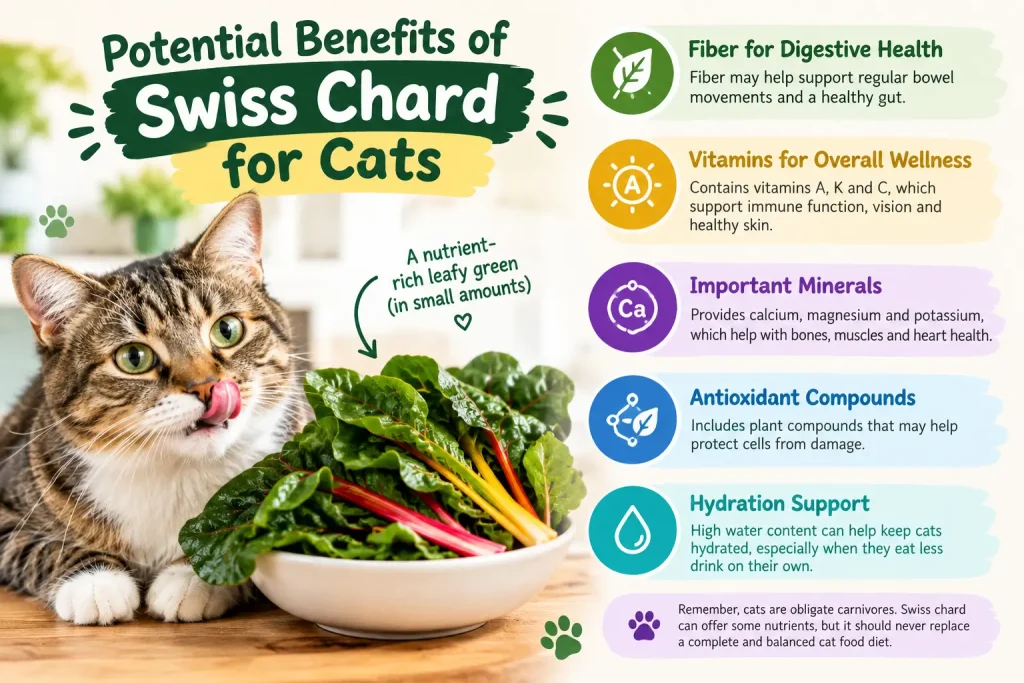
Swiss chard isn’t highly toxic to cats, but it isn’t recommended. It’s high in oxalates, which can irritate the stomach and, in large amounts or in cats with urinary or kidney problems, contribute to crystals or stones. The ASPCA-based source (Growli) rates it mildly toxic. Sources disagree on how safe it is, and a tiny nibble is usually low risk. If your cat has urinary or kidney issues or shows vomiting, drooling, or lethargy, call your vet.
Can Cats Eat Swiss Chard?
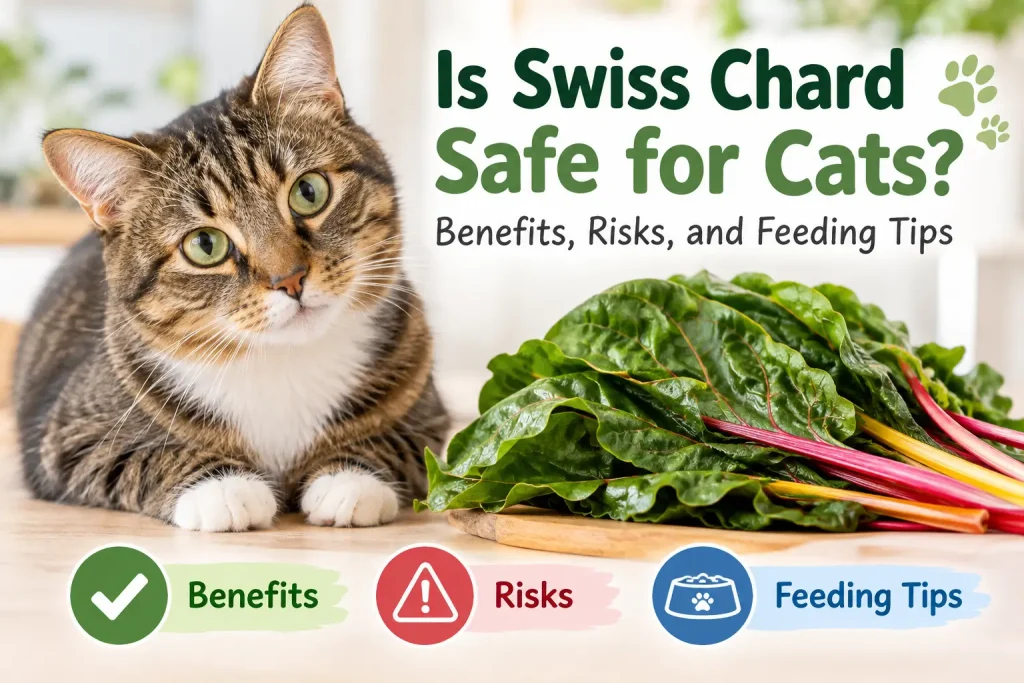
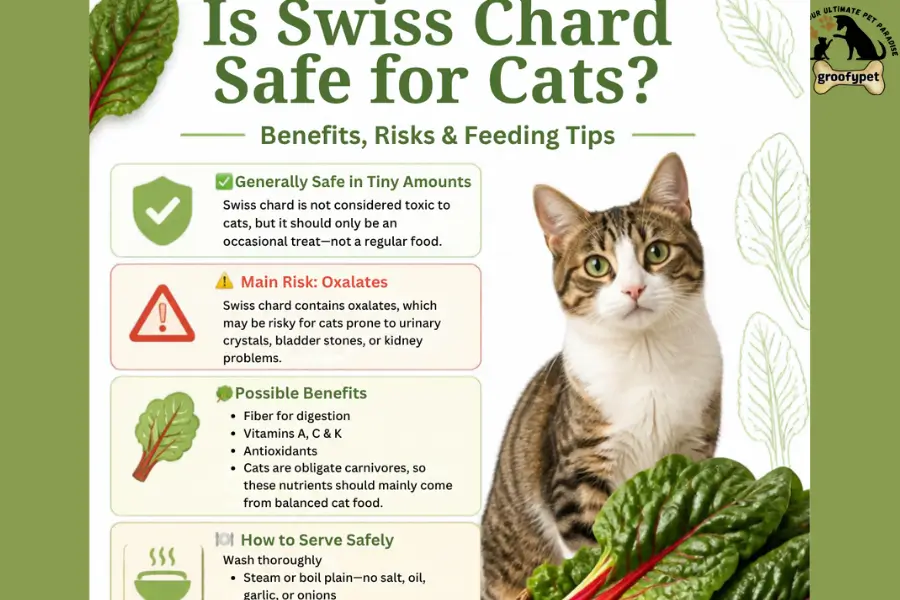
Yes, cats can eat a small amount of Swiss chard, but it is not a recommended regular food. Most sources do not call it highly toxic. A nibble usually causes no trouble. The main concern is oxalates, natural compounds in chard that can irritate the stomach. In cats with urinary or kidney problems, they may also add to the risk of crystals or stones. Cats are meat eaters, so they do not need leafy greens. If you offer any, keep it tiny, plain, and occasional.
A cat can eat a small piece of Swiss chard without serious harm in most cases. That answer comes with limits. “Not considered toxic” does not mean “recommended as a regular food. “Those are two different things. A food can be safe enough for an accidental nibble and still be a poor choice for the bowl.
Cats are obligate carnivores. Their bodies are built to get most nutrients from animal-based foods. Humans digest leafy greens well. Cats have a short digestive tract made for meat. Plant fiber passes through them differently.
Preparation matters too. Raw leaves, big pieces, and added seasonings change the risk. Individual cats also react differently. One cat may ignore a leaf. Another may vomit after a single bite.
Sources do not fully agree on Swiss chard for cats. Some call it fine in moderation. Others tell owners to avoid it because of oxalates. If your cat has any health condition, ask your vet first.
Is Swiss Chard Safe for Cats?
Swiss chard is reasonably safe for most healthy cats in small portions. It is not completely risk-free.
These are the factors that matter most:
- Small portions. A teaspoon of chopped chard is very different from a handful. Larger amounts raise the odds of an upset stomach.
- Occasional feeding. Once in a while is fine for most healthy cats. Frequent feeding adds more oxalates and more plant matter.
- Raw versus cooked leaves. Cooking softens the leaves and may lower some oxalates. We cover this below.
- Stems. The thick stems are tough and stringy. Most cats do better without them.
- Washing. Rinse chard well to remove dirt and pesticide residue.
- Seasonings, oils, and sauces. These cause more problems than the chard itself. Butter, salt, garlic, and onion are common culprits.
- Individual sensitivities. Cats with sensitive stomachs may react to a new food. Cats with kidney or urinary conditions need extra caution.
Safe does not mean useful. Your cat gets its nutrition from complete cat food. Chard is at most a small extra.
Can Cats Eat Raw Swiss Chard?
A cat can eat raw Swiss chard, but raw leaves are not the best option.
- Texture. Raw chard is crisp and leathery. Many cats find it unappealing. Some chew it like grass and then vomit.
- Digestibility. Cats lack the gut setup to break down tough plant cell walls. Raw leaves can pass through half-digested. That may lead to gas or loose stools.
- Stomach upset. Raw chard contains more of its natural oxalates. A bitter taste and mouth irritation are possible. Some cats drool or paw at their mouths after chewing.
- Choking concerns. Large floppy leaves can be hard to chew and swallow. Small cats and fast eaters are at higher risk.
- Proper preparation. If you offer raw chard anyway, wash it and cut away the stem. Chop the leaf into tiny confetti-sized bits. Offer one or two pieces and watch your cat.
Finely chopped leaves are easier to chew and lower the choking risk. Lightly cooked chard is usually the gentler choice.
Can Cats Eat Cooked Swiss Chard?
Cooked Swiss chard is generally the better option for cats, as long as it is plain.
Cooking softens the fibers. That makes the leaves easier to chew and easier on the cat digestive system. Boiling can also reduce oxalates because some dissolve into the water. If you boil the chard, throw the water away. Steaming is gentler and keeps more nutrients, but it removes fewer oxalates.
Keep it plain. Skip these:
- Salt
- Butter or oil
- Garlic and onion
- Sauces and spices
- Broth made with onion or garlic
Garlic and onion are dangerous for cats even in small amounts. Many human recipes with chard contain them.
A simple method: Wash a leaf and remove the stem. Steam or boil it for two to three minutes until soft. Drain well and let it cool. Chop it very fine and offer a small amount.
Can Cats Eat Swiss Chard Stems?
It is better to remove the stems before feeding Swiss chard to your cat.
The stems are thick and fibrous. They are harder to chew than the leaves. Long stringy pieces can be awkward to swallow and may upset the stomach. The bright stems on rainbow chard look appealing, but color does not make them cat-friendly.
If your cat accidentally eats a small piece of stem, do not panic. Watch for vomiting or unusual behavior. For future servings, cut the stems off and use only the leafy part.
Also Read : Can Cats Eat Marjoram? Toxicity, Symptoms, and Safety Tips
What Are the Potential Benefits of Swiss Chard for Cats?
Swiss chard contains nutrients that help humans. Cats can absorb some of them, but the benefits are modest.
Possible components include:
- Fiber. A little fiber may help some cats with stool movement. Too much can cause gas or loose stools.
- Vitamins. Chard contains vitamins A, C, and K. Cats make their own vitamin C. Complete cat food already supplies vitamin A and other needs.
- Minerals. Chard has potassium, magnesium, and iron. Quality cat food usually covers these.
- Water content. The leaves are mostly water, but cats should get moisture from wet food and fresh water.
- Antioxidant compounds. Plant compounds in chard may have antioxidant effects. Research on their value for cats is limited.
Cats are obligate carnivores. They get their essential nutrition from animal-based foods. Swiss chard does not provide anything a cat cannot get from a complete diet. Think of it as a harmless extra at best. It is not a health food for cats.
Risks of Feeding Swiss Chard to Cats
Here are the main concerns:
- Digestive upset. Cats have sensitive digestive systems built for meat. A new plant food can cause stomach discomfort. Even a small amount may bother some cats.
- Vomiting. Chewing raw leaves may trigger vomiting. The bitter taste and oxalates can irritate the mouth and stomach. One mild episode is common. Repeated vomiting needs attention.
- Diarrhea. Fiber and oxalates can loosen stools. Cats unused to vegetables are more likely to react. Mild cases often pass in a day.
- Excessive plant matter. Too much plant material can cause gas and bloating. It may also upset the natural balance of the gut. A meat-based diet suits cats best.
- Oxalates or oxalic acid. Swiss chard is high in oxalates. These compounds bind to calcium. In large amounts they may contribute to calcium oxalate crystals in the urinary tract. Occasional tiny amounts are unlikely to cause trouble in a healthy cat.
- Cats with certain health conditions. Cats with kidney disease or a history of urinary stones should avoid chard. Cats with sensitive stomachs may also react. Ask your vet before offering it.
- Choking risk from large pieces. Big leaf pieces and long stems can be hard to chew. Chop everything very small.
- Seasonings and added ingredients. Garlic, onion, salt, and rich sauces are far riskier than the chard. Cooked greens from your dinner plate often contain them. Always offer plain chard.
- Overfeeding. More chard means more oxalates and more fiber. Overfeeding can cause stomach upset and fill your cat up. Stick to a spoonful or less.
- Replacing nutritionally complete cat food. Treats and extras should stay a small part of the diet. A cat that fills up on greens may eat less of its balanced food. That can lead to nutrient gaps over time.
None of these risks mean a single leaf will harm your cat. They explain why moderation matters.
How Much Swiss Chard Can Cats Eat?
These amounts are general guidance. They are not veterinary prescriptions. Always ask your vet about your own cat.
| Cat Size | Suggested Amount | Frequency | Preparation |
|---|---|---|---|
| Small cat (under 8 lb) | About 1 teaspoon | Once in a while | Cooked, plain, finely chopped |
| Average adult cat (8–12 lb) | 1–2 teaspoons | Up to once a week | Cooked, plain, finely chopped |
| Large cat (over 12 lb) | Up to 1 tablespoon | Up to once a week | Cooked, plain, finely chopped |
| Cat with kidney or urinary issues | None unless your vet approves | Not applicable | Ask your vet first |
Treats and extras should stay a small part of your cat’s overall diet. A common rule is to keep them under about 10 percent of daily calories. For chard, a few small pieces are plenty.
Read This : Can Cats Eat Kabocha Squash? Safe Serving Guide for Cats
How to Prepare Swiss Chard for Cats
Follow these steps:
- Choose fresh Swiss chard. Pick crisp leaves without yellowing or slime.
- Wash it thoroughly. Rinse under running water to remove dirt and residue.
- Remove tough stems if appropriate. Cut the leaf away from the stem. Use only the soft leaf.
- Cook it plainly if desired. Steam or boil for two to three minutes. Do not add salt or oil. Drain boiled chard well.
- Allow it to cool. Hot food can burn a cat’s mouth.
- Chop it into tiny pieces. Aim for bits smaller than a pea.
- Offer only a small amount. Start with half a teaspoon. Mix it into wet food if your cat ignores it.
- Observe the cat afterward. Watch for vomiting, diarrhea, or odd behavior over the next day. If anything looks wrong, stop feeding it.
Never add garlic, onion, salt, spicy seasonings, or sauces.
Can Kittens Eat Swiss Chard?
Kittens should not eat Swiss chard. It is safer to skip it entirely.Kittens grow fast. They need a complete kitten food that supplies the right protein, fat, calcium, and calories. Vegetables add little and may displace the nutrition they need.
Their digestive systems are also smaller and more delicate. Even a small plant meal can cause an upset stomach or loose stools. Dehydration moves faster in kittens.
Wait until your cat is an adult. Even then, treat chard as an occasional extra. If your kitten eats a leaf by accident, watch for vomiting or diarrhea and call your vet if symptoms continue.
What Happens If a Cat Eats Too Much Swiss Chard?
A cat that eats too much chard may show signs of stomach upset. Common signs include:
- Vomiting
- Diarrhea
- Gas
- Reduced appetite
- Abdominal discomfort such as hiding, hunching, or a tense belly
- Changes in normal behavior such as lethargy
- Drooling or pawing at the mouth
Mild signs often pass within a day. Keep fresh water available and avoid giving more chard. A bland vet-approved diet may help in mild cases, but ask your vet before changing food.
Contact your veterinarian if symptoms are severe or last more than a day. Call sooner if your cat is very young, old, or has kidney or urinary issues. Cats with those conditions are higher risk. Straining to urinate or no urination needs urgent care. If you are unsure, call your vet or a pet poison helpline.
Can Cats Eat Swiss Chard Every Day?
No. Cats should not eat Swiss chard every day.A small bite now and then is very different from a daily habit. Regular feeding adds more oxalates and fiber over time. It also takes room away from the meat-based nutrition cats need.
Complete cat food should supply almost everything your cat eats. Cats do not need vegetables to stay healthy. If you want to share greens, keep it rare and tiny.
Swiss Chard vs Other Leafy Greens for Cats
| Vegetable | Generally Safe in Small Amounts? | Main Consideration |
|---|---|---|
| Swiss chard | Yes, in tiny amounts | High in oxalates. Stems are tough. |
| Spinach | Yes, in tiny amounts | Also high in oxalates. |
| Kale | Yes, in tiny amounts | Fibrous and tough to digest. Chop finely. |
| Lettuce | Yes, in tiny amounts | Mostly water with little nutrition. Wash well. |
| Mustard greens | Small amounts only | Peppery and strong flavored. May upset the stomach. |
| Collard greens | Yes, in tiny amounts | Thick fibrous leaves. Cook and chop finely. |
This table is general guidance. No leafy green is a “best” choice for cats. Each one is an optional extra. Cats do not need any of them.
What Vegetables Can Cats Eat?
Some cats tolerate small amounts of plain vegetables. These examples are usually considered safe in tiny portions:
- Cooked carrots. Steam until soft and mash or dice finely.
- Steamed green beans. Cut into small pieces.
- Plain cooked pumpkin. Use pure pumpkin, not pie filling. Some vets suggest it for mild stool issues.
- Cooked peas. Offer a few. Avoid canned peas with salt.
- Cucumber. Peeled and cut into small bits.
- Cooked zucchini. Soft and mild.
Always serve vegetables plain. Skip oil, salt, butter, and spices. Cut them tiny and cook them soft. Start with a very small amount and watch your cat.
Cats do not need vegetables to stay healthy. Think of them as a tiny extra at best.
Vegetables Cats Should Avoid
Some plant foods are unsafe for cats. Avoid these:
- Onions. They can damage red blood cells.
- Garlic. It is also harmful and is stronger than onion.
- Leeks. They belong to the same family and carry the same risk.
- Chives. They are in the same group and are also unsafe.
- Rhubarb leaves. They contain high levels of oxalates and can be seriously harmful.
- Raw or green potatoes and tomato plants. The green parts contain solanine, which can upset the stomach.
Onion, garlic, leeks, and chives are called alliums. They are more dangerous than Swiss chard. Their compounds can damage red blood cells and cause anemia. That is a true toxicity. Chard mainly causes irritation. Even so, cooked chard dishes often include garlic or onion, which makes those dishes unsafe for cats.
When Should You Contact a Veterinarian?
Call your vet if your cat shows any of these signs after eating Swiss chard:
- Repeated vomiting
- Severe or persistent diarrhea
- Blood in vomit or stool
- Difficulty breathing
- Severe weakness or collapse
- Loss of appetite lasting more than a day
- Signs of significant pain such as crying, hiding, or a hard belly
- Straining to urinate or very little urine
- A cat with an existing kidney or urinary condition eating a potentially problematic amount
Also call if the chard was cooked with garlic, onion, or other seasonings. Have the details ready. Know how much your cat ate and when.
This guide gives general information. It cannot replace veterinary advice for your individual cat.
Freuently Asked Questions
Can kittens eat Swiss chard?
Kittens should not eat Swiss chard. They need complete kitten food for growth. Their digestive systems are smaller and more delicate. Vegetables add little value and may upset the stomach. If a kitten eats some by accident, watch for vomiting or diarrhea.
Can cats eat Swiss chard every day?
No. Daily feeding is not recommended. Regular servings add oxalates and plant fiber and take room from the meat-based nutrition cats need. Keep Swiss chard as a rare treat. Complete cat food should make up almost the entire diet.
What should I do if my cat eats too much Swiss chard?
Remove any remaining chard and give fresh water. Watch for vomiting, diarrhea, drooling, or low energy. Mild signs often pass in a day. Call your vet if symptoms are severe or continue. Seek urgent help if your cat strains to urinate.
What leafy greens are safe for cats?
Cats do not need leafy greens. Small amounts of lettuce, spinach, kale, and collard greens are usually tolerated by healthy cats when washed and finely chopped. Some, like spinach, are high in oxalates. Cat grass is a popular choice made for cats.
Key Takeaways
- Cats can eat a small amount of Swiss chard, but it is not recommended as a regular food.
- Swiss chard is not considered seriously toxic, though some sources note mild irritation.
- Keep portions tiny. One to two teaspoons of finely chopped chard is plenty for most adult cats.
- Cooked, plain chard is usually gentler than raw. Remove the stems and chop it fine.
- Swiss chard is high in oxalates, which may matter for cats with kidney or urinary problems.
- Never add salt, butter, garlic, onion, spices, or sauces.
- Kittens should skip it and stick to complete kitten food.
- Cats are obligate carnivores and do not need vegetables.
- Call your vet for repeated vomiting, severe diarrhea, blood, pain, or trouble urinating.
Final Thoughts
Most cat owners ask this question after catching their cat with a leaf in its mouth. If that happened to you, take a breath. A small nibble usually does no harm.
Still, Swiss chard has no real place in a cat’s bowl. Cats are obligate carnivores. Their nutrition comes from meat and a complete, balanced cat food. A leaf of chard adds little and carries a few risks, mainly from oxalates and from the seasonings people add.
If you want to share a bite, keep it plain and small. Cook it lightly, chop it fine, and watch how your cat responds. When in doubt, ask your veterinarian. They know your cat’s health history and can give advice that fits.
Can Cats Eat Redcurrants? Safety, Risks and Feeding Tips
Can Cats Eat Mustard Greens? Benefits, Risks and Safe Alternatives