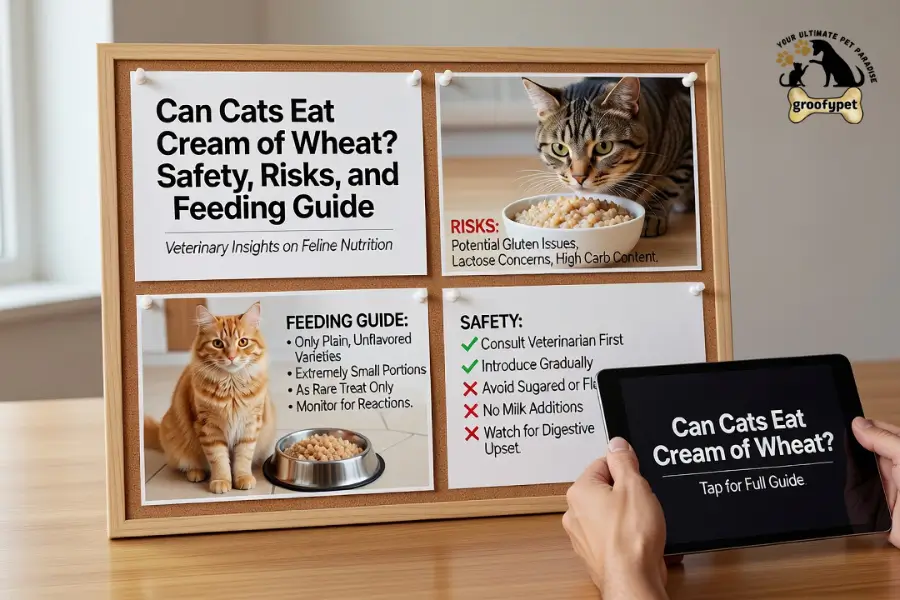
Have you ever noticed your cat showing interest in your warm breakfast bowl? If you enjoy Cream of Wheat, your curious feline might want a taste, too. But is sharing this popular breakfast cereal actually safe?
Can cats eat cream of wheat? Cats can accidentally consume a small amount of plain, cooked cream of wheat without necessarily experiencing health problems. However, it is not a recommended food for cats. Cream of Wheat does not provide the balanced animal-based nutrition cats need to stay healthy.
Although plain farina is not considered inherently toxic to cats, added ingredients such as sugar, milk, chocolate, and certain flavorings can create additional concerns. Understanding the ingredients, possible digestive reactions, and nutritional limitations can help you make safer feeding decisions.
Let’s explore whether cats can eat Cream of Wheat, what happens if they accidentally consume it, and which alternatives are better for your feline friend.
Can Cats Eat Cream of Wheat?
Cats can have a tiny taste of plain, fully cooked Cream of Wheat, but it should not become a regular part of their diet.
Cream of Wheat is a hot breakfast cereal made primarily from farina, a type of milled wheat. It contains carbohydrates, some plant-based protein, and often added vitamins and minerals.
However, cats are obligate carnivores. Their bodies are adapted to obtain essential nutrients from animal-based foods rather than grain-based breakfast cereals.
Here are the important things cat owners should understand:
- Plain Cream of Wheat: A tiny accidental taste is unlikely to cause problems for most healthy cats.
- Sweetened Cream of Wheat: Added sugar provides no nutritional benefit and may upset your cat’s stomach.
- Milk-based Cream of Wheat: Milk can cause digestive problems because many adult cats have difficulty digesting lactose.
- Flavored varieties: Additional ingredients may introduce unnecessary or potentially harmful risks.
- Regular feeding: Cream of Wheat should never replace complete and balanced cat food.
The safest approach is to avoid intentionally feeding Cream of Wheat to your cat. A small accidental taste of plain cereal is different from making it a regular meal.
What Is Cream of Wheat Made Of?
Cream of Wheat is a popular breakfast cereal made from finely ground wheat. Its main ingredient is farina, which produces a smooth, soft texture when cooked with water or milk.
Many people enjoy it with butter, sugar, honey, cinnamon, fruit, or other toppings. However, these additions can make the cereal less suitable for cats.
Here are its common nutritional components:
| Ingredient or nutrient | What it means for cats |
|---|---|
| Farina | A wheat-based ingredient that cats do not need in their diet |
| Carbohydrates | Provide energy but are not a nutritional priority for cats |
| Plant-based protein | Does not replace complete animal-based protein |
| Iron | An essential mineral, but cats should obtain it through balanced nutrition |
| B vitamins | Support normal body functions when provided in appropriate amounts |
| Added sugar | Offers no nutritional benefit to cats |
| Milk | May cause digestive upset in lactose-intolerant cats |
Some commercial Cream of Wheat products are fortified with additional nutrients. However, fortification does not make them suitable as complete feline food.
Also Read : Can Cats Have Alfredo Sauce? Safety, Risks, and What to Do
Is Cream of Wheat Toxic to Cats?
Plain cream of Wheat is not generally considered a poisonous food for cats. A small accidental taste of fully cooked, unseasoned cereal is unlikely to cause serious problems in most healthy adult cats.
However, this does not mean every Cream of Wheat preparation is safe.The biggest concern is often what people add to the cereal. Sweeteners, dairy products, chocolate, and other toppings can change its safety profile.
For example, chocolate contains substances called theobromine and caffeine, which are toxic to cats. Raisins are also best avoided because their safety in cats is not established.
It is important to distinguish between three situations:
- Eating a tiny amount of plain cereal.
- Eating a large quantity that may cause digestive discomfort.
- Eating cereal containing potentially harmful additional ingredients.
If your cat consumes a product containing chocolate or another potentially toxic ingredient, contact a veterinarian promptly rather than waiting for symptoms.
Can Cats Digest Wheat and Farina?
Cats can digest some cooked carbohydrates, including properly prepared grains. However, their ability to digest an ingredient does not automatically make it necessary or beneficial.Farina contains wheat starch, which becomes softer during cooking. This makes the cereal easier to consume, but it does not provide the complete nutrition cats require.
Cats depend on specific nutrients found in animal tissues, including:
- Taurine: Supports normal heart function, vision, and reproduction.
- Arachidonic acid: An essential fatty acid involved in several body functions.
- Vitamin A: Supports vision, immune health, and normal growth.
- Animal-based protein: Supplies essential amino acids for muscles and body maintenance.
- Vitamin B12: Supports normal nerve function and blood cell production.
Cream of Wheat cannot replace these nutritional requirements.
Nutritional Benefits of Cream of Wheat to Cats
Cream of Wheat contains several nutrients that are important in human diets. However, its nutritional value for people does not necessarily translate into benefits for cats.
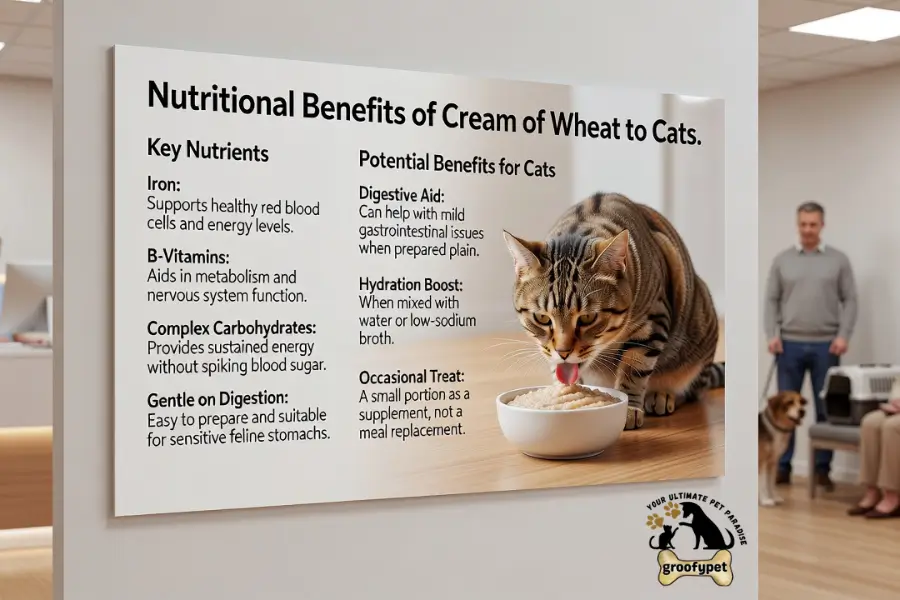
Let’s look at some of its nutritional components.
1. Carbohydrates
Cream of Wheat contains carbohydrates that provide energy. Cats can use some carbohydrates, but they do not need a wheat-based breakfast cereal to meet their energy requirements. Their regular cat food should provide the appropriate balance of protein, fat, and other nutrients.
2. Plant-Based Protein
Farina contains some plant-based protein. However, cats require specific amino acids that are naturally supplied through animal-based foods. A bowl of Cream of Wheat cannot replace chicken, turkey, fish, or nutritionally complete commercial cat food.
3. Iron
Iron helps support healthy red blood cells and oxygen transportation throughout the body. Some Cream of Wheat products contain added iron. However, cats should receive their required minerals through a balanced feline diet rather than human breakfast cereal.
4. B Vitamins
Some varieties contain fortified B vitamins, which help support normal metabolism and other body functions. However, cats need appropriate amounts of these nutrients from their regular food. Adding human cereal does not improve an already balanced diet.
5. Calories
Cream of Wheat contributes additional calories to your cat’s daily food intake. If you regularly share human breakfast foods with your cat, those extra calories can make it harder to maintain a healthy weight.
The bottom line: Cream of Wheat contains nutrients, but there is no nutritional reason to add it to your cat’s regular meals.
7 Possible Risks of Feeding Cream of Wheat to Cats
Although plain cream of wheat is not generally considered toxic, feeding it to cats can create several problems.The risks depend on the ingredients, serving size, and your cat’s individual digestive sensitivity.
1. Digestive Upset
Some cats may experience digestive discomfort after eating unfamiliar human foods.Their digestive systems are adapted to a nutritionally appropriate feline diet. Introducing unnecessary foods can sometimes cause stomach irritation.
Possible symptoms include:
- Vomiting
- Loose stools
- Diarrhea
- Reduced appetite
- Mild abdominal discomfort
A tiny taste does not mean your cat will experience these symptoms. However, monitor your pet after accidental consumption.
2. Vomiting and Diarrhea
Eating a larger amount of cream of wheat may cause digestive discomfort in some cats. This is particularly possible when the cereal contains milk, butter, sugar, or other additions. Vomiting and diarrhea can also occur for reasons unrelated to food. Therefore, persistent symptoms should not automatically be blamed on Cream of Wheat.
Contact your veterinarian if your cat develops repeated vomiting, persistent diarrhea, or unusual behavior.
3. Unnecessary Carbohydrate Intake
Cream of Wheat is primarily a carbohydrate-based food.Although cats can digest some carbohydrates, they need animal-based nutrients to maintain their health. Regularly adding cereal to their meals can contribute unnecessary calories without providing the nutritional balance of complete cat food.
4. Added Sugar and Sweeteners
Some people add sugar, honey, or flavored syrups to Cream of Wheat. These ingredients are unnecessary for cats and can increase the calorie content of their food. Artificial sweeteners also require ingredient-specific consideration. Do not assume every sweetener has the same effects in cats. If your cat consumes a product with an unfamiliar sweetener, check the packaging and contact your veterinarian for advice.
5. Lactose-Related Digestive Problems
Many adult cats have difficulty digesting lactose, the natural sugar found in milk. Cream of Wheat prepared with regular cow’s milk may cause digestive discomfort in lactose-intolerant cats.
Possible symptoms include:
- Diarrhea
- Gas
- Loose stools
- Stomach discomfort
- Occasional vomiting
Plain cereal prepared with water avoids this additional dairy-related concern.
6. Excess Calories and Weight Gain
Cream of Wheat is not a necessary source of calories for cats.Regularly feeding it alongside complete cat food can increase daily calorie intake.ver time, excessive calories may contribute to weight gain. Maintaining a healthy body weight is important for supporting your cat’s mobility and overall well-being.
7. Harmful Additional Ingredients
The toppings and flavorings added to Cream of Wheat can create more serious concerns than plain farina.
For example:
- Chocolate contains theobromine and caffeine, which are toxic to cats.
- Raisins should not be offered because they may pose a serious food safety risk.
- Onion and garlic can damage red blood cells.
- Milk may cause digestive upset.
- Excessive salt is unnecessary and may be harmful.
Chocolate and onion or garlic exposure deserve particular attention. Contact a veterinarian promptly if your cat consumes these ingredients. ASPCA+2
Can Cats Eat Cream of Wheat With Milk?
It is better to avoid giving cats Cream of Wheat prepared with regular cow’s milk.Many kittens gradually lose much of their ability to digest lactose after weaning. This means drinking milk can cause digestive problems in adult cats.When Cream of Wheat is prepared with milk, your cat consumes both wheat and dairy ingredients.
The combination may cause:
- Loose stools
- Diarrhea
- Gas
- Vomiting
- Abdominal discomfort
Not every cat reacts in the same way. Some may tolerate a tiny amount, while others experience symptoms after consuming dairy.If you prepare Cream of Wheat for yourself, keep your cat away from milk-based leftovers.
Can Cats Eat Sweetened or Flavored Cream of Wheat?
Sweetened and flavored Cream of Wheat is less suitable for cats than plain cereal.Commercial varieties may contain additional ingredients that offer no benefit to feline health.
Here is what cat owners should know about common additions.
| Ingredient | Safety concern for cats |
|---|---|
| Sugar | Unnecessary calories and possible digestive upset |
| Honey | Not a necessary food for cats |
| Chocolate | Toxic because of theobromine and caffeine |
| Milk | May cause diarrhea and digestive discomfort |
| Butter | High in fat and may upset the stomach |
| Raisins | Should be avoided because of potential toxicity concerns |
| Cinnamon | Not a suitable addition to cat food |
| Onion powder | Can damage red blood cells |
| Garlic powder | Potentially toxic to cats |
| Excess salt | Unnecessary and potentially harmful |
Important: Never assume a flavored cereal is safe just because it contains familiar kitchen ingredients.Always read the ingredient label before deciding how to respond to an accidental exposure. If the cereal contains chocolate, onion, garlic, or another potentially toxic ingredient, seek veterinary advice immediately.
Read This : Can Cats Drink Rooibos Tea? Safety, Risks and Vet Advice
What Happens If Your Cat Eats Cream of Wheat?
What happens depends on how much your cat eats and what ingredients are present.A tiny lick of plain, fully cooked Cream of Wheat is unlikely to cause serious problems in most healthy adult cats.However, eating a large portion or consuming cereal prepared with milk and other toppings may increase the possibility of digestive problems.
Consider these situations:
| Situation | Possible outcome | What to do |
|---|---|---|
| One small lick of plain cereal | Usually no serious reaction | Monitor your cat |
| A few bites of plain cereal | Possible mild digestive upset | Check the ingredients and observe |
| A large serving | Greater chance of stomach discomfort | Contact your veterinarian for advice |
| Cereal prepared with milk | Possible diarrhea or vomiting | Monitor for digestive symptoms |
| Chocolate-flavored cereal | Potential toxicity | Contact a veterinarian immediately |
| Cereal containing onion or garlic | Risk of red blood cell damage | Seek prompt veterinary advice |
Remember that every cat is different. Age, body weight, existing health conditions, and the amount consumed can influence the outcome.
What Should You Do If Your Cat Eats Cream of Wheat?
Discovering your cat eating from your breakfast bowl can be surprising. Fortunately, a small accidental taste of plain cereal is not automatically an emergency.
However, you should take a few precautions.
Step 1: Check the Ingredients
Look at the cereal packaging and identify everything it contains.Determine whether it was prepared with water, milk, sugar, chocolate, or other toppings.Pay particular attention to chocolate, onion, and garlic ingredients.
Step 2: Estimate How Much Your Cat Ate
Try to determine whether your cat only licked the bowl or consumed several spoonfuls.The quantity matters when assessing a possible food-related reaction.
Step 3: Remove the Remaining Cereal
Put the bowl somewhere your cat cannot reach.This prevents your pet from eating more while you assess the situation.
Step 4: Provide Fresh Water
Make sure your cat has access to clean drinking water.Do not force your cat to drink or give additional human foods to settle its stomach.
Step 5: Monitor Your Cat
Watch for unusual changes over the following hours.Pay attention to vomiting, diarrhea, appetite changes, weakness, or unusual behavior.
Step 6: Contact Your Veterinarian When Necessary
Seek veterinary advice if your cat consumes a large quantity, eats potentially toxic ingredients, or develops concerning symptoms.Do not try to induce vomiting at home unless a veterinarian specifically instructs you to do so.If your cat experiences repeated vomiting, difficulty breathing, tremors, collapse, or severe weakness, seek emergency veterinary care.
Can Kittens Eat Cream of Wheat?
Kittens should not be given Cream of Wheat as a regular food or treat.During their early development, kittens need carefully balanced nutrition to support healthy bones, muscles, organs, and immune function.A complete kitten food provides the protein, fats, vitamins, minerals, and other nutrients needed for proper growth.
Cream of Wheat does not provide this nutritional balance. Even though a tiny accidental taste of plain cereal may not cause serious problems, intentionally feeding it offers no meaningful advantage.
Keep these points in mind:
- Feed kittens food specifically formulated for their growth stage.
- Avoid introducing unnecessary human breakfast cereals.
- Do not replace kitten milk replacer with cow’s milk.
- Keep flavored cereals and sweetened foods out of reach.
- Contact your veterinarian if a young kitten eats a questionable ingredient.
Kittens have smaller bodies and different nutritional requirements from adult cats. It is better to keep their diet simple and appropriate for their age.
Healthier Alternatives to Cream of Wheat for Cats
If your cat enjoys investigating your breakfast, you can offer more appropriate alternatives instead.Cats do not need human breakfast foods. However, certain plain animal-based foods can be offered occasionally alongside their regular balanced diet.
Here are some better options.
| Alternative | Why it may be suitable | Important consideration |
|---|---|---|
| Plain cooked chicken | Provides animal-based protein | Remove bones, skin, and seasoning |
| Plain cooked turkey | Provides animal-based protein | Serve without salt or spices |
| Plain cooked fish | Provides protein and some fats | Remove all bones and serve occasionally |
| Commercial cat treats | Formulated specifically for cats | Follow package feeding guidance |
| Complete wet cat food | Provides balanced feline nutrition | Choose the appropriate life stage |
1. Plain Cooked Chicken
Chicken is a popular protein source for cats.You can offer a small amount of thoroughly cooked, boneless chicken without salt, garlic, onion, or seasoning.Remove the skin and allow the meat to cool before serving.
2. Plain Cooked Turkey
Turkey can also make an occasional treat.Choose plain, fully cooked turkey without gravy, butter, seasoning, or added salt.Avoid processed turkey products because they may contain ingredients unsuitable for cats.
3. Plain Cooked Fish
Some cats enjoy fish because of its smell and taste.Small amounts of thoroughly cooked, boneless fish can be offered occasionally. Avoid raw fish and heavily seasoned preparations.Fish should not replace a complete and balanced feline diet.
4. Commercial Cat Treats
Commercial cat treats are another convenient option.Choose products made specifically for cats and follow the recommended feeding instructions.According to Cornell University, treats should generally account for no more than 10–15% of a cat’s daily calories.
How Much Cream of Wheat Can Cats Eat?
There is no recommended serving size of Cream of Wheat for cats because it is not a necessary part of feline nutrition.You should not calculate a daily portion based on your cat’s weight or age.If your cat accidentally eats a tiny amount of plain, fully cooked cereal, there is generally no reason to panic.However, intentionally adding Cream of Wheat to your cat’s meals is unnecessary.
Consider these recommendations:
- Do not make Cream of Wheat a daily treat.
- Avoid feeding large portions.
- Never use it to replace regular cat food.
- Avoid milk-based and sweetened preparations.
- Choose nutritionally appropriate cat treats instead.
If your cat has diabetes, food allergies, digestive problems, or another medical condition, ask your veterinarian before introducing unfamiliar foods.
Frequently Asked Questions
Is Cream of Wheat poisonous to cats?
Plain, cooked Cream of Wheat is not generally considered poisonous to cats. However, it is not a recommended feline food. Some added ingredients, including chocolate, onion, and garlic, can create serious health risks.
Can cats eat plain cooked Cream of Wheat?
A healthy adult cat can usually tolerate a tiny accidental taste of plain, fully cooked Cream of Wheat. However, it offers little nutritional value and should not become a regular treat.
Can cats eat Cream of Wheat every day?
No. Cream of Wheat should not be part of your cat’s daily diet. Cats need complete and balanced nutrition containing appropriate animal-based protein, fats, vitamins, and minerals.
Can kittens eat Cream of Wheat?
Cream of Wheat is not recommended for kittens. Growing kittens need specially formulated food that supports their development. Human breakfast cereals cannot provide all the nutrients required during this important growth stage.
Can cats eat Cream of Wheat made with water?
A tiny taste of plain Cream of Wheat prepared with water is generally less concerning than a milk-based preparation. However, it still provides no important nutritional advantage and should not be intentionally fed.
Is Cream of Wheat difficult for cats to digest?
Some cats may digest small amounts of cooked wheat without noticeable problems. Others may experience digestive discomfort after eating unfamiliar foods. Individual tolerance varies, and regular feeding is unnecessary.
Can Cream of Wheat cause diarrhea in cats?
It can contribute to digestive upset in some cats, particularly when prepared with milk or other additions. If diarrhea develops, monitor your cat and contact a veterinarian if symptoms persist or become severe.
Is Cream of Wheat better than oatmeal for cats?
Neither Cream of Wheat nor oatmeal is necessary for a cat’s diet. Both are grain-based human foods that provide limited benefits compared with complete and balanced feline food. Your cat’s regular nutrition should come from appropriate cat food.
Final Thoughts
So, can cats eat Cream of Wheat? A tiny accidental taste of plain, cooked Cream of Wheat is unlikely to cause serious problems for most healthy adult cats. However, it is not a nutritious or necessary addition to their meals.The biggest concerns involve added ingredients, milk, excessive portions, and regular feeding. Always check the ingredients before sharing any human food with your feline friend.
Cats are obligate carnivores, meaning they depend on specific nutrients found in animal-based foods. Their regular diet should consist of complete and balanced cat food rather than human breakfast cereals.If your cat steals a little plain Cream of Wheat, do not panic. Check the ingredients, monitor your pet, and contact your veterinarian if anything concerning happens.
Your cat does not need to share your breakfast to enjoy a healthy and happy life!