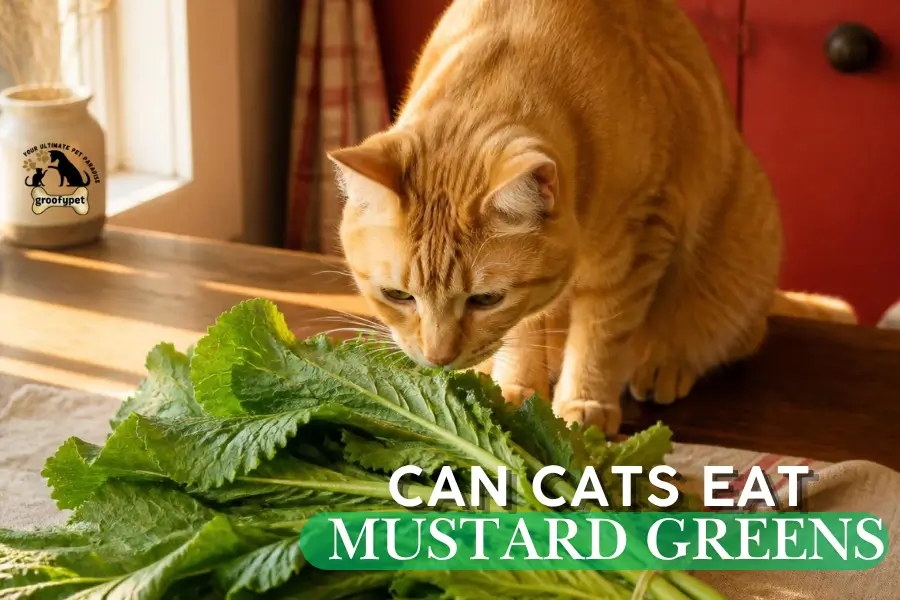
If your cat has ever sniffed at your plate while you were eating a bowl of sautéed greens, you’ve probably wondered whether it’s okay to let them have a taste. Mustard greens show up often in home cooking, especially in Southern-style dishes, so it’s a reasonable question for any curious cat owner to ask. Can cats eat mustard greens? A healthy adult cat may tolerate a very small amount of plain, cooked mustard greens on rare occasions.
Cats are obligate carnivores, so vegetables aren’t a nutritional requirement for them. Mustard greens cooked with onion, garlic, salt, or heavy seasoning should never be given to a cat.
Mustard greens are leafy, slightly peppery vegetables, often cooked with garlic, bacon, or onion for flavor. That’s where the real concern for cat owners comes in. The leaf itself is one issue, but what it’s cooked with is usually the bigger one. Quantity matters too, since even foods that aren’t dangerous can upset a cat’s stomach if given in a larger amount than their body is used to.
Your cat’s regular diet should always come first. Mustard greens, at best, are an occasional curiosity, not something your cat needs. Below, we’ll cover what mustard greens are, whether cats can safely eat them, how much (if any) is appropriate, and what to do if your cat eats more than expected.
What Are Mustard Greens?
Mustard greens come from the mustard plant, part of the Brassicaceae family, the same family as kale, cabbage, and broccoli. The leaves are broad and slightly ruffled, ranging from deep green to reddish-purple. Raw, they have a sharp, peppery bite similar to arugula; cooking mellows that sharpness.
People typically sauté, braise, or simmer mustard greens, often with garlic, onion, bacon, or ham hock for flavor. You’ll find them fresh in grocery stores and farmers markets and sometimes canned or frozen.
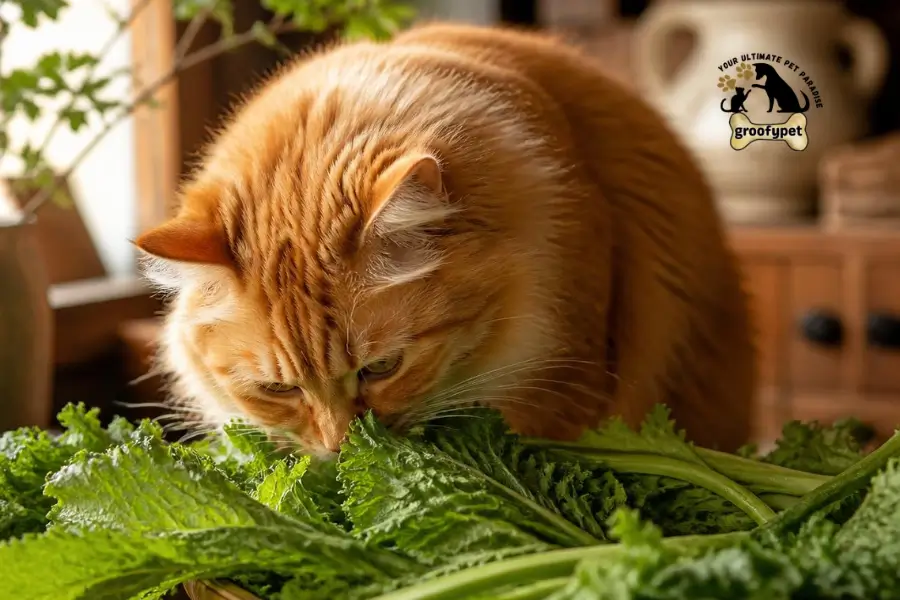
It’s worth noting: mustard greens are not the same as mustard sauce, mustard seeds, mustard powder, or mustard oil. These are different products made from different parts of the plant, prepared differently, and they don’t share the same safety profile. Keep them separate as you read on.
Can Cats Eat Mustard Greens?
A healthy adult cat may be able to eat a very small amount of plain mustard greens without issue. But there’s a difference between “probably won’t cause harm in a tiny amount” and “this is good for my cat.” Mustard greens fall into the first category, not the second.
Cats’ digestive systems are built around processing meat, not plant fiber. A small nibble is unlikely to cause trouble, but a larger portion can lead to digestive upset. Mustard greens should never replace a cat’s meat-based, complete and balanced cat food and shouldn’t become a habitual snack.
Individual cats also react differently to new foods; one might handle a small piece with no reaction, while another develops loose stool from the same amount. That’s normal variation and part of why any new food should be introduced cautiously.
In short:
- Small amount: potentially tolerated
- Large amount: more likely to cause digestive upset
- Plain preparation: strongly preferred
- Cooked with onion or garlic: avoid entirely
- Regular staple food: not appropriate
Are Mustard Greens Toxic to Cats?
There’s a difference between something being toxic and something simply not agreeing with a cat’s digestion. Mustard greens aren’t classified as a toxic plant for cats the way lilies are. A small amount of the plain leaf isn’t expected to poison your cat.
That doesn’t mean any quantity is risk-free. A cat that eats a large pile of mustard greens can still end up with a stomach ache, loose stool, or vomiting not because the plant is poisonous, but because their system isn’t built to process much plant fiber at once.
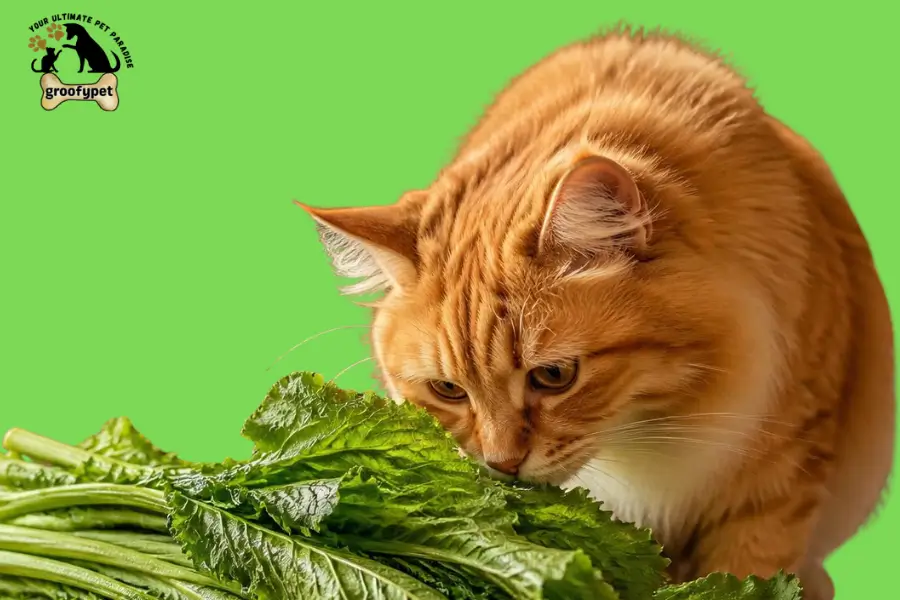
The bigger toxicity concern usually isn’t the greens themselves; it’s what they’re cooked with. Onions and garlic, both common in mustard greens recipes, are genuinely toxic to cats even in modest amounts. So while the plain leaf sits in a gray “probably fine in tiny amounts” zone, a serving simmered with onion and garlic becomes a real safety concern. Cats with sensitive stomachs or existing health conditions may also react more strongly than a typical healthy adult.
Also Read : Can Cats Eat Cantaloupe? Risks, Benefits and Safe Alternatives!
Can Cats Eat Raw Mustard Greens?
Raw mustard greens are tougher and have a stronger, spicier flavor than most cats find appealing. Beyond taste, raw leaves are harder to chew and digest, especially for a cat unaccustomed to plant material.
If offering a raw piece, wash it thoroughly first and keep the portion small, a sliver of leaf, not a handful, then watch closely for any discomfort afterward.
Cats don’t need raw vegetables for fiber or nutrition; everything they require should already come from their compwww.groofypet.comlete cat food. Raw mustard greens aren’t dangerous in the way handling raw meat can be, but they’re not something your cat needs, and the tough texture makes them a less practical choice than cooked greens.
Can Cats Eat Cooked Mustard Greens?
Cooked mustard greens, prepared plainly, are generally the better option for a small taste. Cooking softens the leaf, making it easier to chew and digest.
A few notes:
- Steam or boil to soften without adding fat or seasoning.
- Cool completely before offering hot food can burn a cat’s mouth.
- Cut into tiny pieces to reduce choking risk.
The key word is plain. Avoid mustard greens cooked with garlic, onion, chives, excess salt, spicy seasonings, rich sauces, butter or oil, or fatty, salty meats like bacon or ham. If your kitchen version includes any of these, set aside a small plain portion separately rather than offering a spoonful from the pot.
Can Cats Eat Mustard Greens Cooked With Garlic?
This deserves its own section. Garlic is unsafe for cats. It belongs to the Allium family, along with onions, leeks, and chives, and contains compounds that can damage a cat’s red blood cells.
If your greens were cooked with garlic whole cloves, minced, or powdered, don’t offer that portion, even if you remove the visible pieces. The flavor compounds spread through the cooking liquid and coat the greens themselves.
If your cat has already eaten mustard greens cooked with garlic, especially more than a trivial amount, contact your veterinarian. They can advise based on your cat’s size, health, and how much was likely eaten. There’s no reliably “safe” amount of garlic to give a cat on purpose.
Must Read : Can Cats Eat Chicharrones or Is This Crunchy Snack a Silent Danger!
Can Cats Eat Mustard Greens Cooked With Onion?
Onion carries the same risk as garlic and is just as unsafe for cats. It’s an extremely common ingredient in mustard greens recipes.
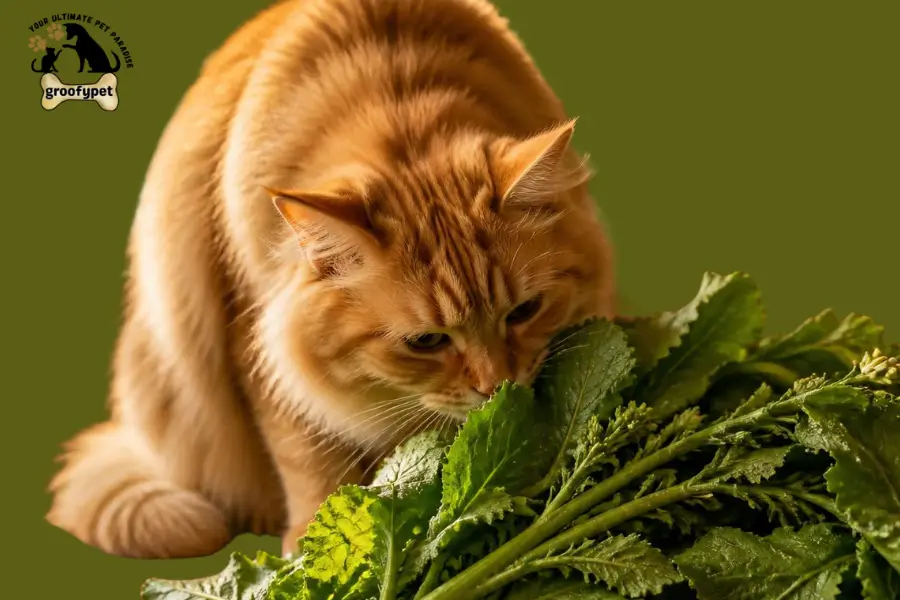
Onion can hide in more places than expected, including cooked greens, soups, sauces, gravies, seasoning mixes, broths, and restaurant leftovers. Because it’s so often baked into the flavor base rather than left visible, check the recipe or ingredient list before assuming a serving is safe. Don’t assume “just a little seasoning” makes a dish harmless; it’s the type of ingredient that matters, not just the amount.
Are Mustard Greens Good for Cats?
Mustard greens have a solid nutritional profile for humans. They contain fiber, vitamins, minerals, and plant compounds that support human health. It’s tempting to assume anything nutritious for people benefits cats too, but that’s not quite how feline nutrition works.
Cats need specific amino acids, like taurine, that only come from animal sources, and their bodies aren’t built to extract much value from plant fiber the way ours are. A food can be healthy for humans while offering little practical benefit for a cat.
That doesn’t make mustard greens harmful in tiny amounts it just means they shouldn’t be viewed as a health boost. Mustard greens contain nutrients that matter in human nutrition, but that doesn’t mean cats need them as a dietary addition. Your cat’s complete cat food already meets their nutritional needs.
Do Cats Need Vegetables?
Cats are obligate carnivores, built to thrive primarily on animal-based protein and fat. Unlike dogs or humans, they have a shorter digestive tract and fewer enzymes for breaking down plant material.
This doesn’t mean vegetables are forbidden; many commercial cat foods include small amounts of plant ingredients for texture, fiber, or as a carrier for certain nutrients. But there’s a difference between a formulated food with controlled plant content and feeding fresh vegetables as a standalone snack.
An occasional taste of a safe vegetable is different from making vegetables a meaningful part of a cat’s diet. If your cat enjoys nibbling greens now and then, that’s generally fine as a novelty just don’t mistake it for something their body actually needs.
How Much Mustard Greens Can Cats Eat?
There’s no universal, veterinary-approved serving size, since body size, health status, and individual tolerance all play a role. The table below is a cautious starting point, not a medical prescription.
| Cat | General Approach |
|---|---|
| Small adult cat | One or two tiny pieces |
| Average adult cat | A few small pieces at most |
| Large adult cat | A few small pieces, still occasional |
| Kitten | Better to prioritize complete kitten food |
| Cat with digestive problems | Ask a veterinarian before introducing new foods |
Start with a very small amount, watch your cat’s behavior and litter box habits afterward, avoid making it a daily habit, and stop immediately if you notice digestive symptoms. There’s no reliable gram measurement for this kind of treat, so err on the side of caution.
How Often Can Cats Eat Mustard Greens?
Occasional exposure is very different from routine feeding. A tiny taste of plain mustard greens once in a while isn’t the same as making it a regular part of your cat’s weekly meals.
Cats don’t need mustard greens on any schedule; there’s no nutritional gap they’re filling. Treats and extras should stay limited, making up only a small fraction of a cat’s overall diet, so their complete cat food remains the primary nutrition source. If your cat has an upset stomach after mustard greens more than once, that’s a fairly clear sign to stop offering it.
Can Kittens Eat Mustard Greens?
Kittens have much higher, more specific nutritional needs than adult cats because they’re growing rapidly. Their diet needs to be dense in calories, protein, and specific nutrients, leaving little room for foods that don’t contribute to that growth.
A complete and balanced kitten food is formulated specifically for this life stage. Introducing unusual human foods, even in small amounts, isn’t necessary and doesn’t offer kittens anything their food isn’t already providing.
For kittens, prioritize complete and balanced kitten food rather than experimenting with leafy greens like mustard greens. If you’re curious about new foods for a kitten, that’s a conversation better had with your veterinarian.
Can Senior Cats Eat Mustard Greens?
Age alone doesn’t make mustard greens more dangerous, but senior cats are more likely to have underlying health conditions that change the picture. A senior cat with healthy kidneys and no digestive issues isn’t necessarily at higher risk than a younger cat from a tiny taste of plain, cooked greens.
However, older cats more commonly deal with kidney disease, digestive sensitivities, or other chronic conditions, and some are on prescription diets built around specific nutritional needs. Adding outside foods, even small amounts, can interfere with those plans. If your senior cat has a diagnosed condition or prescription diet, check with your veterinarian before offering mustard greens or any new food.
Potential Benefits of Mustard Greens for Cats
- Fiber: Mustard greens contain dietary fiber, which plays a role in digestion. Cats don’t need large quantities of plant fiber, and their normal food already accounts for their fiber needs.
- Vitamins and Minerals: Mustard greens contain nutrients valuable in human diets. Cats have different requirements, so while these nutrients aren’t harmful, they aren’t something your cat is lacking if already eating a complete diet.
- Variety: For a cat that enjoys investigating new textures, a tiny piece of mustard green can offer some variety and mental stimulation more about enrichment than nutrition.
It’s worth resisting claims like “mustard greens boost your cat’s immune system.” It’s more accurate to say mustard greens contain nutrients that matter in human nutrition, without that translating into a meaningful benefit for your cat.
Potential Risks of Mustard Greens for Cats
- Digestive Upset: The most common issue. Signs can include loose stool, diarrhea, vomiting, gas, or general discomfort, particularly with a larger-than-intended portion.
- Too Much Fiber: A cat’s system isn’t accustomed to processing much plant fiber, and a sudden larger amount can disrupt normal digestion.
- Choking: Large or tough pieces, particularly raw ones, present a choking risk. Cut any offered greens into small pieces.
- Seasonings: Added ingredients like onion, garlic, and heavy seasoning change the entire safety profile, often the biggest real risk associated with mustard greens.
- Individual Sensitivity: Some cats simply don’t tolerate certain foods well, regardless of preparation or portion size. This isn’t predictable in advance, which is why starting small matters.
Signs Your Cat May Not Tolerate Mustard Greens
Watch for vomiting, diarrhea, soft or loose stool, excessive gas, reduced appetite, unusual discomfort or restlessness, and lethargy. Mild, short-lived digestive changes can happen after any unfamiliar food and often resolve on their own, but symptoms that are severe, persistent, or worsening warrant a call to your veterinarian.
What Should I Do If My Cat Eats Too Many Mustard Greens?
- Remove the remaining greens so your cat can’t eat more.
- Determine whether they were plain or cooked with other ingredients.
- Check for garlic, onion, sauces, or seasonings.
- Observe your cat closely over the next several hours.
- Make sure fresh water is available.
- Contact your veterinarian if symptoms develop, or right away if unsafe ingredients were involved.
Don’t try to manage the situation alone if unsafe ingredients were part of the dish. Don’t attempt to induce vomiting at home, and don’t give human medications; leave those decisions to a veterinary professional.
How to Prepare Mustard Greens for Cats
- Step 1: Wash the greens thoroughly.
- Step 2: Remove tough parts like thick stems.
- Step 3: Cook plainly, in water only, with no garlic, onion, salt, butter, or oil.
- Step 4: Cool completely before serving.
- Step 5: Cut into tiny pieces to reduce choking risk.
- Step 6: Offer a tiny amount; a sliver or two is plenty.
- Step 7: Observe your cat over the following hours and the next day.
Mustard Greens vs. Mustard Sauce: Are They the Same?
| Food | What It Is | Should Cats Eat It? |
|---|---|---|
| Mustard greens | Leafy vegetable | Only a small plain amount if tolerated |
| Mustard sauce | Prepared condiment | Generally not appropriate |
| Mustard seeds | Seeds used as seasoning | Avoid offering intentionally |
| Mustard powder | Ground mustard seed | Not an appropriate cat treat |
| Mustard oil | Cooking oil/ingredient | Not appropriate as a cat food |
Prepared mustard typically contains vinegar, salt, and other seasonings that make it inappropriate for cats. Mustard seeds, powder, and oil are more concentrated forms of the plant’s pungent compounds and aren’t suitable additions to a cat’s diet. Mustard greens, the actual leafy vegetable, are the only item here that falls into a “small amount, plain preparation only” category.
What About Mustard Greens From Leftovers?
Leftover mustard greens add uncertainty; you may not know exactly what went into the dish, especially with restaurant leftovers. Common additions include onion, garlic, salt, spices, butter, cooking oils, and meat-based sauces or drippings.
If you’re considering sharing leftovers, it’s safer to cook and set aside a small plain portion separately rather than assume the seasoned version is fine in small quantities. When in doubt about ingredients, skip sharing it altogether.
Healthier Treat Alternatives for Cats
Consider species-appropriate options instead of leafy greens: plain cooked chicken cut into small pieces, plain cooked turkey without skin or seasoning, plain cooked fish in moderate portions, or commercial cat treats formulated for feline nutrition. These are a better match for a cat’s carnivorous biology than vegetables. As with any treat, moderation matters; treats should make up only a small portion of your cat’s overall diet.
Frequently Asked Questions
Can cats eat mustard greens every day?
No. They aren’t a necessary part of a cat’s diet, and daily feeding increases the chance of digestive upset. They’re better reserved as an occasional, plain taste.
Can cats eat raw mustard greens?
A tiny amount of washed, raw mustard green likely won’t cause harm, but the tough texture makes it harder to chew and digest than cooked. Cooked, plain greens are generally the more practical choice.
Can cats eat cooked mustard greens?
Yes, in small amounts, as long as they’re prepared plainly with no garlic, onion, salt, or added fats. Cool fully and cut into small pieces first.
Are mustard greens poisonous to cats?
The plain leaf isn’t considered toxic, but large amounts can still cause digestive upset. The bigger danger usually comes from ingredients like onion or garlic cooked alongside the greens.
Can kittens eat mustard greens?
It’s best avoided. Kittens have demanding nutritional needs met through complete kitten food, with no benefit to introducing mustard greens during this growth stage.
Can cats eat mustard greens with garlic?
No. Garlic is toxic to cats, and cooking greens with garlic makes the dish unsafe, even if you remove the visible pieces afterward.
Can cats eat mustard greens with onion?
No. Onion is toxic to cats and a very common ingredient in mustard greens recipes, so check what a dish was cooked with before sharing any of it.
How much mustard greens can a cat eat?
There’s no exact universal amount, but a general guideline is one or two tiny, plain pieces for an average adult cat, offered only occasionally.
Can cats eat mustard greens stems?
Stems tend to be tougher than the leaves. It’s generally better to remove thick stems and offer only small pieces of the softer leaf.
What happens if my cat eats too many mustard greens?
Your cat may experience digestive upset such as vomiting, diarrhea, or gas. Monitor them, ensure they have water, and contact your veterinarian if symptoms are severe or the greens contained onion, garlic, or other unsafe ingredients.
Final Verdict
So, can cats eat mustard greens? In small, plain amounts, some healthy adult cats may tolerate them but that doesn’t mean mustard greens belong in your cat’s regular rotation. Cats are obligate carnivores whose nutritional needs are met through complete, meat-based cat food, not leafy vegetables.
If you decide to offer a taste, keep it plain, keep it tiny, and steer clear entirely of onion, garlic, and heavy seasoning. Start small, watch how your cat responds, and stop right away if you notice digestive symptoms. For kittens, senior cats, or cats with existing health conditions, check with your veterinarian before adding anything new to their diet.
Can Cats Eat Acorn Squash? Benefits, Risks, and Safe Feeding Guide
Can Cats Eat Sea Moss? Benefits, Risks, and Safe Feeding Guide!