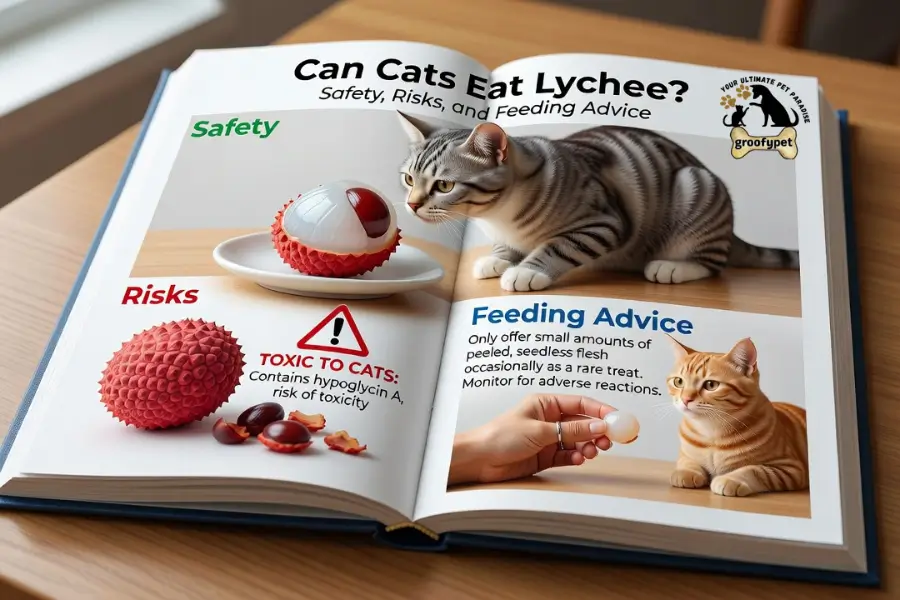
Lychee is a sweet tropical fruit that many people enjoy, but is it safe for cats, or can cats eat lychee? Cats should not be offered lychee as a regular treat because its safety has not been well established in cats, and its skin and seed can pose physical hazards. A tiny accidental taste of the flesh is not automatically an emergency, but the amount eaten and the part swallowed matter.
Cats are obligate carnivores, which means they need nutrients primarily from animal-based foods. Although lychee contains water, natural sugars, and some vitamins, cats do not need this fruit to stay healthy.
If your cat has already eaten lychee, do not panic. Learn which parts may cause problems, what symptoms to watch for, and when to contact your veterinarian.
Can Cats Eat Lychee?
Cats should not be deliberately fed lychee because there is limited reliable evidence establishing its safety for them. While a small taste of the ripe flesh may not cause obvious problems, that does not prove the fruit is completely safe for every cat.
The main concerns include:
- Lychee skin: The tough outer covering may be difficult to chew and digest.
- Lychee seed: The hard seed can create a choking hazard or contribute to an intestinal blockage if swallowed.
- Fruit sugars: The flesh contains natural sugar that cats do not need in their diet.
- Processed lychee: Canned fruit, juice, and desserts may contain added sugar or other ingredients that are unsuitable for cats.
If your cat wants to investigate the fruit on your plate, keep it out of reach. A cat-appropriate treat is a better choice than introducing a food with uncertain feline safety.
Is Lychee Safe for Cats or Toxic?
Lychee, also known as Litchi chinensis, is a tropical fruit with a rough outer peel, juicy flesh, and a large seed. It is popular in many countries and is commonly eaten fresh or used in drinks and desserts.
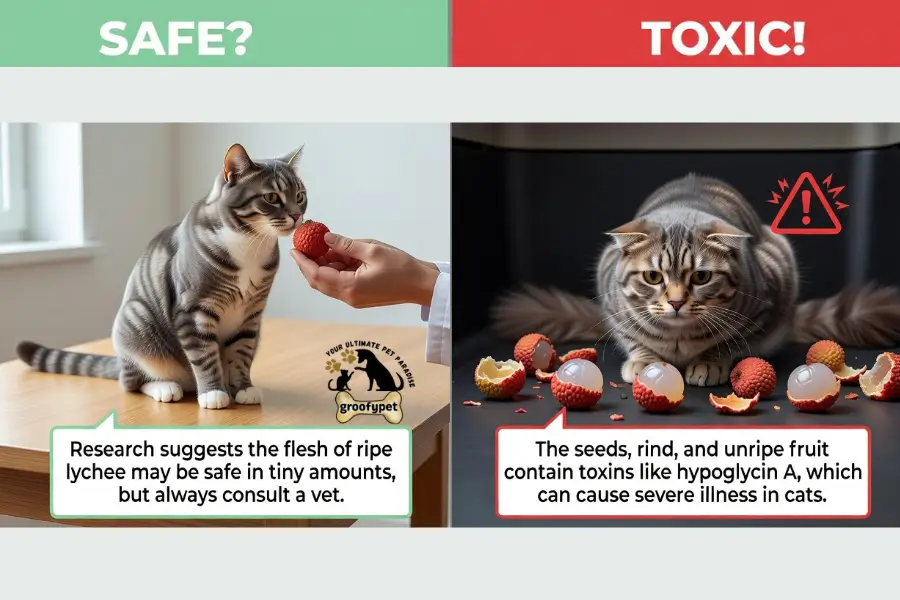
However, evidence about its safety specifically in cats is limited. It is important to distinguish between a food that has been proven toxic to cats and one that is not well studied but may present other risks.
Here is what cat owners should understand:
- The flesh: A small accidental taste does not automatically mean poisoning will occur. However, feline-specific safety information is insufficient to recommend lychee as a treat.
- The peel: The peel is not a suitable food for cats and may cause digestive or physical problems if swallowed.
- The seed: The seed should never be offered because it may cause choking or an intestinal obstruction.
- The processed fruit: Syrup, sweeteners, and other ingredients can introduce additional concerns.
Do not assume that lychee is harmless simply because people eat it. Human food safety and feline food safety are not the same. Likewise, avoid claiming that every part of lychee is poisonous to cats without reliable evidence supporting that conclusion.
Can Cats Eat Different Parts of Lychee?
Not every part of lychee presents the same concern. The following table explains how cat owners should handle each form of the fruit.
| Lychee part or form | Main concern | What cat owners should do |
|---|---|---|
| Fresh lychee flesh | Uncertain feline safety and possible digestive upset | Avoid offering it intentionally |
| Lychee skin | Difficult to chew and a potential digestive or choking hazard | Keep it away from cats |
| Lychee seed | Choking and intestinal blockage risk | Never offer it |
| Canned lychee | Added sugar and syrup | Avoid feeding it to cats |
| Lychee juice | Concentrated sugars and possible additives | Do not offer it as a drink |
| Lychee desserts | Sugar, dairy, sweeteners, or other ingredients | Keep them away from cats |
These recommendations are precautionary. They do not mean that every form of lychee has been proven poisonous to cats.
Can Cats Eat Lychee Flesh?
The flesh is the soft, juicy part surrounding the seed. It contains water and natural sugars, but there is insufficient feline-specific evidence to establish a safe serving size. If your cat licks a little flesh from your finger, monitor it for unusual behavior or digestive problems. Avoid giving additional fruit until you have received veterinary guidance if you are concerned.
Can Cats Eat Lychee Skin?
No. Lychee skin is not an appropriate treat for cats. Its texture can make it difficult to chew, and swallowed pieces may cause digestive problems or create a physical hazard. If your cat swallows a large piece of peel, contact your veterinarian for advice, especially if your cat begins vomiting, retching, or refusing food.
Can Cats Eat Lychee Seeds?
Cats should never be given lychee seeds. The hard seed can cause choking or become lodged in the digestive tract. If your cat swallows a seed, contact a veterinarian promptly, even if your cat initially appears normal. Do not attempt to make your cat vomit unless a veterinary professional specifically instructs you to do so.
Can Cats Eat Canned Lychee?
Canned lychee is generally a poor choice for cats because it often comes packed in sweet syrup. Added sugar offers no nutritional advantage for cats, and rich or unfamiliar foods may upset their stomachs. Check the ingredient label if your cat has already eaten some. If the product contains artificial sweeteners, chocolate, alcohol, or other potentially harmful ingredients, seek veterinary advice promptly.
What Happens If a Cat Eats Lychee?
The effects depend on which part of the fruit your cat ate, how much it swallowed, and whether the product contained other ingredients. A small accidental taste of flesh may cause no noticeable problems. However, digestive upset is possible, and swallowing the skin or seed raises additional concerns.

Watch for the following signs:
- Vomiting or repeated retching
- Diarrhea or unusually soft stools
- Reduced appetite
- Unusual tiredness or weakness
- Signs of abdominal discomfort
- Difficulty swallowing
- Difficulty breathing
These symptoms do not automatically indicate lychee poisoning. They can have many causes, including digestive irritation and physical obstruction.
Seek emergency veterinary care if your cat has trouble breathing, collapses, chokes, or develops severe weakness. Repeated vomiting, abdominal pain, or an inability to keep food down also requires prompt veterinary attention.
Do not wait for symptoms if your cat swallowed a seed or a potentially dangerous ingredient. A veterinarian can assess the risk based on the details of the exposure. Cornell University’s Feline Health Center recommends prompt veterinary consultation when a cat may have ingested a harmful substance
Can Kittens Eat Lychee?
No. It is best not to introduce lychee to kittens because its safety has not been adequately established for cats. Kittens need carefully balanced nutrition to support their growth, bone development, muscle formation, and immune system. Their main food should be a complete and balanced kitten diet appropriate for their age.
Kittens are also small, so a piece of fruit or a hard seed may present a greater practical concern than it would for a larger cat.If you want to reward your kitten, choose a treat made specifically for kittens and follow the feeding instructions on the package. You can also use a small portion of its regular food as a reward.
What Should You Do If Your Cat Eats Lychee?
Finding your cat eating unfamiliar food can be worrying. Fortunately, you can take a few practical steps to assess the situation.
1. Remove the remaining fruit.
Move the lychee, peel, seeds, and any juice or desserts out of reach so your cat cannot eat more.
2. Identify what your cat swallowed
Determine whether it ate the flesh, skin, seed, or a processed product. Check the ingredients if the fruit came from a can or dessert.
3. Contact your veterinarian when needed
Seek advice if the amount is unknown, a seed or substantial piece of peel was swallowed, or your cat has an underlying health concern. Do not wait for symptoms after a potentially dangerous ingestion.
4. Watch your cat carefully
Follow your veterinarian’s instructions and look for vomiting, diarrhea, appetite changes, unusual tiredness, or abdominal discomfort. Seek emergency care for severe symptoms.Never induce vomiting, give human medication, or try home remedies without veterinary direction.
Also Read : Can Cats Eat Jabuticaba? Benefits, Risks, and Safety Tips
Does Lychee Offer Any Benefits for Cats?
Lychee contains water, natural sugars, and nutrients such as vitamin C. These qualities may make it appealing to people, but they do not automatically make it useful for cats.Cats have different nutritional needs from humans. As obligate carnivores, they depend on a diet that supplies essential nutrients, including animal-based protein and taurine.
Here is how lychee’s commonly discussed benefits compare with what cats actually need.
| Claimed benefit | What it means for cats |
|---|---|
| Water content | Fresh water and moisture-rich cat food are better ways to support hydration. |
| Vitamin C | Cats normally produce vitamin C in their bodies, so lychee is not needed as a routine source. |
| Natural sugars | Cats do not need added fruit sugars in their diet. |
| Plant nutrients | They do not replace the nutrients supplied by complete and balanced cat food. |
Lychee should not be used to treat dehydration, vitamin deficiencies, or other health problems. If your cat is not drinking normally or seems unwell, contact your veterinarian rather than relying on fruit.
How Much Lychee Can a Cat Eat?
There is no established, evidence-based lychee serving size that can confidently be recommended for cats. For this reason, the safest approach is not to feed lychee intentionally, but rather to try to calculate a suitable number of pieces. A cat’s response to unfamiliar food may depend on its size, age, health, and individual sensitivity. Removing the seed and skin reduces certain physical hazards but does not establish that the flesh is safe.
If your cat has already eaten a small amount of fresh lychee flesh, contact your veterinarian if you are unsure about the risk. Tell them approximately how much was eaten and when. Do not confuse the absence of immediate symptoms with proof that a food is safe for regular feeding.
Safer Fruit and Treat Alternatives for Cats
If your cat shows interest in your snacks, there are other options worth considering. However, treats should remain a small part of its overall diet.Some cats can tolerate tiny portions of plain watermelon or cantaloupe flesh. Remove all seeds and rind, cut the fruit into small pieces, and offer only a little if your veterinarian agrees it is suitable.
Other practical options include:
- Commercial cat treats: Choose products formulated specifically for cats.
- Plain cooked chicken: Offer a small amount without bones, skin, salt, sauces, or seasonings.
- Plain cooked turkey: Remove bones and avoid butter, gravy, onion, and garlic.
- Your cat’s regular food: A few pieces of its usual kibble can work well as a training reward.
Introduce unfamiliar foods cautiously and stop if your cat develops digestive problems.
Remember that not all human foods are safe for cats. Onions, garlic, chocolate, and certain other ingredients can be dangerous. When in doubt, check with a veterinarian before sharing food from your plate.
Also Read : Can Cats Eat Redcurrants? Safety, Risks and Feeding Tips
Frequently Asked Questions
Can cats eat fresh lychee?
It is best not to offer fresh lychee to cats because feline-specific safety evidence is limited. A small accidental taste of the flesh does not automatically mean your cat will become ill, but the skin and seed should be kept away from pets.
Is lychee poisonous to cats?
Lychee’s toxicity in cats is not well established by the available evidence. It would be inaccurate to label the entire fruit definitively poisonous or completely safe. The seed and skin also present physical hazards that are separate from questions about chemical toxicity.
Can cats eat lychee seeds?
No. Never offer lychee seeds to cats. They can cause choking or an intestinal blockage if swallowed. If your cat has eaten a seed, contact your veterinarian promptly for guidance, even if there are no immediate symptoms.
Can cats eat lychee skin?
Lychee skin is not suitable for cats. Its texture can make it difficult to chew, and swallowed pieces may cause digestive or physical problems. Keep the peel away from your pet and consult a veterinarian if a substantial piece has been swallowed.
What happens if a cat eats one lychee?
The outcome depends on the amount eaten and which parts were swallowed. A small taste of flesh may cause no noticeable effects, but digestive upset is possible. If the seed or skin was swallowed, contact your veterinarian to determine whether an examination is needed.
Can cats drink lychee juice?
Lychee juice is not a recommended drink for cats. It may contain concentrated fruit sugars, added sugar, or other ingredients. Fresh drinking water is the best everyday beverage for a healthy cat.
Can cats eat canned lychee?
Canned lychee is best avoided because it often contains sugary syrup. If your cat has eaten some, check the ingredient list and contact your veterinarian if the product contains potentially harmful ingredients or your cat develops symptoms.
Should I call a vet if my cat eats lychee?
Yes, contact your veterinarian if your cat swallowed a seed or peel, ate an unknown amount, consumed a processed product with questionable ingredients, or develops symptoms. Breathing difficulty, choking, collapse, and severe weakness require emergency veterinary care.
What fruits are safer for cats?
Some cats can tolerate tiny amounts of plain watermelon or cantaloupe flesh without seeds or rind. However, no fruit is necessary for a cat’s diet. Cat-specific treats and complete, balanced cat food are generally more appropriate choices.
Key Takeaways
- Lychee is not a recommended treat for cats because its safety has not been adequately established.
- Never offer lychee skin or seeds because they can create physical hazards.
- Canned lychee, juice, and desserts may contain added sugar or other unsuitable ingredients.
- If your cat eats lychee, identify the amount and parts swallowed and seek veterinary guidance when needed.
- Choose cat-specific treats instead of experimenting with foods that have limited feline safety evidence.
Final Thoughts
So, can cats eat lychee? It is best to avoid feeding lychee to cats intentionally. Although a small accidental taste of the flesh does not automatically mean an emergency, the fruit offers no essential nutritional benefit that cats cannot obtain from an appropriate feline diet.
Keep the peel and seed out of reach, avoid sugary lychee products, and contact your veterinarian if your cat swallows a seed or develops concerning symptoms. When choosing a treat, simple, cat-appropriate options are a more reliable choice.
Can Cats Eat Shallots? Toxicity Risks, Symptoms, and What to Do