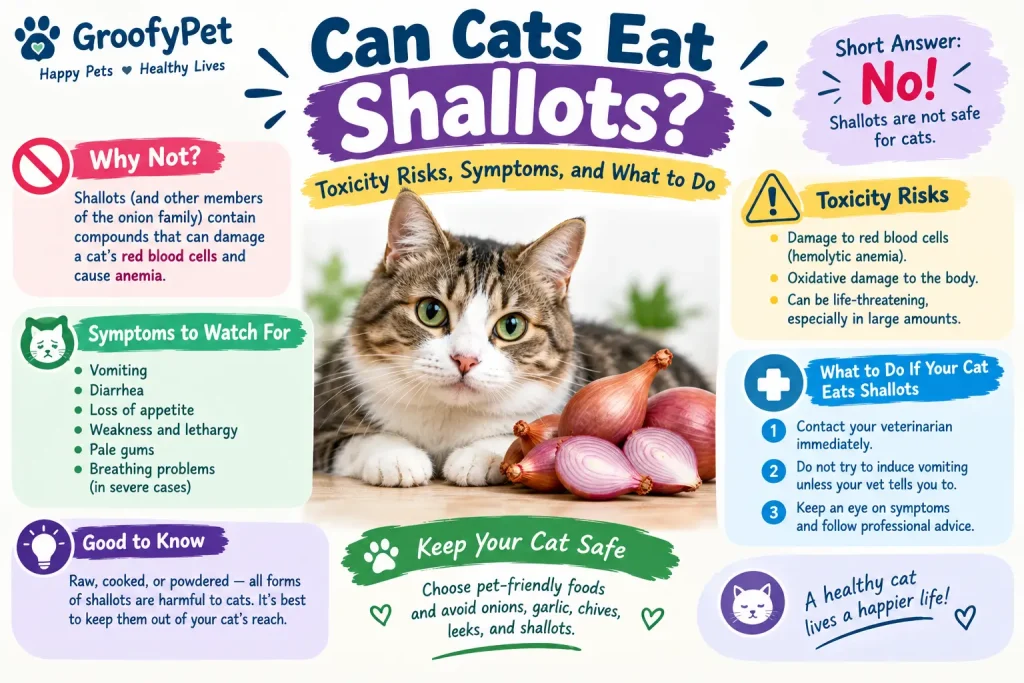
No, cats should not eat shallots. Shallots belong to the Allium family, along with onions, garlic, leeks, and chives. Cats are especially sensitive to the compounds in these plants. Eating shallots can damage a cat’s red blood cells and may lead to anemia.
Most cases start with a small mistake. A cat licks a plate, steals a bite of dinner, or laps up a sauce. This guide explains why shallot toxicity in cats is a real concern, which symptoms to watch for, and what to do after accidental ingestion. It also covers which foods are safer for your cat.
Can Cats Eat Shallots?
No. Cats should not eat shallots in any form. Shallots are poisonous to cats, even though they taste milder than onions to people. They are close relatives of onions, garlic, leeks, and chives, and the whole group carries allium toxicity risk.
Cats are vulnerable because their bodies handle these plant compounds poorly. Their red blood cells are easily damaged by them. Even a small portion can cause trouble in some cats.
Cooking does not fix the problem. Raw, cooked, fried, dried, and powdered shallots all count as toxic foods for cats. If a bite happens by accident, there is no need to panic, but do call a veterinarian for advice. This matters most when you are not sure how much your cat ate.
Why Are Shallots Toxic to Cats?
Shallots contain sulfur compounds. When a cat eats them, these compounds can harm the red blood cells that carry oxygen through the body. Vets call this oxidative damage. It means the cells get stressed and start to break down faster than the body can replace them.
When too many red blood cells break apart, the cat can develop hemolytic anemia. In plain terms, the body does not have enough healthy red blood cells to deliver oxygen. A cat with anemia may seem tired or weak. Gums can look pale, and breathing may speed up.
One tricky part is the delay. The stomach upset may show up within about 6 to 24 hours, but red blood cell damage can build over a few days. A cat may look fine at first and still need care later.
Not every exposure leads to poisoning. A lick of a sauce is very different from a whole shallot. Still, no one can promise a given amount is harmless for your particular cat. That is why a call to your vet is the safest move.
Are Raw Shallots More Dangerous Than Cooked Shallots?
Cooking does not make shallots safe for cats. The compounds that cause harm stay in the food after heat. Each form has its own risks.
Raw shallots are the most obvious danger. Cats may chew a piece out of curiosity, especially if it falls on the floor.
- Cooked shallots are just as unsuitable. Sautéed or roasted shallots may smell good to a cat, but they still carry the same toxicity risk.
- Fried shallots are common as crispy toppings on many dishes. They add oil and salt on top of the allium problem.
- Dried shallot flakes and shallot powder are concentrated. A small pinch of powder can hold more of the plant than it looks like, and it often hides in seasoning blends.
- Foods containing shallots can be the hardest to spot. Sauces, broths, and prepared meals may list shallots in the ingredients without making them obvious.
What Happens If a Cat Eats Shallots?
The outcome depends on several things:
- How much your cat ate
- Your cat’s body size
- The form of the shallot, such as raw, powdered, or mixed into a dish
- Whether the exposure happened once or many times
- Your cat’s own sensitivity
A small cat that eats a large portion faces more risk than a bigger cat that licks a sauce. Repeated exposure is also a concern, since the damage can add up over time.
Symptoms may not appear right away. Some cats show stomach upset within a day. Others look normal for a while and then slow down as anemia develops. Because of this delay, waiting to “see what happens” is not the best plan. Call a veterinarian first.
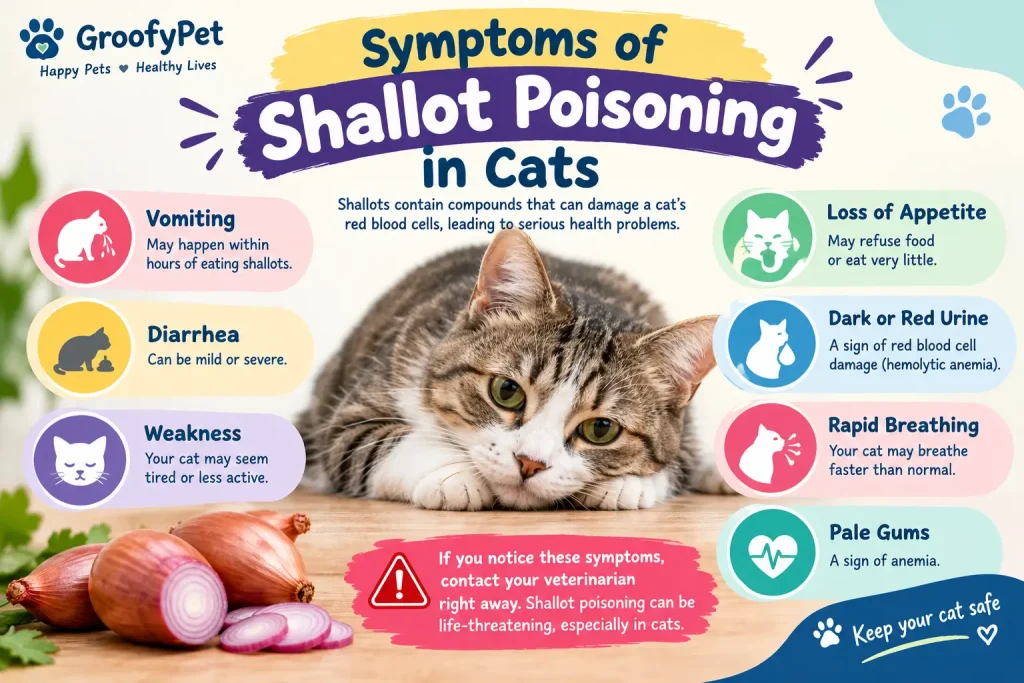
Symptoms of Shallot Poisoning in Cats
Symptoms of poisoning in cats can look a lot like other illnesses. This table shows what owners often notice. Only a veterinarian can tell what is going on, so use it as a guide for when to call, not as a way to diagnose your cat.
| Symptom | What It May Look Like |
|---|---|
| Vomiting | Throwing up food or liquid |
| Diarrhea | Loose or watery stool |
| Weakness | Less energy than usual |
| Loss of appetite | Refusing normal food |
| Pale gums | Gums appear lighter than normal |
| Fast breathing | Breathing faster than usual |
| Fast heartbeat | Heart rate may increase |
| Dark urine | Urine may appear unusually dark |
| Lethargy | Sleeping or resting much more |
| Collapse | Severe weakness or inability to stand |
Pale gums, fast breathing, dark urine, or collapse need urgent veterinary care. Do not wait to see if they pass.
How Much Shallot Is Toxic to Cats?
There is no recommended serving size of shallots for cats. They should not be fed this food on purpose, so no amount counts as a safe treat.
How risky an exposure is depends on the dose, your cat’s size, and the form of the shallot. Cats appear to be more sensitive to Allium plants than many other pets. Published toxicity numbers exist in veterinary references, but they are meant for professionals judging an accidental ingestion. They are not feeding advice.
If you want to know whether your cat’s situation is concerning, contact your veterinarian or a recognized animal poison-control service. Share what your cat ate, about how much, and when. Check their current guidance rather than relying on a number you found online.
Also Read : Can Cats Eat Couscous? Safety Risks and Benefits
What Should You Do If Your Cat Eats Shallots?
Stay calm and move step by step.
- Remove the rest of the shallot so your cat cannot eat more.
- Estimate how much was eaten. Look at what is missing from the plate or package.
- Note the form. Was it raw, cooked, dried, powdered, or part of another food?
- Call a veterinarian or an animal poison service. In the United States, the ASPCA Animal Poison Control Center and Pet Poison Helpline are two well-known options. Look up their current phone numbers and save them now. They may charge a consultation fee.
- Watch your cat closely and follow the instructions the professional gives you.
- Do not try to make your cat vomit unless a veterinarian tells you to. Home methods can be unsafe for cats.
Keep the food package or ingredient list nearby. It helps the vet figure out what your cat actually ate. If your cat already seems weak, has pale gums, or is breathing fast, go to an emergency clinic.
Can Cats Eat Cooked Shallots?
No. Cooked shallots are not safe for cats. Heat does not remove the compounds that harm red blood cells.
Shallots are easy to miss in everyday dishes. They show up in sauces, soups, gravies, meat dishes, and many prepared foods. A little cooked meat from your plate may look harmless but can contain shallots in the seasoning. When in doubt, do not share it.
Can Cats Eat Shallot Powder?
No. Shallot powder is a concentrated form and deserves extra care. It can be a hidden ingredient in seasoning mixes, chips, soups, and other processed foods.
Check the ingredient label before you share any human food with your cat. Look for shallot, onion, and garlic in all their forms, including powders and flakes. Labels that say “natural flavors” or “spices” may not tell the full story, so skip the food if you are unsure.
Must Read : Can Cats Eat Cantaloupe? Risks, Benefits and Safe Alternatives!
Foods Related to Shallots That Cats Should Avoid
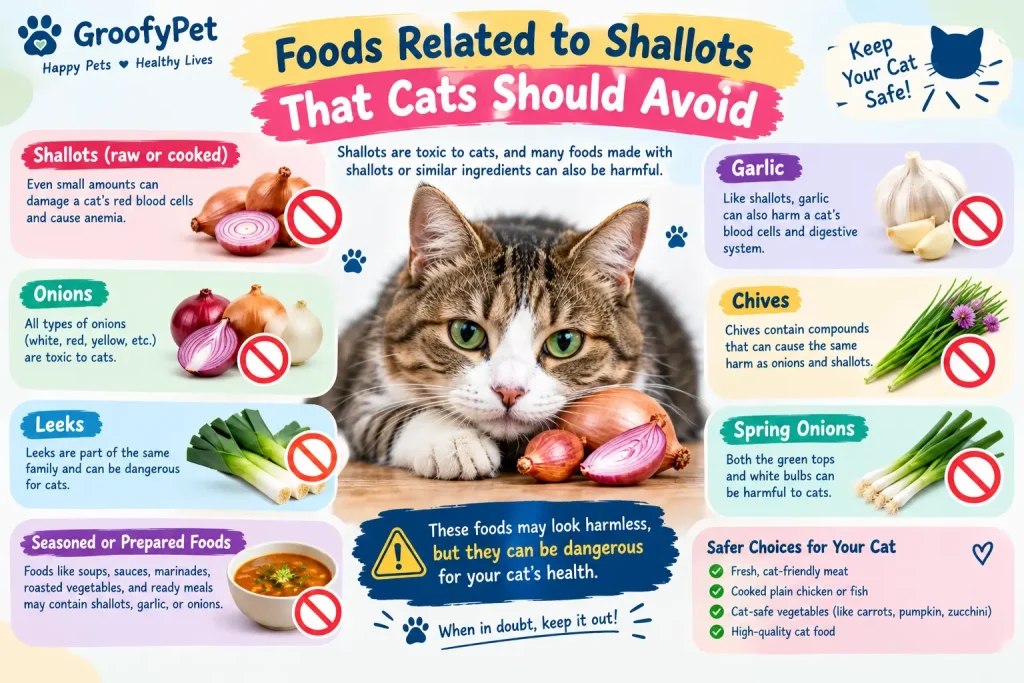
Shallots are one member of a larger group. No Allium is a safe swap for another.
| Food | Safe for Cats? | Reason |
|---|---|---|
| Shallots | No | Allium toxicity risk |
| Onions | No | Can damage red blood cells |
| Garlic | No | Toxic to cats |
| Leeks | No | Allium toxicity risk |
| Chives | No | Allium toxicity risk |
Sources sometimes disagree about which Allium is the most toxic. Garlic toxicity and onion toxicity in cats are both well documented, and the practical advice is the same. Skip all of them. Garlic is also not a proven flea remedy, so please do not use it that way.
What Are Safer Foods for Cats?
Cats do best on a complete and balanced cat food. That covers the nutrients they need, and treats should stay a small part of the diet.
If you want to share a bite of human food, choose simple, plain options such as:
- Cooked chicken
- Cooked turkey
- Certain cooked fish
- Small amounts of other plain, cooked meat
Keep these plain, with no seasoning, sauce, or oil. Never add onion, garlic, shallots, or related ingredients. Check with your veterinarian about which cat-safe foods fit your cat’s age and health.
Can Cats Eat Foods Cooked With Shallots?
Usually not. Even when the shallot itself is gone, the dish may still carry it. Foods that can be a problem include:
- Shallot sauce
- Shallot gravy
- Stir-fried vegetables
- Seasoned meat
- Soups and broths
- Restaurant food
Restaurant meals are hard to judge because you rarely know every ingredient. Plain food cooked at home for your cat is the better choice.
Frequently Asked Questions
Can cats eat shallots?
No. Shallots are in the Allium family and can harm a cat’s red blood cells. They should not be fed on purpose in any form. If your cat eats some by accident, contact a veterinarian for guidance.
Are shallots poisonous to cats?
Yes. Shallots are poisonous to cats because of the sulfur compounds they contain. These can damage red blood cells and may lead to anemia. How serious it gets depends on the amount, your cat’s size, and the form eaten.
Can cats eat cooked shallots?
No. Cooking does not remove the harmful compounds. Cooked shallots are just as unsafe as raw ones, and they often hide in sauces, gravies, and soups.
Can cats eat raw shallots?
No. Raw shallots carry the same Allium toxicity risk. A whole raw shallot or a large piece is a reason to call your vet right away.
Can cats eat shallot powder?
No. Shallot powder is concentrated and often hides in seasoning blends and processed foods. Read ingredient labels before sharing any human food with your cat.
What happens if my cat eats a small piece of shallot?
It depends on the size of the piece, your cat’s weight, and the form. A small piece is not always an emergency, but no one can promise it is harmless. Call your veterinarian or a poison control service for advice and watch for symptoms.
How long does shallot poisoning take to show symptoms?
Stomach upset often appears within about 6 to 24 hours, though sometimes it takes a few days. Anemia can develop later. Because signs can be delayed, call your vet soon rather than waiting.
Can shallots cause anemia in cats?
Yes. Shallots can damage red blood cells, which can lead to hemolytic anemia. This is why your vet may want to check your cat even if symptoms seem mild at first.
What should I do if my cat ate food containing shallots?
Remove the food, note how much was eaten, and check the ingredient list. Then call a veterinarian or animal poison service. Do not induce vomiting at home unless a professional tells you to.
Are onions and shallots equally dangerous to cats?
Both are Allium vegetables and both should be avoided. Sources vary on which is more toxic, so treat them as the same level of concern. The safest approach is to keep every Allium away from your cat.
Can kittens eat shallots?
No. Kittens are small and may be even more at risk from a small amount. Keep shallots and all Allium foods away from them.
What vegetables are safer for cats?
Cats do not need vegetables, because they get what they need from a balanced cat diet. Some cats nibble small amounts of plain, cooked options like carrots or green beans. Ask your vet before adding anything new.
Key Takeaways
- Shallots are not a safe food for cats.
- Shallots belong to the Allium family with onions, garlic, leeks, and chives.
- They can damage red blood cells and may lead to anemia.
- Symptoms may be delayed, sometimes by a day or more.
- Cooked, fried, dried, and powdered forms should be avoided too.
- If your cat eats a concerning amount, get veterinary guidance.
- Never feed shallots to a cat on purpose.
Final Thoughts
Keeping shallots away from your cat is simple once you know the risk. Check ingredient labels, keep plates out of reach, and stick to plain cat-safe foods for treats. Most cases of accidental ingestion can be handled well when owners act early.
If your cat does eat shallots, call your veterinarian or a poison-control service instead of waiting for symptoms. A quick phone call can tell you whether to monitor at home or head to the clinic.
I based the toxicity and symptom details on the veterinary and pet-care pages from your SERP search, including PDSA, Whisker, and Cats Luv Us. Before publishing, check the claims against a current veterinary source and add the poison-control phone numbers you want to feature.
Is Mustard Safe for Cats? What Cat Owners Need to Know
Homemade Cat Food Guide for Scottish Fold Cats | Best Ingredients and Feeding Tips