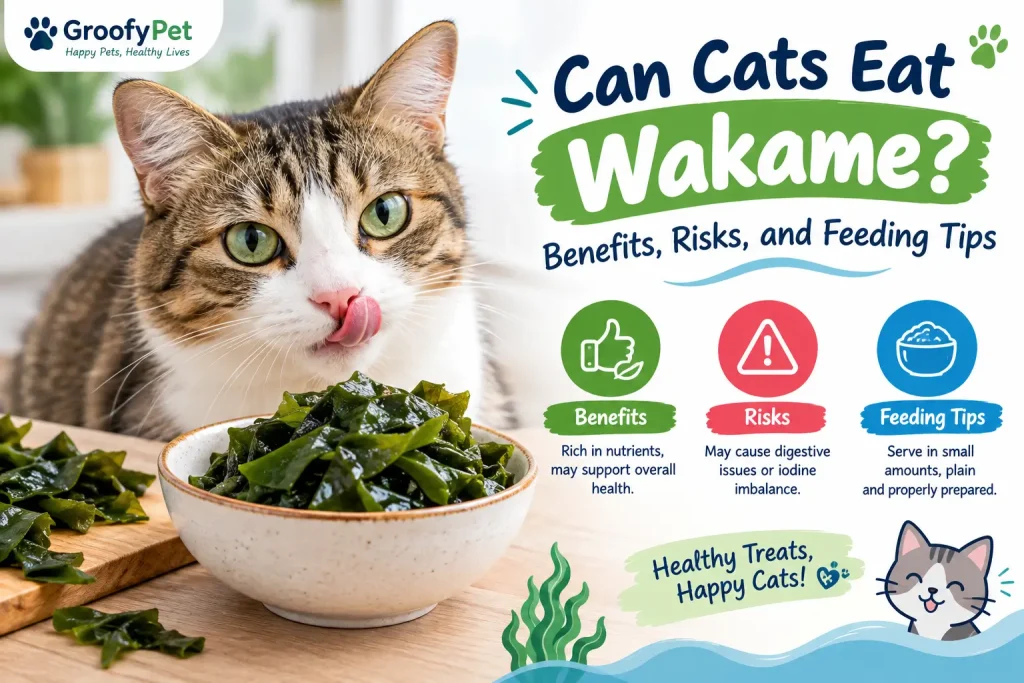
Can cats eat wakame? Yes, a tiny amount of plain, unsalted wakame is unlikely to harm a healthy adult cat. Cats do not need it, though. Wakame is an edible brown seaweed that people eat in miso soup and salads. The real concerns are iodine, sodium, preparation, portion size, and added ingredients like garlic, onion, and soy sauce. Complete and balanced cat food should stay the foundation of your cat’s diet.
What Is Wakame?
Wakame (Undaria pinnatifida) is an edible brown seaweed. It is sometimes called sea mustard. It grows in cool coastal waters and has been part of Japanese and Korean cooking for centuries.
You will meet it in a few forms:
- Fresh wakame: soft and green, with a mild sweet flavor.
- Dried wakame: thin dark pieces that expand when soaked.
- Salt preserved wakame: packed in salt and rinsed before cooking.
- Rehydrated wakame: dried or salted wakame soaked in water until soft.
Most people eat it in miso soup, seaweed salad, and other Japanese dishes. Wakame is a sea vegetable, but it is not a typical food for a carnivore like your cat.
Can Cats Eat Wakame?
Cats can eat a very small amount of plain wakame. Cats are obligate carnivores, so they need nutrients found in animal tissue. Seaweed does not fill that gap.
Preparation matters more than the seaweed itself:
- Plain wakame: low risk in tiny amounts.
- Salted wakame: the salt is the problem.
- Seasoned wakame: sesame oil, soy sauce, sugar, or spices make it a poor choice.
- Wakame soup: the broth and other ingredients cause most of the concern.
- Processed foods with wakame: check the full ingredient list.
Plenty of pet sites call seaweed safe for cats. That is fair for plain, unsalted versions, but I would not treat it as a blanket yes.
Is Wakame Safe for Cats?
Wakame is not widely listed as a toxic food for cats. That is not the same as proven safe for regular feeding. Research on seaweed in cats is limited.
These points decide how safe it is:
- Portion: a pinch is very different from a bowl.
- Plain preparation: no salt, oil, or seasoning.
- Iodine: levels vary between products.
- Sodium: salt-preserved wakame can carry a lot.
- Digestion: Cats are not built to digest much plant material.
- Sensitivity: some cats get an upset stomach from any new food.
Being edible for humans does not make a food appropriate for cats. Think of wakame as a rare nibble, not a health food.
Can Cats Eat Dried Wakame?
Dried wakame is more concentrated than the rehydrated kind. Nutrients, iodine, and any salt are packed into a small, brittle piece.
Here is why I would skip it:
- Concentration: a small dry piece holds more per bite than soft wakame.
- Texture: dry seaweed is stiff and can scratch or stick in the mouth.
- Choking risk: large dry pieces are hard to chew well.
- Expansion: dried wakame swells a lot in water. We do not have good evidence that this blocks a cat’s gut, but there is no reason to test it.
If you still want to offer some, rehydrate it first and cut it very small.
Can Cats Eat Rehydrated Wakame?
Rehydrated wakame is the more sensible form. Soaking softens the texture and adds water, so a piece is less concentrated than a dry one.
If you offer it, keep these steps in mind:
- Use plain wakame with no seasoning.
- Soak it in clean water until soft.
- Rinse it well to wash away surface salt.
- Chop it into tiny pieces, smaller than a fingernail.
- Offer a very small amount mixed into regular food.
- Skip any seasoned or marinated type.
Rinsing helps with surface salt but will not remove the iodine.
Is Wakame High in Iodine?
It can be. Iodine is a mineral that the thyroid gland uses to make hormones, and these hormones help control metabolism. Cats need some iodine, but complete cat foods already include it.
Too much iodine can be a problem over time. Seaweed varies a lot in iodine depending on species, growing area, and processing. Kombu is often much higher than wakame, but wakame still counts as an iodine-rich food.
Research on iodine and feline thyroid disease is mixed, so I will not claim that one serving causes harm. Here is what is reasonable:
- Do not use wakame as an iodine supplement.
- Do not feed it regularly.
- Ask your vet first if your cat has thyroid problems or is on thyroid medication.
Is Wakame High in Sodium?
Plain wakame is not especially salty. The sodium comes from how it is handled. Many wakame products are preserved in salt, and prepared dishes add more.
- Plain-dried wakame: sodium varies, so check the label.
- Salted preserved wakame: can be very salty until rinsed.
- Seasoned wakame: often has added salt and soy sauce.
- Miso soup: miso and broth add a lot of sodium.
- Sauces: soy-based sauces are high in salt.
Too much salt can cause dehydration and extreme thirst in cats, and severe cases can lead to salt poisoning. Cats do not need salty human food.
Potential Benefits of Wakame for Cats
Must Read : Can Cats Eat Watercress? Benefits, Risks, and Safe Feeding Guide
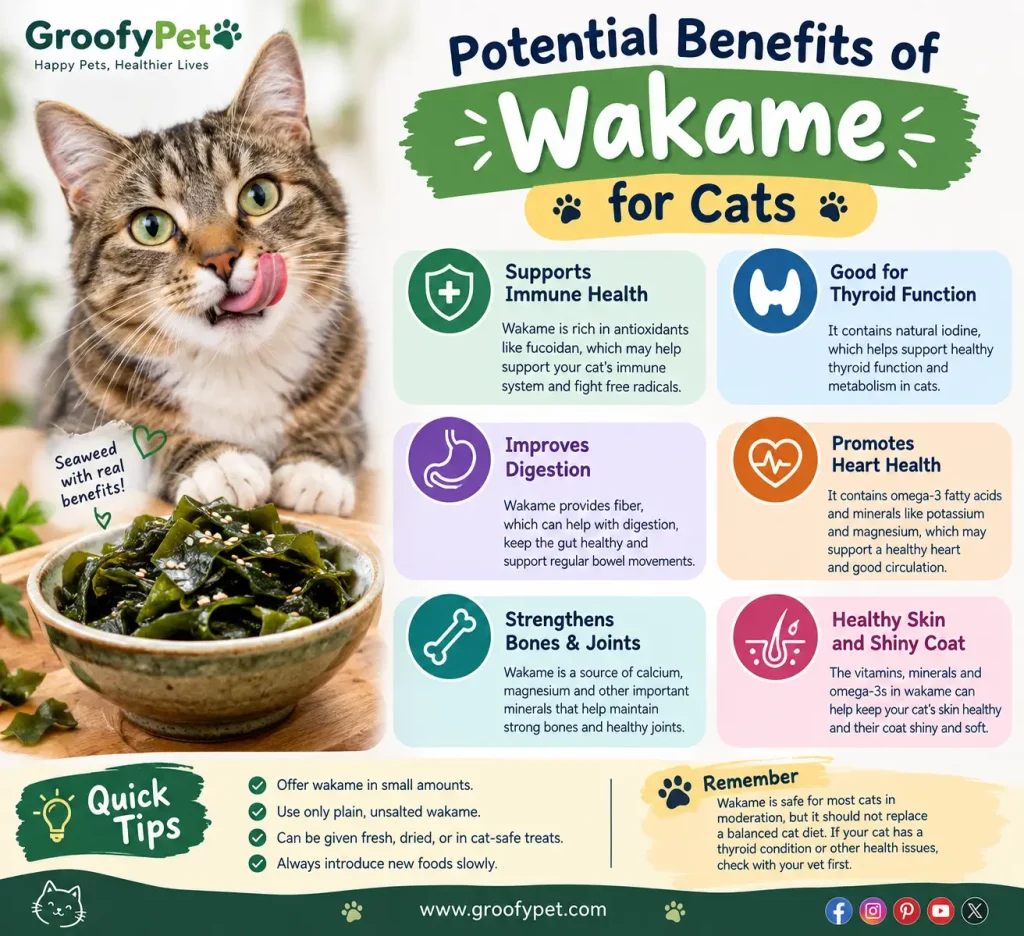
- Wakame contains iodine, minerals, some vitamins, fiber, and plant compounds such as antioxidants.
- Some sources also mention omega-3 fats and prebiotics, which may support gut bacteria, skin, and coat.
- Rehydrated wakame also adds a little water. Keep this in perspective.
- Most of these claims come from human nutrition or general seaweed research, not studies in cats.
- A properly made cat food already supplies what your cat needs.
- Some commercial cat treats include wakame as an ingredient, such as Catit Creamy Superfoods with Coconut & Wakame.
- Those are formulated for cats, which is different from sharing your own seaweed.
Wakame is not necessary for feline health.
Risks of Feeding Wakame to Cats
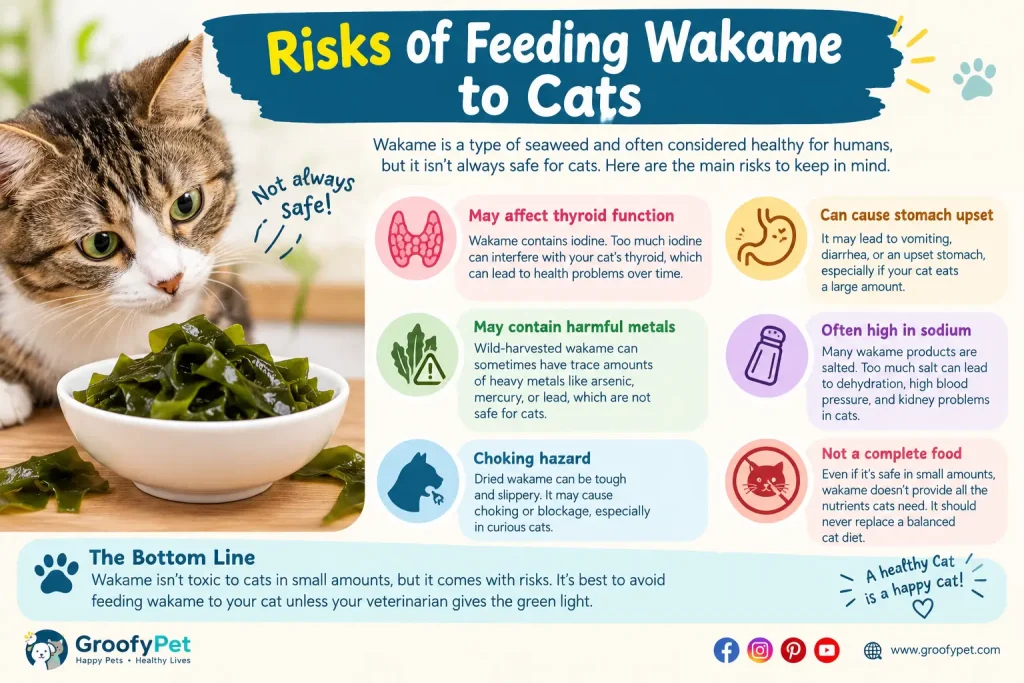
Some concerns are well established, like salt and toxic seasonings. Others are possibilities because cat-specific research is thin.
- Excess iodine: Seaweed iodine varies. Regular feeding could add more than your cat needs. (General concern.)
- High sodium: Salted or seasoned wakame can be very salty. Too much salt harms cats. (Established.)
- Seasonings: Garlic, onion, chili, and soy sauce are common in prepared wakame. Garlic and onion are toxic to cats. (Established.)
- Digestive upset: Cats may vomit or get loose stools from a new food. Fiber and the slimy texture can bother some. (Possible.)
- Large pieces: Long strands can be hard to chew. Cut everything small. (Common sense.)
- Dried seaweed texture: Dry pieces are stiff and brittle. They are best avoided. (Practical concern.)
- Excessive feeding: Even a harmless food can cause trouble in a large amount. Keep it a rare nibble. (General concern.)
- Unbalanced diet: Seaweed does not replace meat-based nutrition. Treats should stay a very small part of intake. (Established principle.)
- Prepared dish ingredients: Soups, salads, and snacks hide oils, sugar, and sauces. Check labels. (Established.)
- Individual sensitivity: Every cat reacts differently. Senior cats or cats with thyroid, kidney, or heart disease need vet advice first. (Possible.)
Seaweed can also pick up heavy metals or pesticides. If you offer any, buy human-grade products from a reputable brand.
Can Cats Eat Wakame in Miso Soup?
No, miso soup is not a good food for cats. The problem is not only the wakame. Miso soup usually contains:
- Miso paste
- Salt and soy sauce
- Dashi broth
- Scallions, onion, or garlic
The salt content is too high for cats, and onion-family ingredients are toxic. If your cat sips a little broth, watch for symptoms. Do not serve it on purpose.
Can Cats Eat Seasoned Wakame?
Avoid it. Seasoned wakame, like the bright green seaweed salad in many restaurants, often contains:
- Sesame oil
- Soy sauce
- Chili
- Sugar
- Vinegar
- Salt
- Garlic or onion
Plain wakame and prepared wakame snacks are very different foods. The seasoning is usually the bigger risk.
How Much Wakame Can Cats Eat?
| Wakame Type | General Guidance | Main Concern |
|---|---|---|
| Plain rehydrated wakame | Very small occasional amount | Iodine |
| Dried wakame | Avoid large pieces | Concentration and texture |
| Salted wakame | Best avoided | Sodium |
| Seasoned wakame | Best avoided | Added ingredients |
| Wakame soup | Not recommended | Salt and seasonings |
There is no veterinary-approved dose for wakame in cats, so I will not invent one. These are conservative guidelines. A vet who knows your cat can give better advice.
Your cat’s regular food should provide complete and balanced nutrition. Treats and extras should stay a very small part of the day.
Can Kittens Eat Wakame?
I would not offer it. Kittens grow fast and need complete kitten food. Their small bodies also mean that iodine or salt has a bigger effect per bite. Skip unnecessary human foods and let kitten food do the work.
Can Cats Eat Wakame Every Day?
No. Daily feeding is unnecessary and adds risk. Iodine from seaweed could build up across days, and the sodium adds up too. Wakame also offers little compared with complete cat food. If your cat loves it, keep it a rare treat.
What Happens If a Cat Eats Wakame?
A small bite of plain wakame will often cause no problems. Signs of upset can include:
- Vomiting
- Diarrhea
- Drooling
- Reduced appetite
- Stomach discomfort
- Unusual behavior
What you see depends on how much was eaten and what else was in it. A cat that ate salty soup or garlic seasoned seaweed is at higher risk than one that nibbled plain wakame.
What Should You Do If Your Cat Eats Wakame?
- Identify the type. Was it plain, salted, or seasoned?
- Check dried or prepared. Dried pieces and seasoned dishes carry more risk.
- Read the ingredients. Look for onion, garlic, and heavy salt.
- Estimate the amount. A nibble is different from a whole bowl.
- Note the time. Your vet may ask.
- Monitor your cat. Keep fresh water available and watch for symptoms.
- Call a vet when needed. Do this if a large amount was eaten or concerning ingredients were involved.
If the product contained onion or garlic, call your vet or an animal poison service right away. Do not make your cat vomit unless a veterinary professional tells you to.
Wakame vs Other Seaweeds for Cats
| Seaweed | Common Form | Main Consideration for Cats |
|---|---|---|
| Wakame | Dried or rehydrated | Iodine and sodium |
| Nori | Dried sheets | Salt and seasoning |
| Kombu | Dried | Very high iodine potential |
| Dulse | Dried flakes | Iodine and sodium |
| Sea lettuce | Fresh or dried | Preparation and iodine |
There is not enough reliable evidence to name a best seaweed for cats, so I will not rank them.
Can Cats Eat Nori and Other Seaweed?
Different seaweeds have different nutrient profiles. Nori is thin and crisp, and snack versions are often salted or flavored. Kombu can be very high in iodine. Some pet sites say cats can have kelp, dulse, nori, and wakame, but plain and tiny is the common rule. A food being healthy for humans does not make it right for cats.
Safe Human Foods for Cats
Some plain foods suit occasional treats:
- Plain cooked chicken
- Plain cooked turkey
- Plain cooked beef
- Plain cooked fish, boneless
- Small amounts of certain cat safe vegetables
These are treats, not meal replacements. Keep them unsalted and unseasoned.
Also Read : Can Cats Eat Acorn Squash? Benefits, Risks, and Safe Feeding Guide
Foods Cats Should Avoid
- Onion, garlic, chives, and leeks: can damage red blood cells.
- Chocolate: contains compounds toxic to pets.
- Alcohol: dangerous even in small amounts.
- Caffeine: coffee, tea, and energy drinks.
- Grapes and raisins: linked to kidney problems in dogs and generally avoided for cats too.
- Xylitol: a sweetener most known as a danger to dogs, but best kept away from cats.
When unsure, check ASPCA or Pet Poison Helpline, or call your vet.
Frequently Asked Questions
Can cats eat wakame?
Yes, a tiny amount of plain, unsalted wakame is unlikely to harm a healthy adult cat. It is not a needed food. Skip seasoned or salty types, and keep portions rare and very small.
Is wakame safe for cats?
Plain wakame is generally low risk in small amounts. Safety depends on preparation, portion size, and iodine content. Salt, garlic, onion, and sauces are the bigger dangers. Ask your vet if your cat has health problems.
Can cats eat dried wakame?
It is better to avoid dried wakame. Dry pieces are concentrated, stiff, and hard to chew. Rehydrate it, rinse it, and chop it very small if you offer any.
Can cats eat rehydrated wakame?
Yes, in a very small amount. Soak it, rinse off salt, and cut it into tiny pieces. Use it only occasionally, mixed into regular food, and never in seasoned form.
Can cats eat salted wakame?
It is best avoided. Salt preserved wakame can contain a lot of sodium, and too much salt harms cats. Rinsing reduces surface salt but does not make it a good regular food.
Is wakame high in iodine?
It can be, and levels vary by product. Cats need some iodine, but complete cat food supplies it. Too much may be a concern over time, especially in cats with thyroid disease.
Can cats eat wakame in miso soup?
No. Miso soup contains salt, soy sauce, and sometimes onion or garlic. These are bigger concerns than the seaweed. Keep soup away from cats and call your vet if your cat ate a lot.
Can cats eat nori?
Plain, unsalted nori in a tiny piece is generally low risk. Nori snacks often contain salt, oil, or seasonings, so avoid those. Like other seaweed, it is a rare treat at most.
What seaweed is safe for cats?
No seaweed is proven best for cats. Plain, unsalted, human grade seaweed in tiny amounts is the usual advice. Avoid seasoned products, and be extra careful with high iodine types like kombu.
Key Takeaways
- A tiny amount of plain wakame is unlikely to harm most healthy adult cats.
- Cats do not need wakame to be healthy.
- Plain wakame is very different from seasoned or salted types.
- Wakame can be a notable source of iodine, and levels vary.
- Salt preserved and prepared wakame can be high in sodium.
- Rehydrated, rinsed, and finely chopped wakame is a safer form than dried.
- Keep portions very small and occasional, and avoid kittens.
- Call a vet if your cat ate a large amount or a product with onion or garlic.
Final Thoughts
Wakame is not a dangerous food in the way chocolate or onions are, but it is also not something your cat needs. A pinch of plain, rinsed wakame is a very different thing from salty soup or seasoned seaweed salad.
Your cat gets what it needs from a complete and balanced cat food. If you want to share a treat, plain cooked meat is a simpler choice. And if your cat has thyroid, kidney, or heart issues, check with your vet before offering any seaweed.