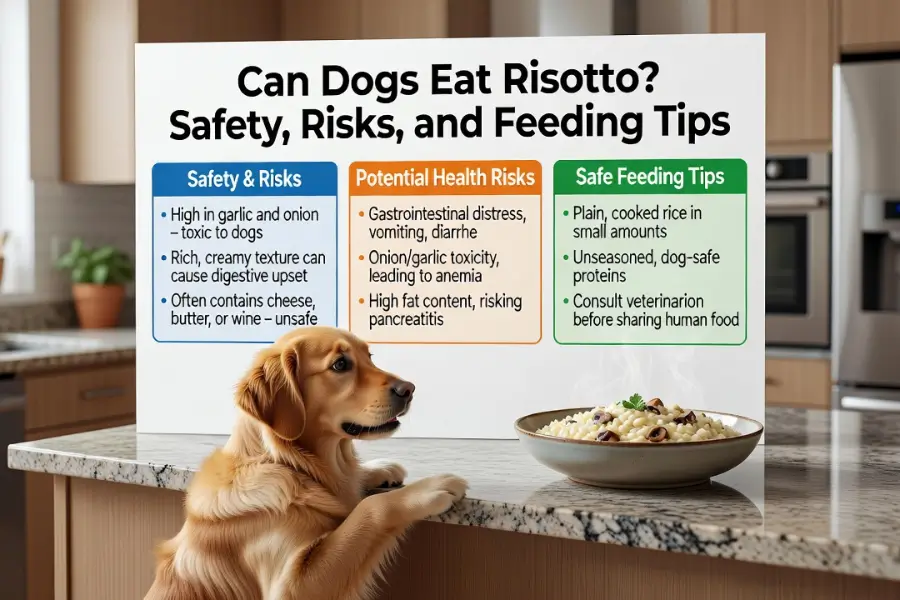
Risotto may look like a simple rice dish, but its ingredients can make it unsuitable for dogs. Dogs may eat a small amount of plain, fully cooked risotto made with dog-safe ingredients, but traditional risotto is best avoided. Onion, garlic, salty broth, butter, and cheese can create health risks depending on the recipe and amount eaten.
If your dog has already eaten risotto, do not panic. Check the ingredients first, especially for onion and garlic. These ingredients can damage a dog’s red blood cells, even when they are cooked or mixed into a sauce. Contact your veterinarian promptly if the dish contains either ingredient.
In this guide, you will learn which risotto ingredients are safe, what risks to watch for, how much may be appropriate, and what to do if your dog eats a seasoned rice dish.
Can Dogs Eat Risotto Safely?
The answer depends on how the risotto was prepared. Plain, fully cooked rice is generally safe for most dogs when served in moderation. However, traditional risotto contains several additional ingredients that may cause problems.
Most risotto recipes use Arborio rice, broth, butter or oil, cheese, and seasonings. Many also include onion or garlic for flavor. Some recipes contain cream, mushrooms, seafood, or wine.
These additions change the safety of the meal. Onion and garlic are toxic to dogs, while rich ingredients such as butter and cheese may cause digestive upset. Broth can also contain high levels of sodium or hidden seasonings.
If you want to share rice with your dog, plain cooked rice is a better option than a restaurant-style risotto. You can also serve a small amount of plain, cooked chicken alongside it, provided both foods suit your dog’s dietary needs.
Risotto should never replace your dog’s complete and balanced food. It offers no special nutritional advantage over simpler, dog-friendly alternatives.
What Is Risotto Made Of?
Risotto is an Italian rice dish known for its creamy texture. It is usually prepared by slowly adding broth to short-grain rice while stirring.
The exact ingredients vary by recipe, restaurant, and personal preference. Understanding the ingredients is the first step in deciding whether a particular dish is appropriate for your dog.
Common ingredients include:
- Arborio rice: A starchy rice that becomes soft and creamy during cooking.
- Broth or stock: Chicken, beef, or vegetable broth adds flavor but may contain onion, garlic, and salt.
- Butter or olive oil: These ingredients add fat and calories.
- Parmesan cheese: This cheese adds flavor but also contributes fat and sodium.
- Onion and garlic: Common flavoring ingredients that are toxic to dogs.
- Mushrooms: Some commercially sold edible mushrooms are suitable for dogs when prepared plainly, but wild mushrooms can be dangerous.
- Cream and additional cheese: These ingredients can increase the fat content.
- Herbs and seasonings: Their safety depends on the specific ingredient and quantity.
A risotto recipe may look harmless while containing unsafe ingredients in its broth or seasoning mixture. Always check the complete recipe rather than judging the dish by its appearance.
Which Risotto Ingredients Are Safe or Unsafe for Dogs?
The following table explains the main ingredients dog owners should understand before sharing risotto.
| Ingredient | Safety for dogs | Important notes |
|---|---|---|
| Plain cooked rice | Generally safe | Offer small portions as an occasional extra. |
| Plain cooked chicken | Generally safe | Remove bones, skin, excess fat, and seasoning. |
| Olive oil | Usually tolerated in tiny amounts | Too much may upset the stomach. |
| Butter | Best limited or avoided | High in fat and calories. |
| Parmesan cheese | Not inherently toxic | Contains fat and sodium; dairy may cause digestive upset. |
| Onion | Unsafe | Can damage red blood cells. |
| Garlic | Unsafe | Can cause red blood cell damage and anemia. |
| Salt-heavy broth | Best avoided | Excess sodium can be harmful. |
| Plain, store-bought edible mushrooms | Generally tolerated when properly prepared | Avoid wild or unidentified mushrooms and unsafe seasonings. |
| Cream | Best avoided as an addition | High in fat and may cause digestive problems. |
| Plain cooked fish | May be suitable | Remove bones and avoid seasoning. |
The safety of each ingredient does not automatically make the finished dish safe. A risotto containing plain rice and cooked chicken may still be unsuitable if the broth contains onion or garlic.
Potential Benefits of Risotto for Dogs
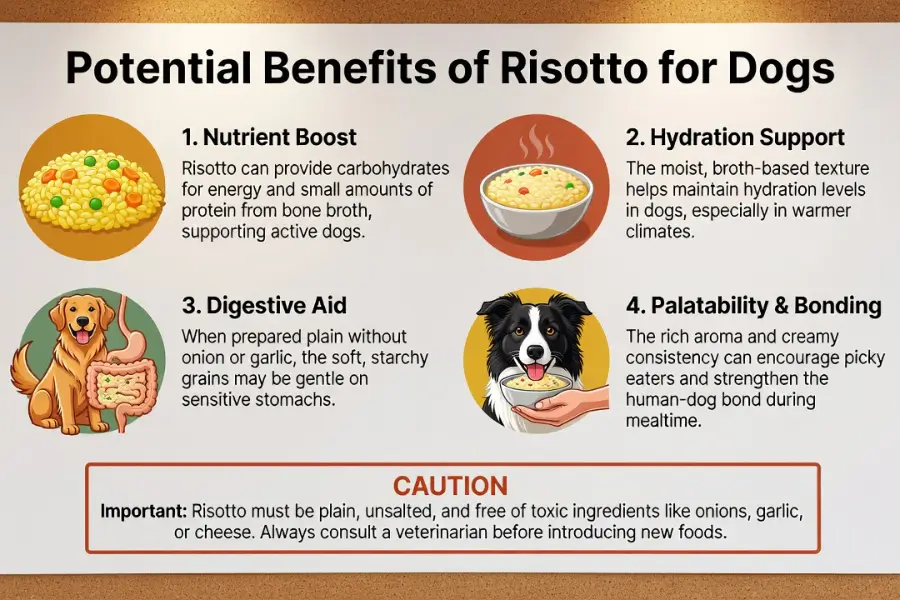
Risotto is not a necessary food for dogs, but some of its plain ingredients can provide useful nutrients. These benefits come from the individual ingredients rather than the prepared dish itself.
1. Rice Provides Energy
Cooked rice contains carbohydrates that supply energy. Plain white rice is also soft and easy for many dogs to chew.However, rice does not provide all the nutrients a dog needs. It should not replace a complete and balanced diet.
2. Chicken Provides Protein
Some risotto recipes include chicken. Plain, fully cooked, boneless chicken provides protein that supports muscle maintenance and other normal body functions. The benefit is reduced when chicken is cooked with excess salt, rich sauces, onion, or garlic.
3. Soft Rice May Be Easy to Chew
Well-cooked rice has a soft texture that many dogs can eat without difficulty. It may be convenient as a small addition to a meal for dogs that tolerate it well. Soft texture does not make every rice dish appropriate, however. The added ingredients still matter.
4. Simple Ingredients Can Add Variety
A small amount of plain rice or an appropriate protein can add variety to a dog’s usual meals. These extras should remain limited so they do not displace nutritionally complete food.Important: Risotto should not be used to treat vomiting, diarrhea, or other medical problems without veterinary guidance. Dogs with diabetes, food allergies, digestive disease, or other health conditions may need a specific diet.
Also Read : Can Dogs Eat Cardoon? Benefits, Risks, and Feeding Tips
Risks of Feeding Risotto to Dogs
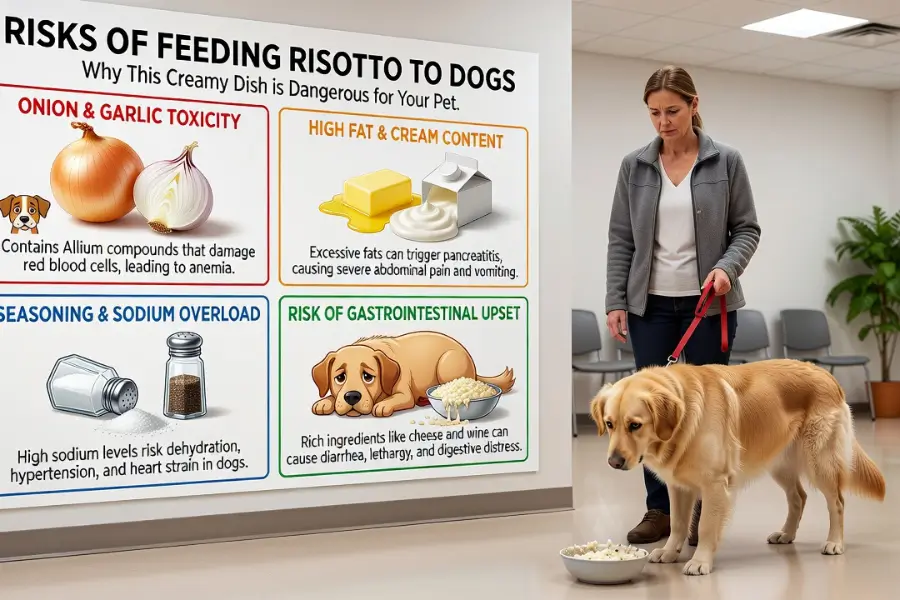
Traditional risotto can contain ingredients that cause anything from mild stomach upset to serious poisoning. The risk depends on the recipe, the quantity eaten, and your dog’s size and health.
1. Onion and Garlic Toxicity
Onion and garlic are among the most important ingredients to avoid. They belong to the Allium family and can damage red blood cells, potentially leading to hemolytic anemia, a condition in which red blood cells break down.Both raw and cooked forms can be harmful. Onion and garlic powders are also a concern because they may be concentrated.
2. Excessive Fat
Butter, cream, oil, and cheese can make risotto rich in fat. A large or fatty meal may cause vomiting, diarrhea, or abdominal discomfort.
High-fat foods can also contribute to pancreatitis, a potentially serious inflammation of the pancreas. Dogs with a history of pancreatitis need particular care with fatty foods.
3. Too Much Salt
Restaurant risotto and packaged broth may contain substantial amounts of sodium. Excessive salt can cause problems, particularly when a dog consumes a large quantity or does not have adequate access to water.
Choose plain ingredients without added salt instead of sharing salty leftovers.
4. Dairy Sensitivity
Parmesan cheese and cream are common risotto ingredients. Some dogs tolerate small amounts of cheese, while others develop gas, loose stools, or diarrhea after eating dairy products.A dog that has previously reacted to dairy should not be given cheese-based risotto.
5. Digestive Upset
A sudden change in diet can upset a dog’s digestive system. Rich sauces, unfamiliar seasonings, excess oil, and large portions may all contribute to vomiting or diarrhea.Introduce any suitable new food cautiously and stop offering it if your dog reacts poorly.
6. Extra Calories and Weight Gain
Risotto can be calorie-dense because of its rice, butter, cheese, and oil. Frequent servings may add calories without supplying the balanced nutrition your dog needs. Extra treats and food additions should generally account for no more than 10% of a dog’s daily calories. Most calories should come from a complete and balanced diet.
7. Unsafe Additional Ingredients
Some risotto recipes contain ingredients beyond the usual rice and cheese. These may include heavily seasoned meat, unsafe sauces, or mushrooms gathered from the wild.Wild mushrooms can be poisonous, and the risk cannot always be identified by appearance. Seek veterinary advice immediately if your dog eats an unidentified mushroom.
8. Hidden Ingredients in Broth
Broth is one of the easiest ingredients to overlook. Onion, garlic, and their powders may be added during preparation, even when the finished risotto has no visible pieces.Removing the visible onion or garlic does not make the remaining dish safe. If the ingredients are unknown, choose not to share it.
Can Dogs Eat Risotto With Parmesan Cheese?
Parmesan cheese is not considered inherently toxic to dogs, but Parmesan risotto is not an ideal treat. Parmesan contributes fat and sodium. Dairy products can also cause digestive upset in dogs that have difficulty digesting lactose or are sensitive to dairy.A tiny amount of plain Parmesan may be tolerated by some healthy dogs, but that does not make a rich cheese risotto a good choice. Traditional recipes may contain butter, cream, onion, garlic, and salty stock as well.
If you want to give your dog a treat, a small piece of plain, cooked chicken or a suitable dog treat is usually a simpler option. Dogs with pancreatitis, weight concerns, or prescribed diets may need stricter limits.
Read This : Can Dogs Eat Escarole? Safety, Benefits, Risks & Serving Tips
Can Dogs Eat Risotto With Onion or Garlic?
No. Dogs should not be fed risotto containing onion or garlic. These ingredients can harm red blood cells and may cause anemia. The danger applies to fresh, cooked, dried, and powdered forms. Onion or garlic may also be present in stock cubes, prepared broth, seasoning blends, and restaurant sauces.
Do not assume that a recipe is safe because you cannot see the onion or garlic. The harmful compounds can remain in the food after cooking.If your dog has eaten this type of risotto, contact your veterinarian promptly. Tell them your dog’s weight, the approximate amount eaten, the time of ingestion, and the ingredients if known.
Watch for vomiting, weakness, reduced appetite, pale gums, rapid breathing, or dark urine. Some signs can appear days after ingestion, so the absence of immediate symptoms does not rule out poisoning.
Can Dogs Eat Mushroom Risotto?
The answer depends on the mushroom and the other ingredients in the recipe.Plain, cooked mushrooms purchased from a grocery store for human consumption are generally considered suitable for dogs in modest amounts. However, that does not mean every mushroom risotto is safe.
Restaurant mushroom risotto may contain onion, garlic, butter, cheese, cream, and salty broth. These additions can make the dish unsuitable for dogs even if the mushrooms themselves are not a concern.Never let your dog eat wild or unidentified mushrooms. Some poisonous species can cause severe illness or death.
If your dog eats a mushroom you cannot identify, seek veterinary advice immediately. Do not wait for symptoms or rely on an online photograph to decide whether the mushroom was poisonous.
Can Puppies Eat Risotto?
Puppies should not be given traditional risotto. Their growing bodies need a complete and balanced puppy diet that supplies the right amounts of protein, fat, vitamins, minerals, and energy.Plain, fully cooked rice may be tolerated by many puppies in a small amount, but it is not a necessary part of their diet. Puppies also have small stomachs, so rich table foods can interfere with normal feeding routines.
Avoid risotto containing onion, garlic, excessive salt, or rich sauces. If your puppy accidentally eats seasoned risotto, contact a veterinarian when harmful ingredients may be present.Puppies that are vomiting, weak, unusually sleepy, or refusing food should be assessed promptly because they can become unwell more quickly than healthy adult dogs.
How Much Risotto Can a Dog Eat?
There is no universally safe serving size for risotto because recipes contain different ingredients. A small serving of plain rice is very different from a serving of risotto made with onion, garlic, butter, and salty broth.
The safest approach is to avoid traditional risotto and choose plain cooked rice if you want to share a small amount.
| Dog size | Conservative approach |
|---|---|
| Toy dogs | A few small bites of plain, cooked rice may be enough. |
| Small dogs | Offer only a small spoonful if it fits their diet. |
| Medium dogs | A small portion may be tolerated if all ingredients are suitable. |
| Large dogs | A somewhat larger portion may fit their calorie needs, but moderation still matters. |
These are general examples, not veterinary-established serving recommendations. The appropriate amount depends on your dog’s weight, usual food intake, health, activity, and dietary restrictions.
Do not use this table to decide how much risotto containing onion or garlic is safe. No portion chart can guarantee that a toxic ingredient will be harmless.
If your dog has a medical condition or follows a prescribed diet, ask your veterinarian before adding human foods.
Plain Rice vs. Traditional Risotto for Dogs
Both foods contain rice, but their ingredients and potential risks are different.
| Feature | Plain cooked rice | Traditional risotto |
|---|---|---|
| Main ingredient | Rice and water | Rice, broth, and added ingredients |
| Added fat | Usually very little | Often butter, oil, or cheese |
| Sodium | Low if no salt is added | May be high, depending on the broth |
| Onion and garlic | Usually absent | Often included in the recipe |
| Ingredient control | Easy to manage | Depends on the recipe |
| Suitability for occasional feeding | Generally suitable in moderation | Best avoided unless the ingredients are verified safe |
For most dogs, plain rice is the easier option because you can control what goes into the bowl. However, rice should still be an occasional addition rather than a replacement for balanced dog food.
What Should You Do If Your Dog Eats Risotto?
If your dog steals a bite from your plate, the first step is to check the recipe. A tiny amount of plain rice is different from a serving containing potentially toxic ingredients.
Follow these steps:
- Check the ingredients. Look for onion, garlic, onion powder, garlic powder, salty broth, rich sauces, and any unknown mushrooms.
- Estimate the amount eaten. Note approximately how much your dog consumed and when it happened.
- Consider your dog’s size and health. Small dogs and dogs with existing health problems may need particular care.
- Contact your veterinarian if a harmful ingredient was present. Do not wait for symptoms after suspected onion or garlic ingestion.
- Watch for changes. Vomiting, diarrhea, unusual tiredness, weakness, pale gums, rapid breathing, or dark urine need attention.
- Avoid home remedies. Do not induce vomiting or give medication unless a veterinary professional specifically instructs you to do so.
If the recipe is unknown, contact a veterinarian and explain the uncertainty. If you suspect poisoning, seek advice immediately rather than waiting to see whether your dog becomes ill.
Healthier Alternatives to Risotto for Dogs
If your dog is interested in your dinner, several simpler foods may be more appropriate, provided they suit the dog’s individual health and diet.
Plain Cooked Rice
White rice cooked in water without salt, butter, or seasonings is generally suitable for many dogs in small amounts. Serve it cooled to a safe temperature and avoid adding prepared sauces.
Plain Cooked Chicken
Boneless, fully cooked chicken without skin, excess fat, onion, garlic, or seasoning can provide protein. Remove every bone before serving.
Plain Cooked Carrots
Carrots can be offered cooked or raw, provided they are cut into pieces suitable for your dog’s size. Avoid butter, salt, and sauces.
Plain Pumpkin
Plain cooked pumpkin may be suitable for some dogs. Choose pumpkin without added sugar, spices, or pie filling, and offer a modest amount.
Plain Cooked Fish
Fully cooked, boneless fish without seasoning can be an occasional protein option for dogs that tolerate it. Remove all bones carefully and avoid sauces or excessive oil.Remember that these foods are additions, not complete diets. Your dog’s regular food should provide the nutrients needed for long-term health.
Frequently Asked Questions
Can dogs eat plain risotto?
Dogs may tolerate a small amount of plain risotto made with fully cooked rice and dog-safe ingredients. Traditional recipes often contain onion, garlic, salt, butter, and cheese, so check the ingredients carefully.
Can dogs eat Arborio rice?
Yes. Plain, fully cooked Arborio rice is generally safe for most dogs in moderation. It should be served without onion, garlic, salty broth, or rich sauces.
Is Parmesan risotto safe for dogs?
Parmesan risotto is not recommended as a regular dog treat. Cheese contributes fat and sodium, and the dish may contain other unsuitable ingredients, including onion and garlic.
What happens if a dog eats risotto with garlic?
Garlic can damage red blood cells and cause anemia. The risk depends on the amount consumed and the dog’s size and health. Contact your veterinarian promptly, even if your dog appears normal.
Can dogs eat mushroom risotto?
It is best to avoid traditional mushroom risotto because it may contain garlic, onion, butter, cheese, and salty broth. Never allow dogs to eat wild or unidentified mushrooms.
Can puppies eat risotto?
Puppies should avoid traditional risotto because of its seasonings and rich ingredients. Their primary diet should be complete and balanced puppy food.
Final Thoughts
So, can dogs eat risotto? A small amount of plain, fully cooked rice may be suitable for many dogs, but traditional risotto is best avoided.The biggest concerns are onion, garlic, rich sauces, excess salt, and high-fat ingredients. These additions can make an otherwise simple rice dish unsafe or unhealthy for your pet.
If you want to share rice with your dog, prepare it separately with water and no seasoning. Keep portions small, maintain a complete and balanced diet, and contact your veterinarian if your dog eats risotto containing a potentially toxic ingredient.
A little caution at the dinner table can help protect your dog’s health without leaving them out of family mealtime.