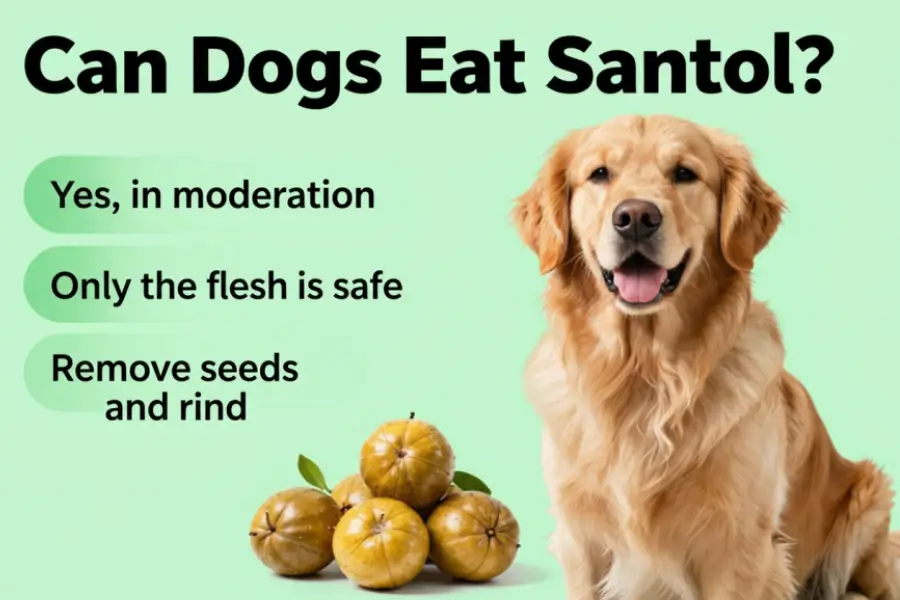
Yes, dogs can eat the ripe flesh of santol (Sandoricum koetjape) in small amounts, but it should only be given as an occasional treat. The large seeds, tough rind, and unripe fruit should never be fed, since they can cause choking, intestinal blockage, or digestive upset. Always serve fresh, ripe, peeled santol in small, bite-sized pieces with no sugar, salt, or seasoning.
Before giving santol to your dog, it is important to prepare it correctly. Always wash the fruit thoroughly, remove the thick peel, and take out all the large seeds before serving. Only the soft, ripe flesh is considered suitable for dogs.
The seeds can become a choking hazard and may even cause an intestinal blockage if swallowed. Likewise, the peel is tough, difficult to digest, and may lead to stomach discomfort. Unripe santol is also more acidic and can irritate your dog’s digestive system, so it should be avoided.
Can dogs eat santol?
Yes, but only the ripe, peeled flesh, and only in small amounts.
Is santol safe or toxic?
The flesh is not toxic in moderation. The seeds and peel are not safe and can cause serious harm if swallowed.
Which parts are safe?
Ripe, peeled flesh only. Seeds, peel, and unripe fruit are off-limits.
Key takeaway: Santol for dogs can be a healthy occasional treat when you remove the seeds and peel first. Skipping this step turns a snack into a choking or blockage risk.
Many dog owners ask, Can dogs eat santol? because the fruit is common in home gardens and local markets throughout the region, and dogs often show interest when family members are eating it.
Scientific Name
The scientific name is Sandoricum koetjape.
Common Names
- Santol
- Cotton fruit
- Wild mangosteen
Where It Grows
Santol grows mainly in Southeast Asia and other tropical regions with warm, humid climates.
Nutritional Value of Santol
The table below summarizes why santol for dogs can offer some nutritional value when it is prepared correctly.
| Nutrient | Benefit for Dogs |
|---|---|
| Water | Supports hydration |
| Fiber | Aids digestive health |
| Vitamin C | Supports immune function |
| Potassium | Supports muscle and nerve function |
| Calcium | Supports bone health |
| Antioxidants | Helps protect cells from damage |
Is Santol Safe for Dogs?
The ripe flesh itself is not considered toxic to dogs. The danger comes from the seeds and peel, not the fruit’s pulp.
Which Parts Are Safe?
Only the ripe, peeled flesh is safe for dogs to eat. The seeds, peel, and unripe fruit are not appropriate for canine nutrition and should be kept out of reach.
Why Moderation Matters
Even dog-safe fruits are high in natural sugar compared to a dog’s regular diet. Feeding too much santol at once can lead to an upset stomach, so occasional fruit treats for dogs should always stay small and infrequent.
Health Benefits of Santol for Dogs
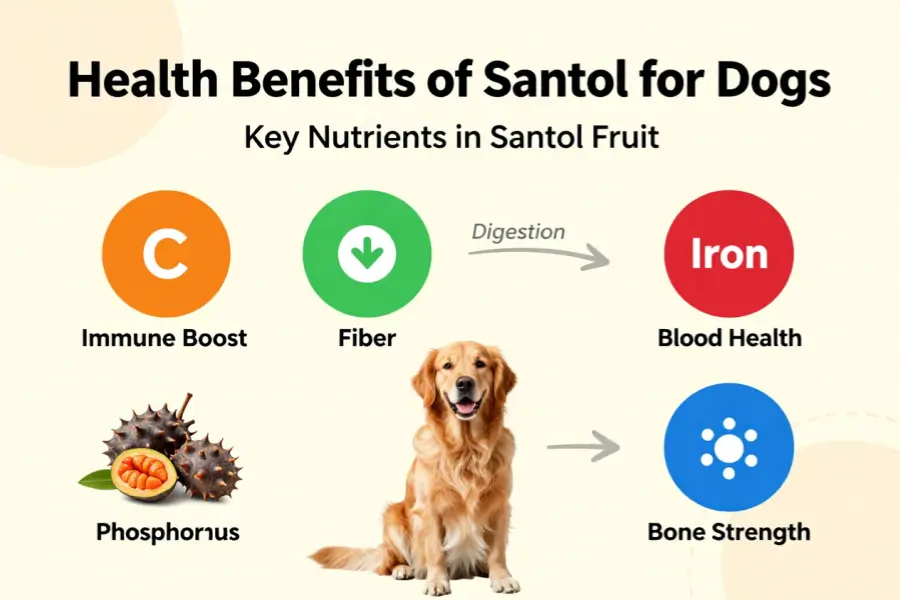
When served safely, ripe santol for dogs offers a few real nutritional advantages.
Risks of Feeding Santol to Dogs
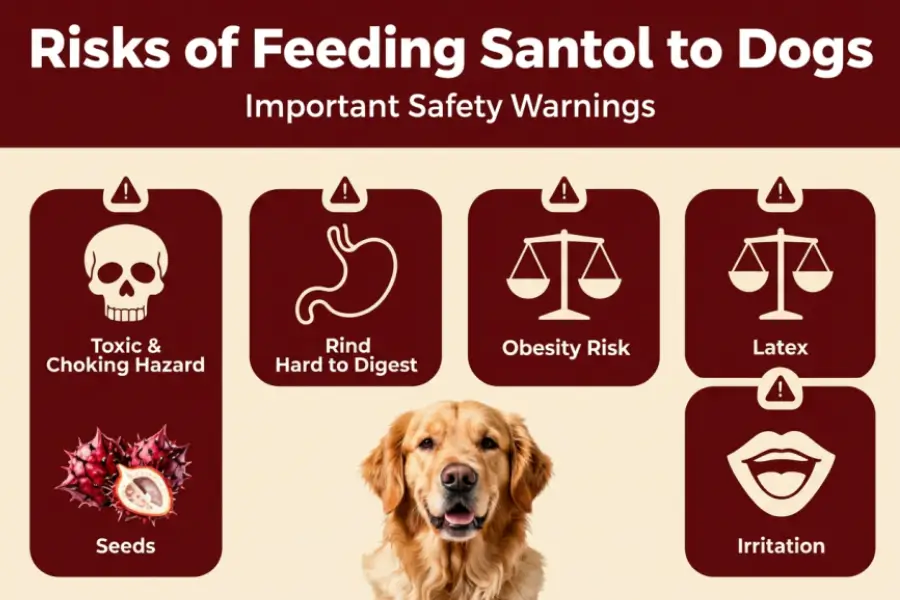
Understanding the risks is just as important as knowing the benefits before adding santol to a balanced dog diet.
1. Digestive Upset
Eating too much santol can upset your dog’s digestive system. Its fiber and natural sugars may cause vomiting, diarrhea, gas, or bloating. Dogs with sensitive stomachs are more likely to experience these problems. Introduce santol slowly and feed only a few small pieces. Stop feeding it if your dog develops digestive symptoms.
2. Seeds Can Cause Choking
Santol contains large, hard seeds that can become lodged in a dog’s throat. This risk is especially high for puppies and small dog breeds. Swallowing a seed may also lead to serious health complications. Always remove every seed before serving the fruit. If your dog is choking, seek emergency veterinary care immediately.
3. Risk of Intestinal Blockage
If swallowed, santol seeds may become stuck in the stomach or intestines. An intestinal blockage is a medical emergency that may require surgery. Symptoms include repeated vomiting, loss of appetite, constipation, abdominal pain, and lethargy. Never allow your dog to chew or swallow the seeds. Contact your veterinarian if you suspect a blockage.
4. Peel Is Difficult to Digest
The thick peel of santol is tough and fibrous, making it difficult for dogs to digest. Eating the peel may cause stomach irritation or constipation. Large pieces can also increase the risk of choking or intestinal blockage. Always peel the fruit completely before feeding it. Only the ripe flesh should be offered.
5. Unripe Santol May Irritate the Stomach
Unripe santol is more acidic than ripe fruit and may irritate your dog’s digestive tract. It can cause stomach pain, vomiting, or diarrhea after consumption. The firm texture also makes it harder to digest. Always wait until the fruit is fully ripe before offering it. Avoid feeding green or sour santol to dogs.
6. Too Much Natural Sugar
Although the sugar in santol is natural, excessive amounts can still add unnecessary calories to your dog’s diet. Frequent overfeeding may contribute to weight gain. Dogs with diabetes or obesity should eat sweet fruits only under veterinary guidance. Santol should be an occasional treat, not a daily snack. Portion control is essential.
7. Allergic Reactions
Some dogs may have an allergic reaction to santol, even if it is rare. Symptoms can include itching, facial swelling, hives, vomiting, or diarrhea. Introduce santol in a very small amount the first time. Watch your dog closely for several hours after feeding. Seek veterinary care if signs of an allergic reaction appear.
8. Pesticide Residue
Fresh santol may contain pesticide residue on its outer skin if it has not been washed properly. These chemicals can be harmful when ingested. Wash the fruit thoroughly under running water before peeling it. Peeling also helps remove any remaining residue. Proper preparation makes the fruit safer for your dog.
9. Weight Gain From Overfeeding
Even healthy fruits can contribute to weight gain when served too often or in large portions. Extra calories from treats may lead to obesity over time. Overweight dogs are at greater risk of joint problems and other health conditions. Keep santol portions small and occasional. Treats should make up less than 10% of your dog’s daily calorie intake.
10. Not a Complete Source of Nutrition
Santol does not contain all the nutrients your dog needs every day. It is low in protein and healthy fats, which are essential for canine health. Feeding too much fruit can reduce your dog’s intake of balanced dog food. Santol should only be offered as an occasional treat. A complete and balanced commercial dog diet should always remain the primary source of nutrition.
Pros and cons of santol for dogs
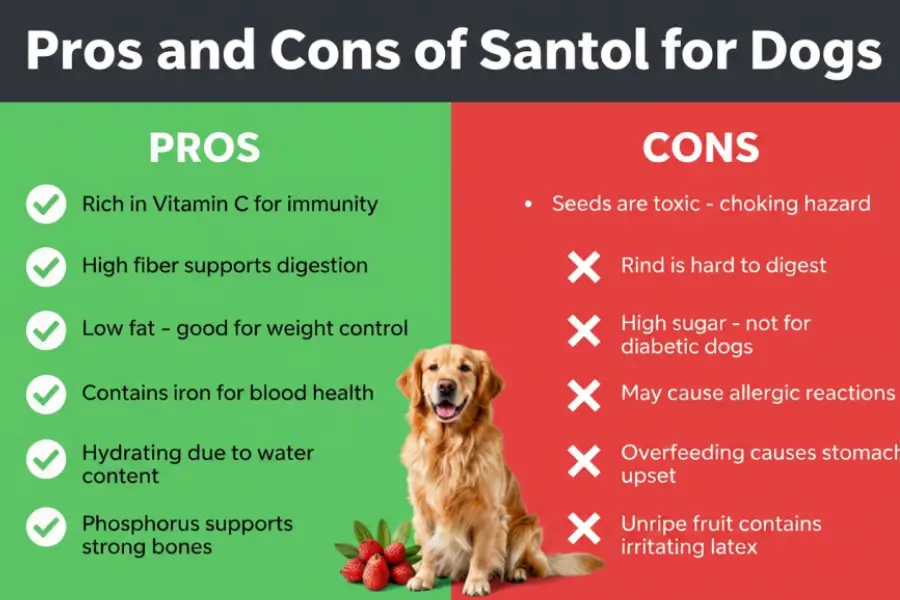
- Helps keep dogs hydrated.
- Supports healthy digestion.
- Rich in antioxidants.
- Contains vitamin C and potassium.
- Low in fat and calories.
- May cause stomach upset if overfed.
- Large seeds can cause blockage.
- Peel is difficult to digest.
- Unripe fruit may irritate the stomach.
- High natural sugar is unsuitable .
Can Dogs Eat Santol Seeds?
No. Santol seeds should never be given to dogs.
Why the Seeds Are Dangerous
The seeds are large relative to a dog’s throat size and are not meant to be chewed or swallowed.
Choking and Intestinal Obstruction
A swallowed seed can get stuck in the throat or intestines, leading to choking or a blockage that may require surgery.
What to Do If Your Dog Swallows a Seed
Contact your veterinarian right away. Watch for vomiting, gagging, loss of appetite, or signs of pain, and do not try to induce vomiting unless a vet instructs you to.
Can Dogs Eat Santol Peel?
No, dogs should not eat santol peel. The peel is tough, fibrous, and difficult to digest, which may cause stomach upset or increase the risk of choking or intestinal blockage, especially in small dogs.
Is the Peel Safe?
No. The peel is tough, fibrous, and difficult for dogs to digest. Before feeding santol, always remove the peel and seeds and offer only the ripe flesh in small, bite-sized pieces. If your dog eats a large amount of peel and develops vomiting, constipation, or abdominal pain, contact your veterinarian
Why It Should Be Removed
Feeding santol to dogs safely means removing the peel completely before offering any flesh, since the rind can contribute to digestive upset or blockage risk.
Can Dogs Eat Unripe Santol?
No, dogs should not eat unripe santol. Unripe fruit is more acidic and may irritate your dog’s digestive system, leading to vomiting, diarrhea, or stomach discomfort. It is also firmer and harder to digest than ripe santol.
If you want to offer santol to your dog, choose fully ripe fruit, remove the peel and seeds, and serve only a few small pieces as an occasional treat. If your dog eats a large amount of unripe santol or shows signs of illness, contact your veterinarian.
Can Puppies Eat Santol?
Is It Recommended?
Puppies have more sensitive digestive systems, so santol for dogs at a young age should be approached with extra caution.
Safe Feeding Advice
If you choose to offer a small taste to a puppy, use a tiny piece of ripe, peeled flesh, and watch closely for any signs of an upset stomach. When in doubt, check with your veterinarian first.
How Much Santol Can Dogs Eat?
Serving size should always match your dog’s body size. Use the table below as a general feeding guide.
| Dog Size | Serving Size | Frequency |
|---|---|---|
| Extra Small | 1–2 small pieces | Occasionally |
| Small | 2–3 small pieces | Occasionally |
| Medium | 3–5 small pieces | Occasionally |
| Large | 5–7 small pieces | Occasionally |
| Giant | A few more pieces | Occasionally |
How to Prepare Santol for Dogs
Follow these steps for safe preparation every time.
- Wash thoroughly to remove dirt and any residue.
- Peel the fruit completely to remove the tough rind.
- Remove all seeds carefully so none remain in the flesh.
- Cut into bite-sized pieces based on your dog’s size.
- Serve fresh and plain, with no added sugar, salt, or seasoning.
Signs Your Dog Ate Too Much Santol
Watch for these symptoms after your dog eats santol:
- Vomiting
- Diarrhea
- Gas
- Bloating
- Stomach pain
- Loss of appetite
If these signs appear or don’t improve within a day, contact your veterinarian.
What If Your Dog Eats a Santol Seed or Peel?
Symptoms to Watch For
Look for gagging, repeated vomiting, drooling, restlessness, or reluctance to eat.
When to Contact a Veterinarian
Call your vet immediately if your dog swallows a seed or a large piece of peel, even if they seem fine at first.
Emergency Signs of Intestinal Blockage
Seek emergency care right away if you notice repeated vomiting, a swollen or painful abdomen, lethargy, or an inability to pass stool.
Can Dogs Be Allergic to Santol?
Food allergies are uncommon but possible. Watch for itching, hives, facial swelling, or digestive upset after a first taste. Offer a very small piece the first time you try santol for dogs, then wait 24 hours before offering more so you can watch for any reaction.
Best Fruit Alternatives to Santol
If you would rather stick with more common dog-safe fruits, these are well-established safe human foods for dogs.
| Fruit | Safe | Main Benefit |
|---|---|---|
| Blueberries | ✅ | Antioxidants |
| Apples (seedless) | ✅ | Fiber |
| Watermelon (seedless) | ✅ | Hydration |
| Bananas | ✅ | Potassium |
| Strawberries | ✅ | Vitamin C |
| Cantaloupe | ✅ | Vitamins A & C |
Fruits Dogs Should Avoid
Not every fruit belongs in a balanced dog diet. Some are outright dangerous.
| Fruit | Reason |
|---|---|
| Grapes | Toxic |
| Raisins | Toxic |
| Cherries | Pits contain toxins |
| Avocado | Contains persin |
| Santol seeds | Choking and blockage risk |
Veterinary Tips Before Feeding Santol
Keep these veterinary nutrition basics in mind before offering santol for the first time.
- Introduce slowly with a small first taste.
- Feed in moderation as an occasional treat, not a daily food.
- Remove seeds and peel every single time.
- Monitor for digestive changes for 24 hours after feeding.
Frequently Asked Questions
Can dogs eat ripe santol?
Yes, dogs can eat ripe santol flesh in small amounts once the seeds and peel are removed.
Is santol poisonous to dogs?
The flesh is not considered poisonous, but the seeds and peel are unsafe and can cause choking or blockage.
Can dogs eat santol seeds?
No. Santol seeds are a choking and intestinal blockage hazard and should never be fed to dogs.
Can dogs eat santol peel?
No. The peel is tough and difficult to digest, so it should always be removed before feeding.
Can puppies eat santol?
Puppies can try a very small piece of ripe, peeled flesh, but check with a veterinarian first due to their sensitive digestion.
How much santol can dogs eat?
A few small, bite-sized pieces occasionally are enough; see the serving size table above for guidance by dog size.
Is santol acidic for dogs?
Unripe santol is more acidic than ripe santol, which is why only fully ripe fruit should be offered.
What should I do if my dog swallows a santol seed?
Contact your veterinarian immediately and watch closely for vomiting, gagging, or signs of pain.
Can diabetic dogs eat santol?
Diabetic dogs should avoid santol or only have it with veterinary approval, since it contains natural sugar.
Can dogs eat dried or candied santol?
No. Dried and candied santol often contain added sugar or salt, which are not appropriate for a healthy canine nutrition plan.
Final Thoughts
Can dogs eat santol? Yes, dogs can eat the ripe flesh of santol in small amounts as an occasional treat. It provides water, fiber, and beneficial nutrients, but it should always be served peeled, seedless, and plain.
Avoid feeding your dog the seeds, peel, or unripe santol, as they may cause choking, digestive upset, or intestinal blockage. Introduce santol slowly, feed it in moderation, and contact your veterinarian if your dog shows signs of illness after eating it.
Contact your vet immediately if your dog swallows a seed, eats the peel, or shows signs of choking, vomiting, or abdominal pain.
Can Dogs Eat Betel Nuts? Benefits, Risks, and Warnings!
Can Dogs Eat Snapper? Benefits, Risks, and Safe Feeding Guide!