If you enjoy cooking with healthy vegetables, you may wonder, can dogs eat burdock root too? Burdock root is a popular root vegetable that people use in soups, stir-fries, and herbal remedies. It contains fiber, vitamins, minerals, and natural antioxidants. While these nutrients may sound good, not every human food is safe for dogs.
The good news is that plain, cooked burdock root is generally safe for most healthy dogs when served in small amounts. However, it is not an essential part of a dog’s diet. Feeding too much burdock root or offering it raw, seasoned, or in herbal supplements may cause digestive problems or other health concerns.
What Is Burdock Root?
Burdock root comes from the Arctium lappa plant, a biennial member of the Asteraceae (daisy and thistle) family, native to Europe, Asia, and Africa, and now found across North America. The plant produces a deep taproot that has been used as food and herbal medicine across cultures for thousands of years.
In Japan and Korea, it is known as gobo and eaten widely as a root vegetable. In traditional Chinese and European herbalism, it was used to purify the blood, support the liver, and treat skin conditions. It is also the plant whose sticky burrs famously inspired Swiss inventor George de Mestral to create Velcro.
Forms of Burdock Root
- Root Vegetable
- Earthy and starchy, eaten like a carrot in Asian cuisine
- Decoction
- Boiled into a medicinal tea or decoction for oral use
- Burdock Root Extract
- Alcohol-free concentrated drops recommended form for dogs, easy dosing, fast absorption
- Supplement
- Standardized powdered root in capsule or loose powder form
Can Dogs Eat Burdock Root?
Yes, burdock root is not toxic to dogs and can be given safely in small amounts under veterinary guidance. Multiple holistic veterinarians and canine nutrition experts classify it as one of the safest medicinal herbs for dogs.
That said, it is not a conventional dog food. It is best treated as an occasional supplement or herbal remedy, not a daily staple. The root’s benefits, particularly for liver, kidney, and skin health, are well-documented in humans, and similar effects are widely reported in dogs, though large-scale canine clinical trials remain limited.
For most pet owners, the most practical and controllable way to give burdock root to a dog is via a burdock root extract, specifically an alcohol-free liquid tincture added directly to food. This form allows precise dosing, avoids the digestive challenges of raw fiber, and delivers the root’s active compounds (inulin, polyphenols, and mucilage) in a highly bioavailable format.
Burdock root extract for dogs is far easier to dose correctly than fresh or dried root, and the best products are veterinarian-formulated specifically for canine use.
Is Burdock Root Toxic to Dogs?
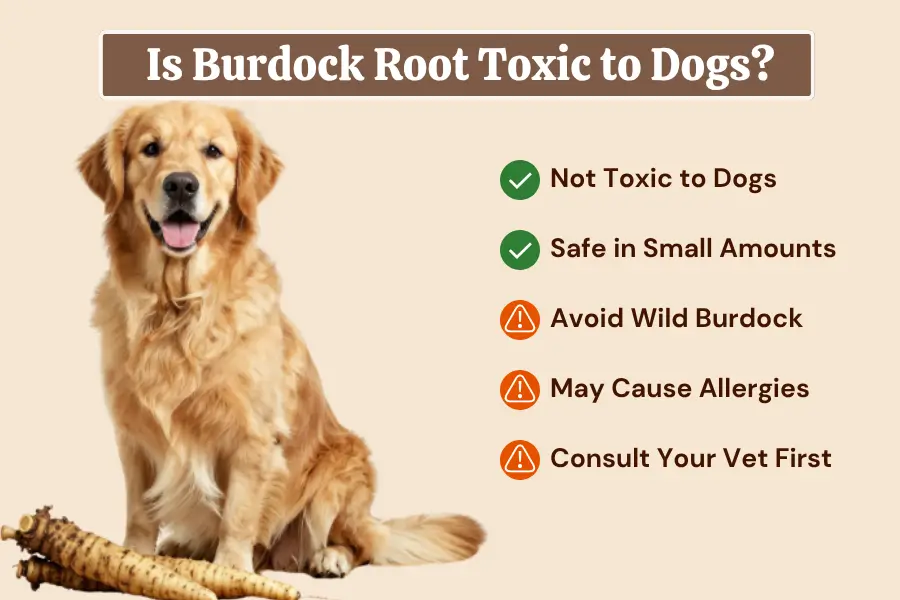
The root itself is not poisonous to dogs. Can dogs eat burdock root? It is not listed as a toxic plant by the ASPCA or Pet Poison Helpline. However, there is an important distinction between safe burdock root and dangerous wild burdock plants:
✅ Safe: Food-Grade Burdock Root
- Cleaned, peeled burdock root
- Cooked (steamed, boiled) burdock
- Commercially prepared tinctures
- Alcohol-free liquid extracts
- Standardized powders and capsules
- Vet-formulated dog supplements
❌ Risky: Wild Burdock Plant
- Burdock burrs: sharp, hooked barbs
- Can be embedded in the mouth, tongue, and throat
- Causes granular stomatitis (burr tongue)
- May require surgery and antibiotics
- Risk of choking and internal damage
- Long-haired breeds are especially at risk
Nutritional Value of Burdock Root for Dogs
Burdock root is rich in vitamins, minerals, and bioactive compounds that offer genuine nutritional value. Here’s how its key components may benefit dogs:
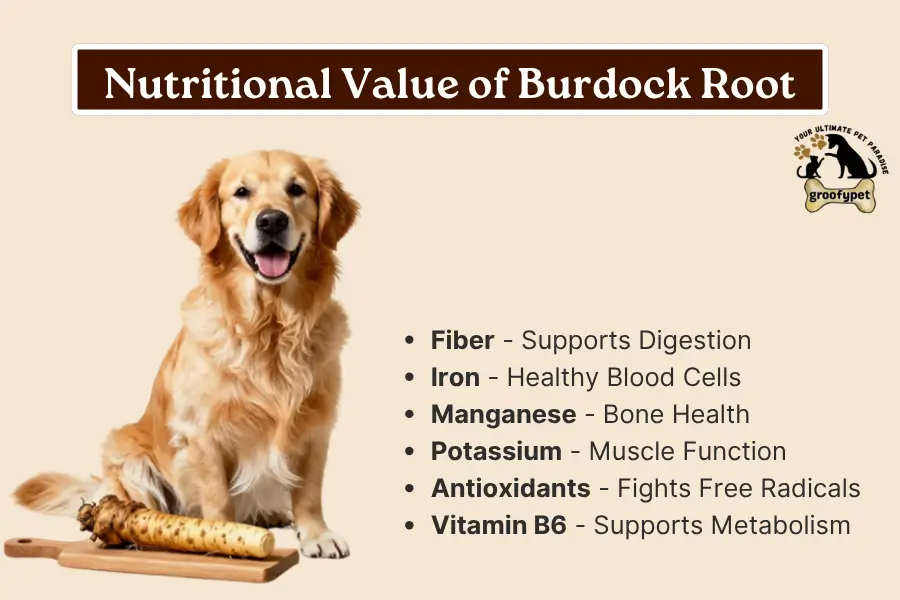
| Nutrient / Compound | Function | Potential Benefit for Dogs |
|---|---|---|
| Inulin (prebiotic fiber) | Feeds beneficial gut bacteria | Supports gut microbiome and digestion |
| Dietary Fiber | Regulates bowel movement | Helps with constipation and diarrhea |
| Potassium | Electrolyte balance, heart function | Supports cardiovascular and muscle health |
| Calcium | Bone and teeth strength | Contributes to skeletal development |
| Iron | Oxygen transport in blood | Supports red blood cell production |
| Phosphorus | Bone mineralization, energy | Beneficial in balance—excess harmful to dogs with kidney disease |
| Magnesium | Nerve and muscle function | Supports enzyme activity and relaxation |
| Vitamin C | Antioxidant, immune support | Dogs synthesize their own, but dietary top-ups support immunity. |
| Vitamin E | Fat-soluble antioxidant | Protects cells from oxidative damage |
| B Vitamins (B1, B6, B9, B12) | Energy metabolism, nervous system | Supports energy production and neurological health |
| Selenium | Antioxidant enzyme cofactor | Supports thyroid function and immune defense |
| Mucilage | Soothing mucous membrane lining | May support respiratory and digestive tract health |
| Polyphenols / Flavonoids | Free radical neutralization | Anti-inflammatory and antioxidant protection |
| Chromium / Zinc / Copper | Metabolic function, immune support | Trace mineral support for overall wellness |
Note: Approximate values per 100 g fresh burdock root. Nutritional content varies by form (raw vs cooked vs dried extract).
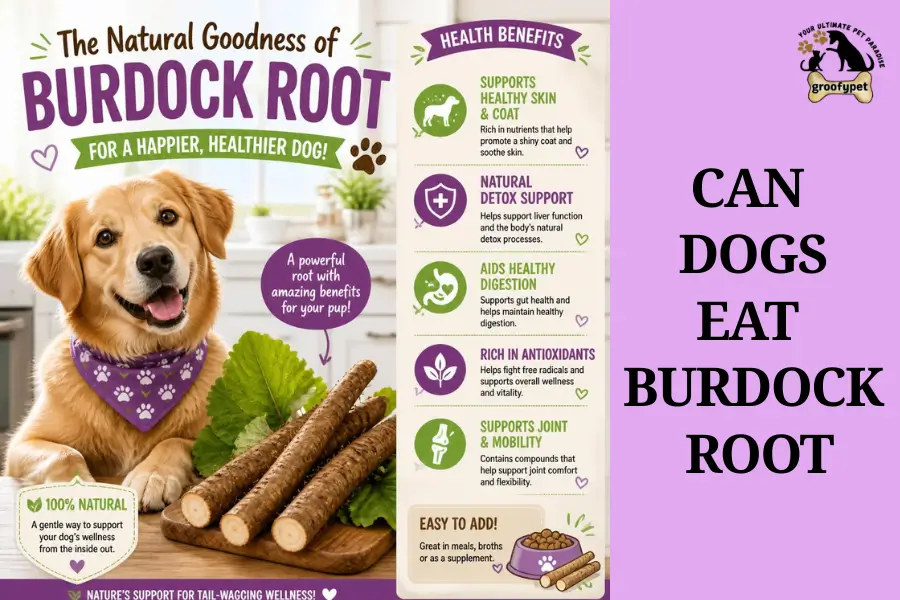
Potential Health Benefits of Burdock Root for Dogs
While large-scale clinical trials in dogs are limited, burdock root’s benefits for canines are supported by its nutritional profile, traditional veterinary herbalism, and some human and in-vitro research. Here are the main areas where it may help:
1. Liver & Kidney Support
Burdock root is best known as a natural liver tonic. Its chemical constituents stimulate bile production, help filter toxins from the bloodstream, and support liver enzyme activity. This makes it especially valuable for older dogs whose liver function may be declining.
Burdock root extract for liver support in dogs is one of the most established uses in holistic veterinary practice. Products like Pet Wellbeing Detox Gold specifically combine burdock extract with complementary herbs (nettle and blessed thistle) for this purpose.
As a mild natural diuretic, it also encourages kidney waste elimination through urine, which is useful for dogs with mild urinary or bladder concerns.
2. Digestive Health
Inulin, burdock root’s key active fiber, is a soluble prebiotic that feeds beneficial gut bacteria (Lactobacillus and Bifidobacterium strains). This supports a healthy gut microbiome, improves stool consistency, and may relieve mild constipation. The mucilage in burdock root also soothes the digestive tract lining, which can benefit dogs prone to gastric sensitivity.
3. Immune System & Antioxidant Protection
Polyphenols, flavonoids, and Vitamins C and E give burdock root strong antioxidant properties. These compounds help neutralize free radicals and reduce oxidative stress, a key driver of cellular aging and chronic inflammation in dogs. Burdock root is one of the ingredients in Essiac tea, a well-known complementary cancer support formula, due to these immune-modulating properties.
4. Skin & Coat Health
Burdock root addresses skin issues from the inside out. By supporting liver function (which directly affects how toxins are processed through the skin), it can improve conditions like canine eczema, mange, psoriasis, and dermatitis. A study found that burdock root extract stimulates chondroitin sulfate biosynthesis and modulates cellular pathways important for wound healing.
Giving a burdock root extract supplement for dogs daily can help manage chronic skin conditions more effectively than food alone, as the extract delivers a concentrated, consistent dose of active phytochemicals. Topical application of a diluted burdock tincture (on unbroken skin only) can also soothe inflamed, itchy skin.
5. Joint & Arthritis Support
Burdock root’s anti-inflammatory compounds, particularly inulin and its polyphenol, may reduce joint inflammation in dogs with arthritis and rheumatoid disorders. The stimulation of chondroitin sulfate synthesis may also contribute to cartilage repair and maintenance, making it a useful complementary aid in older or large-breed dogs.
6. Blood Purification & Detoxification
Burdock acts on the body’s excretory systems, liver, kidneys, and skin to flush mutagens, pesticides, heavy metals, and environmental toxins. It helps create enzymes that break down and absorb nutrients more efficiently, reducing the burden on the immune system and helping the body function at full capacity.
This preventative detox function is particularly useful for dogs living in urban environments with high pollution exposure.
The benefits above are based on burdock root’s nutritional and phytochemical profile and traditional use. They are not proven veterinary treatments. Never replace conventional veterinary care with burdock root supplementation. Always consult your vet before starting any herbal supplement.
Risks of Feeding Burdock Root to Dogs
While burdock root is generally safe, there are real risks to understand before offering it to your dog:
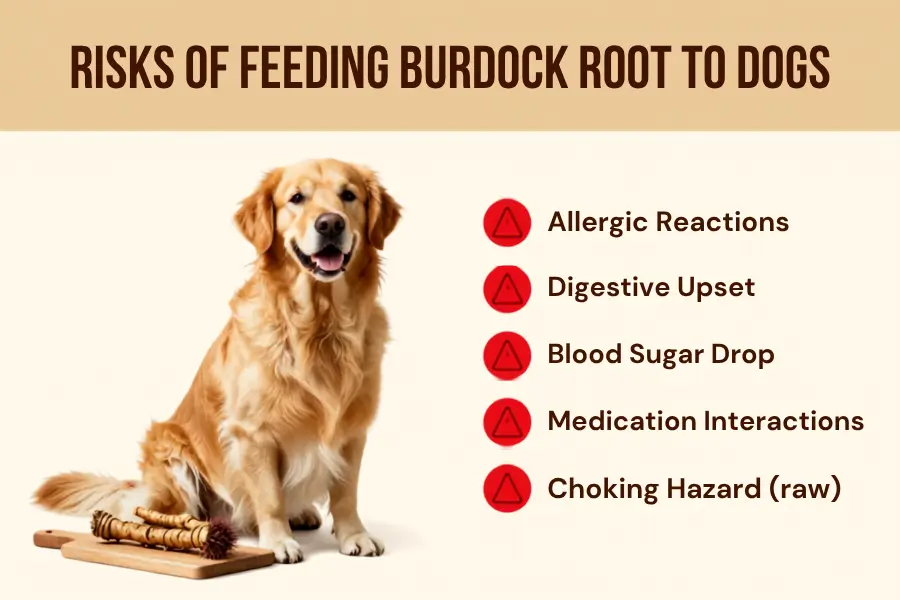
| Risk | Cause | How to Avoid |
|---|---|---|
| Digestive upset | High fiber content, sudden introduction | Start with small amounts, and introduce gradually |
| Vomiting / diarrhea | Too much raw root; individual sensitivity | Feed cooked and in small portions |
| Gas and bloating | Fermentation of inulin in gut | Introduce slowly; reduce quantity if gas occurs |
| Dehydration | Diuretic effect increases urine output | Ensure fresh water access; avoid with diuretic meds |
| Burr tongue (granular stomatitis) | Wild burdock burrs embed in the mouth/tongue. | Keep dogs away from wild burdock plants |
| Drug interactions | Diuretic effect—may amplify heart/kidney meds | Consult vet if dog takes any medications |
| Blood sugar fluctuation | Inulin affects glucose metabolism. | Avoid in diabetic dogs without vet approval |
| Allergic reaction | Sensitivity to the Asteraceae plant family | Watch for itching, hives, and swelling on first use |
| Extract / supplement quality issues | Unregulated supplement industry; alcohol-based extracts toxic to dogs | Choose alcohol-free, vet-formulated, or third-party-tested burdock root extract products only |
| Choking hazard | Large pieces of raw root | Always cut into small, bite-sized pieces |
Can Puppies Eat Burdock Root?
Puppies have significantly more sensitive digestive systems than adult dogs. While burdock root is not toxic to puppies, it is generally not recommended for very young or small-breed puppies due to the risk of digestive upset, gas, and the concentrated effect of its diuretic properties on a small body.
If you want to introduce burdock root to a puppy, wait until at least 6 months of age, start with a tiny amount (a few drops of a diluted alcohol-free tincture added to food), and monitor carefully. Better alternatives for puppy gut health include plain cooked pumpkin or a vet-recommended probiotic supplement.
Raw vs Cooked vs Dried vs Extract: Which Form Is Best?
| Form | Safety for Dogs | Digestibility | Best Use | Key Caution |
|---|---|---|---|---|
| Raw burdock root | Caution | Low — hard, fibrous | Occasional chew treat (small piece) | May cause GI upset; chop finely |
| Cooked (steamed/boiled) | Best option | High — softened fibres | Mixed into meals as a supplement | No oil, salt, garlic, or onion |
| Dried burdock root | Use carefully | Moderate — concentrated | Small crumbled amounts in food | Higher fibre per gram — reduce quantity |
| Burdock root powder | With caution | Good — easy to dose | Sprinkled over food in tiny amounts | Check for additives; avoid blends with xylitol |
| Burdock root extract (liquid tincture) | Recommended | High — fast absorption | Drops added to food; most controlled dosing | Must be alcohol-free; choose vet-formulated |
| Capsule / chewable tablet | Good | Good | Easy standardised dosing | Confirm no harmful fillers or sweeteners |
About Burdock Root Extract for Dogs
Burdock root extract, particularly alcohol-free liquid tinctures, is widely considered the most practical and safe supplement form for dogs. Unlike raw or dried root, a quality burdock root extract for dogs delivers a consistent, concentrated dose of the root’s active compounds (inulin, polyphenols, mucilage, and flavonoids) without the digestive difficulty of high raw fibre.
This makes it the preferred choice of holistic vets for liver support, skin health, and immune supplementation in dogs.
Why Is Extract Better Than Raw Root for Dogs?
Burdock root extract bypasses the fibrous texture challenges of raw root, allows precise dosing by drop count, is faster to absorb into the bloodstream, and carries less risk of digestive upset. For dogs who are picky eaters, a few drops of an alcohol-free extract can be added directly to food without any noticeable change in taste or texture.
Popular burdock root extract products for dogs include:
- Pet Wellbeing Detox Gold — vet-formulated liquid blend with burdock root, nettle, and blessed thistle; designed specifically for canine liver and blood detox support
- Nature’s Answer Burdock Root Extract — 1 oz alcohol-free, Non-GMO, vegan, super-concentrated single-herb extract
- Horbäach Burdock Root Tincture — alcohol-free, 2 fl oz, super-concentrated extract suitable for dilution in dog food
- Animal Essentials Seasonal Allergy Blend — herbal formula containing burdock root alongside nettle leaf and eyebright for allergy and immune support
When choosing a burdock root extract supplement for dogs, look for products that are the following:
- Alcohol-free — ethanol (alcohol) is toxic to dogs even in small amounts
- Non-GMO and free from artificial colours, flavours, or preservatives
- Third-party tested for purity, potency, and contaminant-free status
- Veterinarian-formulated or specifically labelled for pet use
- Free from xylitol, artificial sweeteners, propylene glycol, and harmful fillers
- Clearly labelled with ingredient concentrations and dosage guidance
⚠️ Extract Caution: Never Use Human Alcohol-Based Tinctures
- Many human herbal tinctures, including burdock root extracts sold in health food shops, use alcohol (ethanol) as the extraction base.
- Never give alcohol-based tinctures to dogs.
- Even a small amount of alcohol can cause ethanol poisoning in dogs, leading to vomiting, disorientation, respiratory depression, and, in severe cases, death.
- Always verify the product is explicitly labelled alcohol-free before giving any burdock root extract to your dog.
How Much Burdock Root Can Dogs Eat? (Dosage by Size)
Dosage depends on the form you’re using. Burdock root extract drops are the easiest to dose precisely. Use the chart below as a starting guide; always begin at the lower end and increase gradually. Dosages are for healthy adult dogs; consult your vet for dogs with health conditions.
| Dog Size | Weight | Fresh/Cooked Root | Burdock Root Extract (drops) | Frequency |
|---|---|---|---|---|
| Toy / Teacup | Under 5 kg | 1–2 small pieces (½ tsp) | 2–3 drops | 2–3x per week max |
| Small | 5–10 kg | 1 tsp cooked | 5–8 drops | 3–4x per week |
| Medium | 10–25 kg | 1–2 tsp cooked | 10–15 drops | Daily if tolerated |
| Large | 25–45 kg | 1 tbsp cooked | 15–25 drops | Daily if tolerated |
| Giant | 45 kg+ | 1–2 tbsp cooked | 25–30 drops | Daily if vet-approved |
Always start at 25% of the recommended amount and increase over 1–2 weeks. This allows your dog’s digestive system to adjust to the new fibre and phytochemicals without causing GI upset. Monitor stool consistency throughout.
How to Prepare Burdock Root for Dogs?
- Source Quality Root or Extract: Buy fresh burdock root from a grocery store or health food shop; choose firm, unblemished roots.
- Wash Thoroughly: Scrub the root under cold running water to remove all soil and debris. Burdock root grows deep in the ground and may carry dirt, pesticides, and microorganisms on its surface.
- Peel the Skin: Although the skin is edible for humans, peeling it reduces the risk of pesticide exposure and makes the root softer and easier to digest for dogs.
- Cook Without Seasonings: Steam or boil the root for 15–20 minutes until soft. Never add oil, butter, salt, garlic, onion, or any seasoning. All of these are harmful to dogs. Plain is the only safe option.
- Cut Into Small Pieces: Chop cooked burdock root into bite-sized pieces appropriate for your dog’s size. Small dogs need tiny pieces to prevent choking. For smaller dogs, mashing or pureeing is even safer.
- Introduce Gradually: Add a small amount to your dog’s regular meal; don’t serve it as a standalone food. Start with half the recommended amount for the first week and observe for any digestive changes.
Monitor your DogWatch for loose stools, gas, vomiting, or any signs of allergic reaction (itching, hives, or swelling) in the 24–48 hours after the first serving. If all is well, you can continue at the recommended frequency.
Signs Your Dog Ate Too Much Burdock Root
Even safe foods can cause problems in excess. Watch for these signs if your dog has eaten more burdock root than recommended:
Mild Symptoms — Monitor at Home
- Loose or soft stools
- Excessive flatulence or bloating
- Reduced appetite
- Mild stomach gurgling
- Slight lethargy
Seek vet care if you see the following:
- Repeated vomiting (3+ times)
- Bloody or severely watery diarrhoea
- Signs of dehydration (sunken eyes, dry gums)
- Swollen abdomen
- Difficulty breathing or swallowing
- Hives, facial swelling (allergic reaction)
For mild symptoms, withhold food for 4–6 hours, offer water freely, then transition to a bland diet of plain boiled chicken and rice. Contact your vet if symptoms continue beyond 24 hours.
Dogs That Should Avoid Burdock Root
This applies to all forms: fresh root, dried root, powder, and burdock root extract .Even a high-quality, alcohol-free extract carries the same metabolic effects (diuretic, blood-sugar-modulating) as the raw root. If your dog falls into any of the categories below, do not use burdock root in any form without explicit veterinary approval.
| Dog Profile | Reason to Avoid | Action |
|---|---|---|
| Diabetic dogs | Inulin affects glucose and insulin levels | Only use under direct vet supervision |
| Pregnant / nursing dogs | No safety studies exist for this population | Avoid entirely until more research exists |
| Dogs with kidney disease | Phosphorus content; diuretic effect may stress kidneys | Consult vet — may be contraindicated |
| Dogs on diuretic medications | An additive diuretic effect can cause dehydration | Avoid unless vet-approved |
| Dogs on heart medications | May amplify medication effects | Discuss with vet before use |
| Dogs with Asteraceae allergy | Burdock is in the daisy/thistle family | Avoid; use alternative herbs |
| Dogs with IBD / severe GI conditions | High fibre can aggravate irritated gut lining | Avoid or consult a vet gastroenterologist |
| Very young puppies (under 6 months) | Immature gut; diuretic effect proportionally stronger | Use pumpkin or vet-approved probiotics instead |
| Senior dogs with organ issues | Reduced liver/kidney filtering capacity | Get bloodwork done before starting |
Healthier Vegetable Alternatives for Dogs
If burdock root isn’t right for your dog, or you’re looking for more widely available dog-safe vegetables, here are excellent alternatives:
| Vegetable | Safe for Dogs? | Key Benefits | Prep Notes |
|---|---|---|---|
| Carrots | ✓ Yes | Fibre, beta-carotene, dental health | Raw or cooked, no seasoning |
| Green Beans | ✓ Yes | Low-calorie fibre, vitamins K and C | Plain, unsalted |
| Pumpkin | ✓ Yes | Gut health, fibre, beta-carotene | Plain cooked or canned (no spice) |
| Sweet Potato | ✓ Yes | Vitamin A, fiber, antioxidants | Cooked, never raw |
| Zucchini / Cucumber | ✓ Yes | Hydrating, low-calorie, vitamins B and C | Raw or cooked, slice thinly |
| Broccoli | ⚠ Small amounts | Vitamins C and K, antioxidants | Under 10% of the diet, isothiocyanates cause GI upset in excess |
| Butternut Squash | ✓ Yes | Vitamins A and C, potassium, fibre | Cooked, no skin or seeds |
| Spinach | ⚠ Moderation | Iron, calcium, antioxidants | Oxalic acid can affect calcium absorption in small amounts only |
Foods That Dogs Should Never Eat
While exploring natural foods for your dog, always keep these dangerous foods completely off the menu:
| Food | Why It’s Dangerous |
|---|---|
| Onions & Garlic | Contains thiosulphate, destroys red blood cells, causes haemolytic anaemia |
| Grapes & Raisins | Causes acute kidney failure with a mechanism not fully understood; potentially fatal |
| Chocolate | Theobromine is toxic to dogs, causing vomiting, seizures, and cardiac arrest |
| Macadamia Nuts | Causes weakness, tremors, hyperthermia, and vomiting within 12 hours |
| Xylitol (sweetener) | Causes rapid insulin release, hypoglycemia, and liver failure found in gum, peanut butter, and supplements |
| Alcohol | Even small amounts cause ethanol poisoning, CNS depression, respiratory failure |
| Avocado | Persin in avocado causes vomiting, diarrhea, and myocardial damage |
| Caffeine | Stimulates heart and nervous system to dangerous levels — can be fatal |
Frequently Asked Questions
Can dogs eat burdock root every day?
Is burdock root poisonous to dogs?
Can puppies eat burdock root?
Is cooked burdock root better than raw for dogs?
Can dogs take burdock root supplements or extract?
What happens if my dog eats too much burdock root?
Is burdock root good for digestion in dogs?
Can diabetic dogs eat burdock root?
What is the difference between burdock root extract and dried burdock root for dogs?
How do I give my dog burdock root extract?
Is burdock root extract safe for dogs with allergies?
Final Thoughts
So, can dogs eat burdock root? Yes, most healthy dogs can eat plain, cooked burdock root in moderation. It offers fiber and several nutrients, but it should only be an occasional treat and never replace complete and balanced dog food.
Always wash the root well, cook it without oil, salt, onions, garlic, or other seasonings, and serve only a small portion. Avoid feeding raw burdock root, large amounts, or herbal supplements unless your veterinarian recommends them.
If your dog has a wheat allergy, digestive disease, diabetes, or another medical condition, ask your veterinarian before introducing any new food.
Can Dogs Eat Tamarillos? Benefits, Risks, and Safe Feeding Guide!
Can Dogs Eat Sauerkraut? Benefits, Risks, and Safe Alternatives