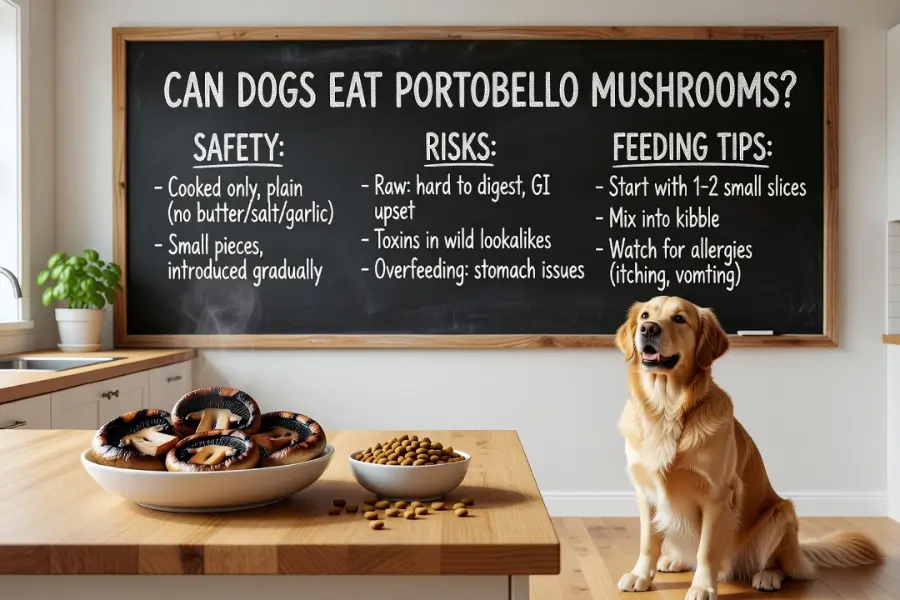
Can dogs eat portobello mushrooms? Yes, plain, commercially grown portobello mushrooms are generally considered non-toxic to dogs when served in small amounts and prepared properly. However, mushrooms are not necessary for a dog’s diet, and some dogs may experience digestive upset after eating them.
The biggest concerns are added ingredients such as garlic, onion, butter, and excess salt, as well as the danger of confusing edible mushrooms with poisonous wild varieties. If you want to share a small piece of portobello mushroom with your dog, it is important to understand how to prepare it, how much to offer, and which warning signs to watch for.
This guide explains the potential benefits, risks, feeding tips, and steps to take if your dog eats an unsafe mushroom.
Can Dogs Eat Portobello Mushrooms?
Yes, many healthy dogs can tolerate a small amount of plain, thoroughly cooked portobello mushroom. Portobello mushrooms belong to the species Agaricus bisporus, which also includes common white button and cremini mushrooms.
Commercially cultivated portobello mushrooms are different from unidentified mushrooms growing in gardens, parks, or wooded areas. Some wild mushrooms contain toxins that can cause severe illness or even death in dogs.
Although plain portobello mushrooms may be an occasional treat, they should not replace your dog’s regular food. A complete and balanced dog food already provides the nutrients your pet needs.
Before introducing mushrooms, consider your dog’s size, digestive health, and any dietary restrictions. If your dog has a medical condition or follows a prescription diet, ask your veterinarian before offering unfamiliar foods.
Are Portobello Mushrooms Safe for Dogs?
Plain portobello mushrooms from a reliable grocery store are generally considered a lower-risk option than unidentified wild mushrooms. However, safe identification and proper preparation are essential.
The mushroom itself is not the only concern. How you cook and serve it can change the risks considerably.
For example, a plain cooked mushroom contains different ingredients from a mushroom sautéed in garlic butter or covered in a creamy sauce. Garlic and onions can damage a dog’s red blood cells, while rich, fatty foods may cause stomach problems and can contribute to pancreatitis in susceptible dogs.
Follow these precautions when considering portobello mushrooms for your dog:
- Choose fresh, commercially cultivated mushrooms.
- Wash them thoroughly before preparation.
- Cook them without garlic, onion, butter, heavy oil, or seasoning.
- Cut them into small, manageable pieces.
- Offer only a tiny amount at first.
- Monitor your dog for digestive changes.
Even when a food is generally considered safe, individual dogs can react differently. Stop feeding mushrooms if your dog develops vomiting, diarrhea, itching, or other unusual symptoms.
Can Dogs Eat Raw Portobello Mushrooms?
Raw portobello mushrooms are not automatically poisonous to dogs simply because they are uncooked. However, cooked mushrooms are generally the more cautious choice because they are softer and may be easier to chew and digest.
Raw mushrooms can also carry dirt or other contaminants if they have not been handled and cleaned properly. Large or tough pieces may create a choking risk, particularly for small dogs that gulp their food.
Cooking does not make a poisonous wild mushroom safe. Never use cooking as a way to make an unidentified mushroom suitable for your dog.
If your dog accidentally eats a small piece of raw, store-bought portobello mushroom, monitor for digestive upset. Contact your veterinarian if symptoms develop or if you are uncertain about the mushroom’s identity.
Can Dogs Eat Cooked Portobello Mushrooms?
Yes, a small amount of plain, thoroughly cooked portobello mushroom may be tolerated by many healthy dogs. The safest preparation method is simple: wash the mushroom, cook it thoroughly without added ingredients, and allow it to cool before serving.
Avoid serving your dog portobello mushrooms prepared with:
- Garlic or onion.
- Butter or large amounts of cooking oil.
- Excess salt or seasoning blends.
- Cream, cheese, or rich sauces.
- Wine or other alcoholic ingredients.
- Spicy sauces or heavily seasoned marinades.
These additions can introduce risks that are separate from the mushroom itself.
How to Prepare Portobello Mushrooms for Dogs
Follow these steps if your veterinarian has no concerns about your dog trying this food.
- Choose fresh mushrooms. Buy commercially cultivated portobello mushrooms from a reliable grocery store. Avoid mushrooms that appear spoiled or slimy.
- Wash them thoroughly. Remove dirt and debris from the surface.
- Cut into small pieces. Smaller pieces are easier to chew and help reduce choking risks.
- Cook thoroughly. Steam or cook the mushroom in a plain pan without seasoning, garlic, onion, butter, or heavy oil.
- Let it cool. Never serve food that could burn your dog’s mouth.
- Offer a tiny taste. Start with a very small piece rather than a full serving.
- Watch for reactions. Monitor your dog for vomiting, diarrhea, or other changes after trying the new food.
Remember that cooking improves texture but does not remove every possible risk. Proper identification remains essential.
Are Portobello Mushrooms Good for Dogs?
Portobello mushrooms contain nutrients such as B vitamins, fiber, and minerals. These nutrients support normal body functions, but their presence does not automatically make mushrooms a necessary or especially beneficial food for dogs.
Most dogs obtain the nutrients they need from a complete and balanced diet. Adding small pieces of mushroom is unlikely to provide a meaningful nutritional advantage for a dog that already eats an appropriate food.
Potential Nutritional Benefits of Portobello Mushrooms for Dogs
These potential benefits should not be exaggerated. Portobello mushrooms are not a treatment for digestive disease, joint problems, or immune disorders.
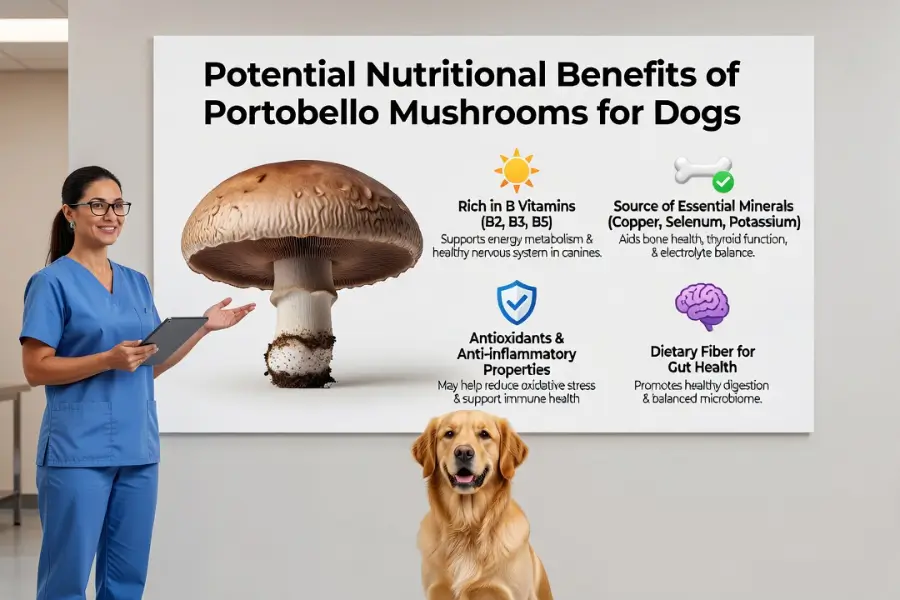
B vitamins: Portobello mushrooms contain certain B vitamins that help support normal energy metabolism and other body functions.
Fiber: Mushrooms contain dietary fiber, although too much of an unfamiliar food may cause digestive discomfort in some dogs.
Minerals: They provide small amounts of minerals that contribute to normal body processes.
Variety: A tiny portion may offer a different texture for dogs that enjoy trying new foods.
They also should not replace veterinary advice, prescribed diets, or balanced dog food.
Potential Risks of Feeding Portobello Mushrooms to Dogs
Although plain, cultivated portobello mushrooms are generally considered non-toxic, several risks deserve attention.
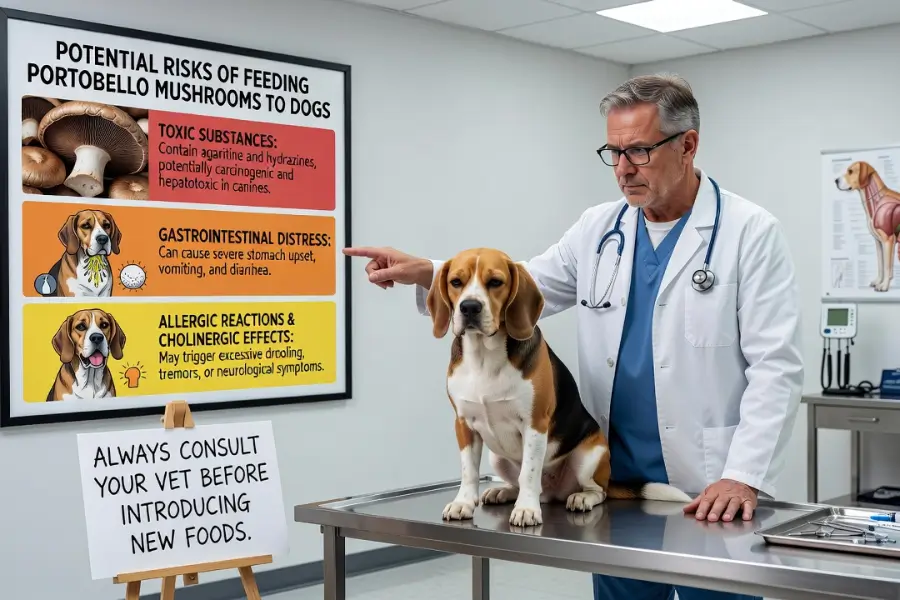
1. Vomiting and Diarrhea
A dog that eats an unfamiliar food may develop an upset stomach. Signs can include vomiting, loose stools, reduced appetite, or abdominal discomfort.
Offer only a tiny amount if appropriate, and stop feeding mushrooms if your dog develops symptoms.
2. Individual Food Sensitivities
Some dogs may not tolerate mushrooms well. A dog with food sensitivities or a history of digestive problems may react even to a small serving.
If your dog has a sensitive stomach, ask your veterinarian before introducing mushrooms.
3. Digestive Discomfort
Mushrooms contain fiber and other compounds that may not agree with every dog. Eating a large portion can make digestive upset more likely.
Keep any new food occasional and limited rather than adding it to every meal.
4. Butter and Cooking Oil
Portobello mushrooms cooked in butter or large amounts of oil can contain excessive fat. Fatty foods may cause vomiting or diarrhea and can contribute to pancreatitis in susceptible dogs.
Plain preparation is a better choice than sharing mushrooms from a human meal.
5. Garlic and Onion Toxicity
Garlic and onions are unsafe for dogs because they can damage red blood cells and lead to anemia. They may appear in mushroom sauces, marinades, stuffing, and seasoning mixes.
If your dog eats mushrooms prepared with garlic or onion, contact your veterinarian for advice. Do not assume a small-looking amount is harmless.
6. Excess Salt and Seasonings
Salt-heavy seasoning blends and sauces can add unnecessary sodium. Some blends also contain onion or garlic powder.
Avoid seasoned mushrooms and serve only plain food if you choose to offer a taste.
7. Choking Risks
Large mushroom pieces may be difficult for some dogs to chew, especially small dogs or dogs that gulp their food.
Cut cooked mushrooms into small pieces and supervise your dog while eating.
8. Poisonous Wild Mushrooms
This is one of the most serious mushroom-related risks. Dogs may sniff, lick, or eat mushrooms growing in grass, gardens, and wooded areas.
Some poisonous species can cause severe digestive, neurological, liver, or kidney problems. Their appearance may resemble harmless varieties, so identification by appearance alone is unreliable.
If your dog eats an unidentified wild mushroom, contact a veterinarian or animal poison control service immediately. Do not wait for symptoms to appear.
Can Dogs Eat Portobello Mushroom Stems?
Stems from fresh, commercially cultivated portobello mushrooms are generally considered non-toxic, just like the caps. However, the stems can be tougher and more fibrous than the caps.
If you offer a stem, wash it, cook it thoroughly, and cut it into small pieces. Avoid giving your dog large, tough chunks that could be difficult to chew.
There is no need to include mushroom stems in your dog’s diet. If your pet has trouble chewing or swallowing, skip them and discuss suitable treats with your veterinarian.
How Much Portobello Mushroom Can a Dog Eat?
There is no scientifically established serving size specifically for portobello mushrooms in dogs. The safest approach is to treat mushrooms as an optional food rather than a regular dietary requirement.
If your veterinarian agrees that a taste is appropriate, start with a tiny piece of plain, cooked mushroom and monitor your dog. The amount should depend on your dog’s size, health, dietary needs, and tolerance.
| Dog size | Cautious starting approach |
|---|---|
| Toy or very small dog | A tiny taste or small piece |
| Small dog | One very small piece |
| Medium dog | A small piece or two |
| Large dog | A small test portion |
These are conservative starting suggestions, not proven safe doses or a recommendation to feed mushrooms routinely. A smaller amount may be appropriate for a dog with a sensitive stomach.
Veterinary nutrition guidance generally recommends keeping treats and other extras to no more than 10% of daily calories, with at least 90% coming from complete and balanced food. That guideline is a general limit, not a target for mushroom consumption.
Do not give mushrooms to a dog if they conflict with a prescribed diet or veterinary instructions.
Must Read : Can Dogs Eat Elderberries? Safety, Toxicity, and What to Do
What Happens If a Dog Eats Portobello Mushrooms?
What happens next depends on the type of mushroom, how much your dog ate, and the other ingredients involved.
A dog that eats a small piece of plain, store-bought portobello mushroom may experience no problems. Another dog may develop mild digestive upset.
Watch for these signs:
- Vomiting.
- Diarrhea.
- Reduced appetite.
- Abdominal discomfort.
- Excessive drooling.
- Unusual tiredness.
These symptoms are not specific to mushroom poisoning, but they may indicate that your dog needs veterinary advice.
More serious signs include weakness, difficulty walking, tremors, seizures, collapse, or repeated vomiting. Seek emergency veterinary care if these occur.
If the mushroom was wild or its identity is uncertain, contact a veterinarian immediately, even if your dog appears normal. Some mushroom toxins can cause delayed symptoms, so waiting for visible illness may be dangerous.
If your dog ate a prepared mushroom dish, check whether it contained garlic, onion, alcohol, or other potentially harmful ingredients. Tell the veterinarian what was eaten, approximately how much, and when it happened.
What to Do If Your Dog Eats a Wild Mushroom
If your dog eats a mushroom found outdoors, treat the situation seriously. You may not be able to tell whether the mushroom is poisonous by looking at it.
Take these steps:
- Stop further exposure. Move your dog away from the area and prevent it from eating more mushrooms.
- Contact a veterinarian immediately. Explain what happened and when your dog may have eaten the mushroom.
- Take a photograph if safe. Photograph the mushroom and its surroundings without tasting it or handling it unnecessarily.
- Estimate the amount eaten. Tell the veterinarian whether your dog swallowed a whole mushroom, part of one, or several.
- Follow professional instructions. Do not induce vomiting or give home remedies unless a veterinary professional specifically directs you to do so.
- Seek emergency care when necessary. Tremors, seizures, collapse, severe weakness, and other serious symptoms require urgent veterinary attention.
Important: Do not wait for symptoms if your dog may have eaten a poisonous wild mushroom. Early veterinary advice can be crucial.
Can Dogs Eat Other Types of Mushrooms?
Some commercially cultivated mushrooms are generally considered non-toxic to dogs when served plain and prepared appropriately. However, wild mushrooms and seasoned mushroom dishes present different risks.
| Mushroom type | Safety considerations |
|---|---|
| White button mushrooms | Generally considered non-toxic when commercially cultivated and served plain |
| Cremini mushrooms | Generally considered non-toxic when commercially cultivated and served plain |
| Portobello mushrooms | Generally considered non-toxic when commercially cultivated and served plain |
| Mushrooms cooked with garlic or onion | Avoid because garlic and onion are toxic to dogs |
| Mushrooms cooked in rich sauces | Avoid because added fats, seasonings, and other ingredients may cause problems |
| Wild mushrooms | Treat unidentified wild mushrooms as potentially poisonous |
White button, cremini, and portobello mushrooms are different forms of the same species, Agaricus bisporus. Their size, color, maturity, and texture differ, but their shared species identity does not make every mushroom growing outdoors safe.
When choosing a mushroom for your dog, consider its source, preparation, and your pet’s health rather than relying on appearance alone.
Read This : Can Dogs Eat Sourdough Starter? Safety, Risks, and What to Do
Safer Alternatives to Portobello Mushrooms for Dogs
If you want to offer your dog a small snack, several familiar vegetables may be easier choices than mushrooms. They should still be prepared appropriately and offered in moderation.
- Carrots: Serve plain, washed, and cut into suitable pieces. Cook them if your dog struggles with crunchy foods.
- Green beans: Offer plain, cooked or appropriately prepared fresh green beans without salt or seasoning.
- Cucumber: Wash it and cut it into manageable pieces to reduce choking risks.
- Plain cooked pumpkin: Use plain pumpkin without added sugar, spices, or pie filling.
These foods are optional treats, not replacements for a complete and balanced dog diet. Introduce new foods gradually, and ask your veterinarian about suitable options if your dog has allergies, digestive problems, or a prescribed diet.
Frequently Asked Questions
Can dogs eat portobello mushrooms safely?
Many healthy dogs can tolerate small amounts of plain, commercially cultivated portobello mushrooms. Serve them thoroughly cooked and without seasonings. Mushrooms are not essential to a dog’s diet, and you should avoid unidentified wild mushrooms because some species are highly poisonous.
Are cooked portobello mushrooms better for dogs than raw ones?
Plain cooked portobello mushrooms are generally the more cautious option because cooking softens their texture and may make them easier to chew. Raw mushrooms are not automatically poisonous, but they may be harder to digest. Neither raw nor cooked mushrooms should be offered if their identity is uncertain.
Can dogs eat portobello mushrooms cooked in butter?
It is best to avoid giving your dog portobello mushrooms cooked in butter. Butter adds fat that may upset your dog’s stomach, and rich meals can contribute to pancreatitis in susceptible dogs. Plain, thoroughly cooked mushrooms without added fats are a better choice.
What should I do if my dog eats a wild mushroom?
Move your dog away from the mushroom and contact a veterinarian or animal poison control service immediately. Take a photograph if possible, and provide details about when and how much your dog may have eaten. Do not induce vomiting or give home remedies unless a veterinary professional instructs you to do so.
Can dogs eat store-bought mushrooms?
Plain, commercially cultivated mushrooms such as white button, cremini, and portobello varieties are generally considered non-toxic to dogs. However, they should be cleaned and prepared appropriately without harmful seasonings. Store-bought mushroom dishes may contain garlic, onion, excessive fat, or other ingredients that are unsuitable for dogs.
Should dogs eat portobello mushrooms regularly?
No. Portobello mushrooms are not a necessary part of a dog’s diet. Dogs should receive most of their nutrition from complete and balanced dog food. If your veterinarian approves, a tiny amount of plain cooked mushroom may be offered occasionally, but there is no need to make it a regular treat.
Key Takeaways
- Plain, commercially cultivated portobello mushrooms are generally considered non-toxic to dogs, but individual tolerance varies.
- Thoroughly cooked mushrooms without seasonings are a more cautious option than rich or heavily seasoned preparations.
- Garlic, onion, excess fat, and excessive salt can introduce additional health risks.
- Start with a tiny taste only if appropriate for your dog, and monitor for digestive upset.
- Treat unidentified wild mushrooms as potentially poisonous and contact a veterinarian immediately after suspected ingestion.
Final Thoughts
So, can dogs eat portobello mushrooms? Yes, many healthy dogs can tolerate a small amount of plain, thoroughly cooked portobello mushroom. However, this food is optional and does not provide a benefit that your dog cannot obtain from a well-balanced diet.
The most important precautions are to choose commercially cultivated mushrooms, avoid harmful seasonings, and keep portions small. Never assume that a wild mushroom is safe because it resembles a portobello.
If your dog has a sensitive stomach, an existing medical condition, or a prescribed diet, ask your veterinarian before introducing mushrooms. If your dog eats an unidentified wild mushroom, seek professional advice immediately.Your dog’s safety matters more than sharing a particular human food. When in doubt, choose a familiar dog-friendly treat instead.