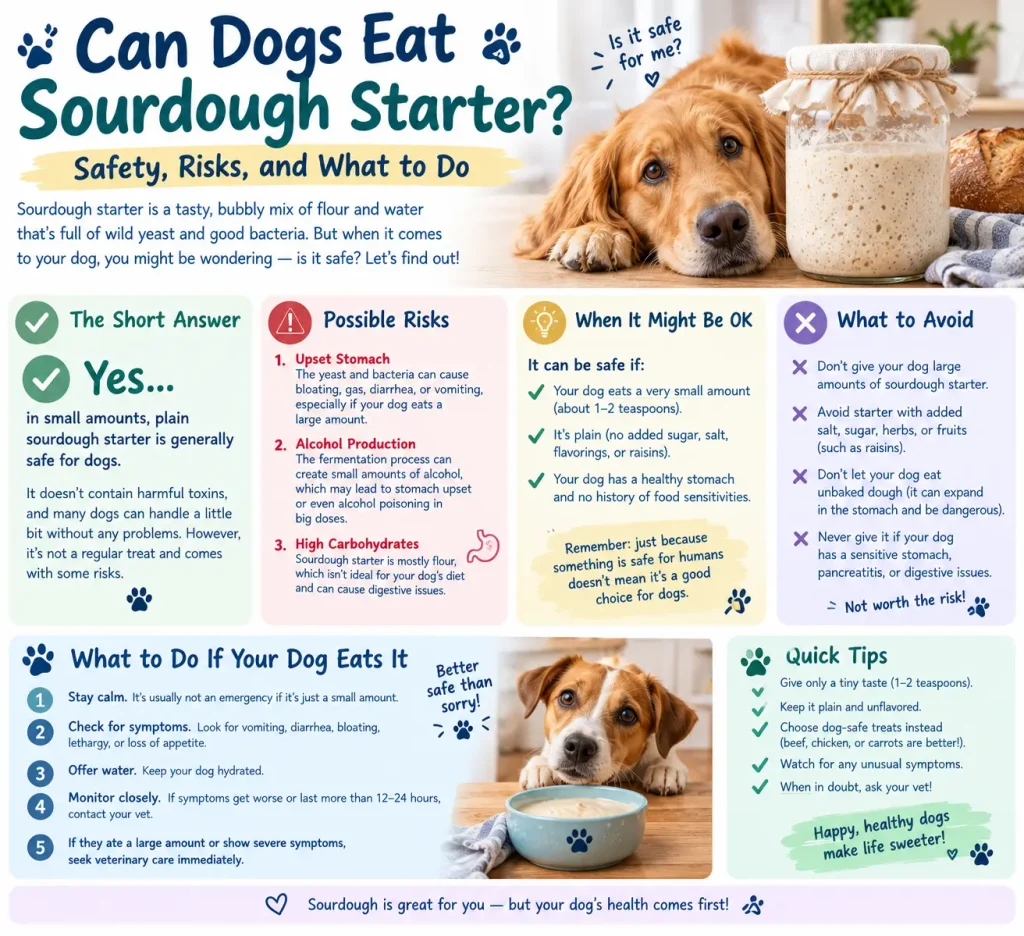
Can Dogs Eat Sourdough Starter? No, dogs should not eat sourdough starter, especially raw, active starter. As it ferments, it can produce alcohol, and eating it may cause alcohol poisoning or stomach upset. The risk depends on the dog’s size, the amount eaten, and any other ingredients. If your dog eats it, call a veterinarian or poison helpline right away.
Dogs should not eat raw, active sourdough starter. Fermentation produces ethanol, and veterinary sources warn that unbaked yeast dough can cause alcohol poisoning and stomach problems in dogs. Fully baked plain sourdough bread is a different case. If a dog eats starter, owners should contact a veterinarian or poison helpline promptly instead of waiting for symptoms.
This guide explains why starter is risky, how it differs from baked sourdough bread, and what to do if your dog got into the jar. You will also find a quick checklist, a comparison table, and answers to common questions.
Is Sourdough Starter Safe for Dogs?
Sourdough starter is a mix of flour and water that sits out at room temperature and slowly ferments. Wild yeast and friendly bacteria from the flour and the air move in and start feeding on the flour’s sugars. The yeast makes carbon dioxide gas, which is what puffs up a loaf. It also makes ethanol, which is alcohol.
That is useful in the kitchen. It is a problem when a dog eats it. Some people point out that starter is full of “good” microbes, and fermented foods get a healthy reputation. But a food being helpful to a bread recipe does not make it safe for a pet. A dog’s body handles alcohol very differently than a person’s body does, and the live yeast keeps working after it is swallowed.
So the safest rule is simple. Treat raw, active starter as food your dog should never have, and keep the jar out of reach.
One honest note about the research. Most published veterinary guidance covers raw bread dough, which uses the same kind of yeast fermentation. Starter is wetter and runnier than dough, and I did not find a veterinary source that measures the alcohol in homemade starter.
Why Is Sourdough Starter Dangerous for Dogs?
There are a few separate concerns, and they can overlap.
- Alcohol from fermentation: Yeast fermentation products include ethanol, which the body absorbs into the bloodstream. In dough cases, that leads to drunkenness and a harmful shift in the body’s acid balance.
- Stomach upset: Even without a big alcohol dose, a mouthful of fermenting flour paste can cause vomiting or diarrhea in some dogs.
- Gas and bloating: Raw dough can swell in the warm, moist stomach. The MSD Manual describes how the expanding mass can stretch the stomach, and the Pet Poison Helpline warns that bloating can become gastric dilatation volvulus (GDV), where the stomach twists. This is mostly a worry with thick dough or large amounts. The starter is looser, but active yeast and gas are still involved, which is another reason not to wait and see.
- Other ingredients: Some recipes include extras. Raisins and grapes can harm a dog’s kidneys. Garlic and onion can damage red blood cells. Sweeteners such as xylitol are also dangerous. Each of these is a separate risk on top of fermentation.
- Unknown alcohol levels: The alcohol in a homemade starter depends on the flour, the temperature, the feeding schedule, and how long the jar has sat. You cannot judge it by looks or smell. A bubbly, sour starter might be higher in alcohol than a fresh one, but you cannot count on that.
Not every exposure causes poisoning. A tiny lick of a freshly fed starter may cause no problem at all. The point is that you cannot know in advance, so it is best to get professional advice.
What Happens If a Dog Eats Sourdough Starter?
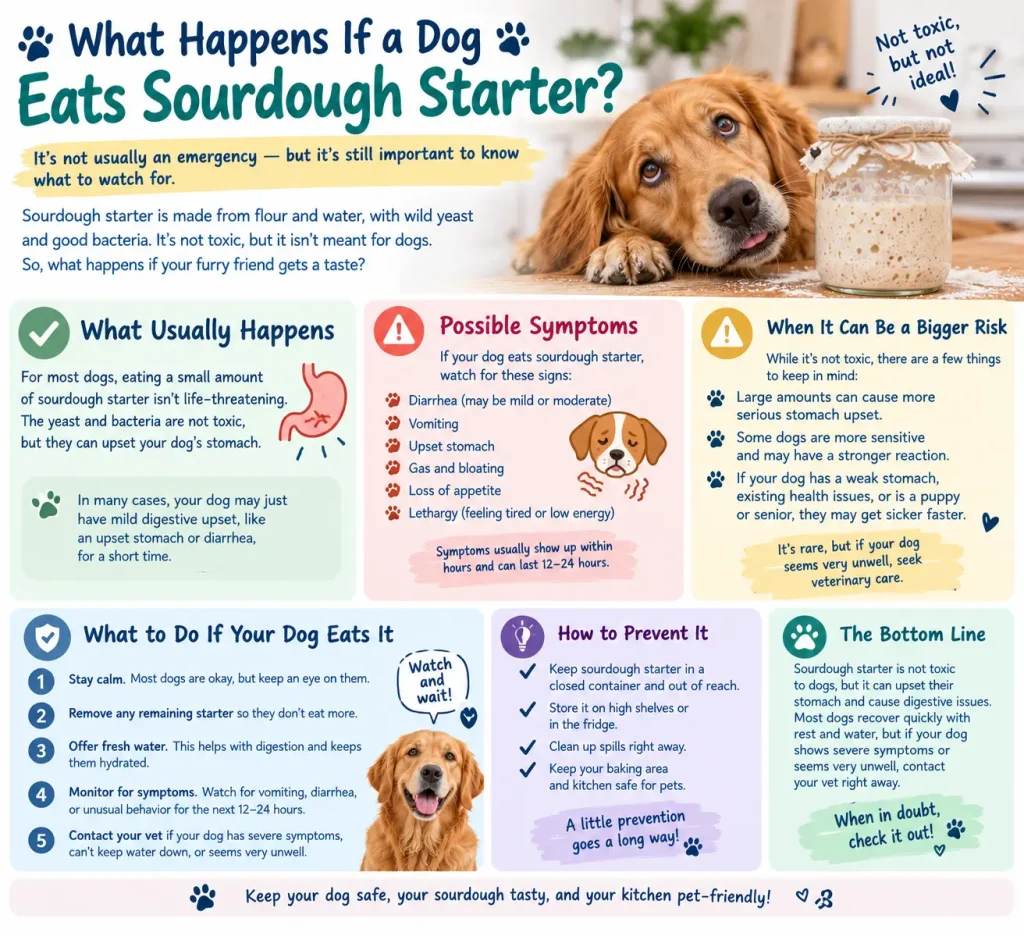
Signs can vary from dog to dog. Watch for:
- Vomiting, retching, or drooling
- Diarrhea
- Unusual sleepiness or weakness
- Wobbling, stumbling, or trouble walking
- Confusion or acting “drunk”
- A swollen or tight belly, or restlessness
- Slow or labored breathing, or a drop in body temperature
- Tremors or seizures in severe cases
This also lists dangerous drops in blood sugar as a possible problem with raw yeast dough.
A dog that looks fine right after eating starter is not necessarily in the clear. No reliable timeline fits every dog, and signs can be delayed or hidden. The Pet Poison Helpline advises seeking veterinary advice right away after raw dough is eaten, even if the pet shows no signs.
The same advice applies here. If you suspect your dog ate an active starter, call for guidance now instead of waiting for symptoms.
Can Sourdough Starter Cause Alcohol Poisoning in Dogs?
It can. Yeast turns sugars in flour into ethanol and carbon dioxide. Once ethanol reaches a dog’s bloodstream, it slows the nervous system. That is why affected dogs may stumble, seem foggy, or become very sleepy.
Other warning signs include vomiting, weakness, and breathing trouble. Alcohol poisoning can become life-threatening, so treat it as an emergency.
Contact a veterinarian or emergency clinic right away if you think your dog ate starter. Please do not try to treat it at home. There is no safe home method, and you cannot work out a safe dose from a formula online.
What Should You Do If Your Dog Eats Sourdough Starter?
Stay calm and work through these steps.
- Remove the rest of the starter and keep your dog away from it.
- Note the amount and the time. A rough guess is fine, such as “about half a cup, 20 minutes ago.”
- Save the recipe or ingredient list. Take a photo of the jar and any labels.
- Call a veterinarian or emergency clinic promptly. If your regular clinic is closed, call an emergency hospital or a poison helpline.
- Follow the professional’s instructions about an exam and treatment.
- Watch your dog while you arrange care. Do not let watching replace calling.
Do not make your dog vomit, give home remedies, or give any medicine unless a veterinarian tells you to. Vomiting at home can be unsafe in some situations, and sticky dough is hard to bring up. Veterinary sources say a vet may choose to induce vomiting, flush the stomach, or hospitalize a dog. Severely affected dogs may need specialty care, including dialysis, to clear alcohol from the blood.
Emergency Checklist
- Take the starter away from your dog
- Write down the time and the estimated amount eaten
- Check the recipe for raisins, garlic, onion, or sweeteners
- Weigh your dog if you can, or note a close estimate
- Call your vet, an emergency clinic, or a poison helpline now
- Do not induce vomiting or give medicine unless told to
What to Tell the Veterinarian
Have these details ready before you call:
- Your dog’s approximate weight, age, and breed
- How much starter was eaten and when
- The starter recipe and age, and how recently it was fed
- Any extra ingredients, such as raisins, garlic, or sweeteners
- Any symptoms you have noticed, and when they began
- Any health conditions or medicines your dog takes
How Much Sourdough Starter Is Toxic to Dogs?
No one can give a single safe amount for every dog, and this article will not invent one. The risk depends on several things:
- Body weight. The same amount affects a small dog more than a large one.
- Amount eaten. More starter means more yeast and more alcohol.
- Starter activity. A bubbly, recently fed starter is more active.
- Alcohol content. This varies from jar to jar and is hard to measure at home.
- Other ingredients. Raisins, garlic, onion, or sweeteners add their own dangers.
- Time since eating. Fermentation continues in the stomach, so the situation can change.
Small dogs, puppies, and dogs with liver, kidney, or other health problems need extra caution. Vetster, a veterinary telehealth service, notes that small dogs and those with existing metabolic, liver, or kidney conditions are more vulnerable to ethanol poisoning.
These factors help a veterinarian judge risk. They do not replace a veterinarian’s advice, and they should never be used to decide that waiting is fine.
Can Dogs Eat Baked Sourdough Bread Instead?
Plain, fully baked sourdough bread is a different situation. Baking ends the yeast activity, so the main worry about raw dough and live starter largely goes away. Still, bread is not something dogs need. It adds calories without much nutrition, and some dogs get an upset stomach or have a wheat sensitivity.
Check the loaf before sharing even a bite. Raisins, garlic, onion, and xylitol turn a harmless slice into a problem, and sourdough sometimes includes seeds, herbs, or dried fruit. Never treat raw dough or active starter as if it were the same as baked bread.
How the Different Forms Compare
| Food | Fermentation status | Main concern | Recommended action |
|---|---|---|---|
| Active starter | Live and fermenting | Alcohol, stomach upset, active yeast | Call a vet or poison helpline promptly |
| Sourdough discard | Still contains live yeast and may have fermented for days | Alcohol and stomach upset, similar to starter | Treat like starter and call a vet |
| Raw sourdough dough | Live yeast, often rising | Alcohol, stomach bloating, possible GDV | Treat as an emergency and call a vet immediately |
| Fully baked plain sourdough | Yeast inactive after baking | Mild digestive upset, extra calories | Small amounts only if plain; check ingredients |
No amount of raw starter is considered safe in this table.
Is Sourdough Starter Toxic to Puppies?
Puppies deserve extra caution. They are small, so a little starter is a bigger dose for their body size. They are also more vulnerable to serious illness when something goes wrong, and they can get dehydrated or develop low blood sugar quickly.
If your puppy eats starter, call a veterinarian right away. Do not wait for symptoms.
What Ingredients in Sourdough Starter Matter?
A basic starter is just flour and water. Neither is poisonous to dogs on its own. What changes the picture is fermentation, which creates alcohol and keeps yeast active. Those fermentation risks are separate from any ingredient risks.
Some bakers add extras, and each one needs its own check:
- Raisins or grapes. A few homemade starter recipes use raisins or raisin water to kick off fermentation.
- Garlic or onion. Both are in the allium family and can harm red blood cells. The AKC lists garlic among bread ingredients that cause abdominal pain, vomiting, weakness, and collapse.
- Sweeteners. Xylitol is dangerous to dogs. Check labels on honey substitutes and sugar free products.
If your starter has any of these, tell the veterinarian. The treatment plan may change.
Also Read : Can Dogs Eat Turnip Greens? Safety, Benefits, Risks, and Serving Guide
Safe Alternatives to Sourdough Starter for Dogs
If you want to share something from the kitchen, these are more suitable choices in small portions:
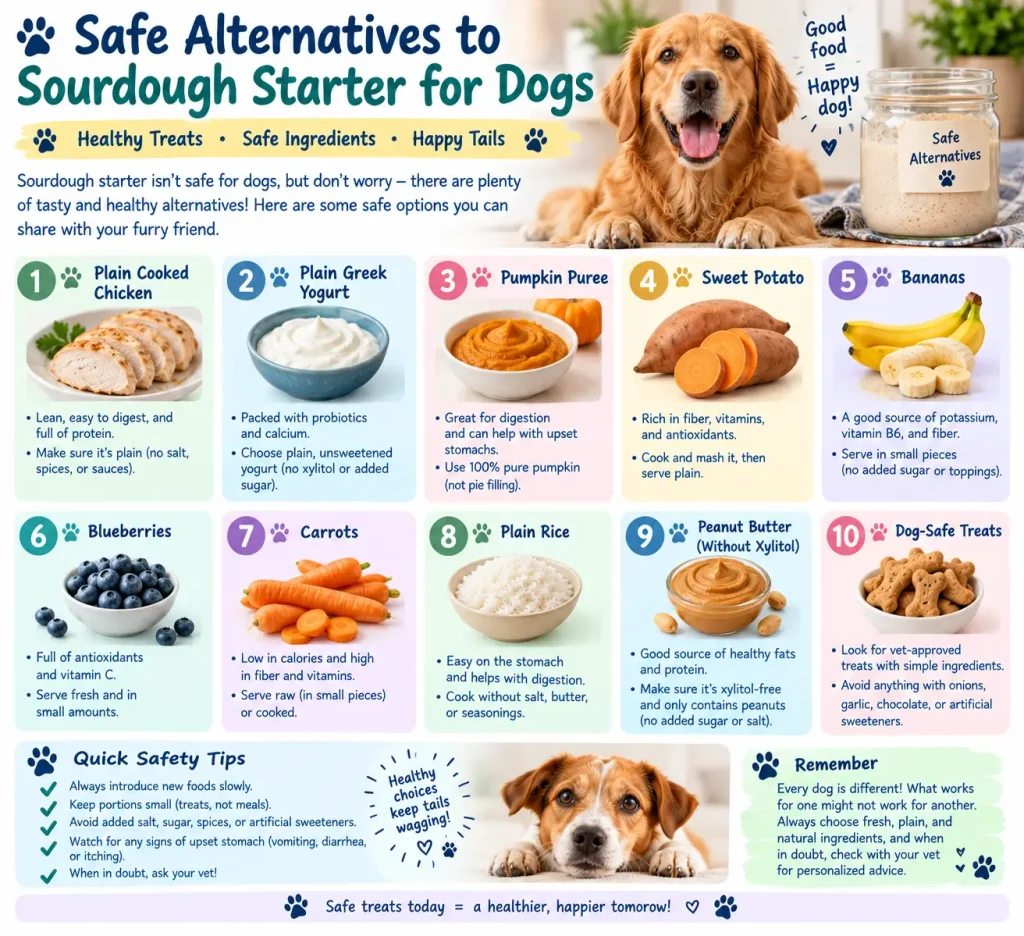
- Plain cooked pumpkin with no sugar or spices
- A few small pieces of plain carrot
- A few apple slices with the seeds and core removed
- A store bought dog treat that suits your dog’s age and diet
Treats should make up only a small part of your dog’s diet. No treat is right for every dog, so check with your veterinarian if your dog has allergies, a sensitive stomach, or a health condition.
Read This : Dog Age in Human Years by Breed: Complete Age Chart
How to Keep Sourdough Starter Away From Dogs
Most accidents happen in a busy kitchen. A few habits help:
- Store starter in a sturdy, lidded container on a high shelf or in a closed cabinet.
- Keep jars and bowls well back from counter edges.
- Do not leave fermenting mixtures on a low table or any spot your dog can reach.
- Wipe up spills and flour paste right away.
- Store baking ingredients away from your dog’s food.
- Remind everyone in the home never to offer raw starter to a dog.
- Put rising dough in a closed oven or a proofing drawer, as VCA suggests, instead of on the counter.
Myths About Sourdough Starter and Dogs
- Myth: Fermented foods are always safe for dogs. Fermented foods can contain alcohol or other ingredients dogs handle poorly. Safety depends on the specific food.
- Myth: A small lick is guaranteed to be harmless. A tiny taste may cause no trouble, but no source can promise that. Contact a vet if you are unsure.
- Myth: Sourdough discard cannot contain alcohol. Discard is simply starter that has been set aside, and it can ferment too.
- Myth: Dogs can eat raw starter because it contains natural yeast. Natural yeast is the very thing that makes alcohol and gas.
- Myth: Waiting for symptoms is always the best approach. Veterinary sources advise getting advice right away after raw dough is eaten, even when a pet seems fine.
Frequently Asked Questions
Can dogs eat sourdough starter in small amounts?
It is best to avoid it. No amount of raw starter should be treated as safe, because alcohol content and a dog’s sensitivity vary. If your dog ate a small amount, call a veterinarian or poison helpline for advice instead of guessing.
What happens if my dog licks sourdough starter?
A small lick may cause nothing, or it may cause stomach upset. Because alcohol levels and sensitivity vary, it is wise to call your vet and describe how much your dog tasted. Watch for vomiting, wobbliness, or unusual sleepiness while you wait for advice.
Can sourdough starter poison a dog?
Yes, it can. Fermentation produces ethanol, and veterinary sources link yeast dough to alcohol poisoning in dogs. Not every exposure leads to poisoning, but the risk depends on the amount, the dog’s size, and any added ingredients. Call a veterinarian if you suspect ingestion.
How quickly can symptoms appear after ingestion?
There is no reliable timeline that fits every dog. Signs may appear within hours, or they may be delayed or hidden. Because of this, veterinary sources recommend seeking advice right away after dough or starter is eaten, even if your dog seems normal.
Can dogs eat sourdough discard?
No. Discard is starter you have set aside, so it still holds live yeast and may have fermented for days. Treat it the same as active starter. Keep it away from your dog, and call a veterinarian if your dog eats some.
Is sourdough discard safer than active starter?
Not in any way you can count on. Discard can still be alive and fermenting, and its alcohol content is hard to judge. It also may contain the same added ingredients. Handle discard with the same caution as active starter.
Can dogs eat sourdough bread?
Fully baked, plain sourdough bread is generally a different situation from raw starter or dough. A small piece is usually not toxic, but bread offers little nutrition. Check for raisins, garlic, onion, and xylitol first, and skip it if your dog has a wheat allergy.
What should I do if my puppy eats sourdough starter?
Call a veterinarian or emergency clinic right away. Puppies are small and can become seriously ill faster than adult dogs. Do not wait for symptoms. Have your puppy’s weight, the estimated amount eaten, and the time ready for the call.
Should I make my dog vomit after eating starter?
No, not unless a veterinarian tells you to. Inducing vomiting at home can be unsafe, and sticky dough or starter may be hard to bring up. Call a vet or poison helpline first. They will tell you whether vomiting is appropriate and how to do it safely.
Quick Decision Guide
- Your dog ate raw, active starter or discard. Treat this as a situation that needs prompt veterinary advice. Remove access, note the amount and time, and call a vet or poison helpline now, even if your dog looks fine.
- Your dog ate dough that contains active starter. Treat this as an emergency. Dough can swell in the stomach as well as produce alcohol. Go to or call an emergency veterinarian immediately.
- Your dog ate a small piece of fully baked, plain bread. This is usually low risk. Check the ingredients for raisins, garlic, onion, and xylitol. Watch for stomach upset, and call your vet if anything seems off or if the bread had a toxic ingredient.
Final Thoughts
So, can dogs eat sourdough starter? No. Raw, active starter can ferment into alcohol, and it can cause alcohol poisoning, stomach upset, or both. Baked sourdough bread is a different matter, but starter, discard, and dough should stay out of your dog’s reach. If your dog does get into it, call a veterinarian or poison helpline right away instead of waiting.