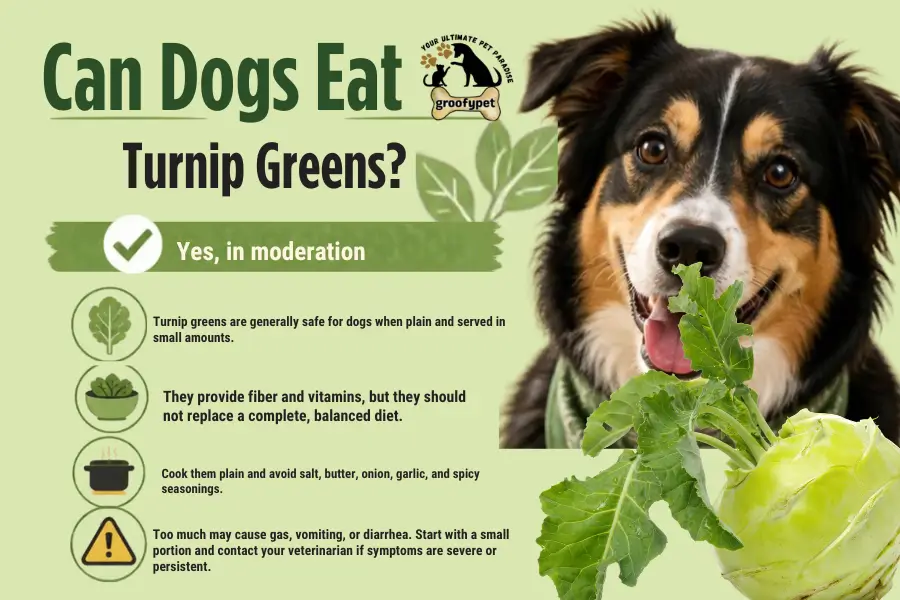
Dogs can eat turnip greens in small, properly prepared portions. Washed, plain, and either finely chopped raw or lightly cooked greens work best. Large servings, seasoned preparations, and daily heavy feeding are not recommended. Introduce turnip greens gradually and watch your dog for any digestive upset.
Turnip greens are showing up more often in homemade dog food recipes and as an occasional topper for kibble. If you’ve got a bunch of fresh turnips with the leafy tops still attached, it’s natural to wonder whether those greens are safe to share with your dog, or whether you should just toss them in the compost.
The short answer is that most healthy dogs can eat turnip greens in moderation, but preparation, portion size, and your individual dog’s tolerance all matter. This guide covers everything from raw versus cooked turnip greens to how much is appropriate for different dog sizes.
Are Turnip Greens Safe for Dogs?
Turnip greens are generally considered safe for dogs when they’re washed thoroughly and served plain, without any added salt, butter, or seasoning. That said, “generally safe” doesn’t mean “safe in any amount.” Turnip greens are fibrous, and dogs, especially those unaccustomed to eating vegetables, can develop loose stool, gas, or an upset stomach if they eat too much too quickly.
Portion size matters because a dog’s digestive system isn’t built to process large amounts of leafy plant fibre the way a human’s can. A tablespoon of chopped greens mixed into a meal is a very different experience for a dog’s gut than a whole handful.
Whether raw or cooked greens are better depends on your dog. Lightly cooking the leaves softens tough fibers and makes them easier to chew and digest, which is often the safer default, particularly for older dogs or those with sensitive stomachs. Raw greens can be fine for some dogs in small, finely chopped amounts, but they’re harder to break down and carry a slightly higher risk of stomach upset or choking on larger pieces.
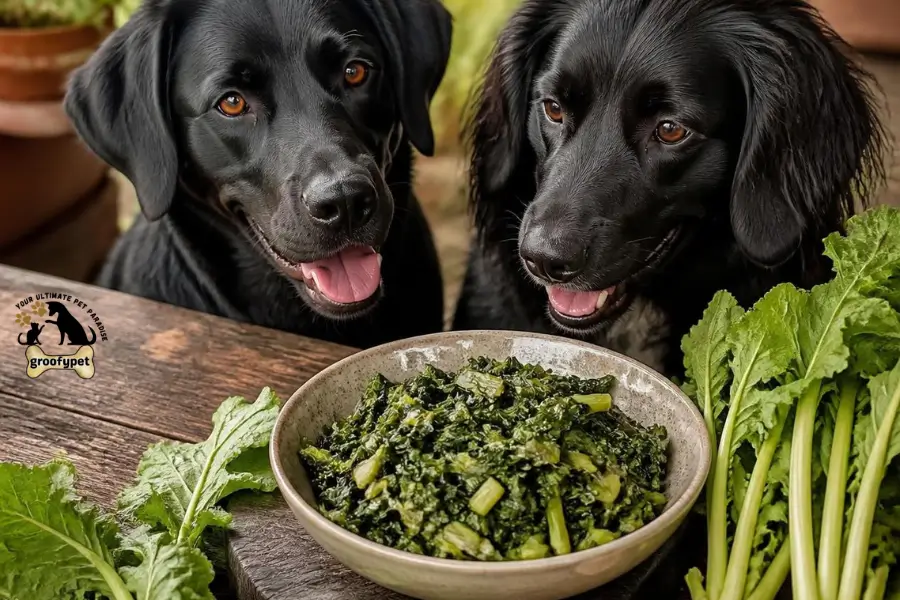
Washing the greens before feeding is non-negotiable. Turnip greens grow close to the soil and can carry dirt, grit, or pesticide residue. Tough, thick stems are also worth trimming off, since they’re harder to chew than the leafy portion and add little nutritional benefit.
Finally, avoid any seasonings or sauces entirely. Ingredients that are common in human kitchens—salt, butter, oil, garlic, onion, or spicy seasoning blends can range from mildly problematic to genuinely dangerous for dogs, regardless of how safe the turnip greens themselves are.
Must Read: Can Dogs Eat Bilimbi? Safety, Benefits, Risks, and Feeding Guide
Can Dogs Eat Raw Turnip Greens?
Quick Answer: Dogs can eat raw turnip greens in small, finely chopped amounts, but the leaves are somewhat fibrous and tougher to digest than cooked greens. Wash them well, cut them small to reduce choking risk, and start with a very small portion to see how your dog tolerates them.
It’s technically possible for dogs to eat raw turnip greens, but “possible” and “ideal” aren’t the same thing. Raw leafy greens have a firmer, more fibrous texture than cooked ones, which means more chewing and more work for the digestive system. Some dogs handle this fine; others end up with gas or loose stool after eating raw greens, especially in larger amounts.
If you do offer raw turnip greens, cut them into small pieces rather than leaving whole leaves. This reduces the choking hazard and makes the pieces easier to swallow safely. Always wash the leaves first to remove dirt and any residue.
For many dogs, lightly cooked greens are simply the easier option to digest, which is why cooking is often the recommended default rather than raw feeding.
Can Dogs Eat Cooked Turnip Greens?
Quick Answer: Yes, cooked turnip greens are usually easier for dogs to chew and digest than raw ones. Cook them plain; steaming or boiling works well, and avoid butter, oil, salt, or any seasoning before serving.
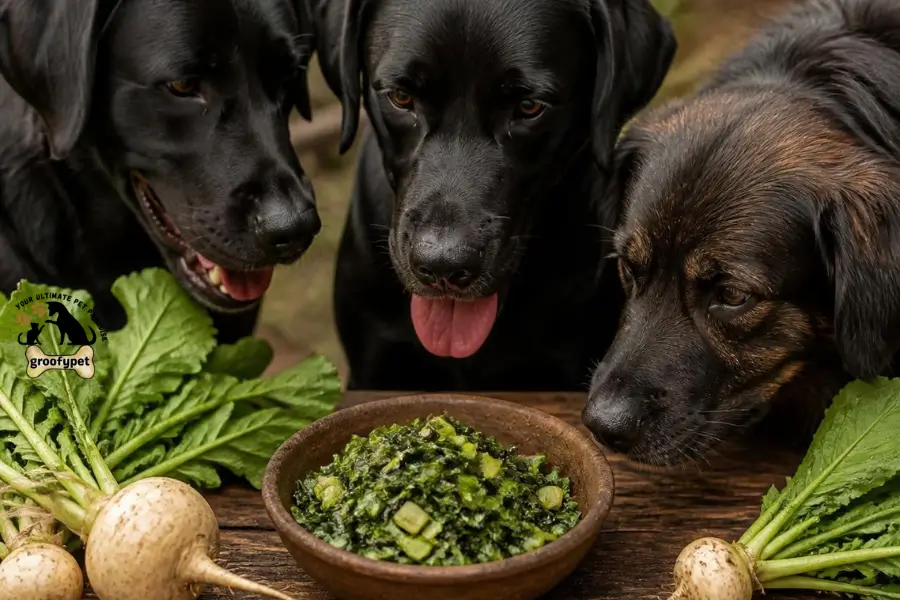
Cooking breaks down some of the tough plant fiber in turnip greens, which softens the texture and can make them gentler on a dog’s stomach compared to raw leaves. Steaming or boiling the greens in plain water, then letting them cool before serving, is a simple and safe approach.
The preparation method matters as much as the fact that the greens are cooked. Skip:
- Salt
- Butter
- Cooking oils in large amounts
- Garlic
- Onion
- Spicy seasoning blends
- Cream-based or heavy sauces
These additions are common in how humans cook greens, but several of them — particularly garlic and onion — can be harmful to dogs even in small quantities. The greens themselves may be fine; it’s what you cook them with that creates the risk.
Turnip Greens Nutrition for Dogs
Turnip greens contain a mix of fiber, vitamins, and minerals, but they shouldn’t be thought of as a superfood or a nutritional cornerstone of your dog’s diet. Dogs get the bulk of their required nutrition from a complete and balanced commercial or vet-formulated diet. Vegetables like turnip greens are best viewed as a supplemental, occasional addition rather than a meaningful nutritional pillar.
| Nutrient/Component | Potential Role |
|---|---|
| Fiber | Supports normal digestive function |
| Vitamin C | Supports normal body functions |
| Vitamin K | Important for normal blood clotting |
| Calcium | Supports bone and dental health |
| Other plant compounds | Contribute to overall vegetable nutrition |
Exact nutrient amounts can vary depending on how the greens are grown and prepared, so it’s more useful to think of turnip greens as a modest nutritional add-on rather than trying to calculate precise values for your dog’s diet.
Potential Benefits of Turnip Greens for Dogs
Adds Some Fiber
Fiber-containing vegetables like turnip greens can contribute to normal bowel regularity when fed in reasonable amounts. This is a supporting role, not a treatment for any digestive condition.
Provides Vitamins and Minerals
Turnip greens contain vitamin C, vitamin K, calcium, and other plant compounds. These nutrients contribute in small ways to overall wellness, though a dog’s primary nutrition should still come from a complete diet formulated for canine needs.
Adds Variety
Introducing a small, dog-safe vegetable now and then can add variety to a dog’s routine without replacing the balanced nutrition of their regular food. Many owners enjoy sharing a bit of what’s on the cutting board, and turnip greens can be part of that in moderation.
Low-Calorie Food Option
Leafy greens are generally low in calories relative to their volume, which can make them a reasonable low-calorie topper for dogs who are managing their weight as long as portions stay small and preparation stays plain.
It’s worth being skeptical of bigger claims you might see elsewhere, such as turnip greens “detoxing” the body, “curing” constipation, or acting as an immune “boost.” These are exaggerated framings not supported by solid evidence, and turnip greens should never be treated as a substitute for veterinary care or a complete diet.
Risks of Feeding Turnip Greens to Dogs
Even a dog-safe food carries some risk if it’s fed carelessly. With turnip greens, the most common issues include:
- Digestive upset: Gas, diarrhea, or vomiting can occur, especially with a new food or larger portions.
- Excess fiber: Too much fiber at once can overwhelm a dog’s digestive system, leading to loose stool.
- Choking: Large, unchopped leaves or thick stems can pose a choking risk, particularly for small dogs.
- Added ingredients: Seasonings, oils, salt, garlic, and onion used in preparation are often riskier than the greens themselves.
- Individual sensitivities: Some dogs simply don’t tolerate certain vegetables well, regardless of how they’re prepared.
The fact that turnip greens are generally dog-safe doesn’t mean unlimited amounts are fine. Moderation is the operative word throughout this entire topic.
Can Dogs Eat Turnip Greens Every Day?
Quick Answer: Daily feeding isn’t necessary and isn’t recommended as a default. Turnip greens work best as an occasional addition rather than a daily habit, since a dog’s main nutrition should come from a complete, balanced diet.
There’s no strong reason for most dogs to eat turnip greens every single day. Treats and vegetable additions are generally recommended to stay within a small percentage of a dog’s overall daily food intake, and turnip greens are no exception. Feeding them occasionally, a few times a week, in small amounts is a more sensible approach than working them into a daily routine.
Individual tolerance also plays a role. Some dogs handle small regular amounts of leafy greens without any issue, while others do better with more spaced-out servings. Pay attention to how your dog responds rather than following a fixed schedule.
How Much Turnip Greens Can Dogs Eat?
Quick Answer: There’s no single medically established amount that applies to every dog. As a general starting point, small dogs should get a teaspoon or two, medium dogs a tablespoon or two, and large dogs a couple of tablespoons of chopped, plain turnip greens introduced gradually.
| Dog Size | Starting Amount |
|---|---|
| Extra-small | A small bite |
| Small | 1–2 teaspoons |
| Medium | 1–2 tablespoons |
| Large | 2–3 tablespoons |
| Extra-large | A little more, depending on tolerance |
These figures are conservative starting points, not veterinary prescriptions. Every dog is different, and factors like size, activity level, existing diet, and individual digestive sensitivity all affect what’s appropriate. Introduce turnip greens gradually, start with a small test portion, wait a day to see how your dog reacts, and adjust from there.
Also read: Can Dogs Eat Escarole? Safety, Benefits, Risks & Serving Tips
How to Prepare Turnip Greens for Dogs
- Wash the greens thoroughly to remove dirt, grit, and any pesticide residue.
- Remove damaged or tough parts, including thick stems that are harder to chew.
- Chop the leaves into small pieces, whether you’re serving them raw or cooked.
- Cook them plainly if desired steaming or boiling in plain water works well.
- Let cooked greens cool completely before serving, since hot food can burn a dog’s mouth.
- Mix a small amount into your dog’s regular food rather than serving it as a standalone dish.
Throughout preparation, skip garlic, onion, spicy seasoning, heavy sauces, and excessive salt. These additions carry more risk than the turnip greens themselves.
Can Puppies Eat Turnip Greens?
Quick Answer: Puppies can try small amounts of turnip greens, but their nutritional needs are different from adult dogs, and treats or vegetables shouldn’t take the place of a complete puppy diet formulated for growth.
Puppies are growing quickly and need consistent, balanced nutrition to support that development. While a very small taste of plain, well-prepared turnip greens is unlikely to cause harm for most healthy puppies, it shouldn’t become a regular substitute for puppy food or treats designed for their life stage.
If your puppy is very young, has any digestive issues, or has known dietary sensitivities, it’s worth checking with your veterinarian before introducing new vegetables, including turnip greens.
Can Dogs With Sensitive Stomachs Eat Turnip Greens?
Quick Answer: Dogs with sensitive stomachs may tolerate turnip greens poorly because of the fiber content. If you want to try, start with a tiny amount and watch closely for any negative reaction.
High-fiber vegetables like turnip greens can trigger digestive symptoms in dogs whose stomachs are already prone to upset. If your dog has a history of sensitive digestion, introduce turnip greens in a very small test amount rather than a full serving, and keep an eye out for:
- Loose stool
- Gas
- Vomiting
- Abdominal discomfort
- Reduced appetite
If any of these symptoms show up and don’t resolve quickly, or if they seem severe, it’s time to call your veterinarian rather than waiting it out.
Turnip Greens vs. Turnips for Dogs
Turnip greens and turnip roots come from the same plant, but they’re different parts with different textures and considerations.
| Feature | Turnip Greens | Turnip Root |
|---|---|---|
| Plant part | Leaves | Root |
| Texture | Leafy | Firm |
| Preparation | Wash, chop, optionally cook | Wash, peel if desired, cook or serve appropriately |
| Main concern | Fiber and digestive tolerance | Portion size and preparation |
The fact that one part of the plant is dog-safe doesn’t automatically confirm the same for the other. Both the greens and the root are generally considered safe for dogs in moderation, but they should each be introduced and portioned with their own considerations in mind.
When Should Dogs Avoid Turnip Greens?
Extra caution is warranted if your dog:
- Is on a veterinary-prescribed diet
- Has an existing digestive condition
- Has shown unusual reactions to vegetables in the past
- Is recovering from a gastrointestinal illness
- Has difficulty chewing
- Has other individual dietary restrictions
For dogs with diagnosed medical conditions, a veterinarian should always guide decisions about new foods, including vegetables like turnip greens.
What Should You Do If Your Dog Eats Too Many Turnip Greens?
If your dog gets into more turnip greens than intended, keep an eye out for:
- Diarrhea
- Vomiting
- Gas
- Abdominal discomfort
- Loss of appetite
Mild digestive upset after an unfamiliar food isn’t unusual and often resolves on its own within a day. However, if symptoms are severe, persistent, or getting worse, contact your veterinarian rather than waiting to see if things improve.
Frequently Asked Questions
Can dogs eat turnip greens raw?
Yes, in small, finely chopped amounts. Raw greens are more fibrous and harder to digest than cooked ones, so start with a small portion and watch for any digestive upset before offering more.
Can dogs eat cooked turnip greens?
Yes, cooked turnip greens are often easier for dogs to chew and digest than raw ones. Cook them plain, without salt, butter, or seasoning, and let them cool before serving.
Are turnip greens good for dogs?
Turnip greens offer fiber, vitamin C, vitamin K, and calcium, which can provide modest nutritional support. They should complement, not replace, a complete and balanced dog diet.
Can dogs eat turnip greens with stems?
Thick stems are harder to chew than the leafy portion and are best trimmed off before serving, especially for smaller dogs.
Can dogs eat turnip greens cooked with garlic?
No. Garlic is unsafe for dogs even in small amounts and should never be used when preparing turnip greens or any other food for your dog.
Can dogs eat turnip greens with butter?
No, butter and other added fats aren’t recommended. Turnip greens should be served plain, without butter, oil, salt, or seasoning.
Are turnip greens safe for dogs with sensitive stomachs?
They can be, but dogs with sensitive stomachs may react poorly to the fiber content. Start with a very small test amount and watch closely for any signs of digestive upset.
Key Takeaways
- Turnip greens can be offered to many healthy dogs in small portions.
- Plain preparation, without seasoning or added fats, is essential.
- Large amounts can cause digestive upset, gas, or loose stool.
- Introduce turnip greens gradually and monitor your dog’s reaction.
- Avoid garlic, onion, excessive salt, and rich sauces entirely.
- Vegetables like turnip greens should complement, not replace, a complete dog diet.
- Dogs with medical conditions or dietary restrictions may need individualized veterinary guidance.
Final Thoughts
Turnip greens can be a reasonable, occasional addition to a healthy dog’s diet when they’re washed well, prepared plainly, and served in modest amounts. The greens themselves aren’t the main concern; it’s the oversized portions and risky seasonings that cause the most trouble.
Keep servings small, introduce them slowly, and watch how your dog responds. If you’re ever unsure whether turnip greens are right for your dog, especially one with an existing health condition, a quick check with your veterinarian is the safest path forward.
Can Dogs Eat Mortadella? Risks, Ingredients, and Safer Alternatives