
Can dogs eat elderberries? Not as a treat. Risk depends on the plant part and preparation: raw berries, leaves, stems, and roots are the main concerns. Stomach upset is the most common result, and serious poisoning is less likely. If your dog already ate some, call your vet or a pet poison hotline now rather than waiting for symptoms.
This guide explains why elderberries need extra caution, how a berry differs from a leaf or a syrup, and what to do next. It is general information, not a substitute for advice from your veterinarian.
Are Elderberries Safe for Dogs?
No. Elderberries are not a safe, proven dog food. Pet Poison Helpline lists elderberry (genus Sambucus) as moderately toxic to dogs, and a veterinary teaching hospital guide from Colorado State University names several toxic compounds in the plant.
That sets elderberries apart from blueberries or watermelon. Those are fruits with no toxic leaves, stems, or roots to worry about. Elderberry is a shrub, and different parts of it carry different risks.
Here is the practical picture:
- Raw berries, leaves, stems, and roots are the biggest concerns.
- Ripe berries are less clear. People eat them after cooking, but that says nothing reliable about dogs.
- Syrups, gummies, and supplements add new variables, including sweeteners that may be dangerous on their own.
No veterinary source we reviewed gives a safe serving size of elderberries for dogs. Without one, the sensible answer is to skip them.
Why Can Elderberries Be Dangerous for Dogs?
Elderberry plants contain more than one irritating or toxic substance. The Colorado State University guide lists triterpenoids, resins, lectins, and cyanogenic glycosides. In plain terms, these are plant chemicals that can upset the digestive tract or, in the case of cyanogenic glycosides, release cyanide under certain conditions.
The cyanide question
Cyanogenic glycosides, such as sambunigrin, are sugar-linked compounds stored inside plant tissue. When the tissue is chewed, crushed, or digested, they can break down and release hydrogen cyanide. Cherry pits and apple seeds work the same way.
This is the part that frightens owners, so here is the balanced version. The Pet Poison Helpline says the risk of true cyanide poisoning after elderberry ingestion is very low for most species, dogs and cats included. The Colorado State guide describes cyanide signs in livestock that ate large amounts of leaves, and it notes that vomiting and diarrhea are more likely caused by other compounds in the plant.
So a dog who eats elderberries is far more likely to have a rough stomach than a cyanide emergency. But “less likely” is not “impossible,” and larger amounts of plant material raise the stakes.
The Sambucus genus includes roughly 25 species, and common types include American elder, red elderberry, and blue elderberry. Toxin levels can differ by species, plant part, and ripeness. A berry that looks harmless on the bush can still sit on a plant whose leaves and stems are a problem. A dog’s size and how much they swallow matter too.
Which Parts of the Elderberry Plant Are Toxic to Dogs?
This table summarizes what reliable sources say and where the evidence runs out. Nothing here is labeled safe, because no dog-specific source we found supports that.
| Plant part or product | Known safety concern | Recommended action |
|---|---|---|
| Raw or unripe berries | Unripe fruit is listed as a toxic part in a poison-center plant guide. Raw berries can cause vomiting and diarrhea and contain cyanogenic compounds. | Keep away. Call a vet or poison line if eaten. |
| Fully ripe berries | Less studied. Some sources treat ripe berries as less hazardous for people, but no reliable evidence sets a safe amount for dogs. | Don’t feed. If eaten, call for advice. |
| Leaves | Listed as toxic. Contain cyanogenic compounds. Livestock cyanide cases involved large leaf intakes. | Prevent access. Call if chewed or swallowed. |
| Stems and branches | Listed as toxic. Often present in pruning waste and fallen cuttings. | Remove cuttings. Call if chewed. |
| Roots and bark | Roots are listed as toxic, and some sources include bark. Exposure is less likely unless a dog digs. | Block digging. Call if eaten. |
| Cooked berries | Cooking is used for human recipes, but no dog-tested preparation exists, and seeds or stems may remain. | Don’t feed deliberately. Call if a large amount was eaten. |
| Elderberry syrup, gummies, supplements | Concentrated extracts plus other ingredients, which may include xylitol or other harmful additives. | Read the full label. Call with the ingredient list. |
What Happens If a Dog Eats Elderberries?
The outcome depends on what was eaten and how much. The Pet Poison Helpline reports that the common signs are vomiting and diarrhea, sometimes with blood. It says signs can be mild when only a few berries, leaves, or an herbal supplement were eaten and severe when a large amount of plant material was swallowed.
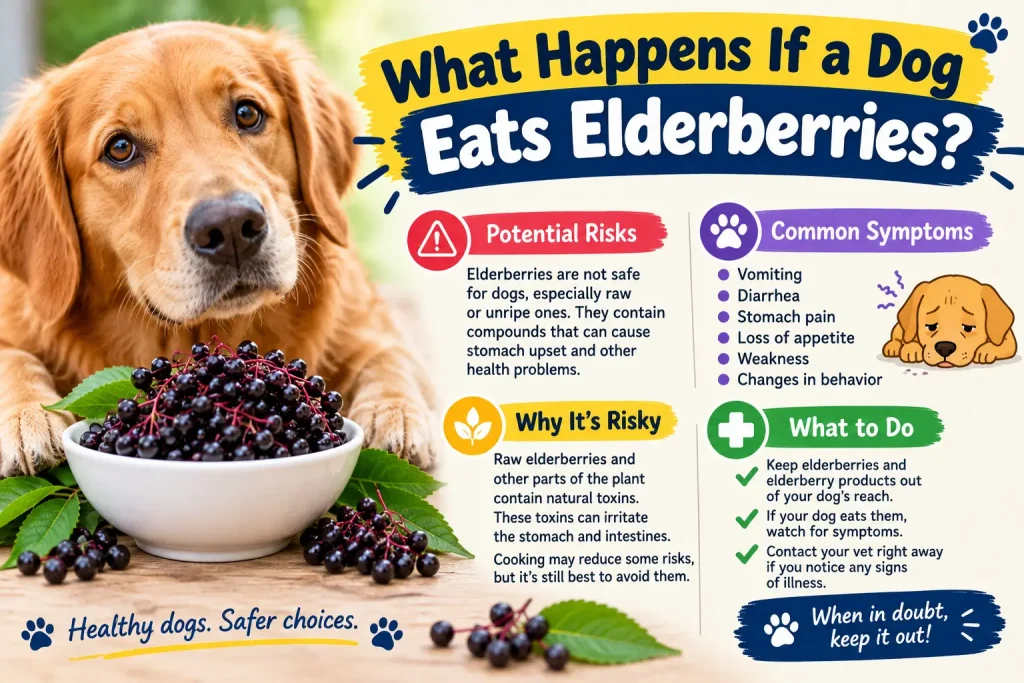
It also says veterinary treatment is needed after a large ingestion or when signs are severe or persistent, such as multiple episodes of vomiting or any bloody diarrhea. Serious cyanide-type poisoning, with rapid breathing trouble and seizures, is described as very unlikely but is the reason to treat leaf and stem exposures with respect.
One thing owners often get wrong: a dog who seems fine is not necessarily in the clear. Veterinary sources don’t give a reliable symptom timeline for elderberries, so no one can promise that quiet means safe. That is why a phone call early beats a wait-and-see approach.
The one-berry question
Is a single elderberry dangerous? The honest answer is that the count alone doesn’t settle it.
A single ripe berry in a large dog is a very different situation from a single berry that turns out to be a different plant, or a chewed handful of leaves, or a gummy with xylitol. Plant identity, plant part, ripeness, product ingredients, and your dog’s size all matter. If it was truly one confirmed berry and your dog is large and healthy, a poison-control specialist can tell you quickly whether to watch at home. Make the call anyway, because that decision should come from a professional who can ask follow-up questions.
Symptoms of Elderberry Poisoning in Dogs
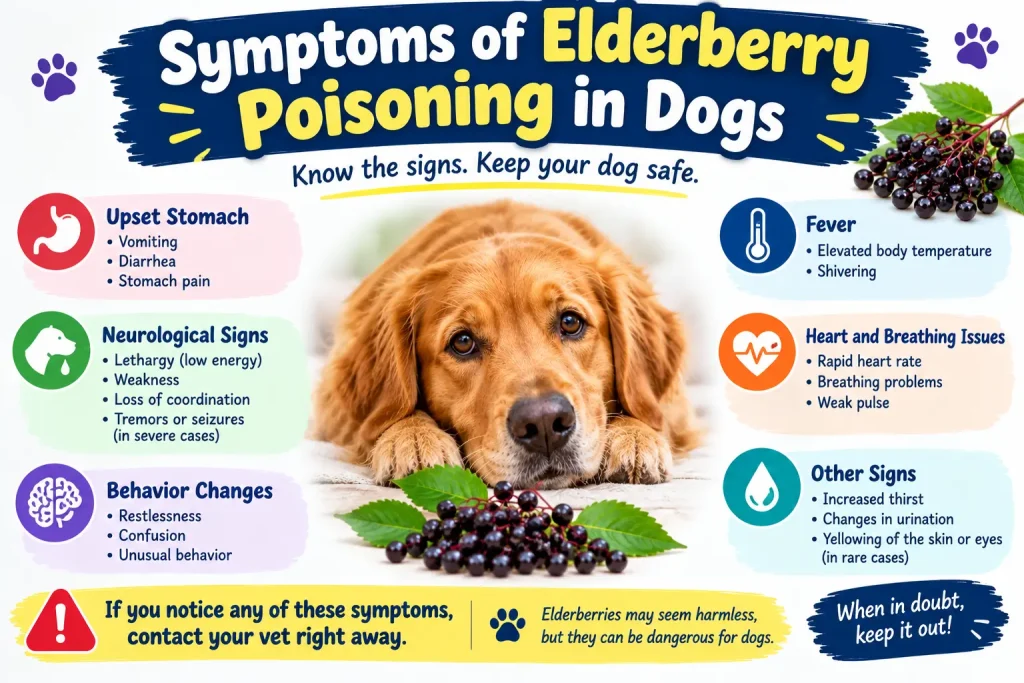
Most dogs who show signs will show digestive ones. The other categories are less common but need urgent attention.
| Category | What you might see | What to do |
|---|---|---|
| Gastrointestinal | Vomiting, diarrhea, loss of appetite, blood in vomit or stool | Call your vet. Repeated vomiting or any bloody diarrhea warrants veterinary care. |
| Weakness or unusual behavior | Lethargy, unusual quietness, unwillingness to move | Call your vet promptly. |
| Breathing abnormalities | Rapid breathing, labored breathing, distress | Emergency. Go to the nearest emergency clinic. |
| Neurological | Seizures, collapse, loss of coordination | Emergency. Go now and call ahead. |
| Product-related signs | Weakness, tremors, or collapse after eating a sugar-free product | Possible xylitol. Emergency. |
Breathing difficulty, collapse, seizures, or any suspicion of cyanide poisoning needs emergency care. We are not listing a timeline because no dependable one exists for elderberries.
What to Do If Your Dog Eats Elderberries
- Stop further access. Move your dog away and bag any remaining berries, leaves, or product.
- Identify what it was. Photograph the plant, leaves, and berries, or keep the packaging.
- Note the amount and timing. A rough guess is fine. Write down when it happened.
- Call promptly. Contact your vet, an emergency clinic, the ASPCA Animal Poison Control Center, or Pet Poison Helpline. Don’t wait for symptoms.
- Follow professional instructions. Go in if they tell you to.
- Monitor only as directed. Watch your dog the way the professional advises.
Do not make your dog vomit, give activated charcoal, or try home remedies unless a veterinary professional tells you to. Some of these can cause harm, and the right choice depends on what was eaten.
Also Read: Can Dogs Eat Escarole? Safety, Benefits, Risks & Serving Tips
Emergency checklist
- Remove the plant or product from your dog’s reach
- Photograph the plant and keep any packaging
- Estimate the amount and note the time.
- Go straight to emergency care for breathing trouble, collapse, or seizures
- Do not induce vomiting or give home remedies unless told to
What to tell the veterinarian
These details help a professional judge how worried to be:
- Your dog’s approximate weight
- The plant or product name, if known
- Which part was eaten (berry, leaf, stem, syrup)
- The estimated amount
- When it happened
- Current symptoms, even mild ones
- The ingredient list and packaging for any product
Weight and amount together tell the vet how much exposure your dog had for their size. The ingredient list tells them whether something like xylitol is involved.
The exposure decision guide
| What happened | Recommended action | Urgency |
|---|---|---|
| Dog chewed an unidentified berry | Remove access, photograph the plant, call a vet or poison line | Call the same day |
| Dog swallowed raw elderberries | Call with amount and time, even if your dog seems fine | Call promptly, before symptoms |
| Dog ate leaves or stems | Call and describe the plant part | Call promptly |
| Dog consumed elderberry syrup | Check the label for xylitol and other ingredients, then call | Call promptly. Emergency if xylitol is listed |
| Dog ate a product with potentially harmful added ingredients | Go to a vet or call a poison line with the packaging | Don’t wait |
| Dog has concerning symptoms after exposure | Seek emergency veterinary care and call ahead | Immediate |
A potentially toxic exposure deserves prompt advice even before symptoms start.
Can Dogs Eat Cooked Elderberries?
Cooking changes the picture for people. Plant nurseries and food guides commonly say elderberries should be cooked before eating, because raw ones can make people sick. That advice is built around human recipes and human bodies.
It doesn’t transfer to dogs. We found no veterinary evidence that a specific cooking method makes elderberries safe for dogs, and ordinary baking or boiling doesn’t guarantee that every problem compound is gone or that seeds, stems, and leaf bits were removed. Commercial products for people are processed differently from a pot on your stove, and neither is tested on dogs.
If you’re wondering whether to cook some for your dog, the answer is to skip it. If your dog ate a cooked product, such as a pie, call for advice based on the ingredients, not just the berries.
Must Read : Can Dogs Eat Bilimbi? Safety, Benefits, Risks, and Feeding Guide
Can Dogs Eat Elderberry Syrup, Gummies, or Supplements?
These products raise a different question: what else is in them? The elderberry itself is only one part of the risk.
Elderberry syrup
Syrups are concentrated and sweet, and many are made for human immune-support use. Check the ingredient list for xylitol and for added flavorings or herbs. Syrup bottles often contain alcohol-free bases, but you shouldn’t assume. Don’t give your dog syrup to treat a cough or illness. If a dog licked or drank some, call with the product details.
Elderberry jam
Jam is mostly sugar and fruit, so the bigger issues are sugar load and any “sugar-free” sweeteners. A lick of regular jam is unlikely to be the main worry, but a sugar-free version needs a label check for xylitol. Jams can also include other ingredients, so read the whole label.
Gummies and supplements
Gummies and chewables are the highest-risk category because they taste like candy, come in bottles dogs can chew open, and are sometimes made with xylitol. Not all elderberry gummies contain it, but some products do, so check every time.
Xylitol is extremely toxic to dogs. VCA Animal Hospitals explains that lower doses cause dangerously low blood sugar and higher doses can lead to liver failure, with liver problems appearing within 24 to 48 hours. A published veterinary review puts the thresholds at doses of more than 0.1 g/kg for low blood sugar and more than 0.5 g/kg for liver failure. If a product lists xylitol, treat it as an emergency.
Also check for zinc, vitamin C, and other added actives. Contact a vet with the complete ingredient list whenever you’re unsure.
Do Elderberries Have Any Benefits for Dogs?
Elderberries contain nutrients and plant compounds, and people take them for immune support. That doesn’t carry over to dogs.
A nutrient existing in a food is not the same as a proven health benefit. The sources reviewed for this article don’t include solid canine research showing that elderberries boost immunity, treat infections, reduce inflammation, or prevent disease in dogs. Meanwhile, the plant has known risks. Even if a food has useful nutrients, that doesn’t make it safe for dogs, and chocolate and grapes are proof of that.
If you want to support your dog’s immune health, talk to your vet about nutrition, vaccines, weight, and dental care, which have much better evidence behind them.
Safer Fruit Alternatives to Elderberries for Dogs
If you want to share fruit, these are commonly used occasional treats. Offer small, appropriate pieces, and ask your vet about portions if your dog has diabetes, pancreatitis, a sensitive stomach, or a weight problem.
| Fruit | General suitability as an occasional treat | Preparation precautions | Key safety note |
|---|---|---|---|
| Elderberries | Not recommended | None makes them reliably safe | Leaves, stems, roots, and unripe fruit are toxic. Products may have xylitol. |
| Blueberries | Commonly given as a small treat | Wash. Offer plain. | Too many can upset the stomach. |
| Strawberries | Commonly given as a small treat | Wash, remove the leafy top, cut up | Natural sugar adds up. |
| Seedless watermelon flesh | Commonly given as a small treat | Remove rind and any seeds | Rind can be hard to digest. |
Apple flesh is another option. Remove the seeds and core first.
Berries aren’t interchangeable. A blueberry being fine says nothing about elderberries, and a berry growing in the wild shouldn’t be assumed to be either.
How to Prevent Elderberry Poisoning in Dogs
- Supervise in the garden. Dogs that chew shrubs or sample fallen fruit are the ones most likely to get into trouble.
- Clear fallen berries. Berries drop under the plant and look like an invitation.
- Handle pruning waste carefully. Cut stems and leaves can sit on the ground or in a pile. Bag them or dispose of them where dogs can’t reach.
- Watch compost piles. Dogs raid them, and plant trimmings add to the risk.
- Store remedies safely. Keep syrups, gummies, and supplements in closed cabinets, not on counters, nightstands, or in open bags.
- Know your plants. If you’re not sure what grows in your yard or on your walking route, find out.
The plant identification trap
Berry color and shape are unreliable. Several plants have dark clusters that resemble elderberries, and some are toxic in their own ways. Don’t decide something is “just an elderberry” or “probably fine” from a glance.
If your dog gets into a plant you don’t know, take clear photos of the whole plant, the leaves, the stems, and the berries when it’s safe to do so. A reliable plant identification resource or a local extension office or botanical garden can help, and so can a poison-control specialist. Keep packaging for any product too.
Myth Versus Fact
- Myth: If it’s natural, it’s safe. Fact: Many natural plants are toxic. Elderberry is listed as toxic to dogs by Pet Poison Helpline.
- Myth: Ripe elderberries are automatically safe for dogs. Fact: No reliable source sets a safe amount for dogs, and ripe berries can still come with other plant parts.
- Myth: Cooking removes the danger. Fact: Cooking is part of human recipes, but no dog-tested preparation exists.
- Myth: One berry is always harmless. Fact: The count isn’t the whole story. Plant identity, plant part, product ingredients, and your dog’s size matter.
- Myth: No symptoms means no risk. Fact: Sources don’t offer a reliable timeline, so don’t assume. Call even if your dog seems fine.
- Myth: Human elderberry supplements are fine for dogs. Fact: They’re made for people and may contain concentrated extracts or ingredients such as xylitol.
Frequently Asked Questions
Can dogs eat raw elderberries?
No. Raw elderberries are one of the main concerns because raw berries and unripe fruit are linked to stomach upset and contain cyanogenic compounds. Even though serious poisoning is unlikely, there’s no reason to offer them. If your dog ate some, call your vet or a poison line for advice.
Are ripe elderberries safe for dogs?
There’s no reliable evidence that they are. Ripe berries are less of a concern than unripe ones in some human guidance, but that hasn’t been established for dogs. They can also come with leaves and stems. Skip them, and call for advice if your dog ate a lot.
Are cooked elderberries safe for dogs?
Not proven. Cooking is used in human recipes, but no veterinary source confirms a cooking method that makes elderberries safe for dogs. Pies, jams, and syrups also add sugar and other ingredients. Don’t feed them on purpose, and call if your dog ate a large amount or a product with unknown ingredients.
What happens if a dog eats one elderberry?
Most likely nothing serious, but it depends. Pet Poison Helpline says signs are generally mild when only a few berries are eaten. Plant identity, dog size, and whether leaves or other parts were involved matter. A quick call to a vet or poison line can tell you whether to watch at home.
How many elderberries are toxic to a dog?
No established toxic dose exists, so we won’t give a number. Severity depends on the plant part, how much was eaten, the species, and your dog’s size. Pet Poison Helpline says large ingestions are more likely to need treatment. When in doubt, call with your dog’s weight and the amount eaten.
Can dogs eat elderberry jam?
It’s not recommended. Jam is high in sugar and may contain other ingredients, including sweeteners in sugar-free versions. A small lick of regular jam is a different matter from a jar of sugar-free jam, so check the label for xylitol and call a vet if you’re unsure.
Can dogs have elderberry syrup?
No. Syrup is a concentrated human product, and it may contain xylitol, flavorings, or other herbs. Don’t give it to treat a cough or illness. If your dog got into a bottle, read the ingredient list and call your vet or a poison line with the details.
Are elderberry leaves toxic to dogs?
Yes, leaves are listed among the toxic parts of the plant. They contain cyanogenic compounds, and livestock cases of cyanide poisoning involved large amounts of leaves. Dogs eating a small amount most often show stomach upset, but call your vet or a poison line if your dog chewed leaves.
How long after eating elderberries do symptoms appear?
There’s no dependable timeline for elderberries in dogs, so we won’t guess. Signs may come on at different speeds depending on the amount and the plant part. Don’t wait for symptoms to decide whether to call. Contact a professional promptly after any suspected exposure.
What should I do if my dog eats elderberries but seems fine?
Still call. A dog who looks normal now may not stay that way, and a professional can use your dog’s weight, the plant part, and the amount to advise you. Remove access, collect photos or packaging, note the time, and follow the guidance you’re given on monitoring.
Final Thoughts
So, can dogs eat elderberries? The safest answer is not on purpose. The plant contains compounds that irritate the stomach, and parts of it contain cyanogenic glycosides that can release cyanide. Serious cyanide poisoning is described as very unlikely in dogs, but vomiting and diarrhea are common, and larger amounts of leaves or other plant material raise the concern.
Because ripeness, plant part, preparation, and product ingredients all change the risk, and because no reliable source gives a safe amount, don’t feed elderberries to your dog without guidance from a veterinarian about the exact plant material or product. If your dog gets into some, call a vet, an emergency clinic, the ASPCA Animal Poison Control Center, or Pet Poison Helpline soon, and go straight to emergency care for breathing trouble, collapse, or seizures.
For treats, stick to options with a long track record, like blueberries or seedless watermelon, in small pieces.
Can Dogs Eat Plumcots? Safety, Benefits, Risks and Feeding Guide