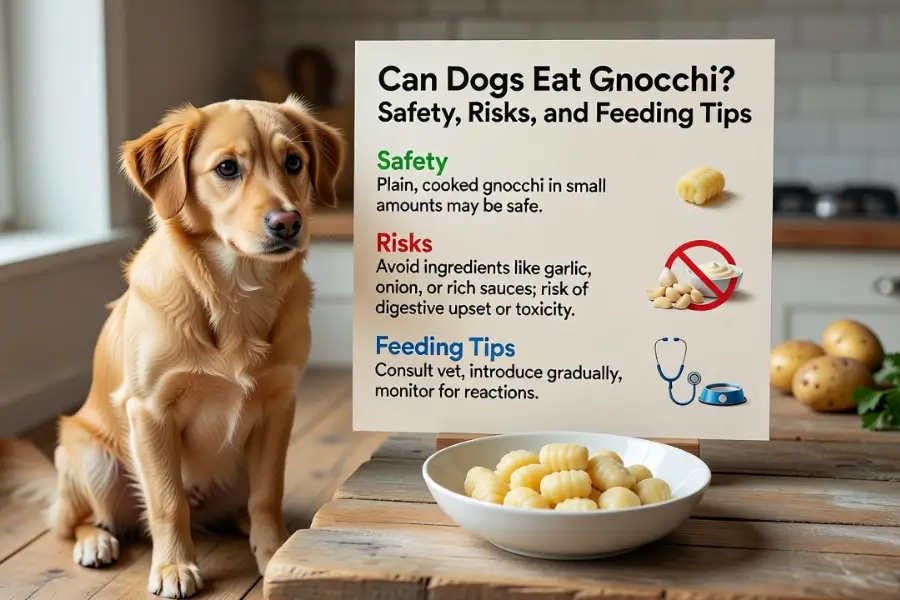
Gnocchi may look like a harmless bite to share with your dog, but is it actually safe? Dogs may tolerate a tiny amount of plain, fully cooked gnocchi, but it is not a recommended regular treat. The ingredients and preparation method matter because sauces, seasonings, and added fats can create health risks.
Traditional gnocchi is an Italian dumpling commonly made with potatoes and flour. Some recipes also contain eggs, cheese, salt, or other ingredients. While plain gnocchi is not automatically toxic to dogs, it offers little nutritional value beyond calories and carbohydrates.
Before sharing a bite with your furry friend, learn which ingredients to avoid, how to handle accidental ingestion, and which healthier alternatives are better for your dog’s diet.
Can Dogs Eat Gnocchi?
Yes, many healthy dogs can tolerate a tiny taste of plain, fully cooked gnocchi made with dog-safe ingredients. However, that does not mean gnocchi is an ideal food for dogs or something they should eat regularly.
The main concern is often not the dumpling itself but what goes into the recipe. Plain gnocchi made with cooked potatoes and flour is different from gnocchi covered in garlic butter, creamy cheese sauce, or seasoned tomato sauce.
Consider these important points before sharing gnocchi with your dog:
- Plain gnocchi: A tiny piece may be tolerated by many healthy dogs.
- Gnocchi with garlic or onion: Avoid it because both ingredients can be toxic to dogs.
- Creamy or buttery gnocchi: The high fat content may cause digestive upset and can contribute to pancreatitis.
- Salty or spicy gnocchi: Avoid heavily seasoned versions because they may upset your dog’s stomach.
- Large portions: Too much gnocchi can add unnecessary calories and cause digestive problems.
If your dog accidentally eats a small piece of plain gnocchi, there is usually less reason for concern than if the food contains garlic, onion, or a rich sauce. Check the ingredients and consider your dog’s size and health before deciding what to do next.
What Is Gnocchi Made Of?
Gnocchi is a type of dumpling commonly associated with Italian cooking. Traditional potato gnocchi usually contains mashed potatoes and flour, although recipes vary by region and manufacturer.
Some versions include eggs to help bind the dough. Others contain cheese, herbs, salt, or additional ingredients that change their suitability for dogs.
Here is a closer look at common gnocchi ingredients.
| Ingredient | Is it suitable for dogs? | What to know |
|---|---|---|
| Cooked potatoes | Generally, in moderation | Must be properly cooked and plain |
| Wheat flour | Usually tolerated by dogs without wheat sensitivity | Provides carbohydrates but is not necessary as a treat |
| Eggs | Generally safe when fully cooked | Avoid raw or undercooked egg preparations |
| Cheese | Depends on the type and amount | Fat and lactose may cause problems |
| Salt | Excess amounts are unsafe | Avoid heavily salted recipes |
| Garlic | Unsafe | Can damage red blood cells |
| Onion | Unsafe | Can cause potentially serious anemia |
| Butter and cream | Best avoided as additions | High fat may upset digestion |
| Spicy seasonings | Avoid | May irritate the digestive tract |
The key is to examine the entire recipe rather than judging gnocchi by its main ingredient. A plain dumpling and a restaurant dish covered in seasoned sauce can have very different risk levels.
Is Gnocchi Safe for Dogs?
Plain, fully cooked gnocchi made from suitable ingredients may be tolerated in a very small amount. However, safety depends on the recipe, portion size, and individual dog’s health.
Gnocchi is a human food, not a complete and balanced dog food. It does not provide the nutritional balance dogs need from their regular meals.
Use this table as a general guide.
| Type of gnocchi | General guidance | Main concern |
|---|---|---|
| Plain, fully cooked gnocchi | A tiny taste may be tolerated | Extra calories and starch |
| Potato gnocchi | Depends on the recipe | Added ingredients and portion size |
| Gnocchi with tomato sauce | Check every ingredient | Garlic, onion, salt, and seasonings |
| Cheese gnocchi | Best avoided as a treat | Fat and dairy sensitivity |
| Garlic or onion gnocchi | Do not feed | Toxicity risk |
| Creamy gnocchi | Best avoided | High fat content |
| Raw gnocchi dough | Do not offer | Uncooked ingredients and digestive concerns |
| Packaged gnocchi | Check the label carefully | Recipe variations and added seasonings |
If your dog has diabetes, food allergies, a history of pancreatitis, or a veterinary-prescribed diet, ask your veterinarian before introducing unfamiliar human foods.
Potential Risks of Feeding Gnocchi to Dogs
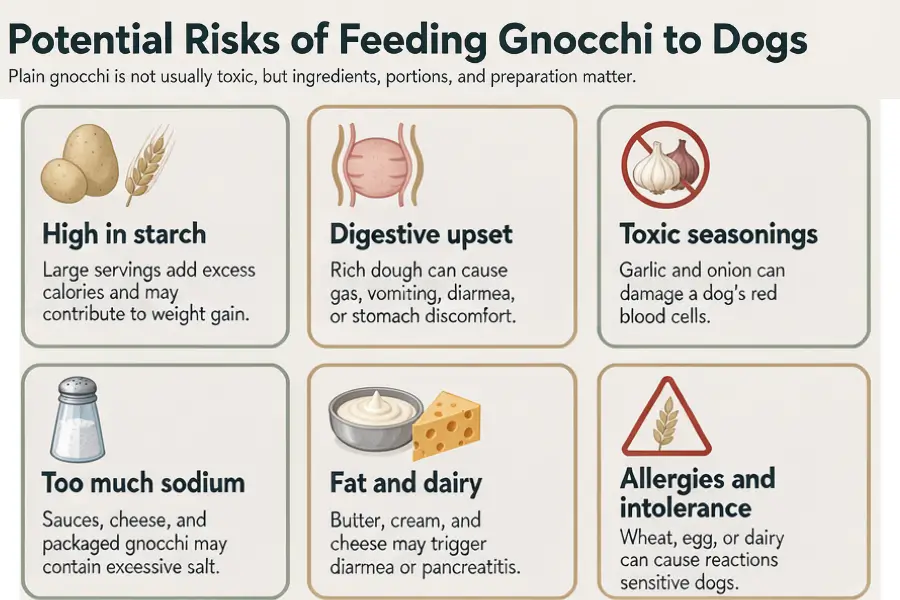
Although plain gnocchi may not be toxic, several risks make it a poor choice for regular feeding. The amount eaten and the ingredients used can make a significant difference.
1. Digestive Upset
Dogs can experience vomiting, diarrhea, gas, or abdominal discomfort after eating unfamiliar foods. A large portion of starchy gnocchi or a meal containing rich sauce may be harder for some dogs to tolerate.
If your dog develops mild stomach upset after eating gnocchi, avoid offering more human food and monitor its condition. Contact your veterinarian if symptoms persist, worsen, or occur alongside other concerning signs.
2. Excess Calories and Carbohydrates
Potato gnocchi contains carbohydrates that provide energy, but dogs do not need dumplings to meet their nutritional requirements. Extra calories from human food can contribute to weight gain when they become a regular part of the diet.
Dogs should receive most of their calories from complete and balanced dog food appropriate for their age and health. Gnocchi should never replace a nutritionally complete meal.
3. Garlic and Onion Toxicity
Garlic and onion are among the most important ingredients to watch for in gnocchi dishes. Both belong to the Allium family and can damage red blood cells, potentially causing hemolytic anemia. These ingredients may be present in tomato sauce, garlic butter, seasoning blends, and restaurant-made dishes.
Signs may include vomiting, weakness, pale gums, unusual tiredness, or dark urine. Some effects can take several days to become apparent, so do not assume your dog is safe simply because it initially seems normal.
If your dog eats gnocchi containing onion or garlic, contact your veterinarian promptly for advice. Do not wait for symptoms before seeking guidance.
4. High-Fat Sauces and Pancreatitis
Gnocchi served with butter, cream, cheese, or rich meat sauces can contain substantial amounts of fat. Fatty foods may trigger digestive upset and can contribute to pancreatitis, a painful inflammation of the pancreas.
Dogs with a history of pancreatitis or other digestive problems need particular caution. Plain gnocchi is a different situation from a large serving covered in creamy sauce, but neither should become a regular treat.
5. Excess Salt
Some packaged gnocchi, sauces, and restaurant dishes contain added salt. Small amounts of salt are part of a dog’s normal nutritional needs, but excessive intake can be dangerous.
Avoid offering heavily salted gnocchi or foods seasoned with salty stock, bouillon, or seasoning mixes. Significant salt ingestion requires prompt veterinary advice, especially if your dog develops vomiting, marked thirst, weakness, tremors, or other unusual symptoms.
6. Dairy Sensitivity
Cheese, milk, and cream may appear in gnocchi recipes or accompanying sauces. Some dogs do not digest lactose well, while others tolerate small amounts of certain dairy products.
Dairy can cause gas, loose stools, or diarrhea in sensitive dogs. High-fat dairy products also add unnecessary calories and may increase digestive risks.
7. Food Allergies and Sensitivities
Wheat flour and eggs are common ingredients in gnocchi. Most dogs can tolerate properly prepared versions of these ingredients, but individual sensitivities can occur.
If your dog follows an elimination diet or veterinary-prescribed food plan, avoid introducing gnocchi without checking with your veterinarian. Even a small amount of an unfamiliar food can complicate efforts to identify a food sensitivity.
8. Choking and Portion Problems
Gnocchi is soft, but large or sticky pieces can still create a choking concern, especially for small dogs or dogs that swallow food quickly.
If you choose to offer a tiny taste of plain gnocchi, make sure it is fully cooked and cut into a suitable size. Never force-feed a dog or offer food to an animal having difficulty swallowing.
9. Hidden Ingredients in Prepared Foods
Restaurant and packaged gnocchi may contain ingredients that are not obvious from the dish’s name. Onion powder, garlic powder, rich sauces, and seasoning blends can be easy to overlook.
Read the full ingredient label or ask about the recipe before allowing your dog to taste it. Remember that cooking does not make onion or garlic safe for dogs.
Can Dogs Eat Potato Gnocchi?
Dogs may tolerate a tiny amount of plain, fully cooked potato gnocchi, provided it contains no harmful seasonings or unsuitable additions. However, it is not a necessary part of a dog’s diet.
Potatoes are generally suitable for dogs when properly cooked and served plain in moderation. Raw potatoes and green parts of potato plants are different because they can contain higher levels of solanine, a naturally occurring compound that can be harmful.
Keep these points in mind:
- Offer no more than an occasional tiny taste, if any.
- Avoid gnocchi prepared with garlic, onion, excessive salt, or rich sauces.
- Do not add butter, cream, or heavy seasoning.
- Do not use potato gnocchi as a replacement for balanced dog food.
If your dog has diabetes, obesity, or a medical condition requiring a controlled diet, ask your veterinarian before offering starchy human foods.
Can Dogs Eat Gnocchi With Tomato Sauce?
It is best not to share gnocchi covered in tomato sauce unless you have confirmed that every ingredient is suitable for dogs. The tomato itself is not necessarily the main concern. Prepared sauces often contain ingredients that change the safety of the meal.
Plain, ripe tomato flesh is generally considered non-toxic to dogs in small amounts. However, some tomato sauces contain onion, garlic, excess salt, oil, chili, or other seasonings.
Before considering any tomato-based food, check the following:
- Onion and garlic: Avoid both because they can damage red blood cells.
- Salt: Excessive amounts can be harmful.
- Chili and spices: These can irritate your dog’s digestive system.
- Oil and butter: Rich additions may cause digestive problems.
- Sugar: Added sugar is unnecessary, although it is not the same as a toxin.
If you want to share a small taste, plain gnocchi without sauce is a simpler option. You can also choose a dog-safe treat instead.
Can Dogs Eat Cheese Gnocchi?
Cheese gnocchi is not a good treat for dogs, especially when it contains a creamy or buttery sauce. Cheese itself is not automatically toxic, but the fat content, lactose, and extra calories can cause problems.
A tiny accidental taste may be tolerated by some healthy dogs. However, a large portion could cause vomiting, diarrhea, or other digestive symptoms.
Avoid cheese gnocchi if your dog has a history of pancreatitis, struggles with weight management, or reacts poorly to dairy. If your dog has eaten a substantial amount of rich cheese sauce, contact your veterinarian for advice.
Can Dogs Eat Store-Bought or Frozen Gnocchi?
Store-bought and frozen gnocchi are not automatically unsafe for dogs. Their suitability depends on the ingredients, preparation method, and any seasoning or sauce included with the product.
Some products contain relatively simple ingredients, while others include cheese, flavorings, salt, or prepared sauces. Frozen gnocchi may also come with a separate sauce packet that contains onion or garlic.
Before sharing any packaged product:
- Read the complete ingredient list.
- Check for onion, garlic, and their powdered forms.
- Look for added salt, butter, cheese, and rich sauces.
- Prepare the product according to its cooking instructions.
- If the ingredients are unclear, do not offer it to your dog.
Never assume that a product is dog-safe simply because it is labeled plain, frozen, or vegetarian. Those labels do not guarantee that every ingredient is suitable for dogs.
How Much Gnocchi Can a Dog Eat?
There is no established veterinary serving size for gnocchi because it is not a necessary or recommended dog treat. The safest approach is to avoid feeding it routinely.
If a healthy dog receives a tiny taste of plain, fully cooked gnocchi, that is generally less concerning than eating a full plate of gnocchi with sauce. However, no specific amount can be guaranteed safe for every dog.
Use these practical guidelines:
- Small dogs: Be especially cautious because a given portion represents more food relative to body size.
- Large dogs: Size alone does not make gnocchi with unsafe ingredients acceptable.
- Puppies: Stick to an age-appropriate, complete puppy diet and suitable puppy treats.
- Senior dogs: Consider existing medical conditions and digestive sensitivity.
- Dogs with health problems: Follow veterinary advice, particularly for diabetes, obesity, pancreatitis, or food allergies.
Veterinary nutrition guidance commonly recommends keeping treats and other extras to around 10% or less of daily calories, with at least 90% coming from complete and balanced food. This is a general guideline for all extras, not a recommendation to feed gnocchi or a gnocchi-specific serving allowance.
For a safer choice, offer a small piece of plain, cooked carrot or another suitable dog treat.
Also Read : 10 Best Treats for Dogs With Sensitive Stomachs
What Should You Do If Your Dog Eats Gnocchi?
What you should do depends on the ingredients, the quantity eaten, and your dog’s condition. A tiny piece of plain gnocchi is different from a large meal containing garlic, onion, or rich sauce.
Follow these steps if your dog eats gnocchi unexpectedly.
Step 1: Remove the Remaining Food
Move the plate out of reach so your dog cannot eat more. Keep any packaging, sauce containers, or leftover food for reference.
Step 2: Check the Ingredients
Look for garlic, onion, onion powder, garlic powder, excessive salt, and rich sauces. If you ate at a restaurant, ask for the ingredients if possible.
Step 3: Estimate How Much Your Dog Ate
Try to establish how many pieces your dog ate and when the incident happened. Your dog’s weight and existing medical conditions are also useful details to share with the veterinarian.
Step 4: Contact a Veterinarian When Needed
Seek prompt veterinary guidance if the gnocchi contained onion or garlic, your dog ate a substantial amount, or you are unsure about a potentially harmful ingredient.
Do not wait for symptoms if a toxic ingredient may have been involved. Onion and garlic exposure can cause delayed red blood cell damage.
Step 5: Watch for Unusual Symptoms
Monitor your dog for vomiting, diarrhea, abdominal discomfort, unusual tiredness, weakness, pale gums, or dark urine. Severe vomiting, collapse, breathing difficulty, or marked weakness requires urgent veterinary attention.
Do not induce vomiting or give home remedies unless a veterinary professional specifically instructs you to do so.
Also Read : Can Dogs Eat Sour Food? A Complete Safety Guide
Healthy Alternatives to Gnocchi for Dogs
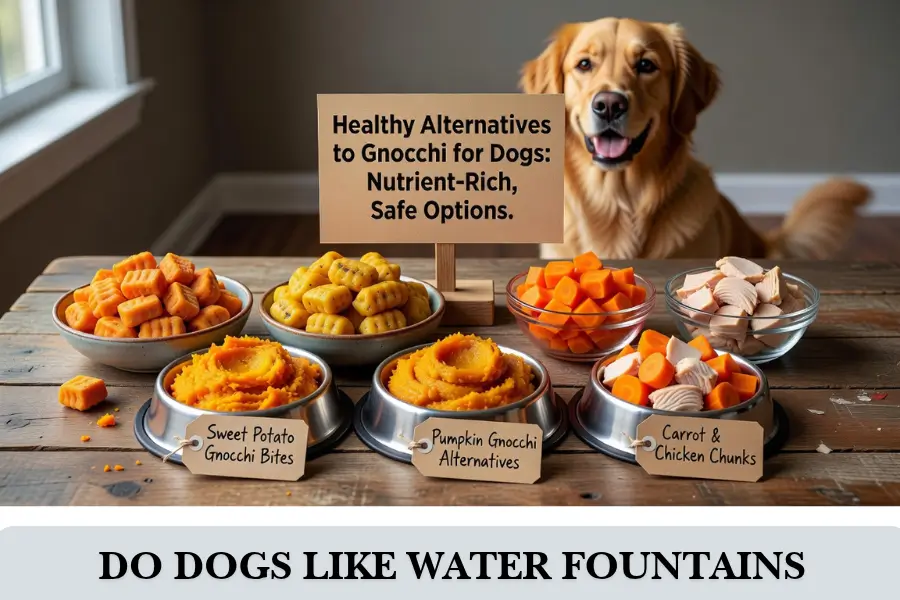
If your dog likes trying foods from your plate, there are simpler options that may fit more easily into a balanced diet. Choose plain foods, prepare them safely, and keep portions small.
1. Plain cooked chicken
Boneless, skinless chicken cooked without onion, garlic, butter, or heavy seasoning can be a suitable occasional treat for many dogs.
2. Carrots
Plain carrots provide fiber and can be served raw or cooked in suitable bite-sized pieces. Adjust the texture and size to reduce choking risks.
3. Green beans
Plain, cooked green beans can be a low-calorie alternative. Avoid canned versions with added salt or seasoning when possible.
4. Plain pumpkin
Plain cooked pumpkin may provide fiber, but it should be served in an appropriate amount. Avoid sweetened pumpkin desserts or spiced pumpkin fillings.
Plain, cooked potato can also be suitable for some dogs in small amounts, provided it contains no harmful additions. Whichever alternative you choose, keep treats moderate and account for your dog’s individual dietary needs.
Is Gnocchi Ever Good for Dogs?
Gnocchi can provide energy from carbohydrates, but that does not make it a particularly beneficial food for dogs. It does not offer a special nutritional advantage that dogs cannot obtain from a properly balanced diet.
Dogs need appropriate amounts of protein, fats, vitamins, minerals, and other nutrients. A complete and balanced dog food is designed to meet those requirements when fed according to its nutritional guidance.
Adding small amounts of suitable human food occasionally may be acceptable for some dogs, but there is little reason to choose gnocchi over a more appropriate treat.
If your dog enjoys begging at the dinner table, consider keeping a few dog-safe treats nearby. This helps you reward your dog without sharing rich sauces or heavily seasoned foods.
Frequently Asked Questions
Can dogs eat plain gnocchi?
Dogs may tolerate a tiny amount of plain, fully cooked gnocchi made with suitable ingredients. However, it offers little nutritional benefit and should not become a regular treat. Avoid adding butter, garlic, onion, excessive salt, or rich sauces.
Can dogs eat potato gnocchi?
A small taste of plain, fully cooked potato gnocchi may be tolerated by many healthy dogs. The potatoes must be properly cooked, and the recipe should not contain harmful seasonings. Dogs with specific medical or dietary needs should follow their veterinarian’s advice.
Is cooked gnocchi toxic to dogs?
Plain, fully cooked gnocchi is not generally considered inherently toxic to dogs. The main concerns are the ingredients, portion size, and preparation method. Gnocchi containing onion or garlic can pose a toxicity risk, while rich sauces may cause digestive problems.
Cheese gnocchi is best avoided as a regular treat because it can be high in fat and calories. Some dogs also experience digestive upset after eating dairy products. A tiny accidental taste may be tolerated, but rich cheese sauces are not a good choice.
Can dogs eat gnocchi every day?
No. Gnocchi should not be a daily part of a dog’s diet. Regular servings can add unnecessary calories and displace nutritionally balanced food. Choose suitable dog treats instead, and keep all treats and extras within your dog’s daily calorie needs.
What should I do if my dog eats a whole plate of gnocchi?
Contact your veterinarian for advice, particularly if the dish contains garlic, onion, cream, butter, or other seasonings. Provide details about the ingredients, quantity, time of ingestion, and your dog’s weight. Seek urgent care if your dog develops severe symptoms.
Key Takeaways
- Plain, fully cooked gnocchi may be tolerated in a tiny amount by many healthy dogs.
- Gnocchi is not a necessary or nutritionally complete food for dogs.
- Garlic and onion are toxic ingredients that can damage red blood cells.
- Creamy sauces, butter, and cheese may increase the risk of digestive upset.
- Packaged and restaurant gnocchi should be checked for hidden ingredients.
- There is no established recommended serving size for gnocchi.
- If your dog eats gnocchi containing potentially toxic ingredients, contact your veterinarian promptly.
Final Thoughts
So, can dogs eat gnocchi? A tiny taste of plain, fully cooked gnocchi may be tolerated by some dogs, but it is not a treat worth feeding regularly. The biggest concerns are unsafe seasonings, rich sauces, excessive salt, and large portions.
If you want to share food with your furry friend, choose simple alternatives such as plain cooked chicken, carrots, or green beans. These options are easier to serve without the added ingredients found in many human dishes.
When your dog accidentally eats gnocchi, check the recipe before deciding whether to worry. If it contains garlic or onion, or your dog develops unusual symptoms, seek veterinary guidance rather than waiting for the problem to become obvious.
Can Dogs Eat Turnip Greens? Safety, Benefits, Risks, and Serving Guide