Can dogs eat sour food? If your dog just grabbed something sour off the counter, you’re probably wondering whether you need to worry. The honest answer is: it depends on what made the food sour in the first place and what else is in it.
Can Dogs Eat Sour Food?
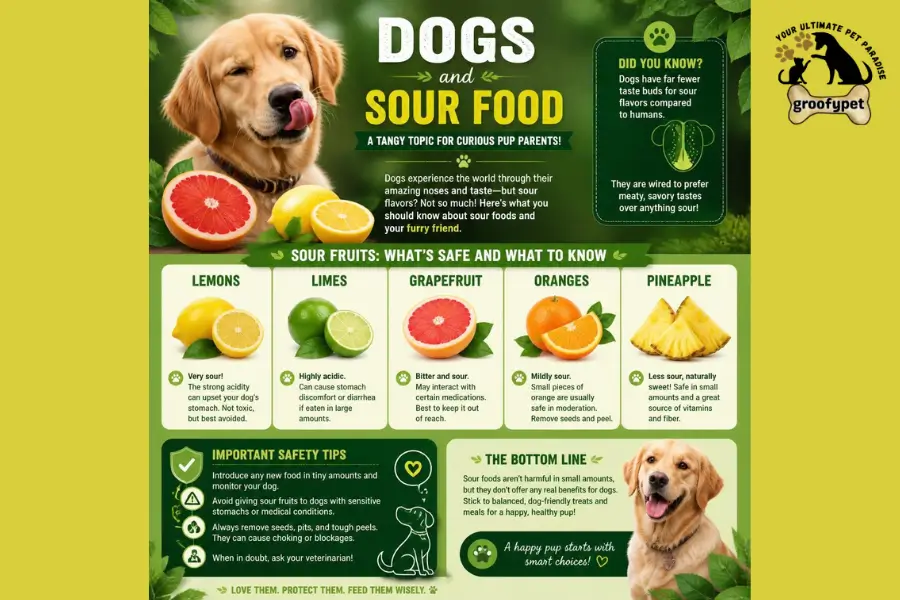
Dogs can taste sour flavors, and some sour foods are safe in small amounts. But “sour” describes a taste, not a specific ingredient. Mildly sour whole foods, like small pieces of certain fruit, may be fine occasionally. Sour candy, sour gummies, and other processed sour snacks are not safe, since they often contain sugar, artificial sweeteners, or xylitol.
Sourness on its own isn’t dangerous. Dogs can detect sour flavors the same way they detect sweet, salty, or bitter ones, and most dogs react with an obvious face when they taste something tart. What actually determines whether a sour food is safe comes down to the ingredients. A sour apple slice and a bag of sour gummy candy might taste similar to your dog’s tongue, but they are nowhere close in terms of safety. Some natural foods are sour because of acids like citric or malic acid, while many commercial sour snacks pack in sugar, artificial sweeteners, excess salt, spices, and additives that dogs’ bodies aren’t built to handle.
This guide walks through which sour foods dogs can eat, which ones to avoid, and what to do if your dog eats something sour without your permission.
Is Sour Food Bad for Dogs?
Sour food is not automatically bad for dogs. Sourness alone does not make a food poisonous. However, highly acidic foods can irritate a dog’s stomach, and portion size and a dog’s individual tolerance both play a role. The bigger risk usually comes from processed sour snacks, which often contain sugar, artificial sweeteners, or ingredients that are genuinely unsafe for dogs not from the sour taste itself.
In short: a food’s sourness tells you almost nothing about whether it’s dangerous. You have to look past the taste and check what’s actually in it.
Why Does Food Taste Sour?
Food tastes sour because of acidity. Foods that are naturally sour usually contain one of a few common acids:
- Citric acid — found in citrus fruits like lemons and limes
- Malic acid — found in apples and other tart fruits
- Acetic acid — found in vinegar and pickled foods
That’s really all “sour” means at a chemical level: acid on the tongue. It’s a flavor characteristic, not a category of ingredient, and definitely not a toxicity label. A food can be sour and perfectly fine for dogs or sour and completely unsuitable; the acidity alone doesn’t decide that.

Can Dogs Taste Sour Flavors?
Yes, dogs can taste sour flavors. Dogs have taste receptors that detect several basic taste categories, including sour, sweet, salty, and bitter, though dogs have far fewer taste buds than humans do. This may be why some dogs react strongly to sour foods while others barely seem to notice.
When a dog encounters something sour, you might see:
- Lip licking
- A scrunched-up or “surprised” facial expression
- Pulling away from the food
- Drooling
- Refusing to eat the food at all
- Or, in some dogs, eating it without any reaction
There’s an evolutionary reason dogs are wired to react to sour and acidic tastes: sourness can signal unripe fruit or spoiled, fermenting food. Avoiding it helped keep wild canine ancestors from eating something that could upset their stomach or make them sick. That instinct is still present in many dogs today, even though a lot of modern “sour” foods (like candy) aren’t natural at all.
Which Sour Foods Can Dogs Eat?
Not all sour foods belong in the same category. Below is a quick reference table, but always check the actual ingredient list of a specific product before feeding it, since recipes and formulations vary.
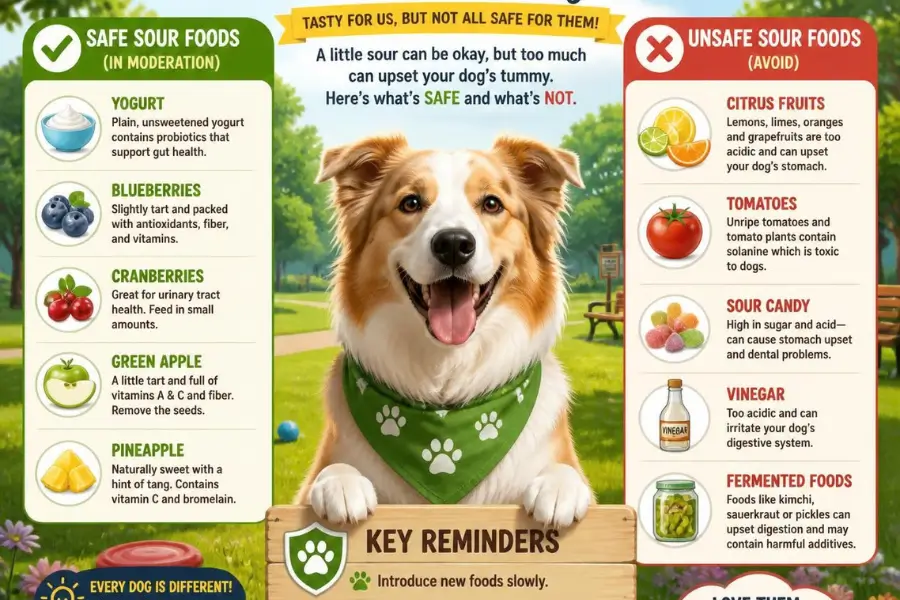
| Sour Food | Generally Safe? | Important Consideration |
|---|---|---|
| Plain small amount of certain sour fruit | Depends on the fruit | Remove seeds, pits, cores, and rinds |
| Lemon | Not a good treat | Highly acidic; may cause stomach irritation |
| Lime | Not recommended as a treat | Acidic; may upset the stomach |
| Plain yogurt (no added sugar or sweeteners) | Often tolerated in small amounts | Lactose tolerance varies by dog |
| Pickles | Usually not ideal | High sodium, garlic, onion, and seasoning risk |
| Vinegar | Small accidental exposure usually not serious | Concentrated amounts can irritate the stomach |
| Sour candy | No | Sugar and potentially dangerous sweeteners |
| Sour gummies | No | May contain xylitol or other unsuitable ingredients |
| Sour chips or snacks | No | Salt, fat, seasoning, and additives |
This table is a starting point, not a substitute for reading the label on whatever your dog actually got into.
Can Dogs Eat Sour Fruits?
Some fruits are naturally tart or sour, and whether they’re safe depends entirely on the specific fruit not on the fact that it’s sour. Before offering any fruit, consider:
- Which fruits are dog-safe in the first place
- Whether seeds or pits need to be removed (some are toxic or a choking hazard)
- Whether the rind, stem, or leaves need to be removed
- How much is a reasonable portion for your dog’s size
Not all fruit is healthy for dogs, sour or otherwise, so it’s worth confirming a specific fruit’s safety before offering it as a treat.
Can Dogs Eat Lemon?
Lemon is not a good treat for dogs. It’s highly acidic, has an intense flavor most dogs dislike, and can cause stomach irritation. The peel and plant material add further risk. That said, a dog accidentally licking a lemon or getting a tiny taste is very different from eating a whole lemon; a small, incidental exposure is unlikely to cause poisoning, though it may cause a brief upset stomach or an unhappy face.
Can Dogs Eat Lime?
Like lemon, lime isn’t something to intentionally add to your dog’s diet. Its acidity can upset a dog’s stomach, and the peel or plant material can add extra digestive risk. A tiny, accidental taste is generally a non-issue, but eating a larger quantity or chewing on the peel is more likely to cause discomfort.
Can Dogs Eat Sour Candy?
No. Sour candy should not be given to dogs. The concern isn’t the sour flavor; it’s what the candy is made of. Sour candy typically contains:
- Large amounts of sugar
- Artificial sweeteners
- Possibly xylitol, which is highly toxic to dogs
- Empty calories with no nutritional benefit
- Hard or chewy textures that can pose a choking risk
Xylitol deserves special attention here: It’s found in many sugar-free candies and gums, and even small amounts can be dangerous for dogs. Always check the label if your dog gets into candy.
Can Dogs Eat Sour Gummies?
Sour gummies are not appropriate for dogs, for many of the same reasons as sour candy. They typically contain sugar, artificial sweeteners, gelatin, and other additives, and some sugar-free versions contain xylitol. Gummy candies can also be a choking hazard, especially for small dogs. If your dog eats sour gummies, check the ingredient label immediately for xylitol or other sweeteners.
Can Dogs Eat Sour Pickles?
Pickles get their sourness from vinegar during preparation, but vinegar usually isn’t the main concern. The bigger issues are
- High sodium content
- Garlic, which is toxic to dogs
- Onion, which is also toxic to dogs
- Added spices and seasonings
Not every pickle recipe is identical, so it isn’t accurate to label every single pickle as automatically toxic, but many do contain ingredients that make them a poor choice for dogs.
Can Dogs Eat Vinegar?
Vinegar is acidic and fairly concentrated. A tiny, accidental exposure like licking a spill usually isn’t serious. Larger amounts, or flavored and seasoned vinegar products, are more likely to cause stomach irritation. Vinegar is not recommended as an intentional home remedy for dogs unless a veterinarian specifically advises it.

Can Dogs Eat Sour Yogurt?
It depends on the type. There’s an important difference between:
- Plain yogurt with no added sugar or sweeteners, and
- Sweetened or flavored yogurt, which may contain added sugar or artificial sweeteners, including xylitol
Some dogs tolerate small amounts of plain yogurt just fine, especially if they aren’t lactose intolerant. Others may develop digestive upset from the lactose. Flavored or sweetened yogurt is a different story and is best avoided.
Can Dogs Eat Sour Sauces?
Sour sauces can contain a wide mix of ingredients, including vinegar, citrus, sugar, salt, garlic, onion, spices, and sometimes artificial sweeteners. Because the recipe varies so much from sauce to sauce, the ingredient list, not the “sour” label, is what actually determines whether it’s a problem for your dog.
Can Sour Food Upset a Dog’s Stomach?
Yes, highly acidic or unsuitable sour foods can cause digestive upset in some dogs. Possible signs include:
- Vomiting
- Diarrhea
- Drooling
- Lip licking
- Reduced appetite
- Abdominal discomfort
Keep in mind that these symptoms can have many causes. Seeing one of them after your dog eats something sour doesn’t automatically confirm the sour food is to blame, but it’s still worth watching closely.
What Happens If a Dog Eats Sour Food?
If your dog got into something sour, work through these steps calmly:
Step 1: Identify the Food
Find the packaging or figure out exactly what your dog ate.
Step 2: Check the Ingredients
Look closely for anything genuinely dangerous, including:
- Xylitol
- Chocolate
- Raisins or grapes
- Onion
- Garlic
- Caffeine
- Any other known toxic ingredient
Step 3: Estimate How Much Was Eaten
Consider your dog’s size along with the quantity consumed. A small dog eating a large portion is a bigger concern than a large dog eating a tiny amount.
Step 4: Watch for Symptoms
Keep an eye on your dog for digestive upset or anything unusual over the next several hours.
Step 5: Contact a Veterinarian When Necessary
Call a vet promptly if:
- A potentially toxic ingredient (like xylitol, garlic, or onion) was consumed
- A large amount was eaten
- Your dog is very young, very small, or has existing health issues
- Symptoms are severe or don’t go away
- You can’t determine what ingredients were involved
Never induce vomiting at home unless a veterinary professional specifically tells you to. Doing so without guidance can sometimes make things worse.
Also Read : Can Dogs Eat Plumcots? Safety, Benefits, Risks and Feeding Guide
When Should I Call a Vet?
Seek urgent veterinary care if your dog shows any of the following after eating a sour food:
- Repeated vomiting
- Severe or persistent diarrhea
- Weakness
- Collapse
- Tremors
- Seizures
- Difficulty breathing
- Severe abdominal pain
- Significant lethargy
- Loss of coordination
Also call immediately if you know the sour product contained a known toxic ingredient, such as xylitol; don’t wait to see if symptoms develop first.
Is Sour Taste Itself Dangerous to Dogs?
This is worth repeating clearly: sour is a taste, not a toxicity category.
Two sour foods can have completely different safety profiles simply because their ingredients are different. Compare a small piece of a dog-safe fruit with a piece of sour candy containing xylitol. Both taste sour. Only one is dangerous, and it’s not because of the sourness. It’s because of what’s actually in it.
This distinction matters because it’s easy to lump all “sour foods” together mentally. In reality, you’re dealing with two separate questions every time: Is this food sour? And, completely independently, what is this food made of?
Also Read : Can Dogs Eat Rose Hips? Benefits, Risks and Safe Feeding Guide
How Much Sour Food Can a Dog Eat?
There’s no single “safe sour food amount” that applies across the board; that kind of blanket rule doesn’t reflect reality. Appropriate portions depend on:
- The specific food
- Its exact ingredients
- Your dog’s size
- Your dog’s age
- Your dog’s overall health
- Any existing dietary needs
- Individual tolerance, which varies dog to dog
For sour foods that are genuinely appropriate for dogs (like a small piece of a dog-safe fruit), let the guidance for that specific food, not a generic “sour food” rule, determine the portion.
Can Puppies Eat Sour Food?
Puppies have different nutritional needs than adult dogs, and their digestive systems tend to be more sensitive. This isn’t the time to experiment with highly acidic or processed sour foods. Stick to age-appropriate puppy nutrition and treats your veterinarian has approved.
Can Small Dogs Eat Sour Food?
Portion size matters even more for small dogs. A small amount of a potentially harmful ingredient represents a much larger dose relative to a small dog’s body weight compared to a large dog. What might cause mild discomfort in a 70-pound dog could be more serious in a 10-pound dog.
What Can Dogs Eat Instead of Sour Snacks?
If you’re looking for dog-friendly alternatives to sour candy or processed sour snacks, consider:
- Small pieces of dog-safe fresh fruit
- Carrots
- Cucumber
- Plain, veterinarian-approved dog treats
Always confirm a specific food’s safety before offering it; not every fruit or vegetable is automatically fine for dogs.
Sour Food for Dogs: Myths vs. Facts
Myth: All sour foods are toxic to dogs.
Fact: Sourness describes taste. Safety depends on the specific food and its ingredients.
Myth: A sour taste means a food will poison a dog.
Fact: Some sour foods simply cause mild digestive irritation, while others contain genuinely dangerous ingredients; the two aren’t the same thing.
Myth: All citrus fruits are equally dangerous.
Fact: Different citrus fruits and different parts of the same plant carry different levels of risk.
Myth: Sour candy is safe because it has “fruit flavor.”
Fact: Fruit-flavored candy is still candy. It can contain sugar, artificial sweeteners, and sometimes xylitol, none of which have anything to do with real fruit.
Myth: A dog’s reaction to a sour taste tells you whether a food is dangerous.
Fact: A dog’s facial reaction reflects taste preference, not toxicity. A dog might dislike a totally safe food and happily eat something harmful.
Myth: Home remedies like vinegar can treat a dog’s upset stomach.
Fact: Vinegar isn’t a recommended home treatment and can itself cause irritation in larger amounts.
Myth: If a small taste didn’t hurt your dog, a bigger portion is fine too.
Fact: Dose matters. A tiny accidental taste and a large intentional serving are very different risk levels.
Frequently Asked Questions
Can dogs eat sour food?
Dogs can eat some sour foods in moderation, but it depends entirely on the ingredients, not the sour taste itself. Natural, dog-safe sour foods in small portions may be fine, while sour candy, gummies, and processed snacks are not recommended due to sugar, artificial sweeteners, and possible xylitol content.
Is sour food bad for dogs?
Not inherently. Sourness alone doesn’t make a food dangerous. Highly acidic foods can cause mild stomach irritation, and processed sour snacks often contain unsafe ingredients, but a food being “sour” is not, by itself, a red flag.
Can dogs taste sour?
Yes. Dogs have taste receptors that detect sour flavors, along with sweet, salty, and bitter. They have fewer taste buds than humans, so their sensitivity to sourness may differ, but the ability to taste sour is well established.
Can dogs eat sour candy?
No. Sour candy contains sugar, artificial sweeteners, and sometimes xylitol, which is toxic to dogs. It offers no nutritional value and carries real health risks, so it should be kept away from dogs entirely.
Can dogs eat sour gummies?
No. Sour gummies typically contain sugar, artificial sweeteners, and additives, and some sugar-free versions contain xylitol. They can also pose a choking hazard. Check the label immediately if your dog eats sour gummies.
Can dogs eat lemons?
Lemons aren’t a good treat for dogs. They’re highly acidic and can cause stomach irritation. A tiny accidental lick usually isn’t serious, but lemons shouldn’t be intentionally offered as food.
Can dogs eat limes?
Limes aren’t recommended for dogs. Like lemons, they’re acidic and can upset a dog’s stomach, and the peel adds further digestive risk. A small accidental taste is generally not a major concern.
Can dogs eat sour pickles?
Usually not ideal. Pickles often contain high sodium, garlic, onion, and seasonings — with garlic and onion being toxic to dogs. Ingredients vary by recipe, so always check the label.
Can dogs eat vinegar?
A small accidental exposure to vinegar, like licking a spill, generally isn’t serious. Larger or concentrated amounts can irritate a dog’s stomach. Vinegar isn’t recommended as an intentional treat or home remedy.
Can dogs eat sour yogurt?
Plain, unsweetened yogurt is sometimes tolerated by dogs without lactose intolerance. Sweetened or flavored yogurt is a different matter, since it may contain added sugar or artificial sweeteners, including xylitol.
What happens if my dog eats sour food?
It depends on the food. Natural sour foods in small amounts may cause no reaction at all, while acidic or processed sour foods can lead to mild stomach upset. Foods containing toxic ingredients like xylitol require immediate veterinary attention.
Can sour food cause diarrhea in dogs?
Yes, highly acidic or unsuitable sour foods can contribute to diarrhea in some dogs, especially if eaten in large amounts. Individual tolerance varies, so not every dog will react the same way.
Can sour food make dogs vomit?
It’s possible, particularly with very acidic foods or large portions. Vomiting can also signal something more serious if a toxic ingredient was involved, so it’s worth monitoring closely and contacting a vet if it continues.
What should I do if my dog ate sour candy?
Check the ingredient label right away for xylitol or other dangerous ingredients. Estimate how much was eaten relative to your dog’s size, watch for symptoms, and contact a veterinarian immediately if xylitol was involved or if your dog shows any concerning signs.
Is sour taste toxic to dogs?
No. Sour taste itself is not toxic; it’s simply a flavor dogs can detect. What matters is the actual ingredients in the sour food, not the sourness itself.
Key Takeaways
- Sourness itself does not determine whether a food is safe for dogs. The specific ingredients, amount, and type of food matter far more than the taste.
- Natural sour foods and processed sour foods are not the same category of risk.
- Sour candy and sour gummies should not be given to dogs.
- Xylitol requires particular caution and can be found in many sugar-free sour products.
- Highly acidic foods, like lemon or lime, may cause digestive irritation even though they aren’t classified as toxic.
- Portion size matters and matters even more for puppies and small dogs.
- Always check the ingredient label after an accidental ingestion, and contact a veterinarian promptly when toxic ingredients or serious symptoms are involved.
Final Thoughts
Dog owners shouldn’t judge a food’s safety by taste alone. A sour fruit, a sour sauce, sour candy, and a pickled snack can all share the same basic flavor profile while carrying entirely different risks because sourness describes taste, not ingredients or toxicity.
When in doubt, don’t guess. Check the ingredient label, note how much your dog ate, and contact a veterinarian if there’s any chance a toxic ingredient like xylitol, garlic, or onion was involved.
Can Dogs Eat Aronia Berries?Benefits, Risks, and Feeding Guide
Can Dogs Eat Bilimbi? Safety, Benefits, Risks, and Feeding Guide