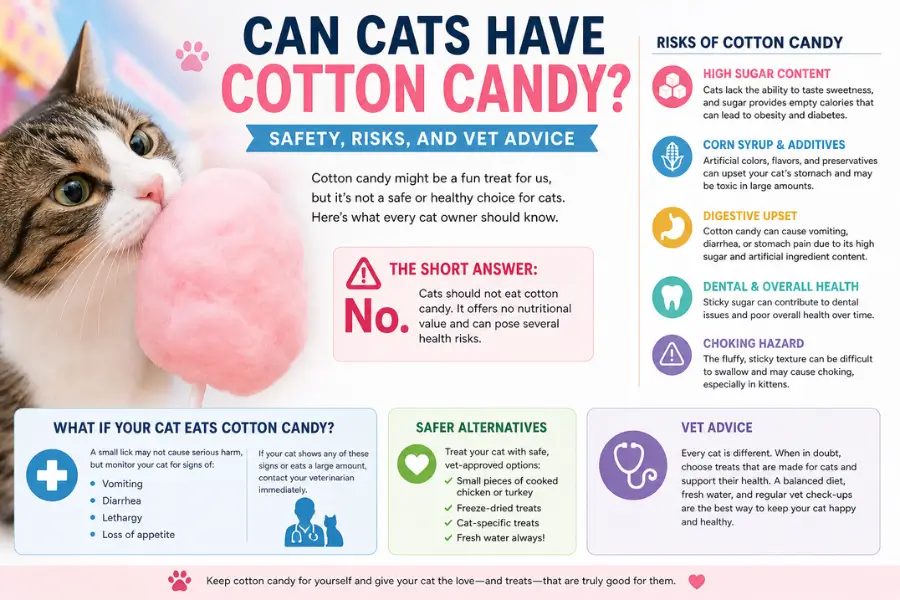
Can cats have cotton candy? No, they shouldn’t. Cotton candy is almost pure sugar, it gives cats no useful nutrition, and it can upset their stomachs.
Still, a tiny lick is not an emergency. Plain cotton candy is not considered highly toxic, so the real risk depends on how much your cat ate, what else was in the product, and whether any packaging was swallowed. This guide explains what to watch for, what to do next, and when to call a veterinarian.
Can Cats Have Cotton Candy?
No. Cats should not eat cotton candy. It is made mostly of sugar, and cats have no nutritional need for added sugar. A tiny lick of the plain kind usually isn’t a crisis, but larger amounts can cause vomiting or diarrhea, and some products contain extra ingredients that raise the risk. The safest plan is to keep it out of reach and offer a treat made for cats instead.
Here is the reason in plain terms. Cats are obligate carnivores, which means their bodies are built to get nutrients from animal tissue, such as meat. They don’t need sweet foods, and sugary snacks add calories without adding anything useful.
What Is Cotton Candy Made Of?
Most cotton candy is granulated sugar that has been heated, melted, and spun into thin threads. A cloud looks enormous, but it is mostly sugar and air.
Many brands add food coloring and flavoring. Some sell flavored sugar that already includes both. Specialty or novelty versions may use other ingredients, including sugar substitutes in products labeled “sugar-free.”
Ingredients differ by brand, vendor, and flavor, so the label matters. A plain pink cloud from a carnival is a different situation from an unfamiliar sugar-free product with a long ingredient list. If the label lists something you don’t recognize, ask a veterinarian or an animal poison service about it.
What Happens If a Cat Eats Cotton Candy?
The outcome depends on the amount, the ingredients, and the individual cat. These are the most likely situations:
- A tiny lick: Many cats show no symptoms at all.
- A small amount: Some cats get an upset stomach, with soft stool, mild vomiting, or a dip in appetite.
- A larger amount: A big dose of sugar is more likely to cause stronger digestive upset, especially in a small, young, or already sick cat.
- A risky ingredient or packaging: A sweetener, a chocolate coating, a wrapper, or a plastic stick changes the picture and may need prompt veterinary advice.
One lick does not cause poisoning or diabetes. Cats do vary, though, and no article can predict how yours will react.
| Exposure | General concern | Recommended action |
|---|---|---|
| One tiny lick of plain cotton candy | Usually low concern | Remove it and observe the cat |
| A noticeable amount eaten | Possible digestive upset | Contact a veterinarian for guidance |
| Sugar-free or unfamiliar specialty product | Depends on the ingredients | Check the label and seek professional advice |
| Wrapper or plastic stick swallowed | Possible choking or blockage | Contact a veterinarian promptly |
| Severe symptoms after eating cotton candy | Potential emergency | Seek immediate veterinary care |
A Tiny Lick vs. a Whole Cotton Candy Cloud
The amount matters because sugar hits a small body hard. A lick at the edge of a cloud delivers only a trace. A whole cloud, eaten while you weren’t looking, is a lot of sugar for a small animal.
Cotton candy is also sticky. It can cling to whiskers, paws, and fur, and cats groom it off. A “tiny lick” can quietly turn into more sugar than you expected, so check your cat’s face and paws too.
Illustrative example, not a real veterinary case: Picture a cat who hops onto a counter at a birthday party and licks the edge of a cotton candy cloud. The owner sees it, takes the cotton candy away, confirms the label lists only sugar and coloring, and sets out fresh water. The cat acts normal all evening.
Now picture another cat who eats half a cloud and chews the plastic wrapper. That owner should call a veterinarian because the amount is larger and the wrapper adds a swallowing risk. It’s the same snack with a very different level of concern.
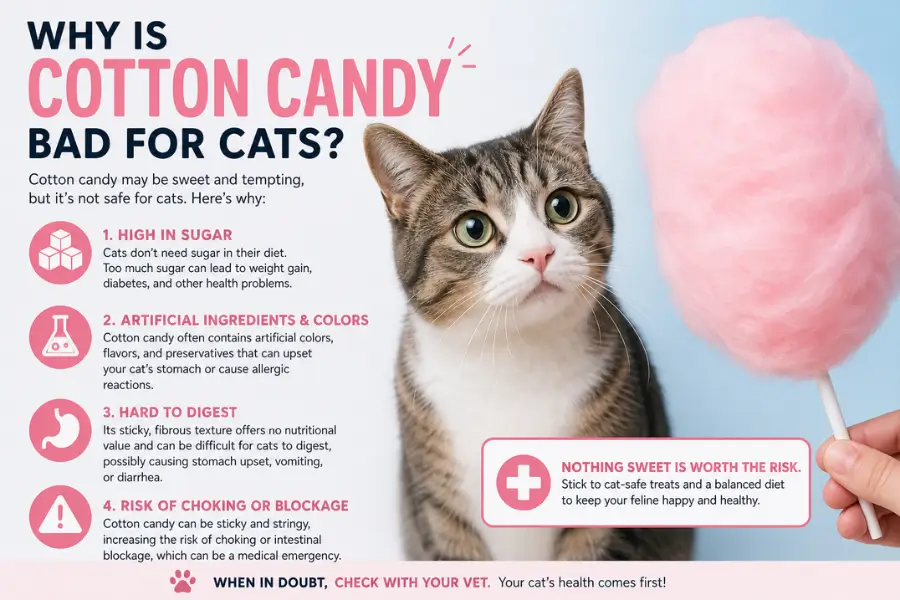
Why Is Cotton Candy Bad for Cats?
Cotton candy isn’t a poison in the usual sense. It’s a poor choice for several separate reasons.
Too Much Sugar
Cats are built to run on protein and fat, not sugar. A sudden dose of sugar gives them nothing they need and may irritate the gut. A healthy cat’s regular food already covers its nutritional needs.
Vomiting and Diarrhea
Some cats get vomiting, loose stool, or a short loss of appetite after a sugary snack. Many cats won’t. These signs are often mild and pass quickly, but they deserve attention if they continue.
Unnecessary Calories
Regular sweets can crowd out balanced cat food and lead to weight gain. Veterinary sources note that obesity, rather than sugar itself, is the main diet-related risk factor for diabetes in cats. One cotton candy lick won’t cause diabetes, but a habit of sweets works against a healthy weight.
Artificial Sweeteners and Other Additives
Ingredients vary, and not every sweetener is toxic to cats. The one owners worry about most is xylitol, found in some sugar-free gum and candy. Xylitol can cause dangerous low blood sugar and liver damage in dogs, and its xylitol page states that it doesn’t cause serious problems in cats or ferrets. Pet Poison Helpline experts writing for VCA Animal Hospitals say cats don’t appear to be at risk.
Some other veterinary articles still urge caution, and evidence for individual sweeteners in cats can be thin. If a product contains an ingredient you can’t identify, call your veterinarian or an animal poison service rather than guess.
Packaging and Choking Hazards
Cotton candy often comes in plastic tubs, bags, or wrappers, and some is served on paper cones or plastic sticks. A cat that swallows these pieces can choke or develop an intestinal blockage. Repeated vomiting, a refusal to eat, or a tender belly after swallowing packaging calls for a prompt veterinary visit.
Is Cotton Candy Toxic to Cats?
Plain cotton candy is an unsuitable food, but it is mainly sugar and is not known as a toxic ingredient. That difference is the key to staying calm and acting wisely.
There are two kinds of risk. The first is sugar-related digestive upset. It depends on the amount, usually passes, and fits most plain cotton candy exposures. The second is ingredient-specific poisoning. It depends on one particular substance in the product, not on the sugar. Chocolate is one example, since the ASPCA lists the methylxanthines in chocolate as hazardous to pets.
So three things decide your next step: the amount eaten, the ingredient list, and any symptoms. Plain sugar and a small amount point toward watching at home. An unfamiliar ingredient or a swallowed wrapper points toward a phone call.
What If My Cat Ate Cotton Candy?
Stay calm and work through these steps:
- Remove the rest. Take away the cotton candy and any packaging.
- Check the label and estimate the amount. Look for sweeteners, chocolate, or anything unfamiliar.
- Offer fresh water. Keep it easy to reach.
- Monitor your cat. Watch for vomiting, diarrhea, low energy, or a change in appetite.
- Call a veterinarian if needed. Do this if your cat ate a substantial amount, swallowed packaging, shows worrying symptoms, or ate a product with questionable ingredients.
Don’t try to make your cat vomit, and don’t give home remedies, unless a veterinary professional specifically tells you to.
Ingredient-checking tip: Snap a clear photo of the ingredient label and the front of the package, then keep the packaging. If you call, the vet or poison line will ask what your cat ate, how much, and when. Having the photo ready saves time. If it was a vendor’s cloud with no label, note the flavor and color instead.
When Should You Call a Veterinarian?
Call your veterinarian if your cat has repeated vomiting, diarrhea that won’t stop, marked tiredness, or a belly that seems sore. Call urgently for collapse, weakness, trouble swallowing, or any suspected exposure to a dangerous ingredient.
Choking or trouble breathing is an emergency. Go to the nearest emergency clinic right away instead of calling first.
Also Read Can Cats Eat Pâté? Ingredients, Risks, and Safe Feeding Tips
Can Cats Taste Sweetness?
Not the way people do. Without it, cats likely can’t detect sweetness, though the rest of their sense of taste works normally.
That doesn’t mean cats never show interest in sweets. A cat may lick a sugary food because of its texture, its smell, or plain curiosity. Interest isn’t proof that a cat enjoys the sugar.
Healthy Alternatives to Cotton Candy for Cats
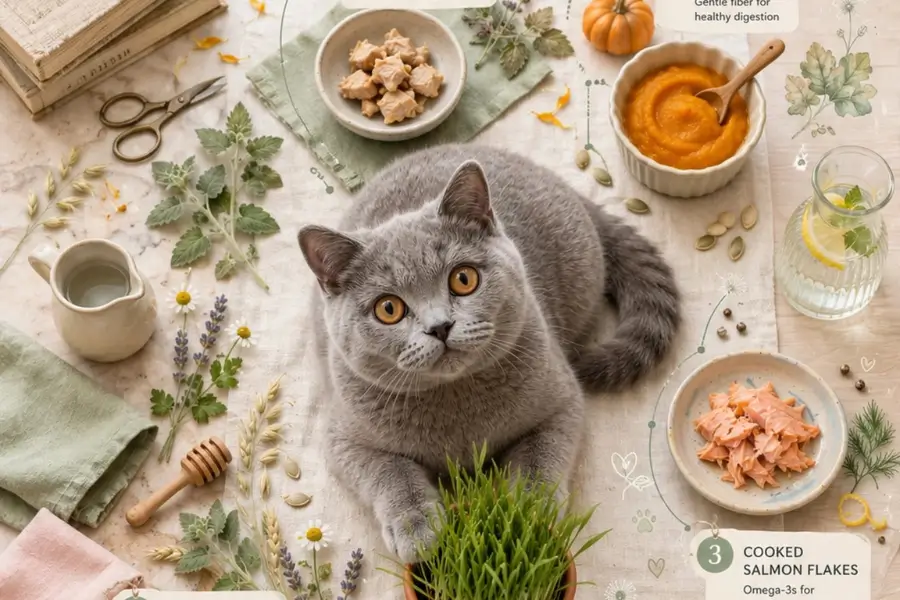
Cats don’t need a sweet replacement, but a treat can still be part of your bond. Good options include:
- Commercial cat treats made for feline nutritional needs
- Small pieces of plain, cooked chicken with no seasoning or bones
- Small pieces of plain, cooked turkey with no seasoning or bones
- An occasional small amount of another cat-safe treat your veterinarian approves
Keep treats a small part of a balanced diet. Introduce any new food slowly, and avoid seasonings, onions, garlic, and other unsafe ingredients.
Must Read : Can Cats Eat Boysenberries? Benefits, Risks, and Feeding Tips
Can Kittens Have Cotton Candy?
No. Kittens grow fast and need complete kitten food to support that growth. Sweets add no value, and a small body means even a little sugar is a bigger dose. Skip cotton candy and other sugary human treats, and ask your veterinarian about the best kitten diet.
Can Cats Eat Sugar-Free Cotton Candy?
Sugar-free does not automatically mean safe. The sweetener could be almost anything, and some products include other additives too. Read every ingredient, keep the packaging, and consult a veterinarian if you see an unfamiliar sweetener.
That doesn’t mean every sugar substitute is poisonous to cats. Many aren’t known to be highly toxic, but they can still upset the stomach. The point is to check the label instead of assuming.
How to Prevent Your Cat From Eating Sweets
A few habits make accidents much less likely:
- Keep desserts covered and off low counters.
- Store candy and wrappers in closed containers, and use a lidded trash can.
- Don’t feed your cat from your dessert plate.
- Keep party decorations and discarded packaging out of reach.
- Tell guests and children not to share sweets with pets.
Frequently Asked Questions
Can cats have cotton candy in small amounts?
Cats shouldn’t have cotton candy even in small amounts, because it offers no nutrition and may upset their stomachs. A tiny accidental lick of the plain kind is usually low concern. It isn’t a treat to offer on purpose, though. If your cat wants a snack, a small portion of a treat made for cats is a better choice.
Is one lick of cotton candy dangerous for a cat?
Usually not. A single lick of plain cotton candy delivers very little sugar, and many cats show no signs at all. Take the rest away, offer water, and watch your cat for a day or so. Call a veterinarian if vomiting, diarrhea, or unusual tiredness appears, or if the product had unfamiliar ingredients.
What happens if a cat eats cotton candy?
It depends on the amount. A small bite may cause no problems or mild stomach upset, such as soft stool or vomiting. A larger amount raises the chance of stronger digestive upset. Swallowed packaging or unusual ingredients can add risks. Contact a veterinarian if your cat ate a lot or seems unwell.
Can cotton candy kill a cat?
That is very unlikely with plain cotton candy, which is not known as a poison. Serious trouble would more likely come from something else, such as a swallowed stick causing a blockage, a choking incident, or a hazardous ingredient in a specialty product. If you’re worried, call a veterinarian or poison service with the product details.
Can cats eat flavored cotton candy?
Flavored cotton candy is still mostly sugar, so the same advice applies. Flavorings and dyes vary by brand, and vendor-made clouds may not list everything. Keep it away from your cat. If your cat ate some, check any packaging for chocolate, sugar substitutes, or other unfamiliar ingredients.
Can cats have sugar-free cotton candy?
Not safely by default. Sugar-free doesn’t mean harmless, because the sweetener could be anything. Major poison centers say xylitol mainly threatens dogs, but some sources urge caution for cats. Check the label, keep the packaging, and call a veterinarian or animal poison line before deciding it’s fine.
Can kittens eat cotton candy?
Kittens shouldn’t eat cotton candy. They need complete kitten food to support fast growth, and sweets add no value. Their small bodies also mean a little sugar is a bigger dose. If a kitten eats a noticeable amount, or seems weak or sleepy afterward, contact a veterinarian promptly.
Do cats like the taste of sugar?
Probably not the taste. A 2005 study found that domestic cats have a switched-off gene needed for the sweet-taste receptor, so they likely can’t taste sweetness as people do. Some cats still lick sweets because of texture, smell, or curiosity. Interest in a snack isn’t proof that a cat enjoys sugar.
Key Takeaways
- Cotton candy is not a suitable treat for cats.
- Its high sugar content offers no meaningful nutritional benefit.
- A tiny lick of plain cotton candy is generally less concerning than eating a large amount.
- Product ingredients and swallowed packaging can change the level of risk.
- Contact a veterinarian when symptoms, substantial ingestion, or concerning ingredients are involved.
Final Thoughts
So, can cats have cotton candy? They shouldn’t, but a tiny lick of the plain kind is rarely a reason to panic. Remove it, check the label, offer water, and keep an eye on your cat. Save your calls for large amounts, swallowed packaging, unfamiliar ingredients, or symptoms that worry you.
The easy long-term fix is simple. Feed a balanced cat food, choose treats made for felines, and keep human desserts out of paw’s reach.