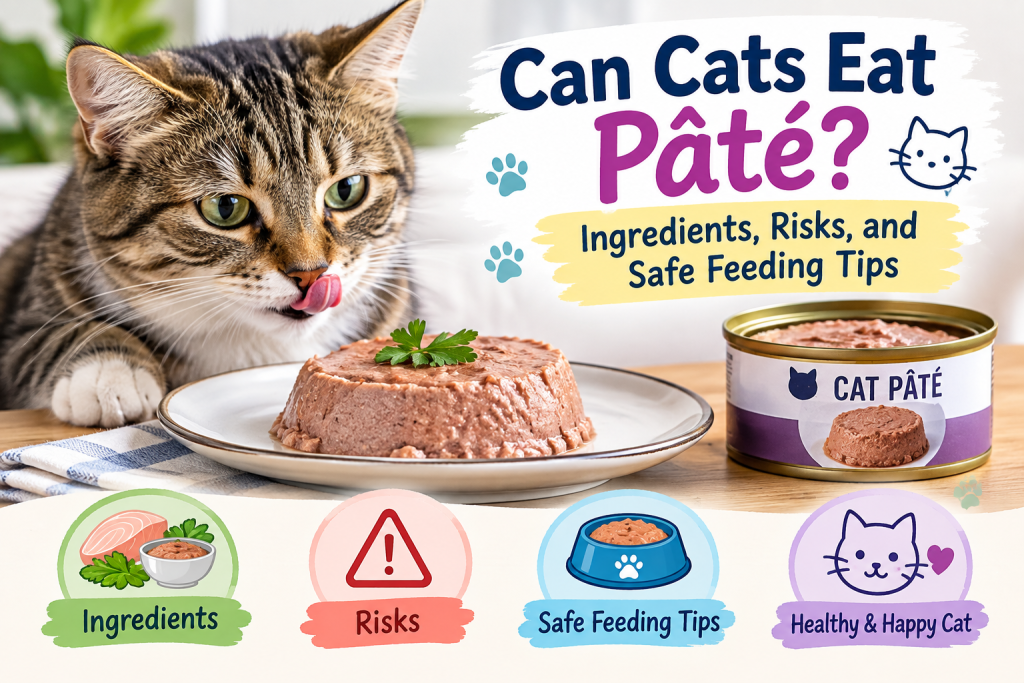
Yes, cats can eat pâté when it is pâté made for cats. Most wet cat food with a smooth pâté texture is safe when the label says it is complete and balanced. Human pâté is different. It often contains salt, rich fat, spices, alcohol, or onion and garlic. Those ingredients can harm cats. The answer depends on the type of pâté and what is inside it.
This guide covers three kinds: commercial cat pâté, human pâté, and homemade pâté. You will learn which ingredients to avoid, how much is reasonable, and what to do if your cat steals a bite.
Can Cats Eat Pâté?
Pâté is a style of food, not one recipe. The word describes a smooth spread made from ground ingredients. These can include meat, liver, poultry, fish, vegetables, dairy, oils, and seasonings. That is why one pâté can be a normal cat meal while another is a bad idea.
Cats are obligate carnivores. They need nutrients found in animal tissue such as taurine and preformed vitamin A. A pâté built around animal protein can meet those needs when a manufacturer balances it for cats. A pâté made for a dinner table is balanced for flavor instead. The ingredient list decides the outcome.
Must Read: Can Cats Eat Jabuticaba? Benefits, Risks, and Safety Tips
Is Pâté Safe for Cats?
Cat food pâté
Commercial cat pâté is made by grinding animal protein into a smooth and even texture. Many brands blend in broth for flavor and moisture. Look for a statement that the food is complete and balanced for your cat’s life stage. In the United States this wording usually refers to AAFCO nutrient profiles.
Well-known wet food lines such as Fancy Feast, Royal Canin, Tiki Cat, Instinct, and Stella & Chewy’s offer pâté style options. Naming a brand is not an endorsement. Always check the label on the exact product.
Human pâté
Human pâté is made for taste. Recipes often use butter, cream, wine, brandy, onion, garlic, salt, and herbs. Not every recipe has all of these. Many do. A cat cannot read the label, so you have to.
Can Cats Eat Human Pâté?
Generally no. Human pâté is not complete cat food. It does not contain the nutrient balance cats need for daily eating. It also carries risks that cat food does not.
- Ingredients: Recipes vary widely, and labels can be vague.
- Sodium: Many spreads are salty.
- Fat: Rich recipes can upset a cat’s stomach.
- Allium ingredients: Onion, garlic, leeks, and chives are toxic to cats.
- Alcohol: Some recipes use wine, brandy, port, or cognac.
A tiny accidental lick of plain pâté is unlikely to cause trouble. Regular feeding is another matter. If your cat gets into human pâté, check the ingredients before you decide how worried you are.
Can Cats Eat Liver Pâté?
Liver itself is not toxic. Wild cats eat liver as part of prey. It supplies vitamin A and vitamin B12, which cats need. The trouble comes from quantity and preparation.
Liver is extremely rich in vitamin A (retinol). Too much over weeks or months can cause hypervitaminosis A. This is vitamin A toxicity. It can lead to stiffness, pain, and bone changes. Regular liver treats are the usual cause. One small taste is not.
Plain cooked liver and seasoned human liver pâté are not the same. Liver pâté and liverwurst style spreads often add fat, salt, onion powder, nutmeg, and spices. Those extras cause more concern than the liver in a single bite. Ask your vet how often liver is reasonable for your cat.
Also Read : Can Cats Eat Swiss Chard? Benefits, Risks, and Feeding Tips
Can Cats Eat Chicken Pâté?
It depends on the source.
- Cat food chicken pâté: Safe when complete and balanced.
- Plain homemade chicken pâté: Cooked chicken blended with a little water and no seasoning is fine as an occasional topper. It is not complete nutrition.
- Human chicken pâté: Chicken liver pâté often includes butter, onion, garlic, and brandy. Avoid it.
Can Cats Eat Fish Pâté?
Many cats love fish pâté. Cat food versions are fine when they are complete and balanced. Plain cooked fish without bones works as a small occasional extra.
Human fish pâté is trickier. Smoked salmon, mackerel, and tuna spreads often contain salt, cream cheese, pepper, lemon, herbs, and sometimes chives or onion. Small bones can also hide in homemade versions. Larger predator fish such as tuna can carry more mercury. Tuna made for people is also not complete food, and some cats start to refuse everything else once they get a taste.
Can Cats Eat Duck or Goose Pâté?
Duck and goose are richer meats. Foie gras is made from fattened liver and is extremely high in fat. Too much fat can cause vomiting and diarrhea. In some cats it may contribute to pancreatitis, which is painful inflammation of the pancreas.
Human duck pâté also tends to include port, cognac, onion, truffle, or fruit jelly. Skip it. Cat food made with duck is a better way to offer the flavor.
Ingredients in Pâté That Cats Should Avoid
| Ingredient | Why It Can Be a Problem | Type of Concern |
|---|---|---|
| Onion | Damages red blood cells and can cause anemia | Established toxic concern |
| Garlic | Same effect as onion and considered more potent | Established toxic concern |
| Leeks | Allium family member with the same risk | Established toxic concern |
| Chives | Allium family member with the same risk | Established toxic concern |
| Alcohol | Cats are small and can be harmed by little | Established toxic concern |
| Excess salt | Strains the body in large amounts and causes thirst | Dietary concern that can become serious |
| Spicy seasonings | Can irritate the gut. Nutmeg is a known worry | Mostly digestive but varies |
| Very high fat | Can trigger stomach upset or pancreatitis | Dietary concern |
| Certain sauces | May include dairy, onion, garlic, or sugar | Depends on recipe |
| Artificial sweeteners or unsuitable additives | Not designed for cats. Check for xylitol in any sweet items served with pâté. | Depends on product |
Can Cats Eat Pâté With Onion or Garlic?
No. Onion, garlic, leeks, and chives belong to the Allium family. They contain compounds that damage red blood cells. This can lead to Heinz body anemia, where the body has too few healthy red blood cells.
Cooked, dried, and powdered forms all count. Onion powder is common in seasoning blends, so it can hide on a label. Cats are more sensitive to these foods than many people expect. Signs may take a day or more to appear.
There is no safe amount to rely on. If your cat ate pâté with any allium ingredient, call your vet promptly. You can also contact the ASPCA Animal Poison Control Center or Pet Poison Helpline. A fee may apply. Watch for weakness, pale gums, fast breathing, and dark urine while you wait for advice.
What Are the Benefits of Pâté for Cats?
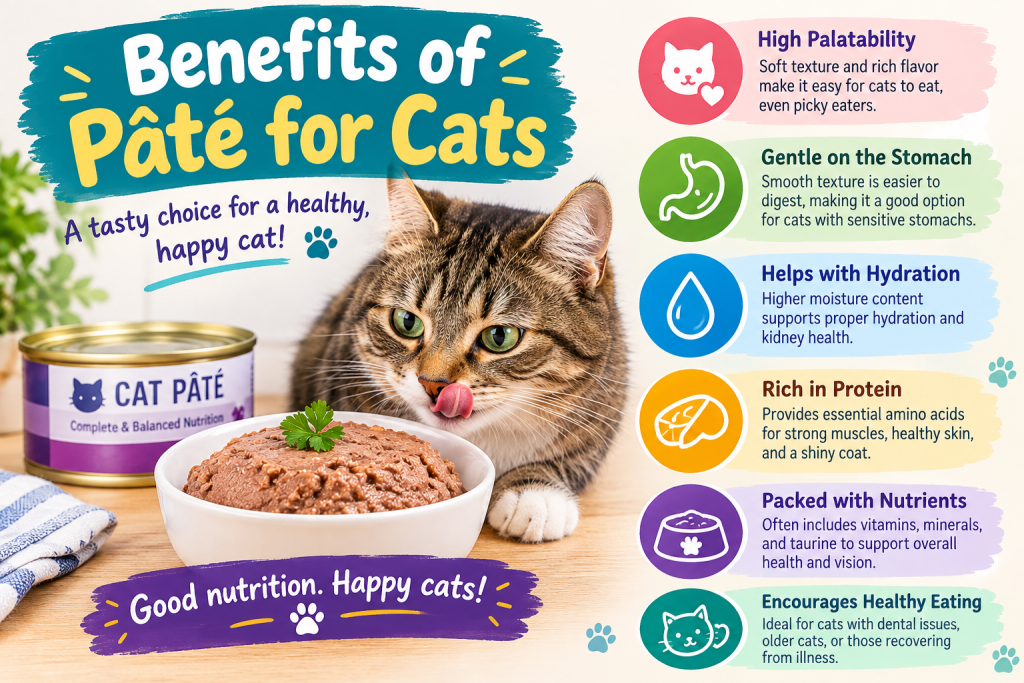
These benefits apply to cat food pâté only.
- Animal-based protein: Fits the needs of an obligate carnivore.
- Moisture: Cats often drink little water. Wet food adds hydration.
- Palatability: Many picky eaters accept it.
- Easy texture: Soft food helps cats with dental problems or missing teeth.
- Convenience: Easy to portion and works as a topper or mixer with kibble.
Human pâté does not offer the same benefits. Its value depends entirely on how it was made, and it is not formulated for cats.
Risks of Feeding Human Pâté to Cats
- Onion and garlic exposure. These can damage red blood cells. Even small amounts are not worth the gamble.
- Excess sodium. Salty spreads can make a cat thirsty and put stress on the body. Cats are small, so little salt goes a long way.
- High fat. Rich pâté can cause vomiting or diarrhea. Repeated feeding adds calories and may lead to weight gain.
- Unbalanced nutrition. Human pâté lacks the nutrient balance of cat food. A cat that fills up on it may miss key nutrients.
- Alcohol. Some recipes use wine or brandy. Alcohol is harmful to cats.
- Strong spices. Pepper, nutmeg, bay leaf, and marjoram can upset the stomach. Some are toxic in larger amounts.
- Excess liver. Frequent liver pâté can push vitamin A too high over time. This is a slow risk but a real one.
- Sauces and extras. Cream, cheese, jelly, and bread can bring lactose, sugar, and more fat. Many cats are lactose intolerant.
How Much Pâté Can Cats Eat?
It depends on what the product is.
| Type of Pâté | Suitable Role | General Guidance |
|---|---|---|
| Complete cat food pâté | Main diet | Follow the package feeding instructions |
| Cat food pâté as a treat | Occasional | Keep treats within appropriate limits |
| Plain cooked meat pâté | Occasional extra | Very small amount |
| Human pâté | Generally avoid | Check ingredients carefully |
Many vets suggest keeping treats and extras to a small share of daily calories. A common rule of thumb is about 10 percent. Your vet can give you a number that fits your cat’s weight and health.
Can Kittens Eat Pâté?
Yes, if it is made for kittens. Growing cats need more calories, protein, and minerals than adults. Choose a pâté labeled complete and balanced for growth. Soft texture helps young kittens and is often used in weaning.
Offer small portions several times a day. Switch foods slowly to avoid stomach upset. Human pâté is not a substitute. It cannot support healthy growth and may contain unsafe ingredients.
Can Cats Eat Pâté Every Day?
Complete and balanced cat food pâté can be a regular part of your cat’s diet when it suits their life stage. Many cats eat it daily. Human pâté should never become routine. Missing nutrients and extra salt and fat add up fast.
When you switch foods, change gradually over several days. Watch stool consistency and appetite. Store opened cans covered in the fridge and follow the label. Throw out pâté that has sat out for too long.
What Happens If a Cat Eats Pâté?
Effects depend on the ingredients and the amount. Plain pâté may cause nothing. A rich one can upset the stomach. Possible signs include:
- Vomiting
- Diarrhea
- Drooling
- Reduced appetite
- Lethargy
- Belly discomfort
- Increased thirst
Many conditions cause these signs. Do not assume pâté is the only cause if symptoms persist.
What Should You Do If Your Cat Eats Human Pâté?
- Identify the type of pâté.
- Read the ingredient list.
- Estimate how much your cat ate.
- Note the time.
- Look for onion, garlic, leeks, chives, alcohol, or heavy spices.
- Monitor your cat for changes in energy, appetite, and digestion.
- Call your vet promptly if the pâté has toxic ingredients or symptoms appear.
Do not try to make your cat vomit unless a veterinarian or poison control professional tells you to.
Cat Pâté vs Human Pâté
| Feature | Cat Food Pâté | Human Pâté |
|---|---|---|
| Designed for cats | Yes | No |
| Complete nutrition | May be | Usually not |
| Protein source | Animal based | Varies |
| Seasonings | Formulated for cats | Often present |
| Sodium | Controlled for the formula | May be high |
| Onion or garlic risk | Should not be present as unsafe ingredients | May be present |
| Suitable as regular food | When complete and balanced | No |
How to Choose Safe Cat Pâté
Use this checklist at the shelf:
- A statement that the food is complete and balanced
- The right life stage on the label such as kitten or adult
- A clear ingredient list with a named animal protein
- A reputable manufacturer
- Storage instructions
- No onion, garlic, or other unsafe additives
Nutritional adequacy matters as much as ingredient quality. A great sounding recipe that is not complete should only be a topper. Cats with kidney disease, allergies, or sensitive stomachs may need a special diet. Ask your vet.
Safe Alternatives to Human Pâté
- Complete wet cat food
- Cat specific pâté
- Plain cooked chicken
- Plain cooked turkey
- Plain cooked lean meat
Keep portions small for anything that is not complete cat food. Skip seasoning, butter, and sauces. Raw meat is not a default swap.
Frequently Asked Questions
Can cats eat pâté?
Yes if it is made for cats. Cat food pâté is a soft wet food that suits most cats when complete and balanced. Human pâté is risky because ingredients vary and may include onion, garlic, salt, or alcohol.
Can cats eat human pâté?
Generally no. Human pâté is not complete cat food and often contains seasonings, fat, and salt. A tiny plain lick is unlikely to harm most cats. Check the label for onion or garlic and call your vet if present.
Can cats eat cat pâté every day?
Yes if it is complete and balanced for your cat’s life stage. Many cats eat it daily. Follow feeding instructions, watch weight, and change foods slowly to avoid stomach upset.
Can cats eat liver pâté?
Only in a very small amount at most. Liver is high in vitamin A, and too much over time can cause toxicity. Human liver pâté also contains salt, fat, and seasonings, so it is better avoided.
Can cats eat chicken pâté?
Cat food chicken pâté is safe. Plain cooked chicken blended with water is fine as an occasional topper. Human chicken pâté often contains onion, garlic, butter, or alcohol, so avoid it.
Can cats eat fish pâté?
Cat food fish pâté is fine when complete and balanced. Plain cooked fish is an occasional extra. Human fish pâté is often salty and may contain chives or onion, so skip it.
Can cats eat pâté with garlic?
No. Garlic can damage red blood cells and cause anemia. It is considered more potent than onion. If your cat ate some, contact your vet or a poison service promptly.
Can cats eat pâté with onion?
No. Onion is toxic to cats in raw, cooked, and powdered form. Even small amounts can be a concern. Call your vet if your cat ate pâté containing onion.
Can kittens eat pâté?
Yes if it is made for kittens and labeled complete and balanced for growth. Offer small portions and change foods slowly. Human pâté is not suitable for kittens.
What happens if my cat eats human pâté?
Plain pâté may cause only mild stomach upset. Pâté with onion, garlic, or alcohol is more serious. Read the label, note how much was eaten, and call your vet if toxic ingredients or symptoms appear.
Is cat pâté better than dry food?
Neither is best for every cat. Pâté adds moisture and suits cats with dental problems or picky tastes. Dry food is convenient and can cost less. Many owners mix both. Ask your vet about your cat’s needs.
What kind of pâté is safe for cats?
Pâté made for cats and labeled complete and balanced for the right life stage is the safest choice. Plain cooked meat pâté without seasoning is a small occasional extra. Avoid human pâté.
Key Takeaways
- Cats can eat pâté if it is made as cat food.
- Cat pâté and human pâté are very different foods.
- Check the ingredient list before sharing anything.
- Onion and garlic are toxic. There is no safe amount.
- Liver is fine in moderation. Too much risks vitamin A toxicity.
- Follow package feeding instructions for cat pâté and keep extras small.
- Choose foods labeled complete and balanced for your cat’s life stage.
- Call a veterinarian promptly if toxic ingredients were eaten or symptoms appear.
Final Thoughts
Pâté is not one food. It is a texture and a style of cooking. That is why the label matters more than the name.
Cat specific pâté can be a good meal when it is nutritionally complete and right for your cat’s life stage. Human pâté should generally not be regular cat food because ingredients vary and may include unsafe seasonings. When in doubt, leave it out and ask your vet.