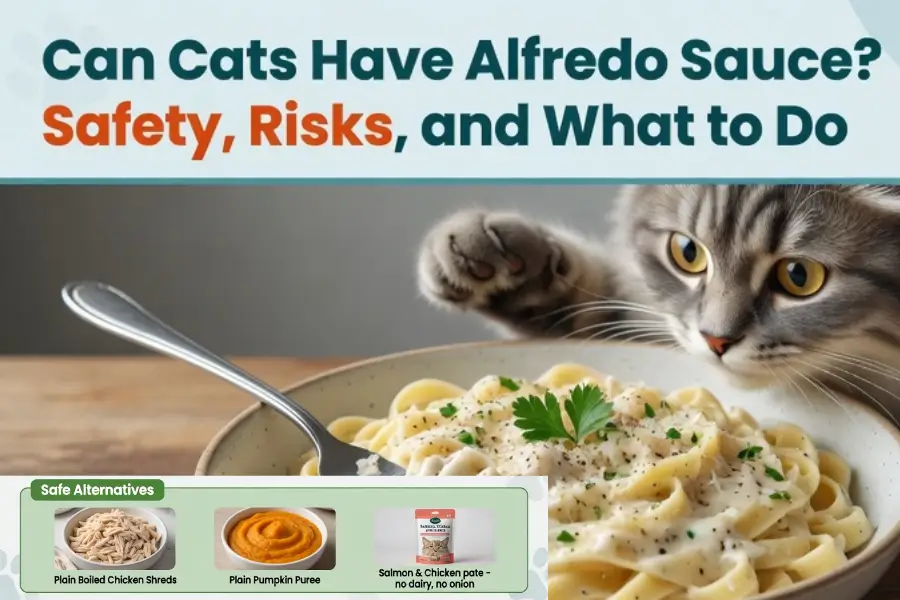
Your cat has just licked the pasta bowl, and now you’re wondering: can cats have Alfredo sauce? The short answer is no. Alfredo sauce is not a safe or suitable food for cats. It is usually made with butter, cream, and cheese, and many recipes also contain garlic or onion.
How worried you should be depends on two things: what is in the sauce and how much your cat ate. A tiny lick of a plain sauce is very different from a few spoonfuls of garlic Alfredo. This guide explains the main risks, the warning signs to watch for, what to do right now, and when to call a veterinarian.
Can Cats Have Alfredo Sauce?
No. Cats should not have Alfredo sauce. It is rich in dairy and fat, which can upset a cat’s stomach, and many versions contain garlic or onion, which can be toxic to cats.
It helps to separate two different problems. The first is that Alfredo sauce is nutritionally unsuitable. Cream, butter, and cheese are heavy, fatty, and hard for many adult cats to digest. At worst, they cause a bad stomach.
The second problem is toxicity. Garlic and onion belong to the allium family, and they can damage a cat’s red blood cells. That is the more serious concern, and it is the reason a vet call may be needed.
Cats are carnivores. They do not need creamy sauces, pasta, or cheese to be healthy. A complete and balanced cat food already gives them what they need.
Why Is Alfredo Sauce Bad for Cats?
Not every Alfredo sauce is the same. A classic version may be little more than butter and Parmesan. Many jarred, restaurant, and homemade versions add cream, garlic, onion, salt, and other seasonings. Because of this, the ingredient list matters more than the label “Alfredo.” Here is how each common ingredient can affect a cat.
Garlic and Onion
Garlic and onion are the biggest worry. They belong to the allium group, along with chives and leeks. The Merck Veterinary Manual explains that compounds in these plants damage red blood cells. This can lead to a condition called Heinz body hemolytic anemia, in which the body destroys its own damaged red blood cells faster than it can replace them. Anemia means the blood can carry less oxygen.
The same source says cats are the most susceptible species, followed by dogs. It also notes that raw, cooked, dehydrated, and powdered forms have all caused problems. In other words, cooking does not make garlic or onion safe. Powders and seasoning blends are especially worrying because they are concentrated, and they are easy to miss in a sauce.
Garlic is also listed as more potent than onion. The Merck manual describes it as three to five times more toxic. That is one more reason a garlic Alfredo deserves extra caution.
Heavy Cream and Milk
Heavy cream has less lactose than milk, but it is very high in fat. So it can still cause trouble, just in a different way.
Butter and High-Fat Ingredients
Butter is mostly fat. A sudden dose of rich food can cause vomiting and loose stools in a cat whose stomach is not used to it. In some pets, fatty meals can also be linked to pancreatitis, which is a painful inflammation of the pancreas. This is not what happens after every bite, but it is one reason vets caution against feeding rich table food.
Frequent rich treats also add up. Extra calories can lead to weight gain over time, and excess weight brings its own health problems for cats.
Parmesan and Other Cheese
Aged cheeses such as Parmesan tend to contain less lactose than fresh milk. Even so, cheese is fatty and salty, and cats do not need it. Some cats still get an upset stomach from it.
So a crumb of cheese is unlikely to harm a healthy cat, but cheese is not a good regular treat. If you want to reward your cat, there are better choices (more on those below).
Salt and Seasonings
Cats are small, so salty human food adds up quickly. Too much salt can be harmful, and sauces are often heavily seasoned. Seasoning blends are also where hidden garlic and onion powder tend to live. That makes a seasoned sauce a bigger risk than a simple dairy-and-butter sauce.
The ingredient-list rule: Do not judge a sauce by its color, smell, or creaminess. A pale, mild-looking sauce can contain garlic powder, and a rich-smelling one might not. The only way to know is to read the label or recipe. If you cannot check, treat the sauce as if it may contain garlic or onion.
What Happens If a Cat Eats Alfredo Sauce?
The outcome depends on the ingredients, the amount, and your cat’s age and health. Here are the most likely scenarios.
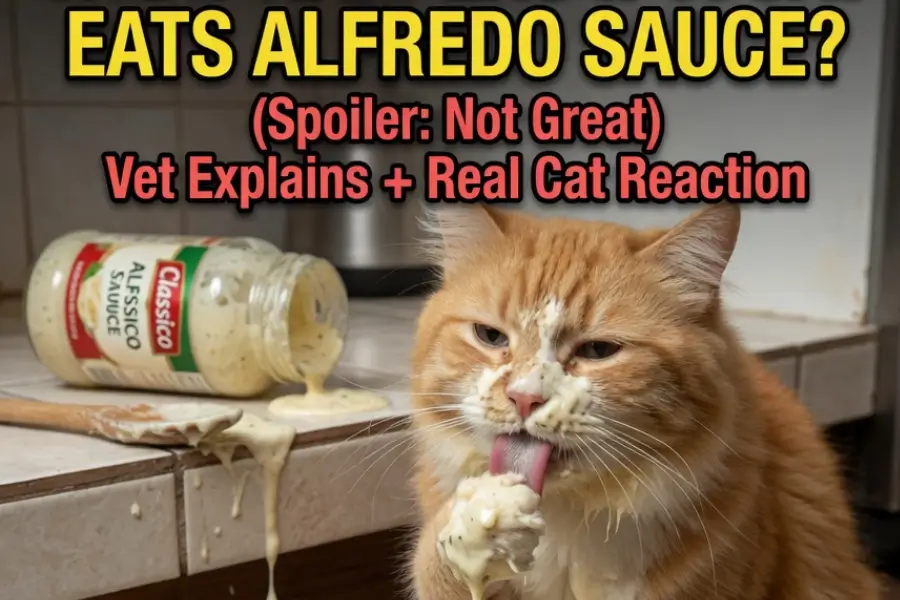
- A very small lick of a plain sauce. Many cats show no obvious problem at all.
- A larger amount of a rich, creamy sauce. Mild digestive upset is common. You might see gas, a soft stool, or less interest in food.
- Vomiting or diarrhea. This can happen if the cat is sensitive to lactose or fat, or if it ate a lot.
- Exposure to garlic or onion. This is the more serious situation. Red blood cell damage can follow, and anemia can develop.
There is an important catch with garlic and onion: the effects can be delayed. According to the Merck Veterinary Manual, signs of anemia are usually not noticed until a lot of red blood cells have been destroyed, which is often a few days after eating the food. So a cat that seems perfectly normal an hour later is not necessarily in the clear.
This does not mean every cat that licks a garlic sauce will get sick. It means you should not rely on how your cat looks right away. Contact a vet and let them judge the risk.
Symptoms to Watch for After a Cat Eats Alfredo Sauce
Watching your cat closely is useful, but symptoms cannot tell you for sure what is going on. Use this list as a guide for when to get help, not as a way to diagnose your cat at home.
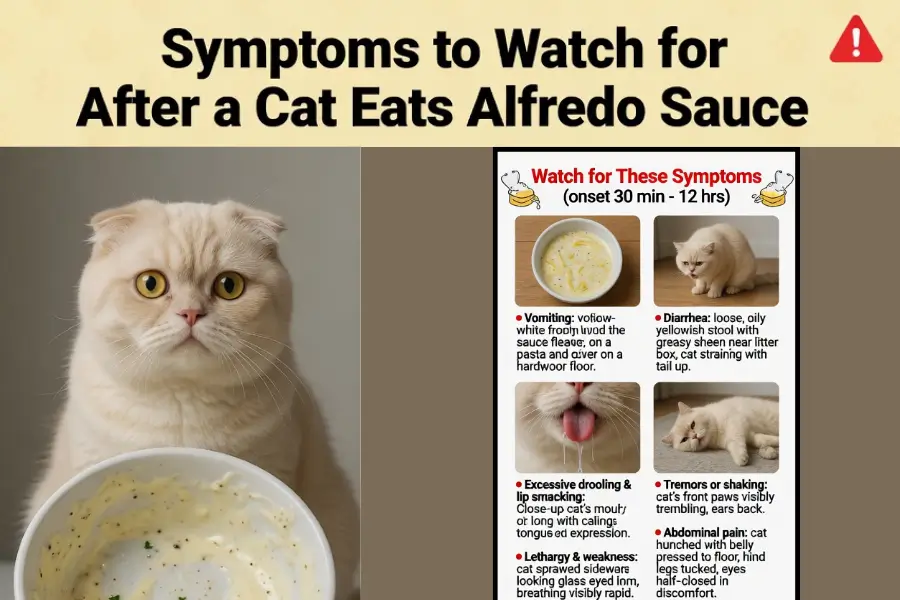
Digestive symptoms (common with dairy and fat):
- Vomiting
- Diarrhea
- Gas or belly discomfort
- Reduced appetite
Possible warning signs of garlic or onion toxicity:
- Weakness or unusual tiredness
- Pale gums
- Rapid breathing
- Faster heart rate
- Dark or reddish-brown urine
- Collapse in severe cases
These second-group signs need prompt veterinary attention. If you know your cat ate garlic or onion, do not wait for them to appear before calling. By the time they show up, the problem may already be advanced.
Notice the difference between the two groups. Dairy upset usually appears within hours and often settles. Garlic and onion problems can build quietly for days.
Read This : https://groofypet.com/can-cats-eat-swiss-chard/
What to Do If Your Cat Eats Alfredo Sauce
Stay calm and work through these steps.
- Remove the sauce. Take away the plate, bowl, or pot so your cat cannot eat more.
- Check the ingredients. Look at the jar label or your recipe for garlic, onion, garlic powder, and onion powder. Also look for “seasoning blend” or “spices,” which can hide them.
- Estimate the amount and the time. Was it a lick or a plateful? When did it happen? Write both down.
- Contact a veterinarian promptly if the sauce contains garlic or onion, if the amount was large or unknown, or if your cat shows any symptoms. An animal poison control service can also give ingredient-specific advice.
- Follow the vet’s instructions and keep monitoring your cat as advised.
Do not try to make your cat vomit, and do not give home remedies, unless a veterinary professional specifically tells you to. Done wrongly, these can cause harm of their own.
Extra care is wise for kittens, senior cats, and cats with existing health problems. They can have a harder time handling any food upset.
It also helps to keep the empty jar or packaging nearby. The vet may want to see the exact ingredient list.
Is a Tiny Lick of Alfredo Sauce Dangerous for Cats?
A tiny lick of a plain sauce with no garlic or onion may cause no noticeable problem. But no one can guarantee that. The risk depends on the ingredients, the amount, and your cat’s own health and digestion.
If garlic or onion is in the sauce, do not assume a small amount is harmless. Call your vet or an animal poison service and tell them what the sauce contained. They can give advice that fits your cat’s size and situation.
This is the difference between a lick and a serving. A lick of a mild sauce is usually a “watch and wait” event. A serving of garlic Alfredo is a “call the vet” event.
And please don’t pick out visible garlic pieces and assume the rest is fine. Garlic flavor and compounds spread through the whole sauce.
Can Cats Eat Alfredo Pasta?
Pasta gives cats very little nutrition. They are meat eaters, and their bodies work best on food that supplies animal protein, the right fats, and key vitamins and minerals. Pasta can never replace that.
Plain, fully cooked pasta is not generally considered toxic in a tiny amount. It is simply unnecessary. Pasta coated in Alfredo sauce is another matter. It combines creamy dairy, a lot of fat, salt, and possibly garlic or onion in one dish. That stack of unsuitable ingredients is why a bowl of fettuccine Alfredo is a poor idea for a cat, even if each ingredient seems small.
This points to a useful rule: a food can be non-toxic in a tiny quantity and still be a poor treat. Plain pasta fits that description. Alfredo pasta is worse.
Are There Any Benefits of Alfredo Sauce for Cats?
No. Alfredo sauce offers no meaningful nutritional benefit for cats. Its calories, fat, and dairy are not health benefits. For a cat, they are just extra weight and extra work for the stomach.
Cats need a complete and balanced diet. That means food made to supply the right mix of animal protein, fats, vitamins, and minerals for cats. A good commercial cat food does this far better than any human sauce.
Safer Alternatives to Alfredo Sauce for Cats
If you want to share a treat, these are better options. Keep portions small and keep treats a minor part of the diet.
- Plain, fully cooked chicken with no seasoning and no bones.
- Plain, fully cooked turkey with no seasoning and no bones.
- A small piece of fully cooked fish with bones removed and nothing added.
- Commercial cat treats made for feline nutrition.
- Your cat’s regular complete and balanced food. Sometimes the best treat is a small extra spoonful of the food they already love.
Introduce any new food slowly, since some cats react to changes. Avoid sauces, gravies, seasoning, onion, and garlic. When in doubt, ask your vet what treats suit your cat.
How to Prevent Cats From Eating Alfredo Sauce
Most accidents are easy to prevent with a few habits.
- Keep plates and sauce containers out of reach, including on counters.
- Store leftovers in closed containers.
- Do not feed your cat from a pasta dish, even “just a bite.”
- Clean up spills right away.
- Tell family members and guests not to share seasoned human food.
- Keep ingredient packaging handy in case of an accident.
Cats are good at finding the one moment you look away. A lid on the pot and a quick wipe of the table go a long way.
Must Read : Can Cats Eat Bread Crust? Risks, Benefits and Safe Alternatives!
When Should You Call a Veterinarian?
Contact a veterinarian if any of these apply:
- The sauce contains garlic or onion in any form, including powder.
- The amount eaten is unknown or may have been large.
- Your cat is vomiting repeatedly or has diarrhea that keeps going.
- Your cat shows weakness, pale gums, changes in breathing, dark urine, or collapse.
Breathing difficulty, collapse, or severe weakness is an emergency. Go to an emergency vet right away.
If you suspect garlic or onion, don’t wait to see whether symptoms appear. Early advice gives your vet more options. This article cannot replace individual veterinary advice for your cat.
Frequently Asked Questions
Can cats have Alfredo sauce in small amounts?
It is best to avoid it. A very small lick of a plain sauce may cause no problem, but there is no safe amount to aim for. Dairy, fat, and salt can upset a cat’s stomach, and garlic or onion can be toxic. Choose a cat-safe treat instead.
Is Alfredo sauce toxic to cats?
Not every Alfredo sauce is toxic, but many contain garlic or onion, which can be. Plain dairy and butter are more likely to cause an upset stomach than poisoning. Because recipes vary, check the ingredient list. If garlic or onion is present, contact a vet.
Can cats eat Alfredo sauce without garlic?
It is still not recommended. Without garlic or onion, the main concerns are lactose, fat, and salt. These can cause vomiting or diarrhea in some cats. A tiny lick is unlikely to be serious for a healthy cat, but the sauce offers nothing useful.
What happens if my cat licks Alfredo sauce?
Often nothing noticeable happens, especially with a plain sauce and a small lick. Some cats get gas, loose stools, or vomiting. If the sauce had garlic or onion, call your vet even if your cat seems fine, because problems can show up days later.
Can cats eat Alfredo sauce with Parmesan cheese?
Parmesan has less lactose than milk, but it is fatty and salty. A crumb is unlikely to harm a healthy cat, yet it adds nothing good. The bigger concern is the rest of the sauce, which may contain garlic, onion, cream, and heavy seasoning.
Is cream sauce bad for cats?
Usually, yes. Cream sauces are high in fat, and many cats have trouble digesting the lactose in dairy. This can lead to diarrhea, gas, and an upset stomach. Cream sauces are also often seasoned with garlic or onion, which raises the risk further.
Can kittens eat Alfredo sauce?
No. Kittens have small, sensitive systems and need complete kitten food. Rich sauces can easily upset their stomachs, and diarrhea can dehydrate a small kitten quickly. If a kitten eats garlic Alfredo, contact a veterinarian promptly.
How long after eating garlic might a cat show symptoms?
Signs can be delayed. The Merck Veterinary Manual says red blood cell changes can begin within 24 hours, while clinical signs of anemia may take several days to appear. This is why vets advise calling early rather than waiting for symptoms.
What should I do if my cat eats garlic Alfredo sauce?
Remove the sauce, note the amount and time, and keep the packaging. Then contact your veterinarian or an animal poison control service right away, even if your cat looks fine. Do not induce vomiting or give home remedies unless a professional tells you to.
Can cats eat plain pasta without sauce?
A tiny piece of plain, fully cooked pasta is not generally considered toxic. But it has little nutritional value for cats and is not needed. It should never replace their regular food. Skip any pasta with sauce, butter, oil, or seasoning.
Final Thoughts
So, can cats have Alfredo sauce? It’s best not to share it. Alfredo sauce is not a suitable treat for cats, and any version containing garlic or onion can be a real health risk. A tiny lick of a plain sauce often passes without trouble, but it’s smart to check the ingredients rather than guess.
Choose cat-safe treats instead, keep sauces out of reach, and call your veterinarian if your cat may have eaten something harmful. When it comes to possible garlic or onion exposure, a quick phone call is always better than waiting to see what happens.
How to Hydrate a Cat That Won t Drink Water: What Should I Do?
Can Cats Eat Honey Ham? Risks Benefits and safe Alternatives!