
Whitebait is a favorite snack in many kitchens. These small, silvery fish show up fried at seafood restaurants, dried on pet store shelves, and frozen in bags at the grocery store. If you’ve ever dropped one on the floor, your dog probably snapped it up before you could react. So can dogs eat whitebait safely, or should you keep it off their plate for good?
The short answer is yes, dogs can eat whitebait in moderation. But how you prepare it, and how much you give, makes a big difference. In this guide, we’ll cover what whitebait is, its nutritional value, the health benefits it offers dogs, the risks to watch for, and exactly how to serve it safely. We’ll also look at puppies, different types of whitebait, portion sizes by dog weight, and warning signs that mean it’s time to call the vet.
Can Dogs Eat Whitebait?
Yes, dogs can eat whitebait in moderation. This small fish is packed with protein and omega-3 fatty acids, both of which support your dog’s health when fed the right way.
Whitebait is safe when it’s plain, cooked (or safely served frozen or dried), and given in small amounts. It becomes unsafe when it’s fried in oil, coated in batter, heavily salted, or seasoned with garlic or onion. Those additions turn a healthy treat into something that can upset your dog’s stomach or cause more serious problems.
Plain cooked whitebait is the safest option for most dogs. It’s easy to digest, low in mercury compared to larger fish, and gentle enough for dogs with sensitive stomachs. If you’re introducing whitebait for the first time, start with a small piece and watch how your dog reacts before making it a regular treat.
Because whitebait is so small, it cooks quickly and doesn’t need to be filleted. This makes it a convenient option for dog owners who want to add fish to their dog’s diet without the hassle of removing bones from a larger fillet.
Types of Whitebait
Whitebait comes in several forms, and each one affects whether it’s safe to feed your dog.
- Fresh whitebait is the closest to its natural state. It should always be cooked before serving to reduce the risk of parasites and bacteria.
- Frozen whitebait is a common option in pet stores and is often sold specifically as a dog treat. Many owners feed it thawed, and some serve it straight from frozen as a cool, crunchy snack.
- Dried whitebait is dehydrated and sold as a shelf-stable treat. It’s a popular choice because it’s easy to store and portion out.
- Fried whitebait is the version served in restaurants, usually coated in flour or batter and cooked in oil. This type is not a good choice for dogs.
- Canned whitebait often comes packed in oil, brine, or salted water, which makes it less suitable unless you rinse it thoroughly and check the label for added salt.
Nutritional Value of Whitebait for Dogs

Whitebait is a nutrient-dense little fish. Here’s a general breakdown of what it offers.
| Nutrient | Amount (per 100g, approx.) | Benefit for Dogs |
|---|---|---|
| Protein | 15–18g | Supports muscle health and repair |
| Omega-3 fatty acids | 1–2g | Promotes healthy skin and coat |
| Calcium | 400–800mg | Builds strong bones and teeth |
| Phosphorus | 300–500mg | Supports energy production |
| Vitamin D | Present in moderate amounts | Aids bone support and calcium absorption |
| Selenium | Present in trace amounts | Boosts immune system function |
These numbers can vary depending on the exact species and preparation method, but whitebait consistently ranks as a lean, nutrient-rich food.
Is Whitebait Safe for Dogs?
Whitebait is generally safe for dogs because of its small size, soft bones, and high nutritional value. Most dogs can eat the whole fish, bones included, without any issue.
That said, a few factors affect how safe it really is.
Bones. Whitebait bones are tiny and soft, especially once cooked. Unlike the bones in larger fish, they rarely cause choking or internal injury. Still, it’s smart to supervise your dog the first few times to make sure they’re chewing rather than swallowing large amounts whole.
Freshness. Fresh whitebait spoils quickly. Always check that it smells clean, not sour or overly fishy, before feeding it to your dog. Spoilt fish can cause food poisoning.
Contamination risks. Fish, in general, can carry parasites and bacteria if eaten raw. Cooking whitebait thoroughly kills off most of these risks. Frozen whitebait that’s been properly stored is generally safer to feed raw than fresh fish straight from the market, since freezing kills many parasites.
Seasoning. This is where most problems start. Whitebait itself is safe, but the seasonings people add for human meals, like salt, garlic, onion powder, and butter, are not. Always feed whitebait plain.
Health Benefits of Whitebait for Dogs
When served correctly, whitebait offers several real health benefits.
1. Excellent Source of Lean Protein
Whitebait is high in protein but low in fat compared to many other protein sources. This makes it a good option for dogs who need lean protein, including dogs managing their weight or recovering from illness.
2. Rich in Omega-3 Fatty Acids
Omega-3s are essential fats that dogs can’t produce on their own. Whitebait delivers a solid dose of these fatty acids, which support heart health and help reduce inflammation throughout the body.
3. Supports Healthy Skin and Coat
The omega-3s in whitebait don’t just help internally. They also show up in your dog’s coat, keeping it shiny and reducing dry, flaky skin over time.
4. Helps Brain Function
Omega-3 fatty acids, particularly DHA, play a role in brain health. This is especially useful for puppies whose brains are still developing and for senior dogs who may benefit from added cognitive support.
5. Supports Joint Health
The anti-inflammatory properties of omega-3s can help ease joint stiffness, which makes whitebait a helpful addition for older dogs or breeds prone to joint issues.
6. Provides Calcium for Bones
Because whitebait is eaten whole, including the soft bones, it delivers a natural source of calcium that supports bone strength and density.
7. Contains Important Vitamins and Minerals
Beyond protein and omega-3s, whitebait provides vitamin D, phosphorus, and selenium. Together, these nutrients support metabolism, immune function, and overall energy levels.
Risks of Feeding Whitebait to Dogs
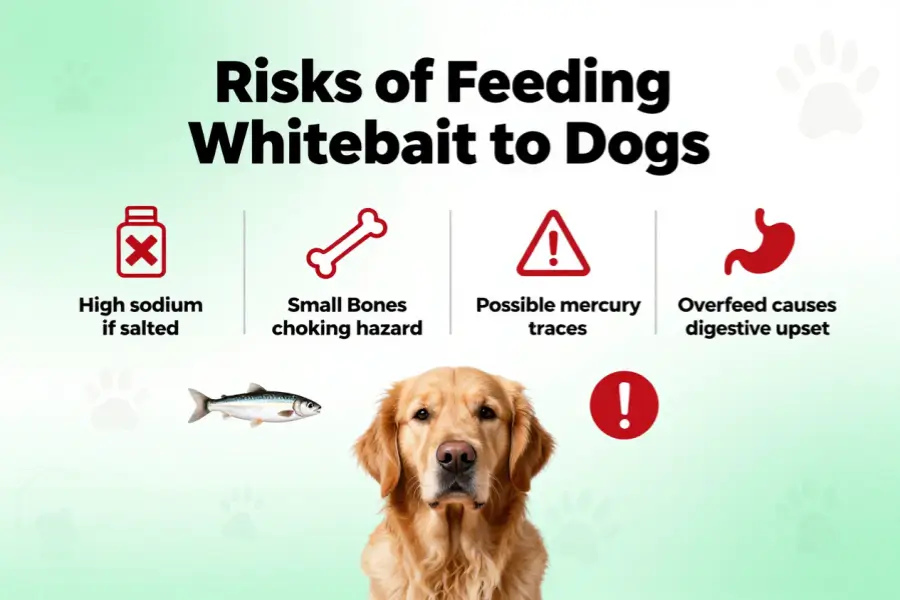
While whitebait offers real benefits, it’s not risk-free. Here’s what to watch out for.
1. Small Bones
Whitebait bones are usually soft and safe, but in rare cases, larger pieces can cause minor gastrointestinal irritation, particularly in small dogs or dogs who gulp their food without chewing.
2. High Sodium in Processed Whitebait
Canned or heavily processed whitebait often contains added salt. Too much sodium can lead to excessive thirst, dehydration, and, in severe cases, sodium poisoning.
3. Fried Whitebait Contains Too Much Fat
Fried whitebait is coated in oil and sometimes batter, both of which add unnecessary fat. Regularly feeding fried whitebait can contribute to weight gain and increases the risk of pancreatitis, a painful and potentially serious inflammation of the pancreas.
4. Seasonings Like Garlic and Onion
Restaurant-style whitebait is frequently seasoned with garlic, onion, or spice blends that contain these ingredients. Garlic and onion are toxic to dogs and can damage red blood cells if eaten in large enough amounts.
5. Raw Fish Parasites
Raw or undercooked fish can carry parasites that cause illness in dogs. Cooking whitebait, or using properly frozen whitebait, greatly reduces this risk.
6. Food Allergies
Some dogs are allergic to fish. Signs of an allergic reaction include itching, swelling, hives, or digestive upset. If your dog has never eaten fish before, introduce whitebait slowly and watch for any reaction.
7. Digestive Upset
Any new food, including whitebait, can cause temporary digestive upset like loose stool or mild vomiting, especially if introduced in large amounts too quickly.
Can Puppies Eat Whitebait?
Puppies can eat whitebait, but with extra caution. Their digestive systems are still developing, and they’re more sensitive to new foods than adult dogs.
- Is it safe? Yes, in small, well-cooked portions. Avoid raw or frozen whitebait for puppies until they’re a bit older and their digestive system is more established.
- Serving recommendations. Offer just a small piece at first, cut down further if needed for tiny breeds, and always cook it thoroughly with no added oil or salt.
- Bone concerns. While whitebait bones are generally soft, puppies have smaller mouths and throats, so supervise closely during their first few tries.
- Frequency. Treat whitebait as an occasional addition, not a daily staple, for puppies. Once or twice a week in small amounts is plenty.
Can Dogs Eat Different Types of Whitebait?
Can Dogs Eat Raw Whitebait?
Dogs can eat raw whitebait if it’s been properly frozen first, since freezing kills many common parasites. Fresh, never-frozen raw whitebait carries a higher risk and is best avoided.
Can Dogs Eat Cooked Whitebait?
Yes, and this is the best option. Plain cooked whitebait, steamed, boiled, or baked without oil or seasoning, is the safest way to serve it.
Can Dogs Eat Fried Whitebait?
It’s best to avoid fried whitebait. The added oil and batter bring unnecessary fat and calories, and restaurant versions are often salted or seasoned in ways that aren’t dog-safe.
Can Dogs Eat Dried Whitebait?
Yes, dried whitebait makes a convenient, shelf-stable treat. Just check that it’s plain with no added salt, oil, or preservatives, and offer it in small quantities since dried foods are more concentrated.
Can Dogs Eat Frozen Whitebait?
Yes, many owners feed frozen whitebait straight from the freezer as a cold, crunchy treat. It’s a popular option specifically because freezing helps reduce parasite risk.
Can Dogs Eat Canned Whitebait?
Only if it’s packed in water with no added salt. Canned whitebait in oil or brine should be rinsed thoroughly first or skipped in favor of fresher options.
Can Dogs Eat Whitebait with Batter?
No. Batter adds refined carbohydrates and fat that offer no nutritional benefit and can contribute to weight gain or digestive upset over time.
How Much Whitebait Can Dogs Eat?
Portion size depends on your dog’s size. Use this chart as a general guide, and adjust based on your dog’s individual needs.
| Dog Size | Serving |
|---|---|
| Extra Small (under 10 lbs) | 1–2 small fish |
| Small (10–25 lbs) | 2–4 small fish |
| Medium (25–50 lbs) | 4–6 small fish |
| Large (50+ lbs) | 6–10 small fish |
- Frequency. Whitebait works best as an occasional treat, not a daily meal replacement. A few times a week is a reasonable target for most healthy dogs.
- Introduce gradually. The first time you offer whitebait, start with a single small piece and wait 24 hours to check for any digestive upset or allergic reaction.
- Feed occasionally. Even though whitebait is nutritious, no treat should make up more than about 10% of your dog’s daily calorie intake. The rest should come from a balanced commercial dog food formulated for their life stage.
How to Prepare Whitebait for Dogs Safely
Proper preparation is what separates a healthy treat from a risky one.
Cook Thoroughly
Cooking whitebait until it’s fully done reduces the risk of parasites and bacteria. Steaming, boiling, or baking are all good methods.
Avoid Oil
Skip butter, olive oil, or any cooking oil. Dogs don’t need the extra fat, and too much can trigger digestive upset or contribute to pancreatitis over time.
Do Not Add Salt
Never salt whitebait meant for your dog. Even a small amount of added salt can add up quickly for a small animal.
Remove Harmful Ingredients
If you’re cooking whitebait for yourself and want to share some with your dog, set aside a plain portion before adding garlic, onion, spices, or marinades.
Let It Cool Before Serving
Always let cooked whitebait cool to room temperature before giving it to your dog. Hot food can burn a dog’s mouth and throat.
Signs Your Dog Ate Too Much Whitebait
Even a dog-safe food can cause problems in large amounts. Watch for these signs after feeding whitebait:
- Vomiting
- Diarrhea
- Stomach pain or a hunched posture
- Constipation
- Excessive thirst
- Lethargy
Mild symptoms that resolve within a day usually aren’t a cause for alarm. But if vomiting or diarrhea continues for more than 24 hours, if your dog seems to be in significant pain, or if you notice blood in their stool or vomit, call your veterinarian right away.
What to Do If Your Dog Eats Fried or Seasoned Whitebait
Accidents happen. If your dog gets into fried or seasoned whitebait, here’s what to do.
- Stay calm. One incident of eating fried or seasoned fish usually isn’t an emergency, but it’s worth monitoring closely.
- Check ingredients. Try to figure out exactly what was in the dish. Was it just fried in oil, or did it include garlic, onion, or a heavy seasoning blend?
- Watch for symptoms. Keep an eye out for vomiting, diarrhea, lethargy, or unusual behavior over the next 24 to 48 hours.
- Contact your veterinarian if garlic, onion, or excessive salt is present. These ingredients pose a real toxicity risk, and your vet may want to see your dog or offer guidance based on how much was eaten.
Best Fish Alternatives to Whitebait for Dogs
If you’re looking to mix things up, several other fish are also considered safe fish for dogs when prepared properly.
| Fish | Safe | Notes |
|---|---|---|
| Salmon | Yes | Must be cooked only; never serve raw |
| Sardines | Yes | Choose low sodium, packed in water |
| Mackerel | Yes | Fresh is preferred over canned |
| Pollock | Yes | Lean protein, easy to prepare |
| Cod | Yes | Easy to digest, mild flavor |
| Herring | Yes | Rich in omega-3, similar to whitebait |
Rotating between these options, alongside whitebait, is a good way to give your dog variety while keeping meals balanced.
Pros and Cons of Whitebait for Dogs
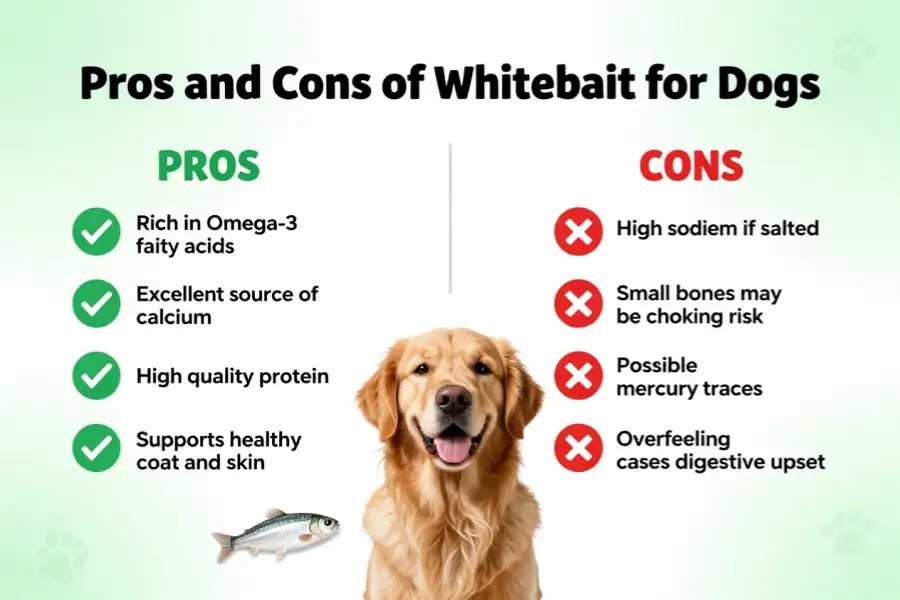
- High in protein
- Rich in omega-3 fatty acids
- Good source of calcium
- Supports healthy skin and coat
- Generally low in mercury
- Bones, though soft, need supervision
- Fried versions are unhealthy
- High sodium if processed or canned
- Raw fish carries parasite risk
- It is possible for some dogs to be allergic
Frequently Asked Questions
Can dogs eat whitebait every day?
It’s better to treat whitebait as an occasional food rather than a daily one. A few times a week, in appropriate portions, is a safer approach for most dogs.
Can dogs eat frozen whitebait?
Yes, frozen whitebait is a popular and generally safe option, especially since freezing helps reduce the risk of parasites.
Can dogs eat dried whitebait?
Yes, as long as it’s plain with no added salt or oil. Dried whitebait is a convenient, shelf-stable treat option.
Can dogs eat whitebait bones?
Yes, whitebait bones are small and soft enough that most dogs eat them without issue. Still, supervise your dog, especially the first few times.
Can diabetic dogs eat whitebait?
Plain, unseasoned whitebait is generally low in carbohydrates and can fit into a diabetic dog’s diet, but always check with your veterinarian first since individual needs vary.
Can senior dogs eat whitebait?
Yes, and the omega-3 fatty acids can actually be helpful for aging joints and cognitive function. Stick to soft, cooked whitebait for senior dogs with dental issues.
Can whitebait upset a dog’s stomach?
It can, especially if introduced too quickly, fed in large amounts, or seasoned. Introduce it slowly and stick to plain preparations.
Is whitebait better than sardines?
Neither is strictly better. Both are nutrient-dense, low-mercury fish rich in omega-3s. Whitebait tends to be smaller and softer-boned, while sardines offer a similar nutritional profile in a slightly larger package. Many owners rotate between the two.
Final Thoughts
So, can dogs eat whitebait? Yes, plain, cooked whitebait in moderation can be a healthy, occasional treat that supports your dog’s skin, coat, joints, and overall protein needs. It’s a lean, nutrient-dense option that many dogs genuinely enjoy.
That said, not all whitebait is created equal. Avoid fried, heavily seasoned, salted, or raw (non-frozen) whitebait, since these versions carry real risks ranging from digestive upset to toxicity from ingredients like garlic and onion.
As with any new food, it’s worth talking to your veterinarian before making significant changes to your dog’s diet, especially if you have a puppy, a senior dog, or a dog with an underlying health condition like kidney disease or a history of pancreatitis.
With the right preparation and portion control, whitebait can be a simple, tasty way to add a nutritional boost to your dog’s routine.
Can Dogs Eat Snapper? Benefits, Risks, and Safe Feeding Guide!
Can Dogs Eat Psyllium Husk? Benefits, Risks and Safety Guide