Vinegar is a common household product that many cat owners use for cleaning, removing odors, and other everyday tasks. Since cats often explore their surroundings by sniffing, licking, and touching objects, it is natural to wonder whether vinegar is safe for them.
Is vinegar bad for cats? The good news is that vinegar is generally not considered toxic to cats. However, that does not mean it is completely harmless in every situation. The effects of vinegar can vary depending on the amount, concentration, and how a cat comes into contact with it.
In this article, you will learn the facts about vinegar and cats, including potential risks, possible benefits, and the safest ways to use vinegar in a cat-friendly home.
Vinegar is a sour liquid created through a two-step fermentation process. First, sugars or starches from a base ingredient (like grapes, apples, or grains) are fermented into alcohol. Then, bacteria convert that alcohol into acetic acid, the compound responsible for vinegar’s sharp smell and sour taste.
Is vinegar bad for cats?
In small, diluted amounts, vinegar is generally not toxic to cats; most cats won’t even touch it because they hate the smell. However, undiluted vinegar, cleaning vinegar, or large ingested amounts can cause stomach upset, vomiting, diarrhea, and irritation to the mouth, eyes, or skin.
Vinegar is not classified as a deadly poison for cats, but it is not a safe substance to offer intentionally, and exposure should always be minimized.
What cat owners should know immediately:
- Vinegar and cats don’t usually mix well — most cats avoid it instinctively.
- A small lick of diluted vinegar is unlikely to cause serious harm.
- Drinking a large amount, or exposure to undiluted/cleaning vinegar, can cause real digestive distress.
- Vinegar poisoning in cats is rare but possible with concentrated exposure.
- When in doubt, contact your veterinarian rather than waiting to see what happens.
- Vinegar is mildly irritating, not highly toxic, to cats in small amounts.
- Is white vinegar toxic to cats? Not in small amounts, but it can cause GI upset in larger quantities.
- Apple cider vinegar for cats is sometimes used in tiny diluted doses for skin or coat support, but benefits are largely anecdotal.
- Cleaning vinegar is significantly more concentrated than table vinegar and poses a higher risk.
- Can cats lick vinegar? Yes, occasionally, without major incident, but it’s not something to encourage.
- Vinegar smell cats hate; this natural aversion is actually a built-in safety mechanism that prevents most accidental ingestion.
- Veterinary care is needed if a cat shows persistent vomiting, drooling, or lethargy or refuses to eat after vinegar exposure.
How Is Vinegar Made?
- A sugar-rich liquid (apple juice, grape juice, rice water, or grain mash) is fermented by yeast into alcohol.
- Acetic acid bacteria are introduced, converting the alcohol into acetic acid.
- The mixture is aged, filtered, and sometimes pasteurized.
- The final product typically contains 4–7% acetic acid for table vinegar or up to 20%+ for cleaning vinegar.
Common Types of Vinegar Found in Homes
White vinegar is a distilled, clear vinegar typically around 5% acetic acid. Common in cooking and household cleaning.
- Apple cider vinegar: Made from fermented apples, slightly less acidic, with a mellow flavor. Often marketed for wellness uses in both humans and pets.
- Cleaning vinegar: A stronger, more concentrated vinegar (often 6–10% acetic acid or more) marketed specifically for household cleaning, not for consumption.
- Rice vinegar: It is a milder vinegar common in Asian cooking, lower in acidity than white vinegar.
- Balsamic vinegar: a dark, sweetened vinegar made from grape must, often containing added sugars.
- Flavored vinegar: Vinegar infused with fruits, herbs, garlic, or onion some of these added ingredients (like garlic and onion) are far more dangerous to cats than the vinegar itself.
Is Vinegar Toxic to Cats?
Vinegar is not considered a classic toxin in the same category as antifreeze or rodenticides. Acetic acid, vinegar’s main component, is mildly irritating rather than poisonous in small quantities. That said, vinegar ingestion in cats in large volumes, or exposure to concentrated cleaning vinegar, can cause real gastrointestinal and tissue irritation.
What do veterinary experts say?
Veterinary toxicology resources generally classify diluted household vinegar as having low toxicity potential for cats. The primary concerns are gastrointestinal upset from ingestion and irritation from direct contact with skin, eyes, or respiratory passages, not life-threatening systemic poisoning, except in cases involving very concentrated or large-volume exposure.
Expert Insight: Veterinarians generally agree that the bigger risk with vinegar isn’t the vinegar itself it’s what it might be mixed with, or how concentrated it is. When evaluating any at-home exposure, vets typically ask three questions: How concentrated was the vinegar? How much was ingested or contacted? Is the cat showing any symptoms right now? These three factors guide whether home monitoring or an in-person exam is the right next step.
Most feline toxicology guides place vinegar in a “low concern” category compared to true feline toxins such as lilies, antifreeze (ethylene glycol), or common rodenticides. This distinction matters: it means pet owners shouldn’t panic over a minor vinegar exposure, but it also doesn’t mean vinegar should be treated as completely risk-free.
How Much Vinegar Is Dangerous?
| Exposure Type | Risk Level |
|---|---|
| A single small lick of diluted vinegar | Low risk — mild taste aversion, unlikely to cause symptoms |
| Drinking a small puddle of table vinegar | Mild risk — possible stomach upset, vomiting |
| Drinking a large amount of table vinegar | Moderate risk — vomiting, diarrhea, dehydration possible |
| Exposure to undiluted cleaning vinegar | Higher risk — irritation to mouth, throat, eyes, or skin |
| Inhaling concentrated vinegar fumes | Moderate risk — respiratory discomfort, especially in cats with asthma |
Risks of Vinegar for Cats
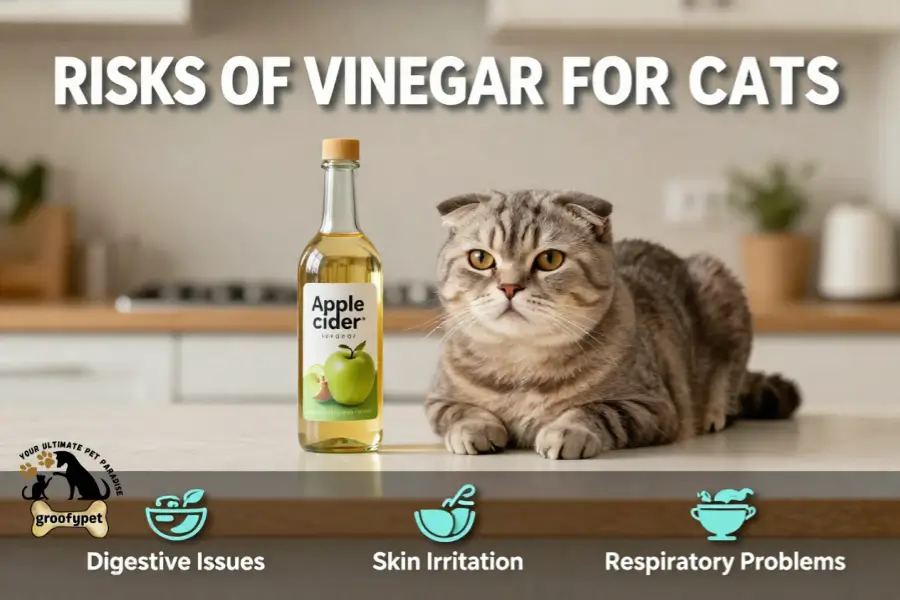
1. Stomach Irritation
Vinegar is highly acidic and may irritate a cat’s stomach if consumed. Some cats have sensitive digestive systems and may react even to small amounts. Stomach discomfort can cause restlessness and reduced appetite. Kittens and older cats may be more affected.
2. Vomiting
The sour taste and acidity of vinegar can trigger vomiting in some cats. This is more likely if a cat drinks undiluted vinegar. Repeated vomiting may lead to dehydration. Veterinary attention may be needed if symptoms persist.
3. Diarrhea
Consuming too much vinegar can upset the digestive tract and cause diarrhea. Loose stools may lead to fluid loss and discomfort. Cats with existing digestive issues are at greater risk. Monitoring hydration is important.
4. Mouth and Throat Irritation
Undiluted vinegar can irritate the mouth, tongue, and throat. Cats may drool excessively or show signs of discomfort. The acidic nature of vinegar can make eating and drinking unpleasant. Severe irritation is uncommon but possible.
5. Reduced Appetite
Many cats dislike the strong smell and taste of vinegar. Exposure or accidental ingestion may temporarily reduce their interest in food. Poor appetite can affect energy levels. This is especially concerning in young or sick cats.
6. Eye Irritation
Vinegar can cause burning and irritation if it gets into a cat’s eyes. Symptoms may include redness, tearing, and squinting. Immediate flushing with clean water is usually recommended. Persistent irritation requires veterinary care.
7. Skin Irritation
Direct contact with concentrated vinegar may irritate sensitive skin. Some cats may develop redness, itching, or discomfort. Repeated exposure can worsen irritation. Always dilute vinegar before using it around pets.
8. Dehydration
Vomiting and diarrhea caused by vinegar can result in dehydration. Cats can lose fluids quickly, especially kittens and seniors. Signs include lethargy and dry gums. Severe dehydration requires prompt treatment.
9. Stress and Anxiety
The strong odor of vinegar can be unpleasant for many cats. Some may avoid areas cleaned with vinegar or become stressed by the smell. Cats rely heavily on their sense of smell. Strong scents can disrupt their comfort.
10. Problems for Cats With Medical Conditions
Cats with kidney disease, digestive disorders, or other health problems may be more sensitive to vinegar. Even small amounts could worsen symptoms. Special care is needed for these cats. Always consult a veterinarian before use.
Real-Life Scenarios: Vinegar and Cats in the Home
Understanding vinegar safety is easier with real-world context. Here are common situations pet owners encounter:
Scenario 1: The Kitchen Spill
A bottle of white vinegar tips over while cooking, and a curious cat walks through the puddle before anyone notices. In most cases, the cat will simply lick its paws clean, react with obvious distaste, and move on. Mild drooling is possible, but serious symptoms are rare from this kind of brief, diluted exposure.
Scenario 2: The Freshly Cleaned Floor
An owner mops the kitchen floor with a vinegar-and-water solution and lets the cat back in before the floor fully dries. The cat may walk through residual liquid and later lick its paws. This is one of the most common ways cats are exposed to vinegar, and it’s also one of the easiest to prevent — simply keep cats out of the room until the floor is completely dry.
Scenario 3: The DIY Coat Rinse Gone Wrong
An owner tries an apple cider vinegar rinse for a cat’s dry skin without diluting it properly. The cat develops redness and discomfort on the skin. This scenario highlights why dilution ratios matter and why a veterinarian should be consulted before trying home remedies, even ones marketed as “natural.”
Scenario 4: The Curious Drinker
A cat discovers an unattended glass of diluted vinegar (perhaps part of a homemade cleaning solution) and drinks a noticeable amount out of curiosity. This is the scenario most likely to produce vomiting or diarrhea, and it’s a good reminder to never leave vinegar solutions unattended in open containers.
Scenario 5: The Cleaning Vinegar Mix-Up
A household keeps both standard white vinegar and stronger cleaning vinegar in the kitchen. Someone accidentally uses the cleaning vinegar near the cat’s food area without diluting it as much as usual. Because cleaning vinegar is more concentrated, this scenario carries a higher chance of irritation and reinforces the importance of clearly labeling and separating the two products.
These everyday examples show that most vinegar-related incidents involving cats are mild and preventable with basic awareness, but they also show why concentration, volume, and supervision all matter.
Can Cats Drink Vinegar?
Cats can technically drink vinegar, but they rarely choose to because of its overpowering smell and sour taste. If a cat does drink it, the outcome depends on concentration and volume.
What Happens If a Cat Licks Vinegar?
A quick lick of diluted vinegar — for example, from a spill or a splash on fur — is unlikely to cause more than a brief reaction of disgust. Most cats will shake their head, drool briefly, or walk away. Serious symptoms from a single lick are uncommon.
What Happens If a Cat Drinks Vinegar?
Drinking a noticeable quantity is more concerning. Cats may experience vomiting, diarrhea, drooling, or reduced appetite. In rare cases involving large amounts of concentrated vinegar, more significant irritation to the digestive tract can occur.
Why Do Most Cats Avoid Vinegar Naturally?
Cats have an extremely sensitive sense of smell, far more acute than humans. The sharp, acidic odor of vinegar is overwhelming to them, which is exactly why cat-friendly cleaners with strong scents (including vinegar) tend to repel cats rather than attract them. This natural aversion is one of the biggest reasons vinegar poisoning in cats is so rare in real-world households.
Is White Vinegar Safe for Cats?
Is vinegar bad for cats? White vinegar is generally considered non-toxic to cats and is often used as a natural household cleaner around pets. However, cats should not drink large amounts of vinegar, as it can cause stomach irritation, vomiting, or digestive discomfort.
White Vinegar and Cat Health
In diluted form (mixed with water, as is standard for cleaning solutions), white vinegar poses minimal risk to cat health upon brief or incidental contact. It’s the concentrated, undiluted form that raises more concern.
White Vinegar in Household Cleaning
White vinegar is one of the most popular natural cleaning products for cats‘ households because it’s effective at cutting grease and odor without leaving behind harsh chemical residues like ammonia or bleach.
Potential Side Effects
- Mild skin irritation with direct, repeated contact
- Eye irritation if vinegar splashes during cleaning
- Respiratory discomfort from strong fumes in poorly ventilated spaces
- Stomach upset if a cat licks a freshly cleaned (undiluted) surface
Pros and Cons of Using Vinegar Around Cats
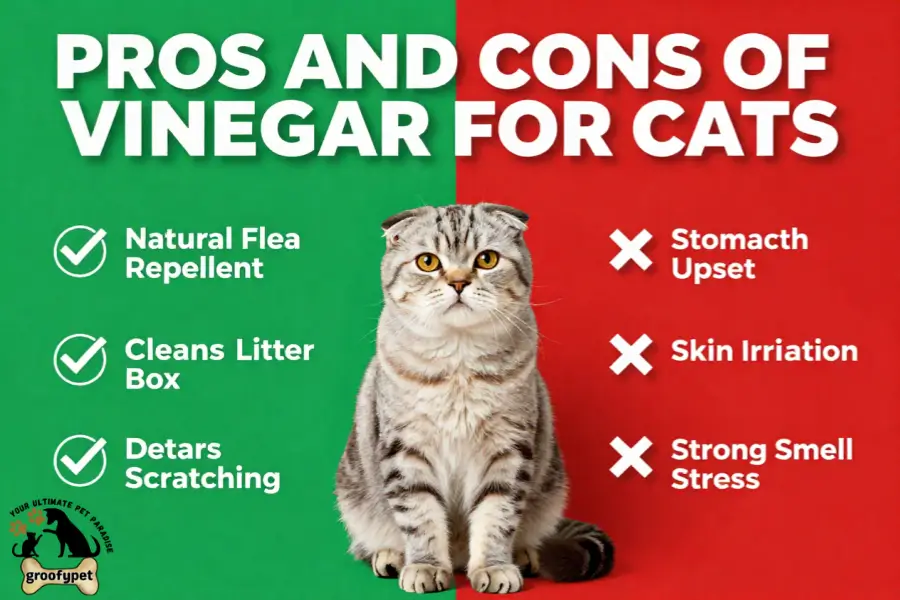
- Natural, non-toxic deterrent option
- Helps redirect unwanted scratching/Jumping
- Inexpensive and widely available
- Avoids harsh chemical repellents
- A strong smell can be unpleasant
- Need frequent reapplication as scent fades
- Not effective on all cats
- Can irritate sensitive cats
Potential Benefits of Vinegar Around Cats
Is vinegar bad for cats? Vinegar offers an effective, low-toxicity alternative to many commercial cleaners, making it appealing to households trying to reduce harsh chemical exposure around pets.
Signs a Cat May Have Consumed Too Much Vinegar
If a cat consumes too much vinegar, it may show signs such as vomiting, diarrhea, drooling, or a decreased appetite. Some cats may also appear lethargic or show signs of stomach discomfort. Contact your veterinarian if symptoms are severe or do not improve quickly.
- Drooling
- Vomiting
- Diarrhea
- Nausea (lip licking, lethargic posture)
- Reduced appetite
- Excessive thirst
- Pawing at the mouth
- Lethargy
- Stomach discomfort (hunched posture, sensitivity when touched)
- Irritation around the mouth (redness, swelling)
What Should You Do If Your Cat Drinks Vinegar?
If your cat only had brief contact or a small lick and shows no symptoms beyond temporary discomfort, monitoring at home for the next few hours is usually reasonable.
Immediate First Aid Steps
- Remove your cat from the source of vinegar immediately.
- Offer fresh water to help dilute any remaining residue in the mouth.
- Gently wipe your cat’s mouth and chin if vinegar is visible on the fur.
- Avoid inducing vomiting unless specifically directed by a veterinarian.
When to Contact a Veterinarian?
Contact your vet if your cat drank a noticeable amount, shows any of the warning signs listed above, or had contact with undiluted cleaning vinegar.
Emergency Warning Signs
- Repeated vomiting
- Visible distress or pain
- Difficulty breathing
- Severe lethargy or collapse
- Refusal to eat or drink for an extended period
Can Vinegar Be Used to Clean Around Cats?
- Always dilute vinegar with water (a common ratio is one part vinegar to one part water for general cleaning).
- Ventilate the room well during and after cleaning.
- Wipe down surfaces with a damp cloth after the vinegar has done its job, especially on floors or surfaces your cat walks on.
Areas to Avoid
- Food and water bowls (residual smell can deter cats from eating or drinking)
- Bedding and scratching posts (strong odor can cause behavioral avoidance)
- Areas immediately around the litter box, unless fully rinsed afterward
How Long to Keep Cats Away After Cleaning?
As a general guideline, keep cats away from freshly cleaned surfaces until they are completely dry, typically 15 to 30 minutes, to avoid paw or paw-pad contact with residual liquid.
Do Cats Hate the Smell of Vinegar?
A cat’s nose contains far more scent receptors than a human’s, making strong, acidic smells like vinegar overwhelming and unpleasant. This heightened sensitivity is part of why cats’ hatred of the vinegar smell is such a widely repeated observation among pet owners.
Can Vinegar Be Used as a Cat Deterrent?
Yes, many pet owners use diluted vinegar sprays to discourage cats from scratching furniture, entering certain rooms, or jumping onto counters, relying on natural aversion rather than physical barriers.
Vinegar vs Common Household Cleaners
| Cleaner | Cat Safe | Toxicity Risk | Best Use |
|---|---|---|---|
| Diluted White Vinegar | Mostly yes | Low | General surface cleaning, odor removal |
| Cleaning Vinegar (concentrated) | Caution needed | Moderate | Tough stains always rinse and ventilate |
| Bleach | No | High | Avoid in pet areas; toxic fumes and contact risk |
| Ammonia-based Cleaners | No | High | Avoid entirely around cats; smells mimic cat urine, attracting confusion |
| Essential Oil Cleaners | No | High (many oils) | Avoid it; many essential oils are toxic to cats |
| Plain Soap and Water | Yes | Very low | Daily cleaning, food bowls, bedding |
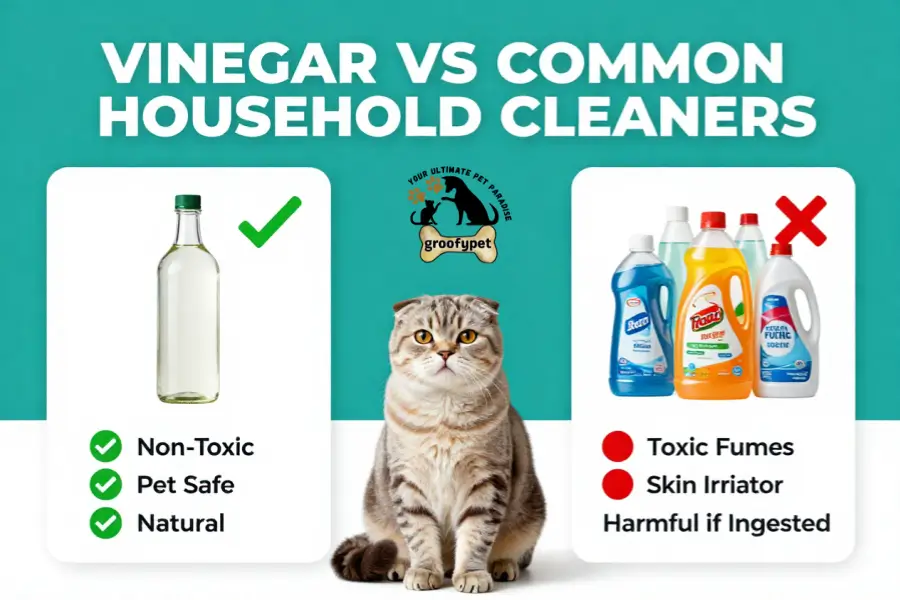
When Can Vinegar Be Dangerous for Cats?
- Concentrated Vinegar: Undiluted vinegar carries a much higher acetic acid concentration, increasing irritation risk on contact or ingestion.
- Cleaning Vinegar: Formulated to be stronger than table vinegar, cleaning vinegar should never be used without dilution in homes with cats.
- Vinegar Mixed with Chemicals: Never mix vinegar with bleach or ammonia-based products; this combination creates toxic fumes dangerous to both cats and humans.
- Large Quantity Consumption: A cat drinking a substantial volume of vinegar (rather than a brief lick) significantly raises the likelihood of vomiting, diarrhea, and dehydration.
How to Prevent Vinegar Accidents?
Safe Storage Tips
- Store vinegar bottles in closed cabinets, not open shelving.
- Seal spray bottles tightly after each use.
- Keep cleaning vinegar separate from table vinegar to avoid mix-ups.
Cleaning Safety Checklist
- Dilute before use.
- Ventilate the room.
- Keep cats in a separate room while cleaning.
- Wipe surfaces dry before allowing cats back in.
- Never leave a vinegar-soaked cloth or spray bottle unattended.
Pet-Proofing Your Home
- Use closed-door storage for all cleaning supplies.
- Train cats to avoid counters and cabinets where chemicals are stored.
- Choose unscented or cat-safe alternatives in homes with particularly curious or food-motivated cats.
- Keep a written note or label on any DIY cleaning bottle that lists the dilution ratio used, so every family member applies it consistently.
- If you have multiple cats, remember that sensitivity to smells and irritants can vary between individuals. What one cat tolerates well, another may react to more strongly.
Frequently Asked Questions
Can cats lick white vinegar?
Yes, a brief lick of diluted white vinegar is unlikely to cause serious harm, though most cats will avoid it due to the strong smell and taste.
Is apple cider vinegar toxic to cats?
Apple cider vinegar is not considered highly toxic in small, diluted amounts, but it can still cause stomach upset or irritation if overused or given undiluted.
Can vinegar kill cats?
Vinegar is extremely unlikely to be fatal to cats in typical household exposure; serious harm would require ingestion of a large amount of concentrated vinegar, which is uncommon given cats’ natural aversion to the smell.
Why do cats hate vinegar?
Cats have a far more sensitive sense of smell than humans, and the sharp, acidic scent of vinegar is overwhelming and unpleasant to their heightened olfactory system.
Is vinegar safe to clean cat litter boxes?
Diluted white vinegar can help neutralize odors in litter boxes, but it should be thoroughly rinsed afterward and never mixed with bleach or ammonia-based products.
Can vinegar keep cats away?
Yes, diluted vinegar sprays are commonly used as a natural, non-toxic deterrent to discourage cats from scratching furniture or entering certain areas.
What happens if a kitten drinks vinegar?
Kittens are more sensitive to gastrointestinal upset than adult cats, so even a small amount of vinegar ingestion warrants closer monitoring and a call to the veterinarian if any symptoms appear.
Is cleaning vinegar stronger than regular vinegar?
Yes, cleaning vinegar typically contains a higher concentration of acetic acid than standard table vinegar, making it more effective for tough cleaning jobs but also more irritating on contact.
Veterinary Takeaway on Vinegar and Cats
So, is vinegar bad for cats? The honest answer sits in the middle. Vinegar is not a severe toxin like antifreeze or certain houseplants, but it’s also not something to treat as harmless. In small, diluted amounts, the kind typically encountered through household cleaning, vinegar poses a low risk to most cats, and their natural aversion to the smell usually prevents meaningful exposure in the first place.
Can Cats Eat Spirulina? Benefits, Risks, and Safe Feeding Guide
Can Cats Eat Watercress? Benefits, Risks, and Safe Feeding Guide