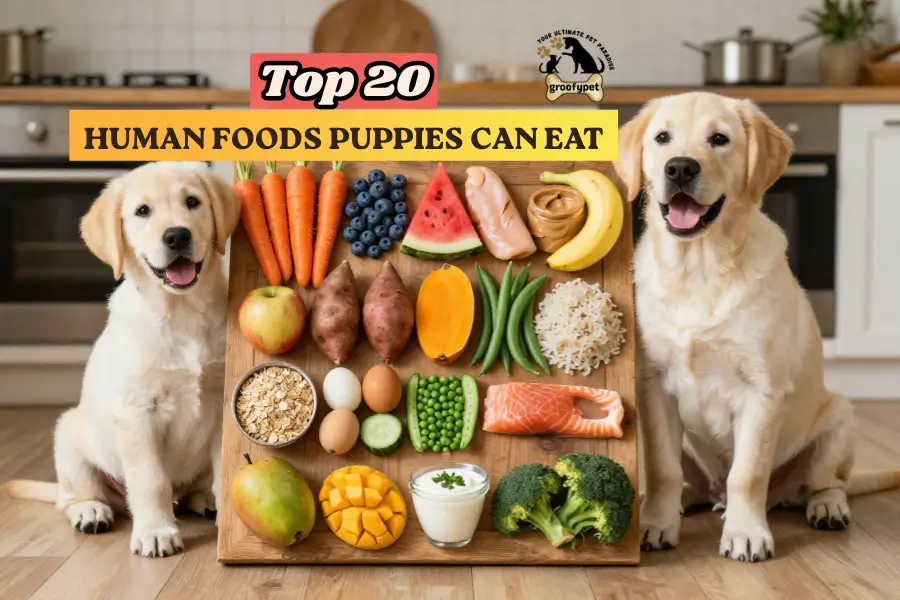
Puppies are curious, energetic, and always eager to taste whatever is on your plate. As a pet owner you naturally want to share your favorite snacks with your furry companion. However, not every human food is safe for your growing pup. A puppy’s digestive system is far more sensitive than an adult dog’s, and their nutritional needs are highly specific.
Choosing the right human foods as occasional treats can support healthy growth, improve digestion, and strengthen immunity. Making the wrong choice can lead to serious health consequences. This vet-approved guide will walk you through safe human foods for puppies, toxic foods to avoid completely, proper portion control, and feeding tips to keep your puppy healthy, active, and happy.
But not all human foods are okay. Some are toxic and can make your puppy very sick. So knowing which ones are safe is really important. This guide gives you 20 human foods puppies can eat — plus tips on how to serve them the right way.
Why You Should Be Careful With Human Foods for Puppies:
A puppy’s gastrointestinal health is delicate. Their digestive system is still developing, which means even small amounts of the wrong food can trigger vomiting, diarrhea, constipation, or more serious conditions like pancreatitis. Unlike adult dogs, puppies are more prone to dehydration, intestinal blockage, and biotin deficiency caused by improper feeding.
Many common human foods contain ingredients like xylitol, caffeine, or persin that are highly toxic to dogs. High-fat foods can cause sudden weight gain and put stress on a growing puppy’s organs. Some natural-looking foods such as grapes, onions, and garlic are equally dangerous. ‘Natural’ does not mean ‘safe.’
Portion control is equally important. Following the 10% treat rule, where human food should make up no more than 10% of a puppy’s daily caloric intake, helps maintain nutritional balance and prevents gastrointestinal issues. Always consult your veterinarian before introducing any new food into your puppy’s diet.
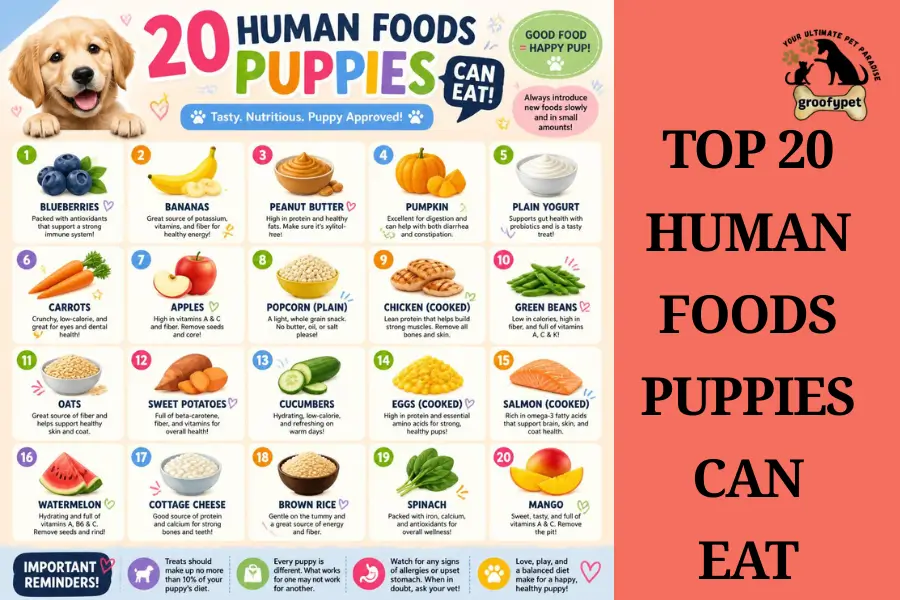
20 Human Foods That Are Safe for Puppies
The following human foods are generally vet approved and safe when served properly. Always introduce one food at a time, watch for food intolerance reactions, and serve foods plain without added salt, sugar, spices, or oil.
1. Cooked Chicken
- Why it’s good: Chicken is packed with protein and amino acids. It helps your puppy build strong muscles. It is also gentle on the stomach, so it is great for puppies with an upset tummy.
- How to serve: Boil it plain. No salt, garlic, onion, or oil. Remove all bones before serving. Shred it into small pieces.
- Watch out: Never give raw chicken. Always remove bones — they can splinter and cause choking or internal injury.
2. Cooked Turkey
- Why it’s good: Turkey is another lean protein that supports healthy muscle growth. It is easy to digest and low in fat when you use the right cuts.
- How to serve: Cook it plain with no seasoning. Skip the skin; it is too fatty. Cut into bite-sized pieces.
- Watch out: Avoid turkey with onion powder or garlic in the seasoning. These are toxic to dogs.
3. Cooked Eggs
- Why it’s good: Eggs are full of protein, healthy fats, and vitamins. They support a shiny coat, healthy skin, and strong growth in young puppies.
- How to serve: Boil or scramble without butter or salt. Let it cool before serving. One egg a few times a week is plenty.
- Watch out: Never feed raw egg whites. They block the absorption of biotin, a vitamin puppies need for healthy skin.
4. Salmon (Cooked)
- Why it’s good: Salmon is rich in omega-3 fatty acids that help your puppy’s skin, coat, digestion, and immune system. It is one of the best fish you can give.
- How to serve: Cook it fully and remove all bones. Serve plain with no seasoning. Limit to twice a week.
- Watch out: Never give raw or undercooked fish. It can carry harmful bacteria and parasites.
5. Sardines
- Why it’s good: Sardines are full of omega-3 fatty acids and calcium. Their soft bones are digestible and give a big nutrition boost without any prep work.
- How to serve: Use sardines canned in water with no added salt. Drain well and serve a small amount as a topper on regular puppy food.
- Watch out: Avoid sardines in oil or brine. Too much sodium is bad for puppies.
6. Carrots
- Why it’s good: Carrots are crunchy, low-calorie, and full of beta-carotene and vitamin A. They support eye health, immunity, and dental health by scraping plaque off teeth.
- How to serve: Serve raw or cooked. Cut into small sticks or rounds to prevent choking. No salt or seasoning needed.
- Watch out: Large raw chunks can be a choking hazard for tiny puppies. Always cut them into puppy-sized pieces.
7. Pumpkin
- Why it’s good: Plain pumpkin is one of the best foods for puppy digestion. It is high in prebiotic fiber and helps with both diarrhea and constipation. Vets recommend it often.
- How to serve: Use plain canned pumpkin — not pumpkin pie filling. Add a small spoonful to regular puppy food.
- Watch out: Pumpkin pie filling has sugar and spices that can upset your puppy’s stomach. Always check the label.
8. Sweet Potatoes
- Why it’s good: Sweet potatoes are rich in vitamin A, fiber, and antioxidants. They support eye health, a healthy immune system, and smooth digestion.
- How to serve: Cook plain and mash or cut into small cubes. No butter, salt, or sugar. Serve as an occasional treat.
- Watch out: Raw sweet potato is hard to digest. Always cook it first before giving it to your puppy.
9. Green Beans
- Why it’s good: Green beans are low in calories and high in fiber and vitamins. They make a filling, healthy snack without adding extra calories great for puppies that need weight management.
- How to serve: Serve plain — raw, steamed, or cooked. No canned beans with added salt. Cut into small pieces.
- Watch out: Skip canned green beans with sodium. Too much salt causes dehydration and other health problems.
10. Broccoli
- Why it’s good: Broccoli is full of vitamins C and K, fiber, and antioxidants. It gives a real nutritional boost for growing puppies.
- How to serve: Steam or serve raw in tiny amounts. Cut into very small florets. Mix with regular puppy food.
- Watch out: Keep broccoli under 10% of the daily diet. Too much causes gas and stomach upset in puppies.
11. Apples
- Why it’s good: Apples give vitamin A, vitamin C, and prebiotic fiber. They help with digestion and support dental health by reducing plaque and freshening breath.
- How to serve: Wash well, remove the core and all seeds, then slice thin. Serve a few slices as a treat.
- Watch out: Apple seeds contain cyanide compounds and are toxic to dogs. Always remove every seed before serving.
12. Bananas
- Why it’s good: Bananas are a great source of potassium, natural sugars, and fiber. They give quick energy and support healthy digestion in puppies.
- How to serve: Peel and slice into small rounds. Give a few pieces as a treat. Do not feed the peel.
- Watch out: Bananas are higher in sugar than other fruits. Give them in small amounts, not every day.
13. Blueberries
- Why it’s good: Blueberries are tiny but powerful. They are packed with antioxidants, vitamin C, and fiber. They help boost the immune system and protect cells from damage.
- How to serve: Serve fresh or thawed frozen blueberries. A small handful makes a perfect low-calorie training reward.
- Watch out: Too many blueberries can cause loose stools. Keep portions small, a few berries at a time.
14. Watermelon
- Why it’s good: Watermelon is mostly water, making it very hydrating for puppies. It gives vitamins A and C and is a refreshing low-calorie snack.
- How to serve: Remove all seeds and the hard green rind. Cut the pink flesh into small cubes. Great as a summer treat.
- Watch out: The rind is too tough for puppies to digest. Seeds can cause intestinal blockage. Always prep it carefully.
15. Plain White Rice
- Why it’s good: Plain white rice is one of the gentlest foods for a puppy’s stomach. It is easy to digest and often recommended by vets when puppies have diarrhea or gastrointestinal issues.
- How to serve: Cook plain with water only. No salt, butter, or seasoning. Serve warm and mix with boiled chicken for an upset-tummy meal.
16. Oatmeal
- Why it’s good: Oatmeal gives slow-release energy, fiber, and vitamins. It supports healthy digestion and keeps your puppy feeling full longer.
- How to serve: Cook with water — not milk. Serve plain without sugar, honey, or flavoring. A small serving a few times a week is fine.
- Watch out: Never give flavored instant oatmeal packets. They contain sugar and artificial sweeteners that are harmful to puppies.
17. Plain Greek Yogurt
- Why it’s good: Greek yogurt has probiotics that support gut health and improve digestion. It also gives calcium and protein for healthy bones and muscles.
- How to serve: Choose plain, unsweetened Greek yogurt with no artificial flavors. Give a small spoonful as a treat or mix with food.
- Watch out: Check the label for xylitol — it is extremely toxic to dogs. Also avoid yogurt with added fruit or sweeteners.
18. Cottage Cheese
Why it’s good: Cottage cheese is a great source of protein and calcium. It is lower in lactose than most dairy products, so it is easier on a puppy’s stomach.
How to serve: Give a small amount of plain low-fat cottage cheese. You can mix it into puppy food or serve it alone as a treat.
Watch out: Start with a tiny amount to make sure your puppy does not have food intolerance to dairy. Watch for diarrhea or bloating.
19. Peanut Butter
- Why it’s good: Plain peanut butter is a fan favorite for puppies. It is rich in healthy fats, protein, niacin, and vitamins B and E. Most puppies go absolutely crazy for it.
- How to serve: Use only natural peanut butter with no added salt or sugar. Spread a thin layer inside a toy or give a tiny amount on a spoon.
- Watch out: This is critical: always check the label for xylitol. Many popular peanut butter brands now use xylitol as a sweetener, and it is highly toxic to dogs even a small amount can be deadly.
20. Plain Cooked Pasta
- Why it’s good: Plain cooked pasta gives carbohydrates for energy and is easy on a puppy’s stomach. It is a simple, filling treat when served in small amounts.
- How to serve: Cook plain with water. No sauce, no salt, no seasoning. Serve a few pieces mixed with their regular food.
- Watch out: Pasta with sauce, garlic, onion, or cheese is a no. Those ingredients can cause serious harm. Keep it completely plain.
Quick Summary – Safe Foods at a Glance
Here is a fast reference list of all 20 safe foods for your puppy:
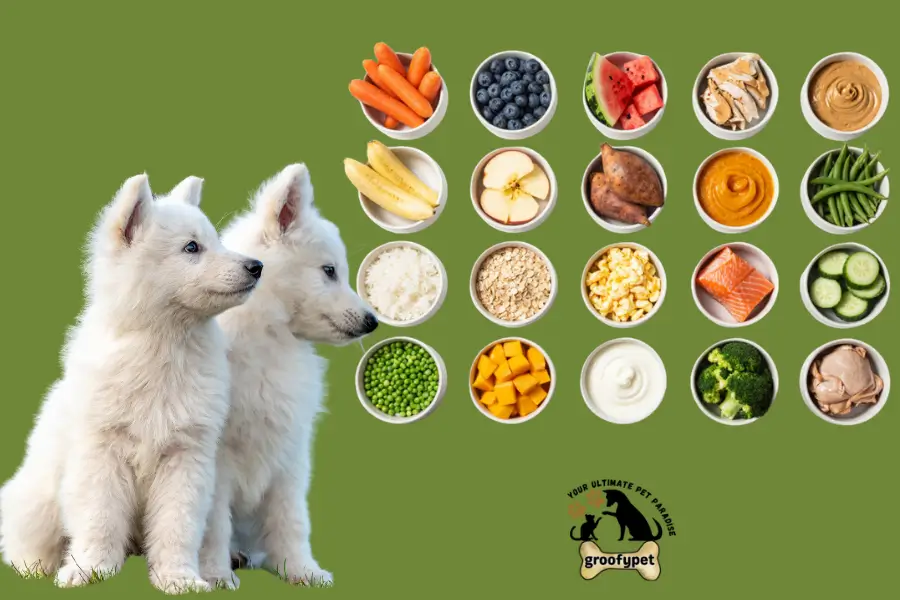
- Cooked chicken – protein, muscle growth
- Cooked turkey – lean protein, easy digestion
- Cooked eggs – protein, healthy coat
- Cooked salmon – omega-3 fatty acids, immune support
- Sardines in water – omega-3s, calcium
- Carrots – vitamin A, dental health
- Pumpkin – fiber, digestion support
- Sweet potatoes – vitamin A, antioxidants
- Green beans – low-calorie, fiber
- Broccoli – vitamins C and K (small amounts)
- Apples – fiber, dental health (no seeds)
- Bananas – potassium, energy
- Blueberries – antioxidants, immune system
- Watermelon – hydration, vitamins (no seeds or rind)
- Plain white rice – gentle on upset stomachs
- Oatmeal – fiber, slow energy
- Plain Greek yogurt – probiotics, gut health
- Cottage cheese – protein, calcium
- Peanut butter – healthy fats (no xylitol)
- Plain cooked pasta – carbohydrates, energy
Human Foods Puppies Should Never Eat
The following foods are toxic or harmful to puppies and should be kept completely out of reach. Even small amounts of some of these can cause life-threatening conditions.
1. Chocolate and Caffeine
Chocolate and caffeine are among the most dangerous substances for dogs. They contain theobromine and caffeine compounds that a puppy’s body cannot metabolize efficiently. Even small doses can trigger rapid heart rate tremors seizures hyperactivity increased blood pressure and in severe cases death. Keep all chocolate products, coffee, tea, and energy drinks away from puppies at all times.
2. Grapes and Raisins
Grapes and raisins are deceptively dangerous. Even very small amounts can cause acute kidney failure in dogs. The exact toxic compound is still being studied, but the risk is severe enough that the ASPCA and veterinary experts recommend complete avoidance. Never feed grapes, raisins, or any products containing them to your puppy.
3. Onions, Garlic and Chives
Onions, garlic, and chives belong to the Allium family and are toxic to dogs in all forms: raw, cooked, or powdered. These vegetables destroy red blood cells, which can lead to hemolytic anemia. Symptoms include weakness, lethargy, pale gums, and collapse.
Many human foods like soups, sauces, and seasonings contain hidden garlic or onion powder, so always check labels before sharing any prepared food with your puppy.
4. Fried and Junk Foods
Fried foods, fast food chips and processed snacks are high in fat sodium and artificial additives that are harmful to a puppy’s developing organs. Excessive fat consumption can lead to obesity and trigger pancreatitis, a painful and potentially life-threatening inflammation of the pancreas.
High-sodium foods can increase blood pressure and cause dehydration. These foods have zero nutritional value for puppies and should never be part of their diet.
5. Avocado, Alcohol and Xylitol
Avocado contains persin, a fungicidal toxin that is somewhat toxic to dogs and can cause vomiting, diarrhea, and pancreatitis. Alcohol even in tiny amounts can impair coordination and breathing and may result in coma or death.
Xylitol, an artificial sweetener found in sugar-free gum, candies, peanut butter, and baked goods, is extremely toxic to dogs and can cause rapid insulin release and severe hypoglycemia. Always read ingredient labels carefully before offering any human food to your puppy.
How Much Human Food Can Puppies Eat?
Human food should always be treated as an occasional treat, never a replacement for balanced commercial puppy food, which should form the foundation of your puppy’s diet. 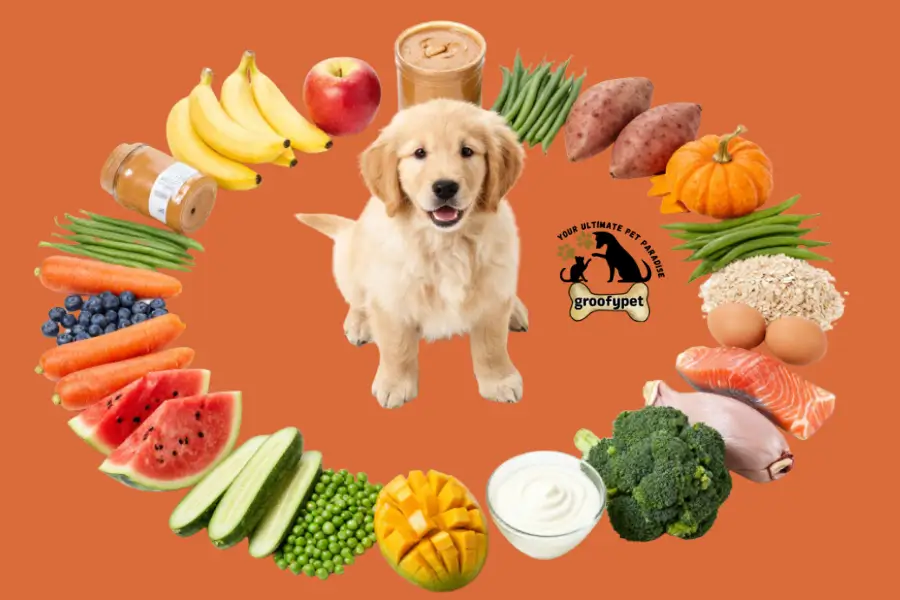
The 10% treat rule is the widely accepted guideline among veterinary nutrition experts: human food and treats combined should account for no more than 10% of your puppy’s total daily caloric intake.
| Category | Guideline | Details |
|---|---|---|
| Daily Limit | 10% Rule | Human food should not exceed 10% of total daily calories |
| Main Diet | 90% Puppy Food | Balanced commercial puppy food must be the main nutrition source |
| Portion Size | Small Bites Only | Human food should be given in tiny training-sized pieces |
| Frequency | Occasional Only | Not daily meals, only as treats or rewards |
| Best Use | Training Rewards | Use human food to reward good behavior |
| Overfeeding Risk | High | Can cause obesity, diarrhea, and nutrient imbalance |
| Water Intake | Always Required | Fresh water must be available after feeding treats |
| Vet Advice | Recommended | Consult vet before introducing new foods |
Small bite-sized pieces are ideal for training rewards and reduce the risk of choking hazards. Overfeeding human food, even safe options, can upset digestion, cause weight gain, and lead to nutritional imbalances.
Puppies have smaller stomachs than adult dogs, so moderation is key. Ensure your puppy always has access to fresh and clean water, as proper hydration supports digestion and overall health.
Feeding Tips for Puppy Owners
• Always introduce one new food at a time and observe for 24–48 hours
• Watch closely for signs of food intolerance or allergic reactions
• Serve only fresh, fully cooked plain foods no salt sugar or spices
• Cut all foods into small, manageable pieces to prevent choking
• Never feed raw meat raw fish or raw egg whites to puppies
• Maintain a consistent feeding schedule to support digestion and energy levels
• Avoid giving table scraps regularly; it can create begging habits and overfeeding
• When in doubt consult your veterinarian before offering anything new
Signs Your Puppy Ate Something Wrong
Even careful pet owners can make mistakes. Knowing the warning signs of toxic food ingestion can save your puppy’s life. Contact a vet immediately if you notice any of the following:
• Vomiting or diarrhea that persists beyond a few hours
• Loss of appetite or refusal to drink water
• Lethargy, weakness, or unusual tiredness
• Excessive drooling, foaming, or pawing at the mouth
• Tremors, seizures, or loss of coordination
• Behavioral changes or unresponsiveness
If you suspect your puppy has eaten a toxic food, do not wait for symptoms to worsen. Contact your veterinarian or an emergency animal poison helpline immediately.
Best Feeding Routine for Puppies
A balanced consistent feeding schedule supports your puppy’s nutritional needs, energy levels and digestive health. Here is a simple daily routine that incorporates safe human foods as occasional rewards:
• Morning: Balanced commercial puppy food + fresh water
• Mid-Morning (optional): A small piece of carrot or apple as a training treat
• Afternoon: Fresh water + light puppy-safe snack if needed
• Evening: Balanced puppy meal (puppy food as the primary source)
• Occasional reward: Small pieces of cooked chicken boiled egg or plain yogurt
Stick to puppy food as your primary nutrition source and use human foods strictly as supplements or training rewards within the 10% treat rule.
Frequently Asked Questions
Can puppies eat human food daily?
No. Human food should only be offered as occasional treats. A puppy’s primary diet should be a nutritionally balanced commercial puppy food recommended or approved by your veterinarian.
Can puppies eat fruit every day?
Small safe portions of dog-safe fruits can be given regularly but not in large quantities every day.
What is the safest human food for puppies?
Boiled plain chicken and plain white rice are the safest.
Can puppies eat milk?
Cow’s milk is not recommended for puppies due to lactose intolerance issues.
Can puppies eat peanut butter?
Yes, but only if it is xylitol-free and unsweetened.
Final Thoughts
Human foods can be a wonderful supplement to your puppy’s diet when chosen carefully and given in moderation. Safe options like cooked lean meats, eggs, dog-safe fruits and vegetables, plain rice, and Greek yogurt offer genuine nutritional benefits.
Puppies can enjoy a lot of the same foods you eat as long as you choose carefully and serve them the right way. The 20 foods in this guide are safe, healthy, and full of real nutritional benefits. From cooked chicken and eggs to carrots, blueberries, and plain yogurt, you have plenty of good options to treat your puppy with.
Just remember: puppy food is always the main meal. Human food is extra. Keep portions small, serve everything plain, and check labels for hidden dangers like xylitol, garlic, or onion powder. Do that, and sharing food with your puppy is a safe and happy experience for both of you.
This article is for general information only. Always consult your veterinarian for advice specific to your puppy’s health, breed, and nutritional needs.
By understanding what is safe and what is dangerous, you can enjoy safe bonding moments with your puppy while protecting their long-term health.
Can Dogs Eat Honeycrisp Apples? Smart Feeding Secrets Revealed!